How Client Account Management Works Around MT4 and MT5 Trading Platforms
Key Takeaways Client Account Management around MT4 and MT5 should connect onboarding, KYC, wallets, trading…


One app, many services
Rides, food, delivery and payments in a single super app, with one wallet and one operations console.
All 6 in Super App →Move people, profitably
Driver and rider apps, dispatch, fare rules and payouts, tuned for city-scale operations.
All 5 in Ride Sharing →Everything to the door
Food, grocery, pharmacy, parcel and alcohol, with dispatch, live tracking and courier payouts.
All 35 in Delivery →Book a professional in minutes
Home services, healthcare and freelance work, with scheduling, quotes and escrow.
All 13 in On Demand Services →Supply, demand, and the listing in between
Rentals, ecommerce, travel and jobs, with search, inventory and governed payouts.
All 31 in Listings →Where audiences gather
Social feeds, messaging, file sharing, AI assistants and website builders.
All 28 in Networks →Attention, monetized
Video on demand, short form, creator subscriptions and betting.
All 16 in Entertainment →Money that moves
Neobanking, brokerage, investment and cross-border remittance, built for compliance.
All 8 in Finance Investment →Exchanges, tokens and NFTs
Spot and P2P trading, launchpads and NFT marketplaces with custody and KYC.
All 14 in Blockchain →160 launch-ready platforms across 10 categories, each shipping in 6 days with full source code.
Twenty-five sectors, each with its own page naming what we have already shipped into it and what we would build from zero.
Everything a forex and CFD brokerage runs on except the trading terminal itself – client portal, funding, KYC and AML, an IB and affiliate programme, a prop desk, CRM and a fifty-page admin console across six role-scoped operator logins.
Order execution stays where traders already are, in MT4 and MT5. This platform is the operational layer around it: onboarding, money movement, compliance, partner payouts and the back office your team actually lives in.
Go Live in 6 Days with Brokerage OpsProp DeskIB ProgrammeCompliance-ReadyMulti-JurisdictionWhite-Label
⚡ Platform at a Glance
Revenue Lines
spreads, challenge fees, profit splits, IB rebates, funding
Runtime Modes
demo and live share one codebase, so you rehearse before launch
Revenue Share
you own the source outright, with no per-client fee
Auditable
KYC, funding and payouts on one logged, reversible trail
A funded-trader programme and a classic brokerage share the same accounts, wallets and payout rails, so challenge fees start earning while spread revenue builds.
Tiered IB rebates, sub-affiliates, referral links and a self-serve partner portal with live volume reporting - the growth channel most brokerages bolt on a year too late.
🚀 Ready to launch your own brokerage operations platform?









Live in Action
Don’t just take our word for it – open the Miracuves Blueberry Markets Clone yourself. Six live environments with real credentials for every role, no setup required. The access control is real: each operator login sees only its own scope.
CLIENT PORTAL
Sign in as a client and move through the dashboard, wallets, funding, KYC and prop enrolment exactly as your traders will.
PARTNER / IB PORTAL
Sign in as a partner to see the IB, affiliate and fund-manager surfaces - the tooling that decides whether introducers stay with you.
ADMIN CONSOLE
Sign in as an administrator for unrestricted access - all fifty pages, every integration toggle, role assignment and the audit log.
COMPLIANCE DESK
Sign in as a compliance officer to see access control working - the KYC and risk surfaces open, payment approval deliberately blocked.
FINANCE DESK
Sign in as a finance operator to work the payments side - deposits, withdrawals, approvals and reconciliation, without compliance write access.
ANDROID APP
Install the branded Android build - twenty router paths and twenty-one screens sharing the same portal APIs as the web client.
Watch It Work
Want a guided tour? Book a 30-minute call with our team and map your brokerage launch – jurisdiction setup, funding rails, KYC vendors, partner programme design and go-live sequencing.
Every Screen Mapped
More than two hundred addressable surfaces across four journeys – 132 public pages, 25 client portal routes, 9 partner routes and 50 admin pages, plus 20 mobile paths.

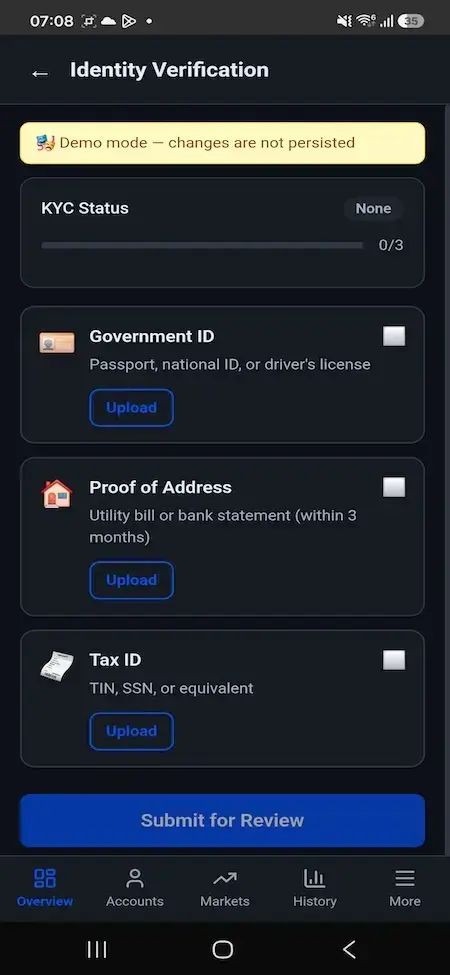
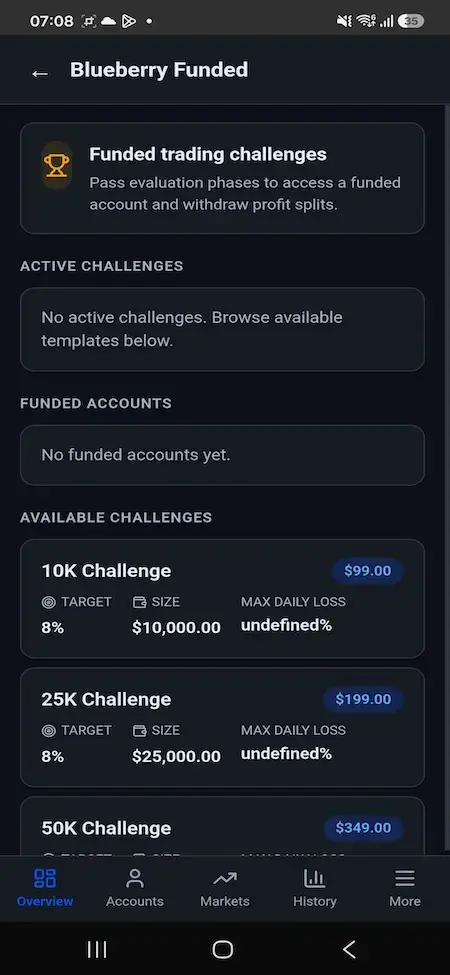
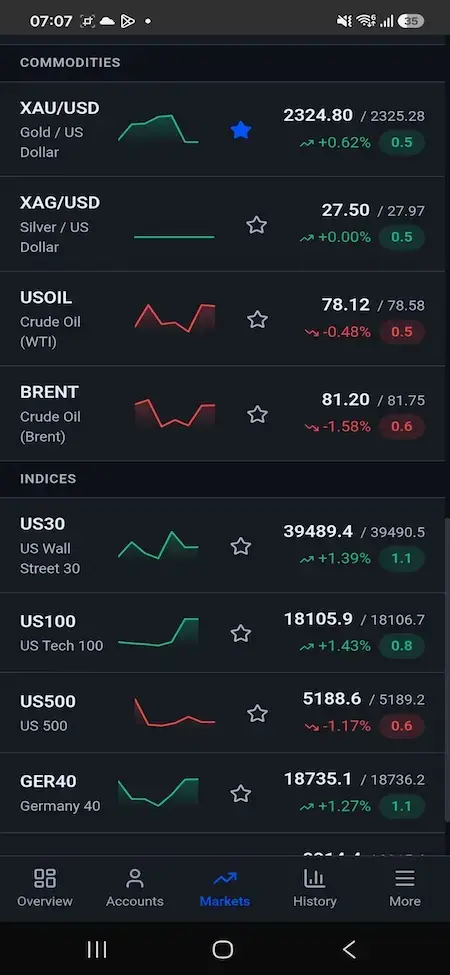
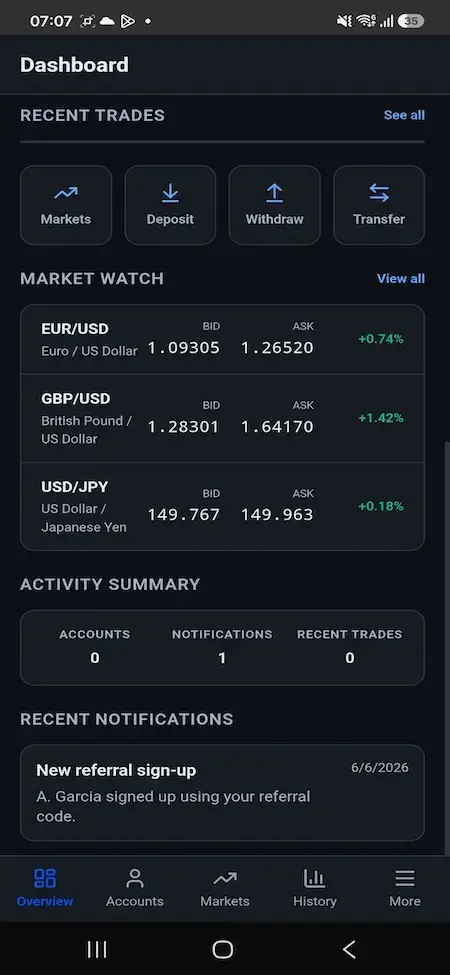
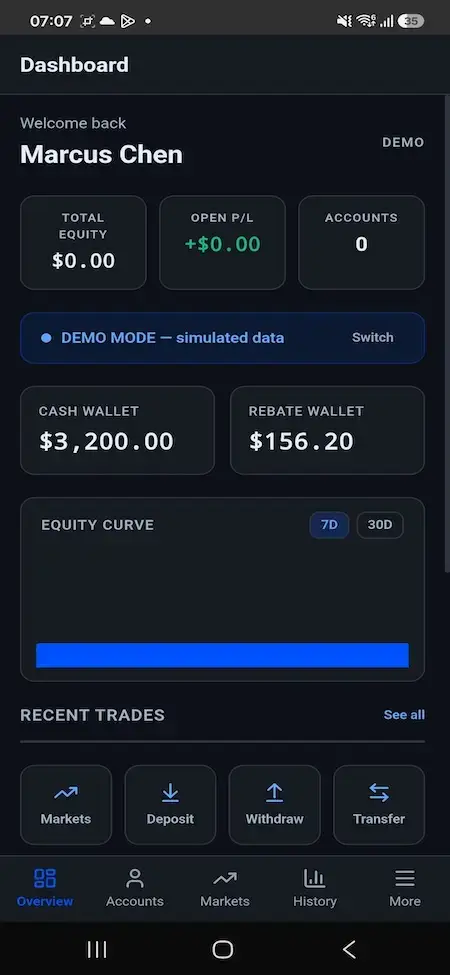
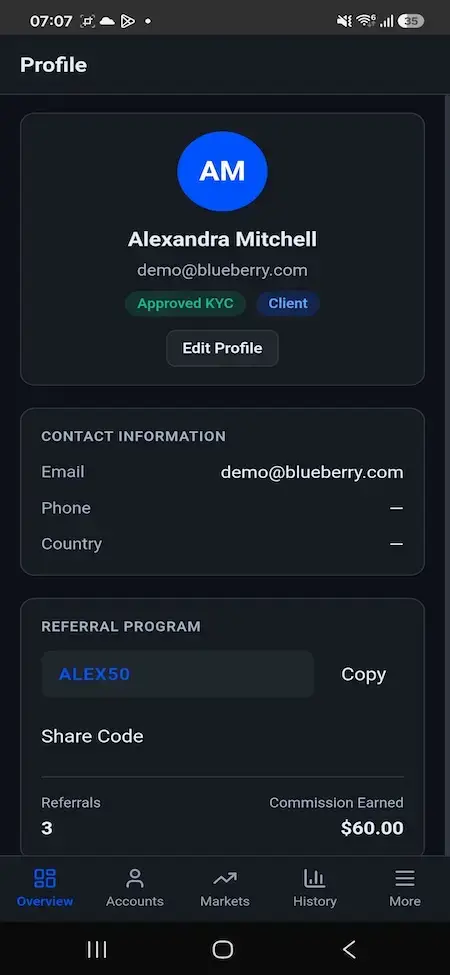
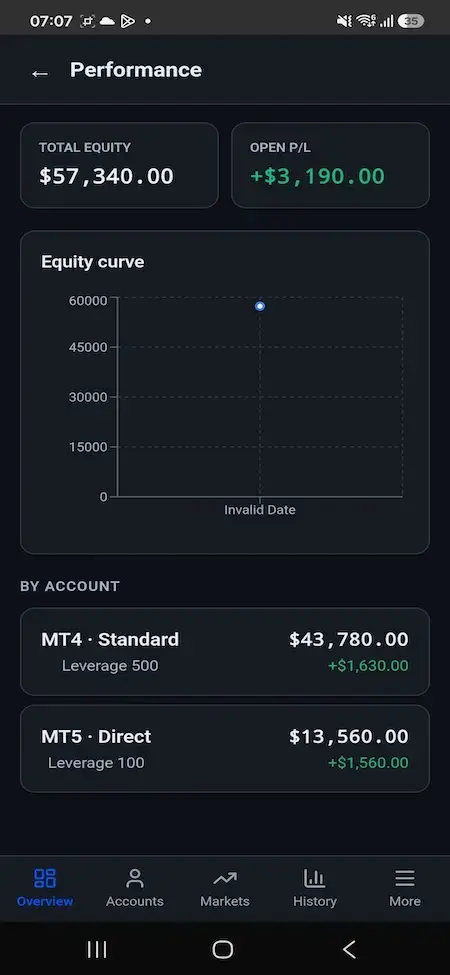
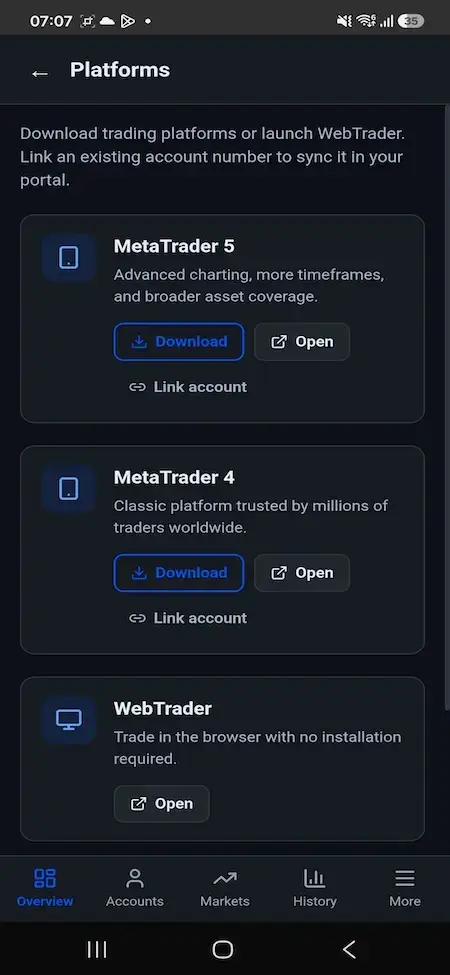
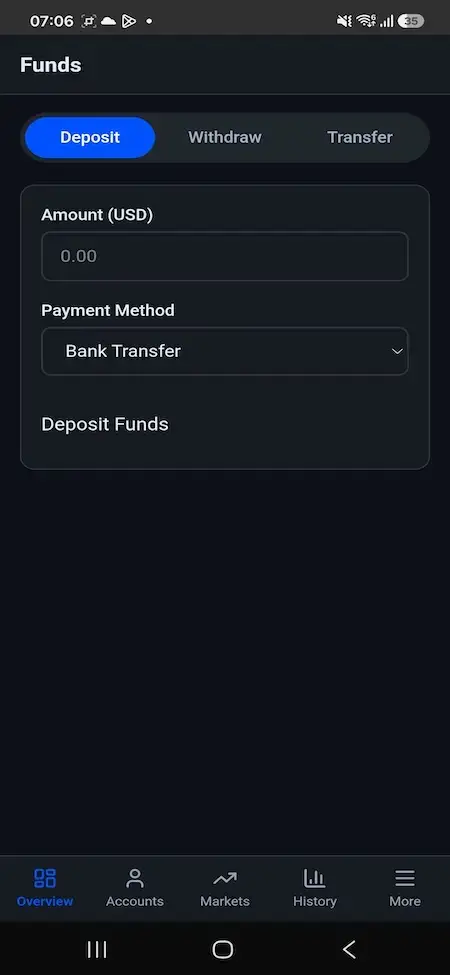
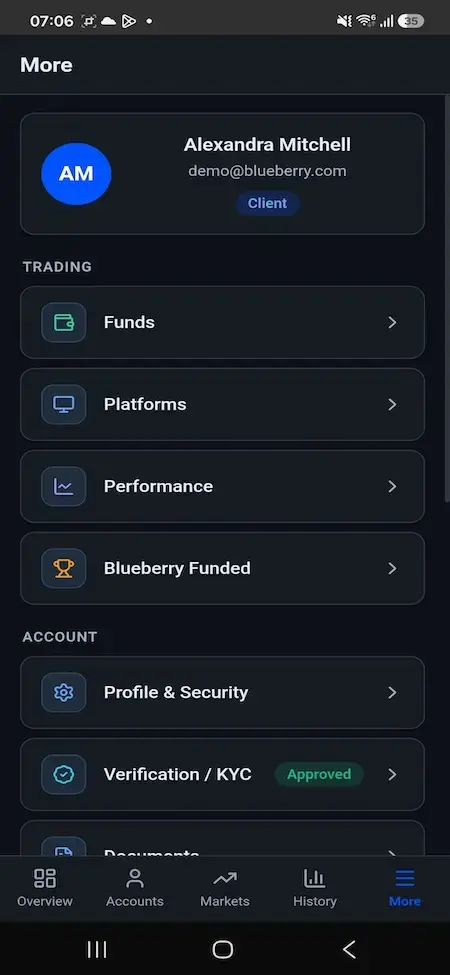
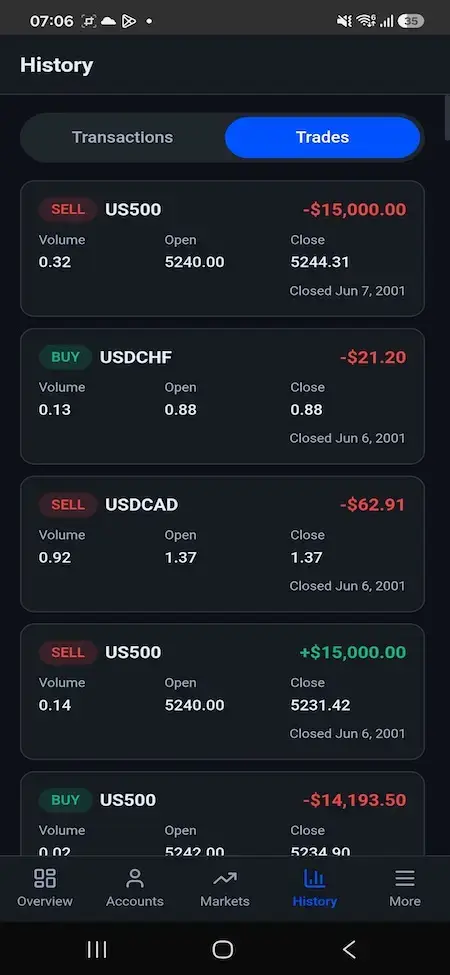
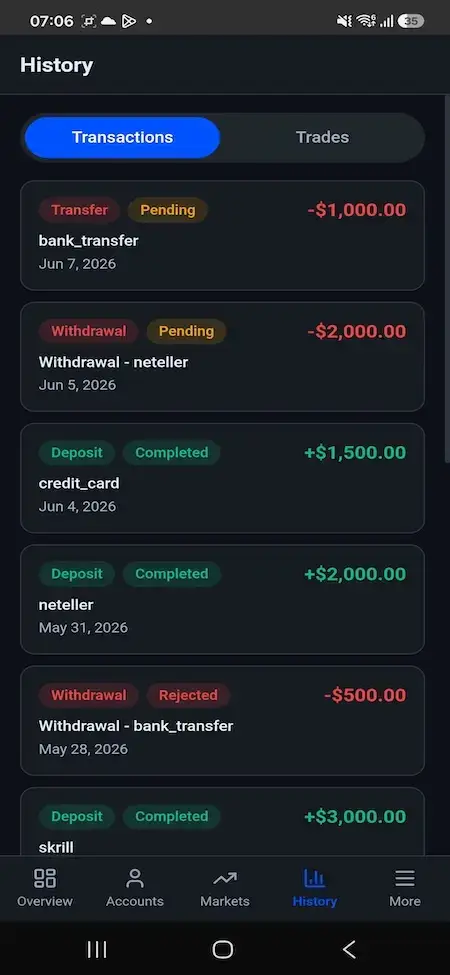
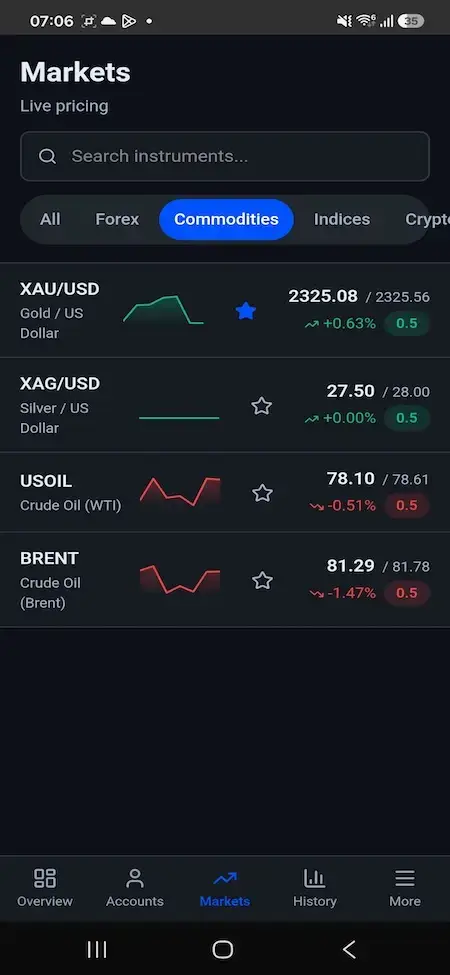
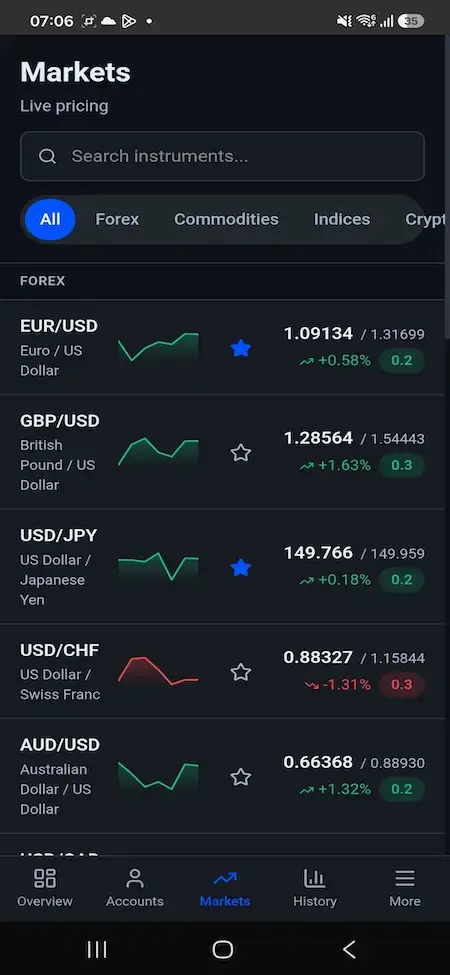
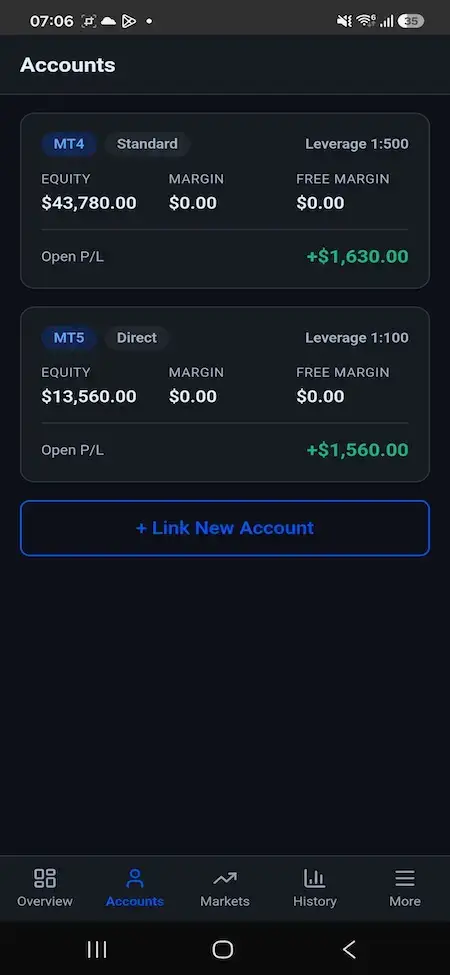
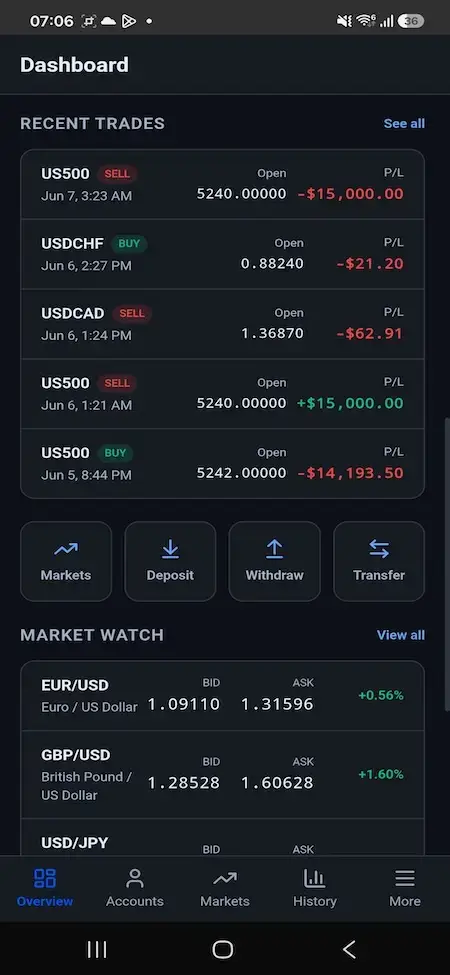
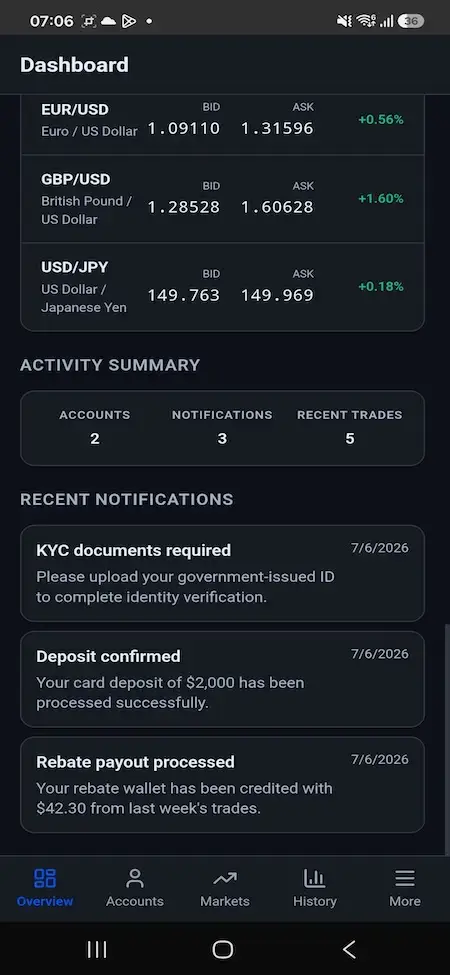
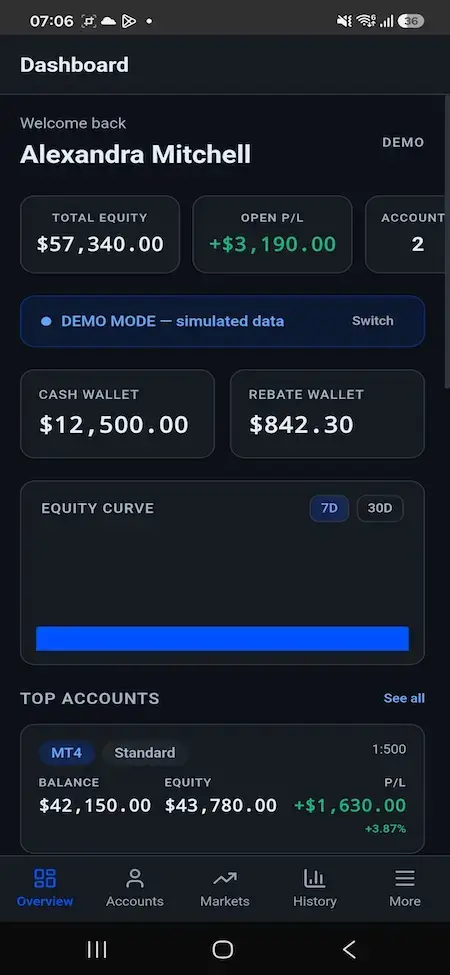
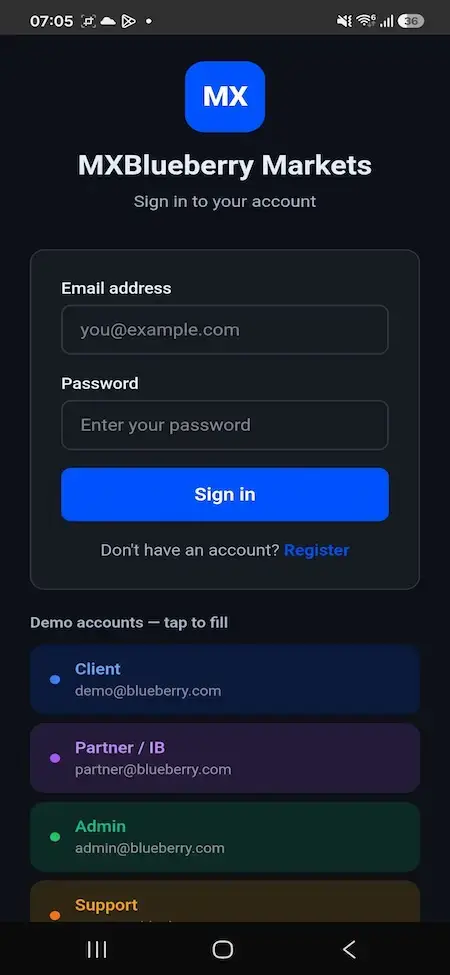
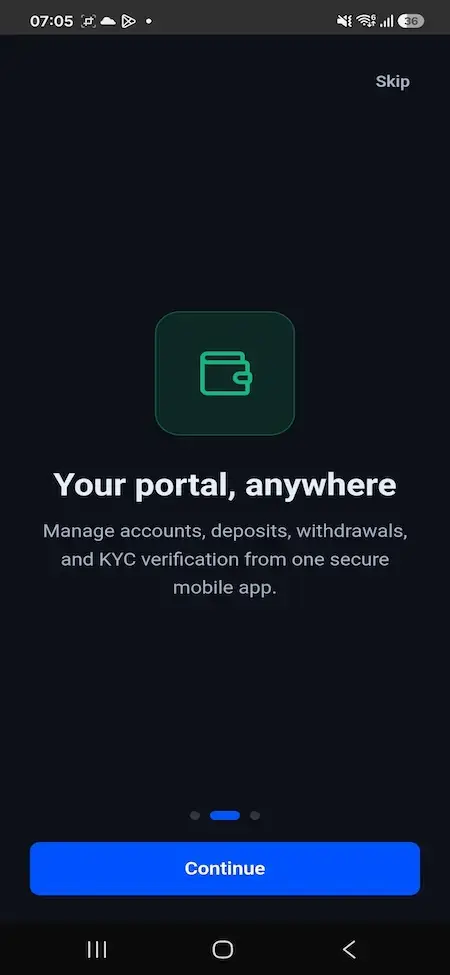
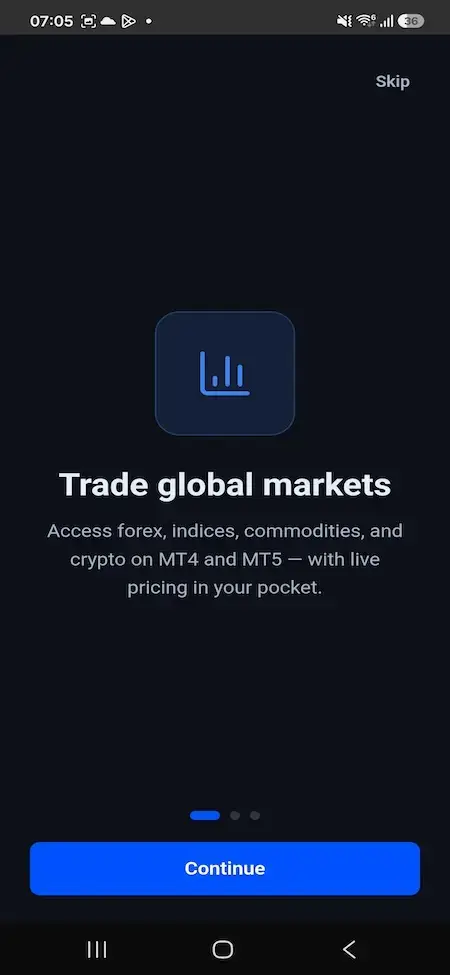

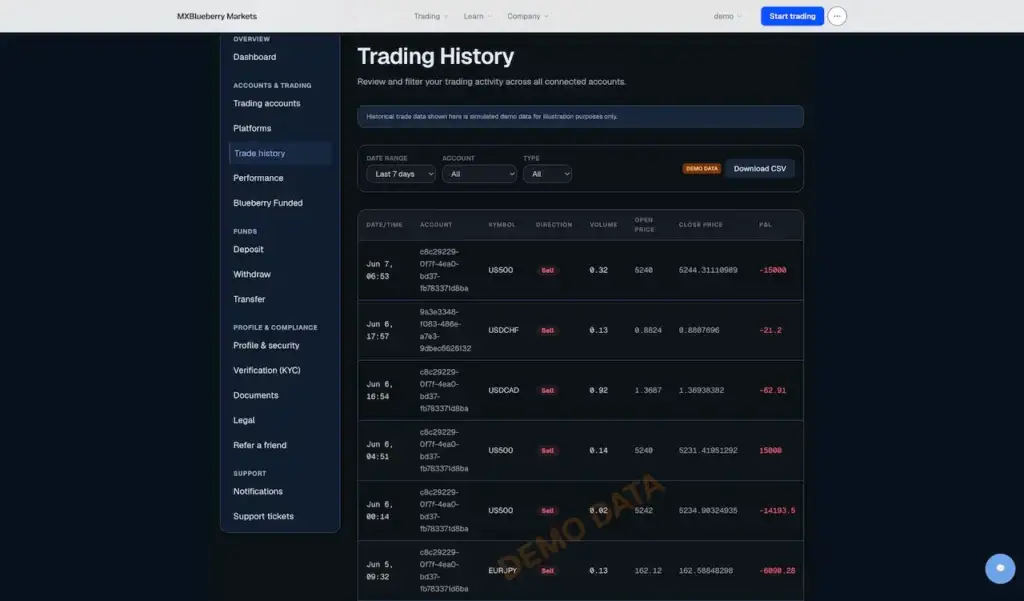
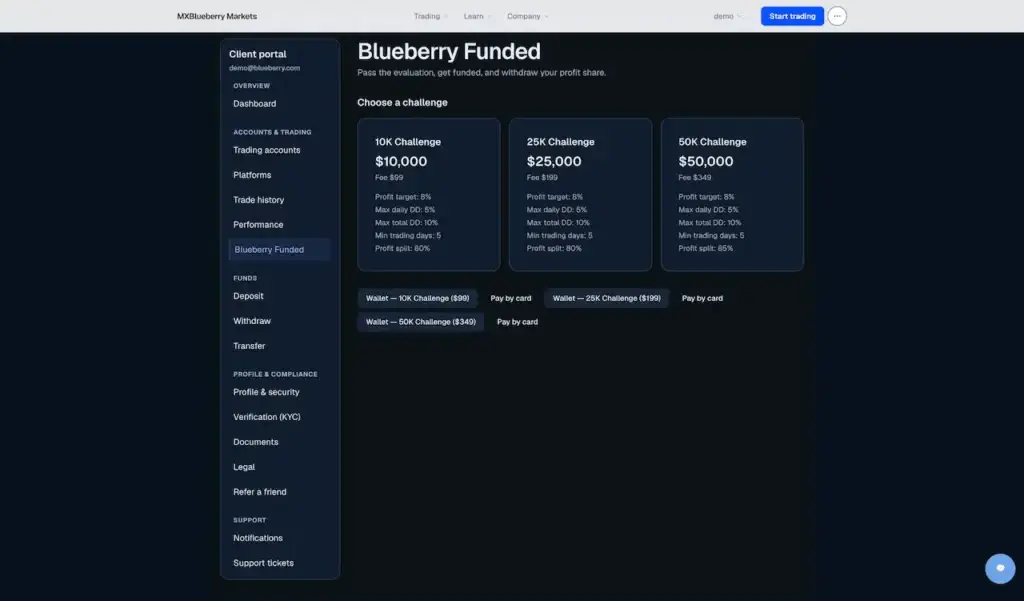
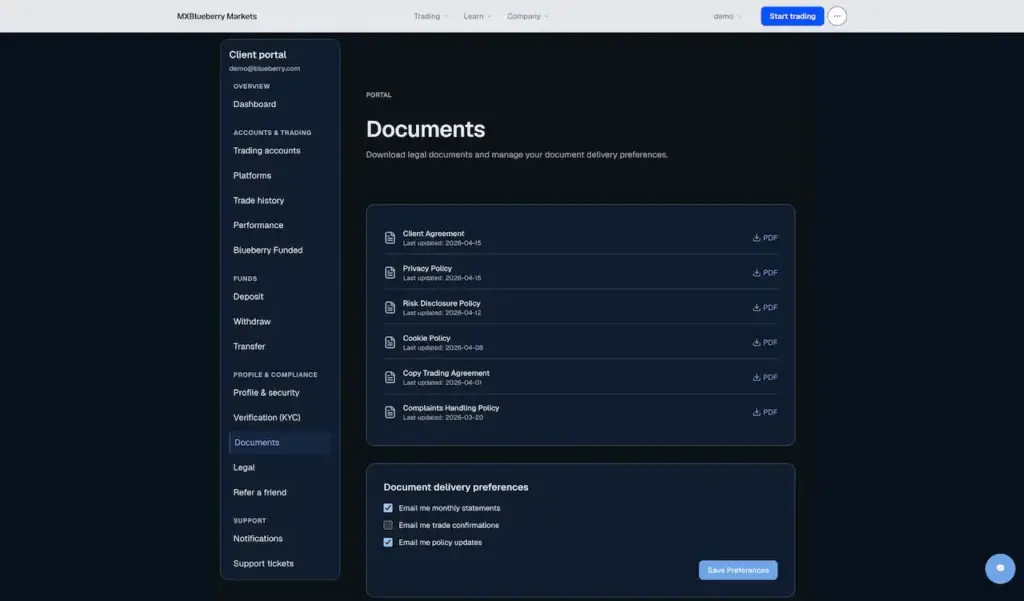
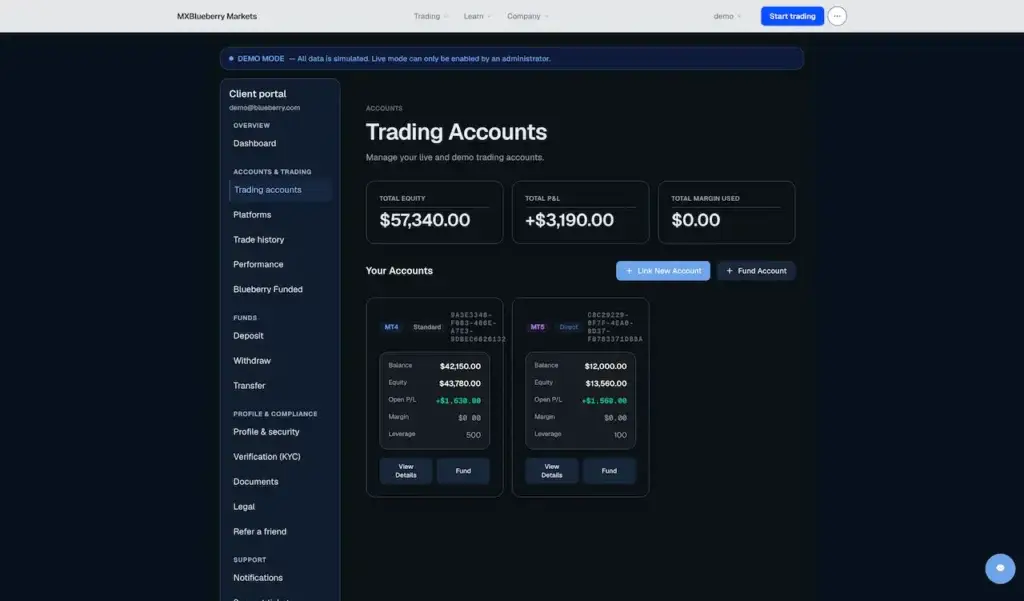
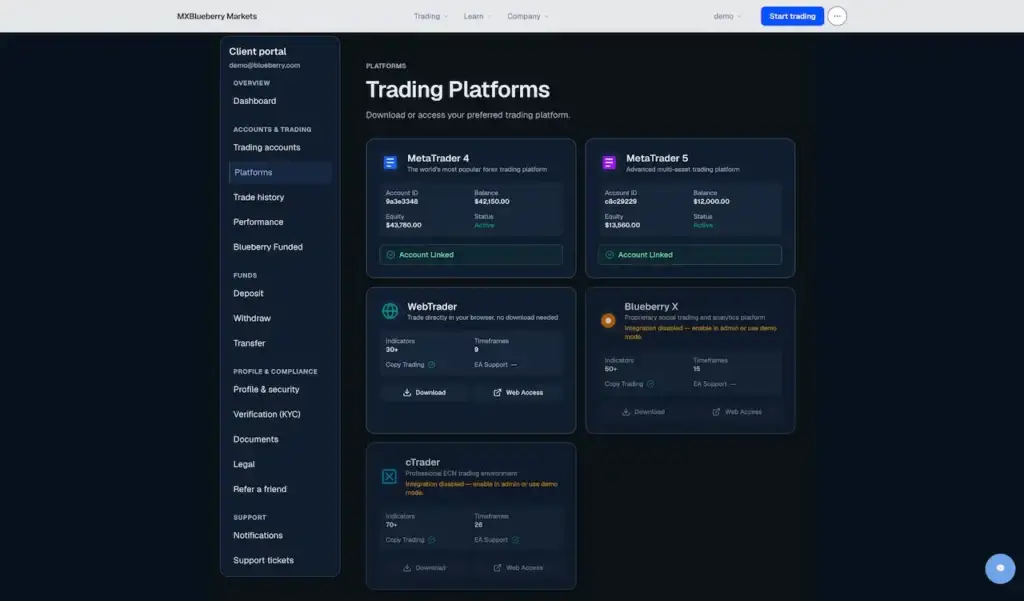
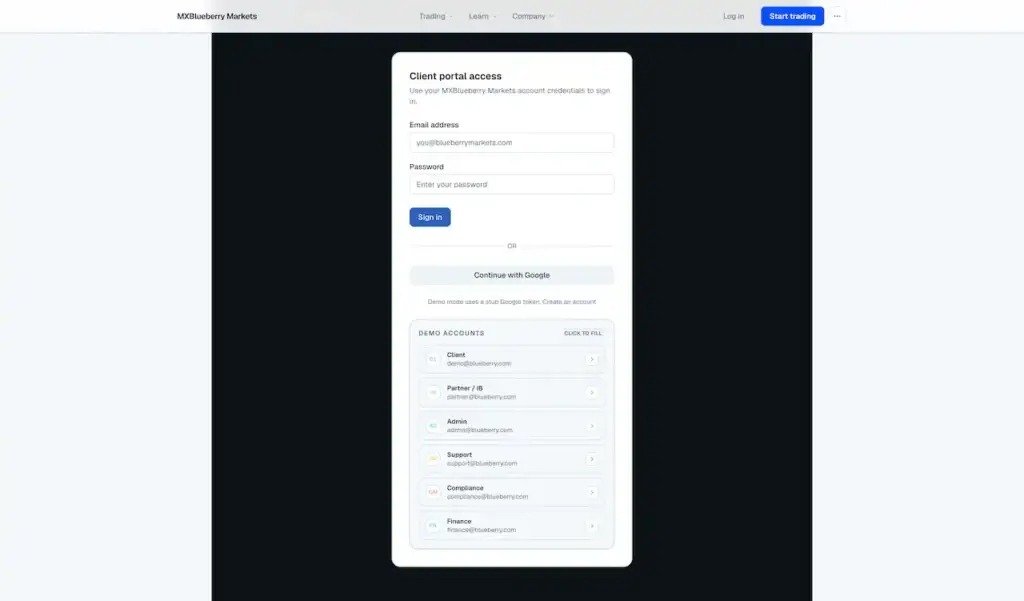
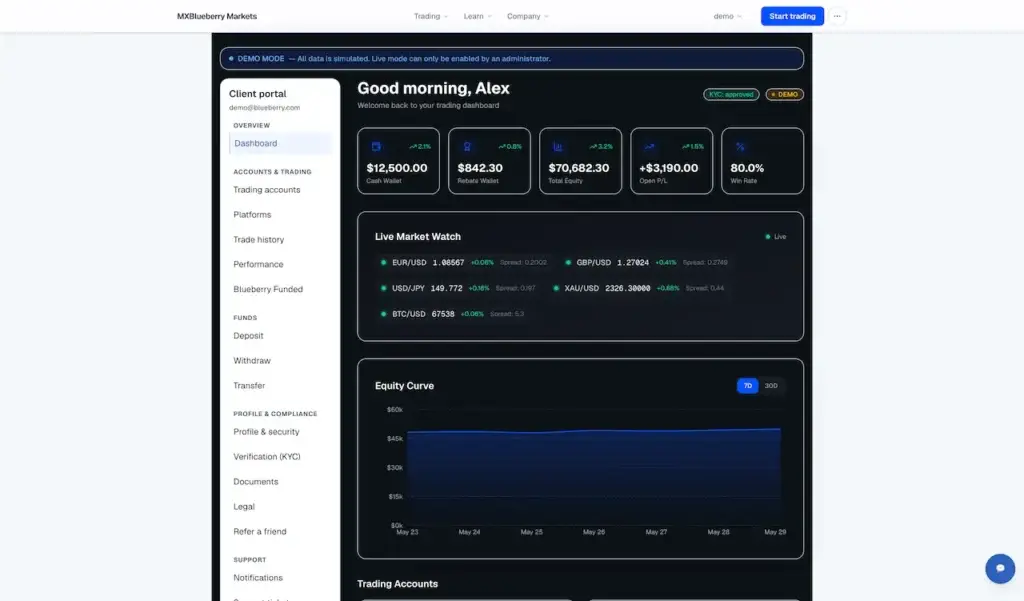
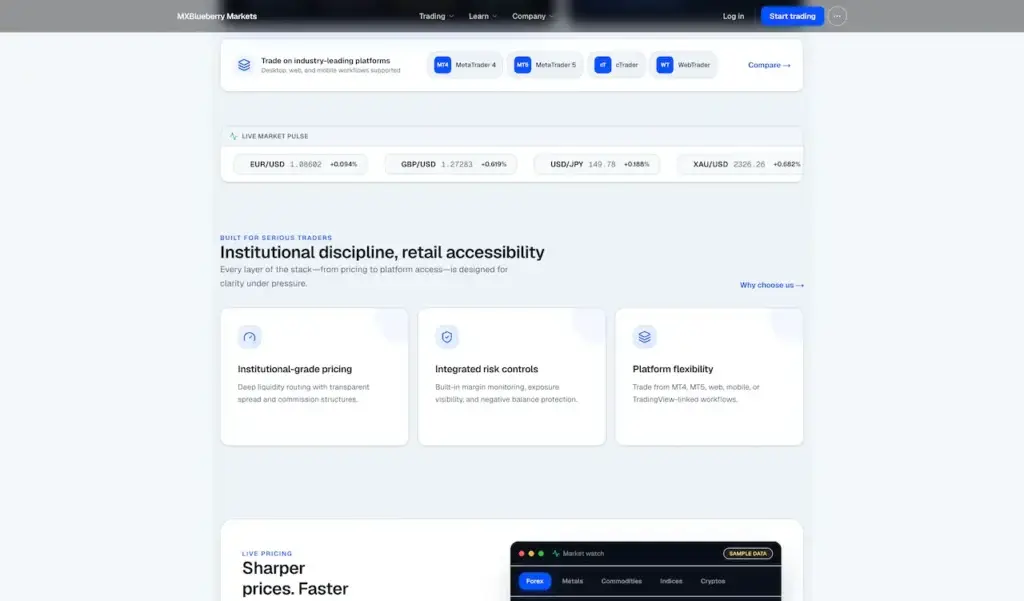
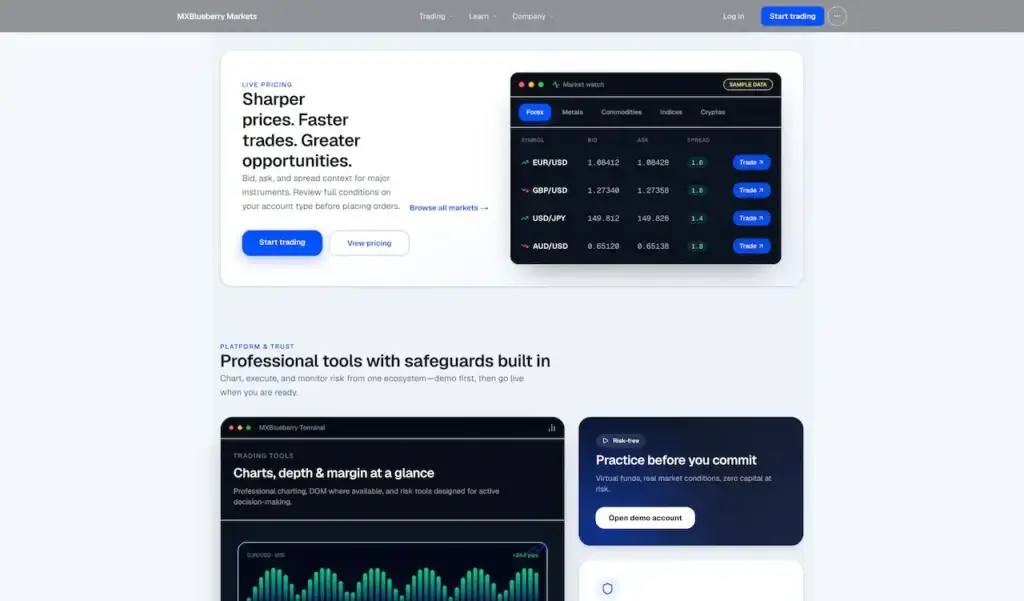
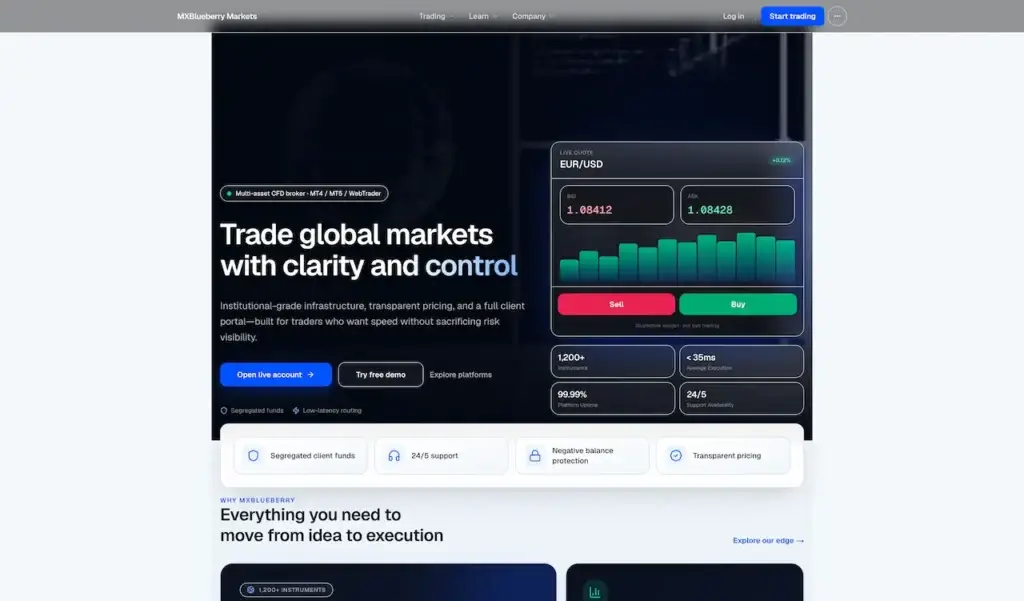
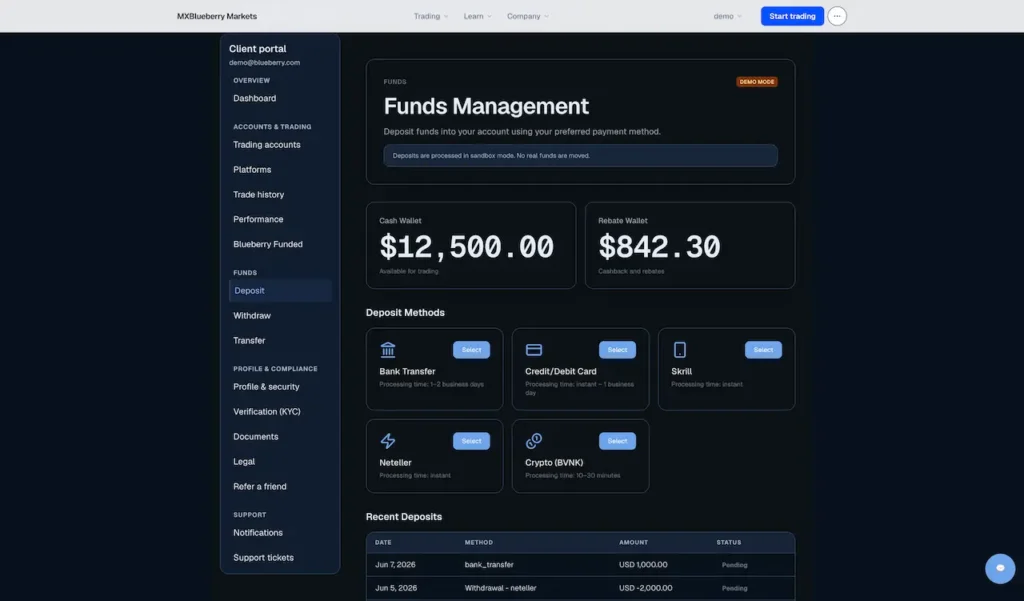
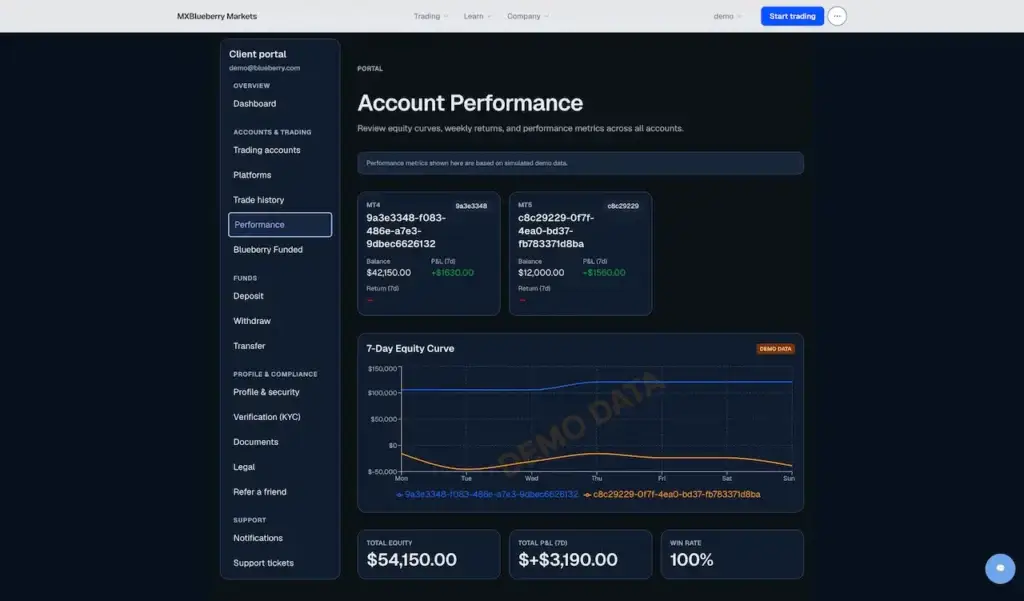
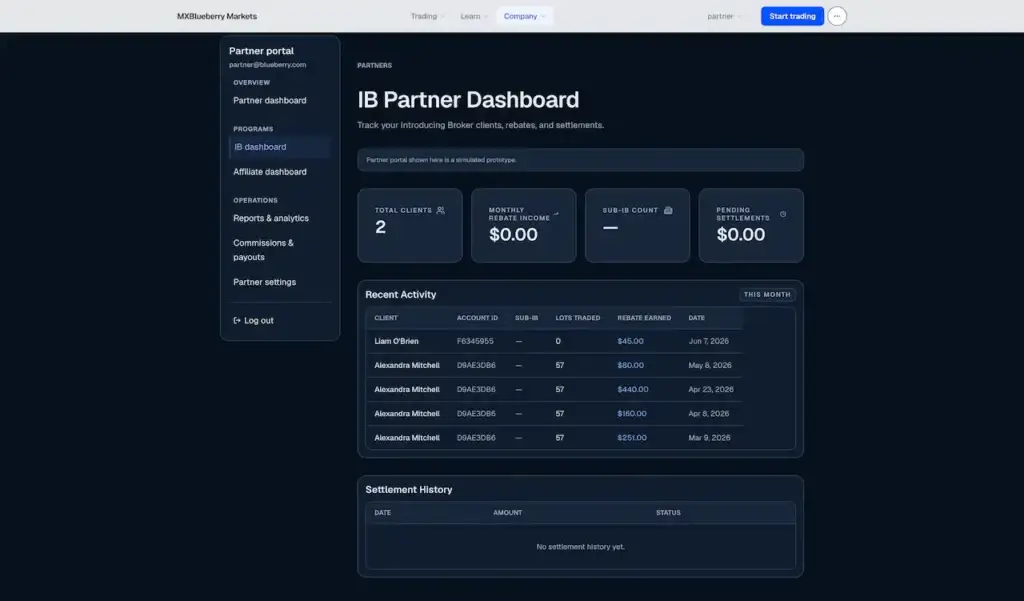
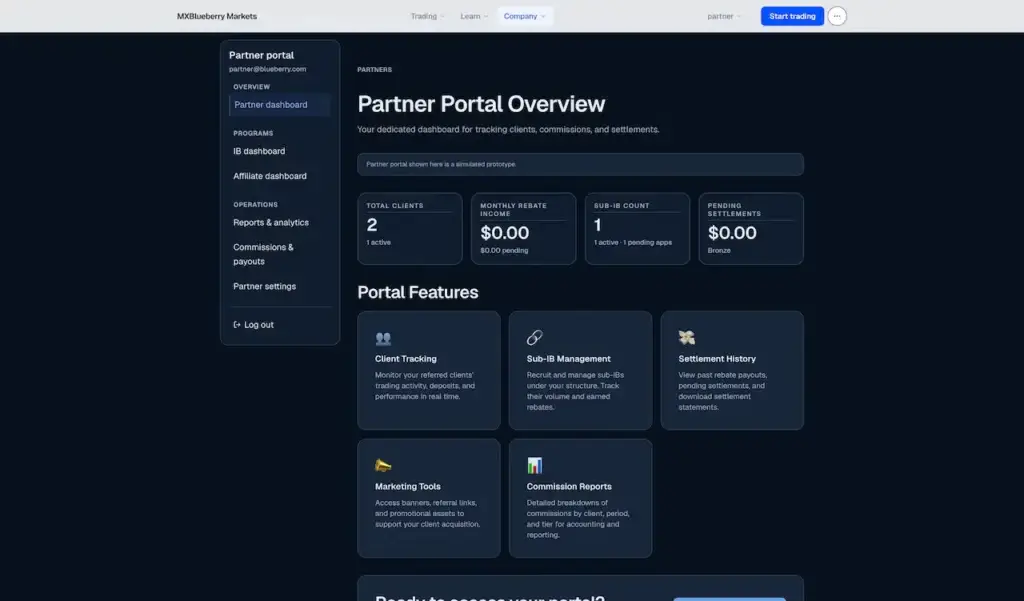
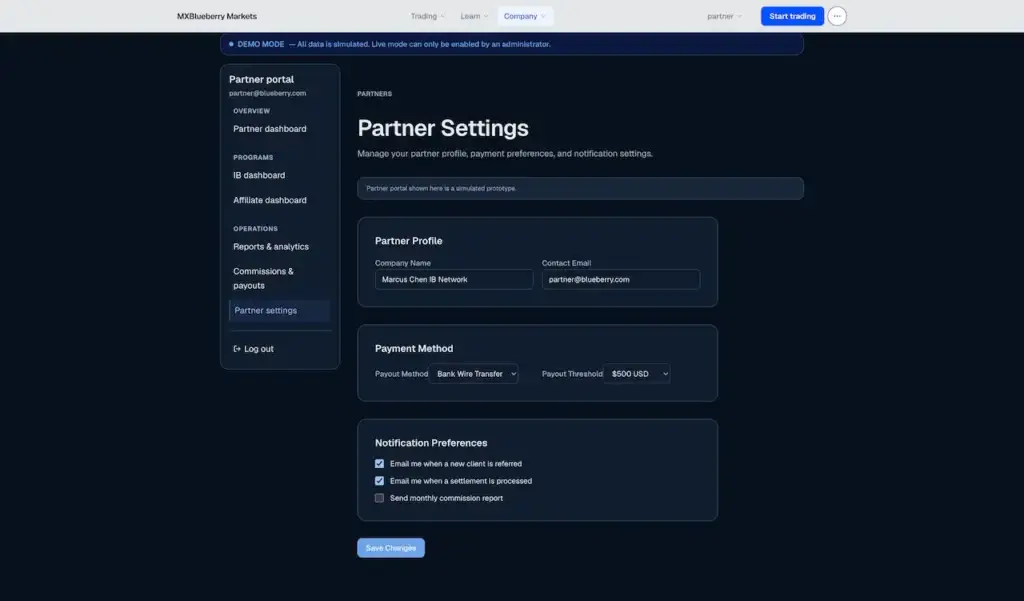
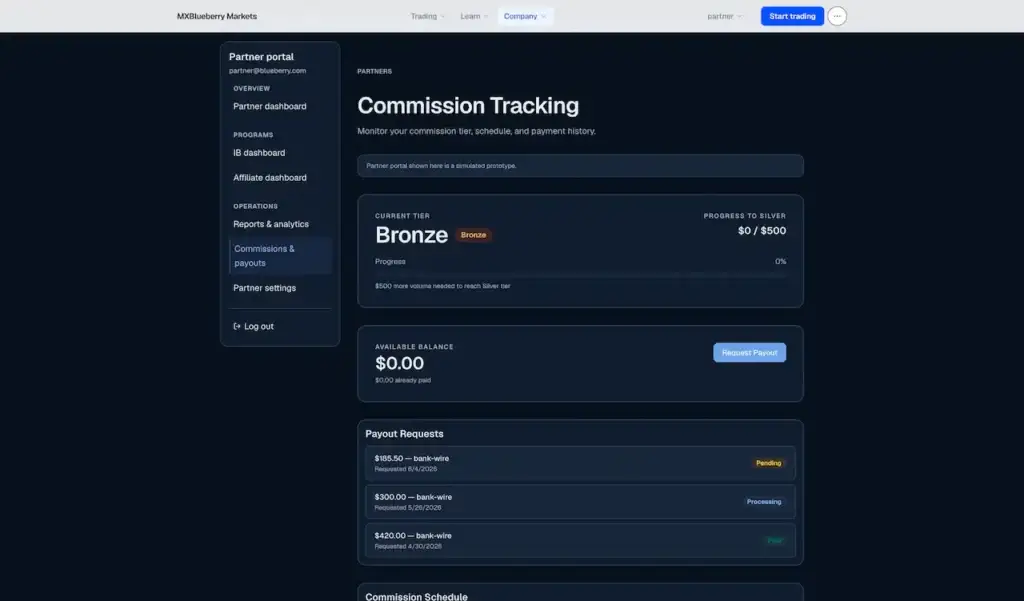
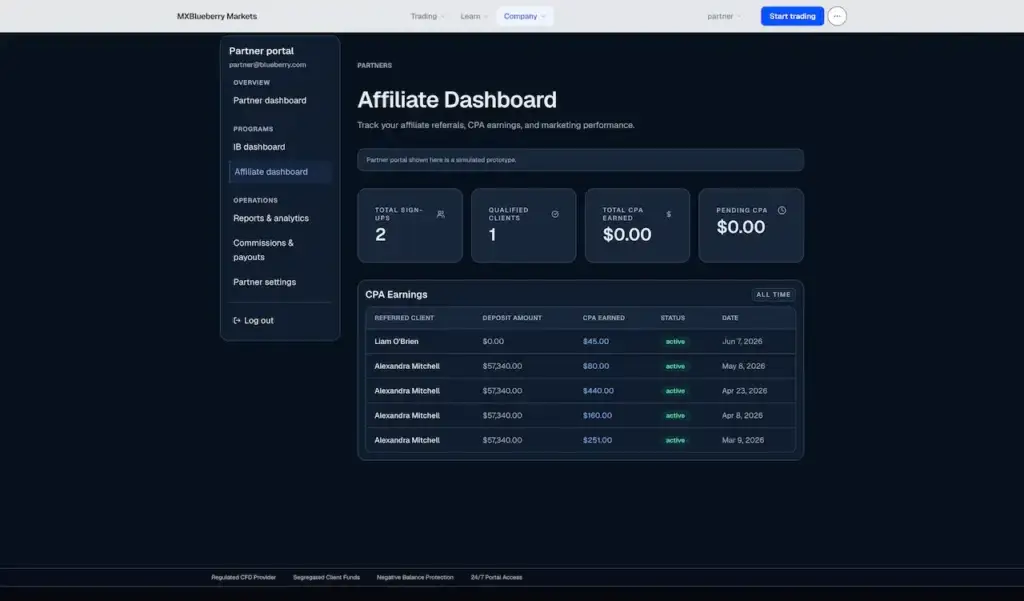
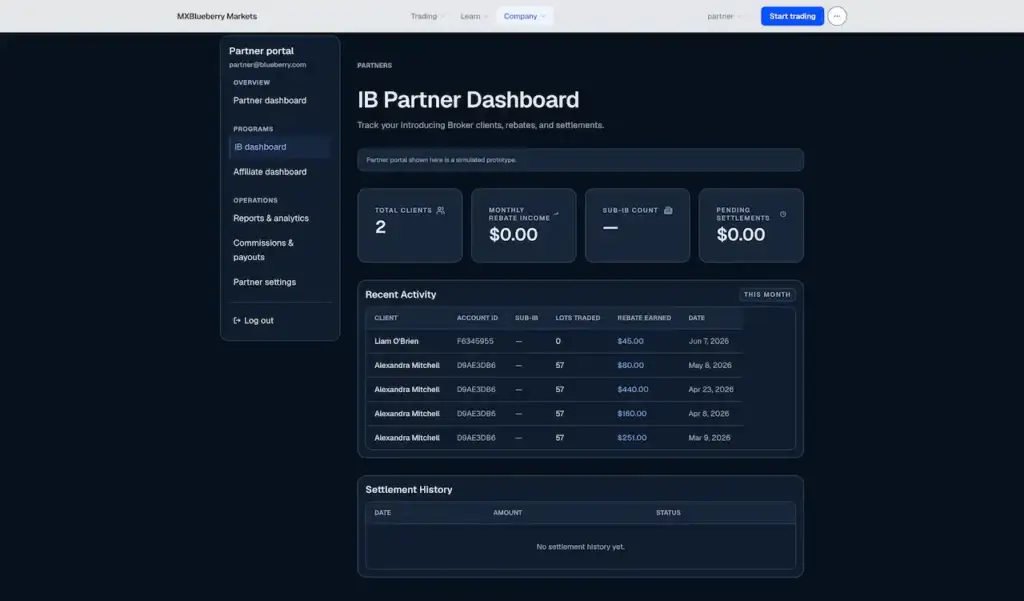
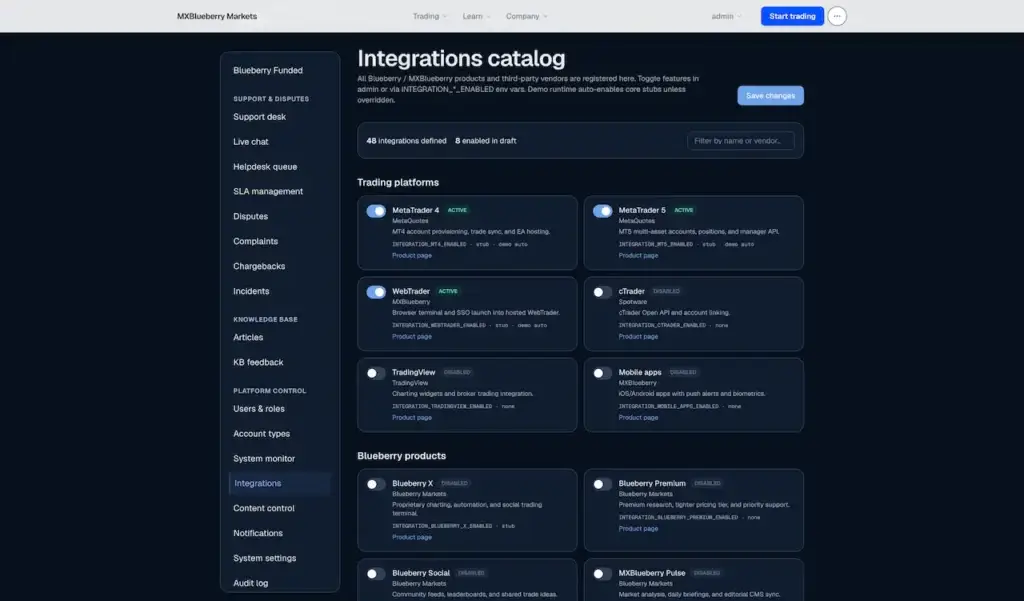
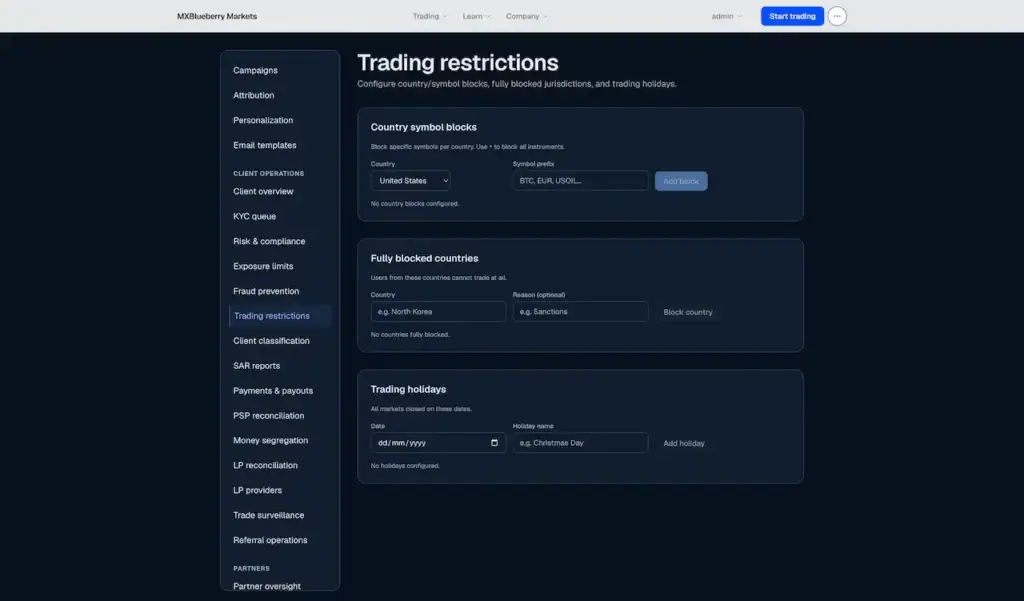
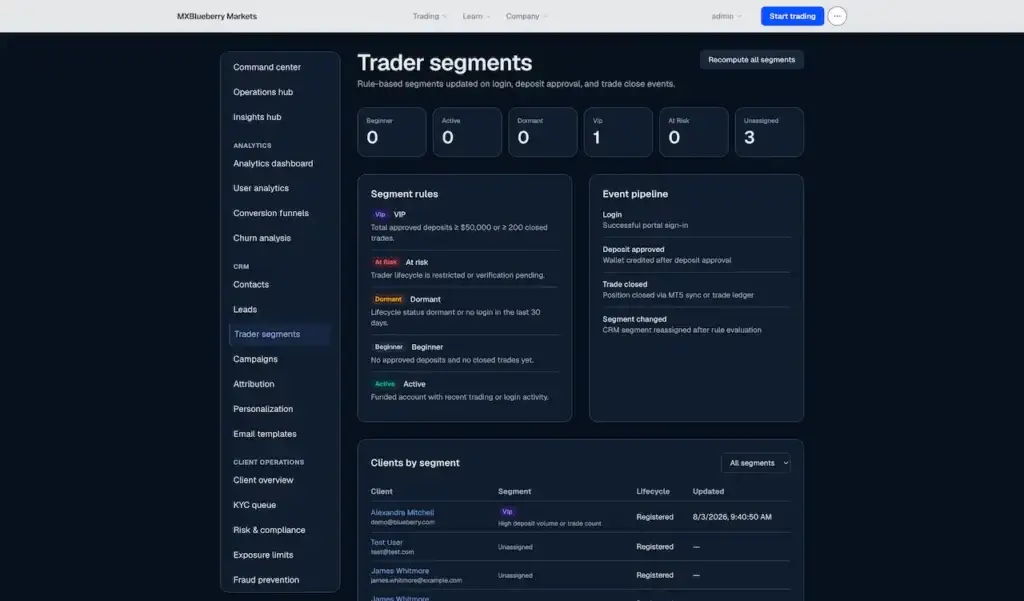
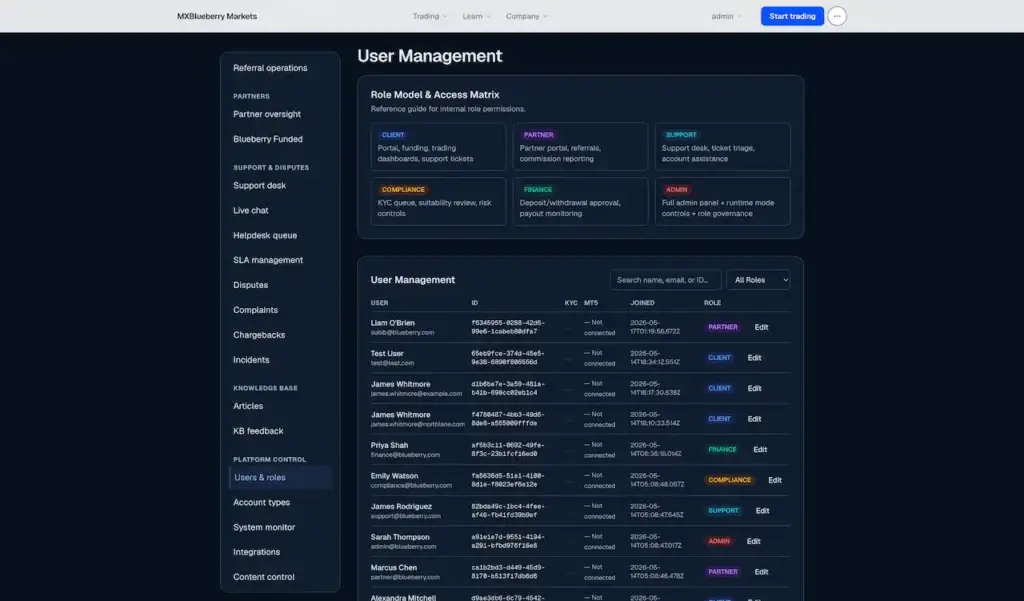
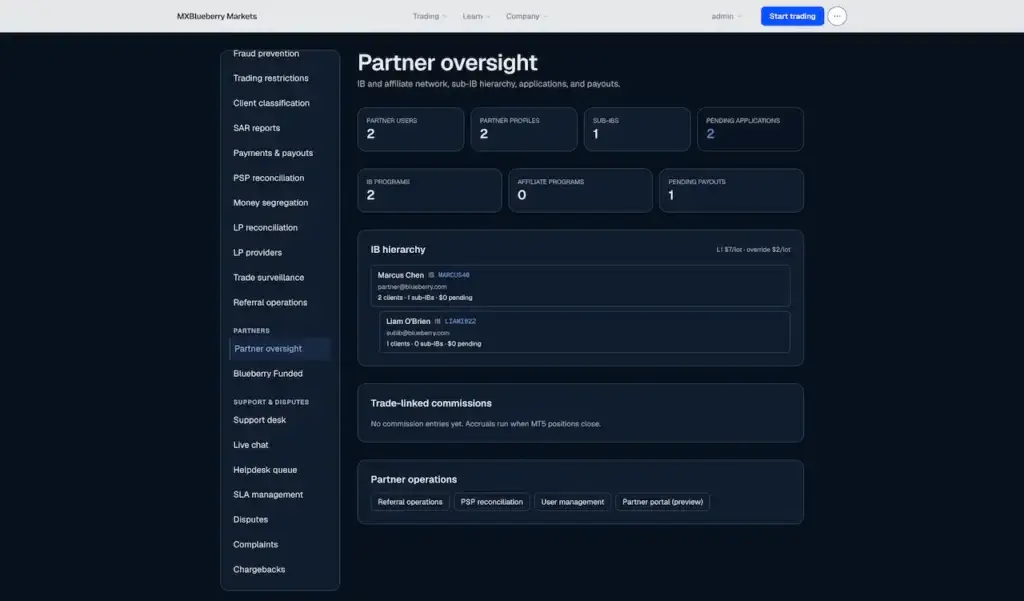
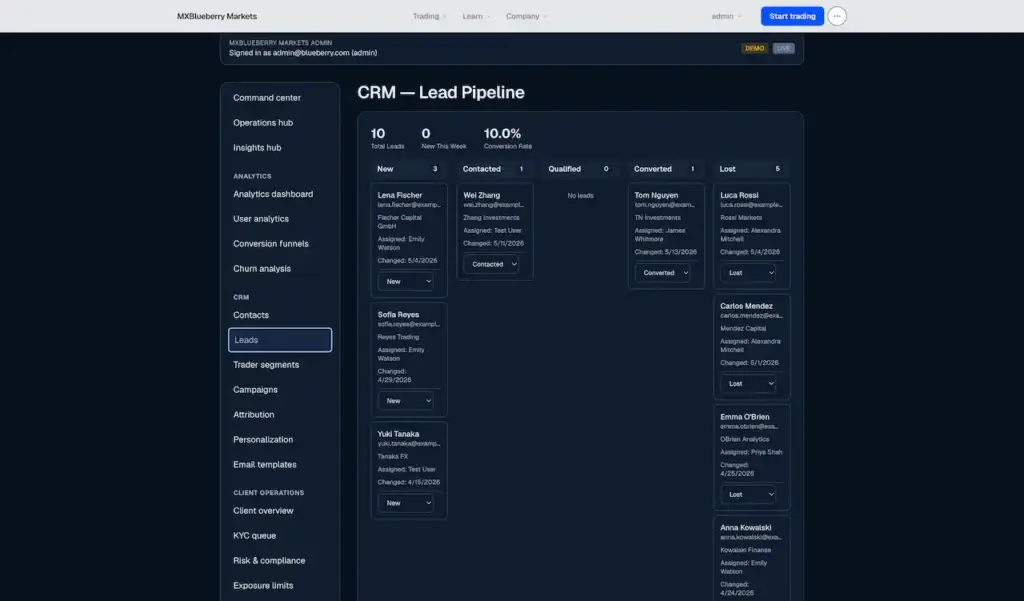
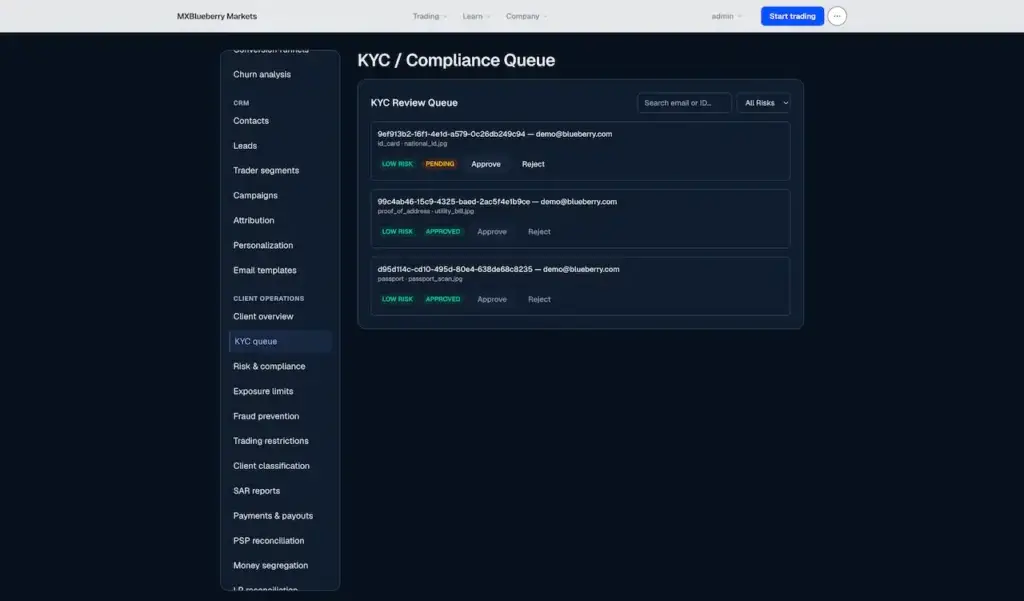
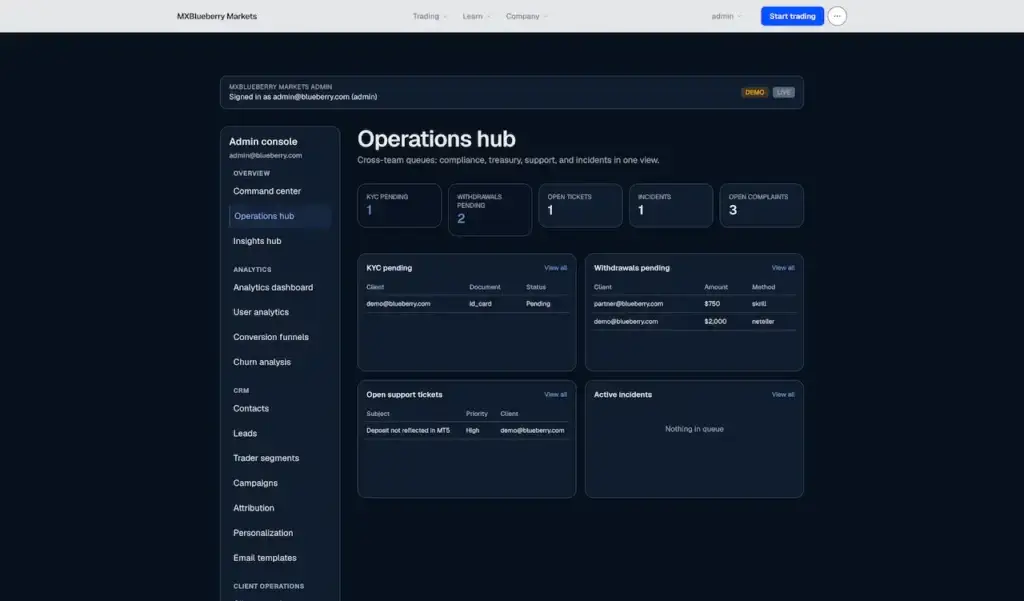
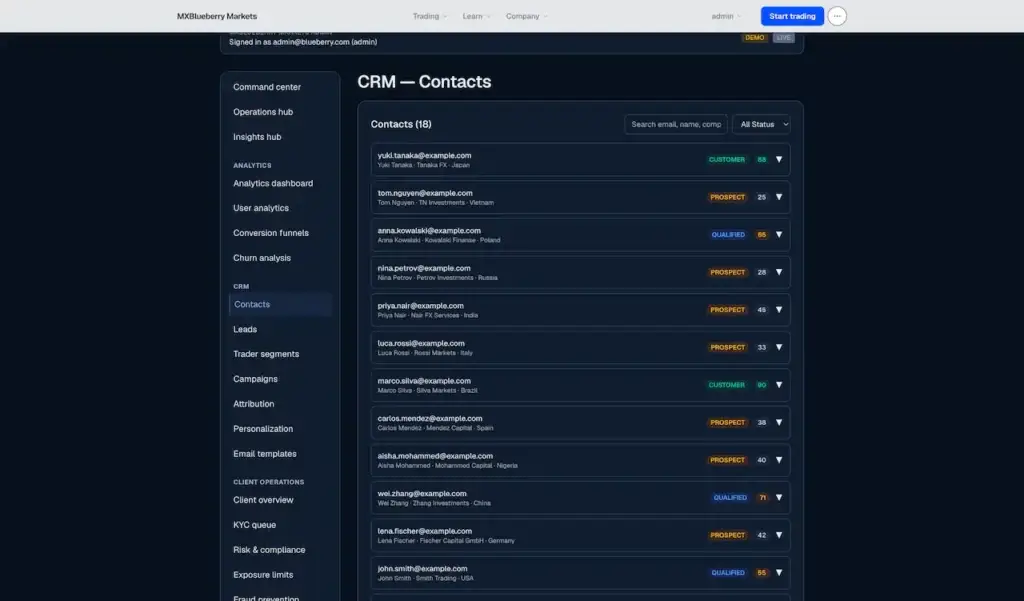
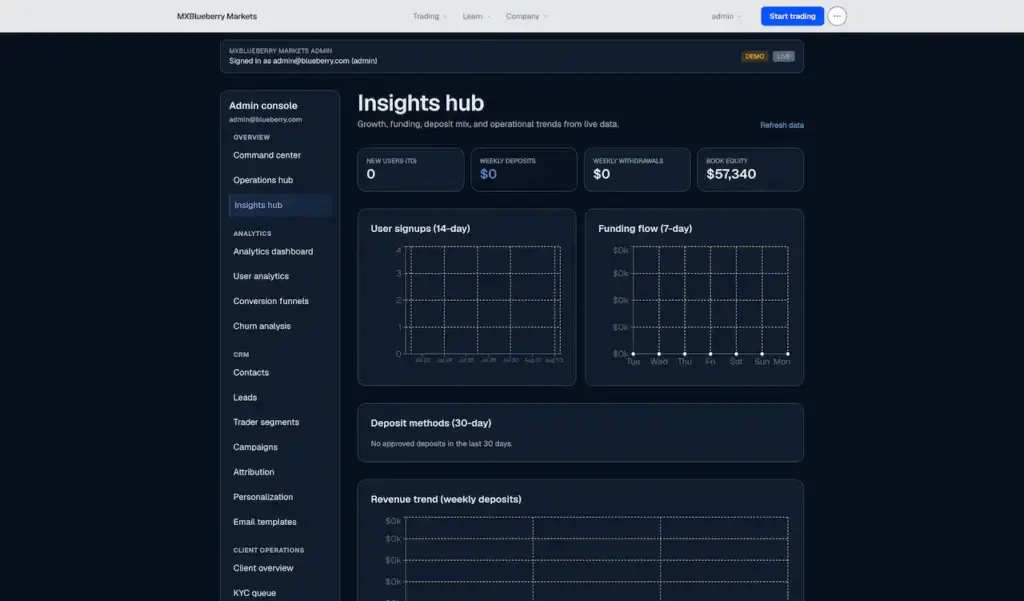
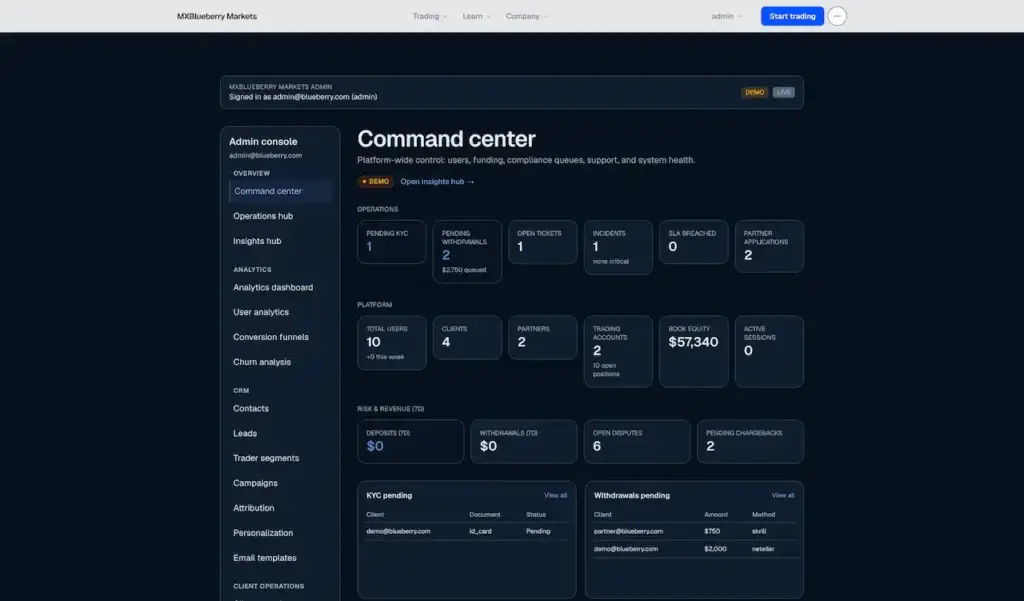
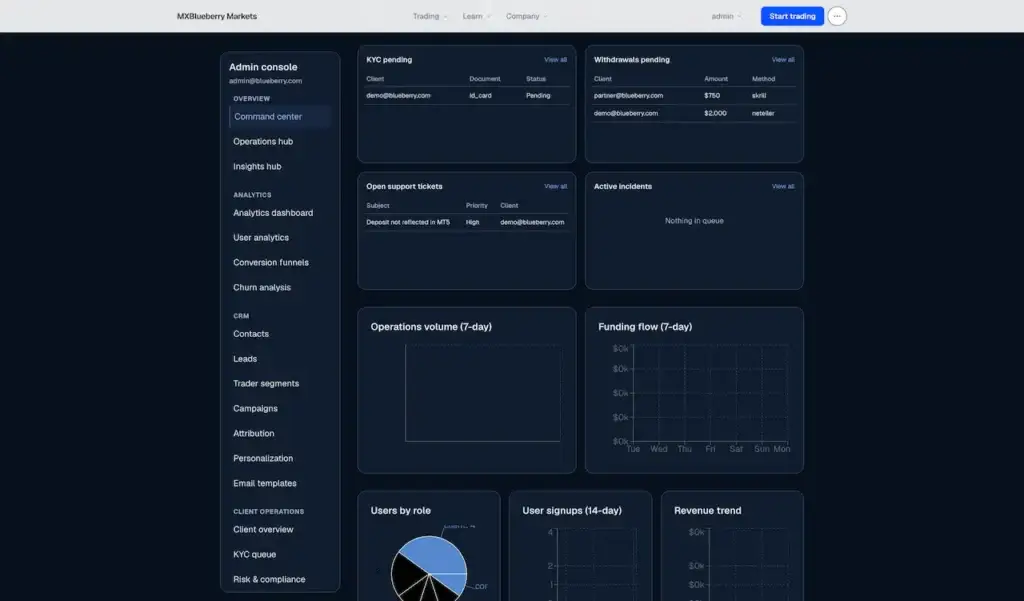
Follow a trader from first visit through KYC to a funded account, a partner from application to first rebate payout, and an operator from KYC queue through to a reconciled withdrawal.
Client Voices
Feedback from brokerage operators who launched with Miracuves. Client identities withheld under NDA.
Proof in Production
How an operator launched a regulated forex and CFD brokerage on the Miracuves Blueberry Markets Clone. Client identity withheld under NDA.
Confidential Deployment
Multi-Jurisdiction Brokerage
A regulated forex and CFD brokerage launched on the Miracuves Blueberry Markets Clone, with a full IB programme and prop desk live from day one.
"The IB rebate tiers and the prop challenges shipped together, which is why we could open both desks at once. Demo mode is how we trained staff before going live."
The Basics
A Blueberry Markets Clone is a ready-made brokerage operations platform – the client portal, funding rails, KYC and AML workflow, partner programme, prop desk, CRM and administrative back office that a forex or CFD broker needs in order to operate.

Execution lives in MT4 and MT5. This is the operational layer around it - onboarding, money movement, compliance, partner payouts and back-office control.
You receive the source, the schema and the content. No per-seat fee, no vendor roadmap dependency, and the database is standard PostgreSQL.
Marketing and admin are complete end to end. Everything touching money, market data or identity runs on simulated data until you connect your own vendors - stated per capability, not buried.
Built for Web, Android & API
What it deliberately is not is a trading terminal. Order execution stays in MT4 and MT5 where your traders already work; the platform provisions those accounts and surrounds them with everything else.

The build ships 93 database tables across 12 domains, 213 API handlers, 50 admin pages and 132 public marketing pages, with six access-controlled roles and a demo-to-live runtime switch.
Everything Included
Every capability below is built and demonstrable in the live demo. Where a feature needs a vendor contract before it moves real money or real identity data, that is stated against the feature rather than implied away.
Equity, wallets and watchlists in one view, with MT4 and MT5 accounts opened or linked from the portal and trade history reported back. Execution itself stays in the terminal.
Deposits, withdrawals, internal transfers between wallets and currency conversion, with provider webhooks crediting balances automatically once a gateway is connected.
Client document upload with live status tracking, an operator verification queue with recorded decisions, and risk classification applied on approval.
Withdrawal screening in the approval path, suspicious activity reporting, per-client trading restrictions and a fraud rule engine matching transaction patterns.
Tiered rebates on client trading volume, sub-IB hierarchies with downline attribution, affiliate CPA tracking and configurable commission schedules with payout requests.
Priced challenges at three account sizes with daily drawdown checks, pass and fail state transitions, funded-account progression and profit-split payout handling.
Segments, contacts and a lead pipeline alongside campaign scheduling, a lifecycle journey engine and churn scoring that feeds back into segmentation.
Ticket queues with SLA policy and breach escalation, disputes, complaints, incident logging, a knowledge base and a live chat surface.
Eight navigation sections across more than thirty-four operational areas, with role assignment, forty-eight integration toggles and a complete operator audit log.
132 addressable public pages and 93 MDX articles spanning academy, learn, education and market analysis - an organic acquisition asset shipped with the product.
English, Arabic and Chinese with right-to-left handling, plus jurisdiction configuration carrying per-region entities, restrictions and disclosure surfaces.
A Capacitor 8 build across twenty router paths and twenty-one screens, sharing the portal API surface exactly, with iOS available from the same artefact.
Note for buyers: The documentation is explicit about maturity. Marketing, CMS and the admin console are complete. Client portal, partner portal, mobile, order management, market data, funding, prop and compliance are built end to end but run on simulated data until you connect vendors – of 48 integration registry entries, 5 are external today, 12 are stubs including MT4 and MT5, and 31 are catalogue definitions.
How Brokers Earn
A brokerage earns from several places at once, and the platform models each of them separately so an operator can tune one without disturbing the others.
Account types and trading groups carry the pricing structure. What the spread actually is depends on your liquidity provider and account group configuration, so this is deployment-specific by nature.
Priced evaluation challenges at three account sizes generate revenue before a trader is ever funded. The pricing, rules and drawdown thresholds are all operator-set.
Funded traders keep the majority share, with the split configurable per package. The evaluation and payout state machine is modelled rather than manual.
Tiered rebates on client volume, sub-IB attribution and affiliate CPA. The commission schedule is yours to define per tier and per programme.
Deposit pass-through and withdrawal fees are policy per method, set by the operator rather than hard-coded, so you can absorb or pass on provider costs.
A premium account upsell alongside client refer-a-friend earnings, both crediting through the same wallet ledger the rest of the platform uses.
Some streams are deployment-specific by nature – spread and commission depend on your liquidity arrangement and account groups rather than on software. Those are marked as such rather than presented as shipped revenue.
Run It Without a Dev Team
Fifty pages across eight navigation sections, covering more than thirty-four operational areas. Access is scoped by role at the area level, so support, compliance and finance each get a genuinely different console rather than a hidden menu.
Platform-wide KPIs, recent activity and the queues that need attention today - the landing surface an operations lead opens first each morning.
Client overview, trading account provisioning, account-type assignment, linked MT4 and MT5 records and per-client trading restrictions.
Deposit and withdrawal queues, approvals, provider webhook history, internal transfers, wallet adjustments and reconciliation.
The document queue with operator decisions, status transitions that unlock trading, and notification back to the client on every change.
Client risk scoring, classification, fraud rule matching on transaction patterns, and automatic blocking with alerting.
Withdrawal screening, suspicious activity reports, trading restriction management and the classification surfaces an auditor will ask about.
IB tier oversight, sub-IB hierarchies, affiliate conversions, commission schedules and payout run approval.
Segments, contacts, lead pipeline, lifecycle journey engine, campaign scheduling and churn scoring feeding back into segments.
Ticket queues with SLA policy and breach escalation, disputes, complaints, incident logs and the knowledge base.
Role assignment, forty-eight integration toggles, site settings, feature flags, jurisdiction configuration and the audit log.
Need deeper governance? Additional regulatory reporting, external audit exports, custom role definitions beyond the six shipped, and single sign-on for operator accounts are the modules brokers most often add. Tell us your regulator and we will scope against it.
Transparent Pricing
Building a brokerage operations platform with Miracuves typically starts from around $9,099 for a launch-ready white-label Blueberry Markets Clone and increases based on jurisdiction count, integration scope, partner programme complexity and regulatory reporting requirements.
Not sure which option
is right for you?
Talk to us - we'll understand your goals, timeline, and budget, and point you to exactly what you need. No upselling, just honest advice.
The Full Package
You receive a complete, deployable platform – the application source, the schema behind it, the marketing and education content, and the documentation a regulator-facing buyer will ask for. Everything transfers with full ownership.
The complete Next.js 16 and React 19 application in strict TypeScript - marketing, client portal, admin console and REST API in one codebase, yours to modify and redeploy.
Ninety-three tables across twelve business domains in standard PostgreSQL, with JSONB settings surfaces for per-deployment extension and no ORM lock-in.
Twenty-five routes covering the dashboard, wallets, account provisioning, funding, KYC, prop enrolment, referrals, support and the notification centre.
Nine routes across IB, affiliate and fund-manager surfaces, with rebate attribution, sub-IB hierarchy, commission schedules and a public application form.
Fifty pages across eight sections with six role-scoped logins, area-level access control, forty-eight integration toggles and a complete audit log.
A branded Capacitor 8 build across twenty router paths and twenty-one screens, sharing the portal API surface. iOS available from the same build.
132 addressable public pages and 93 MDX articles across academy, learn, education and market analysis - content that would otherwise take a year to commission.
ERD, schema guide, API collection, developer and deployment handbook, VAPT and compliance posture, and the per-domain gap matrix stating maturity honestly.
Want to see it running first? Open the demo with any of the six role logins above, or book a walkthrough and we will take you through client onboarding, a partner rebate run and a compliance decision against your own jurisdiction.
Four focused guides - features, cost, how to choose a builder, and how the business model makes money - each going deeper than this overview can.
Every feature by role - client, partner and IB, and operator - across six role-scoped consoles, 50 admin pages, and 93 tables covering 12 business domains.
See the full breakdown →Our fixed $9,099 price vs. white-label providers, custom agencies, and enterprise ranges - plus the 6-day deployment timeline and what actually drives brokerage platform cost.
See exact pricing →White-label provider vs. custom agency vs. Miracuves compared - plus the regulatory-readiness checks to run before you hire anyone.
Compare options →Six revenue lines, the realistic path to first revenue, and the three operator models the platform supports.
See the playbook →Know Your Buyer
The platform suits operators who need brokerage infrastructure with compliance and partner economics already modelled – the parts that take longest to build and are hardest to retrofit.
If your business depends on funded trading accounts, an introducing-broker and partner network, or multi-asset execution carried under your own brand, a Blueberry Markets-style platform becomes a long-term owned asset rather than a front end leased from another provider.
Where It Fits
The same codebase serves quite different businesses depending on which surface an operator leads with. A new broker leans on onboarding and funding; a prop firm leans on the evaluation engine; an IB network leans on rebate attribution. Each is configuration and emphasis rather than a fork.
Forex & CFD Brokerage
Run a full forex and CFD brokerage operation – client onboarding, KYC, funding, account provisioning into MT4 and MT5, and the compliance surfaces that keep the licence intact.
Proprietary Trading Desk
Operate a proprietary trading desk on priced evaluation challenges, with daily drawdown enforcement, pass and fail states, funded-account progression and profit-split payouts already modelled.
IB & Affiliate Network
Build an introducer network where tiered rebates, sub-IB hierarchies and affiliate CPA are attributed correctly and paid on schedule – the operational detail that retains partners.
Multi-Entity Operations
Operate several regulated entities from one deployment, with jurisdiction configuration, per-region restrictions and localized legal surfaces rather than a separate build per market.
White-Label Provision
Deploy branded brokerage instances for client operators, where branding, content, jurisdiction and integration set are all configuration rather than a maintained fork.
Education-Led Acquisition
Lead with education, using the 93 shipped articles across academy, learn and market analysis as an acquisition surface that earns organic traffic while the brokerage matures.
One platform, many configurations. Every use case above runs on the same 93-table schema and the same six roles. What changes is which surface you lead with, the branding and the jurisdiction set – not a fork you then maintain separately.
Market Timing
Retail trading participation keeps widening, and the brokers taking share are the ones whose onboarding, funding and partner economics work smoothly rather than the ones with the tightest spread.
Traders leave over a stuck withdrawal or a slow verification far more often than over pricing. The back office is the retention product.
Introducer networks bring volume, and they judge a broker on whether rebates land correctly and on time. Getting that wrong is unrecoverable.
Evaluation challenges generate revenue before any funding occurs, and the model is now expected rather than novel among competitive brokers.
KYC, AML screening, suspicious activity reporting and audit trails are the licence. Starting with them modelled removes a category of regulatory risk.
Serious brokers operate several entities. Jurisdiction configuration built in beats a separate deployment and codebase per market.
A from-scratch equivalent is most of a year across portal, admin, compliance and partner tooling. A white-label deployment is live on your server in under six days.
Building this layer from scratch is the part that consumes the year – compliance queues, rebate attribution and reconciliation are unglamorous, mandatory and slow to get right.
Under the Hood
Under the hood, a brokerage operations platform needs separation of duties enforced in code, money movement that reconciles, and a demo mode that behaves like production. Here is the stack behind it.
Next.js 16 App Router · React 19 · TypeScript
TanStack React Query · api-adapter
PostgreSQL 14+ · 93 Tables
JWT · bcrypt · Six Roles
Capacitor 8 · Vite · Stripe
MDX · next-intl · 93 Articles
Note for Tech Buyers: liquidity bridges, KYC vendors, payment gateways and market data feeds connect through a typed integration registry with per-deployment toggles, each requiring your own vendor contract and credentials. Every layer above is mainstream and widely hired for, with no proprietary framework and no runtime dependency on Miracuves after handover.
End to End
A brokerage looks simple from the outside and runs on a long regulated pipeline underneath. Here is the path from first visit to a funded, compliant, monetized client.

Most brokerages buy their traffic. This one ships with an organic surface - 132 public pages and 93 education articles across academy, learn and market analysis.

Signup opens a client record and a wallet, then routes documents into the operator verification queue where a decision unlocks trading.

Deposits credit the wallet through provider webhooks, with internal transfers and conversion between currencies handled inside the platform.

The platform provisions and links MT4 and MT5 accounts, then reports history and performance back into the portal. Execution itself stays in the terminal.

Two revenue engines run alongside the core brokerage - evaluation challenges on one side, introducer rebates on the other.

Every withdrawal passes screening before it reaches finance, and every operator action lands in the audit log a regulator can read.
Visual Flow Diagram
Register → Verify KYC → Fund → Trade on MT4/MT5 → Partner Rebate → Withdraw
How It's Built
Marketing, client portal, admin console and the REST API all ship from a single Next.js application, so there is no drift between what the site says and what the platform does.
Six roles map to permitted operational areas rather than to hidden menu items, which is why a compliance login genuinely cannot approve a payment.
A single data adapter switches the whole platform between simulated and live sources, which is what makes full-fidelity demos and operator training possible pre-launch.
Forty-eight vendor definitions with per-deployment toggles and an environment-key pattern, so enabling a provider is configuration rather than a code change.
Deposits, KYC decisions, SLA breaches, fraud matches, referral credits and prop evaluations all fire from platform events rather than manual operator polling.
Operator actions write to an audit log, money movement reconciles against provider records, and prop evaluation state is derived rather than hand-set.
Performance Targets
The platform is built for a growing retail brokerage rather than a tier-one institutional desk, and the architecture is deliberately conventional so that scaling it is ordinary infrastructure work rather than a rewrite.
The surfaces a regulator asks about exist as data rather than as process documents, which is what makes an audit answerable by query.
The compliance layer covers:
Introducer networks leave over incorrect rebates faster than over anything else, so attribution is modelled rather than calculated in a spreadsheet each month.
The partner engine covers:
Access control is the part auditors actually test, so it is enforced at the area level rather than by hiding navigation.
The six roles divide as follows:
A brokerage back office grows headcount fast unless the recurring work is event-driven from the start.
Automations shipped include:
The queues operators live in - KYC, withdrawals, tickets, partner payouts - run against indexed access paths rather than table scans.
Webhooks, scheduled jobs and rule matches drive the recurring work, so operational load grows more slowly than client count.
Wallet balances reconcile against provider records, and every adjustment carries an operator and a reason.
Ninety-three tables organized into clear business domains, so extending one area does not require understanding all of them.
Demo and live modes are switched at the data layer, so training and sales demos never touch production vendors.
Managed PostgreSQL, read replicas and standard Next.js hosting - no exotic infrastructure to operate or hire for.
Every brokerage ends up needing something specific to its jurisdiction or its partner model. The stack is conventional so that extending it is ordinary work.
Adding a capability is a migration, a route and a page. Next.js, React, TypeScript and PostgreSQL are all widely hired for, with no proprietary framework in the way.
Note for founders and operators: You can launch lean and scale the same deployment. What changes as volume grows is instance sizing, read replicas and provider capacity – not the architecture underneath.
Built to Be Audited
Security posture is documented against the OWASP Top 10, with a dedicated VAPT and compliance document supplied for review. For a brokerage the sharper question is separation of duties, and that is enforced in code rather than by policy.
OWASP-Oriented Mapping
Documented Gap Matrix
Fraud Rule Engine
Data Protection Posture
Deployment Hardening
Regulatory Reporting Extension
Compliance cannot approve payments, finance cannot alter KYC decisions, support can touch neither. Enforced at the area level, which is what an auditor will test.
Every privileged action is recorded with actor, target and timestamp, giving a queryable answer to who changed what and when.
Withdrawals are screened before reaching finance rather than reviewed afterwards, so the control sits in the path rather than beside it.
Signed JWTs with bcrypt password hashing, plus two-factor authentication available on client accounts.
Every form and API write passes schema validation before touching the database, closing the malformed-input class of problem.
Per-region entity configuration with restrictions and disclosure surfaces, so a single deployment can serve markets with different rules.
Where hardening is deployment-governed – vendor credentials, network policy, production secrets, regulatory reporting – the documentation lists it as a checklist rather than implying coverage.
Go Further
Out of the box the platform is complete as an operational layer and fully demonstrable. The modules below are what turn a demo-mode deployment into a live regulated brokerage, plus the extensions operators most often add afterwards.
MT4 and MT5 are registry entries at stub level today. Live account provisioning, position sync and trade reconciliation need a bridge and an LP session configured to your arrangement.
Stripe, Skrill and Neteller webhook handlers ship in the codebase. Live money movement requires your own merchant contracts, credentials and settlement configuration.
The verification queue, risk scoring and screening workflow are complete. Automated identity and sanctions checking requires connecting a vendor to the existing provider pattern.
Watchlists and instrument catalogues run on simulated prices in demo mode. Real-time pricing requires a market data contract wired into the same adapter.
The audit and compliance data model supports it; the specific formats your regulator expects are built per jurisdiction as a scoped module.
Android ships with the base product. The same Capacitor build produces iOS, making it an additive step rather than a second codebase.
Segments, campaigns and a journey engine ship in-product. Connecting an external marketing automation platform or a data warehouse is an integration.
Single sign-on for operator accounts, custom roles beyond the six shipped, extended retention policy and data residency for deployments where procurement sets the terms.
The Blueberry Markets Clone is one platform in a complete trading and fintech suite. If your roadmap extends beyond brokerage operations, these connect naturally.

Multi-broker retail trading platform with an algo engine, real-time market data and a seven-language SDK.

Neobank super-app with multi-currency accounts, cards, transfers and an investing surface.

Crypto exchange with spot and derivatives trading, wallets, order matching and market data.

Retail crypto brokerage with custody, fiat on-ramps, staking and a compliance-first onboarding flow.
The Commercial Case
Retail trading participation has widened structurally, and the brokers gaining share are rarely the cheapest. They are the ones whose onboarding completes, whose withdrawals clear predictably and whose introducers get paid correctly – all of which are back-office properties rather than pricing decisions.
Spread, funding fees, prop challenges, profit split, IB rebates and premium tiers - revenue does not depend on a single behaviour or a single client type.
An introducer network scales acquisition without scaling paid spend, provided the rebate engine is trustworthy enough to keep partners.
A modelled compliance layer shortens licensing conversations and survives audits - value that only becomes visible when a regulator asks.
The codebase, the schema and the content are yours. Standard PostgreSQL and a mainstream stack mean no proprietary format to unwind.
Most operators start in demo mode to train the team and record partner walkthroughs, then wire the payment gateway and KYC vendor first because those unblock real deposits. Prop challenges often go live before full liquidity connectivity, because challenge fees are collected through the same payment rails and the evaluation engine runs on platform data rather than on a live bridge.
Defensibility comes from the introducer network and the client relationships rather than from the software. Partners consolidate where rebates are reliable, and clients stay where withdrawals clear. The platform contribution is making sure both of those work from the first month, and that the operation is yours rather than rented from a white-label provider who can change terms.
Example Revenue Scenarios
The commercial argument for owning the operational layer is that it is the part you cannot outsource and the part that takes longest to build. Spread is a commercial arrangement; compliance queues, rebate attribution and reconciliation are a year of engineering.
Emerging Broker
Active Clients
Spread and funding fees carry early revenue while the partner network is still forming.
A new brokerage where onboarding completion and withdrawal reliability decide whether the first cohort stays long enough to matter.
Prop-Led Operator
Active Clients
Challenge fees generate revenue ahead of funding, with profit split following.
A firm leading with evaluation challenges, where the prop engine is the primary product and brokerage is the settlement layer beneath it.
IB-Driven Brokerage
Active Clients
Partner volume dominates, with rebate accuracy determining network retention.
A broker whose growth is introducer-led, where the partner portal is effectively the product that the sales channel experiences.
Why Miracuves
There are many ways to get a brokerage platform: white-label providers, generic scripts, freelancers, or owning the infrastructure.
Six roles with area-level access control, so compliance genuinely cannot approve a payment. Generic scripts hide menus; auditors test permissions.
Tiered rebates, sub-IB attribution and affiliate CPA as real data rather than a monthly spreadsheet reconciliation - the part introducer networks judge immediately.
Priced challenges, drawdown enforcement and funded progression ship with the platform rather than arriving as a phase-two project.
The complete Next.js, TypeScript and PostgreSQL codebase plus 93 content articles are yours to modify and deploy. No per-seat fee, no provider who can change terms.
We hand over a per-domain maturity table covering UI, API, schema and live integration. Most vendors will not show you that; it is the first thing a technical buyer should ask for.
Included, available, configuration required or integration required is stated per capability - including that MT4 and MT5 are stubs until bridged. Nothing surprises you after purchase.
| Criteria | Miracuves Blueberry Markets Clone | Generic Clone Script | Custom Dev Agency |
|---|---|---|---|
| Time to Launch | 6 days (Production) | Unknown / DIY | 6-9+ months |
| Source-Code Ownership | ✔ Full | Often limited / encrypted | Usually yes |
| Feature Depth (Blueberry Markets-like) | High (client portal, partner programme & compliance tooling) | Basic (onboarding & feed only) | Depends on budget |
| Security & Compliance | Strong (ISO mindset, GDPR-ready) | Minimal | Varies widely |
| Scalability & Performance | Cloud & CDN-optimized | Rarely considered | Depends on architecture |
| Monetization Options | Multiple (ads, gifts, subs) | Limited / needs custom work | Custom (more time & cost) |
| Admin & Analytics | Full-fledged dashboard | Very basic or missing | Custom build (extra cost) |
| Cost vs Speed vs Quality | Balanced | Cheap but risky | High cost, slow |
| Ongoing Support & Updates | Available with clear plans | Usually none | Depends on contract |
Not every route to a brokerage platform ends in something you own and can defend to a regulator. Here is where we differ.
Industries
The Blueberry Markets Clone suits any operator running regulated trading relationships. Forex and CFD brokers use the full stack from onboarding through to payout. Proprietary trading firms lead with evaluation challenges and funded-account progression. Introducer and affiliate networks depend on the rebate attribution engine. Multi-entity operators use jurisdiction configuration to serve several regulators from one deployment. White-label providers deploy branded instances per client. Wealth and advisory businesses use the client portal and reporting surfaces. Crypto brokerages reuse the same onboarding, funding and compliance spine. Education-led operators lead with the academy content and convert into funded accounts.
Miracuves’ Blueberry Markets Clone is built as a compliance-first brokerage operations platform adaptable to any regulated trading model – multi-entity where your licences require it, and white-labelled entirely under your brand.
Changelog
| Version | Date | <span style="color: rgb(6, 6, 8); font-family: Montserrat, sans-serif; font-size: 13px; font-style: normal; font-variant-ligatures: normal; font-variant-caps: normal; font-weight: 700; text-align: left; white-space-collapse: collapse; background-color: rgb(255, 255, 255);">What's New</span> |
|---|---|---|
| v2026.1 | Jul 2026 | Initial release - brokerage platform with six role consoles, client portal, IB programme, prop desk, KYC and AML workflow, and CRM. |
Blog & Resources
Stay updated with the latest trends, guides and case studies on brokerage technology, prop trading models and partner programme design.
How Client Account Management Works Around MT4 and MT5 Trading Platforms
Key Takeaways Client Account Management around MT4 and MT5 should connect onboarding, KYC, wallets, trading…
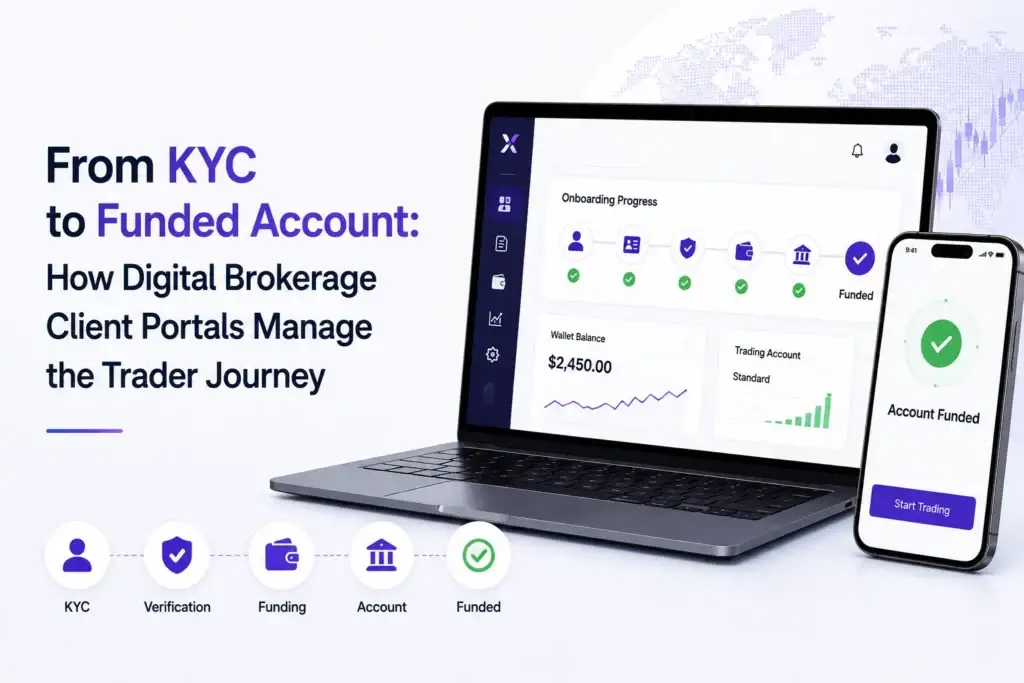
From KYC to Funded Account: How Digital Brokerage Client Portals Manage the Trader Journey
Key Takeaways Brokerage Client Onboarding should connect registration, KYC, AML review, wallet setup, deposit confirmation,…
Best Marketing Strategies to Grow a Blueberry Markets Clone Trading Platform
Last Updated on August 20, 2026 by Ashish Khan Key Takeaways A Blueberry Markets clone…

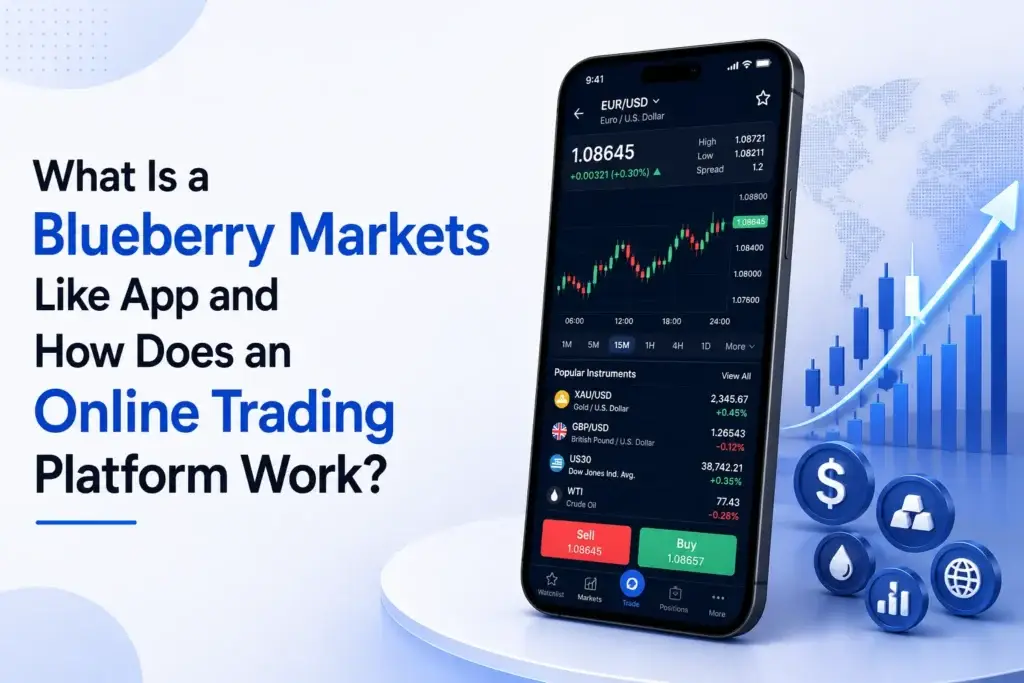
What Is a Blueberry Markets Like App and How Does an Online Trading Platform Work?
Last Updated on August 20, 2026 by Ashish Khan A Blueberry Markets like app is…
Last Updated on August 25, 2026 by sakshi Key Takeaways A ready-made brokerage platform gives…

FAQ
Everything you need to know about the Miracuves Blueberry Markets Clone.
A ready-made brokerage operations platform – client portal, funding, KYC and AML workflow, IB and affiliate programme, prop evaluation desk, CRM and a fifty-page admin console across six role-scoped logins, rebrandable under your own identity.
No, and that is deliberate. Order execution stays in MT4 and MT5 where your traders already work. The platform provisions and links those accounts and surrounds them with everything else a brokerage needs – onboarding, money movement, compliance, partner payouts and back-office control.
The Miracuves Blueberry Markets Clone starts from $9,099 for a launch-ready white-label deployment. Final scope varies with jurisdiction count, integration set, partner programme complexity and any regulatory reporting your licence requires.
Six days from our side. The platform is ready-made, so our work is rebranding it and deploying to your server – that is done in under six days. What sits outside that is anything on your side: brand assets, hosting access, vendor contracts for payments, KYC and liquidity, and your own licensing timeline.
The documentation publishes a gap matrix. Marketing, CMS and the admin console are complete end to end. Client portal, partner portal, mobile, order management, market data, funding, prop and compliance are built with full UI, API and schema, running on simulated data until vendors are connected. Of 48 integration entries, 5 are external today, 12 are stubs including MT4 and MT5, and 31 are catalogue definitions.
Yes, and this is one of the stronger reasons to buy it. A runtime switch runs the entire platform on simulated data, so you can train your operations team, record partner walkthroughs and run sales demos weeks before signing a gateway or liquidity contract.
Tiered rebates calculated on client trading volume, sub-IB hierarchies with downline attribution, affiliate CPA on referred conversions, configurable commission schedules and partner-initiated payout requests – with analytics and CSV export in the partner portal.
Priced evaluation challenges at three account sizes, daily drawdown checks driving pass and fail states, funded-account progression and profit-split payout handling. Challenge pricing, rules and thresholds are all operator-set.
Six roles map to permitted operational areas rather than to hidden menus. A compliance login can decide KYC but cannot approve a payment; finance can move money but cannot alter a KYC decision; support can do neither. You can verify this in the demo with the credentials above.
A branded Android app is included, built with Capacitor 8 across twenty router paths and twenty-one screens, sharing the same portal API surface as the web client. iOS is available as an add-on from the same build artefact.
Yes. You receive the complete Next.js 16 and React 19 application, the PostgreSQL schema across 93 tables, the Android build configuration, and the 93 MDX education articles and 132 marketing pages – with full ownership to modify and extend.
It ships with area-level access control, an operator audit log, AML screening in the withdrawal path, suspicious activity reporting, fraud rules and jurisdiction configuration, documented in a dedicated VAPT and compliance file alongside a published gap matrix. Regulator-specific report formats are scoped per jurisdiction.
Let's turn your idea into
a live platform.
Get a free consultation, a clear timeline, and honest answers. We'd rather earn your trust than rush a sale.
Miracuves is an independent software development company. We are not affiliated with, connected to, sponsored by, or endorsed by Blueberry Markets.
“Blueberry Markets Clone” is used descriptively. It is how the software industry refers to building a platform with functionality similar to Blueberry Markets, and how clients search for it.
The entire design and codebase is built by our own team. The product contains no code, design, graphics, or content originating from the Blueberry Markets website or applications.
Blueberry Markets and all other third-party names and marks are the property of their respective owners, referenced here solely to describe the category of software offered.
Build Your Branded App - Clone or Custom

Envision. Decide. Deploy.
With Perfection in Just 6 Days
90+ readymade clone apps deployed in 6 days. Schedule a Live Walkthrough Now.
Custom development from 15 days. Free consultation
Launch any ready-made solution under your own brand, now at 30% off.
30% off the published price of any ready-made solution. The 6 working days start once your branding, hosting and accounts are ready. We reply in under 2 hours, Mon-Sat.