Etsy Clone App: A Marketplace Built for Many Small Sellers
Miracuves' ready-made, white-label Etsy clone is shaped for many small sellers, with source code for a buyer storefront, a seller panel and app, an operator console and buyer and delivery apps on Android and iOS, yours to own and live in six working days.
Makers register with KYC and wait for approval, listings pass a bulk moderation queue, commission can differ per seller, and payouts run from a withdrawal queue. Quote and made-to-order flows and engraving options are available as add-ons, while all three apps ship on Android and iOS. An options and quote builder is priced as its own scoped project, set out in writing and typically delivered in 2-8 weeks.
Launch in 6 Days with
- Source Code
- Buyer Storefront
- Seller Panel + App
- Buyer App
- Delivery Agent App
- Operator Console
StackFlutter · Laravel 12 · PHP 8.2 · MySQL 8 · Redis 7
Streaming marketplace activity
- Seller registeredSelf-serve signup
- KYC documents in reviewSeller approval queue
- Shop approvedSeller approval queue
- Listings approved in bulkShop item review
- Plan renewedShop plan fees
- Order split by sellerOne cart, many makers
- Commission at seller rateCommission per seller
- Withdrawal processedPayout queue
- 4Commission Levelsplatform-wide, by category, by seller and by product
- 2Listing Gatesoperator approval for each new seller and a moderation queue for every item
- 0%Revenue Share With Miracuvesno slice of any maker's sale, and no per-seat fee
- 1Line That Pays Monthlyseller plans billed whether or not anything sells
- 6Days to Launchand if the delay is ours, we keep going free
- $2,799Paid Once, Not Rentedsource code yours, no per-seat fee, no monthly rental
Live in six working days, or we keep working free until you launch. Every build carries 60 days guidance, 6 months bug fixes and 12 months updates.Verify every figure
Photo Reviews Do the Selling
Buyers attach photographs to their ratings and sellers can reply, while buyer-to-seller chat with attachments carries the custom requests a listing cannot.
Plans Built to Be Outgrown
Seller tiers bundle listing limits, lower commission, featured placement and priority support, with a trial and grace on failed billing, so a small shop starts cheap and upgrades to list more.
Card Fields Live at the Gateway
Eleven gateways, from Iyzico to Mercado Pago, host the card fields on your own merchant credentials, so no card number is stored anywhere and a refund passes a status machine.
01See it live
Live in Action
Etsy Clone Demo: Six Live Front Ends Sharing One Data Set
Miracuves' Etsy clone demo puts six live surfaces on a single database. Sign in below and trace one purchase from start to finish: a buyer places an order with an independent seller, the seller accepts and packs it, then an agent delivers, while the operator tracks commission and payout with the approval queue alongside.
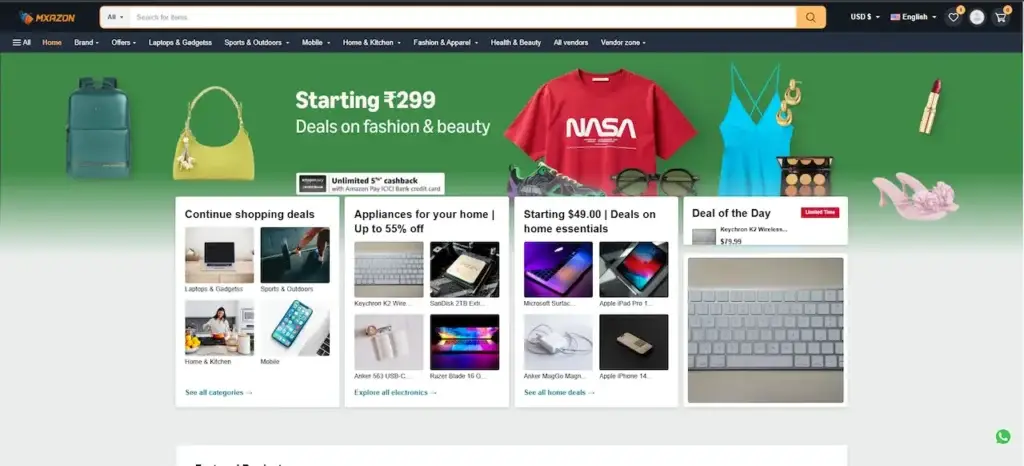
Browse, Load the Cart, Check Out Online
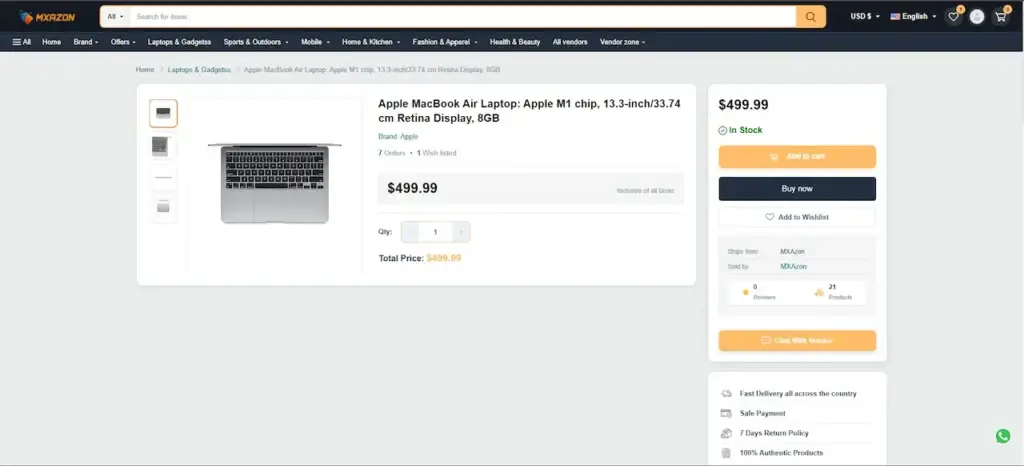
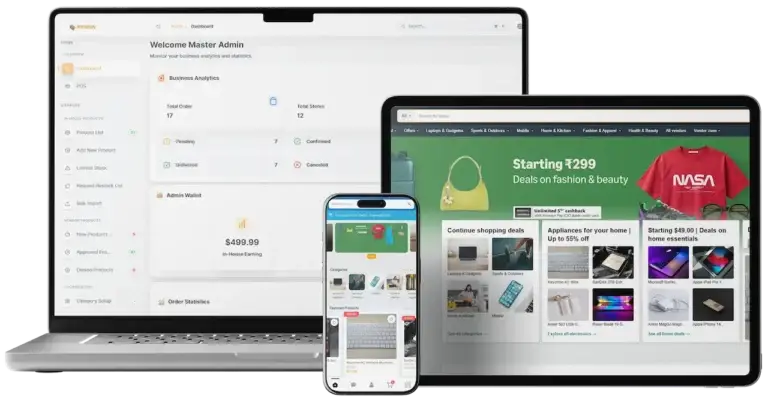
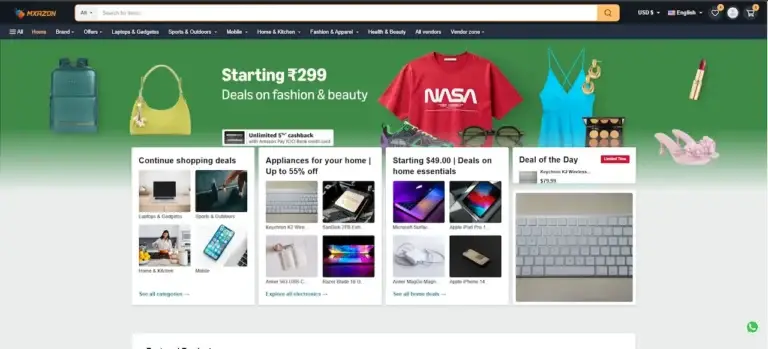
This is the web storefront for buyers. It offers a category tree, a brand directory, filtered search with autocomplete, product pages carrying reviews and the variant matrix, a cart that spans vendors, and a checkout where one order can combine coupon, wallet and loyalty.
- 1Open the storefront and browse a seller shop
- 2Log in as a buyer with the credentials listed below
- 3Trace: Shop, Listing, Chat, Cart, Orders
user@demo.com | User_321
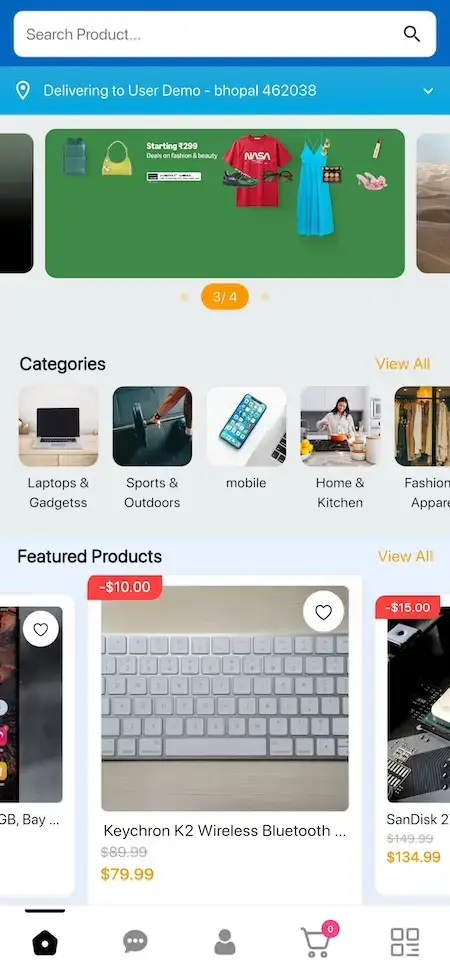
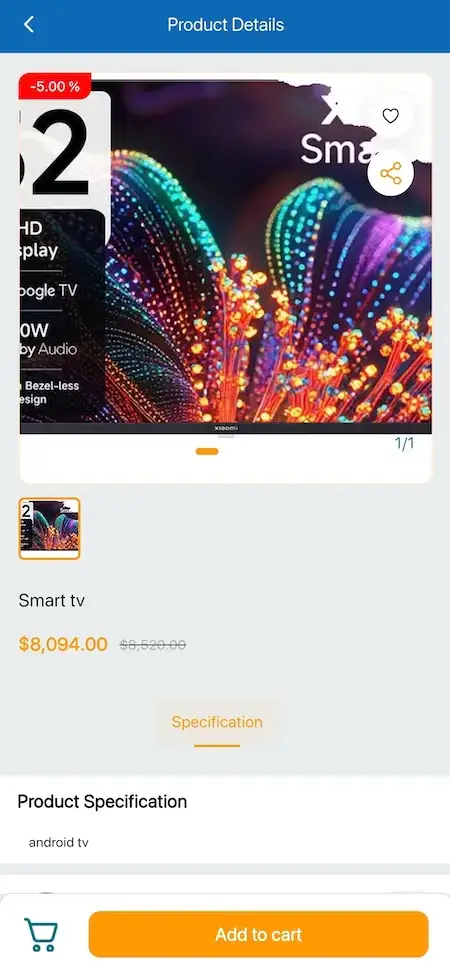
Identical Shop Front on Android
A Flutter app for customers that talks to the very same REST API. It covers category browsing, home rails, search and variant-aware product detail, then cart and checkout, live order tracking, wallet and loyalty, and arrives with push notifications plus a support chat inside the app.
- 1Download the Android buyer app
- 2Log in with the buyer credentials below
- 3Trace: Home, Search, Chat, Cart, Orders
user@demo.com | User_321
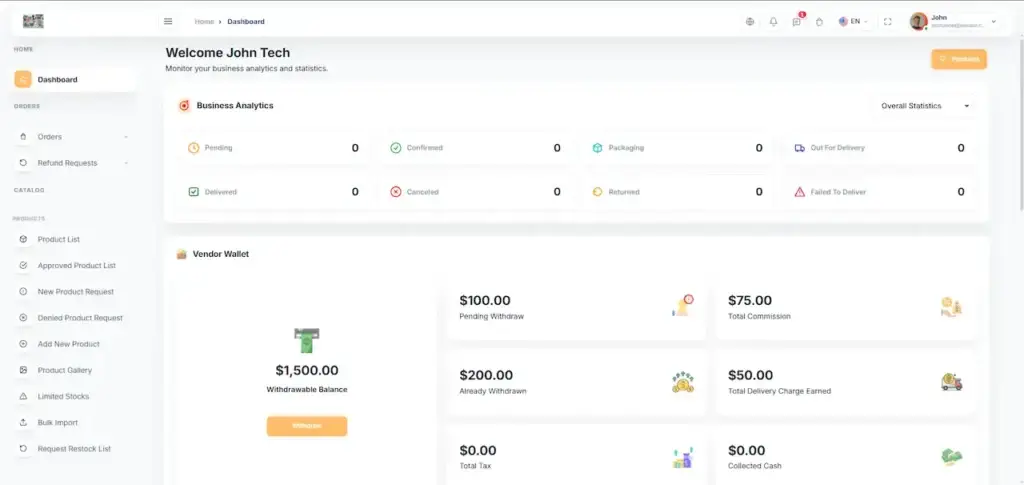
Storefront, Items, Sales and Earnings
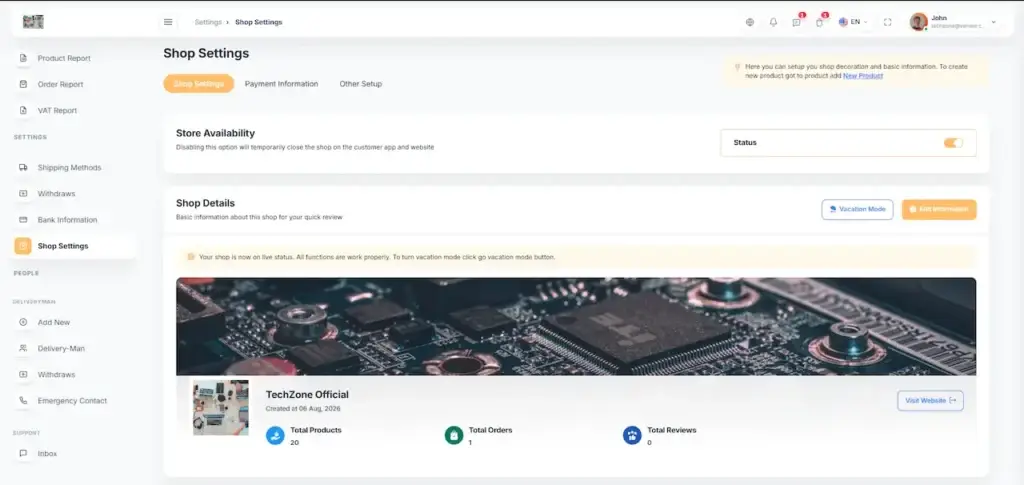
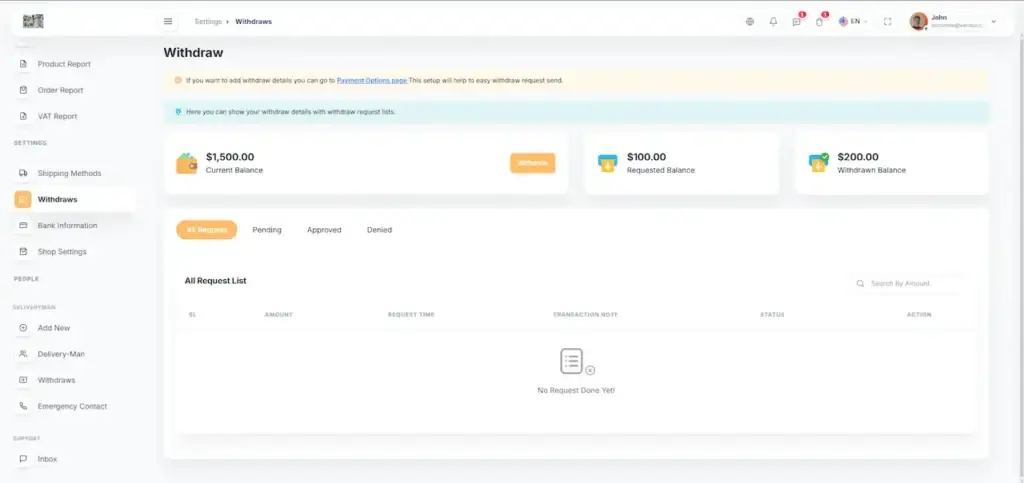
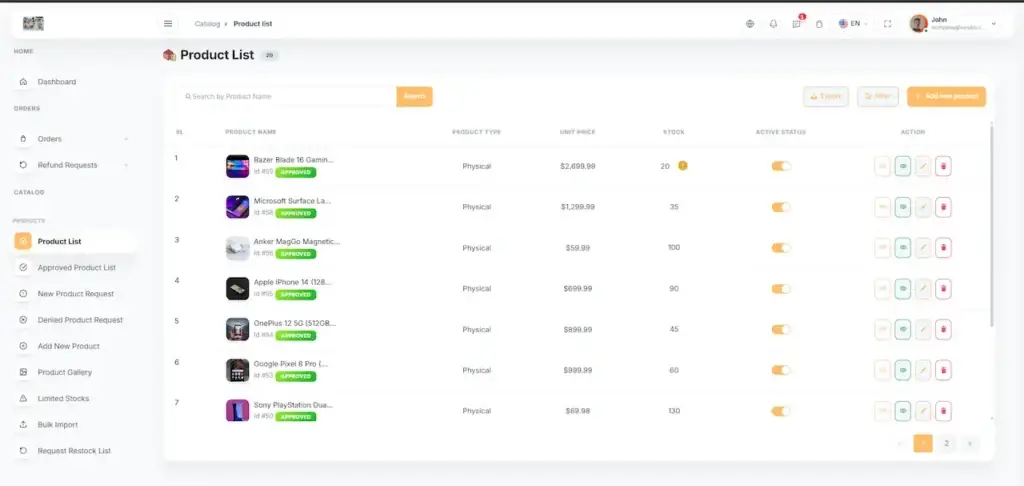
Sellers get a web panel with a shop profile plus KYC, product CRUD covering the variant matrix and stock levels, bulk import and export, plus descriptions drafted with AI assistance, a queue of orders to accept or reject, and answers to refund requests. Sales analytics are included, along with a wallet showing commission, from which a withdrawal can be requested.
- 1Launch the seller panel in another browser tab
- 2Log in using the seller credentials below
- 3Explore: Products, Orders, Refunds, Wallet, Analytics
vendor4@demo.com | Vendor_$321
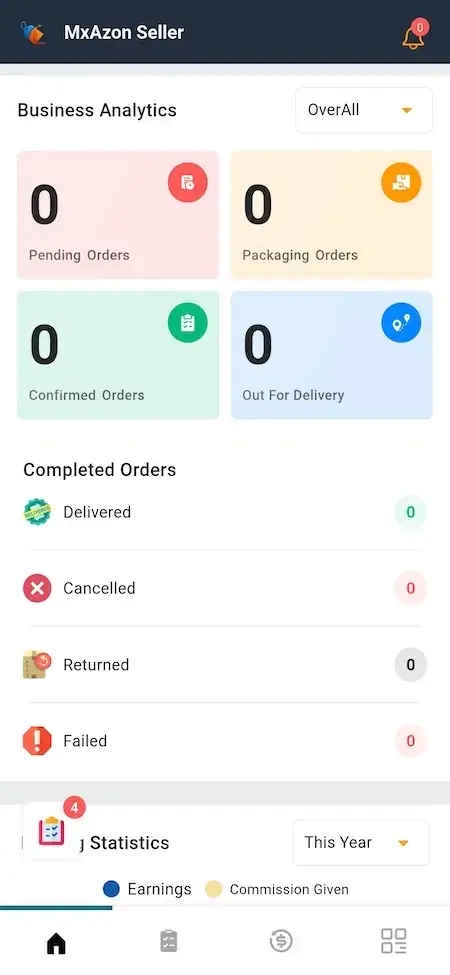
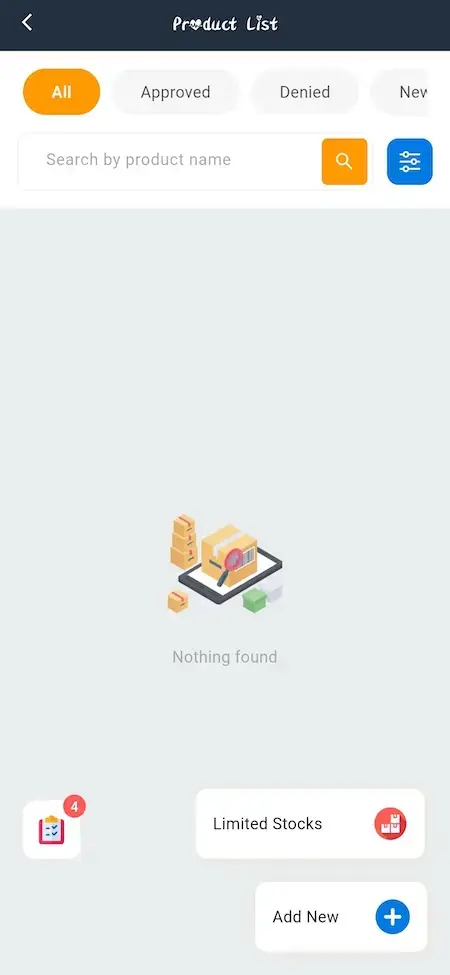
Manage the Shop from Your Phone
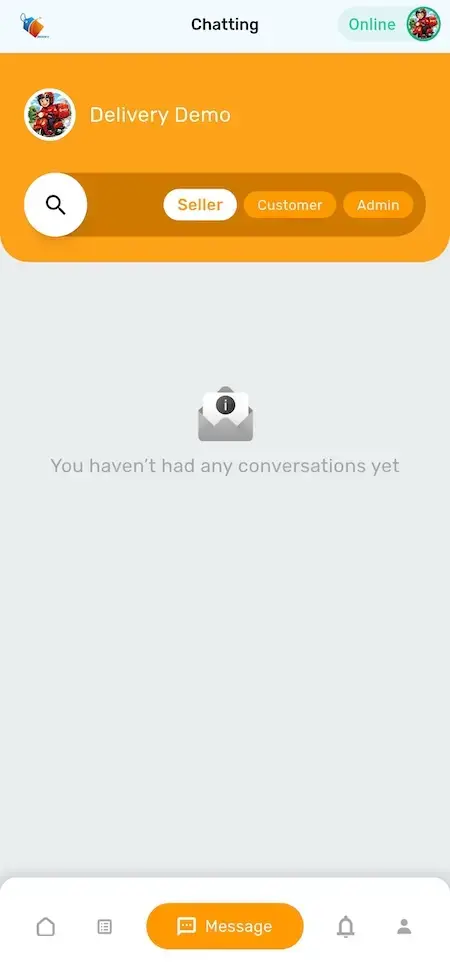
A Flutter app built for vendors who work away from a desk. It holds the live order queue (accept or reject), edits to products and stock, refund responses, chat with customers, and a wallet balance that displays commission, along with withdrawal requests.
- 1Download the Android seller app
- 2Log in with the seller credentials below
- 3Explore: Orders, Products, Stock, Chat, Wallet
vendor4@demo.com | Vendor_$321
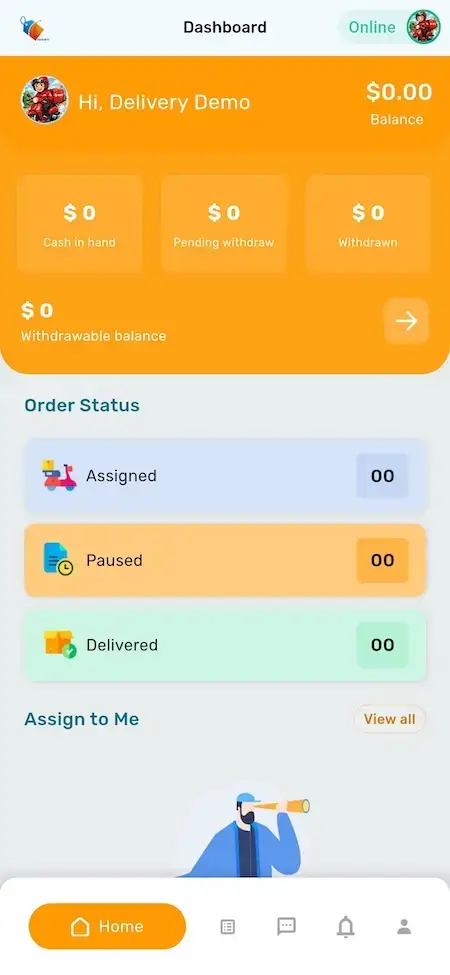
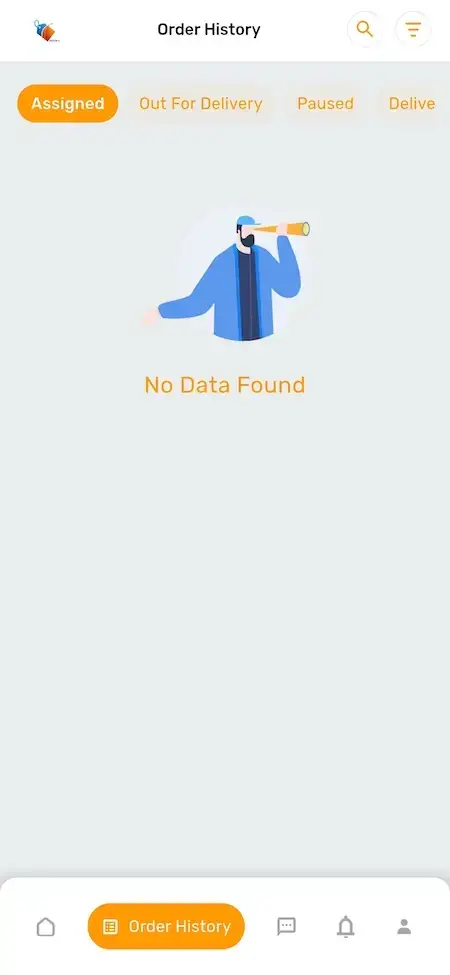
Job Assignments, Delivery Proof and Cash Handling
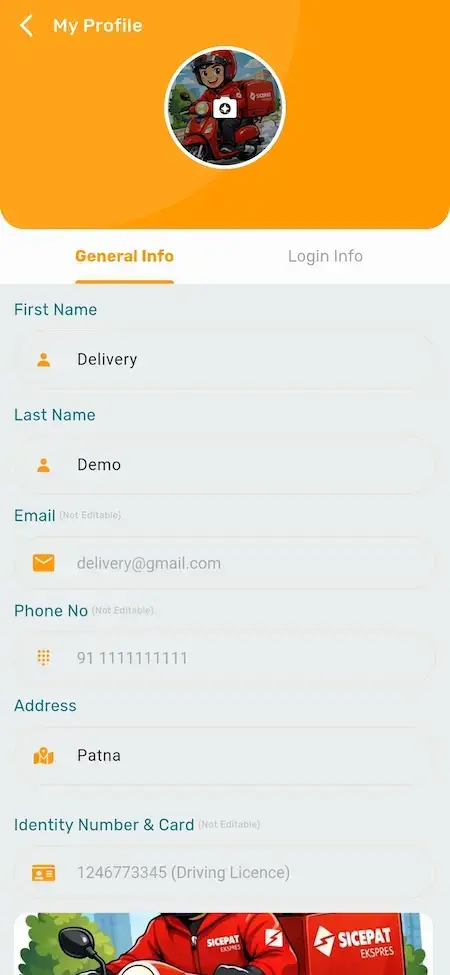
This covers the final leg of an order. Agents see a feed of assignments they can accept or reject, get navigation first to the vendor and then to the customer, move an order through checkpoints running from pickup to delivery, confirm with a one-time code at the door, and keep a wallet that keeps earnings apart from cash taken on COD orders.
- 1Download the Android agent app
- 2Log in with the agent credentials below
- 3Explore: Assignments, Pickup, OTP Handover, Earnings
delivery@demo.com or +91 9876543212 | Delivery_$321
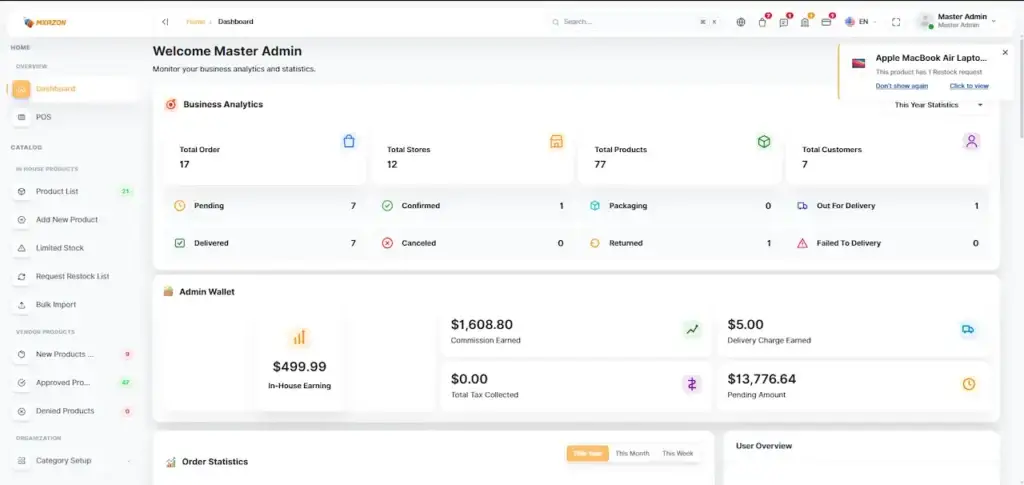
Listings, Users, Money and Settings
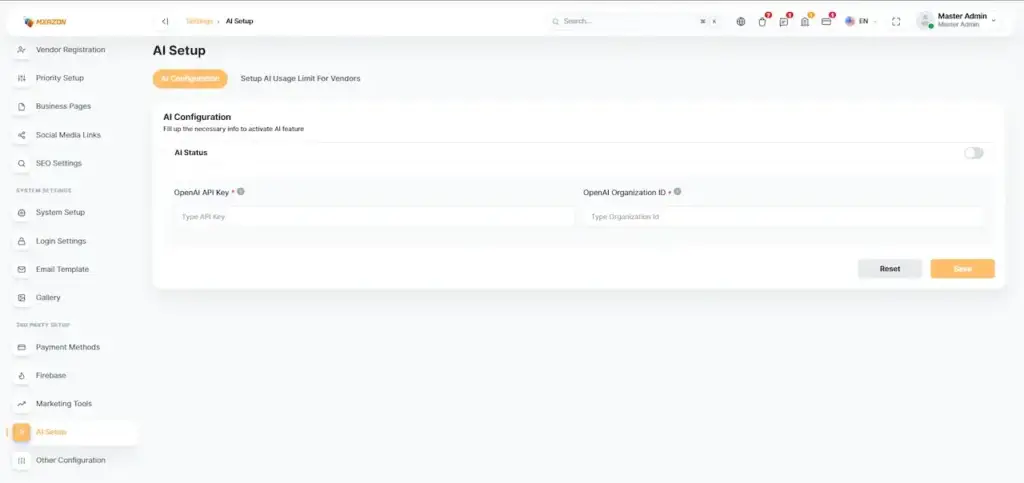
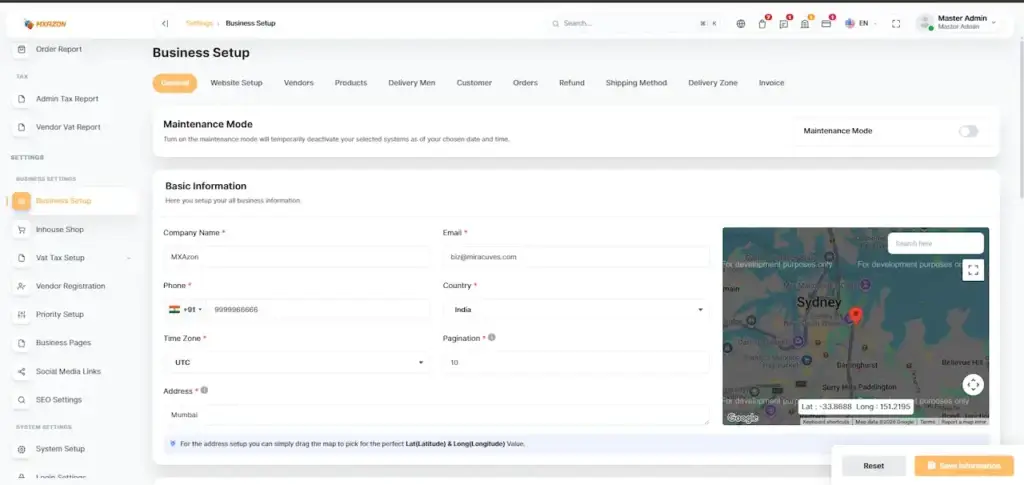
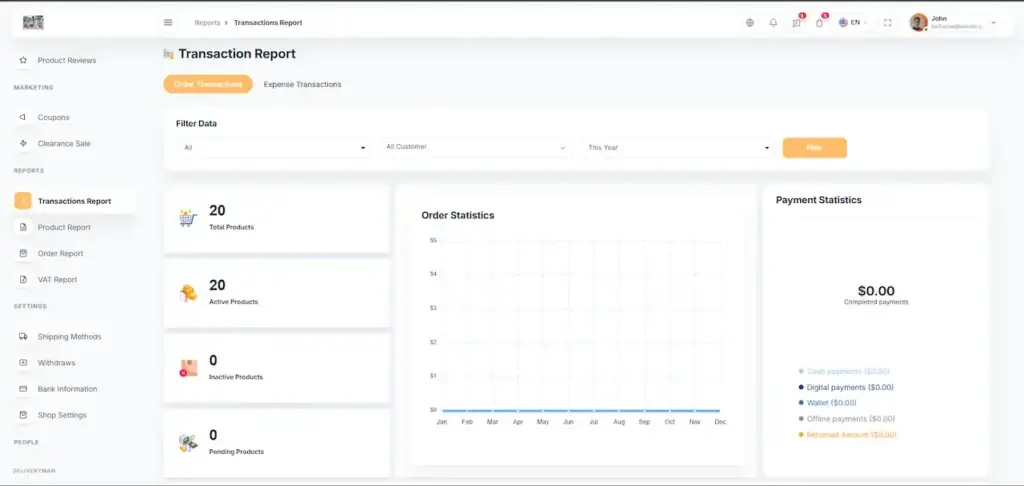
The operator console is the control room: product moderation, orders across every vendor with a complete status timeline, queues for refunds and withdrawals, approval of vendors and deliverymen, commission and tax setup, marketing and reports. Each business rule is stored as configuration, not code.
- 1Launch the admin console in a third browser tab
- 2Log in using the operator credentials below
- 3Explore: Moderation, Orders, Payouts, Settings, Reports
admin@demo.com | Admin_$321Guided Screen Tour
Watch a Demo of a Marketplace App Like Etsy: Buyer Storefront, Seller Side and Admin Console
This video tours the platform from the operator's chair instead of showing a feature reel. One order is traced from a shopper's search, via the vendor queue, to the delivery handover. The same order then appears in the admin console, showing its status history and tax lines next to the wallet entries created on both sides. Next come the catalog and moderation screens, followed by vendor subscriptions and commission, with the configuration area for payment gateways last, plus currencies, languages and delivery zones. Want a specific flow instead of the tour? Just request it, and we will go through it live using real data.
Schedule a ConsultationTap-by-Tap Paths
Etsy Clone App Screens: Customer, Vendor, Delivery plus Marketplace Owner
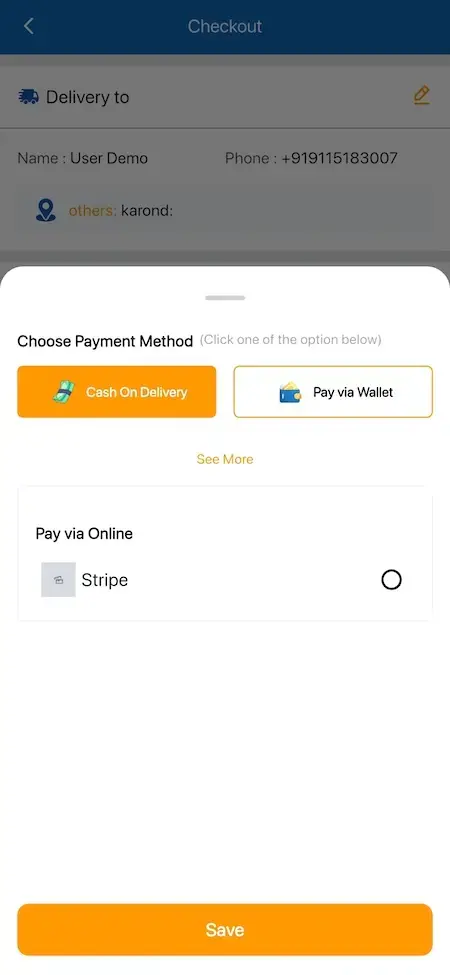
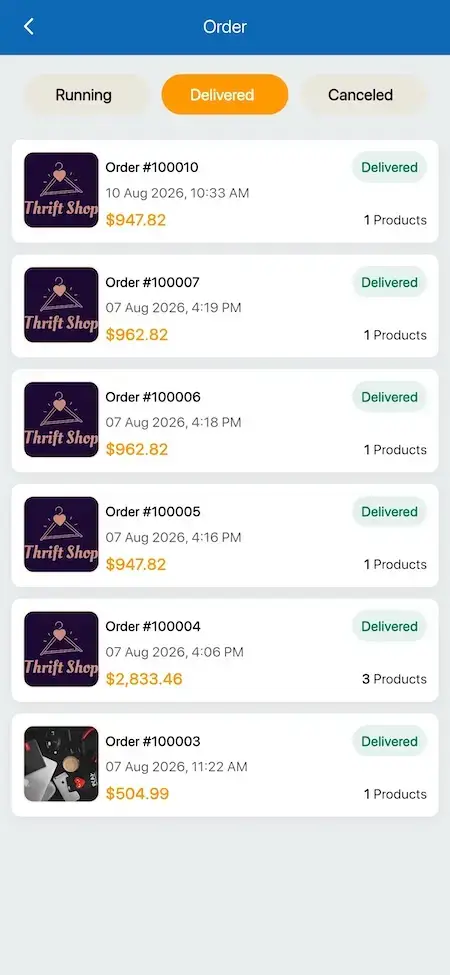
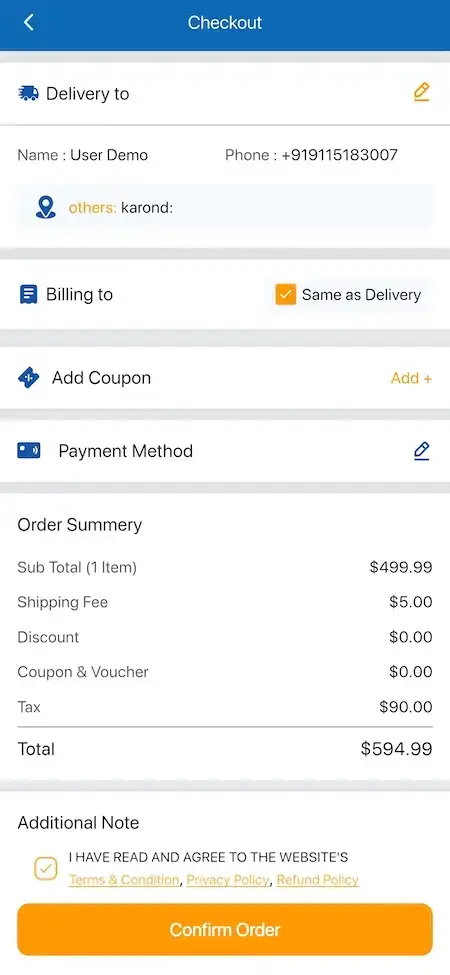
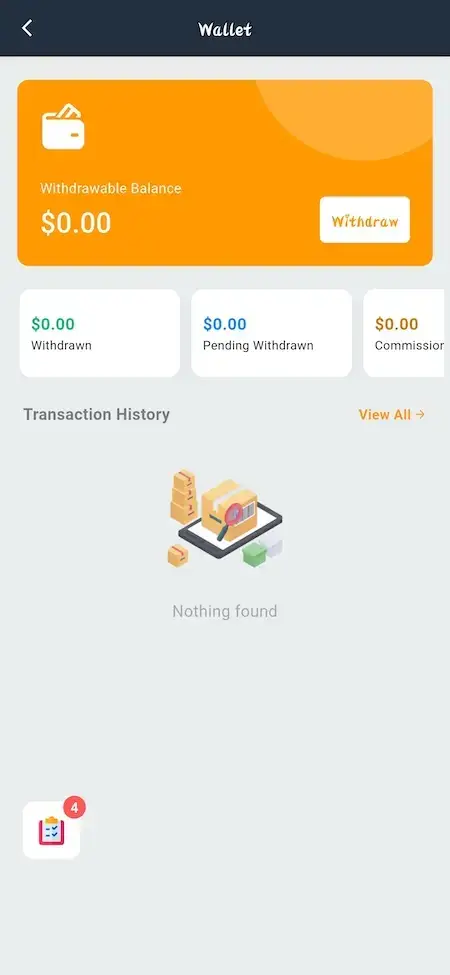
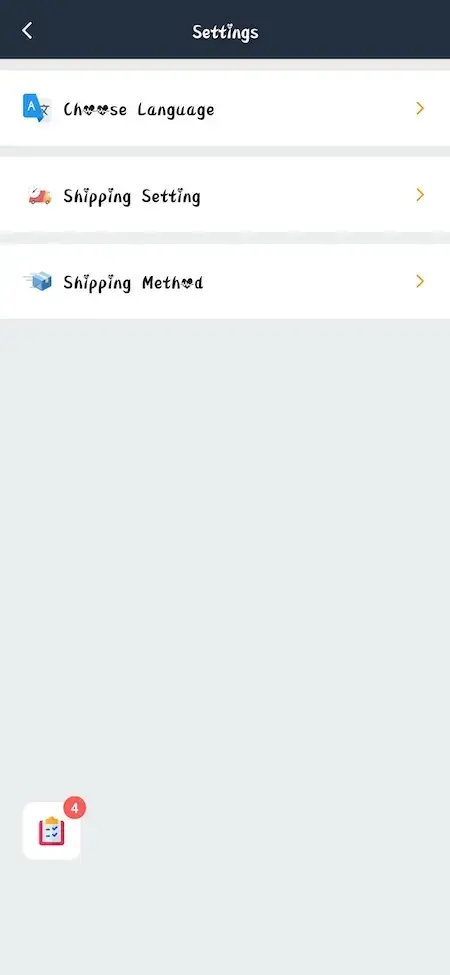
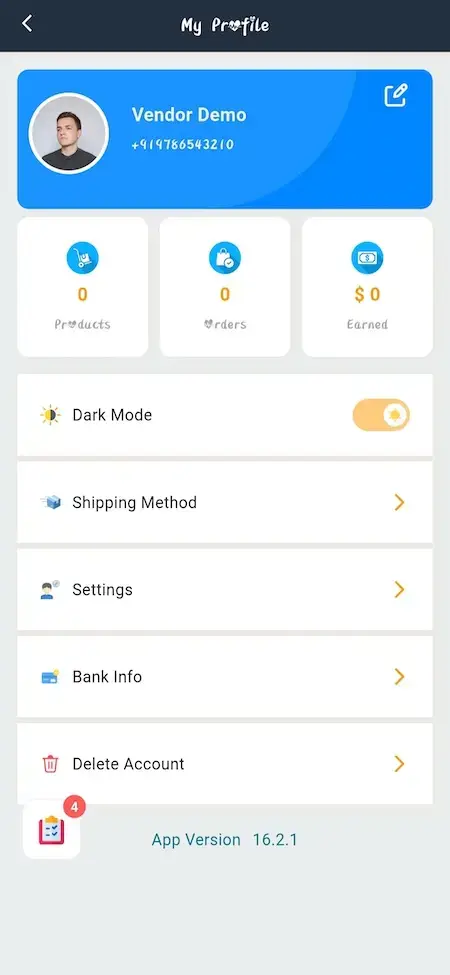
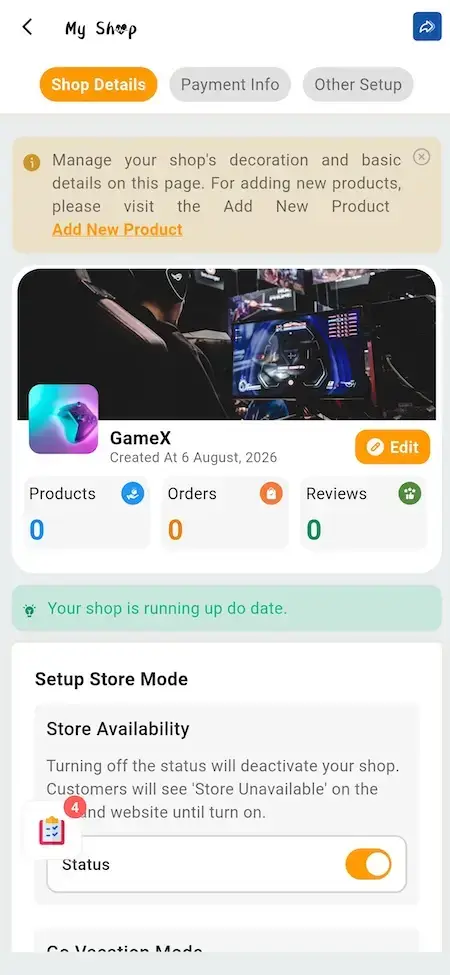
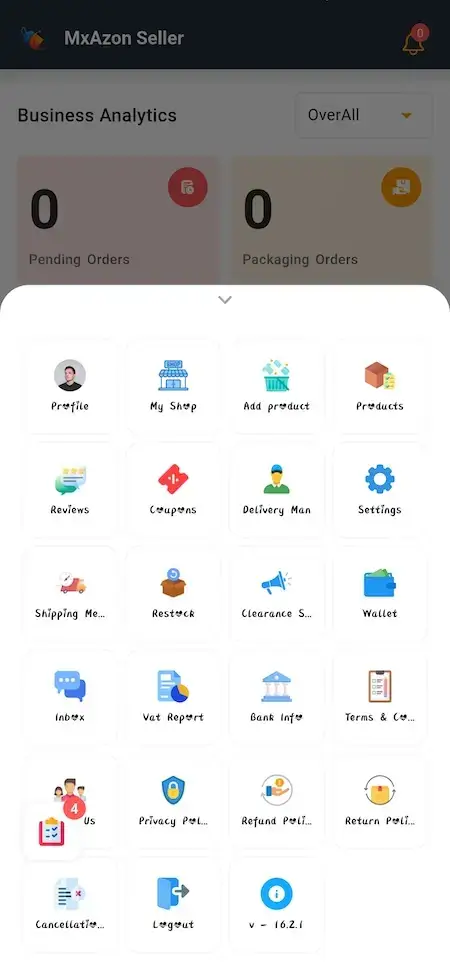
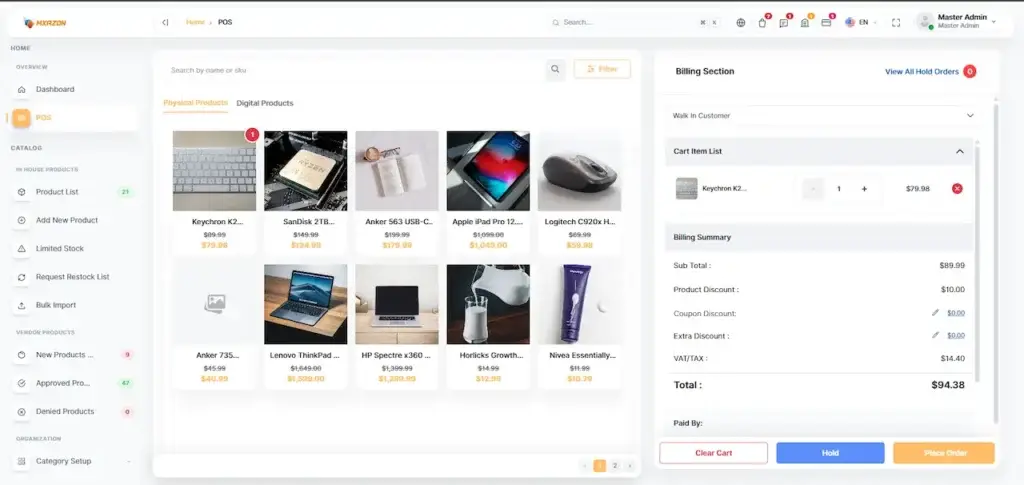
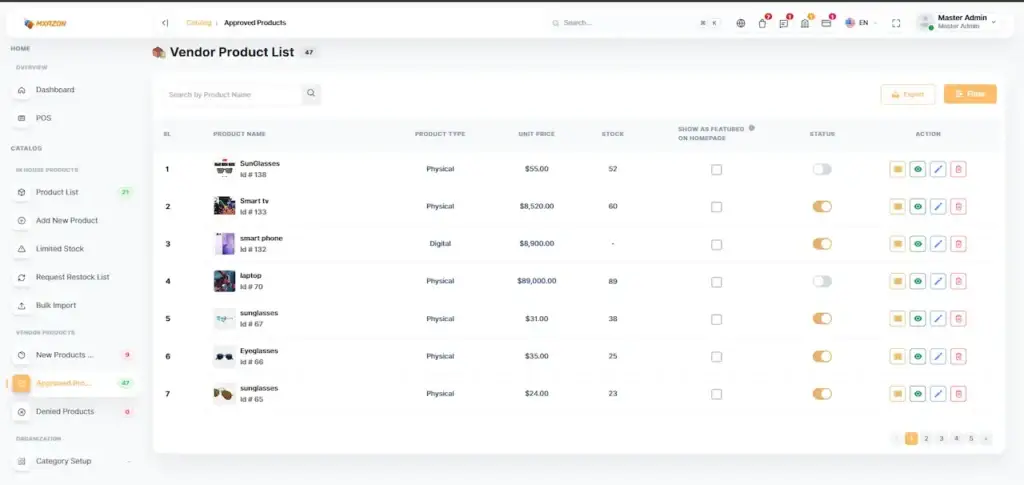
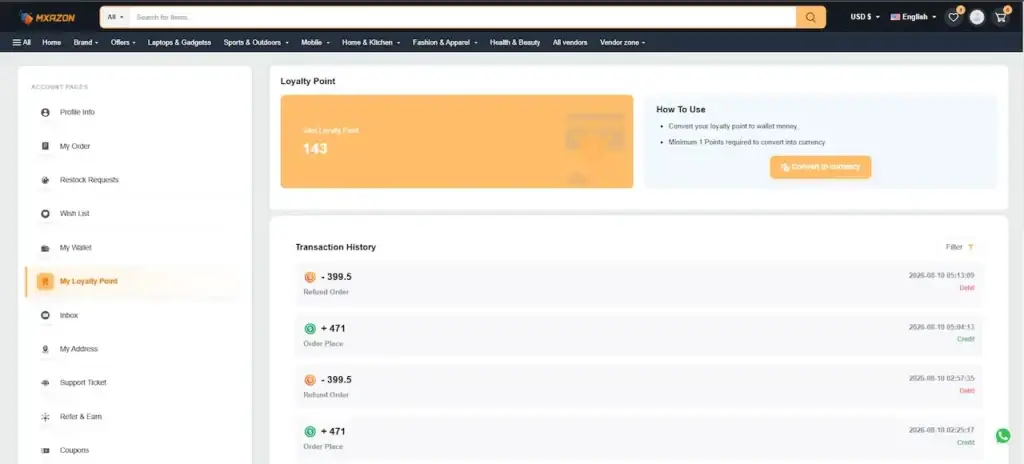
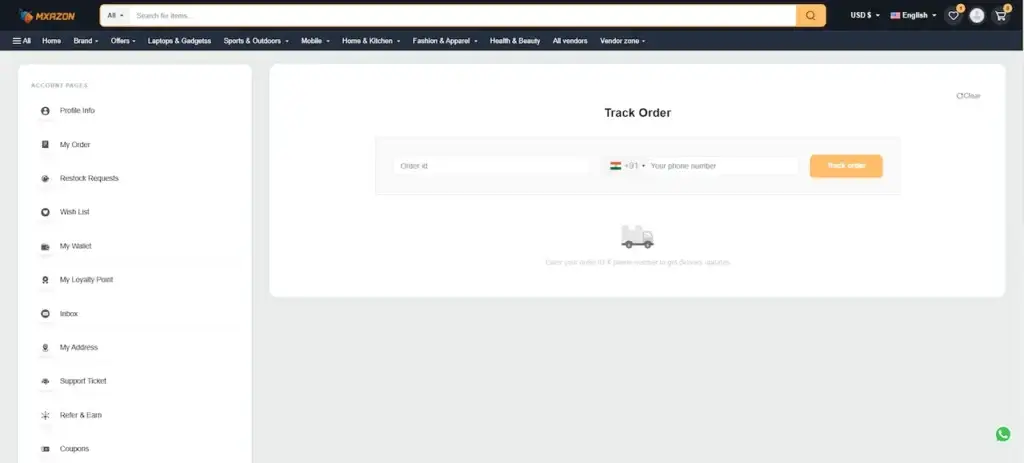
These screens cover every important surface of the Etsy clone app Miracuves delivers: category browsing from home, filtered search, a product page with reviews and variants, a shared cart and checkout across sellers, the seller order queue and wallet, the job feed where delivery agents confirm by OTP, and the console the operator runs.

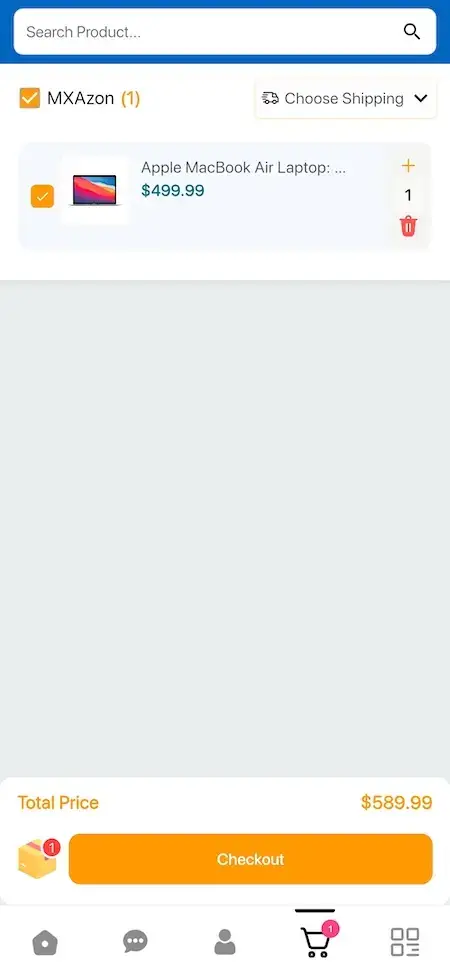
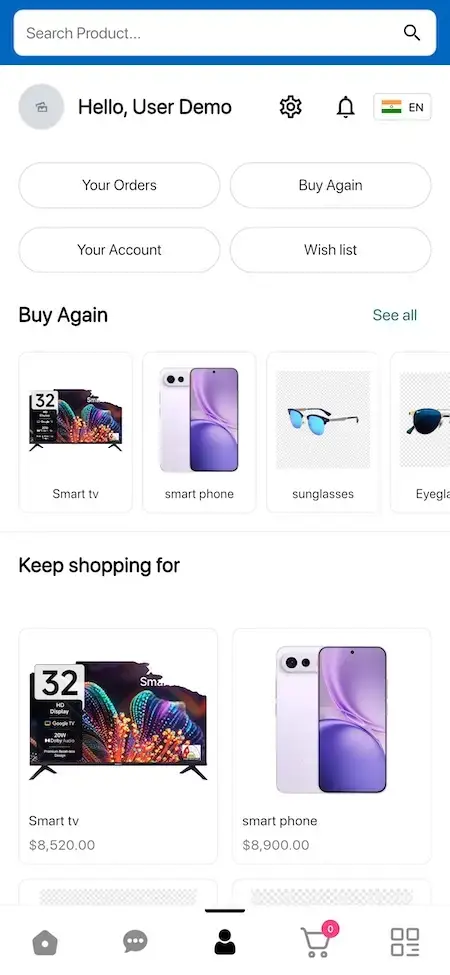
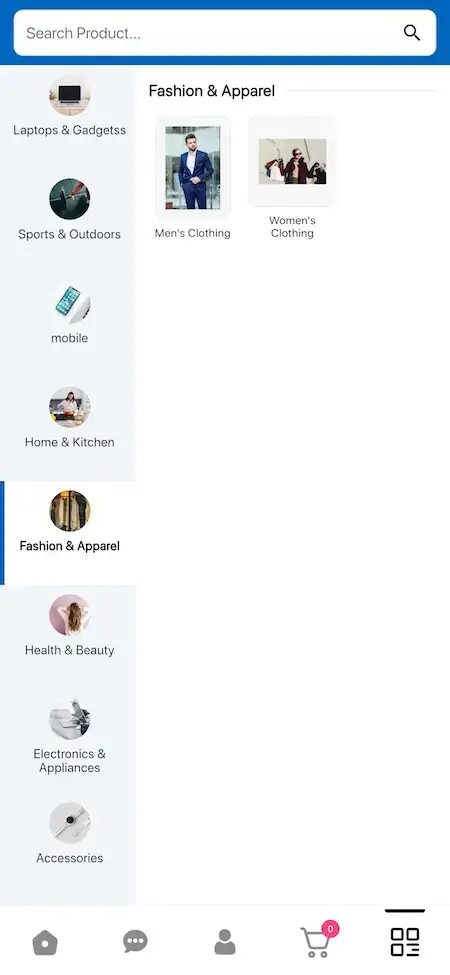


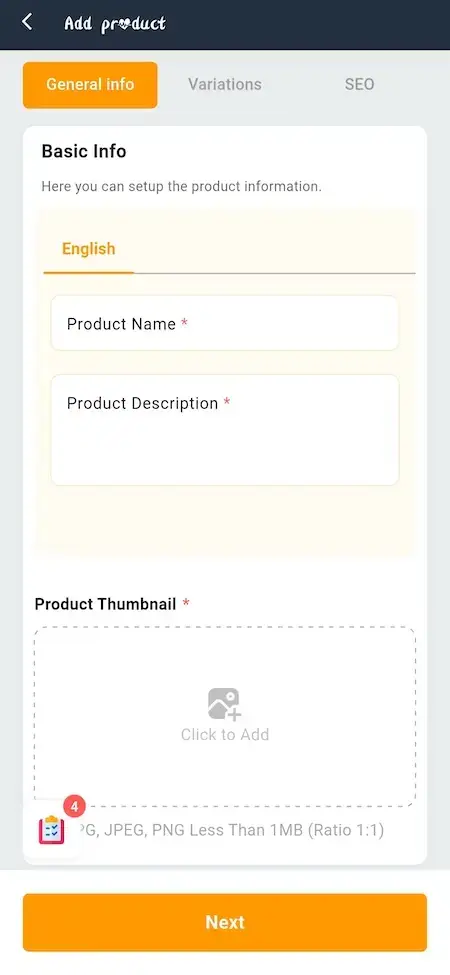
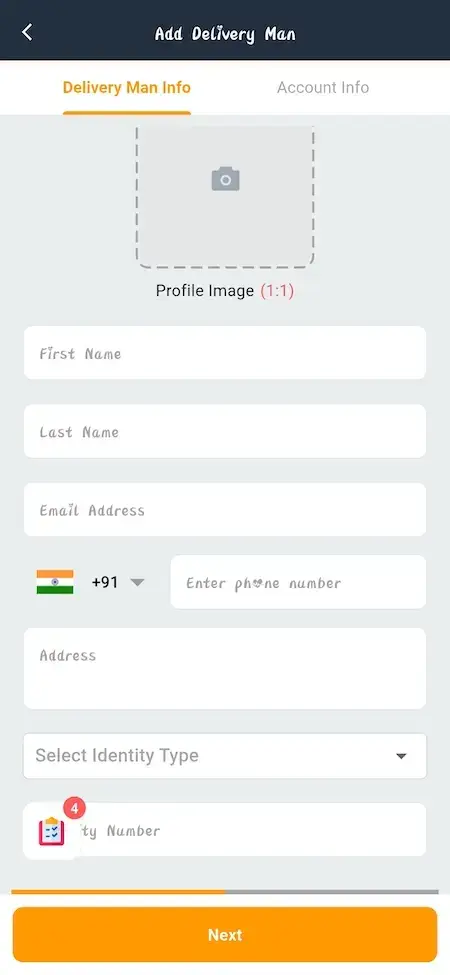
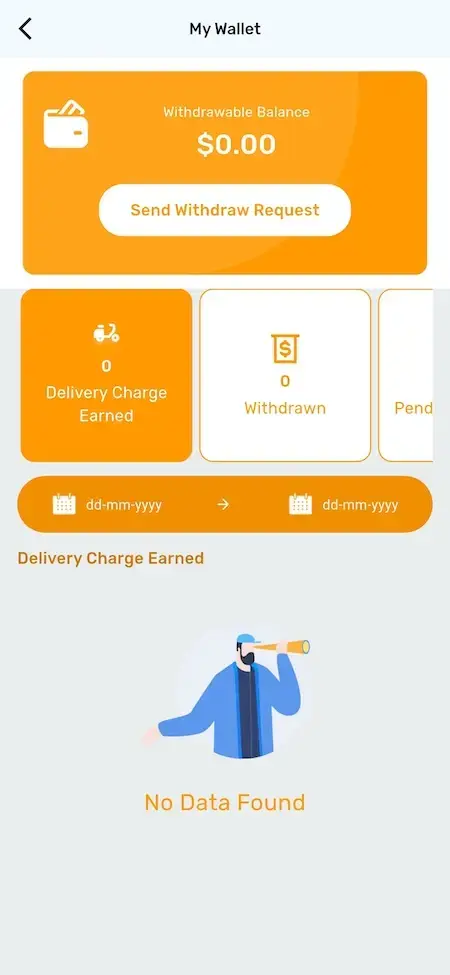


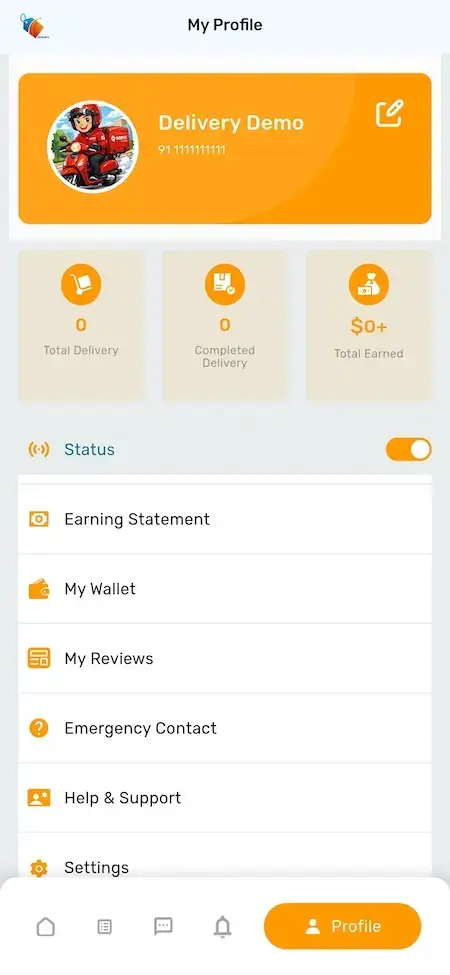


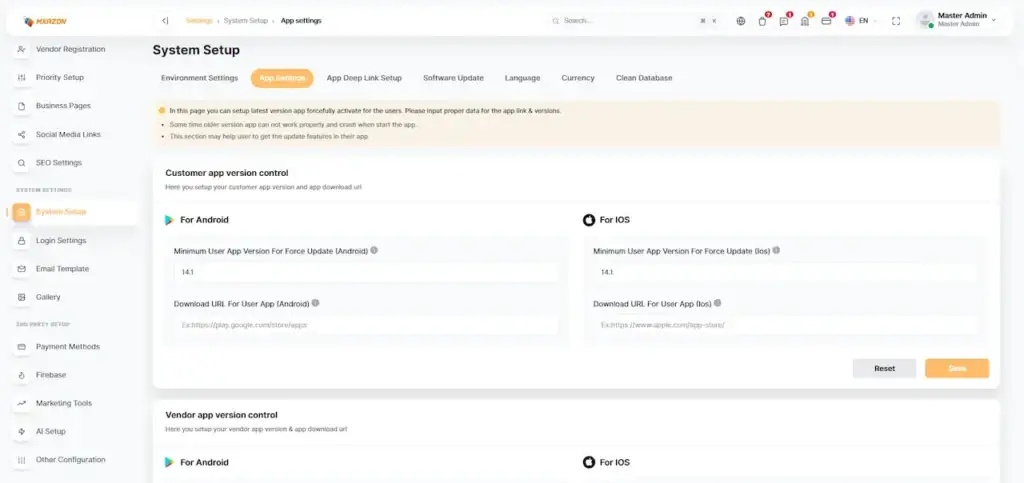
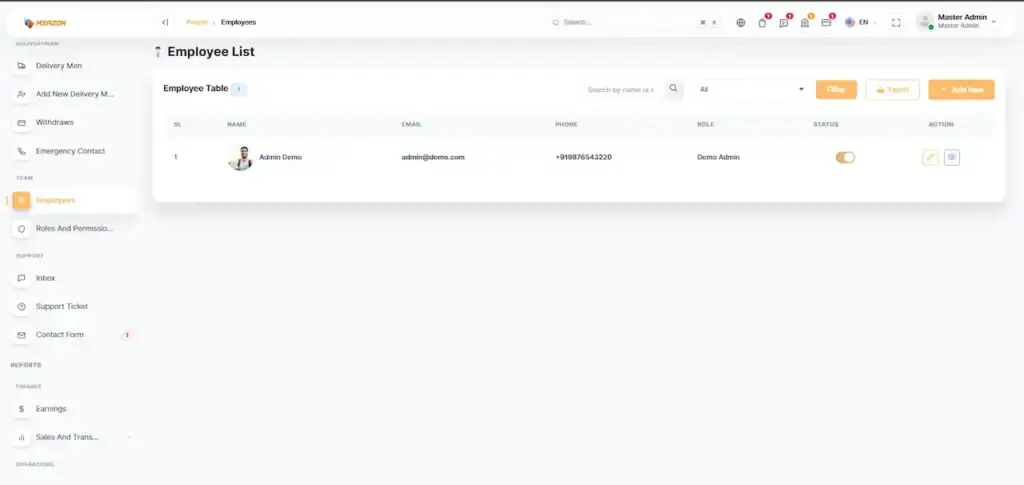
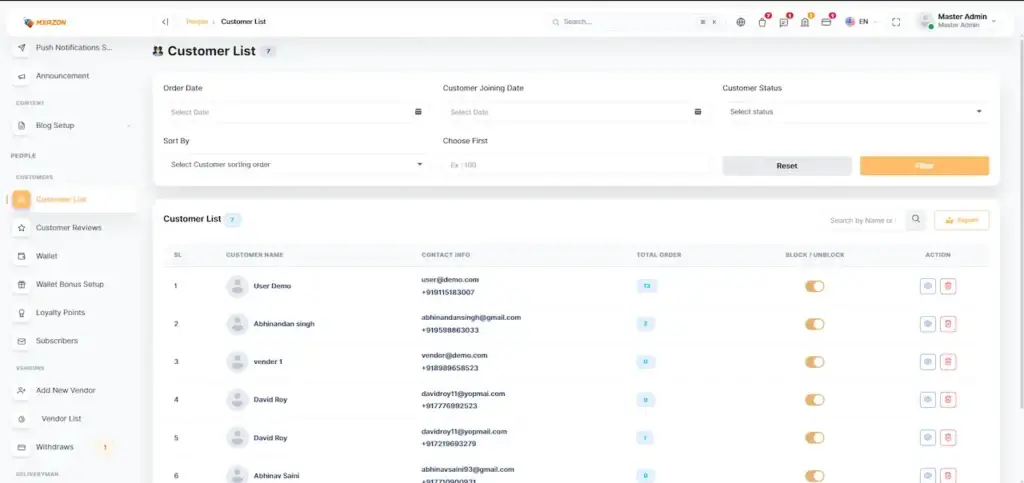
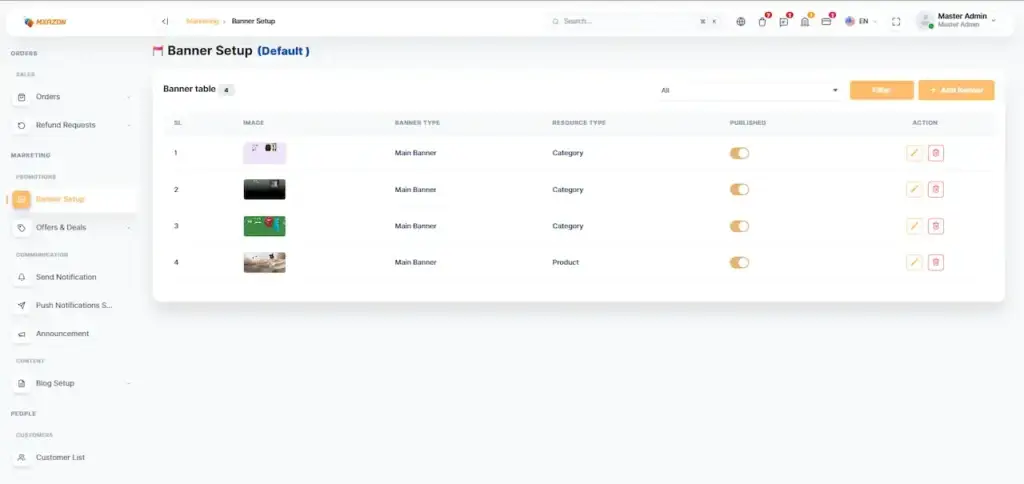
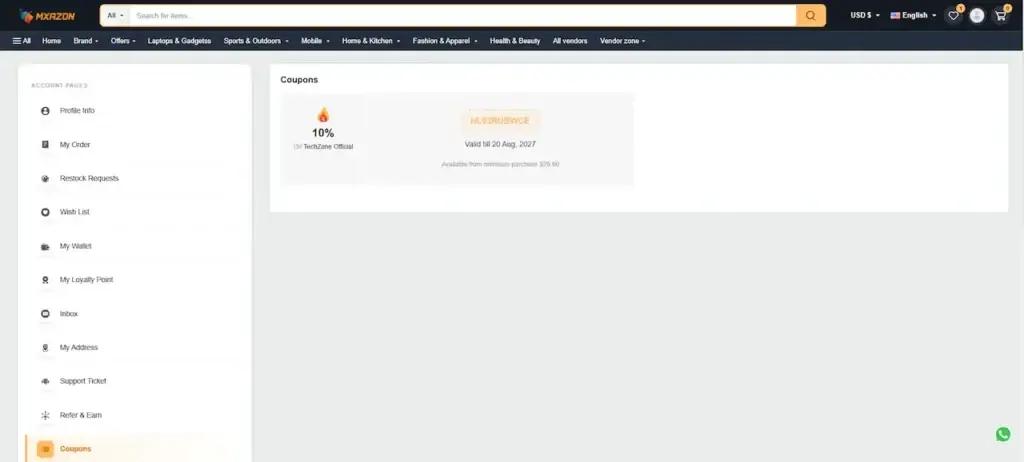
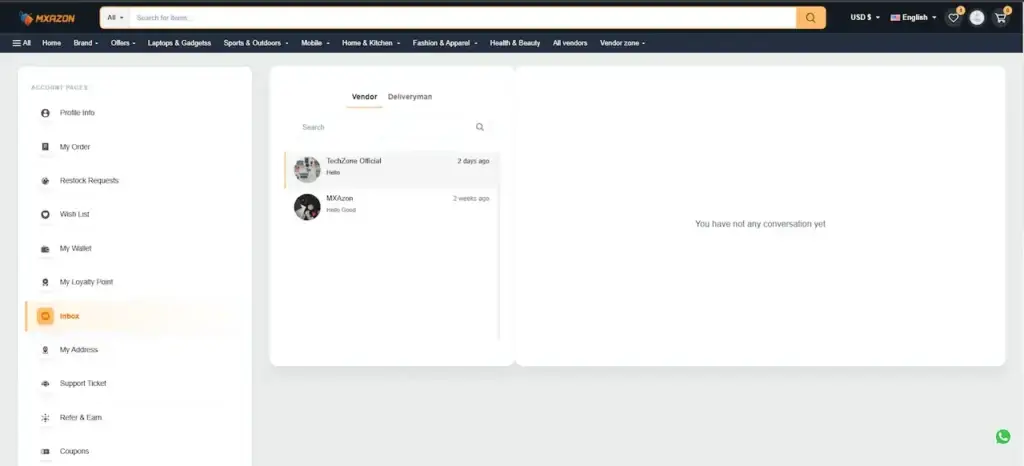
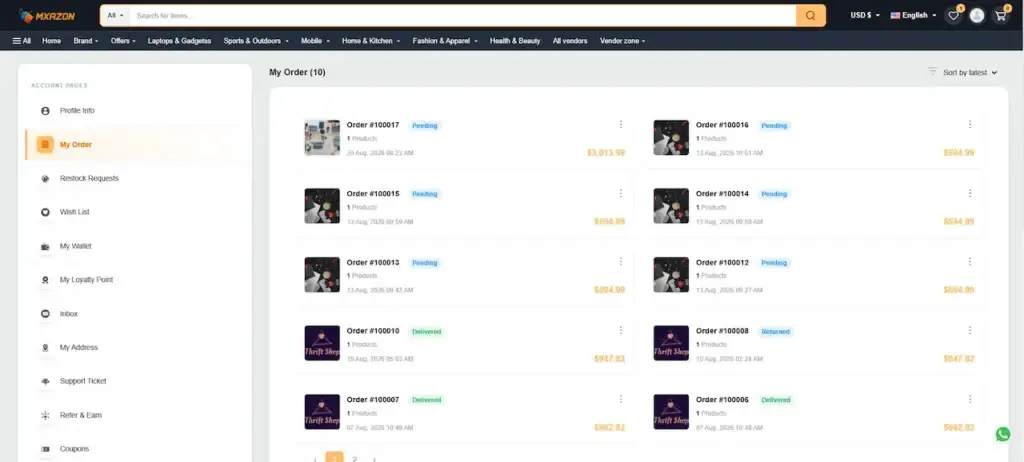
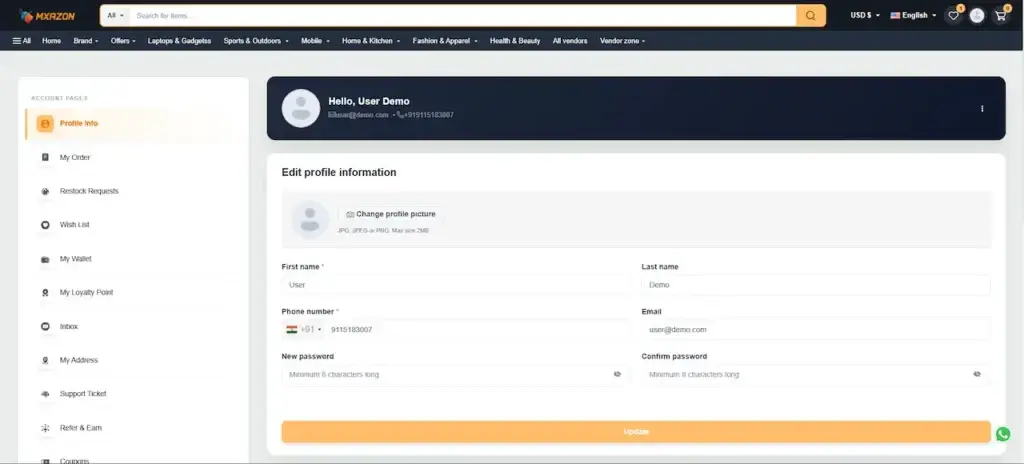
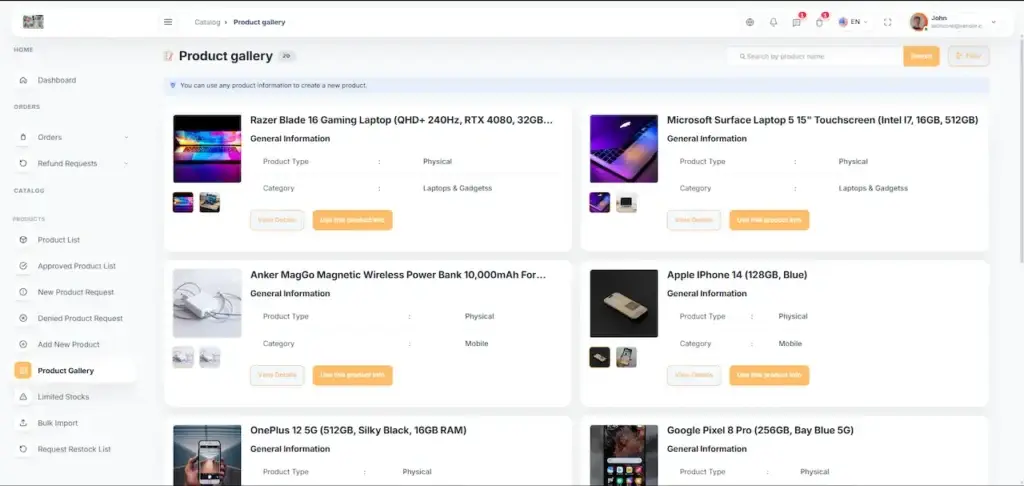
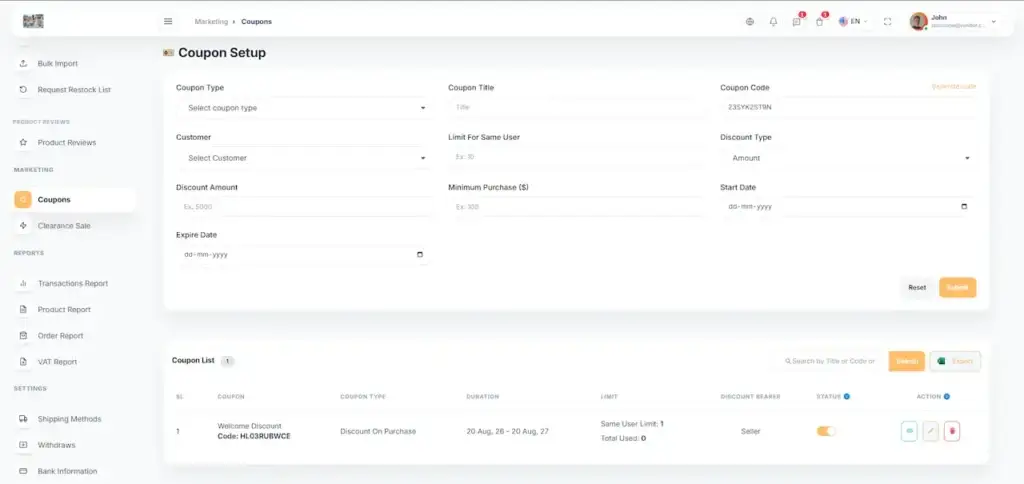
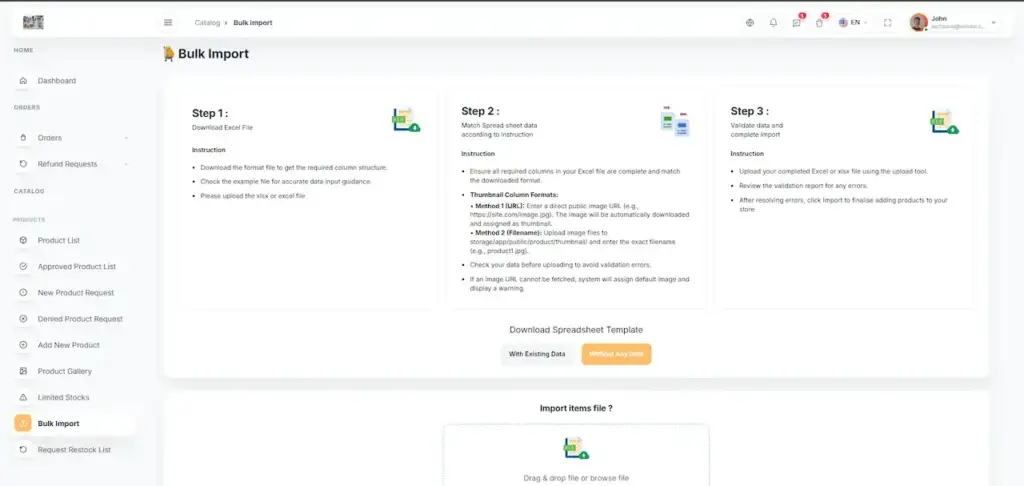
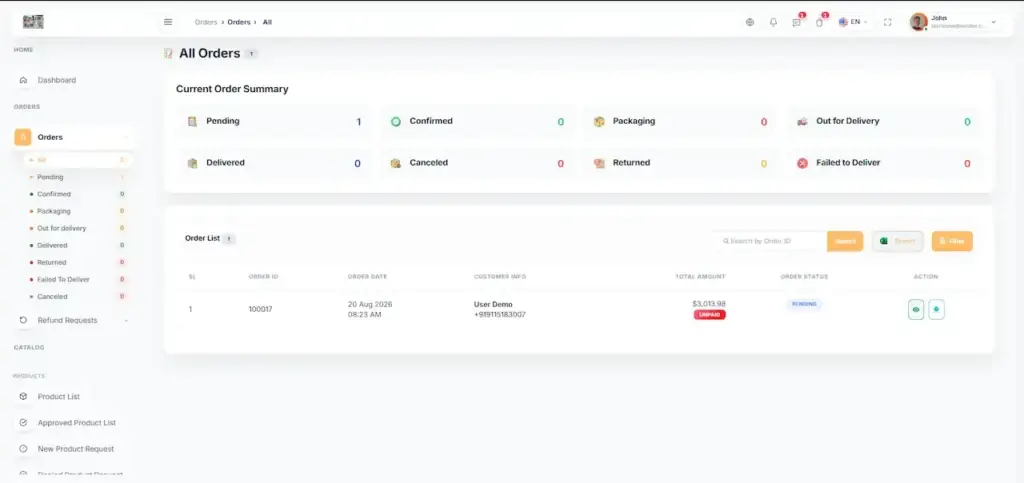


Would a guided tour of one flow help? Book a call and we will open whichever surface interests you, loaded with live data.
02Proof
Client Reviews
What Operators Say About Miracuves - Real Platforms, Outcomes From the Field
None of these four describes a handmade-goods marketplace. The nearest are Vyapar Pe's retailer commerce platform and the regional marketplace layer Miracuves built for Shophy Holdings; Makaalu and Izi Technologies, which run delivery, sit further from this model.
“ShopRaja is a B2B commerce + payments platform for small retailers in India — catalogue, orders, credit, and a payment layer. Building a custom B2B commerce stack with credit and reconciliation was the longest pole, and we didn't have a year to do it. Miracuves's MXB2B base gave us the catalogue, the order flow, and the payments backbone. We added our custom short-term-credit module, our distributor-tier pricing, and a custom reconciliation engine. From kickoff to first 100 active retailers was 9 weeks. Our credit portfolio is now a real product line, not a spreadsheet.”
“Ride-hailing, food, courier and a marketplace, and we were chasing a holiday window. Their Gojek base had the rider and driver apps, dispatch and the merchant console already. We added local payment partners and our regional marketplace layer, and were taking live orders inside a month.”
“We needed three apps that agree with each other: customer, driver and store. The shared state model was already built, which is the part people underestimate. Live inside a month with all three in the stores.”
“Talokitoko is grocery and food delivery for the African diaspora market in Europe. The rider app, dispatch and the merchant console were already built, so we spent the engagement on our own local payment mix, the vendor onboarding flow and the regions we actually operate in. The platform was live inside a month, which was months faster than our internal estimate.”
Modeled on the Base Build
Marketplace Reference Deployments: Thailand and India
Below are two modeled reference deployments that show how the platform is set up for two very different retail markets. Each is an illustrative scenario, not a client engagement, and uses only capabilities in the base build. Actual client deployments and the figures they report appear in the Miracuves portfolio.
Cash-Led Multi-Vendor Marketplace
This shows the platform set up for a market in which cash still settles many orders, and where growth spreads outward from the big metros to tier-3 and tier-2 towns.

- Cash settles the order at the doorstep, days after checkout, when stock and commission are already committed
- Tax rates vary with the product category and the state, so each invoice needs its own tax line
- Shoppers who read another language than English and convert poorly on an English-only storefront
- Couriers who reach certain pin codes dependably and cannot serve others at all
- Accept cash without building a spreadsheet to track it
- Enter a new town only after a real delivery route is in place
- Charge commission by category instead of a single flat rate covering both electronics and apparel
- Present the storefront in whichever language the local market reads
- Cash on delivery confirmed by a code the server verifies at handover
- Each agent carries a cash-collected balance that settles into the operator wallet
- Operators decide the handling charge applied to cash orders
- Zip allowlists that control where checkout appears at all
- Tax classes tied to zones, with rules at the product level
- Language and currency settings that reach the web storefront and all three Android apps
- KYC-based seller onboarding with commission set for each seller
What you see is a modeled reference deployment, not a client engagement. The base build includes every capability above, and the live demo lets you try them. Any numbers describe the platform; no customer supplied them.Real, named deployments live in the Miracuves portfolio · it lists engagements along with the results clients report.
Marketplace Spanning Provinces and Borders
This shows the same platform set up where a single catalog must serve Bangkok, the provinces and neighboring markets, each with its own delivery economics and currency.

- Delivery costs that diverge widely between dense Bangkok routes and provincial or island runs
- Shoppers who would rather pay when the parcel arrives than up front
- Sales into nearby markets that price in another currency
- Every extra market tending to mean another deployment that must be kept in sync
- Provinces and the capital share one catalog, and neither carries the cost of the other
- Show each buyer prices in the currency they know
- A neighboring market becomes a configuration change instead of a separate platform
- The operator brand keeps ownership of cash and the final delivery leg
- Shipping zones that can override cost for particular categories
- A catalog of currencies where the default sets what checkout displays
- Agent-by-agent reconciliation for cash on delivery
- Pickup and delivery checkpoints across a delivery fleet
- Every surface of the storefront is offered in several languages
- Each order keeps its full status history across nine statuses
- All three apps, the seller panel and the storefront sit on one REST API
What you see is a modeled reference deployment, not a client engagement. The base build includes every capability above, and the live demo lets you try them. Any numbers describe the platform; no customer supplied them.Real, named deployments live in the Miracuves portfolio · it lists engagements along with the results clients report.
03The product
The Basics
What Is an Etsy Clone App?
An Etsy clone from Miracuves is a ready-made online marketplace like Etsy, where makers post their own work for shoppers to browse and buy, your agents deal with delivery, and each sale earns you commission. Under it sits Laravel 12 with a normalized MySQL database of 131 tables, and a single REST API serves the storefront, seller panel, operator console, plus three Flutter apps that run on Android and iPhone.
Sellers
Self-service registration with KYC, operator approval, per-seller shops with their own profile, subscription tiers with listing limits, and a moderation queue between a new maker and the shop front.
Conversation
Buyer-to-seller chat with attachments, reviews with image upload and seller replies, and a threaded ticket queue for anything that needs you rather than them.
Money
Four wallets, each keeping an append-only history for its owner; a commission rate per seller, split when an order completes; withdrawal queues; and settlement records kept for every gateway.
Covers Web, Android, iOS, Vendor & Delivery
What Do You Get in the Etsy Clone Script?
The economics of a maker marketplace are unusual. Each seller is small, so no single one matters much, but there are a great many of them and the cost of serving each has to be near zero. That means onboarding without interviews, moderation that works in bulk, commission that can differ per seller without a spreadsheet, payouts that run as a queue rather than as favors, and support that sellers largely handle themselves through chat. All of that is what this platform is.
- 01Self-service seller registration with KYC and documents
- 02Commission set per seller, category or individual product
- 03Subscription tiers carrying product-count limits
- 04Moderation queue with bulk approve and reject
- 05Buyer to seller chat with attachments
Anything not marked configuration-required or integration-required comes in the base build. The operator provides the keys for gateways, SMS, push and AI, because those accounts belong to you and not to us.
Features
Etsy Clone Features: Catalog, Checkout, Fulfillment plus Disbursements
Everything listed is part of the base build of the Miracuves Etsy clone software and visible in the live demo. We begin with the seller side and work outward, because that is where a maker marketplace does most of its work, and anything your model does not use can be switched off in the console.
Seller Onboarding
Self-service registration with KYC and document upload, reviewed by an operator before anything publishes, with a shop profile and storefront created on approval. At this seller count the pipeline has to hold quality without a human interview.
- Self-service registration with KYC and documents
- Operator approval before anything publishes
- Per-seller shop profile and storefront
- Suspension and reinstatement from the console
Commission Per Seller
A rate defined for the whole platform, for a category, for a seller or for an individual product, taken on completion and reversed on refund. Signing one maker on better terms never means repricing the rest of the marketplace.
- Commission defined platform-wide, by category, by seller or by product
Shop Membership Plans
Tiered plans that bundle product-count limits, lower commission, featured placement and priority support, plus a trial and a grace period when billing fails. Small sellers start cheap and upgrade to list more.
- Subscription tiers with product-count limits
- Reduced commission as a paid tier benefit
- Trial period and grace on failed billing
Moderation at Volume
A queue of listings submitted by sellers, with approve and reject buttons plus bulk actions, and full editing rights over anything on the platform. With many small sellers this is a daily shift rather than a periodic review.
- Moderation queue with approve, reject and bulk actions
- Full editing rights over any listing
One Cart, Many Makers
One cart holds items from several independent sellers; checkout splits it into an order per seller while the buyer still pays once, and a guest cart merges into the account at login.
- A single cart that holds items from multiple vendors
- Guests get a session-tracked cart that merges when they log in
- Park items for later or move them to a wishlist
- Each vendor shipping cost is estimated ahead of checkout
Cart Payment and Discount Codes
Buyers can combine coupons, wallet balance and loyalty points, and shipping is chosen per vendor. An idempotency check guards order placement.
- Combine coupon, wallet and loyalty within one order
- Fixed-amount or percentage discounts can target one product, one category or the cart
- Coupons for free shipping, with a usage cap for each user
- Submitting an order passes through an idempotency check
Order Status Engine
An order passes through nine statuses, starting at pending payment and ending at delivered. Canceled, returned and failed are terminal branches, and each transition is logged in a status history.
- Order lifecycle of nine statuses, pending payment through delivered
- Delivery status tracked on each line, so partial fulfillment works
- Each status change records who made it, a note and the time
- Every operator edit is logged field by field
- Refund requests with a reason and evidence attached
- A dedicated status machine that blocks double-spend
- Credit the wallet instantly, or settle through the gateway
Buyer to Seller Chat
Direct conversation with attachments, which is where custom requests, sizing questions and made-to-order arrangements actually happen. There is no product-options builder in the base platform, so the chat is the mechanism.
- Buyer to seller chat with attachments
- Customers and vendors can message each other and attach files
- Support tickets with threaded conversations
Seller Wallets and Payouts
Each seller carries their own balance with an append-only history, requests a withdrawal, and is settled from a queue. At a thousand sellers, payouts have to be a process rather than a series of favors.
- A wallet for each of the customer, vendor, deliveryman and operator
- Each balance movement adds one append-only history row
- Wallet top-ups go through whichever gateway is configured
- The operator defines bonus tiers for adding funds
Referral Rewards
Customers earn points on order value or by category, spend them at checkout, or convert them into wallet balance. Referral codes reward both sides.
- Earn points from order value, or by category
- Apply points to the order total when paying
- Customers can swap points for wallet balance on request
- Referral codes rewarding both sides
- Loyalty points reversed on cancellation
Delivery and COD Options
Delivery agents get an assignment feed for accepting or rejecting jobs, checkpoints at pickup and at delivery, live location, a running balance of cash collected, and OTP verification at the door.
- Agents accept or reject jobs from an assignment feed
- Location shared live during transit
- Door-step verification by one-time code
- Reconciled cash-collected totals for each agent
Reviews With Photographs
Ratings and reviews carrying image upload with seller replies. For handmade work, a photograph from a real buyer is the only proof of quality a listing can offer.
- Reviews and ratings that accept uploaded images
- Vendor replies on any review
- Reviews with image upload and seller replies
Each feature listed above is white-label and can be switched on or off for a given deployment. Several things are not built: there is no quote workflow, no made-to-order flow, and no personalization or engraving options. A product-options builder would be custom work that we scope, not a setting you toggle, and buyers and sellers arrange custom orders over chat.
Monetization
Etsy Clone Revenue Models: Commission, Subscriptions, Delivery and Ad Slots
Miracuves built the Etsy clone knowing that on a maker marketplace commission alone is fragile, because individual order values are small and sellers are price sensitive. The durable revenue is the subscription: a listing fee paid whether or not anything sells. Six lines share a single ledger and can stack on the same order.
- 01
Fee on Each Sale
A percentage set at global level, by category, by seller or by product, deducted from the seller wallet on completion and reversed on refund. Per-seller rates let you reward volume without a blanket cut.
- 02
Seller Subscriptions, the Real Line
Tiered plans that bundle reduced commission, a cap on listings, featured placement and priority support, invoiced each cycle. This is revenue that arrives whether or not a maker sells anything that month, and on this model it is usually the line that funds the business.
- 03
Shipping Markup
Shipping carries a configurable mark-up, cash-on-delivery orders a handling fee, and agent withdrawals a settlement fee.
- 04
Boosted Product Slots
Paid banners and sponsored positions on search and category pages. Small sellers buy visibility more readily than they accept a higher commission, because the cost is theirs to control.
- 05
Stored Balance Float
Money topped up by buyers and held in seller balances sits with the platform until each payout run. With many small sellers withdrawing on different cycles, that float is meaningful and continuous.
- 06
White-Labeled Launch
Resale of the platform is possible too: agencies and networks operate a separate branded marketplace for each client or territory, all from one codebase.
| Revenue stream | How it is charged | Take rateTypical range | What sets the ceiling |
|---|---|---|---|
| Fee on Each Sale | A transaction fee on the item price including shipping, plus a separate payments fee on every order. | 6.5% transaction fee; payments processing 3.0%-6.5% plus a flat per-order amount. | What small sellers will tolerate in total. Etsy Inc reported a 2025 revenue take rate of 24.2% (revenue divided by GMS) across all its fees and services, the all-in figure to stay near. |
| Seller Subscriptions | A fixed fee per live listing, renewed every four months or used up when the item sells. | $0.20 per listing per four-month period, nonrefundable. | Catalog size. Cost follows listings, not sales, so a shop with 500 live items pays $100 per period (500 x $0.20) before a single order arrives. |
| Shipping Markup | Shipping sits inside the fee base, and labels bought on the platform are booked net of carrier cost. | The 6.5% fee applies to the shipping charge too; no label margin is published. | Carrier rates. Etsy records label revenue net of what it pays for the label, and the filing gives no rate, so model this line from your own carrier rate card. |
| Boosted Product Slots | Sellers pay per click for prominent placement inside search and category results. | Cost per click set by bidding; no fixed percentage. | The price per click sellers will bear. Etsy's 2025 filing ties a $62.2 million rise in advertising revenue largely to a higher average price per click. |
How to read this. Every figure above is taken from Etsy's 2025 Form 10-K: the $0.20 listing fee, the 6.5% transaction fee, the payments range, the click-based advertising description, and the 24.2% take rate. Those are fees Etsy states for its own sellers, so they are published rather than inferred. The $100 example is simple arithmetic on the listing fee, not a figure from the filing. Treat the whole table as a set of inputs for your own pricing work. Nothing here is a quote, and nothing here predicts what a maker marketplace will collect.
Etsy Clone Revenue Model, Stage by Stage
Per-seller commission, listing-capped shop plans, shipping markup, boosted slots, balance float and white-label resale all post to one ledger in the Etsy clone console, so you bring each line in as your maker roster grows.
Launch
Keep commission modest and set rates per seller so the first makers join and stay, while an entry listing-limited plan opens the recurring line from month one.
Traction
As shops fill up, listing-limited subscription tiers become the line that funds the business, and boosted slots let small sellers buy visibility instead of accepting a higher cut.
Scale
With hundreds of makers withdrawing on different cycles, the float between payout runs becomes meaningful, and agencies can resell a branded marketplace per client or territory.
Plan invoices still go out in a month when a shop sells nothing, and every maker's commission stays with you.
Operators set the commission bands, the subscription tiers and the delivery margin. Talk to us and we will test those levers against the volumes you realistically expect.
Control Center
Admin Dashboard for an Etsy-Like Marketplace: Catalog, Orders, Disbursements and Setup
With a thousand sellers, the console Miracuves ships with its Etsy clone is mostly two queues: who wants to join, and what they just listed. Every module sits behind its own permission, which lets a moderator clear listings all day without reaching business settings and a finance clerk run the payout queue without touching the catalog.


Owner Oversight
- 01
Seller Approval Queue
Pending registrations with their KYC documents, approved or rejected with a note. This is the gate that decides what the marketplace becomes, and at this volume it has to be quick without being careless.
- 02
Item Approval Review
Moderators can approve or reject the listings sellers send in, one at a time or in bulk, and they have full edit rights over everything published. Bulk is what makes it survivable when a hundred new listings arrive daily from a hundred different people.
- 03
Multi-Shop Orders
The operator sees every order from every seller in one place, each with a timeline of statuses, edit history down to the field, changes to expected delivery, manual override with a stated reason, and invoice generation.
- 04
Pending Refunds
Requests come with a reason and evidence and are approved or rejected with a note; refunds settle as wallet credit or return along the original rail. On handmade goods the dispute is usually about expectation rather than defect, so the evidence trail matters.
- 05
Payout Queue
Seller and agent withdrawal requests with approve, deny and mark-processed. With many small sellers on different cycles this runs continuously rather than monthly, so it has to be a queue rather than a task.
- 06
People and Plans
A buyer directory; sellers approved, suspended or moved between subscriptions; delivery agents approved, suspended or given a zone.
- 07
Promotion Tools
Banners, featured slots, the daily deal, coupons from the platform or from individual sellers, and composers for push, email and SMS, which is how a small maker gets discovered without buying ads.
- 08
Tax Rule Setup
Taxes are set up as classes and rates tied to each zone. Individual products get their own rules via a polymorphic binding, prices display tax-inclusive or tax-exclusive, and each order includes a tax line breakdown.
Shop Settings Panel
Operators configure currencies, languages, delivery countries with zip allowlists, shipping methods that allow cost overrides per category, commission, loyalty ratio and OTP lifetime - all settings, not code.
- Per-seller commission and subscription tier
- Suspension and reinstatement with a reason
- SEO metadata for each route, plus a sitemap generated automatically
- Structured data on listing and blog pages
Data Downloads and Reports
Report on sales, sellers, products, buyers, wallets, refunds, withdrawals and tax across any date range, with export to Excel, CSV or PDF. Reporting at the seller level shows which makers earn their place on the platform.
- Pending seller registrations with their KYC documents
- Listing moderation queue with bulk actions
- Payout queue running continuously across the roster
- Seller count, active shops and roster growth
Custom modules can cover needs such as age-gated categories, country-specific catalog rules, per-vendor document expiry tracking, or four-eyes approval on payouts. Describe the requirement and we will scope the job.
04Deliverables and pricing
Deliverables
Etsy Clone Script Package: Code, Seller Apps and Deployment
Miracuves hands you the whole Etsy clone system, seller tooling included, rather than a license to operate someone else’s platform. Running costs stay with you: recruiting makers, staff time on the moderation queue and on seller support, payout transaction fees, KYC document storage and review, notification volume, OpenAI usage for the AI module and media storage. Scope that changes the quote includes an options and quote builder, automated moderation help, deeper seller analytics and payout automation through a provider.
Customer Phone App
Branded Android and iOS builds that call the same REST API as the storefront and carry browse, seller shops, chat, cart, checkout, order tracking and wallet.
- A customer-facing Android and iOS app carrying your brand throughout
- Covers browsing, search, the cart, checkout and tracking orders
- Built-in wallet, loyalty and referral features
- Push notifications and a support chat inside the app

Shop Owner App
The maker surface on mobile: listings, stock, the order queue, refund responses, buyer chat, wallet and withdrawal requests. For most sellers on this kind of platform, the phone is the only tool they use.
- Your vendors get their own branded Android and iOS app
- On mobile: product CRUD, stock handling and the order queue
- Refund responses and customer chat
- Wallet balance and withdrawal requests

Courier Phone App
Delivery agents receive assignments with navigation, step through status checkpoints, hand over with an OTP and watch collected cash and earnings feed a payout.
- Delivery agents work in a branded Android and iOS app
- A feed of assignments that an agent can accept or decline
- OTP proof of delivery and live location sharing
- Payout requests, with earnings and cash collected shown
Customer Web Storefront
The public site: browse by category, search and filter, visit each seller shop, read photo reviews on a listing and fill one cart from several makers.
- Shoppers browse a web storefront that includes complete search
- SEO-friendly structure on product and category pages
- Responsive layouts for desktop, tablet and phone screens
Shop Owner Dashboard
Shop profile and KYC, listing and inventory management, analytics and payouts for the sellers who do work at a desk, with the same data as the app rather than a reduced version of it.
- A vendor web panel to run the shop and manage the catalog

Marketplace Control Panel
The admin panel console covers seller approval, listing moderation, cross-seller orders, refunds and the payout queue, along with people, plans, marketing, tax and configuration. Staff permissions are scoped by role from the first day.
- Staff accounts with scoped roles inside the operator console
- Granular permission system per module
- Vendor approval and product moderation
- Commission, coupons and payout processing
$ git clone your-repo Whole Codebase Bundle
Your own repository receives the Laravel 12 backend together with each of the three Flutter projects. The code is unobfuscated and makes no license callback.
- Complete, unencrypted Laravel 12 source code
- REST API versions v1, v2 and v3 serve all clients
- A 131-table schema whose migrations can be reversed
- AI, Blog and Tax come as individual modules
Go-Live and Transfer
We install it on your infrastructure, set up the queue, scheduler and storage, and finish with the configuration checklist and a walkthrough for admins.
- Branding of the logo, app name, splash screen and color theme
- Branded transactional email templates
- Custom domain configuration
- Complete white-label coverage on every surface
- Servers set up with the provider you choose
- Configuration of the queue worker, scheduler and storage
- 60 days of launch guidance
- 6 months of priority bug fixes and 12 months of updates
A booked walkthrough covers the operator console, delivery app, vendor panel and storefront on live data, followed by the repository layout you would own.
Pricing
How Much Does an Etsy Clone Cost?
The white-label platform costs one payment of $2,799 and goes live after six working days. Included are the source code, the customer storefront, the vendor panel, the operator console, plus the three apps in Android and iOS versions, deployed on your infrastructure under your branding. A senior team building this from scratch faces a program of eighteen to thirty months. Assembling it from separate payout, commerce and logistics products would mean paying three subscriptions, passing three security reviews and integrating with no clear finish. You provide some items, which fall outside the fixed price: catalog data you prepare, a Firebase project, an OpenAI key, tax rates per jurisdiction, SMS and email providers, and gateway credentials. Deeper changes and custom modules usually run two to eight weeks and get a separate quote after scoping.
Professional
Prebuilt Launch-Ready PackageIdeal when: Vertical marketplaces, regional retailers and operators who rely heavily on COD
The solution matches what you see in our demo, carrying your own branding and hosted on your side.
Get StartedEnterprise
Tailored, Audited & Large-VolumeIdeal when: White-label agencies, franchise networks, distributors and retail groups
A build shaped around your circumstances and business requirements, delivered as a fully custom job.
Request a QuoteEtsy Clone Development Cost in 2026
Miracuves sells the Etsy clone for $2,799, one payment, covering the buyer storefront, seller panel and app, operator console, the three Android and iOS apps and the source code, deployed under your brand in six working days. Seller fees, plans and commission stay entirely yours.
What moves your total sits outside the software invoice
- Recruiting makers and staffing the moderation queue
- Payout transaction fees and gateway merchant approval
- KYC document storage and review
- Notification volume through your SMS and email providers
- OpenAI usage for the AI module, plus media storage
Extensions such as the options and quote builder, deeper seller analytics or payout automation get a written quote after scoping and typically run 2-8 weeks.
Compare Your Options
Ready-Made Etsy Clone vs Custom Development vs SaaS
Founders opening a marketplace for many small makers usually pick between buying Miracuves' ready-made Etsy clone, paying for a bespoke build or renting a hosted storefront; the trade-offs look like this.
| Criteria | MiracuvesReady-Made Etsy Clone | Custom Development | SaaS |
|---|---|---|---|
| Launch time | Branded install on your servers in 6 working days | Written scope first, usually 2-8 weeks per module | Shop opens fast, platform rules are theirs |
| Upfront cost | $2,799 once, three Android and iOS apps included | Priced after a scoping session | Monthly plan plus transaction charges |
| Source code ownership | Laravel backend and Flutter projects in your repository | Yours under the agreed contract | No access to the underlying code |
| Customization | Commission, plans and moderation set per seller | Built around your maker rules | Only the options the host allows |
| Ongoing fees | 0% of any maker sale goes to Miracuves | Engineers paid for every change | Fees that rise with seller sales |
| Branding & app-store listing | Storefront plus Android and iOS apps carry your name | Your identity on a commissioned build | Host branding sits beside yours |
| Best for | Founders building a long-tail maker community | Marketplaces with rare workflows | Single sellers testing an idea |
Same product, other editions: Amazon Clone · Flipkart Clone · Walmart Clone · Noon Clone · Myntra Clone · Fancy Clone · White-Label Marketplace Software · Browse all eCommerce solutions · Browse all eCommerce solutions
Best-Suited Settings
Use Cases for a Multi-Vendor Marketplace Like Etsy: Retail, Grocery, Fashion & Overseas Trade
All the scenarios that follow share one Etsy clone platform built by Miracuves. What varies is which modules are enabled and which piece of the operating model leads.
Swipe · 6
Here you run a broad marketplace: a moderation queue that protects quality, brand pages, an unlimited category tree, and many vendors across many categories. Commission and vendor subscriptions bring in revenue, and with your own delivery fleet the last mile stays with your brand, not with an aggregator.

Grocery puts the awkward cases at the center: fast-moving stock, restock subscriptions that alert a customer when an item returns, short-dated goods sold off through a clearance shop front, and a delivery fleet collecting cash on arrival.

In fashion the hard part is variants. Color and size map to SKU-level rows that each hold their own price and stock, galleries show the full range, and reviews with uploaded images do what description copy cannot.

High-value electronics rely on auditability. OTP verification confirms that the handover took place, every order keeps a status history along with an edit log at field level, and the refund pipeline preserves a defensible record if a dispute comes up.

No courier is involved with digital goods. Downloadable products have variants of their own, single-use access is enforced through OTP verification, and books and media catalogs get authors and publishing houses modeled.

For cross-border launches, the multi-currency table, translation store, per-zone tax profiles, zip allowlists and delivery country codes come into play, letting a single deployment serve several markets from one operator console.

Etsy Clone Business Model: Three Ways to Run It
Miracuves' Etsy clone business model earns from the seller roster more than from single orders, and one install supports three kinds of maker marketplace.
Open maker platform
A broad craft marketplace aggregates independent makers who each list a handful of items, so self-service onboarding and listing plans carry the economics.
Niche community
A vertical platform serves one craft or interest, where the community is the moat and moderation keeps the catalog trusted rather than cheap.
Collective or regional
A cooperative or regional artisan platform keeps each maker's identity under one roof, with per-seller shops, per-seller commission and payouts to the right person.
Each model runs on per-seller rates you set, so a maker worth keeping can get better terms without repricing everybody.
Not sure which one fits? Many operators blend two. In a call we weigh your fulfillment model, vendor mix and product range against the platform's existing coverage.
Discuss My Use CaseWhy Now
Is 2026 the Right Year to Open a Multi-Vendor Marketplace?
The case for a maker marketplace is rarely about software. It is that the incumbents have raised fees repeatedly on sellers who have nowhere else to go, and a community with an alternative will move if the alternative works.
01Seller Fees Are the Opening
Independent makers watch platform fees closely because those fees come out of a small margin. An operator who sets their own rate, and can keep it, has the clearest possible pitch to a community that feels squeezed.
02Your Buyers, Your Data
Your database holds each buyer's order history and wallet balance, along with email addresses and repeat-purchase behavior - the raw material for direct marketing and a loyalty program.
03A Community You Already Have
Anyone who already runs the fair, the forum or the guild starts with the hard half solved. Sellers follow the community rather than the software, and the platform is the missing piece rather than the business.
04Sellers Are the Scarce Side
Buyers are replaceable, a roster of makers is not. Owning the relationship, the payout terms and the shopfront is what keeps that roster from being poached later.
05Curation Is a Real Differentiator
Global platforms cannot police who joins at their scale, so quality drifts. An operator who decides who gets in has something the incumbents structurally cannot offer.
06A Single Core, Not Five
Commerce, payouts, logistics, content and AI share one codebase, leaving a single agreement, a single schema and a single security audit to manage rather than five apiece.
The figures that follow describe the platform, not the market: they cover what is included in the build, not what the sector is predicted to do. Sources disagree on market size, so we cite our own schema instead of another party's forecast.
The Case for Launching
Data Model Tables
Eloquent Data Models
Payment Gateway Hookups
Apps on Android + iOS
Industries
Industries That Run an Etsy-Style Marketplace
Miracuves Etsy Clone is built as a seller-first marketplace platform: self-service onboarding, commission set per seller, subscription tiers that bill regardless of sales, and white-labeled entirely under your brand.
one platformMXAzon
- 01GrBroad Retail Mix
- 02GeFood & Basics
- 03FaApparel and Accessories
- 04ElElectronics
- 05PwChemist & Health
- 06BmMedia and Books
- 07DwBulk Supply & Trade
- 08FnChain Outlet Networks
- 09HaCraft & Maker Goods
- 10CbGlobal Shop Selling
The Etsy Clone suits any operator whose sellers are many and small. Craft and handmade marketplaces use self-service onboarding and continuous moderation. Art and print platforms lean on photo reviews and seller storefronts. Vintage and resale communities need per-seller commission and fast suspension. Digital goods sellers use the downloadable product tables. Cooperatives keep individual identities under one roof. Regional artisan platforms curate who gets in. Hobby and niche verticals trade on community trust rather than price, and creator storefronts use the wallet and payout queue as their whole back office.
06Under the hood
How an Order Moves
How the Etsy Clone Works: Browse, Buy and Fulfill then Pay Out Sellers
Trace a single order through the Miracuves Etsy clone from start to finish, across the four surfaces and both ledgers.
How an Order Moves
Swipe · 6
- 1Shop From Independent Sellers
Shoppers reach a product through whichever route suits their browsing, then drop it into the cart.
- Browse the category tree or brand directory, or search by keyword with autocomplete
- Sort and narrow by vendor, brand, price, rating and attributes
- Product page with a gallery, reviews, a stock indicator and a variant picker
- Item goes into a cart that may mix products from multiple vendors
- 2Check Out Across Several Sellers
Totals are settled and the cart is split by vendor before any money is taken.
- Delivery address chosen, with a shipping method picked for each vendor
- One order can combine loyalty points, wallet balance and a coupon
- Buyers can pay by cash on delivery, through an offline method, or with any of eleven gateways at checkout
- An idempotency check on order placement means submitting twice cannot create a duplicate
- 3Seller Accepts and Packs the Order
A seller is shown just their own items from a mixed order, nothing from other shops.
- The order arrives in the vendor queue along with buyer and item details
- The vendor accepts, or rejects with a stated reason, and then marks it packed and ready
- SKU-level stock drops automatically
- Both a packing slip and an invoice are created as PDF files
- 4Assign a Delivery Agent
The operator, or the auto-assignment job, hands the order to a delivery agent for pickup.
- The agent sees the assignment in the deliveryman feed and can accept or reject it
- Route guidance first to the vendor for pickup and then on to the customer
- Location is broadcast live while the order travels
- Every status checkpoint is written with its geo position and a timestamp
- 5Deliver and Confirm the Handover
An order closes only once the handover is verified, not merely claimed.
- A one-time code is checked at the door against a record that expires
- On COD orders, the cash taken is written to the agent balance
- Push, email and SMS notifications reach the customer when the order is marked delivered
- Delivery history is retained as the SLA and dispute evidence
- 6Pay Sellers and Reconcile
Funds settle across four wallets inside one single transaction.
- Commission is divided among operator, vendor and delivery agent
- The vendor balance gets credited while the platform commission is debited
- Collected cash is reconciled out of the agent's balance and into the operator wallet
- Each movement is recorded with a reference id and its own append-only history row
Architecture
Backend of an Etsy-Like Marketplace: Platform Architecture and How It Flows
- 01Layer 01
Stacked Server Tiers
The controller faces HTTP, the service coordinates work and transactions, the repository handles data access and Eloquent models the entity. Business logic sits in a single layer instead of being spread through controllers.
- 02Layer 02
Module-Based Packaging
AI, Blog and Tax each ship as a self-contained nWidart module carrying routes, migrations and service providers of its own, and switching one off leaves the core application untouched.
- 03Layer 03
Event-Triggered Actions
The platform emits an event when an order is placed or a status changes, when a vendor gets approved, when a payout is requested and when a refund is processed. Listeners then fan the work out to analytics, notifications and ledger writes.
- 04Layer 04
Queue Workers and Schedulers
Redis workers under Supervisor take the image, PDF, email, push and AI-call jobs. A cron scheduler handles backups and abandoned-cart reminders, as well as subscription renewals and commission recalculation.
- 05Layer 05
Immutable Ledger Tables
Wallet histories, refund statuses, order status histories and order edit histories are only ever inserted, never changed, so anyone can replay and audit the full financial and operational record.
- 06Layer 06
Horizontal Scaling Room
A load balancer fronts a stateless application tier, reports read from MySQL replicas, Redis handles caching and queues, and media sits in S3 behind a CDN.
Tech Stack
Etsy Clone Tech Stack: Laravel 12, Flutter, Redis and MySQL
Miracuves wrote the Etsy clone script for online marketplaces on a mainstream stack that is simple to staff. Nothing in it is unusual by design, since whoever maintains the platform after handover ought to know the tools already.
Server and Commerce Rules
- Requests pass from controller through service and repository to the model, and transactions are opened at the service layer
- 114 Eloquent models map onto 131 normalized MySQL tables
- AI, Blog and Tax live in modules that can be switched on or off while core stays as is
- Notifications and ledger writes are triggered by observers, events and listeners
Buyer and Seller Apps
- The customer app, the vendor app and the deliveryman app share a single architecture
- Sanctum bearer tokens carry role claims for sellers and delivery agents
- Firebase Cloud Messaging powers every app, with topic subscriptions supported
- Google Maps powers routing to pickup and drop-off points in the deliveryman build
Storage and Caches
- utf8mb4 everywhere; customer, product, vendor and agent rows are soft-deleted rather than removed
- Busy queries use composite indexes, for instance on vendor, status and creation date
- Redis handles cache, queue and session, with a database queue as backup
- Any balance can be recomputed from the wallet history, which is append-only
Money In and Payouts
- Gateways supported: PayPal, Stripe, Razorpay, Iyzico, Mercado Pago, PhonePe, Paytm, PayUZ, PayTabs, SSLCommerz and Flutterwave
- Webhook signatures are verified on arrival, and the gateway transaction id keeps handling idempotent
- Offline methods the operator defines, checked by hand
- Reconciliation of cash on delivery happens in a dedicated agent transaction table
Chat and AI Tools
- Firebase Cloud Messaging delivers push to each of the three apps
- Twilio or Vonage sends SMS, while SMTP or Amazon SES sends email
- OpenAI writes SEO copy, image alt text and product descriptions
- Each feature has its own token quota, and tokens and cost are logged on every call
Files and Fulfillment
- Storage via Flysystem can sit on AWS S3, DigitalOcean Spaces, Wasabi or MinIO
- A queue job produces optimized images and responsive variants
- Images are converted to WebP where the client supports it
- A CDN in front of static and media assets is the recommended setup
the Etsy Clone is laid out so that your own team can pick it up. It follows standard Laravel conventions and ships a documented schema, migrations that can be reversed, and a modular boundary for custom work.
Build to Scale
Room to Grow: Larger Catalogs, More Orders and Busier Fleets
Scaling pressure on Miracuves' Etsy clone is unusual: a very wide seller table and a very long tail of listings, most of which are viewed rarely and none of which can be dropped. Search and moderation feel it before order volume ever does.
The Seller Table Is the Wide One
A thousand sellers each with a shop, a wallet, a subscription and a document set makes the seller side wider than the order side for a long time.
- Approval and payout queues, seller status and subscription state carry the indexes
- Those are the screens an operator lives in rather than the ones buyers touch
Chat and Notifications Dominate
On a maker marketplace the message volume outweighs the order volume, because every custom arrangement is a conversation.
- Push fan-out, mail and image processing run as queued jobs under Supervisor
- Failed-job capture and retry
- A busy chat day never slows a checkout
A Very Long Tail
Most listings on a maker marketplace are viewed rarely, which makes caching less effective than it is elsewhere and indexing more important.
- Category rails, banners and settings still come out of Redis
- The long tail is served by indexed queries and server-side pagination
- Related models eager loaded so a browse page never resolves seller data one row at a time
Standalone Search Index
Out of the box, search runs on indexed columns and MySQL full-text, which covers most catalogs.
- The same search service interface can sit in front of Elasticsearch or Meilisearch when you add one
- Index sync on a queue
- Moving past the default means changing configuration and infrastructure, not rewriting code
Write Load at Fleet Scale
A working delivery fleet generates a steady stream of writes.
- A separate queue handles location updates instead of processing them inline within a request
- Once the fleet is big enough to warrant it, delivery histories and notifications are good candidates for partitioning by time in the storage layer
Cold Storage Route
An archive table with the same schema receives closed orders once they pass twelve months of age.
- Keeping the hot table small
- Without breaking joins or reporting
CTO and founder note on Etsy-style builds:
one modest instance is a fine place to start, and the route to scale stays credible since nothing in the platform has to be swapped out along the way. Swapping happens only in the drivers; the code stays as it is.
07Security and trust
Security
Security in a White-Label Etsy App: Mapped to OWASP, GDPR-Ready and Ready for Penetration Tests
A marketplace of many small sellers has a specific exposure: a thousand accounts you did not interview, each holding a balance and each able to reach an API. Tenant scoping is therefore enforced in the repository layer rather than trusted to a query filter, so no seller can read another one’s records by editing an id. A wallet movement and the history row recording it are written in a single transaction with the balance change, so a disputed payout can be replayed. The gateway hosts the card fields, so no card number ever touches your server, and API tokens carry explicit abilities rather than blanket access.
- 01 · ControlsMapped to the Controls
Argon2id hashes every password, session cookies are encrypted and marked HttpOnly and SameSite, a CSRF token guards any web request that alters data, and mass assignment is blocked at the model layer.
- Rate limits start at sensible defaults, not tuned values: Throttling is on by default for login, registration, OTP and checkout. The right figures vary with your traffic pattern, so verify them against actual volume rather than keeping the defaults for good.
- Two-factor stays off until you enable it: TOTP works for operator staff and should be switched on for anyone allowed to modify orders or authorize payouts. It is not turned on automatically.
- 02 · PrivacyGDPR-Ready
Customer, vendor and agent rows are soft-deleted, each user can export their data as JSON, PII is purged only after a grace period following account deletion, and marketing needs explicit opt-in.
- 03 · TenantsA Thousand Tenants, Properly Scoped
Seller and agent scoping enforced in the repository layer with read and write model policies, while API token abilities map to permission slugs. At this seller count, isolation is the control that matters most.
- 04 · PaymentsSafe Payment Handling
No card number is stored in any location. Webhook signatures are verified at the system boundary, gateway ids make transactions idempotent, and refunds pass through a status machine so a seller balance is never settled twice.
- 05 · InputUntrusted Seller Content
Every listing description, shop profile and chat message comes from someone you never met. Eloquent parameterization throughout, form-request validation on every write, Blade escaping on output, and Mews Purifier over all rich text.
- After handover, security headers belong to you: the CDN edge or the web server applies Referrer-Policy, X-Frame-Options and HSTS, along with Content Security Policy. We configure them at deployment, but keeping them correct as third-party scripts are added is the operator’s responsibility.
- 06 · AuditActivity History
Seller approval decisions, listing moderation actions, order and refund transitions, wallet histories per actor, and an error log in the console. When a maker disputes a suspension, the record is what settles it.
- Auditing dependencies is ongoing work: Add Composer and npm audits to your CI pipeline on every deploy. An annual penetration test and a quarterly dependency review are what keep this security posture accurate instead of a one-time snapshot.
Ownership passes to you at handover, along with the full security setup. The listed controls are in place, and your launch plan can carry a penetration test and evidence gathering for reviewers. Several items sit in the deployment layer; we set those up, then they are yours, and the cards above label them accordingly. Seller accounts are built on SOC 2, ISO 27001 and GDPR controls. A review by independent audit partners follows, and the attestation arrives in your company name, not ours. Explanation: seller audit fact.
Request the VAPT SummarySeller and Marketplace Readiness
Seller Readiness on a Maker Marketplace: What the Software Checks and What Is Fully Yours
An Etsy clone hands you the tools to let a thousand strangers sell, not the legal standing to do it. Miracuves builds and transfers the seller-side controls described on this page. Deciding who may sell, what may be listed, how buyers are protected and how tax and payouts are handled remains your call as the operator.
The base build ships self-service seller registration with KYC document upload and operator approval before anything publishes, suspension and reinstatement with a recorded reason, a listing moderation queue with bulk approve and reject and full editing rights, sanitization over every listing description, shop profile and chat message, repository-level tenant scoping so one seller never reads another seller's records, refund requests with reason and evidence on their own status machine, tax classes set per zone, with a tax line on every order, append-only wallet histories behind the payout queue, an audit trail of approval and moderation decisions, gateway-hosted card fields, and GDPR tooling (a JSON export for each user, account closure with a grace period before deletion, and explicit marketing opt-in). Scoped custom work covers an options or quote builder, age-gated categories, country-specific catalog rules, per-seller document expiry and four-eyes payout approval.
What the Software Checks
That a seller has registered, uploaded documents and been approved before a listing goes live; that each listing has passed a moderator; that commission is taken at the rate set for that seller; that every payout traces back to a wallet history row; and that a suspension or a refund carries a reason someone can read later.
Duties That Remain With the Operator
Judging the KYC documents and deciding who gets in, your seller policy and prohibited-items list, product-safety duties for categories such as toys, cosmetics or food, consumer-protection rules on returns and refunds, and the terms that govern custom orders agreed in buyer-to-seller chat. Where a marketplace must collect tax for its sellers, such as marketplace-facilitator sales tax in the US or GST TCS in India, registering, collecting and filing are yours.
Payouts Run on Your Provider
The seller wallets, per-seller commission and payout queue are complete in the software. Moving real money to makers happens via payment processing through the payment providers you connect - your own merchant accounts, with your own licensed provider, and card data never leaves the gateway.
Trader Rules Differ by Market
A marketplace with a large base of small traders falls under duties from several regimes. The EU Digital Services Act expects platforms to gather and verify trader details, the INFORM Consumers Act in the US covers third-party sellers that operate at high volume, and the Consumer Protection (E-Commerce) Rules of 2020 in India impose seller-disclosure obligations. Qualified counsel can tell you which of these apply. Miracuves offers no legal advice.
08Grow the platform
- Self-service seller onboarding
- Per-seller commission & plans
- Moderation queue & chat
- Seller wallets & payouts
How add-ons work
- 1Add only what you need
Pick modules at launch or add them afterward; the core will not need rebuilding.
- 2Each module quoted alone
A written scope and price accompanies each module.
- 3Delivered into your repository
You receive it as source code you own, same as the core.
Advanced Add-Ons
Add-Ons for a Maker Marketplace Like Etsy: Quote Builder, Seller Analytics, Search and Member Rewards
What ships as standard is the marketplace itself. Add-ons follow a set sequence for this kind of shop: first an options and quote builder, next improved search, and after that seller analytics. Every one gets its own scope and quote instead of being folded into the base.
Pause on hover · drag to look around
- 01Growth and loyalty
Options and Quote Builder
Configurable product options, personalization fields and a request-a-quote workflow, so custom work stops living entirely in chat. This is the single most requested extension on a maker marketplace and it is genuinely not in the base build.
Options - 02Running at larger volume
Seller Analytics
Per-seller performance scoring, cohort retention across the roster and long-tail listing analysis on a read replica, which is how you find out which of a thousand makers actually carry the marketplace.
Analytics - 03Running at larger volume
Dedicated Search
Keep the search service you have and put Elasticsearch or Meilisearch behind it, with the index kept in sync through a queue, for a long-tail catalog where MySQL full-text no longer surfaces the right results.
Search - 04Growth and loyalty
Member Tiers and Rewards
A paid buyer membership brings member pricing and free delivery. The membership relies on the loyalty points and wallet that are already there, and it is the model shoppers have come to expect.
Loyalty
- 05Growth and loyalty
Wholesale for Makers
Pricing tiers for each buyer group, minimum order quantities and trade terms, for the makers on your platform who also sell to shops rather than only to individuals.
B2B - 06Growth and loyalty
Paid Listing Boosts
Sellers buy their own ad placements by bidding for spots in search results and category listings, set spending caps and read delivery reports for each campaign.
Ads - 07Running at larger volume
Health Check Tools
For operators who outgrow the built-in error log: Prometheus with Grafana (or a vendor equivalent), plus log aggregation and OpenTelemetry tracing.
Observability - 08Channels and connections
iOS Builds, Included
Our team builds and signs all three Flutter projects for iOS, files them with the App Store and manages review rounds and listing assets until approval, and none of it costs extra.
iOS
Alternative Shop Platforms
Working in eCommerce? Four Multi-Seller Models to Compare.
Several neighboring products run on the foundations beneath this platform. Should your model sit nearer to one of them, begin with that one.
01This flagship multi-vendor marketplace brings a commission engine, seller onboarding, reviews, payments, a cart and a catalog.
Explore Solution
02A wholesale marketplace where suppliers set bulk prices next to unit prices, so a buyer can order a single sample or a whole lot.
Explore Solution
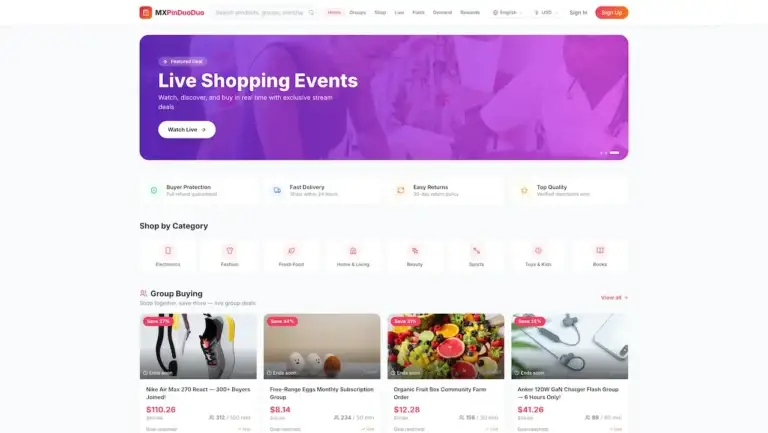
03A marketplace for group buying: shoppers join forces on a single order and reach tiered discounts.
Explore Solution
04This marketplace platform carrying your name, delivered together with its complete source code.
Explore Solution09The business case
Market Benchmarks
Independent Benchmarks for Online Marketplaces: 2025-2026 Data
Those revenue models come from us; the figures that follow come from elsewhere. Each is a published number from Etsy, Amazon, BCG or the US Census Bureau, shown as published. Together they indicate the size online retail has reached, the share a listed marketplace retains from every sale, and the scale of seller services at the biggest incumbent, giving you outside sources to check the business case against.
Online Channels Take 17.1% of Retail Sales in the US (Q2 2026)
In the second quarter of 2026, retail e-commerce sales reached $340.2 billion by the estimate of the US Census Bureau, up 12.2 percent from the second quarter of 2025, while all retail sales rose 6.7 percent. E-commerce therefore made up 17.1 percent of total retail sales. The seasonally adjusted figures were released on 18 August 2026 and could be revised.
Etsy's Revenue Take Rate Reached 24.2% in 2025
In its 2025 annual report, Etsy reports $2,883.5 million of revenue against $11,916.9 million of gross merchandise sales. The take rate, 24.2 percent, compares with 22.3 percent for 2024. For Etsy, take rate means revenue over GMS. The revenue combines $2,007.2 million from the marketplace and $876.3 million from services, which means it covers more than sales commission.
Third-Party Seller Services Brought Amazon $172.2bn
Amazon's annual report for 2025 shows $172,162 million of net sales from third-party seller services, against $156,146 million in 2024 and a consolidated total of $716,924 million. This line is where Amazon books the commissions, plus related fulfillment and shipping fees, that it collects from sellers. By our own arithmetic on the reported numbers, that works out to roughly 24 percent of total Amazon net sales, with growth of about 10 percent.
India's E-Commerce Market Is on Course for $280-300bn by 2030
A February 2026 study from Boston Consulting Group, drawing on a survey of over 12,000 shoppers in urban and rural India, projects e-commerce there reaching $280-300 billion by 2030. BCG attributes the growth to quick commerce, social and chat commerce and platforms focused on a single category, along with higher participation among rural consumers, women and smaller cities.
US Census Bureau, Quarterly Retail E-Commerce Sales, 2nd Quarter 2026, 18 August 2026 - census.gov
Etsy, Inc., Form 10-K for the fiscal year ended 31 December 2025, filed 19 February 2026 - sec.gov
Amazon.com, Inc., Form 10-K for the fiscal year ended 31 December 2025, filed 6 February 2026 - sec.gov
Boston Consulting Group, $300 Billion Connected Commerce: How clicks and bricks are defining the future of India's E-commerce, 24 February 2026 - bcg.com
Every figure is taken from the publisher's own estimates, forecasts or filings and appears as published. Census numbers may be revised. The Amazon percentages for share and growth come from our own arithmetic on reported figures. All of this describes the market, not how any Miracuves-built platform performs, and none of it projects revenue for your business.
Marketability
Market Appeal, Earning Potential and Where Demand Is Heading
On the Etsy clone Miracuves builds, value grows with each seller who joins, not each order that lands, because subscription revenue is charged whether or not anything sells. The scenarios below are illustrative and calculated from inputs the operator sets; none of them is a forecast or a promise.
- 01
Subscriptions Are the Stable Line
Listing plans bill monthly whether or not a maker sells, which on a long-tail marketplace is the revenue that actually holds. Commission rides on top of it rather than carrying the business alone.
- 02
Every Seller Is a Subscription
A listing plan bills monthly whether or not a maker sells, so revenue tracks roster size rather than order volume, which is a far steadier line on a long tail.
- 03
Placement Beats Commission Rises
Small sellers resist a higher cut but will pay for visibility they control. Featured slots and sponsored positions grow revenue without the churn a fee increase causes.
- 04
The Asset Is the Roster
A community of makers who trust you is far harder to rebuild than the software they sell through. The platform is what lets you own that relationship rather than rent access to it.
- Order commission is configurable globally, by category or by vendor
- Subscription based plans for vendors, bringing product limits and lower rates
- A COD handling fee alongside delivery margin earned on the shipping charge
- Vendors can purchase featured placement and sponsored positions
- A settlement fee charged each time a vendor or agent makes a withdrawal
- Add-fund bonus tiers, and wallet float retained in the gap between payout runs
- You own the sales channel instead of renting a listing on another platform
- Customer records with order history attached, ready for direct marketing
- The vendor network is itself an asset
- The commission rate is yours to set, and no one sets it on your behalf
- Last-mile delivery carries your brand rather than an aggregator's
- Source code you may extend, license or resell
About these figures: every scenario is basic arithmetic using values the operator chooses, there to make the levers concrete. None is a projection, and Miracuves does not guarantee any commercial outcome. Six days is the time we need to deploy the base platform, not the length of your route to market.
An operator who already runs the fair, the forum or the guild converts that community into sellers, charging a listing plan and a commission on each sale.
Plan price, commission, placement fees and the delivery charge are all yours to set, and because commission is stored per seller, one maker can be repriced without touching the rest. You buy the platform once; the costs that recur are hosting, gateway fees and the moderation time that a growing roster calls for.
A founder who can already call on suppliers runs a tight, specialized catalog instead of an everything store, competing on relevance rather than range.
Our deployment time covers building the base only. Filling the catalog, signing up vendors and going to market fall to the operator and determine the actual timeline.
A studio launches the platform separately for each client or territory, every deployment carrying its own full branding, all from one codebase it already knows.
Licensing per deployment is settled in a commercial discussion, rather than listed here as a price. The platform contributes deep branding options and module toggles, which make repeated deployment workable.
10Why Miracuves
Why Miracuves
Miracuves Set Against Other Etsy-Style Marketplace Builders
A team launching a many-seller craft marketplace can hire freelancers, engage an agency, customize a generic commerce script, or take full ownership of the platform with Miracuves' Etsy clone. Whoever you meet, ask them to onboard a seller in front of you, give that seller a rate of their own, bulk approve a batch of listings, hit the cap on a plan, pay out several small sellers at once and show where KYC documents end up.
What Founders Pick Us For
- 01
One Quote, No Range
The price is one figure, $2,799, never a "from" number. Scope is written down before work begins, and any change to it is quoted openly rather than absorbed in silence.
- 02
Built for the Seller Side
Self-service onboarding, per-seller commission, listing-limited plans and bulk moderation. Most marketplace scripts assume a curated handful of vendors and quietly fall apart at the five hundredth.
- 03
Full Code at Delivery
The backend, together with each of the three Flutter projects, goes straight into your repository. The code is readable and unobfuscated, with no license server, and no vendor can later raise seller fees for you.
- 04
Six Days of Build Time
We install it on your servers and get the queue, scheduler and storage running. Since nothing has to be invented, the week goes to setup and branding, not building.
- 05
Easy-to-Hire Tech
It runs on Laravel, MySQL, Redis and Flutter, which means whoever takes over maintenance after us can be hired through normal channels and not through us.
- 06
Honest Maturity Labels
Throughout this page, items labeled configuration-required or integration-required are marked as such, and whatever depends on your credentials is named outright, never implied to be included.
How to Choose an Etsy Clone Development Company
Pick the vendor whose seller onboarding, payouts and moderation still hold up once your maker roster passes five hundred shops.
What to look for Miracuves
- Proof in the product Six live front ends on one data set, open to try
- Seller-side depth Self-serve signup with KYC, a commission rate and plan cap per shop, bulk listing approval
- Payouts at volume A wallet per seller with append-only history and a withdrawal approval queue
- Source ownership Unobfuscated Laravel 12 source plus all three Flutter apps, handed over with no license callback
- Time to launch Six working days on your servers
- Support after launch Launch guidance for 60 days, then priority fixes for six months and update releases for a year
Walk away from any vendor who
- Cannot onboard a seller in front of you
- Offers one commission rate for every seller
- Pays makers by manual transfer instead of a queue
- Cannot show where KYC documents end up
- Prices with a from figure instead of one number
Put Us Side by Side and See Why Operators Pick Us for Many-Seller Commerce
| Criteria | MiracuvesMiracuves Etsy Clone | Generic Clone Script | Custom Dev Agency |
|---|---|---|---|
| Time to Launch | 6 days (Production) | Unknown / DIY | 6-9+ months |
| Source-Code Ownership | Full | Often limited / encrypted | Usually yes |
| Feature Depth (Etsy-like) | High (catalog, payouts, fleet) | Basic (single-vendor storefront) | Depends on budget |
| Security & Compliance | Strong (built-in controls, ready for GDPR) | Minimal | Varies widely |
| Scalability & Performance | Cloud & CDN-optimized | Rarely considered | Depends on architecture |
| Monetization Options | Multiple (commission, plans, delivery) | Usually commission only | Custom (more time & cost) |
| Admin & Analytics | Full-fledged dashboard | Very basic or missing | Custom build (extra cost) |
| Cost vs Speed vs Quality | Balanced | Cheap but risky | High cost, slow |
| Ongoing Support & Updates | Available with clear plans | Usually none | Depends on contract |
Release Timeline
Release Log for the Maker Marketplace
| Version | Date | What’s New |
|---|---|---|
| v4.0 | Aug 2026 | Upgraded to Laravel 12. An AI module covers catalog copy and SEO, and a clearance storefront plus restock subscriptions have been added. |
| v3.6 | 2025 | A deliveryman app offering live location, OTP proof of delivery and a ledger of cash collected. |
| v3.4 | 2025 | Vendor subscription packages that include trials, grace periods and their own commission rate for each tier. |
| v3.0 | 2024 | A tax module with rates per zone, a wallet ledger for each actor, and a state machine for refund status. |
Let’s build together
Let's turn your idea into a running platform.
Book a free consultation and leave with a firm timeline and frank answers. We value your trust over a fast sale.
- Reply in 24 hrs
- Free consultation
- No lock-in contracts
- Full source code ownership
11Learn more
Blog & Resources
Latest Articles and Guides on Marketplaces Like Etsy
Read about marketplace economics, onboarding vendors, running deliveries and the choices worth making before launch.


Product6 questions
01What does an Etsy Clone App actually refer to?
An Etsy Clone App is a ready-made marketplace for independent makers, in the handmade and small-batch model Etsy made familiar: sellers register themselves, list their own work and receive payouts, buyers browse and purchase, your agents handle delivery, and you take commission on each sale. In the box, the Miracuves Etsy Clone comes with an operator console made of role-scoped modules, three Flutter apps that each run on Android and iOS, a seller panel and a web storefront. What makes it a maker marketplace rather than generic retail is that everything on the seller side assumes many small sellers rather than a few large ones.
02What sets this apart from your Amazon Clone?
The platform is the same; what changes is how each page frames the operating model. The Miracuves Amazon Clone fits a broad marketplace of many vendors, and the Etsy Clone instead suits a marketplace made up of numerous small, independent sellers and so puts continuous moderation, buyer-to-seller chat, self-service onboarding, per-seller commission and subscription tiers that cap listings first. Both come from one codebase at one price, so decide on whether you anticipate fifty sellers or five thousand.
03Does it support made-to-order or personalized items?
Yes, in two ways. Buyer-to-seller chat with attachments ships in the base build, and that is where makers and buyers agree custom arrangements. For structured personalization, engraving fields and a quote workflow, the options and quote builder is an add-on that Miracuves scopes and prices for your marketplace.
04How do sellers get onboarded at scale?
Entirely self-service, which is the only way this model works. A maker registers, uploads KYC documents and a shop profile, and lands in an approval queue. An operator approves or rejects with a note, and on approval the shop and storefront exist immediately. Nobody is interviewed, and nothing publishes on the Etsy Clone before a human has looked at it.
05What does a seller actually get?
A shop of their own: product CRUD with variants and stock, an order queue, AI-assisted descriptions, refund responses, buyer chat, sales analytics, a wallet and a withdrawal request flow, in the web panel or in the seller app on Android and iOS. For a maker selling a handful of items on an Etsy-style marketplace, that is the whole business rather than a supplementary tool.
06How does the AI module work in practice?
The AI module inside the Miracuves Etsy Clone drafts image alt text, tag suggestions, SEO titles and product descriptions via OpenAI, applying token quotas per feature and logging the cost of each call. Most sellers on a maker marketplace are craftspeople, not copywriters, so this is genuinely useful. Because it uses your own OpenAI key, it counts as integration-required.
Budget & timeline5 questions
07What is the price, and what is the timeline?
The Miracuves Etsy Clone sells for a one-off $2,799, is live within six working days on your infrastructure and runs under your brand. Extensions such as an options and quote builder are scoped and priced as separate projects, typically two to eight weeks.
08Will I receive the source code, and do the iOS apps come with it?
Source yes: at handover, the complete Laravel backend and every one of the three Flutter projects of the Etsy Clone are transferred into your repository, nothing obfuscated, with no license callback and no continuing dependency on Miracuves. iOS yes: the base price covers all three apps on Android and on iOS, so makers and buyers can use either phone. Building, signing and submitting the iOS versions to the App Store is included in that price too, while Apple's review time falls outside the six days.
09What falls outside the six days?
Whatever has to be your own: merchant approval from the gateway, a Firebase project, an email and SMS provider, plus an OpenAI key and, above everything, seller recruitment - on an Etsy-style marketplace that is the whole business, and it takes much longer than any build. Miracuves needs six days to deploy the base platform; that figure is not your timeline to reach the market.
10What makes Miracuves a good partner for a many-seller marketplace?
It has completed 9,000+ projects for 6,000+ clients, and its catalog offers 90+ ready-made clone solutions across marketplace and eCommerce platforms. Aimed at the seller side at scale, this clone offers self-service onboarding, listing-limited plans, bulk moderation and per-seller commission. Its price is fixed at $2,799, never a range, and it offers the options and quote builder as a scoped add-on. Every ready-made solution comes with 60 days of launch guidance, then a 6-month window of priority bug fixes and 12 months of update releases. Support is staffed from 10:00 to 19:00 IST, Monday to Saturday, with a first response in under 2 hours. Each company figure appears with its scope on the Miracuves facts page.
11What does a maker marketplace lack out of the box?
Out of the box, custom arrangements run through buyer-to-seller chat. A personalization, engraving and made-to-order options system with a quote workflow comes as the options and quote builder add-on, scoped and priced in writing.
Sellers & money3 questions
12Which payment providers come included?
The Miracuves Etsy Clone integrates eleven gateways: Flutterwave, Iyzico, Mercado Pago, PayPal, PayTabs, Paytm, PayUZ, PhonePe, Razorpay, SSLCommerz and Stripe. Offline methods defined by the operator, along with cash on delivery, are included too. Every gateway needs your own merchant credentials, so each carries an integration-required label.
13Can I charge different sellers different rates?
Yes, and on a maker marketplace it matters. In the Etsy Clone, commission can be defined platform-wide, then by category, by seller or per individual product, taken on completion and reversed on refund. That granularity lets you offer better terms to a maker worth keeping without repricing everybody, and reduced rates can be attached to subscription tiers as a paid perk.
14How do seller payouts work at this volume?
As a queue rather than a series of transfers. Each seller carries their own wallet with an append-only history, requests a withdrawal against operator-defined methods, and you approve, deny or mark it processed. With hundreds of sellers withdrawing on different cycles that has to be a process, and the history is what makes any disputed balance re-derivable.
Security7 questions
15Is the Etsy Clone secure, and does it carry a certification?
These controls are already in place: append-only ledgers, webhook signature verification, repository-level tenant scoping, HTML sanitization of untrusted seller content, parameterized queries, CSRF protection and Argon2id hashing. The Miracuves Etsy Clone fits a penetration test, and the evidence reviewers ask for is straightforward to collect; both slot into the launch plan.
16Is a ready-made Etsy clone better than custom development?
For a maker marketplace, usually yes. Self-service seller onboarding, per-seller commission, listing-limited plans, bulk moderation and split payouts already run in the live demo, at one fixed $2,799. A from-scratch build is a long program whose price is only known after scoping. Commission custom work, such as an options and quote builder, with the scope and price agreed in writing first.
17What is the business model of a marketplace like Etsy?
A maker marketplace like Etsy earns from its seller roster more than from single orders. The revenue table on this page covers commission on each sale, subscription plans that cap listings, delivery charges and ad slots that sellers bid for. You decide each rate in the console, and Miracuves takes no slice of any maker sale.
18What is the step-by-step process to launch my Etsy clone?
Start in the live demo, then brief us on your seller model, brand and hosting. Over six working days we map the model, set up environments, configure the seller pipeline and plans, apply branding and catalog structure, connect payments and policies, and finish with a demo and code handoff. The three apps then go to Google Play and App Store review, which runs outside those six days.
19Can I customize the Etsy clone script for my niche?
Yes. The complete Laravel backend and all three Flutter projects are handed over unobfuscated, so either your developers or ours can reshape screens, categories and rules for your niche. Anything your model does not use can be switched off in the console. A personalization options and quote builder is available as a priced add-on.
20Do I get a website and mobile apps with the Etsy clone?
You get both. One REST API serves the storefront, the seller panel and the operator console, and three Flutter apps run on Android and iPhone. The base price covers all three apps with iOS included, deployed on your infrastructure with your branding in six working days, and the source for every part transfers to you.
21Can I approve or reject seller listings in bulk on an Etsy clone?
Yes. Bulk moderation is part of the base build, so you can approve a batch of listings together instead of one at a time. New shops also wait in an approval queue where you approve or reject with a note, and listing-limited plans cap how much each seller can publish.
Go Deeper on Marketplaces Like Etsy
The service behind it, one-time pricing, reading on the product and the wider industry.
E-commerce app development
See the service→ GuideWhy Startups Choose a Ready-Made Handmade Marketplace Platform Over Custom Development
Read the guide→Business model
The way a platform of this type is organized, along with the origin of its income.
Read the guide→ GuideWhat Features Should a Handmade Marketplace Platform Include for Independent Makers and Buyers?
Read the guide→ GuideHow Safe is a White-Label Etsy App? Security Guide 2026
Read the guide→Disclaimer
Miracuves is an independent software development company. We are not affiliated with, connected to, sponsored by, or endorsed by Etsy.
Read our full Legal Notice & Disclaimer →“Etsy Clone” is used descriptively. It is how the software industry refers to building a platform with functionality similar to Etsy, and how clients search for it.
The entire design and codebase is built by our own team. The product contains no code, design, graphics, or content originating from the Etsy website or applications.
Etsy and all other third-party names and marks are the property of their respective owners, referenced here solely to describe the category of software offered.