
Myntra Clone App: Multi-Brand Fashion Marketplace
A launch-ready marketplace for multi-brand fashion, built around the two things that actually decide whether one works. Every colour and size is its own sellable unit with its own price and stock, and the returns pipeline is treated as core rather than as an exception, because in apparel a large share of what ships comes back.
Six surfaces, one REST API. A buyer storefront and Android app, a brand panel and brand app, a delivery agent app, and an operator console spanning catalog, orders, finance, marketing and configuration.
Go Live in 6 Days with Multi-Vendor CatalogVendor PayoutsDelivery FleetCOD ReconciliationAI Catalog CopyWhite-Label
⚡ Platform at a Glance
6
Revenue Streams
reversible commission, brand plans, shipping, deals
100%
Size-Level Stock
every size and colour is its own tracked product
1
Brand Storefront
brands get their own page, not just a seller row
0
Revenue Share
you own the source outright, with no per-seat fee
In Fashion, Returns Are the Business
A large share of what ships comes back. Reversed commission, return shipping, quality checks and restocking are first-class flows here, not an exception path added later.
Photographs Do the Selling
Multi-image galleries, zoom, colourway switching and size guides are built into the product record, because a garment that photographs badly will not sell at any price.
🚀 Ready to launch your own multi-brand fashion marketplace?









Live in Action
Myntra Clone Demo: Six Live Surfaces, One Database
Four live surfaces sharing one database. Sign in below and follow a bag end to end: a buyer picks a size, a brand accepts and packs that exact SKU, an agent delivers, and the operator watches the state change, the stock move and the money settle.
USER WEB
Browse, Cart and Checkout in the Browser
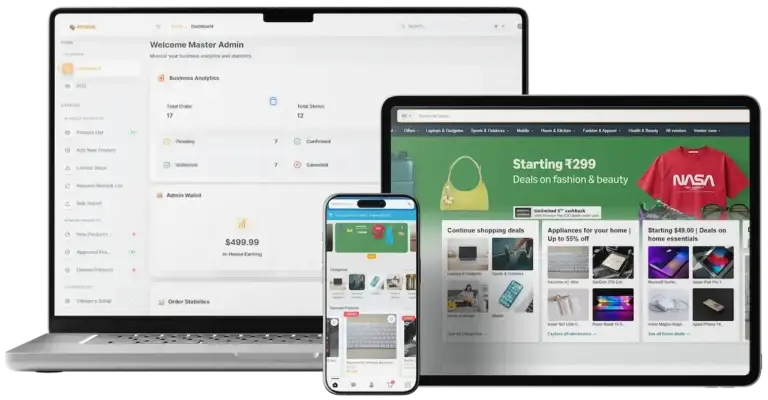
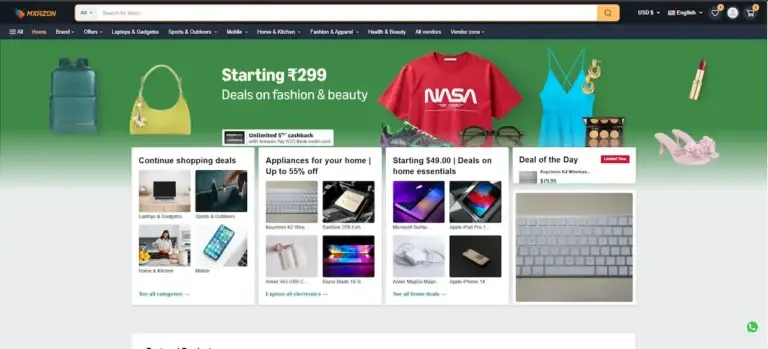
The buyer experience on the web: category tree, brand directory, search with filters and autocomplete, a product page with the variant matrix and reviews, a multi-vendor cart, and checkout with coupon, wallet and loyalty applied together.
-
Open the storefront and pick a brand
-
Sign in as a buyer using the details below
-
Trace: Brand, Variant Picker, Wishlist, Bag, Orders
-
Try: user@demo.com | User_321
USER APP
The Same Storefront on Android
The Flutter customer build against the same REST API: home rails and category browse, search, product detail with variants, cart and checkout, order tracking with live status, wallet and loyalty, plus push notifications and in-app support chat.
-
Install the Android buyer build
-
Use the buyer details below to sign in
-
Trace: Home, Search, Wishlist, Bag, Orders
-
Try: user@demo.com | User_321
SELLER WEB
Shop, Products, Orders and Payouts
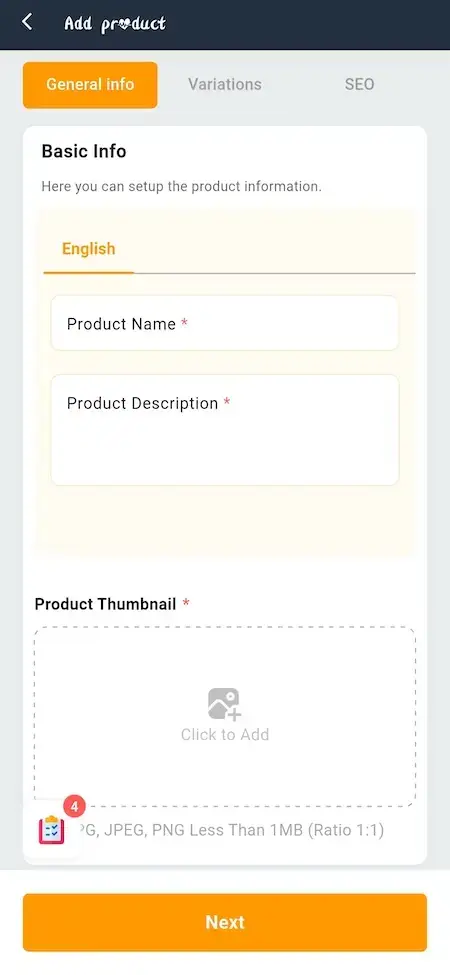
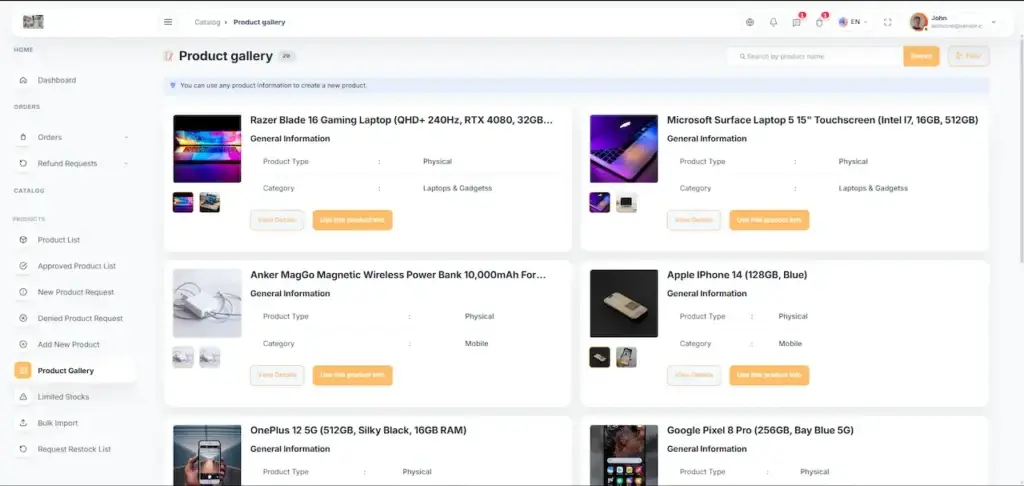
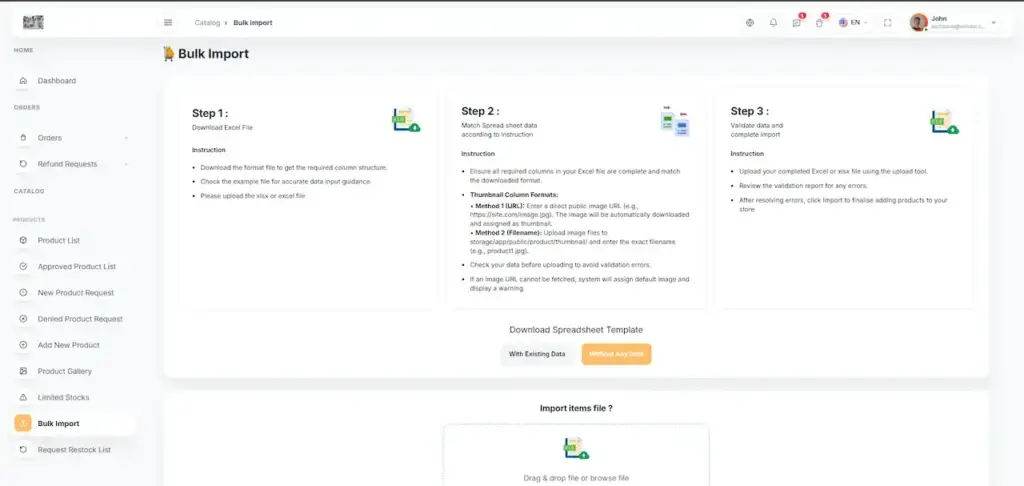
The seller panel on the web: shop profile and KYC, product CRUD with the variant matrix and stock, bulk import and export, AI-assisted descriptions, an order queue with accept and reject, refund responses, sales analytics, and a wallet showing commission with a withdrawal request flow.
-
Open the brand panel in a second tab
-
Sign in with the brand details below
-
Explore: Products, Orders, Refunds, Wallet, Analytics
-
Try: vendor4@demo.com | Vendor_$321
SELLER APP
Run the Shop from a Phone
The Flutter vendor build for sellers who work away from a desk: the live order queue with accept and reject, product and stock edits, refund responses, customer chat, wallet balance with commission visible, and withdrawal requests.
-
Install the Android brand build
-
Use the brand details below to sign in
-
Explore: Orders, Products, Stock, Chat, Wallet
-
Try: vendor4@demo.com | Vendor_$321
DELIVERY APP
Assignments, Proof of Delivery and Cash
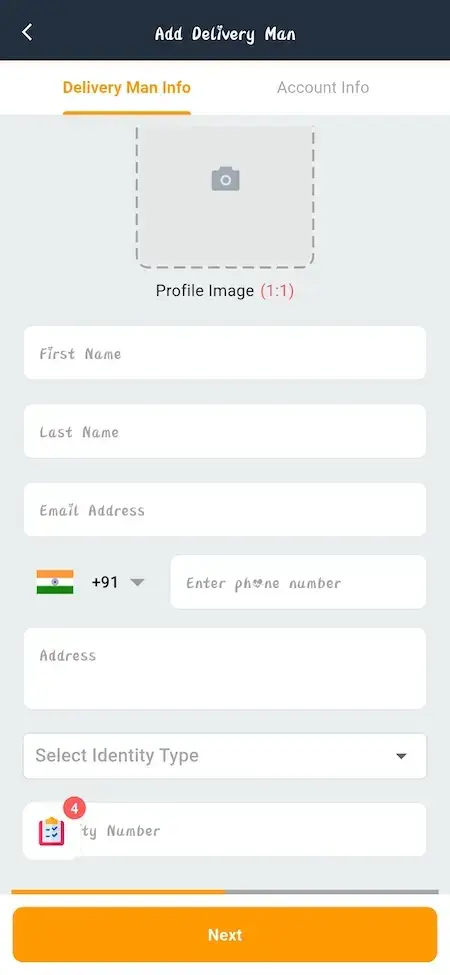
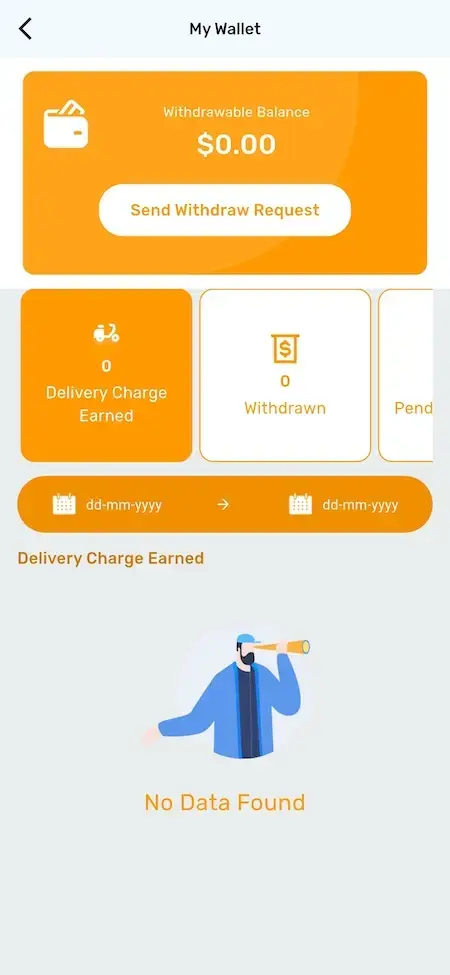
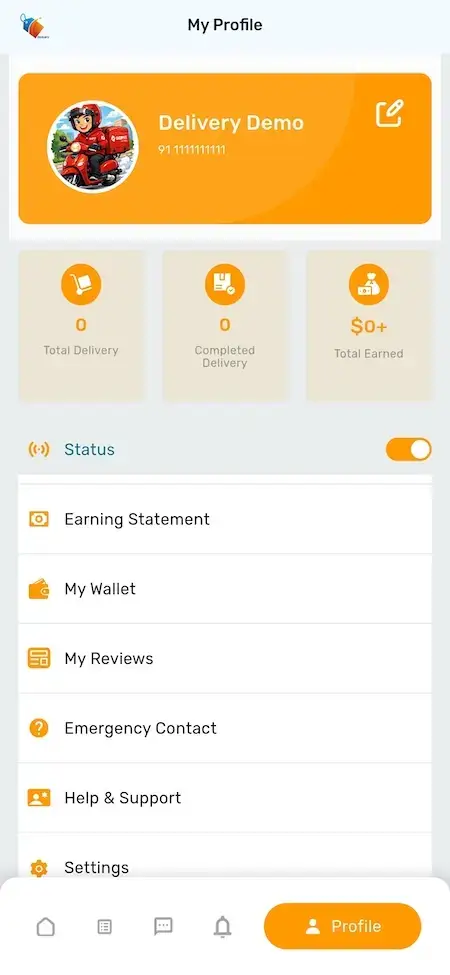
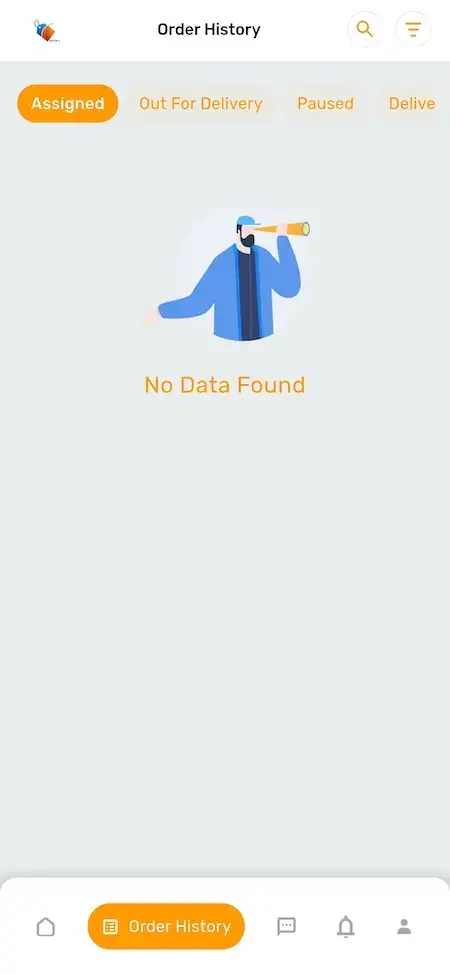
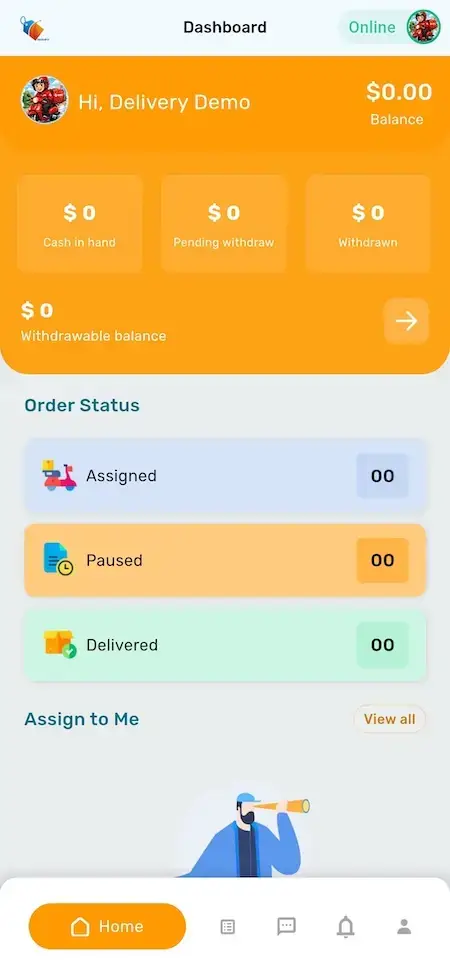
The last mile: an assignment feed with accept and reject, navigation to the vendor for pickup and then to the customer, status checkpoints from picked up to delivered, one-time-code verification at the door, and a wallet separating earnings from cash collected on COD orders.
-
Install the Android agent build
-
Use the agent details below to sign in
-
Explore: Assignments, Pickup, OTP Handover, Earnings
-
Try: delivery@demo.com or +91 9876543212 | Delivery_$321
ADMIN DASHBOARD
Catalog, People, Finance and Configuration
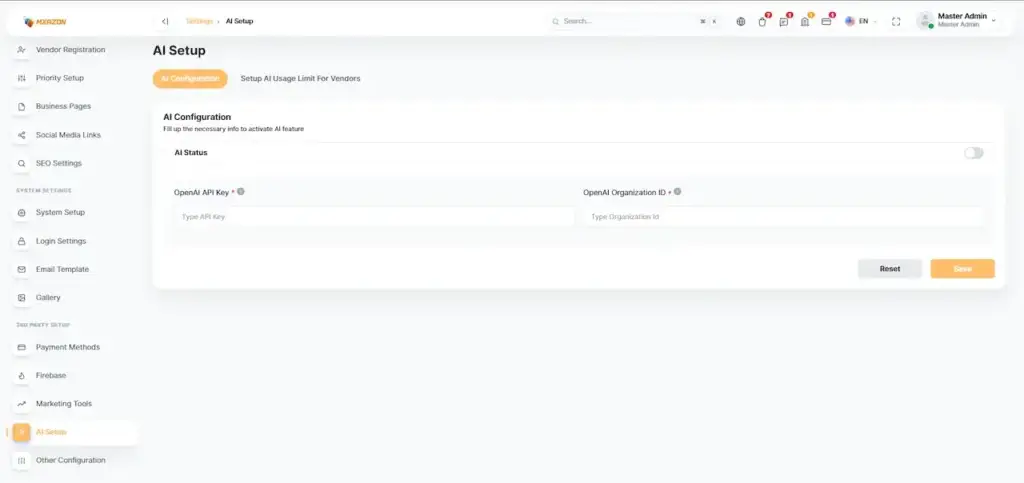
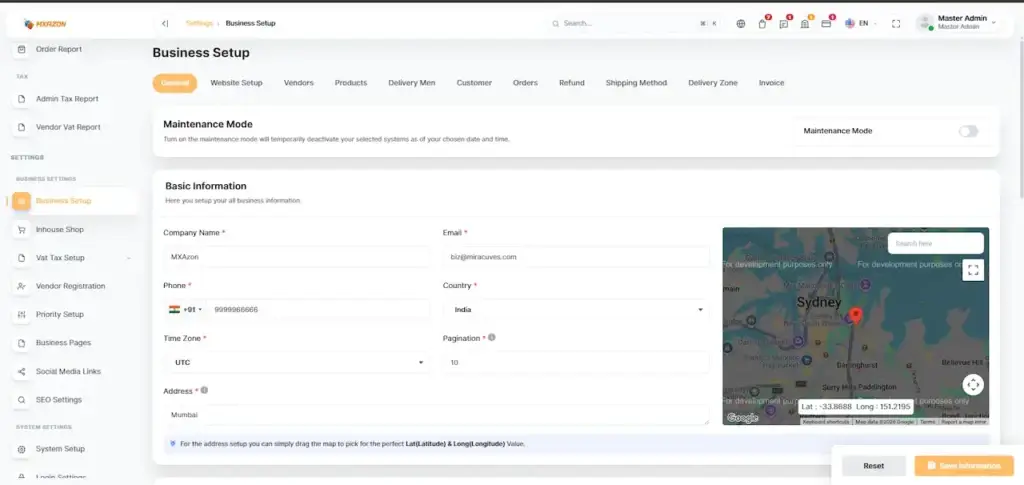
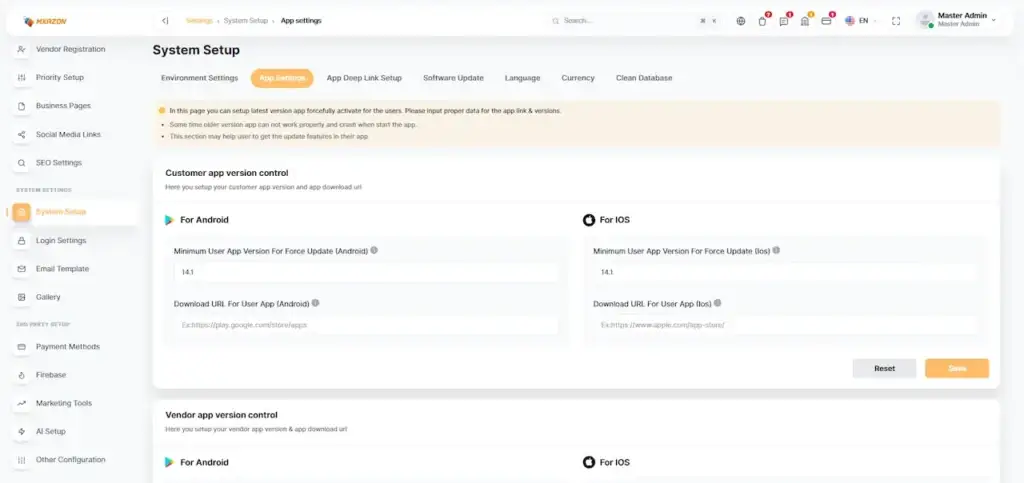
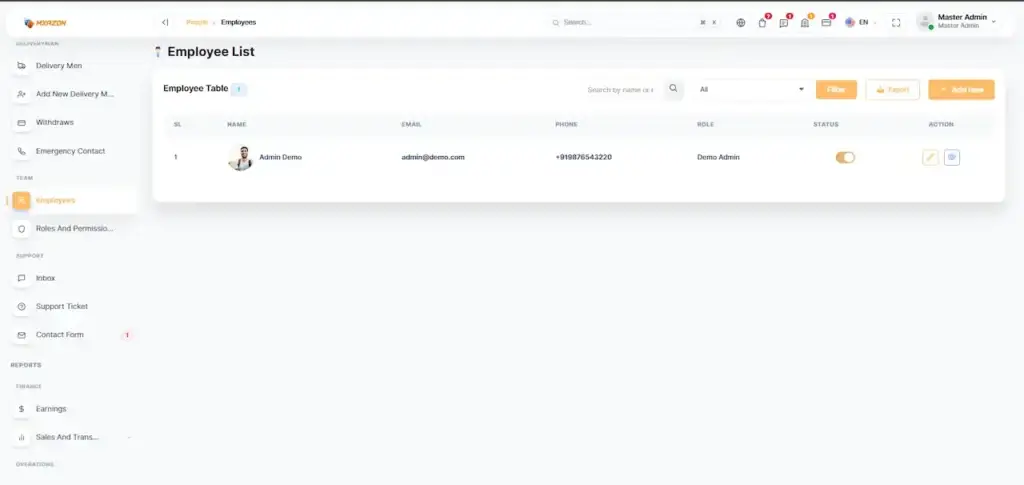
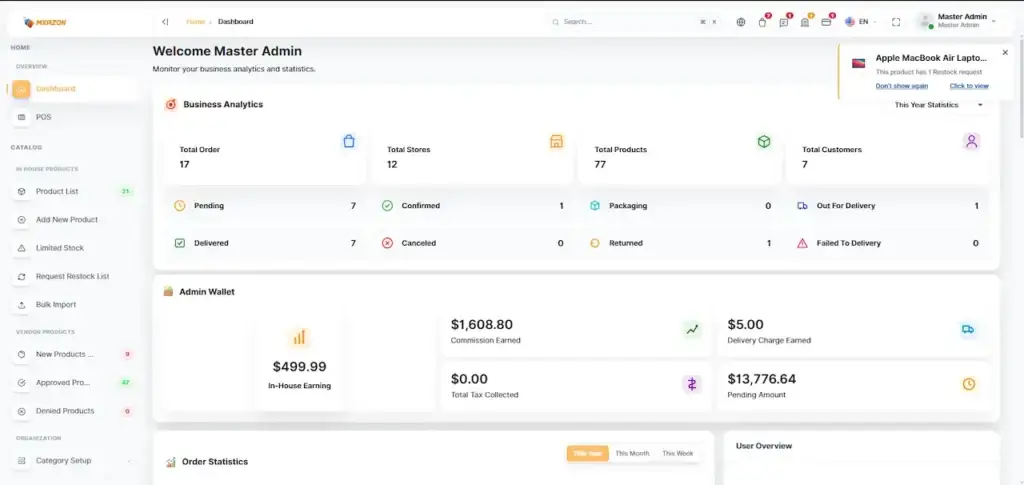
The operator cockpit: product moderation, cross-vendor orders with a full status timeline, refund and withdrawal queues, vendor and deliveryman approval, commission and tax setup, marketing, reports, and every business rule held as configuration rather than code.
-
Open the operator console in a third tab
-
Sign in with the operator details below
-
Explore: Moderation, Orders, Payouts, Settings, Reports
-
Try: admin@demo.com | Admin_$321
Video Walkthrough
Myntra Clone Video Demo: Storefront, Vendor Flow and Operator Console
A walkthrough of the platform as an operator sees it, rather than a feature reel. It follows a single order from a customer search through the vendor queue and the delivery handover, then shows the same order in the admin console with its status history, its tax lines and the wallet entries it produced on both sides. The catalog and moderation screens follow, then vendor subscriptions and commission, then the configuration surface where gateways, currencies, languages and delivery zones are set. If a specific flow matters more than the tour, ask and we will open it live with data in it.
App Flows
Myntra Clone App Screens: Customer, Vendor, Delivery and Operator
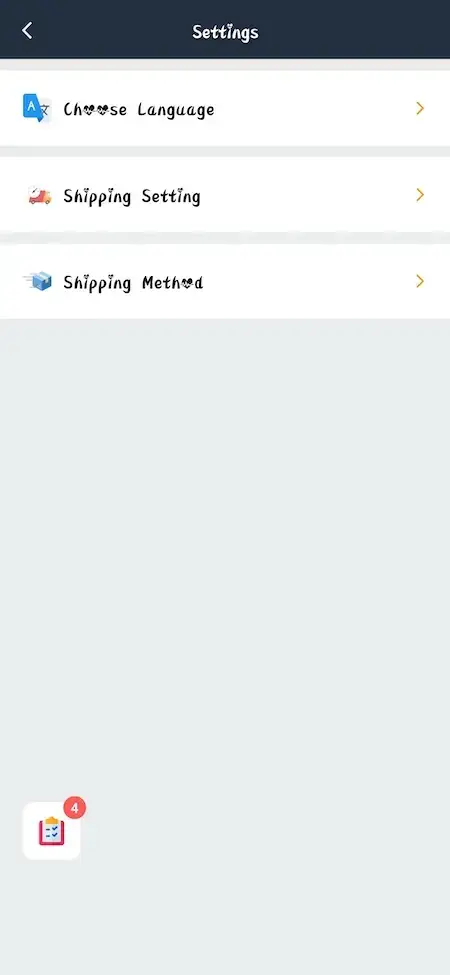
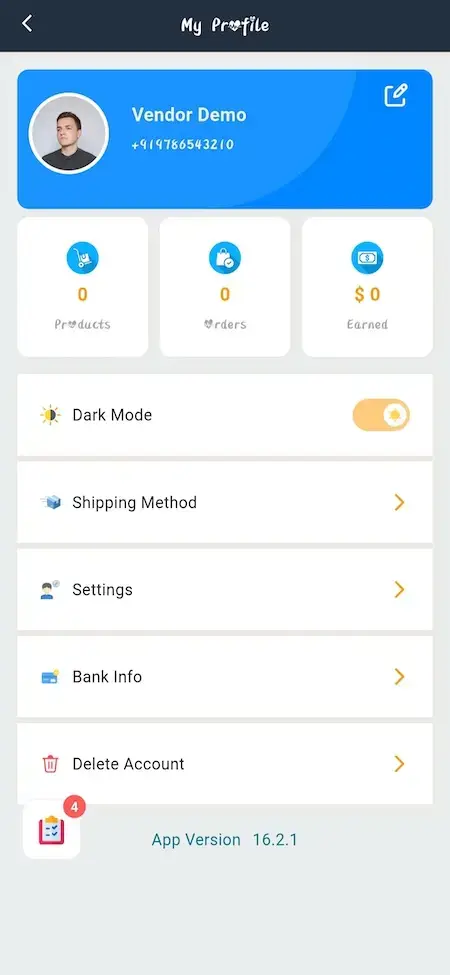
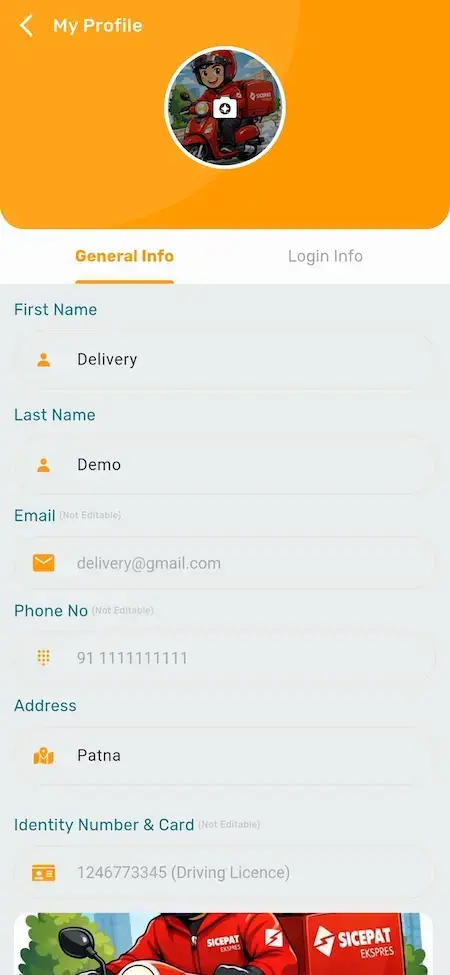
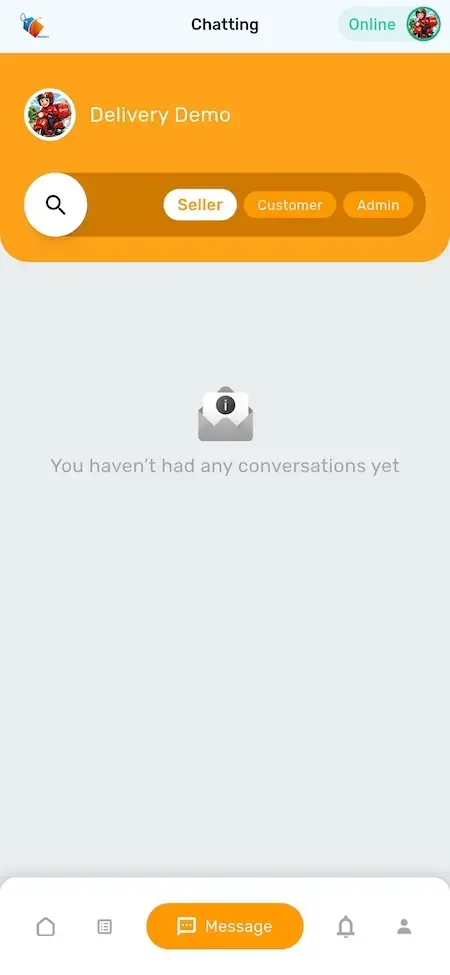
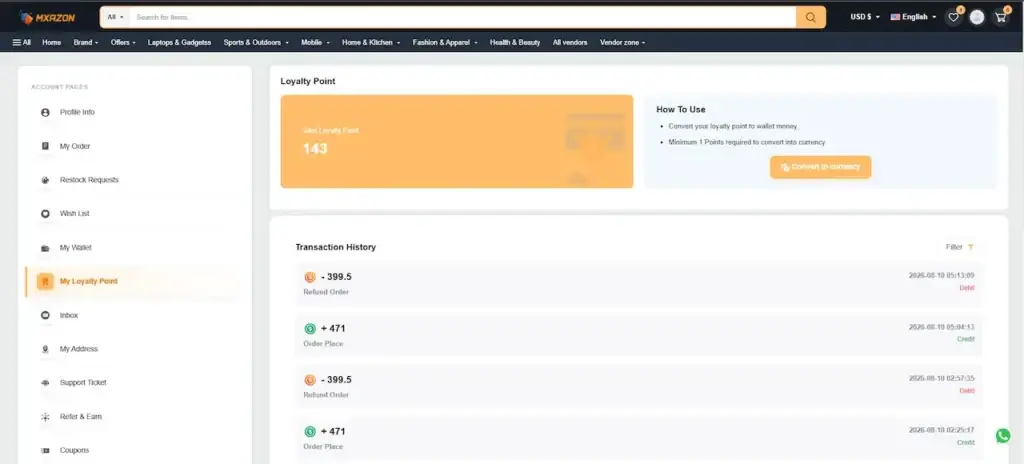
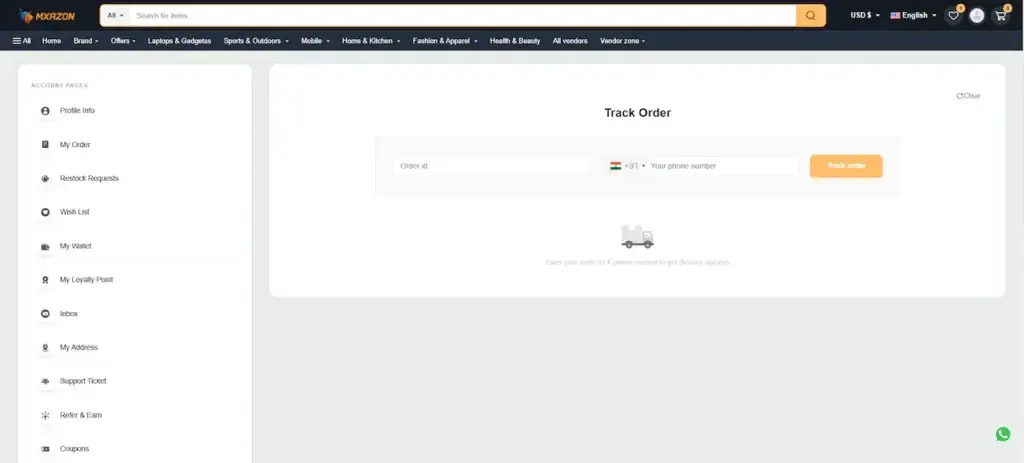
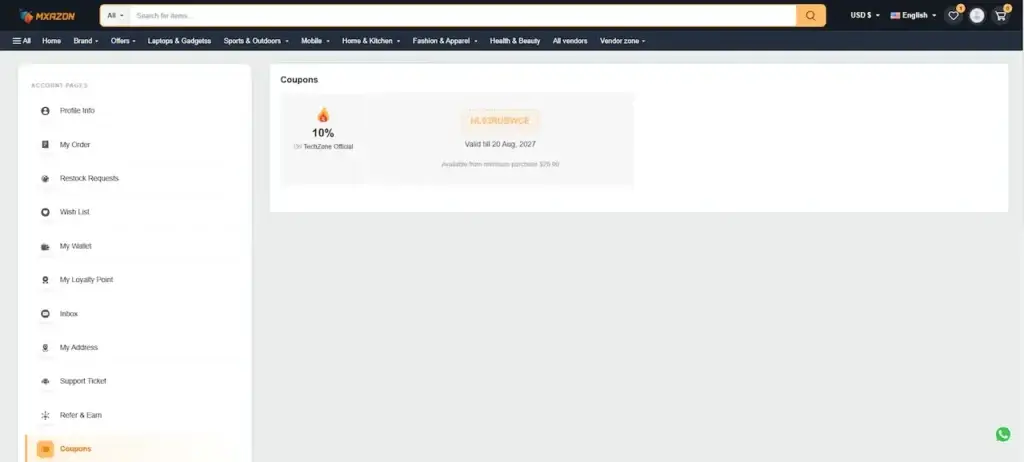
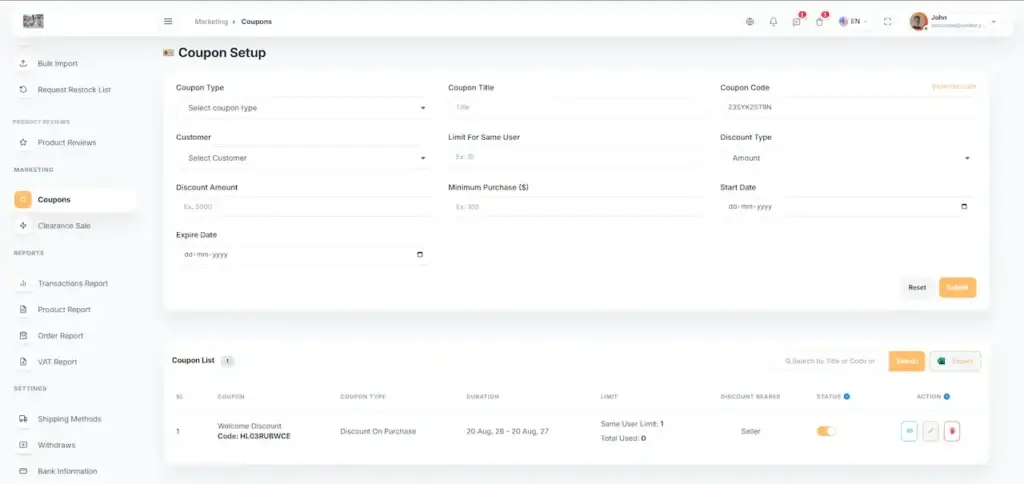
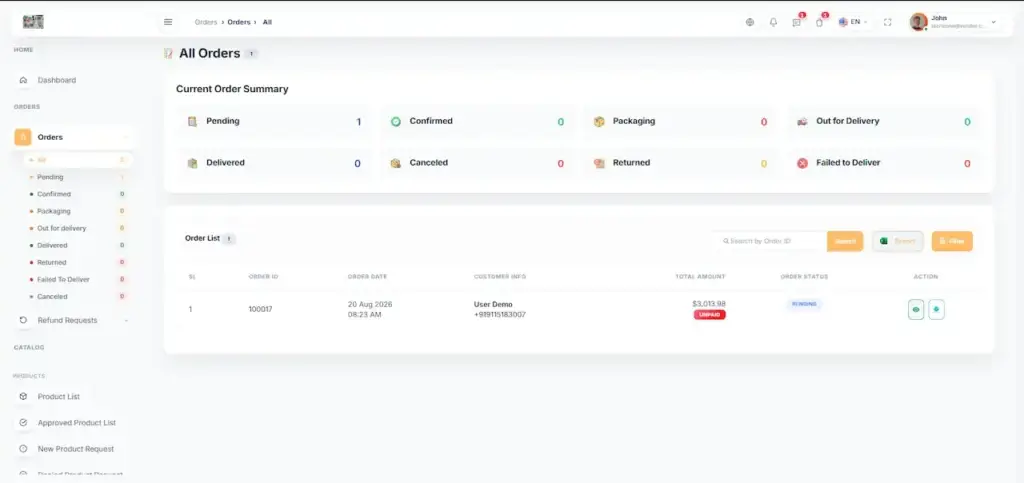
The interface across the surfaces that matter: home and category browse, search with filters, the product page with its variant matrix and reviews, the multi-vendor cart and checkout, the vendor order queue and wallet, the deliveryman assignment feed with OTP handover, and the operator console.


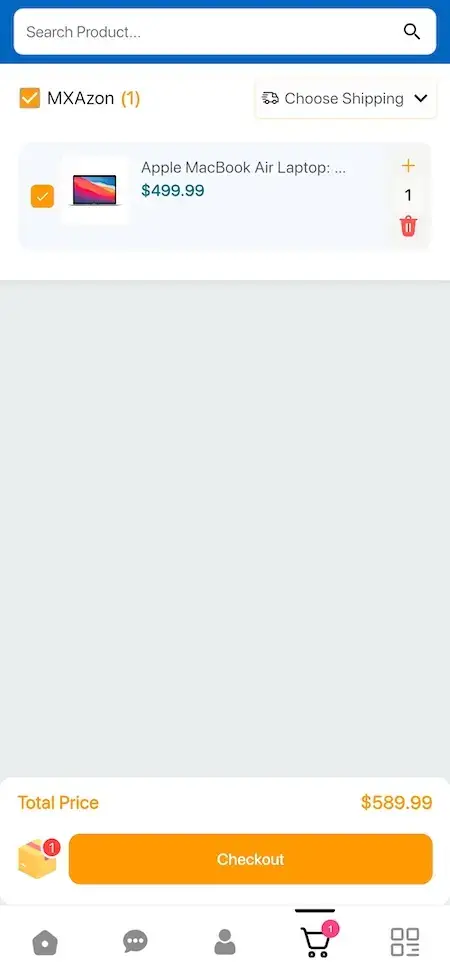
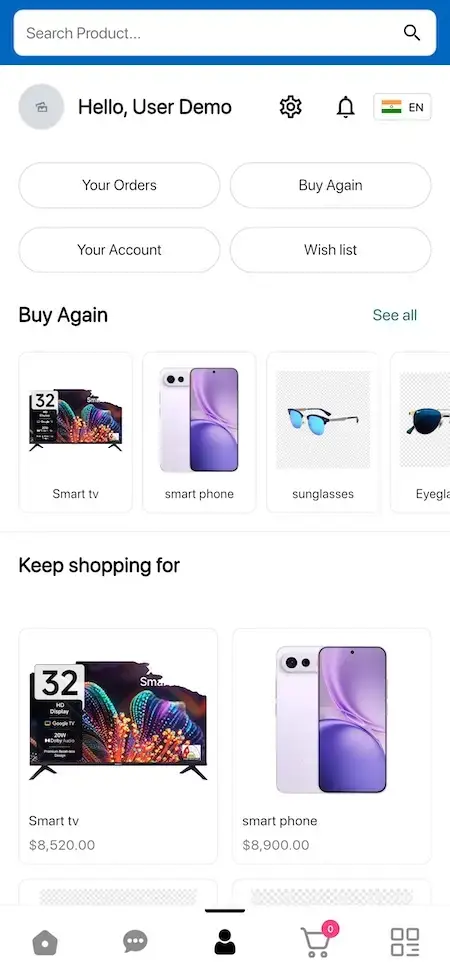
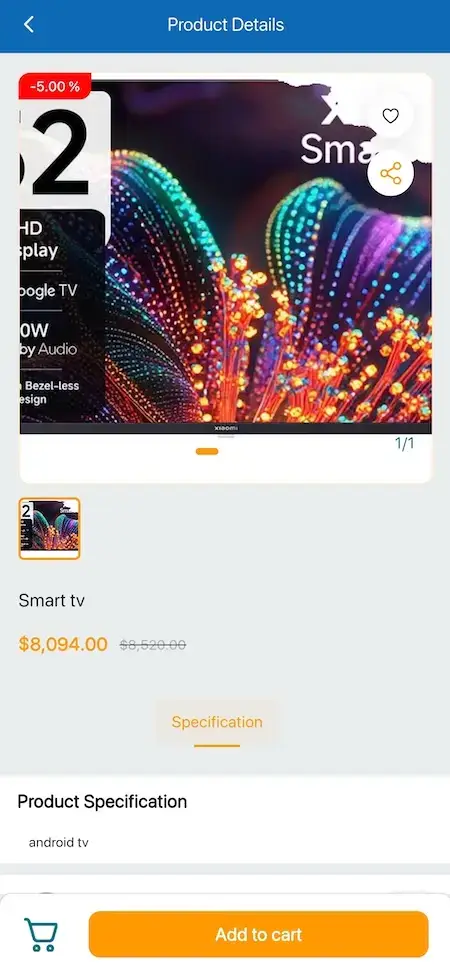
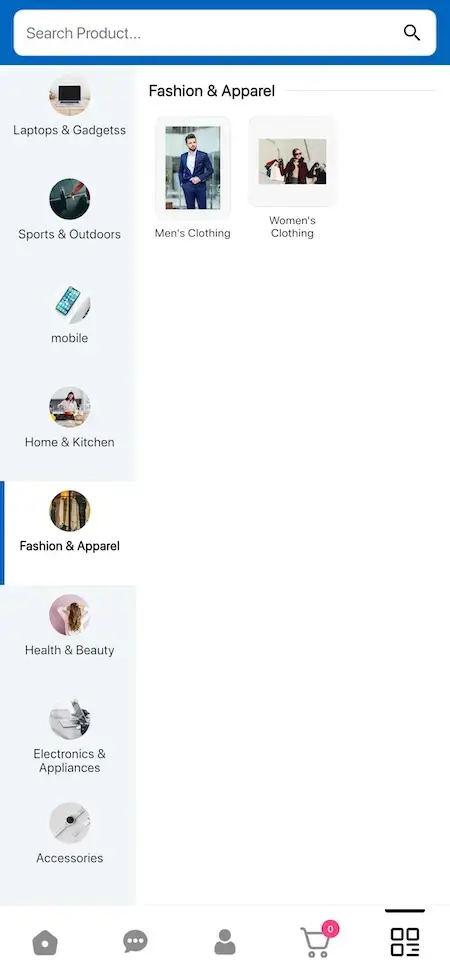
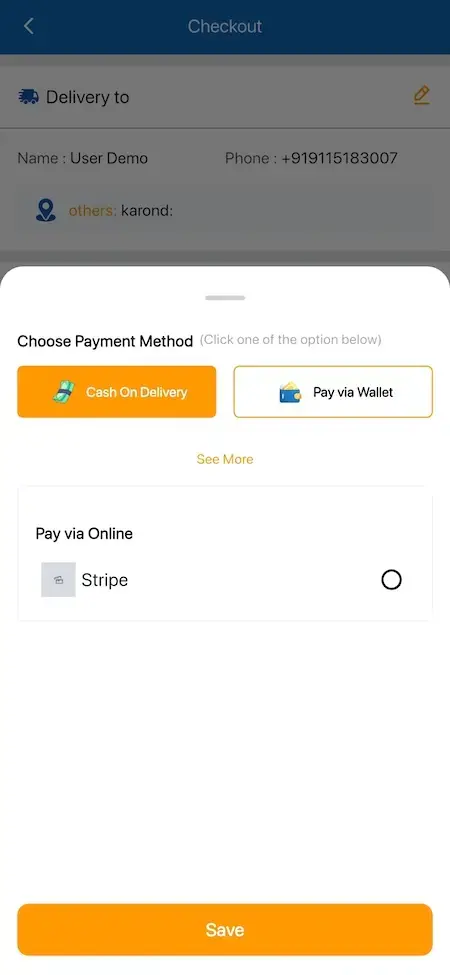
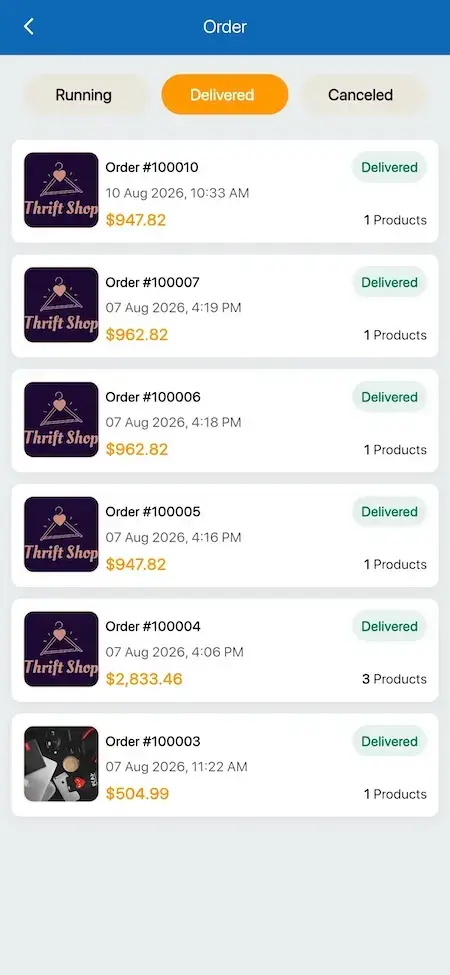

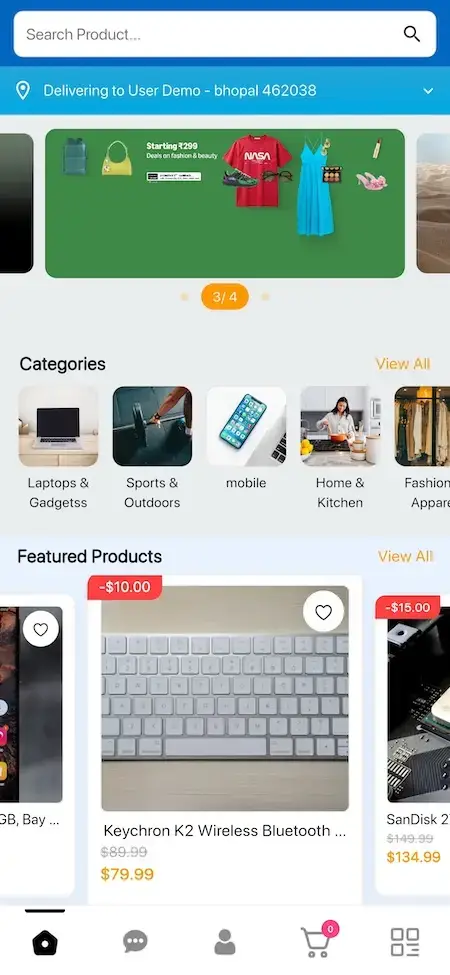
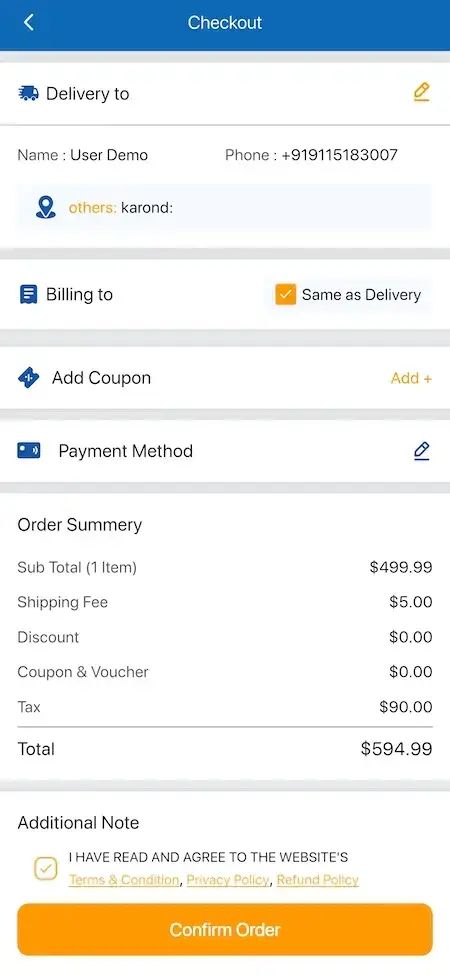
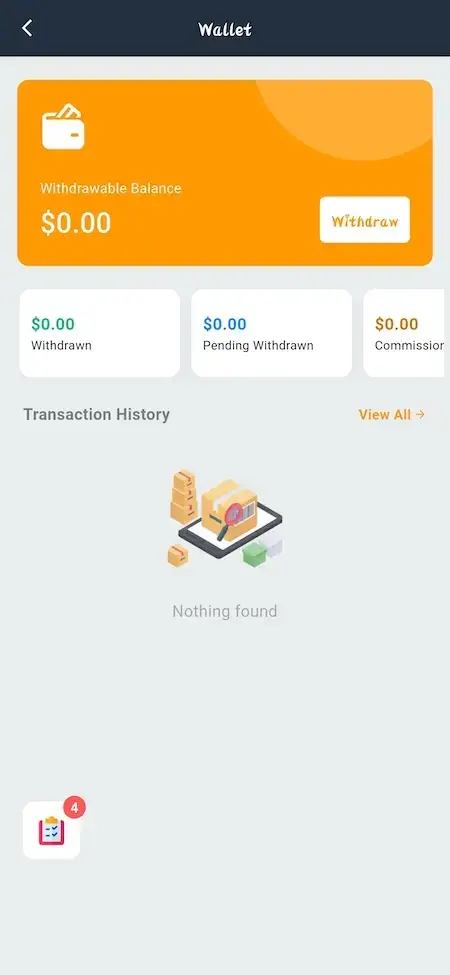

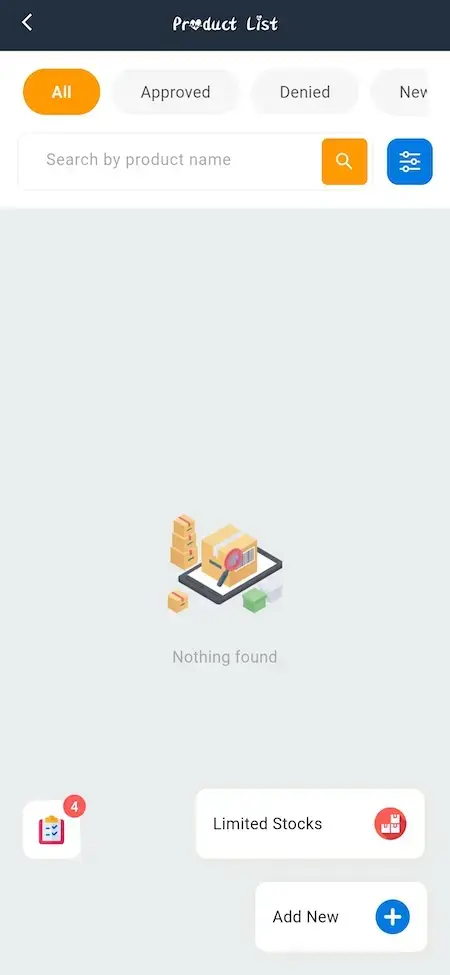
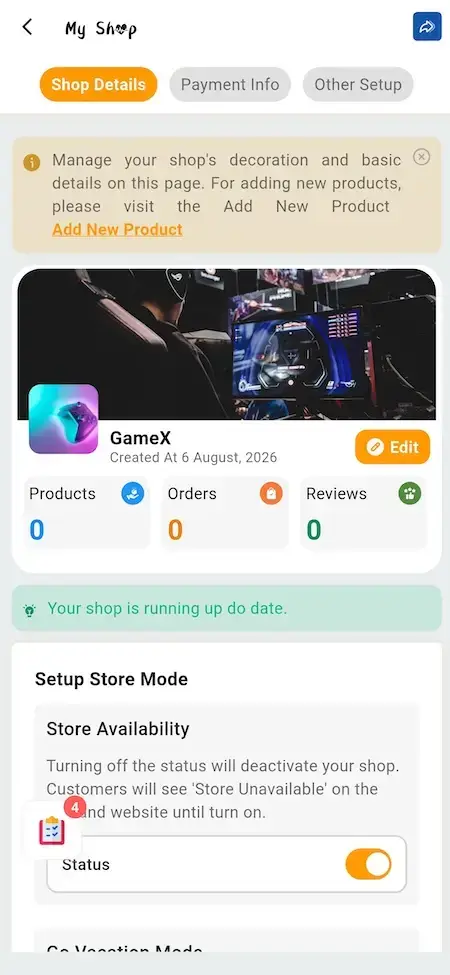
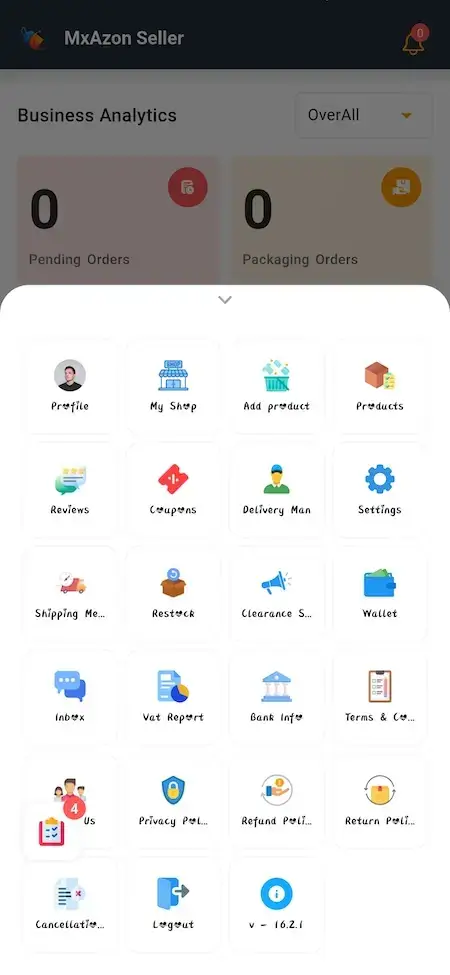
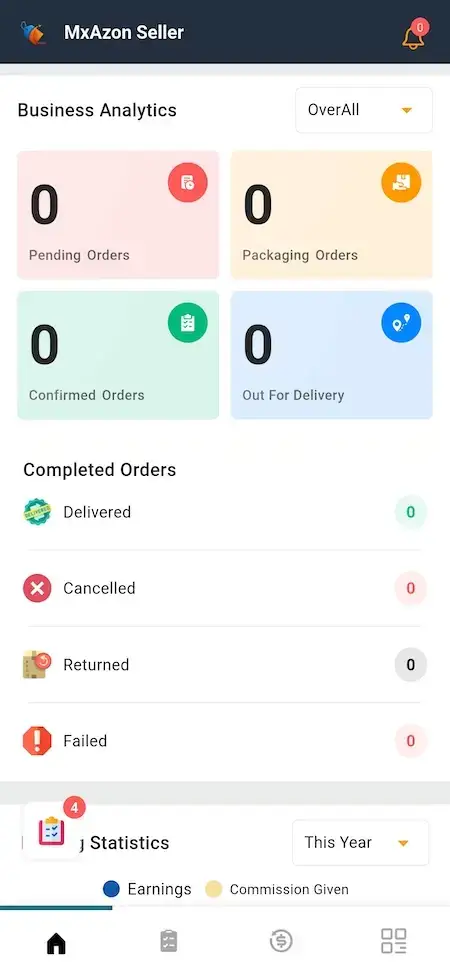




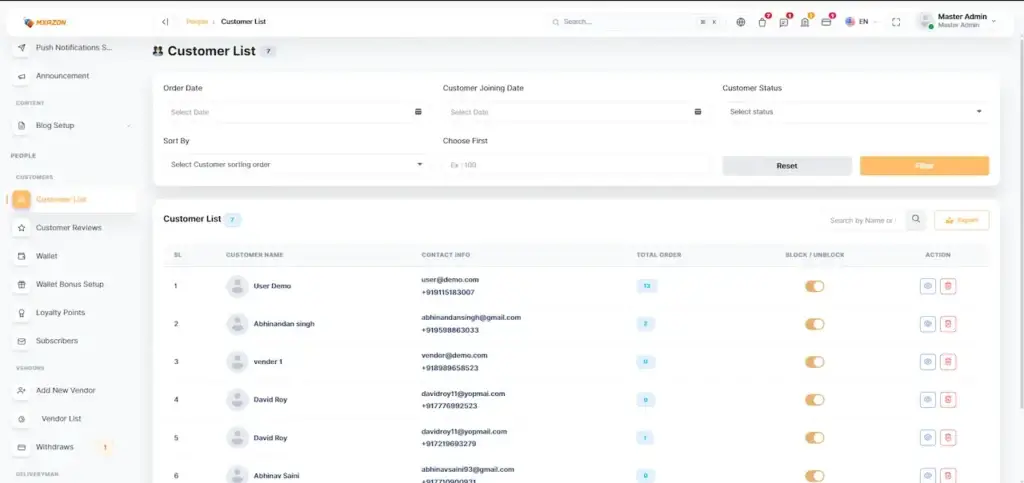
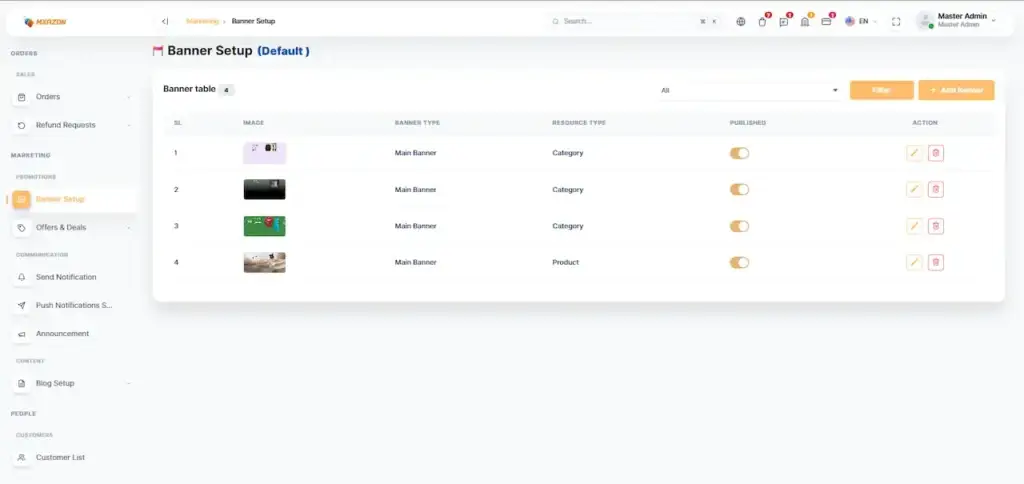
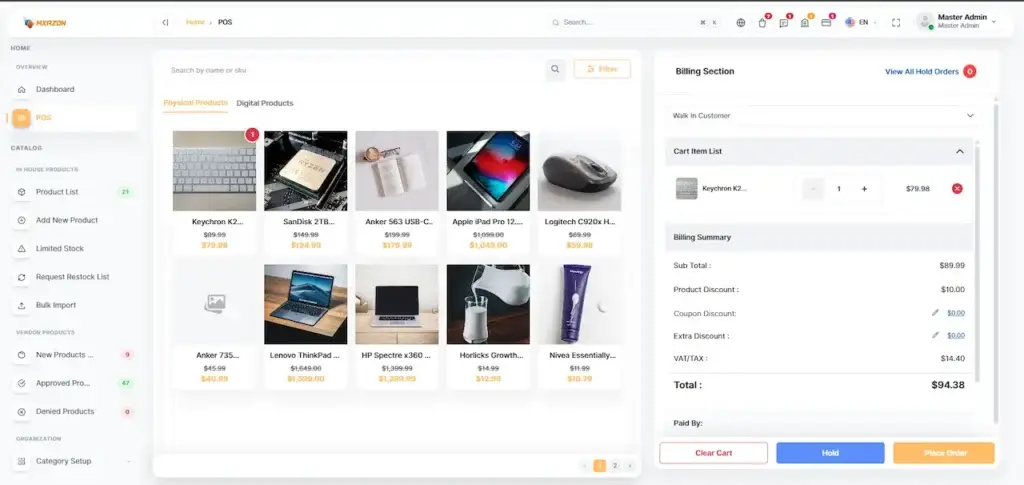
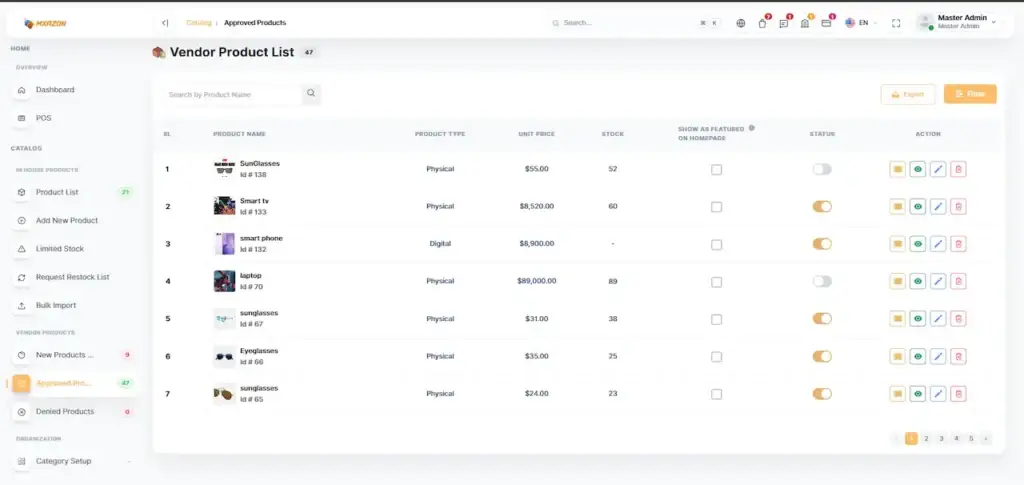
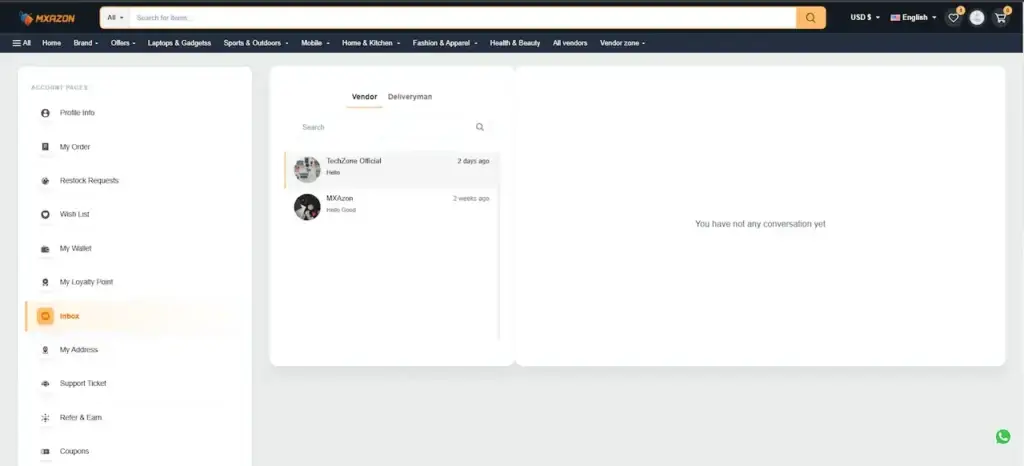
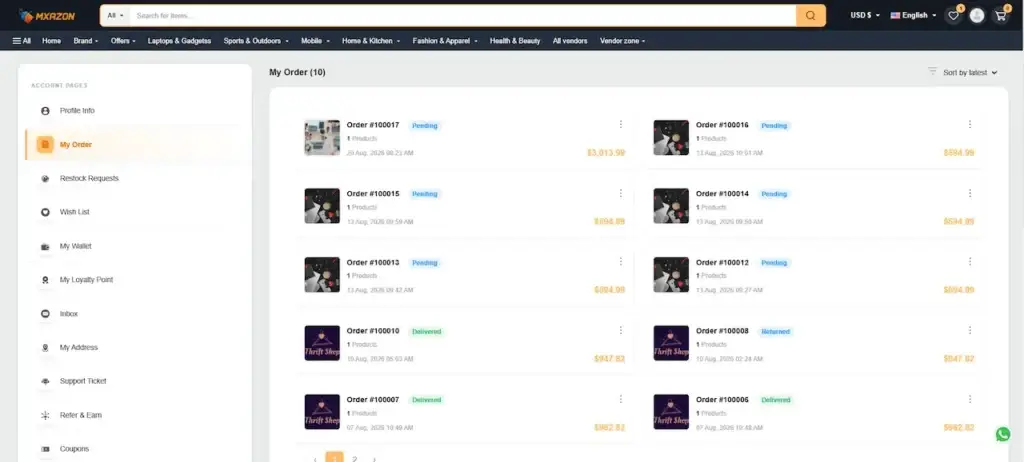
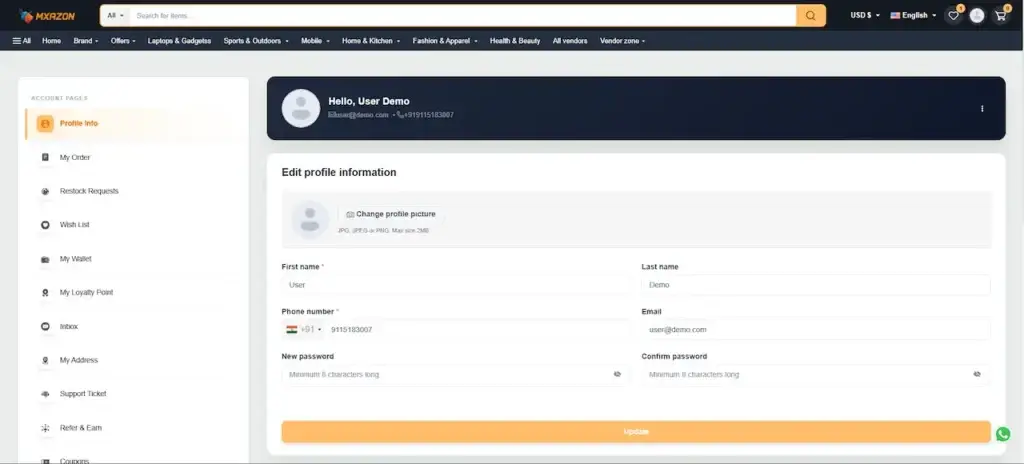
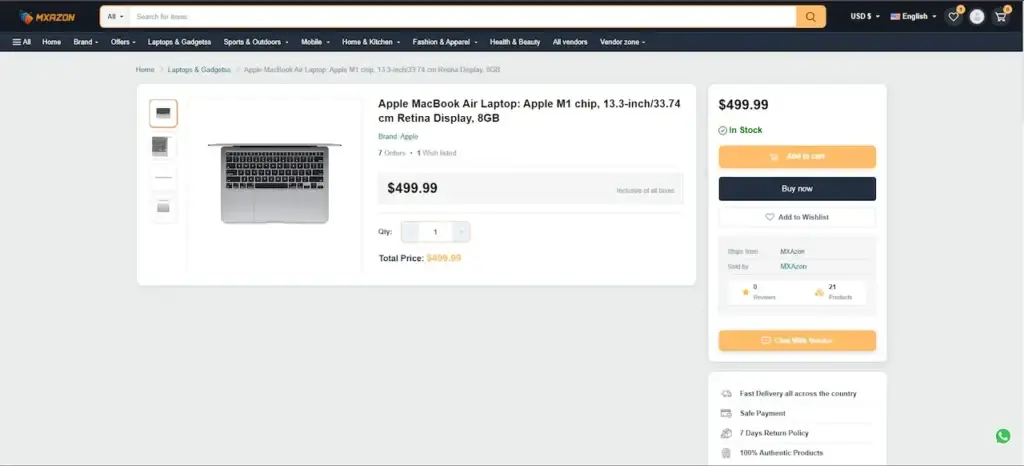
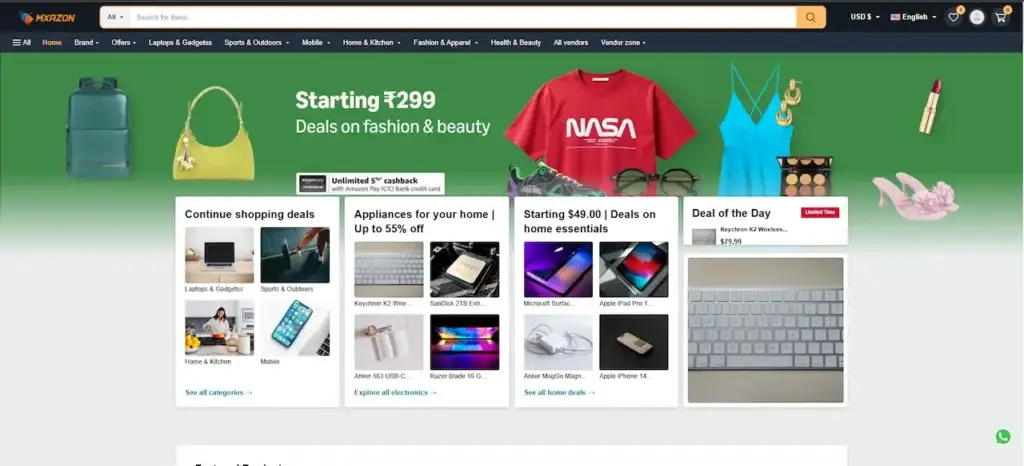
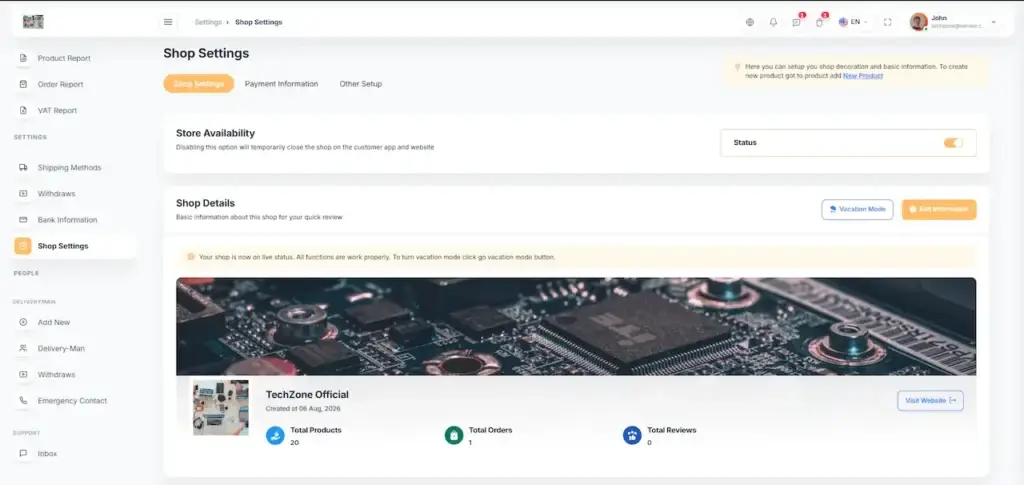
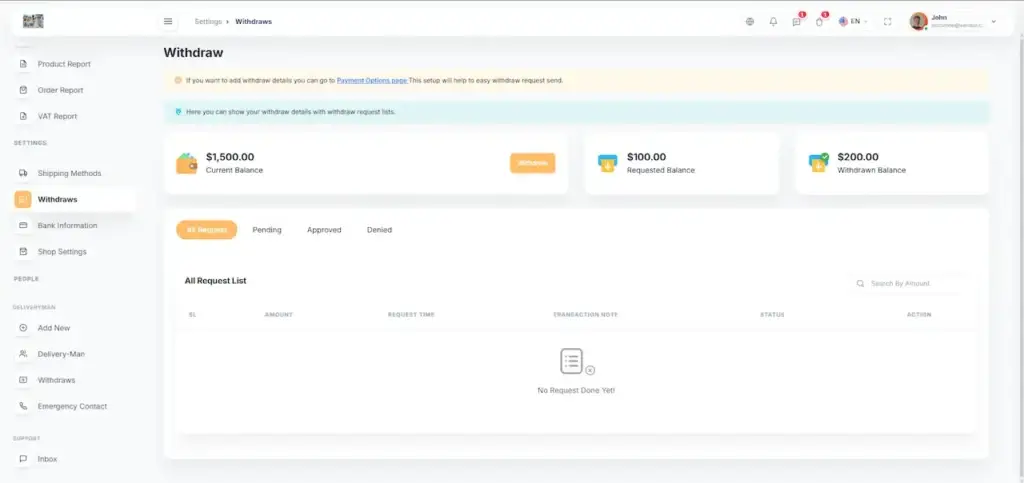
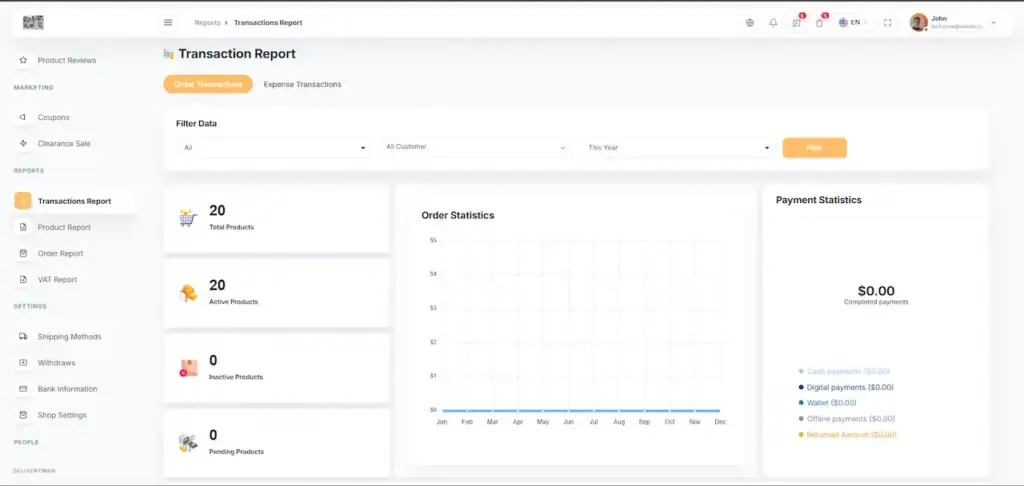
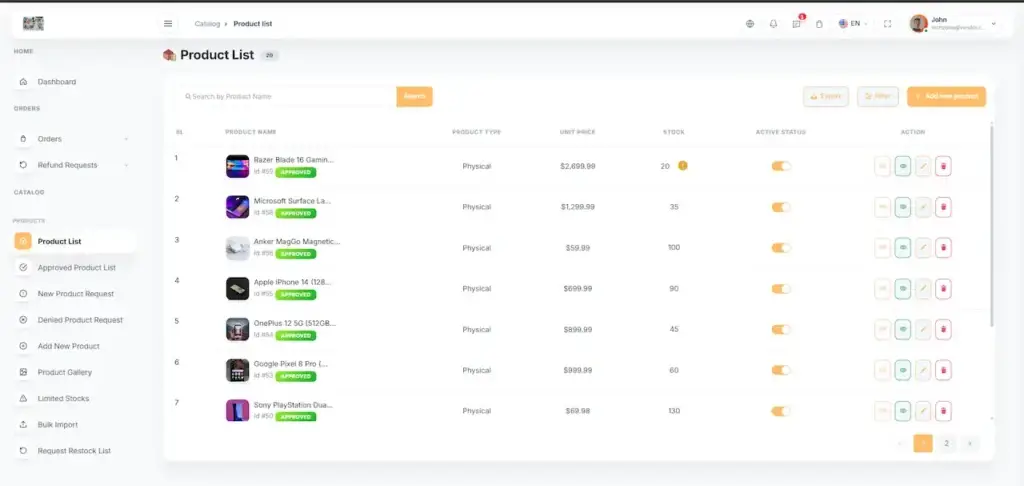
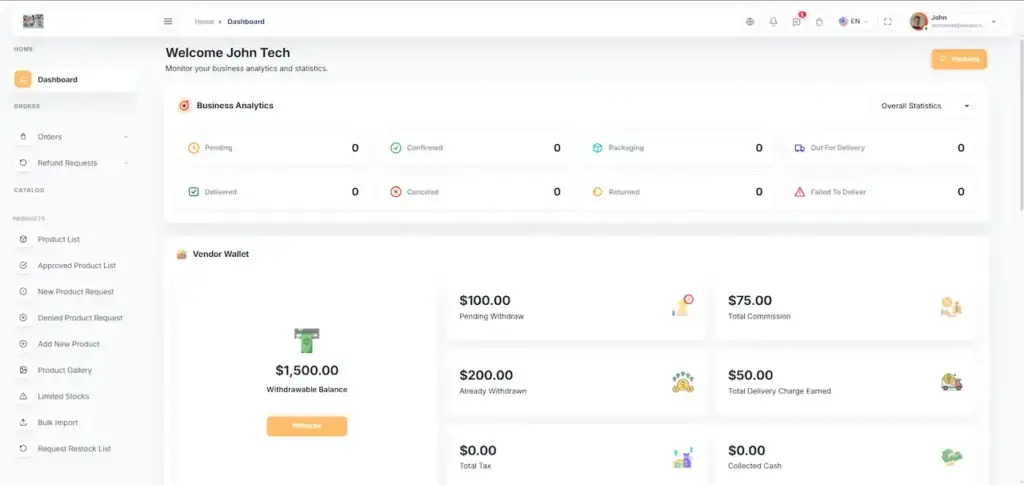
Want a guided walkthrough of a specific flow? Book a call and we will open the surface you care about with live data in it.
Client Reviews
Marketplace Builds We Have Shipped
We have not yet deployed this multi-vendor commerce platform for a named client, so nothing below is presented as a Myntra Clone reference. These are approved quotes from operators who launched other Miracuves marketplaces built on the same foundations: vendor onboarding and approval, a merchant console, dispatch to a delivery fleet, and commission and payouts on one ledger.
Proof in Production
Marketplace Reference Deployments: India and Thailand
Two modelled reference deployments showing how this platform is configured for two very different commerce markets. Both are illustrative scenarios rather than client engagements, built only from capabilities that ship in the base build. Real client deployments, with their own reported figures, are published on the Miracuves portfolio.
India
COD-Led Multi-Vendor Marketplace
How the platform is configured for a marketplace where cash still closes a large share of orders and growth runs outward from the metros into tier-2 and tier-3 towns.
- Cash closing the order at the door, days after it was placed, with stock and commission already committed
- Tax rates that differ by product category and by state, needing a line on every invoice
- Buyers who do not shop in English and convert badly against an English storefront
- Delivery that reaches some pin codes reliably and others not at all
- Take cash without inventing the accounting for it in a spreadsheet
- Open a new town only once a delivery route genuinely exists
- Set commission per category rather than one flat rate across electronics and apparel
- Run the storefront in the language the market actually reads
- Cash on delivery with a server-verified code at handover
- A cash-collected balance carried per agent, settled to the operator wallet
- Operator-set handling fee on cash orders
- Zip allowlists deciding where checkout is offered at all
- Tax classes bound per zone with per-product rules
- Languages and currencies configured across web and three Android apps
- Seller onboarding with KYC and per-seller commission
This is a modelled reference deployment, not a client engagement. Every capability listed above ships in the base build and is demonstrable in the live demo. The figures are properties of the platform, not results reported by a customer.
Thailand
Provincial and Cross-Border Marketplace
How the same platform is configured where one catalog has to serve Bangkok, the provinces and neighbouring markets, each with different delivery economics and a different currency.
- Delivery economics that differ sharply between a dense Bangkok route and a provincial or island one
- Buyers who expect to pay on arrival rather than in advance
- Selling into neighbouring markets that quote in a different currency
- A second market usually meaning a second deployment to keep in step
- Serve provinces and capital from one catalog without one subsidising the other
- Quote every buyer in the currency they recognise
- Add a neighbouring market as configuration rather than a second platform
- Keep the last mile, and the cash, under the operator brand
- Zones with per-category shipping cost overrides
- A currency catalog whose default drives checkout display
- Cash on delivery with per-agent reconciliation
- Delivery fleet with pickup and delivery checkpoints
- Multi-language storefront across every surface
- Nine order statuses with a full status history per order
- One REST API serving storefront, seller panel and all three apps
This is a modelled reference deployment, not a client engagement. Every capability listed above ships in the base build and is demonstrable in the live demo. The figures are properties of the platform, not results reported by a customer.
The Basics
What Is a Myntra Clone App?
A Myntra Clone is a ready-made fashion marketplace: buyers browse by brand, category or look, independent labels list their own ranges and get paid, your own agents close the last mile, and you take commission on each transaction. The backend is Laravel 12 across 131 normalized MySQL tables, with one REST API serving the storefront, the brand panel, the operator console and three Flutter Android apps.
Range
Colour and size resolved to SKU-level rows, a brand directory, categories to any depth, low-stock thresholds per variant, and a clearance storefront for end-of-season stock.
Returns
A refund request with reason, evidence and its own status machine, reversing money, commission and loyalty points together rather than leaving three manual corrections.
Money
Four wallets, an append-only history per actor, commission split on completion, withdrawal queues and per-gateway settlement records.
Built for Web, Android, Vendor & Delivery
What Is a Myntra Clone Script?
Apparel breaks marketplaces in a specific way. One product is really thirty sellable units once colour meets size, each needing its own stock count and its own price, and a meaningful share of everything that ships comes back within a fortnight. A platform that models a product as one row and a return as an edge case will hold together for a season and then stop reconciling. Here the variant is the unit of inventory and the refund has its own state machine.
-
Colour and size as SKU rows with their own price and stock
-
Low-stock thresholds set per variant, not per product
-
Reviews with image upload, plus wishlist and save for later
-
Refund pipeline reversing money, commission and points together
-
Brand directory alongside the category tree
Everything on this page is in the base build unless it is labelled configuration-required or integration-required. Gateway credentials, SMS, push and AI keys are operator-supplied because they are your accounts, not ours.
Features
Myntra Clone Features: Catalog, Checkout, Fulfilment and Payouts
Everything below is in the base build and demonstrable in the live demo. The order runs from the variant matrix outward, because in apparel that is where every other decision starts. Anything your range does not need switches off from the console.
The Variant Matrix
Colour, size and custom attributes resolved into SKU-level rows, each carrying its own price and quantity. One product becomes thirty sellable units, and every one of them is counted, priced and discounted independently.
- Colour, size and custom attribute variants
- SKU-level rows with their own price and quantity
- Low-stock thresholds set per variant
- Barcode and SKU management with bulk import
Returns and Refunds
A request carries a reason and evidence and walks its own status machine so nothing settles twice, resolving as wallet credit or back down the original rail, reversing commission and loyalty points alongside the money.
- Refund request with reason and evidence
- Its own status machine preventing double-spend
- Instant wallet credit or gateway settlement
- Loyalty points reversed on cancellation
Reviews With Photographs
Ratings and reviews carrying image upload, with brand replies. Seeing a garment on somebody real is what converts in fashion, and it is inventory your buyers create for free.
- Reviews and ratings with image upload
- Brand replies on any review
- Wishlist and save for later
- Buyer to brand chat with attachments
Wishlist and Save for Later
Items held across sessions rather than lost at the end of one. Fashion is browsed far more often than it is bought, and the saved item is what brings the buyer back.
- Brand directory with dedicated brand pages
- Featured, most-demanded and best-selling rails
- End-of-season clearance storefront
- Restock subscriptions when a size returns
Brand Directory
Brands as entities with their own pages alongside the category tree, so a buyer can shop by label, and a label can be merchandised rather than buried among sellers.
- One cart spanning several vendors at once
- Guest cart tracked by session and merged on login
- Save for later and move to wishlist
- Shipping estimated per vendor before checkout
Checkout and Coupons
Coupon, wallet balance and loyalty points applied together, shipping selected per vendor, and order placement guarded by an idempotency check.
- Coupon, wallet and loyalty applied together
- Flat or percentage, scoped to product, category or cart
- Free-shipping coupons and per-user usage limits
- Order placement guarded by an idempotency check
One Bag, Several Brands
A bag spanning several labels, split at checkout into per-brand orders while staying one order to the buyer, with guest bags merged into the account on login.
- Nine order statuses from pending payment to delivered
- Per-line delivery status allowing partial fulfilment
- Status history with actor, note and timestamp
- Field-level edit history on any operator change
Search and Filters
Keyword search with autocomplete and filters on price, brand, rating, size, colour and attributes, with the sort options a fashion buyer actually reaches for.
- Refund request with reason and evidence
- Its own status machine preventing double-spend
- Instant wallet credit or gateway settlement
- Loyalty points reversed on cancellation
Four Wallets
Customer, vendor, deliveryman and operator balances held separately, each debit and credit paired with a history row inside the same database transaction.
- Customer, vendor, deliveryman and operator wallets
- Append-only history row per balance movement
- Top-up through any configured gateway
- Add-fund bonus tiers set by the operator
Loyalty and Referral
Points earned on order value or per category, redeemed at checkout, converted to wallet balance, plus referral codes with rewards on both sides.
- Points earned on order value or per category
- Redeemed at checkout against the order total
- Converted to wallet balance on request
- Referral codes rewarding both sides
Delivery and Cash
Assignment feed with accept and reject, collection and delivery checkpoints, live location, a code verified at the door, and a cash-collected balance per agent.
- Assignment feed with accept and reject
- Live location broadcast while in transit
- One-time code verified at the door
- Cash collected tracked per agent and reconciled
Clearance and Restock
An end-of-season clearance storefront, plus restock subscriptions that tell a buyer the moment their size comes back rather than losing the sale to an out-of-stock page.
- Ratings and reviews with image upload
- Vendor replies on any review
- Customer to vendor chat with attachments
- Support tickets with threaded conversations
Note for buyers: every feature above is white-label and switchable per deployment from the console. Note also what is not here: there is no size chart, no fit recommendation and no virtual try-on. Fashion buyers ask about all three, so we name them as custom work rather than letting a demo imply them.
Monetization
Myntra Clone Revenue Models: Commission, Subscriptions, Delivery and Placement
Fashion economics are gross-margin rich and return-rate poor, so the lines that matter are the ones that survive a return. Six run on one ledger and combine against the same order, and commission reversing cleanly on a refund is what keeps the reported number honest.
Commission That Reverses
A percentage set globally, per category, per brand or per product, taken on completion and reversed automatically when the item comes back. In a category with high return rates, commission that does not reverse is revenue you will restate later.
Brand Subscriptions
Tiered packages carrying listing limits, reduced commission, featured placement and priority support, billed on a cycle. For a label, the tier is a shelf position as much as a discount.
Delivery and Return Shipping
A mark-up on the shipping charge, a handling fee on cash orders, and a settlement fee when an agent withdraws. In apparel the return leg is the cost line most operators forget to price.
Placement and Seasonal Deals
Paid banners, sponsored positions on search and category pages, and a participation fee for brands joining an end-of-season or flash event. In fashion, placement during a season change is worth more than at any other time.
Wallet Float and Store Credit
Buyer top-ups and brand balances rest with the platform between payout runs, and refunds settled as wallet credit keep the money inside the business rather than leaving it.
White-Label Deployment
The platform is itself sellable. Agencies and groups stand up a branded fashion marketplace per client or per region from one codebase they already know.
Want a revenue model that survives your return rate? commission bands, brand tiers and delivery margin are all operator-set. Book a call and we will model them against your actual return rate rather than your gross.
Control Center
Myntra Clone Admin Dashboard: Catalog, Orders, Payouts and Configuration
A fashion console is run around two queues: what is coming back, and what is going out of season. Every module sits behind its own permission, so a finance clerk clears refunds and payouts without reaching catalog, and a merchandiser sets rails and clearance without touching business settings.
Operator Control
Returns Desk
The refund queue with reason and evidence on each request, approved or rejected with a note, settling as wallet credit or back down the original rail. In apparel this is not a side queue, it is the busiest screen in the console.
Range Moderation
Brand-submitted listings with approve, reject and bulk actions, full editing rights over any product, and control of the category, brand, colour and attribute libraries that the whole variant matrix is built from.
Cross-Brand Orders
Every order across every label with a status timeline, field-level edit history, expected-delivery changes, manual override with a reason, and invoice generation.
Stock by Variant
Low-stock thresholds set per SKU rather than per product, so a single size running out raises its own alert instead of hiding inside a listing that still looks healthy.
Withdrawal Queue
Brand and agent payout requests with approve, deny and mark-processed, running against operator-defined withdrawal methods and each brand saved payout details.
People and Approval
Buyer directory, brand approval and suspension with subscription management, and agent approval, suspension and zone assignment.
Merchandising Surface
Banners, flash and seasonal deals, the daily deal, platform and per-brand coupons, and composers for push, email and SMS. In fashion this is how a season is cleared rather than marked down in panic.
Tax Configuration
Tax classes and rates bound per zone, per-product tax rules through a polymorphic binding, inclusive or exclusive display, and a per-order tax line breakdown.
Business Settings
Commission, loyalty ratio, OTP lifetime, currencies, languages, delivery countries and zip allowlists, shipping methods and per-category cost overrides, all as configuration.
- Refund queue with reason, evidence and settlement route
- Return rate visible by brand, category and product
- Pending brand and listing requests as actions
- Gross merchandise value, orders and growth at a glance
Reports and Exports
Sales, brand, product, buyer, wallet, refund, withdrawal and tax reports over any range, exported to Excel, CSV or PDF. Refund reporting is the one a fashion operator reads first.
- Per-route SEO metadata and robots directives
- Auto-generated sitemap on a daily schedule
- Analytics script injection for GA, GTM or Pixel
- Structured data on product and blog pages
Need deeper governance? age-gated categories, country-specific catalog rules, per-vendor document expiry or a four-eyes approval on payouts can all be added as custom modules. Ask and we will scope it.
Pricing
How Much Does It Cost to Build a Myntra Clone App in 2026?
The white-label platform is $2,799 as a one-time purchase, deployed in six working days. That covers the source, the buyer storefront, the brand panel, the operator console and all three Android applications, installed on your infrastructure under your branding. Building the same surface from scratch is an eighteen to thirty month programme with a senior team, and stitching it from separate commerce, logistics and payout products means three subscriptions, three security reviews and integration work that never quite finishes. What the fixed price does not include is anything that is yours to own: gateway credentials, an SMS and email provider, a Firebase project, an OpenAI key, catalog data and the tax rates for your jurisdictions. Anything beyond the base, a sizing layer, exchanges rather than refunds, or a returns-logistics integration, is scoped and quoted separately, typically two to eight weeks.
Not sure which option
is right for you?
Talk to us - we'll understand your goals, timeline, and budget, and point you to exactly what you need. No upselling, just honest advice.
Deliverables
What's Included: Myntra Clone Source Code, Apps and Deployment
The handover is the whole system, not a licence to run somebody else’s platform.
Customer App
A branded Android build consuming the same REST API as the storefront, carrying browse, cart, checkout, order tracking, wallet and support.
- Fully branded Android app for your customers
- Browse, search, cart, checkout and order tracking
- Wallet, loyalty and referral built in
- Push notifications and in-app support chat
Vendor App
The seller surface on mobile: products, stock, the order queue, refund responses, customer chat, wallet and withdrawal requests.
- Branded Android app for your vendors
- Product CRUD, stock and order queue on mobile
- Refund responses and customer chat
- Wallet balance and withdrawal requests
Delivery App
The agent surface: assignments, navigation, status checkpoints, OTP handover, cash collected and earnings with a payout flow.
- Branded Android app for your delivery agents
- Assignment feed with accept and reject
- Live location and OTP proof of delivery
- Earnings, cash collected and payout requests
Customer Storefront
The public marketplace with category browse, search and filters, product pages with variants and reviews, and a multi-vendor cart.
- Customer web storefront with full search
- Vendor web panel for shop and catalog management
- SEO-friendly product and category pages
- Responsive across desktop, tablet and mobile
Vendor Web Panel
Shop profile and KYC, catalog management with bulk import, analytics, and everything a seller needs from a desk rather than a phone.
- Operator console with role-scoped staff accounts
- Granular permission system per module
- Vendor approval and product moderation
- Commission, coupons and payout processing
Operator Console
Moderation, cross-vendor orders, refunds, payouts, people, marketing, tax and configuration, with role-scoped staff access from day one.
- Complete Laravel 12 source, no encrypted files
- REST API v1, v2 and v3 serving every client
- 131-table schema with reversible migrations
- Modular structure for AI, Blog and Tax
Full Source Code
The Laravel 12 backend and all three Flutter projects transferred to your repository, unobfuscated, with no licence callback.
- App name, logo, splash screen and colour theme
- Branded transactional email templates
- Custom domain configuration
- Full white-label across every surface
Deployment and Handover
Installed on your infrastructure with queue, scheduler and storage configured, then an admin walkthrough and the configuration checklist.
- Server setup on your preferred provider
- Queue worker, scheduler and storage configured
- 60 days of launch guidance
- 6 months of priority bug fixes, 12 months of updates
Want to see exactly what you get? book a walkthrough and we will open the storefront, the vendor panel, the delivery app and the operator console with live data, then show you the repository structure you would be taking ownership of.
Explore Every Angle of the Myntra Clone
Four deeper guides on what ships, what it costs, who should build it, and how a fashion marketplace turns catalog depth into revenue.
Features
The complete role map, with the variant as the inventory unit so size and colour carry through catalog, cart, stock and returns as one matrix instead of four loose product records.
See the full breakdown→Development Cost
A fixed $2,799 compared against freelancer, agency and ground-up builds, plus the six working days to launch and the catalog photography and sizing data you supply alongside.
See exact pricing→Development Company
What separates builders once the catalog gets complicated: who owns the code, how variants and returns are modelled, and what the audit trail actually captures.
Compare options→Business Model
Six revenue lines for a fashion marketplace: commission, brand subscriptions, shipping fees, featured placement, wallet float and white-label licensing.
See the playbook→Built For
Who Is Our Myntra Clone App Built For?
These operators share one problem: a catalog where every product multiplies into dozens of sellable units, and a return rate that would look like a crisis in any other category and is simply Tuesday in this one.
Multi-Brand Fashion Retailers
Emerging Label Marketplaces
High-Return Categories
Brands Going Direct
Seasonal Operators
Agencies Building for Fashion Clients
If your catalog multiplies into sizes and a fifth of it comes back, this platform is the substrate. Book a call and we will tell you honestly whether it fits your range or whether one of our adjacent solutions is the better start.
Where It Fits
Myntra Clone Use Cases: Retail, Grocery, Fashion & Cross-Border
The platform is identical in every case below. What differs is how deep the variant matrix runs and how much of what ships is expected back.
General Retail Marketplace
A general marketplace with many vendors across many categories, an unlimited category tree, brand pages and a moderation queue holding quality. Commission and vendor subscriptions carry the revenue, and the delivery fleet keeps the last mile under your brand rather than an aggregator.
Grocery and Daily Essentials
Footwear behaves like apparel with a deeper matrix and a worse return rate, since half sizes and widths multiply the variant count again. Per-SKU stock and restock subscriptions matter more here than anywhere else in the shop.
Fashion and Lifestyle
A multi-brand apparel marketplace is the case this configuration is written for. Colour and size resolve to independent SKU rows, galleries carry the range, photo reviews do the convincing, and the refund pipeline absorbs a return rate no other category would tolerate.
Electronics and High-Value Goods
Accessories and jewellery invert the problem: few variants, high value per item, and disputes that arrive weeks later. The status history, the field-level edit log and the verified handover are what make those defensible.
Digital Goods and Media
Beauty and personal care sit alongside apparel in most fashion baskets, with shade variants behaving exactly like colour and a returns policy that is usually stricter. The same matrix and the same refund flow carry both.
Cross-Border Commerce
Cross-border rollouts use the multi-currency table, the translation store, delivery country codes and zip allowlists, and per-zone tax profiles, so one deployment serves several markets under one operator console.
Not sure which of these you are? most operators are a blend of two. Book a call and we will map your catalog, your vendor mix and your fulfilment model against what the platform already does.
Why Now
Why Launch a Multi-Vendor Marketplace in 2026?
Fashion has the best gross margins in retail and the worst net ones, and the gap between them is returns, discounting and platform commission. Two of those three are yours to control the moment you own the platform.
Commission on a Returned Item Is Still a Cost
On somebody else platform you often pay to sell an item that comes straight back. On your own, commission is yours and it reverses cleanly on refund, which changes the reported margin rather than just the gross number.
You Own the Customer
Email addresses, order history, wallet balances and repeat-purchase behaviour sit in your database, which is what makes direct marketing and a loyalty programme possible at all.
Supply You Already Control
Retailers with stock, distributors with suppliers and networks with outlets start with the hard half solved. The platform is the missing piece, not the business.
Unboxing Is Part of the Product
In fashion the parcel is the brand experience. Handing the last mile to an aggregator hands over the packaging, the timing and the one moment the buyer photographs and posts.
Returns Are Where Platforms Fail
Most marketplace software treats a return as an exception bolted onto checkout. In apparel it is a fifth of the business, and handling it as a first-class flow with its own state machine is a genuine operational advantage.
One Substrate, Not Five
Commerce, logistics, content, AI and payouts in one codebase means one vendor contract, one data model and one security review rather than five of each.
Why Launch
The numbers below are platform facts, not market projections: they describe what ships in the build rather than what apparel is forecast to do. Fashion market sizing varies wildly by source, and we would rather quote our own schema than somebody else forecast.
Tech Stack
Myntra Clone Tech Stack: Laravel 12, Flutter, MySQL and Redis
A conventional, hireable stack. Nothing here is exotic, which is deliberate: the developers who maintain this after handover should already know it.
Backend and Business Logic
PHP 8.2 · Laravel 12 · nWidart Modules
- Controller to service to repository to model, with transactions at the service boundary
- 114 Eloquent models over 131 normalized MySQL tables
- Modules for AI, Blog and Tax that enable and disable without touching core
- Observers, events and listeners driving notifications and ledger writes
Mobile Applications
Flutter · Dio · Provider with GetIt
- Customer, vendor and deliveryman builds from one shared architecture
- Sanctum bearer tokens with role claims for seller and delivery agents
- Firebase Cloud Messaging per app, with topic subscriptions
- Google Maps in the deliveryman build for pickup and drop-off routing
Data and Caching
MySQL 8.x · Redis 7.x · InnoDB
- utf8mb4 throughout, soft deletes on customer, vendor, agent and product rows
- Composite indexes on the hot paths, including vendor with status and created date
- Redis for cache, queue and session, with a database queue as fallback
- Append-only wallet histories so any balance can be re-derived
Payments and Settlement
Eleven gateways · Offline · COD
- Stripe, PayPal, Razorpay, Mercado Pago, Iyzico, PhonePe, Paytm, PayUZ, SSLCommerz, Flutterwave and PayTabs
- Signature verification at the webhook boundary, idempotent by gateway transaction id
- Operator-defined offline methods with manual verification
- Cash on delivery reconciled through a dedicated agent transaction table
Communications and AI
FCM · Twilio · Vonage · OpenAI
- Push through Firebase Cloud Messaging to all three apps
- SMS through Twilio or Vonage, email through SMTP or Amazon SES
- OpenAI for product descriptions, SEO copy and image alt text
- Per-feature token quotas with tokens and cost logged per call
Storage and Delivery
S3-compatible · Intervention · CDN
- AWS S3, DigitalOcean Spaces, Wasabi or MinIO through Flysystem
- Image optimization and responsive variants generated on a queue
- WebP conversion where the client supports it
- CDN recommended at the edge for static and media assets
Note for tech buyers: the Myntra Clone is structured so your own team can take it over. Standard Laravel conventions, a documented schema, reversible migrations and a modular boundary for anything custom.
How It Works
How the Myntra Clone Works: Browse, Buy, Fulfil and Settle
One order followed end to end, including the part every fashion demo skips: what happens fourteen days later when one size comes back.
How It Works

Discover and Add to Cart
A buyer arrives by brand, category or look, and the choice that matters is the variant rather than the product.
- Brand directory, category tree or search with autocomplete
- Filters on price, brand, rating, size, colour and attributes
- Gallery, variant picker, per-size stock signal and photo reviews
- Saved to a wishlist, or added to a bag spanning several labels

Checkout and Pay
The bag splits by brand and every total resolves before anything moves.
- Shipping address selected, with a method chosen per brand
- Coupon, wallet balance and loyalty points applied together
- Payment through one of eleven gateways, an offline method or cash on delivery
- Placement guarded by an idempotency check so a double submit cannot duplicate

Vendor Accepts and Packs
Each label sees only its own lines, and stock decrements at the SKU that was actually bought.
- Lines land in each brand queue with buyer and variant detail
- Accepted or rejected with a reason, then marked packed and ready
- Stock decremented at the exact colour and size sold
- Packing slip and invoice generated as PDF

Assign and Collect
The operator or the auto-assignment job puts the order in front of an agent.
- Assignment appears in the deliveryman feed, accepted or rejected
- Navigation to the vendor for pickup, then to the customer
- Live location broadcast while the order is in transit
- Status checkpoints written with a timestamp and a geo position

Verify and Hand Over
Delivery is not the end of the transaction in apparel. It is the start of a two-week window.
- One-time code verified at the door against a time-boxed record
- Cash collected on COD orders and written to the agent balance
- Order moves to delivered and the customer is notified on push, email and SMS
- Delivery trail retained for the SLA and dispute record

Settle and Reconcile
Money resolves across four wallets, and a return has to undo all of it without leaving a correction for someone to make by hand.
- Commission split between operator, brand and delivery agent
- A refund reverses commission and loyalty points with the money
- Collected cash reconciled off the agent balance into the operator wallet
- Every movement paired with an append-only history row and a reference id
Visual Flow Diagram
Browse → Cart → Checkout → Vendor Accepts → Assign Agent → Pickup → OTP Handover → Settle
Architecture
Myntra Clone Platform Architecture and Backend Flow
The Variant Is the Inventory Unit
Stock, price and availability live on the SKU row rather than the product, which is the single design decision that makes a fashion catalog behave correctly rather than approximately.
Modular Packaging
AI, Blog and Tax ship as nWidart modules carrying their own routes, migrations and providers, so a sizing or exchanges module can be added the same way rather than patched into core.
Event-Driven Side Effects
Order placed, status changed, brand approved, payout requested and refund processed each emit an event, with listeners fanning out to notifications, ledger writes and analytics.
Queues and Scheduler
Redis-backed workers under Supervisor handle the image processing a fashion catalog generates in volume, plus PDFs, mail, push and AI calls, while cron runs commission recalculation, plan renewals, abandoned-bag reminders and backups.
Append-Only Ledgers
Wallet histories, order status histories, order edit histories and refund statuses are written, never updated, so the financial and operational record can be replayed and audited.
Horizontal Scale
A stateless application tier behind a load balancer, MySQL with read replicas for reporting, Redis for cache and queue, and S3 behind a CDN carrying what is usually a very heavy image library.
Build to Scale
Built to Scale: Catalog Depth, Order Volume and Fleet Load
Fashion scales awkwardly for one specific reason: the variant table grows faster than the product table, by roughly the number of sizes you stock. A catalog of ten thousand products is really a few hundred thousand sellable units, and every filtered search touches all of them.
The Variant Table Is the Big One
Every product multiplies by its colour and size combinations, so the row count that matters is variants rather than products. Related models are eager loaded so a filtered category page never resolves stock variant by variant on the N+1 path, lists paginate server side, and the category tree, banners and rails come out of Redis instead of being rebuilt per request.
Order Tables Under Peak
Orders, order details, notifications, chat and delivery histories are the hot tables. Composite indexes sit on the real access patterns, including vendor with status and created date, and agent with status. Closed orders older than twelve months can move to an archive table on the same schema, keeping the working set small without breaking joins or reporting.
Images Are the Heavy Job Here
A fashion catalog carries more photography per product than any other category, often eight or ten shots per colourway. Resizing and derivative generation run as queued jobs under Supervisor with failed-job capture and retry, so a bulk range upload never blocks a buyer mid-checkout, and a slow mail provider degrades notifications rather than orders.
Returns Double the Order Traffic
Every returned item writes a second wave of status changes, refund transitions and ledger rows against an order that already completed. In apparel that is a large minority of everything you ship, so refund and status history tables deserve the same index attention as orders themselves.
Cached Reads
The category tree, banners, settings and popular-product rails are served from Redis rather than rebuilt per request, which is most of the storefront read load.
Hot Tables Indexed
Orders, order details, notifications, chat and delivery histories carry composite indexes on the access patterns that matter, including vendor with status and date.
Image Pipeline on Queues
Resizing and derivatives for a photography-heavy catalog run off the request, so a bulk range upload never slows a buyer down.
Returns Write Twice
A refund replays status and ledger activity against a completed order, so those tables carry the same index discipline as orders themselves.
Facet Headroom
Size, colour, brand and price filtered together is the query that strains first. A dedicated engine slots in behind the same service interface when it does.
Archive Path
Closed orders older than twelve months move to an archive table on the same schema, keeping the hot table small without breaking joins or reporting.
Faceted Search Outgrows MySQL First
Filtering by size, colour, brand, price and rating at once is the query fashion buyers actually run, and it is the one that stops scaling soonest. MySQL full-text carries the baseline, and Elasticsearch or Meilisearch drops in behind the same search service interface with sync on a queue when facets outgrow it.
Note for founders and CTOs: you can start on a single modest instance and still be on a credible path to scale, because nothing here needs replacing to get there. The drivers change, the code does not.
Security
Myntra Clone Security: OWASP-Mapped, GDPR-Ready and VAPT-Ready
In a high-return category the security question is really an integrity question: can the same refund be claimed twice, and can a balance be edited without a trace. Both are answered structurally. Refunds move through a status machine rather than a flag, and every wallet movement writes a history row in the same transaction as the balance it changes, so any figure can be replayed rather than trusted. Brands are tenants scoped in the repository layer, card numbers never reach your server because the gateway hosts the fields, and an agent location trail is visible only to that agent and the operator.
Security headers are yours after handover
Rate limits ship at sane defaults, not tuned ones
No sizing layer ships
A WAF is recommended and not included
Two-factor is configurable, not mandatory
Dependency audits are a standing task
Refunds Cannot Be Claimed Twice
A refund moves through a status machine rather than a flag, so the same return cannot settle against two payouts. In a category where returns are routine, that is the control that protects the margin.
GDPR-Ready
Soft deletes on customer, vendor and agent rows, a per-user JSON export, account deletion with a grace period before PII is purged, and marketing that requires explicit opt-in.
Tenant Isolation
Vendor and deliveryman scoping enforced in the repository layer, model policies on read and write, and API token abilities mapped to permission slugs rather than a blanket scope.
Payment Integrity
No card number is ever stored. Webhook signatures verified at the boundary, transactions made idempotent by gateway id, and refunds guarded by a status machine against double-spend.
Injection and XSS
Eloquent parameterization throughout, form-request validation on every write endpoint, Blade output escaping, and Mews Purifier over rich-text fields such as descriptions and support replies.
Built to the Controls
Argon2id password hashing, encrypted session cookies with HttpOnly and SameSite, CSRF tokens on every state-changing route, and mass-assignment protection across models.
The honest position on certification: the controls below are built, and the platform is ready for a penetration test and for the evidence-gathering that ISO 27001 or SOC 2 require. Neither certificate is held, and neither is claimed. Several items are also deployment-layer responsibilities that we configure but you own after handover, and they are named as such below rather than folded into a compliance claim.
Advance Add-Ons
Myntra Clone Add-Ons: Search, Analytics, Integrations and Automation
The base build covers the marketplace. These are the extensions operators ask for once volume arrives, quoted after scoping rather than bundled.
External Search
Elasticsearch or Meilisearch behind the existing search service, with index sync on a queue, for catalogs where MySQL full-text has stopped being enough.
Advanced Analytics
Cohort analysis, vendor performance scoring, basket analysis and forecasting on a read replica, beyond the standard sales, refund and tax reports.
ERP and Accounting Bridges
Two-way sync with an existing ERP, accounting package or POS, so stock and settlement do not have to be reconciled by hand.
Loyalty and Membership Tiers
A paid membership with free delivery and member pricing, layered over the existing loyalty points and wallet, in the style buyers now expect.
B2B and Wholesale
Tiered pricing per customer group, minimum order quantities, quote requests and credit terms, for operators serving trade buyers alongside retail.
Sponsored Placement Engine
A self-serve advertising surface where vendors bid for position on search and category pages, with budget control and delivery reporting.
Observability Stack
Prometheus and Grafana or a vendor equivalent, log aggregation and OpenTelemetry tracing, for operators who need more than the built-in error log.
iOS Builds
The three Flutter projects compiled, signed and submitted for the App Store, with the review cycle and the store assets handled alongside.
Building in eCommerce? We Have the Whole Market Covered.
The same foundations carry several adjacent products, and one sibling worth naming outright. If your range sits closer to any of these, start there rather than here.

Amazon Clone
The flagship multi-vendor marketplace: catalogue, cart, payments, reviews, seller onboarding and the commission engine.

Alibaba Clone
B2B wholesale marketplace with trade buyers, tiered pricing, minimum order quantities and RFQ negotiation.

Pinduoduo Clone
Group-buying marketplace where shoppers team up on one order to unlock tiered discounts.

White Label Marketplace Software
The same marketplace platform under your own name, with the full source code handed over.
Marketability
Marketability, Revenue Potential and Business Prospects
Fashion is a gross-margin business with a net-margin problem, and returns are most of the gap. What the platform is worth is largely what cleaner returns handling and your own commission rate are worth. The scenarios below are illustrative arithmetic on operator-set inputs, not a forecast and not a promise.
Returns Decide the Real Margin
Gross margin in apparel looks excellent until a fifth of it walks back through the door. A refund flow that reverses money, commission and points together is what makes the reported number the actual number.
Brands Are Recurring Revenue
Subscription tiers turn a one-time onboarding into a monthly line, and for a label the tier buys shelf position as much as a commission discount.
Delivery Is Margin, Not Cost
Running your own fleet turns the shipping charge from a pass-through into a controllable margin, with the COD handling fee on top in cash-heavy markets.
The Asset Is the Roster
A stable of labels and a database of buyers with size and style history are worth more than the software. The platform is what lets you own both rather than rent access to them.
- Commission on every order, set globally, per category or per vendor
- Vendor subscription plans with product limits and reduced rates
- Delivery margin on the shipping charge and a COD handling fee
- Featured placement and sponsored positions sold to vendors
- Settlement fee applied when a vendor or agent withdraws
- Wallet float held between payout runs, with add-fund bonus tiers
- An owned sales channel rather than a rented listing on another platform
- A customer database you can market to directly, with order history attached
- A vendor network that is an asset in its own right
- A commission rate you set rather than one set for you
- Last-mile delivery under your brand rather than an aggregator
- Source code that can be extended, licensed or resold
Example Revenue Scenarios
On these numbers: each scenario is arithmetic on inputs an operator chooses, shown to make the levers concrete. They are not projections, and Miracuves does not guarantee any commercial outcome. The six days is our deployment window for the base platform, not your route to market.
Regional retailer going multi-vendor
Vendors onboarded in year one
An operator with existing stores adds thirty local sellers and takes a commission on each order alongside their own sales.
The commission rate, the order volume and the delivery margin are all operator-set. The platform cost is one-time; what recurs is hosting, gateway fees and the team running it.
Multi-brand launch
Working days to deployment
A buyer with label relationships launches a curated multi-brand shop, competing on edit and relevance rather than on breadth of catalog.
Six days is our side. Loading a range with its full size matrix, signing labels and shooting the photography is your side, and that is what sets the calendar.
Agency running white-label deployments
Codebase, many branded marketplaces
A studio deploys the same platform per client or per territory, each fully branded, from one codebase it already knows.
Per-deployment licensing is a commercial conversation rather than a page price. What the platform provides is the branding depth and module toggles that make repeat deployment practical.
Why Miracuves
Miracuves vs Other Myntra Clone Developers
There are many ways to get a marketplace: generic commerce scripts, freelancers, agencies, or owning the platform outright.
Why Founders Choose Miracuves
Built Around Variants
Colour and size are SKU rows with their own price and stock, not attributes on a product. Most scripts bolt variants on afterwards, which is why their stock counts and their discounts stop agreeing after one season.
Returns as a First-Class Flow
A refund has its own status machine, reversing money, commission and loyalty together. Most platforms treat it as a cancel flag and leave the accounting for you to reconstruct at month end.
Source Code on Handover
The full backend and all three Flutter projects transfer to your repository. No obfuscated files, no licence server, no dependency on us to keep running.
Six Working Days
Deployment on your infrastructure with the queue, scheduler and storage configured. The platform is proven; the work is installation and branding, not construction.
Fixed Price, Not a Range
The number is $2,799 rather than starting at. Scope is written down before anything is built, and changes are quoted rather than absorbed silently.
Honest Readiness Labels
Configuration-required and integration-required items are marked throughout, and what is absent is named. There is no size chart, no fit engine and no try-on, and we say so rather than let a fashion demo suggest otherwise.
Compare & Discover Why Operators Choose Us for Multi-Vendor Commerce
| Criteria | Miracuves Myntra Clone | Generic Clone Script | Custom Dev Agency |
|---|---|---|---|
| Time to Launch | 6 days (Production) | Unknown / DIY | 6-9+ months |
| Source-Code Ownership | ✔ Full | Often limited / encrypted | Usually yes |
| Feature Depth (Myntra-like) | High (catalog, payouts, fleet) | Basic (single-vendor storefront) | Depends on budget |
| Security & Compliance | Strong (built to the controls, GDPR-ready) | Minimal | Varies widely |
| Scalability & Performance | Cloud & CDN-optimized | Rarely considered | Depends on architecture |
| Monetization Options | Multiple (commission, plans, delivery) | Usually commission only | Custom (more time & cost) |
| Admin & Analytics | Full-fledged dashboard | Very basic or missing | Custom build (extra cost) |
| Cost vs Speed vs Quality | Balanced | Cheap but risky | High cost, slow |
| Ongoing Support & Updates | Available with clear plans | Usually none | Depends on contract |
The comparison that decides a fashion build is not the storefront, it is what happens to the variant matrix and the returns queue in month six. A script modelling a product as one row with a stock number looks fine until the first season with real sizes in it.
Industries
Industries We Serve
The Myntra Clone suits any operator selling physical or digital goods through more than one seller. General retailers use the full category tree and brand directory. Grocery operators lean on fast stock movement, restock alerts and clearance. Fashion brands use the SKU-level variant matrix. Electronics sellers need the audit trail and OTP handover on high-value orders. Pharmacies use moderation and controlled catalog access. Book and media sellers use the digital product tables with authors and publishing houses. Distributors going direct use vendor onboarding and commission. Franchise networks run per-location inventory under one console.
- 🛒 General Retail
- 🥬 Grocery & Essentials
- 👗 Fashion & Apparel
- 📱 Electronics
- 💊 Pharmacy & Wellness
- 📚 Books & Media
- 🏭 Distribution & Wholesale
- 🏪 Franchise Networks
- 🎨 Handmade & Artisan
- 🌍 Cross-Border Retail
Miracuves Myntra Clone is built as a marketplace-first fashion platform: every size its own unit of stock, returns handled as core flow, brands merchandised as entities, priced by your own rules and white-labelled entirely under your brand.
Version History
Release Log
| Version | Date | What's New |
|---|---|---|
| v4.0 | Aug 2026 | Laravel 12 upgrade. AI module for catalog copy and SEO. Clearance storefront and restock subscriptions added. |
| v3.6 | 2025 | Deliveryman app with OTP proof of delivery, live location and a cash-collected ledger. |
| v3.4 | 2025 | Vendor subscription packages with trials, grace periods and per-tier commission rates. |
| v3.0 | 2024 | Tax module with per-zone rates, wallet ledgers per actor and the refund status machine. |
Blog & Resources
Myntra Clone App: Latest Insights and Guides
Guides on marketplace economics, vendor onboarding, delivery operations and the decisions that matter before you launch.
Last Updated on October 4, 2026 by Ashish Khan A fashion ecommerce marketplace depends on…

Last Updated on October 4, 2026 by Ashish Khan Fashion ecommerce marketplaces are not built…

Last Updated on October 4, 2026 by Ashish Khan Launching a fashion ecommerce marketplace is…

Last Updated on October 4, 2026 by Ashish Khan A fashion ecommerce marketplace looks simple…

Last Updated on October 7, 2026 by Ashish Khan Fashion ecommerce is not only about…

FAQ
Myntra Clone FAQ: Pricing, Features, Payments and Deployment
Everything you need to know about the Miracuves Myntra Clone App.
A ready-made multi-brand fashion marketplace. Buyers shop by brand, category or look, labels list their own ranges and receive payouts, your agents close the last mile, and you take commission on each transaction. It ships with a web storefront, a brand panel, an operator console of role-scoped modules and three Flutter Android apps. What makes it fashion rather than generic retail is the variant matrix, where every colour and size is a sellable unit with its own stock, and a returns pipeline built as a first-class flow.
Same platform, different operating model on the page. The Amazon Clone is written for the general multi-vendor marketplace. This page is written for apparel, so it leads on the variant matrix, returns and refunds, photo reviews and seasonal merchandising. Same product, same price. Choose by whether your catalog multiplies into sizes and whether a fifth of what you ship comes back.
The white-label platform is $2,799 as a one-time purchase, deployed in six working days on your infrastructure with your branding. Custom modules and deeper changes are scoped and quoted separately, typically two to eight weeks depending on what you need.
Source yes: the full Laravel backend and all three Flutter projects transfer into your repository at handover, nothing obfuscated, no licence callback, no dependency on us afterwards. iOS no: the base price covers the three Android builds. The Flutter projects compile for iOS, and App Store builds, signing and submission are quoted separately because the developer account and the review cycle are their own work.
Eleven are integrated: Stripe, PayPal, Razorpay, Mercado Pago, Iyzico, PhonePe, Paytm, PayUZ, SSLCommerz, Flutterwave and PayTabs. Operator-defined offline methods and cash on delivery are also built in. Each gateway needs your own merchant credentials, which is why they are labelled integration-required.
No, and this is the question fashion buyers ask first, so here is the straight answer. There is no size chart module, no fit recommendation engine and no virtual try-on. What ships is the variant matrix, so every size is stocked and priced independently, and photo reviews, which in practice do a great deal of the work a size guide is meant to do. A sizing layer is custom work we scope and quote rather than a switch to enable.
As core flow rather than an exception. A request carries a reason and evidence and moves through its own status machine, which is what stops the same refund settling twice. On approval it resolves as instant wallet credit or back down the rail that took the payment, and the brand commission and any loyalty points earned reverse alongside it. Nothing is left for someone to correct by hand.
Yes, and for a fashion catalog that is essential rather than convenient. Brands register with KYC, are approved, then run their own shop: product CRUD with the full colour and size matrix, stock per SKU, bulk import and export, AI-assisted descriptions, an order queue, refund responses, analytics and a withdrawal flow, from the web panel or the Android app.
A percentage set globally, per category, per brand or per product, taken from the brand wallet on completion and reversed automatically on refund. That reversal matters more here than in any other category: with high return rates, commission that does not reverse means restating revenue every month. Brand subscription tiers can carry reduced rates as a paid benefit.
Each colour and size combination is its own SKU row with its own quantity, so a sold-out medium marks only that variant unavailable while the rest of the listing keeps selling. Low-stock thresholds are set per variant too, which is what stops a size quietly running down inside a product that still looks healthy at listing level.
Yes, and in fashion it is the highest-converting thing on a product page. Reviews carry image upload and brands can reply to any of them. A buyer seeing a garment on somebody with their build tells them more than any description, and it is content your customers produce at no cost to you.
The controls are built: Argon2id hashing, CSRF protection, parameterized queries, HTML sanitization, tenant scoping, webhook signature verification and append-only audit ledgers. It is ready for a penetration test and for ISO 27001 or SOC 2 evidence gathering. Neither certificate is held, and we do not claim either.
Anything that is yours: gateway merchant approval, an SMS and email provider, a Firebase project, an OpenAI key, your catalog data, your vendor recruitment, tax rates for your jurisdictions and app store review. Six days is our deployment window for the base platform, not your route to market.
Let's turn your idea into
a live platform.
Get a free consultation, a clear timeline, and honest answers. We'd rather earn your trust than rush a sale.
Go deeper on this platform
The detail pages, the guides behind it, and where it fits.
E-commerce app development
See the service→ ProductDevelopment Company
What separates builders once the catalog gets complicated: who owns the code, how variants and returns are modelled, and what the audit trail actually captures.
Compare options→Business model
How this kind of platform is structured and where its revenue comes from.
Read the guide→ ProductFeatures
The complete role map, with the variant as the inventory unit so size and colour carry through catalog, cart, stock and returns as one matrix instead of four loose product records.
See the full breakdown→ ProductBusiness Model
Six revenue lines for a fashion marketplace: commission, brand subscriptions, shipping fees, featured placement, wallet float and white-label licensing.
See the playbook→Retail and e-commerce
See the industry→ GuideHow it works
The user journey, the core mechanics and what sits behind them.
Read the guide→ GuideDeveloper guide
Architecture, stack and build steps for this kind of app.
Read the guide→Development Cost
A fixed $2,799 compared against freelancer, agency and ground-up builds, plus the six working days to launch and the catalog photography and sizing data you supply alongside.
See exact pricing→ GuideRevenue model
The income streams and fee structure, broken down.
Read the guide→ Talk to an expert →Miracuves is an independent software development company. We are not affiliated with, connected to, sponsored by, or endorsed by Myntra.
“Myntra Clone” is used descriptively. It is how the software industry refers to building a platform with functionality similar to Myntra, and how clients search for it.
The entire design and codebase is built by our own team. The product contains no code, design, graphics, or content originating from the Myntra website or applications.
Myntra and all other third-party names and marks are the property of their respective owners, referenced here solely to describe the category of software offered.