Assist or decide
Which outputs are drafts for a clinician and which, if any, reach a patient directly. We default to drafts.
Scoped upfront
Mira AI
AI you own, from day one. Ready-made AI platforms live in 6 working days, or custom AI built by our engineers.
Explore Mira AINot sure where AI fits? Talk it through with an engineer, free.
Talk to an AI engineerFrom a first assistant to agents that run whole workflows. Full source code on every build.
Machine learning, computer vision and language models, on data pipelines built to last.
Production-ready AI products with apps, admin and full source code, branded as yours.
Where AI earns its keep in your market, with the platforms we have already built there.
Bring in AI engineers by the month, or hand us the whole build.
What we have learned shipping AI products, from our blog.
Prompt-to-app generation, credits and an admin console, with the full source code.
Explore the Bolt.new clone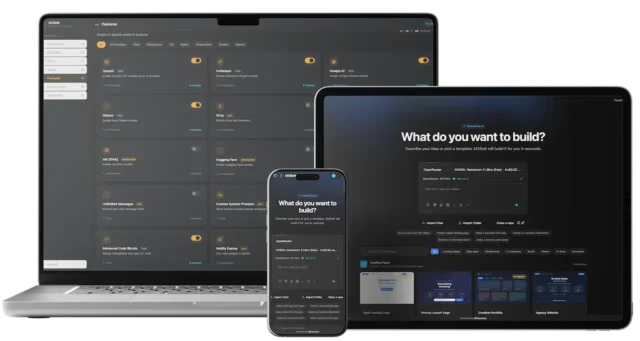
8 ready-made AI platforms24 AI and data services100% source code ownership6 working days to launch
Add AI to a clinic, hospital or health startup platform: symptom intake and triage, clinical note drafting, report summaries, patient-message routing and no-show prediction. AI assists and clinicians decide. Start from a Miracuves healthcare base from $2,799, or add the AI layer to your own system in 2-8 weeks, with 100% source code.





Miracuves builds AI into healthcare software: symptom intake and triage, AI medical scribe notes, report summaries, patient-message routing and no-show prediction, with clinicians approving every clinical output. Start from a ready-made healthcare base from $2,799, built in 6 working days, or add the AI layer to your own system as custom work in 2-8 weeks. Miracuves can sign a BAA, and you own 100% of the code.
Our Approach
Miracuves has delivered 9,000+ projects since 2010 and runs ready-made healthcare bases for booking, consults and pharmacy. The AI work sits on top: symptom intake and triage, an appointment and follow-up assistant, clinical note drafting, report summarization, patient-message routing and no-show prediction. Each feature uses the language models and NLP pipelines that suit that task, not one model for everything.
Who this is for: clinics, hospital groups and digital health startups that want clinicians spending less time on intake, notes and the inbox, without handing clinical judgment to a model. It is not for anyone who wants software that diagnoses or prescribes on its own; that is a regulated medical device, and we say so on the first call.
Every engagement starts with an NDA and, where patient data is involved, a BAA: Miracuves can sign one as your business associate. We then agree the evaluation set with a clinician on your side, build against it, and hand over the prompts, the test cases and the audit log design along with the code.
When AI is the wrong tool: if the problem is a missing booking flow or a slow front-desk process, fix the workflow first. We tell you when a rule, a form or a reminder does the job better than a model.
Decisions First
Healthcare AI goes wrong in the scoping, not in the model. These six answers set what the AI may do, what it may see and who is accountable.
Which outputs are drafts for a clinician and which, if any, reach a patient directly. We default to drafts.
Scoped upfrontWhich fields go to a model, which are redacted first, and which never leave your database.
Scoped upfrontA hosted model covered by a BAA with its provider, or an open model on your own servers when data cannot leave.
Scoped upfrontSoftware that diagnoses or recommends treatment can be regulated as a medical device. We build below that line unless you choose to pursue clearance.
Scoped upfrontA test set of real, de-identified cases and a pass mark your clinician agrees before launch.
In the buildNamed reviewers, escalation paths and an audit trail of every AI output and every edit.
In the buildHealthcare AI Solutions
Six of our 90+ ready-made platforms, each shipping with its apps and admin panel in 6 days.
View All 90+ SolutionsBooking, video consults and records. Its product page lists an AI symptom checker; your triage rules and a scribe are added on top.
Medicine orders and lab tests. Its product page lists prescription image reading, with a drug interaction checker as an add-on.
Structured questions, red-flag escalation and a suggested care route, written around your protocols.
Consult audio turned into a draft note in your template, held until the clinician signs it.
Messages sorted by intent and urgency, with draft replies that staff approve before sending.
Tomorrow's visits scored for no-show risk from your own booking history, with targeted reminders.
AI Anatomy
Where each AI feature sits across the three apps. Two are listed on Miracuves product pages today: the Practo base's symptom checker and the pharmacy bases' prescription reading. Everything else here is custom work added on top, in 2-8 weeks.
Choose Your Route
Three ways to put AI into a healthcare product. The difference is who owns the prompts and data flows, where patient data goes, and how soon you can start.
Healthcare base plus custom AI
AI added to your own system
A rented AI tool
you are launching booking, consults or pharmacy and want triage or a scribe in the same product, owned from day one. Start with the Practo Clone.
you already run an EHR or patient platform and need AI added through its APIs (custom), or you want to trial a single AI feature before committing (white-label).
Before You Build
The questions that decide which AI feature to build first, what it costs to run and where responsibility sits.
Pick the task with the most repetition and the least clinical judgment. For most clinics that is intake: the same pre-visit questions asked by phone every day. For doctors who type notes after hours, it is an AI medical scribe. For crowded inboxes, it is patient-message routing, which sorts messages by intent and urgency so staff answer the right ones first.
Report summarization suits hospitals with long discharge and lab reports, and no-show prediction suits clinics whose schedules lose slots to missed visits. Leave diagnosis and treatment advice out of the first build: they carry the most risk and, in many markets, medical device rules.
It routes rather than diagnoses. The intake asks structured questions, checks the answers against your red-flag list first, and suggests a care route such as self-care information, a GP visit or urgent care. It never presents a condition as the answer, and your clinicians review its wording before launch.
The line matters legally. Software that diagnoses or recommends treatment can be regulated as a medical device in many markets, including the US and the EU. Miracuves builds assistive triage below that line by default. If you decide to pursue clearance, that is a regulatory project your team leads, and we scope the engineering it needs.
There are two parts. The build: a ready-made healthcare base is a published one-time price, from $2,799 today, and the AI layer on top is quoted after scoping, typically 2-8 weeks of work. Adding AI to a platform you already run is quoted the same way.
The running cost sits with your providers and grows with use: model calls per message or note, speech-to-text minutes for the scribe, hosting for the retrieval index, and servers for a self-hosted model if you choose one. Before you commit, we estimate these from your monthly visit and message volumes, and we design the gateway to cache and batch where it safely can.
Miracuves builds to the controls those frameworks require: role-based access, encryption, PHI redaction before model calls, and an audit log of every AI output and sign-off. Miracuves can sign a BAA as your business associate. Your model provider needs its own BAA with you, or the model runs on your servers so patient data never leaves them.
What stays with you: your compliance program, your policies, the patient consent wording, where data is hosted and any certification. Miracuves does not certify your platform as HIPAA or GDPR compliant; we document the architecture so your compliance officer can assess it.
The model is rarely what slows a healthcare AI project down. What does is usually on your side, so it pays to start these early, in parallel with scoping:
Ask to see the work behind the demo. A serious vendor tests on your de-identified cases rather than its own examples, shows how red flags bypass the model, and shows you the audit log a reviewer would actually read.
Then check the exit terms. Do you receive the prompts, the evaluation set and the pipeline code, or only an API key? Can you switch models without a rebuild? Will the vendor sign a BAA? Miracuves answers yes to each in the written scope. If you are comparing several proposals, a short AI consulting engagement can assess them before you commit.
How It Works
One patient contact traced through the AI layer: the model gathers, sorts and drafts, and a clinician makes every clinical decision.
The intake asks structured follow-ups in plain language, in the patient's own language where scoped.
Answers that match your escalation rules go straight to a person, before any AI summary is written.
The clinician sees a short intake summary, with links back to the patient's own answers.
With the patient's consent, the scribe turns consult audio into a draft note the clinician edits and signs.
The assistant books the follow-up and sends reminders; visits flagged as likely no-shows get an extra nudge.
Summaries, notes and replies stay drafts until a person approves them.
Urgent answers bypass the model and alert staff.
Input, output, edits and sign-off stored for audit.
Where AI Pays Back
Each AI feature should move one operational number. Baseline it before the build and track it in the pilot, so the decision to keep the feature rests on your own data.
Structured intake replaces the repeat phone questions before a visit.
Measure: calls per bookingA scribe draft cuts the typing after each consult.
Measure: minutes per signed noteNo-show prediction aims reminders at the visits most at risk.
Measure: no-show rateRouting sends each patient message to the right queue on arrival.
Measure: time to first replySummaries of lab and discharge reports speed up clinician review.
Measure: report-to-review timePatients or clinics pay for an AI assistant tier on your platform.
Measure: tier uptakeNo savings promised: Miracuves does not quote savings in advance. These are the measures to baseline before launch; your results depend on your volumes, specialty and staffing.
Who This Is For
Four kinds of healthcare organization ask for this work most often, each with a different bottleneck.
Intake calls and follow-up messages eat the front desk's day. An intake assistant and message routing hand staff a sorted queue instead of a full inbox.
Primary care, dermatology, dentalDischarge summaries and referral letters take clinician hours. Report summarization and a scribe draft them for review, inside the systems already in use.
Outpatient departmentsEvery consult opens with the same questions. Structured symptom intake gives the doctor a summary before the call starts.
Virtual and async careYour customers ask for AI in the product. We add it as a feature tier with its own controls, on your codebase or on ours.
Practice management softwareWhy Miracuves
Healthcare AI tools are easy to demo and hard to leave. These are the terms to compare before any patient data moves.
Some AI vendors keep the prompts and tuning as their property, which makes leaving expensive. Miracuves transfers the prompts, evaluation sets and pipelines with the source code.
Model providers change versions and terms often. The AI gateway lets you move between GPT, Claude, Gemini or a self-hosted Llama model without rewriting the product.
Symptom routing and note drafting can stay assistive. Diagnosis or treatment advice can make the software a regulated medical device, and we flag that before the scope is signed.
A demo on clean examples proves little. Each feature is tested against de-identified cases from your own service, with a pass mark your clinician sets.
A ready-made base takes 6 working days of build time; the AI layer is custom work of 2-8 weeks, quoted in writing before payment.
Architecture
The apps never call a model directly. Every AI request passes one gateway that redacts, routes and logs, and that waits for a person wherever the scope says it must.
Intake, chat, scribe capture and the review screens where drafts are signed.
PHI redaction, model routing, rate limits and a log of every prompt and output.
Answers grounded in your own triage rules and patient leaflets, not the open web.
Sign-off queues, escalation alerts and exports for your compliance officer.
Built withLLM DevelopmentNLP DevelopmentChatbot DevelopmentRAG Development
Technology Stack
Models are chosen per feature and can be switched later. Named models are tools we integrate, not partners; your engineers get the architecture notes at handover.
Quality Standards
Every AI feature passes these gates on staging, with a clinician from your side, before it sees a real patient.
Delivery Gates
The feature runs against de-identified cases from your service and must meet the pass mark your clinician set before launch.
Every symptom on your escalation list is tried in intake and chat; each must reach a person with no AI summary in between.
Model calls are inspected on staging to confirm names, identifiers and free-text details are removed as scoped.
Patients typing instructions to the assistant, or asking it for a diagnosis or a dose: the feature must decline and route to staff.
Source code, prompts, evaluation set, model settings, audit log design and a runbook for changing models later.
Output quality and error rates watched after launch; failures within scope are fixed inside the support window.
Delivery Process
One AI feature at a time, evaluated with your clinicians before patients see it. NDA, a BAA where patient data is involved, written scope and source handoff are standard.
Share the workflow you want AI to help with. NDA signed before any project details are shared; a BAA before any patient data.
Your triage rules, note templates and de-identified example cases collected, and the pass mark agreed with a clinician.
Gateway, prompts, retrieval and review screens built into your healthcare base or your existing system.
Runs against the test set, red-flag and misuse tests, then a supervised pilot with your staff.
Code, prompts, evaluation set and runbook delivered, and the 60-day support window begins.
If you start from a ready-made healthcare base, its build takes 6 working days of Miracuves time. The AI features on top are custom work of 2-8 weeks, and what usually sets the pace sits on your side: clinician time for the test set, your model provider's BAA and your compliance review. We list these on the first call so they can run in parallel.
Cost & Pricing
Published base prices, and a written quote for the AI layer. Ready-made healthcare bases from $2,799; the Practo telemedicine base is $4,299. AI features on top are scoped and quoted before payment.
$2,799 /from
6 working days · scoped
Custom Quote
2-8 weeks · milestone billing
Enterprise
Multi-site · FHIR · compliance
Running costs sit outside the build pricemodel usage, speech-to-text minutes and hosting are billed by those providers to your account. We estimate them from your volumes before you commit.
How many AI features, hosted or self-hosted models, EHR integration, languages and how deep the evaluation goes. Each is itemized in the written quote before payment.
AI layer: scoped quote · 2-8 weeks, milestone billing.
Hospital program: multi-site, FHIR integration, compliance - written scope.
Example engagement
An illustrative example of a typical project of this kind, with client details anonymized. Figures show what this kind of build targets, not a named client's results.
An illustrative engagement: a multi-specialty clinic group on a telemedicine base wants intake triage and a scribe, without letting either reach a patient unreviewed.
Staff answered the same pre-visit questions by phone, and doctors typed notes after hours. Patient data could not reach a model without a BAA and redaction.
Symptom intake with red-flag escalation, a scribe that drafts notes for sign-off, and an AI gateway with redaction and audit logging, evaluated on the group's own de-identified cases.
Every clinical draft signed by a clinician, no automatic replies on clinical questions, and fewer repeat intake calls, measured against the pre-launch baseline.
Client Reviews
Two of these clients run healthcare platforms on the Miracuves base; the third built an AI conversational layer with us. They are real Miracuves clients quoted word for word, not reviews of a healthcare AI project.
"They rebuilt the consultation form, lesion mapping, and a custom billing layer for our treatment packages (acne programs, hair restoration cycles) exactly how dermatologists actually work."
"Miracuves's MXHealth base covered the patient/doctor apps, video consult, e-prescription and the pharmacy integrations. We added Spanish-language UX across every flow, our asynchronous-queue logic, and a custom regulator module for each country."
"Conversational workflows, knowledge-base integration and the automation layer were already built. We connected our own data sources and tuned multilingual accuracy for support and lead qualification."
Why Miracuves
Each one is either run by someone else or open to anyone. Check them in any order; the whole list takes about a minute.
Why clients choose MiracuvesMiracuves Solutions Pvt. Ltd., CIN U62099MH2023PTC406639. Search the CIN on the Ministry of Corporate Affairs portal.
mca.gov.in 02Projects, clients, prices and timelines, each one defined and sourced on our public facts ledger.
miracuves.com/facts 03Client reviews published by Clutch, an independent B2B review platform, not by us.
clutch.co 04A second, separate review platform. Read what clients wrote there too.
goodfirms.co 05Web app, admin panel and APK with printed credentials. Try the real thing before a single call.
miracuves.com/solutions 06Named clients describing their launches, in their own words.
miracuves.com/client-testimonialsEvery promise on this site rests on these three. Each one is something you can check, not something you have to take on trust.
Our leadership is public, with real LinkedIn profiles, not a stock-photo team page. A named team works your build and sends you progress on WhatsApp every working day.
Meet the leadershipEvery number we publish, pricing, timelines, project counts, is defined and sourced on a public facts ledger. If we can't back a claim, we don't make it.
Read the facts ledgerReady-made platforms go from kickoff to live deployment in 6 working days, guaranteed: miss it for reasons on our side and we work free until launch. Custom builds get a fixed quote after a free feasibility study.
Get a feasibility studyExplore Miracuves
The healthcare platform this AI layer sits on, the AI disciplines behind each feature, and the teams that build them.
Related Solutions
Ready-made healthcare bases and the AI services that sit alongside this page.
Frequently Asked
Something not covered here? Ask on WhatsApp and you will usually have an answer within two hours.
Ask us directlyThe Practo Clone product page lists an AI-powered symptom checker and predictive health insights among its features, and a Health AI Chatbot as an add-on. The pharmacy bases list prescription image reading. The scribe, report summarization, message routing and no-show prediction are custom work on top, quoted in writing and built in 2-8 weeks.
Not on clinical questions, unless you decide otherwise in writing. By default, clinical replies are drafts that a staff member approves. Administrative messages, such as booking confirmations and reminders, can go out automatically, and anything that matches your red-flag list goes straight to a person.
We integrate hosted models such as GPT, Claude and Gemini, open models such as Llama that can run on your own servers, and Whisper-class speech-to-text for the scribe. The choice is made per feature, by accuracy on your test cases, where the data may go and running cost. The gateway lets you switch later.
Yes, as custom scope. The scribe produces a draft note that the clinician edits and signs; through the EHR's API, often FHIR, the signed note is written back to the chart. Without an API, the note is copied from the review screen. EHR write-back is quoted separately and depends on your EHR vendor's access terms.
It depends on your patients, specialty and language, so we do not quote an accuracy figure in advance. We measure it: the feature runs against de-identified cases from your service, a clinician reviews the results, and it launches only when it meets the pass mark you agreed. Monitoring continues after launch.
You do. The source code, prompts, evaluation sets and pipeline configuration are transferred to your account. Patient data stays in your hosting, and model calls run through your own provider accounts, with the settings that keep your data out of model training where the provider offers them, documented at handover.
Yes. If your platform has APIs or a database we can reach, the AI layer is built alongside it as custom work of 2-8 weeks, quoted after a short technical review. The gateway, review screens and audit log are the same; only the integration points change. We confirm feasibility before any payment.
Every build includes 60 days of guidance after launch, and ready-made bases add 6 months of priority fixes and 12 months of product evolution. For AI features, ongoing monitoring, model upgrades and re-evaluation can run on a retainer. First response is under 2 hours, Monday to Saturday, 10:00-19:00 IST.
Get Started
Tell us which task eats your team's time. Miracuves scopes the AI feature, the base if you need one (from $2,799), and the evaluation plan, in writing.
NDA signed before we discuss your project
Page reviewed by Miracuves Healthcare AI Team · Last updated September 2026 · Clutch & Google Reviews
Miracuves is an independent software development company. We are not affiliated with, connected to, sponsored by, or endorsed by any of the brands or platforms named on this page.
Names of the form “Brand Clone” are used descriptively. It is how the software industry refers to building a platform with functionality comparable to a known service, and how clients search for it.
The entire design and codebase of our products is built by our own team. Our products contain no code, design, graphics, or content originating from any third-party website or application.
All third-party names and marks listed on this page are the property of their respective owners, referenced solely to describe the category of software offered.

Launch a ready-made solution under your own brand in 6 working days, with a discount and two bonuses on us.
The discount applies to the published price and depends on the solution. Both bonuses are included with a ready-made solution ordered during the offer. The offer runs in 96-hour windows; the timer shows the current one. The 6 working days start once your branding, hosting and accounts are ready. We reply in under 2 hours, Mon-Sat.