
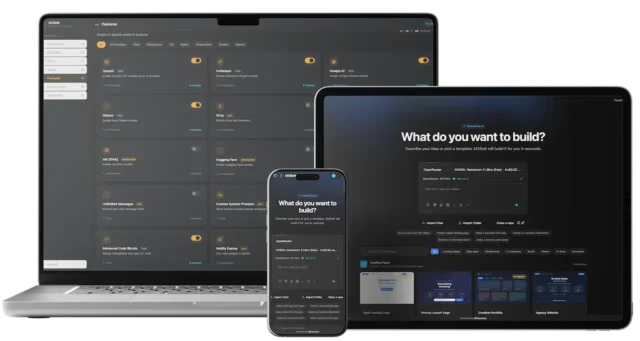
AI App RescueFix AI-generated code and finish the app
SecurityDatabaseRefactoringTestsHandover
You built an MVP with Cursor, Bolt.new, Lovable or Replit and it got you further than anyone expected. Now logins fail, keys sit in the front end, the database stalls under real users and every prompt breaks something else. Miracuves audits the code first, tells you in writing whether to fix or rebuild, then makes it safe, tested and maintainable.
- NDA Before Repo Access
- Audit Before Changes
- Tested Before Release
- Your Code, Your Accounts
- NDABefore repo access
- WrittenFix or rebuild verdict
- TestedEvery fix before release
- 100%Source code ownership
- 9,000+Projects since 2010








Miracuves AI App Rescue fixes AI-generated code in apps built with Cursor, Bolt.new, Lovable, Replit and similar tools. A scoped audit says in writing whether to fix, refactor, rebuild or move to a ready-made platform. Miracuves then secures keys and auth, repairs the database, refactors into maintainable modules, adds tests, sets up deployment and hands over documentation. The code stays 100% yours.
What This Engagement Delivers
What an AI app rescue actually fixes
An AI app rescue turns an MVP that works in a demo into one that survives real users. It starts with an audit of the actual repo and database, ends with a verdict per module, and then fixes in order of risk: exposed secrets and broken auth first, the database next, structure and tests after that.
AI coding tools are very good at producing screens and flows quickly. What they produce less reliably is the part nobody sees in a demo: access rules on every table, keys kept on the server, queries that still work at a thousand users, and code split so one change stays in one place. That is the work a rescue adds. Where the MVP turns out to duplicate a product Miracuves already has, the audit says so, and moving onto that ready-made platform can be cheaper than repairing it. For the decision itself, read Fix vs. Rebuild: The Ultimate Decision Framework for AI-Built Startups.
- Audits the real repo and live database, not the demo
- Rotates exposed keys and moves them server-side
- Fixes auth, sessions and database access rules
- Refactors tangled files into modules with tests
- Hands over docs any developer can work from
"Getting to a working MVP with an AI coding tool is a real achievement, and most of what you built is usually worth keeping. The tools write what the prompt asks for. Production asks for things nobody prompted: rotated keys, access rules, indexes, tests. That gap is what we close."
Deliverables
What you hold at the end of a rescue
A rescue should leave you less dependent on anyone, including us. These three documents are written so a founder can make the fix-or-rebuild call, and so the next developer can work on the app without first reverse-engineering it.
Rescue audit report
Written report · verdict per module- When
- At the end of the audit
- Timeline
- Set in the written scope
- Used for
- Deciding whether to fix or rebuild before spending more
Stabilization plan
Costed work plan · in order of risk- When
- With the audit report
- Timeline
- Custom work, typically 2-8 weeks
- Used for
- Approving the fix work item by item
Handover pack
Docs and runbook · yours to keep- When
- At the end of the rescue
- Timeline
- Included in every full rescue
- Used for
- Onboarding any developer, in-house or external
These are the standard documents in every rescue. Examples of the format are shared under NDA after a first conversation.
Honest Comparison
Audit-first rescue vs more prompting vs a rewrite - an honest comparison
When an AI-built app starts failing, founders usually do one of three things: keep prompting the tool, rewrite from scratch with a new team, or audit what exists and fix it in order of risk. Each is right somewhere.
Audit-first rescue
Trace, rank, then fix in order
Keep prompting
Ask the AI tool to fix each bug
Rewrite from zero
A new team starts again
Real users or money are about to touch the app, an investor or an agency has asked to see the code, or every new prompt breaks something that used to work. An audit is also what turns a vague rewrite quote into a priced list of fixes.
The app is a prototype you are still testing with a handful of people: keep prompting and fix it once the idea is proven. If the MVP duplicates a product in the Miracuves catalogue, moving onto that ready-made platform in 6 working days can cost less than repairing it. For a new product built from scratch see software development.
Rescue guide
Before you fix an AI-built app: what to know first
The questions founders ask when an MVP built with AI coding tools stops holding up, answered plainly, including when a rescue is not the right call.
Should you fix or rebuild an app built with AI tools?
Decide module by module, not on gut feeling. An AI-built MVP is rarely all good or all bad: the screens and the core flow often hold up, while authentication, database rules and payment handling are where the damage sits. The audit scores each module on security, data integrity and how easily another developer can change it.
Fix what is sound, refactor what works but is tangled, and rebuild only the parts that are unsafe at the root, such as a schema that cannot enforce who owns which record. A full rewrite is justified when most core modules fail, and it is the most expensive answer, so it should be the conclusion of an audit rather than the starting point. The full framework is in Fix vs. Rebuild: The Ultimate Decision Framework for AI-Built Startups.
What does an AI codebase audit check?
Four areas, read from the real repo and the live database rather than a demo. Each finding is ranked by what it costs if it fails, so the order of work is clear before any code changes. The security items are set out in AI MVP Security Audit: The 14-Point Checklist for Founder Survival, and the structural test in The Modularity Audit: Is Your AI Codebase Ready for Human Developers?
- Security: keys in the front end or git history, session handling, database access rules
- Data: schema design, missing indexes, migrations, and backups that have actually been restored
- Performance: connection pooling, API rate limits, pages that fetch far more than they show
- Structure: duplicated logic, dead files, missing tests, and whether one feature can change without breaking another
Why do AI-built apps break once real users arrive?
Because a preview environment forgives what production does not. In a builder's preview, one person clicks through one path against a quiet database. With real traffic, each request may open its own database connection, retries multiply calls to paid APIs, and queries without indexes scan whole tables. The app that felt fast with ten testers stalls at the first spike.
The fixes are unglamorous and well understood: connection pooling, indexes on the queries that matter, caching, back-off on retries, and moving heavy work out of the request. Supabase Connection Limits Reached? Fixing AI Database Architecture walks through the most common case, and Why AI-Built MVPs Break at Scale: Founder Crash Patterns After Launch Traffic covers the rest.
How do you get out of a prompt loop?
Stop prompting and start reproducing. A prompt loop happens when each fix is generated from the symptom in front of the tool, so a change in one file quietly breaks two others, and the next prompt repairs those at the cost of something else. After a few rounds nobody knows which version of the logic is correct.
The way out is to freeze feature work, get the app running from the repo on a clean machine, write a test that reproduces the bug, and trace it to the one place it starts. Fix it there once, keep the test, and the loop cannot restart silently. The method is described in Escaping the Prompt Loop: How to Debug and Extract Logic from Cursor Builds.
What should be ready before developers take over an AI-built codebase?
Ownership, and a way to run the app outside the tool. Most handoffs stall on day one because the code lives in one person's builder account, the database sits under a personal login, or the app only runs inside a preview. Settle these before anyone quotes, and the quote you get will be for the work rather than for the unknowns. AI Codebase Handoff Checklist: 8 Steps Before You Hire a Dev Agency covers the full list.
- The full repo exported to a git account the company owns
- Admin access to hosting, database, domain and payment accounts
- Every environment variable and API key listed, ready to rotate
- A short list of what is broken and what must keep working
When is moving to a ready-made platform better than repairing the MVP?
When the MVP is a well-known product shape. If what you built is essentially a marketplace, a delivery app, a booking platform or an AI chat product, much of the repair work would rebuild what already exists in tested form. Miracuves has 90+ ready-made platforms, and launching on one takes 6 working days, with full source code ownership.
What makes the product yours carries across: the brand, the pricing, and the workflows your first users liked. Moving existing users and data, and building anything genuinely unique on top, is custom work scoped in writing, typically 2-8 weeks. The audit says whether this route fits; our post on why patching an AI-built MVP can cost more than it looks covers the cost trade-off.
Rescue Method
Six stages from a fragile MVP to a codebase a team can own
Each stage leaves something written that you keep, so progress can be checked by anyone, including a developer who joins after we leave.
- Stage 01
Access and NDA
NDA signed, then read access to the repo, hosting, database and the builder project. Nothing is changed in this stage.
- Stage 02
Reproduce
The app is built and run on a clean machine from the repo alone. Anything that only works in one browser or one preview is logged.
- Stage 03
Audit by risk
Security, database, performance and code structure, each finding ranked high, medium or low by what it costs if it fails.
- Stage 04
Verdict
Keep, fix, refactor, rebuild or move to a ready-made base, decided per module and costed in writing.
- Stage 05
Stabilize and refactor
Keys rotated, auth and access rules fixed, indexes and pooling added, then tangled files split into modules with tests.
- Stage 06
Deploy and hand over
A staging copy, a repeatable deployment and docs any developer can follow. The repo and every account stay in your name.
Engagement Types
Four ways to rescue an AI-built app
Sized to what the audit finds. If a small stabilization is enough to get you to launch, we say so rather than sell the full rescue.
Rescue Audit Only
The written audit and a fix-or-rebuild verdict per module, which you can act on with your own team or anyone else.
- Best for: Founders deciding what to do next
Stabilization
The urgent findings fixed: keys rotated, auth and access rules corrected, the database indexed and pooled.
- Best for: Apps already live with users
Full Rescue
Stabilization plus refactoring into modules, tests, a repeatable deployment and a documented handover.
- Best for: MVPs heading into growth or a raise
Move to a Ready-Made Base
When the MVP duplicates a Miracuves platform, launch on that base in 6 working days and rebuild only what is unique.
- Best for: Marketplaces, delivery, booking, AI chat
Review Gates
What every fix answers before it ships
Seven checks each change to a rescued app must pass before it reaches production. They are the reason a rescue does not turn into a second prompt loop.
- Is there a test or repro that proves itEvidence
- Does it change the database schemaData
- Which keys or permissions does it touchSecurity
- What changes for users already signed upUsers
- Can it be rolled back in one stepRollback
- Has a second engineer reviewed the diffReview
- Is it written into the handover docsDocs
What's Included
Every rescue includes this - whatever its size
Six terms apply to every rescue, from a single audit to a full stabilization and handover. None of them is sold as an extra.
An Audit Before Any Change
Nothing in the codebase is edited until the audit is written and the order of work is agreed. Patching before tracing is how the prompt loop started.
NDA Before Repo Access
A mutual NDA is signed before we see the repo, the database or your users' data. Your product idea stays yours from the first call.
Secrets Rotated, Not Just Hidden
An exposed key stays exposed in git history even after it is deleted from the code. Every leaked key is revoked and replaced, then kept on the server.
Tested and Reviewed Fixes
Each fix ships with a test that proves it and a second engineer's review of the diff, plus a way to roll it back if production disagrees.
Your Repo, Your Accounts
We work as invited collaborators on your git, hosting and database accounts. Nothing is moved to an account in our name.
Docs for the Next Developer
An architecture map, a setup guide and a deployment runbook, so a new hire or another agency starts from a map rather than from guesswork.
Scope
The problems founders usually bring us
Most AI-built MVPs that reach us share a handful of failures. The audit confirms which ones apply to your app before any fee for fixing them is agreed.
Secrets in the browser
Payment, email or AI model keys bundled into front-end code or committed to the repo, where anyone can read them.
Common findingLogin that half works
Sessions that never expire, OAuth redirects that fail in production, and users who can read each other's records.
Common findingA database with no guardrails
Access rules switched off, no indexes, no migrations, and a schema that grew one prompt at a time.
Common findingCrashes under real traffic
Connection limits hit at the first spike, retry loops burning through API quotas, pages that fetch everything on every load.
Common findingThe prompt loop
Each fix breaks something else, and nobody can say which version of a file holds the logic that is actually correct.
Common findingCode no developer will take on
Agencies decline or quote a full rewrite because there is no structure, no tests and no documentation to start from.
Common findingWhat We Assess
What a rescue audit checks
Read from the repo and the live database, not the demo.
How It Runs
From a broken build to an app you can hand over
The order matters. Security first because a leak cannot be undone, the database next because everything sits on it, structure and tests last because they keep the first two fixed.
- Step 01
Freeze and reproduce
Feature work pauses for the audit, and we get the app building and running from the repo alone. If it only runs inside a builder's preview or on one laptop, that is the first finding, and usually the first fix.
- Step 02
Audit and rank
Security, database, performance and structure, read from the code and the live data. Each finding gets a risk level and a cost to fix, and the report gives a verdict for every module: fix, refactor, rebuild or move.
- Step 03
Stabilize
The dangerous items first: exposed keys revoked and moved server-side, auth and access rules corrected, indexes and connection pooling added. Each change ships with a test and a rollback.
- Step 04
Refactor and test
Duplicated logic merged, tangled files split into modules with clear boundaries, dead code removed. Tests go around the flows that take money or hold personal data, so the next change cannot break them silently.
- Step 05
Deploy and hand over
A staging environment, a repeatable deployment, and documentation that explains how the app fits together. Any developer, in-house or external, can pick it up from there, and keep using AI tools safely inside that structure.
Three rules written into every rescue scope
1. Audit before changes: no code is edited until the audit is written and the order of work agreed. 2. Your accounts stay yours: we join your repo, hosting and database as collaborators, never the other way round. 3. No lock-in: the audit and handover are written so any team can carry on without Miracuves.
How It Is Scoped
What an AI app rescue costs
Scoped to what the audit finds. If a short stabilization gets you to launch, that is what we quote.
Rescue Audit
Get pricing
Scoped by the size of the codebase
- NDA before repo access
- Security, database, performance, structure
- Findings ranked high, medium or low
- Fix, refactor, rebuild or move, in writing
- A costed plan for each route
- Yours to act on with anyone
Full Rescue
Get pricing
Scoped by the audit findings
- Everything in the Rescue Audit
- Keys rotated, auth and access rules fixed
- Indexes, pooling and rate limits
- Tangled files refactored into modules
- Tests and a repeatable deployment
- Documentation and handover
Rescue Retainer
Get pricing
Scoped by ongoing involvement
- A named engineer who knows the codebase
- Reviews of new AI-generated changes
- Dependency and security updates
- Help when a new feature breaks an old one
- Cancel with notice
- Your repo and accounts throughout
Why there is no price on this pageA small prototype on one database and a live app with payments, several integrations and paying users are different pieces of work. The audit is quoted in writing first, and after it you are free to stop, fix it yourself, or hand the report to another team.
What changes the scope
How large the codebase is, how many services and integrations it calls, whether payments or personal data are involved, whether the app is already live with users, and how much the audit marks for refactoring rather than quick fixes.
What we will not do
Paste more generated patches over a fault we have not traced, ship a change without a test and a rollback, or keep your code or accounts behind the next invoice.
Why Miracuves
Six places to check us before you ever call us
Each one is either run by someone else or open to anyone. Check them in any order; the whole list takes about a minute.
Why clients choose MiracuvesCompany registration
Miracuves Solutions Pvt. Ltd., CIN U62099MH2023PTC406639. Search the CIN on the Ministry of Corporate Affairs portal.
mca.gov.in 02Every number, sourced
Projects, clients, prices and timelines, each one defined and sourced on our public facts ledger.
miracuves.com/facts 03Reviews on Clutch
Client reviews published by Clutch, an independent B2B review platform, not by us.
clutch.co 04Reviews on GoodFirms
A second, separate review platform. Read what clients wrote there too.
goodfirms.co 05The product itself
Web app, admin panel and APK with printed credentials. Try the real thing before a single call.
miracuves.com/solutions 06Clients, by name
Named clients describing their launches, in their own words.
miracuves.com/client-testimonialsThree promises we would stake the company on
Every promise on this site rests on these three. Each one is something you can check, not something you have to take on trust.
01People you can name
Our leadership is public, with real LinkedIn profiles, not a stock-photo team page. A named team works your build and sends you progress on WhatsApp every working day.
Meet the leadership02Proof over promises
Every number we publish, pricing, timelines, project counts, is defined and sourced on a public facts ledger. If we can't back a claim, we don't make it.
Read the facts ledger03A process with a deadline
Ready-made platforms go from kickoff to live deployment in 6 working days, guaranteed: miss it for reasons on our side and we work free until launch. Custom builds get a fixed quote after a free feasibility study.
Get a feasibility study
Industries
Industries we build and rescue apps for
Exposed keys and broken logins look the same in every sector. What changes is what leaks when they fail: patient records, payment details, or a creator's earnings.
Healthcare & Life Sciences
Exposed keys and open tables can leak patient records.
View industryTelemedicine
Unsigned video links and open storage buckets can expose consult recordings.
View industryFintech
Broken auth and missing row rules put payment data at risk.
View industryRetail & E-commerce
Leaked payment or email keys and unindexed catalog queries.
View industryMedia & Entertainment
Unprotected media URLs and missing paywall checks give content away.
View industryCreator Economy
Sessions that never expire expose creator earnings and messages.
View industryTransportation & Mobility
Open APIs and missing row rules expose rider and driver locations.
View industryFood & Beverage
Weak admin logins and shared keys expose orders and home addresses.
View industryFull Catalog
Other ways Miracuves can help - ship, secure, or test
A rescue often surfaces work that sits next to the code itself: a deployment pipeline, a wider security review, or a tester to keep the app stable as features arrive. These are the services a rescue most often leads to.
Related Services
Related services across Miracuves
A rescue often leads to one of these: advice on where AI fits next, developers to keep building, or a ready-made platform to launch on.
Frequently Asked
Questions founders ask about AI app rescue
Something not covered here? Ask on WhatsApp and you will usually have an answer within two hours.
Ask us directlyDo you work on apps built with Cursor, Bolt.new, Lovable or Replit?
Yes. The tool matters less than what it produced, and all of them produce code we can read. We work from the repo exported to your own git account, plus your hosting and database, whether that is Supabase, Firebase or a plain Postgres server. If the app still lives only inside a builder account, exporting it is the first step we help with.
We think our API keys were exposed. What should we do first?
Revoke and replace the keys today, before anything else, then check the provider dashboards for usage you do not recognize. Deleting a key from the code is not enough, because it stays in git history. Exposed API Keys in Your AI App? Here Is the 3-Step Emergency Rotation Protocol sets out the steps, and the audit then finds where else secrets leak.
Will the app go offline during the rescue?
It should not. Work happens on a staging copy with its own database, and fixes reach production in small releases, each with a test and a rollback. Changes that need a maintenance window, such as a schema migration on a busy table, are scheduled with you in advance and kept as short as the change allows.
Can we keep building with AI coding tools after the rescue?
Yes, and most founders do. The difference is that the app now has clear modules, tests and a documented structure, so a generated change lands in one place and a broken test flags it before users see it. The handover notes include the conventions that keep AI-assisted changes inside those boundaries.
Can you get the app ready for investor due diligence?
That is a common reason founders call. Technical reviewers look at data handling, access control, backups and whether anyone other than the founder can run the system. The audit covers those points and the fixes close them. Passing Due Diligence: The 10-Point Database Audit for AI-Built Startups lists what reviewers ask about the database.
How much does an AI app rescue cost at Miracuves?
There is no fixed price on this page because each rescue is scoped to what the code needs. A Rescue Audit is scoped by the size of the codebase, a Full Rescue by what the audit finds, and a Rescue Retainer by how much ongoing involvement you want; you can cancel the retainer with notice. The audit is quoted in writing first, and you can stop after it. Every quote is written before payment, with no surprise invoices after kickoff.
What happens if the audit says rebuild?
You get the verdict in writing, per module, with the reasoning. Your options are then a custom rebuild with Miracuves, typically 2-8 weeks with larger scope quoted in writing, a rebuild with any team you choose using the audit as the brief, or a move onto a ready-made platform in 6 working days if the MVP duplicates one.
Who owns the code, and do you need our passwords?
You own 100% of the source code, and every commit lands in your repo. We do not need your personal passwords: you invite us as collaborators on git, hosting and the database, and remove us when the work ends. Any credential we must handle is rotated at handover, and the handover pack lists every account and who holds it.
Can the rescue be done remotely?
Yes. Miracuves is based in Mumbai, with a presence in New York, and runs rescue work remotely for founders worldwide. Calls happen by video, code access goes through your own accounts under the NDA, and the first response comes in under 2 hours, Monday to Saturday, 10:00-19:00 IST.
Get Started
Ready to find out what your app needs?
Tell us what the app does, what it was built with, and what is breaking. Miracuves comes back with a written audit scope: what we will check, what access we need, and what you receive at the end.
NDA signed before we see your code
Page reviewed by Miracuves Engineering Team · Last updated September 2026 · Clutch & Google Reviews
