Which call the AI makes or advises
Assigning a driver, ordering stops, quoting an arrival window or pricing a load. Pick one call with a clear cost of getting it wrong before picking a model.
Scoped upfront
Mira AI
AI you own, from day one. Ready-made AI platforms live in 6 working days, or custom AI built by our engineers.
Explore Mira AINot sure where AI fits? Talk it through with an engineer, free.
Talk to an AI engineerFrom a first assistant to agents that run whole workflows. Full source code on every build.
Machine learning, computer vision and language models, on data pipelines built to last.
Production-ready AI products with apps, admin and full source code, branded as yours.
Where AI earns its keep in your market, with the platforms we have already built there.
Bring in AI engineers by the month, or hand us the whole build.
What we have learned shipping AI products, from our blog.
Prompt-to-app generation, credits and an admin console, with the full source code.
Explore the Bolt.new clone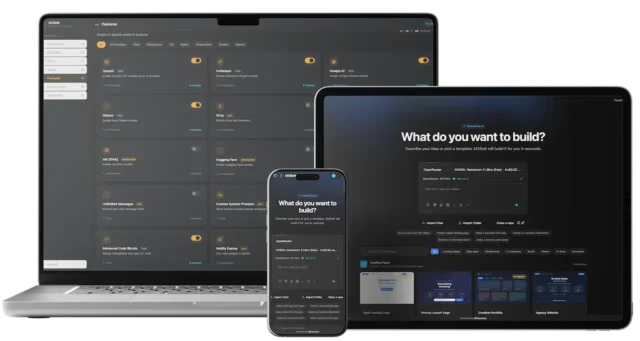
8 ready-made AI platforms24 AI and data services100% source code ownership6 working days to launch
Add AI dispatch, route and stop sequencing, ETA prediction, load matching and document extraction to a courier, parcel or freight platform. Miracuves builds the AI layer on a ready-made logistics base from $2,499 or into the system you already run, as 2-8 weeks of custom work, with 100% source code and a dispatcher override on every automated call.








AI in logistics is software that makes or advises the calls dispatchers, planners and brokers make: which driver takes a job, the order of stops, the arrival time, which carrier fits a load, and whether a delivery photo is valid. Miracuves adds these modules to a ready-made logistics base from $2,499 or to your own system, as 2-8 weeks of custom work, with 100% source code.
Our Approach
AI in logistics is software that makes or advises the calls a dispatcher, planner or broker makes all day: which driver takes a job, in what order the stops run, when the parcel will arrive, which carrier fits a load, whether a proof photo shows a real delivery, and what a scanned bill of lading says. Miracuves builds that layer on a logistics platform it already ships, or into the one you run. The model side is covered on the AI development and machine learning pages.
Who this is for: courier and parcel operators with a busy dispatch desk, freight marketplaces and brokers matching loads to carriers, and 3PLs sitting on months of trip logs. Every model starts in shadow mode: it suggests, a person decides, and both are logged, so you see how often it agrees with your team before it acts on its own.
Each engagement opens with an NDA and a written scope that names the decision, the data it learns from, the override rules, how accuracy is tested and what it will cost per shipment to run. Data stays in your cloud accounts; hosted models such as GPT, Claude or Gemini are called with your own keys, and open models such as Llama run on your servers when the data must not leave them.
When AI is the wrong tool: if you run a small fleet in one city or have no trip history yet, the nearest-driver assignment, zone pricing and multi-stop routing in a ready-made base do the job. Launch, collect clean records, and add a model when there is something to learn from.
Decisions First
A logistics model is only as useful as the choice it takes off a dispatcher, planner or broker. These six are settled in writing before a line of model code.
Assigning a driver, ordering stops, quoting an arrival window or pricing a load. Pick one call with a clear cost of getting it wrong before picking a model.
Scoped upfrontCompleted trips, GPS pings, stop times and failed-attempt reasons. A few months of clean records matter more than a bigger model; without them, start on rules and collect.
Your dataWhich suggestions a dispatcher approves, which run on their own, and how an override is logged so it teaches the next version.
Scoped upfrontRe-sequencing a van mid-route needs an answer in seconds; overnight planning can wait minutes. That choice decides where the model runs.
Scoped upfrontLate drops, empty miles or desk minutes per order, measured before switch-on, so the model is judged against your own numbers rather than a vendor benchmark.
Before launchMap and traffic calls, hosted-model tokens for documents and chat, GPU time for photo checks. Estimated per shipment before the build is quoted.
Scoped upfrontLogistics Bases
Five of these have product pages and launch in 6 working days as ready-made bases. An AI module counts as part of a base only where its product page says so; everything else on this page is custom work on top, 2-8 weeks. The sixth card brings models to a system you already run.
View All 90+ SolutionsLoad board with a carrier TMS behind it; its page lists AI rate suggestions, voice load posting and email-to-load import as built.
Parcel shipping with routing, tracking and proof of delivery, where learned ETAs and document extraction are added as modules.
Booking by vehicle type with auto-assignment and live tracking; AI dispatch scoring and demand forecasts sit on top.
Many merchants sharing one rider fleet, the setting where batching and assignment models pay off first.
Pick-up-and-drop inside the hour, where short windows make ETA prediction and exception alerts worth building.
Dispatch, ETA or document models connected to the TMS, WMS or ERP you already run, through its API.
AI Modules
What the AI layer adds to each surface of a logistics platform. Each item is a module chosen in the written scope, not a bundle: most operators start with one or two on the dispatch console and add the customer and driver side once those have proved themselves.
Three Routes
Three ways to put AI into dispatch, routing and tracking. They differ in who owns the models, where your trip data sits and whether the AI can be tuned to your lanes.
Logistics base, with AI modules added
Models wired into your TMS or WMS
A routing or visibility tool, rented
you are launching the platform and the AI together and want both in your name. Freight marketplaces start on the DAT Load Board Clone; parcel and courier operators on the FedEx Clone or Lalamove Clone.
you already run a TMS or WMS your team relies on (custom modules, 2-8 weeks each), or only want to test one feature such as ETAs before owning a model (white-label).
Questions Before You Build
Straight answers on when AI pays, what already ships in a base, how load matching works, what data you need, what it costs to run and how to judge a vendor.
AI earns its place where a person makes the same judgment many times a day and there is history to learn from: assigning jobs across a large fleet, ordering dozens of stops, quoting arrival windows customers hold you to, matching loads to carriers across many lanes, or keying in paperwork that arrives as scans and emails.
It is the wrong first step when volume is small, the history is thin or messy, or the decision is already settled by a clear rule. A courier with a handful of drivers in one city gets most of the value from the nearest-driver assignment, zone pricing and multi-stop routing a ready-made base already runs. In that case launch first, collect clean trip records for a few months, and add a model once there is something for it to learn.
It depends on the base, and this page counts only what the product pages say. The DAT Load Board Clone page lists AI rate suggestions from lane, equipment, weight and distance, voice load posting through speech transcription, inbound email import that turns freight messages into load drafts, and AI-assisted message drafting as built and demonstrable, and sells AI coverage as an add-on module.
The parcel, courier and van-booking bases behind the FedEx, Lalamove and Dunzo clones ship driver assignment, route optimization, live tracking and proof-of-delivery capture; the Lalamove and Dunzo pages also list a traffic- and weather-aware AI routing add-on. ETAs learned from your own trips, dispatch scoring, photo checks, document extraction and support assistants are custom modules on top, 2-8 weeks.
Load matching ranks carriers for a load, or loads for a truck, instead of leaving both sides to scroll a board. A useful score combines equipment fit, pickup timing, the truck's position and direction of travel, the carrier's lane history and reliability, verification and insurance status, and rate expectations, and it shows its reasons so a broker can accept or reject it.
Carriers that fail verification never enter the ranking; the score sits on top of those checks. Accepted and refused offers, cancellations and late deliveries feed the next version. Miracuves sets out the design in AI Load Matching in a Digital Freight Marketplace: Improving Carrier Fit, Route Efficiency, and Rate Decisions. On the DAT Load Board Clone, matching is planned around your business model and built as custom scope; a board without enough loads and carriers yet should build that liquidity before it builds a matcher.
Models learn from what your platform already records, so a data check comes before any quote. If the history is short or scans are unreliable, the first weeks go into fixing capture in the driver app, and the model follows. For dispatch and ETA work, these records matter most:
Build and running costs are separate. The platform underneath is a published one-time price if you start from a ready-made base: from $2,499 today. Each AI module is custom work, quoted in writing after the data check and typically built in 2-8 weeks; one ETA or assignment model on clean history sits at the short end, several modules across regions at the long end.
Running costs grow with volume and are estimated per shipment before you sign: map and traffic API calls, hosted-model calls for documents and chat, GPU or vision API time for photo checks, storage for GPS history, and periodic retraining. Keys and bills sit in your accounts. Where call costs would outgrow the value, an open model on your own servers is priced as the alternative.
Ask to see the decision, not the model. A credible vendor names the one call the AI will make or advise, the baseline it will be measured against, and how it behaves when it is wrong. These five questions separate a working plan from a slide:
How It Works
Every module on this page follows the same loop, shown here for assigning a job to a driver.
A new order, a driver going offline or a late scan triggers a decision.
Distance, vehicle, load size, shift time and stop history are read from the shipment record.
Drivers, stop orders or carriers are scored, and the reasons are stored beside the score.
In shadow mode a person decides; later, routine calls run on their own within set limits.
Actual arrival, accept or reject and any exception go into the next training run.
Top three drivers shown with the reason for each.
Arrival window recalculated on each GPS ping.
Late-risk job or failed photo check sent to a person.
Business Case
An AI module has to pay for its build and its running cost. These are the lines where logistics operators usually look for that return, each checked against the baseline measured in the first week.
Once predicted windows hold, a tighter window can be sold at a higher fee to merchants and customers who need it.
Revenue: premium feeAddress checks and pre-arrival notices cut the second trip that a missed drop costs.
Saving: repeat tripsBetter stop order and batching fit more deliveries into the same driver hours.
Saving: driver hoursRoutine assignments run on their own, so the same desk handles more volume and spends its time on exceptions.
Saving: desk timeFreight marketplaces can charge for quicker, better-matched carrier coverage on hard lanes.
Revenue: match feeETA feeds, forecast reports and exception alerts sold to business shippers as a paid plan or API.
Revenue: merchant planNo promised savings: each card shows where an AI module usually earns or saves, not a result. Miracuves measures your baseline before switch-on and reports against it; the size of any gain depends on your volume, lanes and the quality of your data.
Who This Is For
Four kinds of operator with enough volume and history for a model to learn from.
Desks assigning hundreds of jobs a day by hand, where auto-assignment and stop sequencing leave dispatchers free for failed drops and complaints.
Parcel & courierLoad boards and brokers that need carrier-fit ranking, rate guidance and documents read from email, on the DAT base or their own.
Digital freightOperators with months of trip logs who want staffing and vehicle forecasts, and a warning before an SLA is missed rather than after.
Contract logisticsBrands delivering with their own drivers who want customers to see a predicted window and ask an assistant instead of calling the store.
Own-fleet deliveryWhy Miracuves
Logistics AI quotes often price the model and leave out the data work, the dispatcher override and who owns the result. These are the terms Miracuves puts in writing.
Trip history, GPS traces and scanned documents are processed in your cloud, and hosted-model calls go out under your own keys. Your records are not used to train a model for another client.
Any assignment, route or ETA the model sets can be reversed from the dispatch console, and each reversal is logged as training signal for the next version.
Weeks of your own history are held back from training and used to test the model, reported by zone, vehicle and time of day in plain terms rather than a vendor benchmark.
If nearest-driver assignment or zone pricing in the base already does the job, Miracuves says so. A model is scoped only where volume and data give it something to learn.
A ready-made base takes 6 working days; each AI module is 2-8 weeks of custom work, and any longer data or integration work is quoted in writing before payment.
Architecture
The shipment record stays the source of truth. Models read from it and write their suggestions beside it, never over it, unless a rule or a person approves, so the audit trail shows who decided what and why.
Bookings, scans, status changes and GPS pings captured as they happen.
Travel times, dwell times and driver history kept ready for scoring.
Assignment, ETA, vision and document models behind one internal API.
Every suggestion, override and outcome stored for audits and retraining.
Built withAI DevelopmentMachine LearningData EngineeringNode.js Development
Technology Stack
The tools behind the AI layer. The exact mix follows your volume, your data and where the models must run; architecture notes are part of the handover.
Quality Standards
A logistics model fails in ways a demo never shows: a holiday week, a new depot, a driver who always parks round the corner. Each gate below tests for one of those.
Delivery Gates
Models are scored on weeks of your own trips they never saw in training, split by zone, vehicle type and time of day, so a weak depot or a bad hour shows up before launch.
The model runs beside your dispatchers on live orders without acting. Its suggestions and the human choices are compared, and automation is switched on only where the two agree.
Every automated decision can be reversed from the console. If a model or a hosted API is down, the platform falls back to the base rules instead of stopping dispatch.
No keys in source; hosted-model calls go through your accounts; driver locations and customer addresses are masked in prompts and logs wherever the task allows.
Repository, training and evaluation scripts, prompts, model versions, a retraining runbook and the accuracy and override dashboards.
Accuracy drift, bad extractions and noisy alerts caused by in-scope configuration are fixed, and Miracuves stays reachable through the first retraining cycle.
Delivery Process
A data check comes before the quote, and shadow mode comes before automation. The NDA, written scope and handover of code, prompts and models come with every engagement.
Tell us the decision you want the AI to make. The NDA is signed first, then a sample of your trip, scan and document records is reviewed and the module is scoped in writing.
Current performance measured on your own records, and the event and feature pipeline set up in your cloud account.
Model trained, tested on held-back weeks and wired to the dispatch console with its override and fallback rules.
The model suggests while your team decides. Agreement, errors and running cost are reported against the baseline.
Automation enabled for the calls that passed shadow mode; code, prompts, scripts and dashboards handed over, and the 60-day support window starts.
One module on clean trip history sits at the short end; several modules, patchy scans or a TMS without an API sit at the long end. If you are also launching a ready-made base, its 6 working days come first. Data access, API credentials and a dispatcher for shadow review are on your side, and we list them on the first call.
Cost & Pricing
Published prices for the platform, a written quote for the AI. Logistics bases from $2,499: the FedEx parcel base is $2,499 and the multi-merchant courier base $3,399. Each AI module is custom work, quoted after the data check.
$2,499 /from
6 working days · add AI after
Custom Quote
2-8 weeks · milestone billing
Enterprise
Multi-region · retraining · written scope
Cost factors that change the pricehow many decisions the AI makes, how clean your history is, and whether models run on hosted APIs or your own servers.
The number of modules, the state of your trip and document records, the systems the models must read from and write to, and whether the data may leave your servers. Running costs - map calls, model tokens, GPU time - are estimated per shipment and billed to your own accounts.
AI module: scoped quote · 2-8 weeks, milestone billing.
Enterprise: multi-region, retraining - contact for written scope.
Example engagement
An illustrative example of a typical project of this kind, with client details anonymized. Figures show what this kind of build targets, not a named client's results.
A courier operator on the multi-merchant base whose dispatch desk assigns every job by hand, and the shape an assignment and ETA project takes on top of it.
Dispatchers pick a rider for every order from the live map, and customers are quoted a fixed window that peak hours regularly break. The decisions to automate, the override rules and the baseline are agreed in writing first.
An assignment model that ranks riders by distance, load and shift, and an ETA model trained on the operator's own completed trips, both wired into the dispatch console with an override and a fallback to the base rules.
What a build like this targets: fewer manual assignments per dispatcher and a smaller gap between predicted and actual arrival, with no rise in late drops. Results are reported against the week-one baseline, and the code and models are handed over.
Client Reviews
Three Miracuves clients, quoted word for word from their published testimonials. All three built on a Miracuves base and brought their own layer on top: a courier network, a field-service dispatch operation and a multi-service delivery business. None of them bought the AI logistics modules on this page.
"We added a multi-tenant layer for our B2B clients, our branded customer tracking page, and a custom COD/settlement module. We launched in 6 weeks."
"Dispatch, the technician app and work orders were already there. We added parts inventory, customer sign-off with photos and SLA dashboards."
"Our market, our payment partners and our categories were the work. Dispatch, the rider and driver apps and the merchant console were already built and proven."
Why Miracuves
Each one is either run by someone else or open to anyone. Check them in any order; the whole list takes about a minute.
Why clients choose MiracuvesMiracuves Solutions Pvt. Ltd., CIN U62099MH2023PTC406639. Search the CIN on the Ministry of Corporate Affairs portal.
mca.gov.in 02Projects, clients, prices and timelines, each one defined and sourced on our public facts ledger.
miracuves.com/facts 03Client reviews published by Clutch, an independent B2B review platform, not by us.
clutch.co 04A second, separate review platform. Read what clients wrote there too.
goodfirms.co 05Web app, admin panel and APK with printed credentials. Try the real thing before a single call.
miracuves.com/solutions 06Named clients describing their launches, in their own words.
miracuves.com/client-testimonialsEvery promise on this site rests on these three. Each one is something you can check, not something you have to take on trust.
Our leadership is public, with real LinkedIn profiles, not a stock-photo team page. A named team works your build and sends you progress on WhatsApp every working day.
Meet the leadershipEvery number we publish, pricing, timelines, project counts, is defined and sourced on a public facts ledger. If we can't back a claim, we don't make it.
Read the facts ledgerReady-made platforms go from kickoff to live deployment in 6 working days, guaranteed: miss it for reasons on our side and we work free until launch. Custom builds get a fixed quote after a free feasibility study.
Get a feasibility studyExplore Miracuves
Related Solutions
The logistics bases the AI layer is built on, and the AI services behind each module on this page.
Frequently Asked
Something not covered here? Ask on WhatsApp and you will usually have an answer within two hours.
Ask us directlyIt is the use of trained models and language models in the daily decisions of moving goods: assigning drivers, sequencing stops, predicting arrival times, matching loads to carriers, forecasting demand, checking proof-of-delivery photos, reading shipping documents and answering driver and customer questions. In a Miracuves build each is a separate module that reads the shipment record and writes a suggestion back, with a person able to overrule it.
Yes, if it exposes its data. Miracuves connects models to an existing TMS, WMS, ERP or dispatch tool through its API, a read replica of its database or scheduled exports, and returns suggestions the same way or in a small console beside it. A system with no API needs an export first, scoped in writing. AI integration services covers that work across industries.
The base routing is what each product page describes: stop ordering and job assignment with live tracking. An AI route and stop sequencing module adds what your own history teaches: how long drops really take at each address, which roads slow down at which hour, delivery windows, vehicle capacity and driver shifts. A solver such as OR-Tools does the ordering with those learned times, and it re-runs when a job is added or a driver falls behind.
It depends on your lanes and data, so Miracuves does not quote a figure before seeing them. The model is trained on completed trips, tested on weeks it never saw, and reported as the typical gap between predicted and actual arrival by zone, hour and vehicle. That test is agreed before switch-on, and customers see a window rather than a single minute when the model is less certain.
Yes, as custom work. A vision model checks each photo as it is taken: is there a parcel, is it at a door or locker rather than on a road, is the image sharp, and do its time and place match the stop. Passing photos close the job; doubtful ones go to a review queue in the dispatch console. More on the computer vision development page.
Yes. Scanned or emailed documents go through OCR and a language model that pulls shipper, consignee, weights, reference numbers and charges into the shipment record. Each field carries a confidence level, and low-confidence values go to a person before they reach billing. The DAT base already turns inbound freight emails into load drafts; other document types are scoped as custom work.
Yes. Source code, prompts, training and evaluation scripts, and any model trained on your data are handed over in your own repositories and cloud accounts, under an NDA with IP assignment. Hosted models such as GPT, Claude or Gemini remain the provider's; you own how they are used and the data sent through your keys. Support runs 60 days from switch-on.
The choice follows the job. Gradient-boosted models handle ETA and demand forecasts, a route solver handles stop order, vision models check photos, and language models such as GPT, Claude, Gemini or an open Llama model handle documents and assistants. Where data must stay on your servers, the open-model route is priced alongside. The LLM development page covers the language-model side.
Yes. A demand forecasting model for logistics predicts orders or loads per zone and hour from your own history, including weekends, paydays and holidays, and turns that into the number of drivers or vehicles to schedule. The console shows the forecast beside the actual count, so planners can judge it for a few weeks before shifts are planned from it.
It changes their work more than their number. Routine assignments and re-sequencing can run on their own once shadow mode shows the model agrees with your team, which leaves dispatchers with the exceptions: failed drops, unhappy customers, a van off the road. Every automated call stays visible and reversible, and their overrides become the training signal for the next version.
Get Started
Tell us the decision you want the AI to make and the data you hold. Miracuves scopes the module in writing, on a base from $2,499 or on the system you run, with full source code.
NDA signed before you share any shipment data
Page reviewed by Miracuves AI Team · Last updated September 2026 · Clutch & Google Reviews
Miracuves is an independent software development company. We are not affiliated with, connected to, sponsored by, or endorsed by any of the brands or platforms named on this page.
Names of the form “Brand Clone” are used descriptively. It is how the software industry refers to building a platform with functionality comparable to a known service, and how clients search for it.
The entire design and codebase of our products is built by our own team. Our products contain no code, design, graphics, or content originating from any third-party website or application.
All third-party names and marks listed on this page are the property of their respective owners, referenced solely to describe the category of software offered.

Launch a ready-made solution under your own brand in 6 working days, with a discount and two bonuses on us.
The discount applies to the published price and depends on the solution. Both bonuses are included with a ready-made solution ordered during the offer. The offer runs in 96-hour windows; the timer shows the current one. The 6 working days start once your branding, hosting and accounts are ready. We reply in under 2 hours, Mon-Sat.