Which calls the model may touch
Advice to a reviewer, a step-up check, or an automatic action. Credit declines and account freezes usually stay with a person, and that answer shapes the whole design.
Your policy
Mira AI
AI you own, from day one. Ready-made AI platforms live in 6 working days, or custom AI built by our engineers.
Explore Mira AINot sure where AI fits? Talk it through with an engineer, free.
Talk to an AI engineerFrom a first assistant to agents that run whole workflows. Full source code on every build.
Machine learning, computer vision and language models, on data pipelines built to last.
Production-ready AI products with apps, admin and full source code, branded as yours.
Where AI earns its keep in your market, with the platforms we have already built there.
Bring in AI engineers by the month, or hand us the whole build.
What we have learned shipping AI products, from our blog.
Prompt-to-app generation, credits and an admin console, with the full source code.
Explore the Bolt.new clone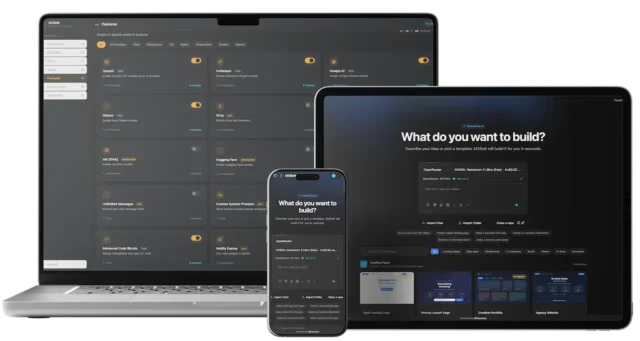
8 ready-made AI platforms24 AI and data services100% source code ownership6 working days to launch
Add fraud and anomaly signals, credit-risk scoring support, KYC document extraction and a conversational banking assistant to a fintech product you own. Miracuves builds the AI layer as scoped custom work, on a ready-made fintech base from $3,699 or on your own platform, and a person signs off every decision that touches a customer's money.









AI in fintech at Miracuves means fraud and anomaly signals, credit-risk scoring support, KYC document extraction and a conversational banking assistant, built into a fintech product you own. The AI layer is custom work of 2-8 weeks, on a ready-made base from $3,699 or on your own platform. Every score carries its reasons, people sign off credit and fraud decisions, and you keep 100% of the source code.
Our Approach
Miracuves has delivered 9,000+ projects since 2010. For AI banking software development we start from what a model needs to be useful: a clean transaction history, a KYC record, and an admin where a person can act on a flag. Our fintech bases carry those already, so the custom weeks go into the models themselves. Engineers can read how we train and ship models on the machine learning and LLM development pages.
Who this is for: lenders, neobanks, payment companies and wealth apps that want fraud signals, faster KYC review, credit-risk support or a support assistant, without sending customer data somewhere they cannot audit. Every model output lands in the admin with its reasons and a log entry, so your compliance officer can see what the system suggested and what a person decided.
An NDA comes first, then a written scope naming the decisions in play, the data sources, the model or API you will use, where it runs, and the review thresholds. Models are tested on your own history before they touch live traffic, then run in shadow: they score, a person decides, and we compare the two before anything switches on.
When AI is the wrong first step: a new lender or wallet with no transaction history gives a model nothing to learn from. Launch on the base's risk rules, record every outcome for a few months, then add the model. No model replaces a lending license, a credit policy or your compliance officer's judgment.
Decisions First
Fintech AI rarely fails on the model. It fails on questions answered late: which decisions the model may touch, what history it can learn from, and what a customer is told when it says no. We settle these in writing first.
Advice to a reviewer, a step-up check, or an automatic action. Credit declines and account freezes usually stay with a person, and that answer shapes the whole design.
Your policyConfirmed fraud cases, repayment outcomes, rejected documents. Without labeled outcomes a model has nothing to learn from, and a rules-first launch is the honest start.
Scoped upfrontA declined applicant or a held payment needs a reason in plain words. That requirement limits which models fit, so it is settled before any model is chosen.
Scoped upfrontQueue design, thresholds, who may override and how each override is logged. Reviewers who trust the queue use it; reviewers who do not will work around it.
Built with the layerA hosted model API with redaction, or an open model on your own cloud. Your data policy decides, and it moves the running cost as much as the quality.
Scoped upfrontAlert volume, override rates and score shifts watched from day one, with a model version on every score so a bad release can be rolled back.
Built with the layerWhere The AI Sits
Three ready-made bases that already carry the ledger, KYC and admin, then three AI builds Miracuves adds as custom work on a base or on your own platform.
View All 90+ SolutionsIts product page lists sanctions screening, risk rules, fraud analysis and anomaly detection in the admin. A model-based fraud score plugs into that review path as custom work.
Its product page lists AI budget recommendations, spending categories with anomaly detection, and a credit score view with a factor breakdown. Your own risk model is built on top.
Multi-currency accounts, cards and KYC, with advanced KYC and AML modules and risk scoring offered as an add-on. Spend insights and an assistant are custom work on top.
Application risk scores, affordability checks and reason codes built to your credit policy, with a credit officer approving every decline.
IDs, proof of address and bank statements read into structured fields, mismatches flagged, and low-confidence reads queued for a reviewer.
Answers on balances, cards, fees and disputes, grounded in your policies and the customer's own account, with a human agent one tap away.
AI Layer Anatomy
What the AI layer can add, surface by surface. It is a menu, not a fixed package: each item is scoped against your data and policy and built as custom work in 2-8 weeks, on a Miracuves base or your own platform.
Choose Your Route
Three ways to get AI into a money product. The difference is who owns the model, whether you can explain its output, and how soon it reaches customers.
A fintech base with models added
AI on your platform, or both from scratch
A vendor's score, rented per call
you are launching a wallet, transfer or credit product and want fraud signals, KYC extraction or an assistant from the start, with the code in your own account. Browse the Wise Clone or the Cred Clone.
you already run a platform and only need the AI layer (custom, on your system), or you want to test one vendor score before owning a model (rented API).
Before You Build
Seven questions that decide whether AI fits, what it costs, and how the obligations split between your business and Miracuves.
AI earns its place where a decision repeats thousands of times and a person cannot look at each one: scoring card and transfer payments for fraud, reading KYC documents, sorting support questions, ranking which overdue accounts to call first. In each case the model narrows the work and a person still owns the hard calls.
It is the wrong first step when there is no history to learn from. A new lender or wallet has no labeled fraud and no repayment outcomes, so launch on clear rules, record every outcome, and add a model once a few months of data exist. It is also wrong where a fixed rule would do: a daily transfer limit needs no model.
Only what each product page states. The Wise base, at $12,999, lists sanctions screening, risk rules, fraud analysis, risk scoring and anomaly detection in its admin. The Cred base lists AI budget recommendations, spending categories with anomaly detection, and a credit score view with a factor breakdown, with AI insights behind its premium plan. The Revolut base, at $15,999, offers advanced KYC and AML modules with risk scoring as an add-on, and the P2P exchange script, a separate crypto product at $2,799, lists an AI fraud detection module as an add-on.
Everything else on this page, including a model-based fraud score, credit-risk scoring support, KYC document extraction and a banking assistant, is custom work built on top in 2-8 weeks.
Rules and models do different jobs. Rules catch what you already know: a transfer over a limit, a sanctioned name, one card used in two countries within an hour. A model scores each payment against the customer's normal pattern and the patterns of past fraud, and catches combinations nobody wrote a rule for.
In the build, both run on every payment. The model returns a score and its top reasons; thresholds you set decide whether the payment passes, asks for a biometric step-up, or waits for an analyst. Analyst decisions and later chargebacks become the labels for the next model version, and a new version runs in shadow until your risk team is satisfied with what it flags.
We build AI credit scoring as decision support, not as the decider. The model estimates risk from data you hold with consent, such as repayment history, income checks and bureau data, and returns the main reasons behind each score. A credit officer approves, declines or refers, and the admin records who decided and why.
Many lending rules require you to give a declined applicant the main reasons, and to show that decisions do not disadvantage protected groups. That shapes the build: we favor models whose reasons can be read, compare outcomes across the groups your policy names before launch, and keep every model version on record. Your credit policy, license and compliance sign-off stay with your business.
Two parts. If you need the platform too, a ready-made fintech base starts from $3,699, with 6 working days of build. The AI layer is custom work of 2-8 weeks, quoted in writing after scoping; the number of models, the data cleaning involved and the review screens your admin needs move the quote most.
Running costs are separate and listed before you sign: hosting for the model services, per-call fees if you use a hosted model such as GPT, Claude or Gemini for extraction or the assistant, your KYC vendor's per-check charge, bureau fees where you pull credit data, and periodic retraining. A self-hosted open model trades per-call fees for GPU hosting you run yourself.
Miracuves works remotely from Mumbai, and the build moves as fast as the data arrives. The slow items usually sit on your side, so start these in parallel:
Ask five things. Will you own the model code, prompts and training pipeline, or rent a score? Does every score come with reasons a reviewer can read? Will the model run in shadow on your own data before it acts, and will the vendor show you the comparison? Where does customer data go, and can the model run on your own cloud if your policy demands it? And who watches drift after launch?
Be wary of any vendor that quotes a fraud-reduction or approval-rate figure before seeing your data. Those numbers depend on your customers, your history and your thresholds, and an honest vendor measures them with you rather than promising them.
How It Works
A single card payment, followed from the moment it is attempted to the analyst's decision and the record your auditor will read.
The customer app sends amount, merchant, device and location to the payments API, which asks the risk service for a score before authorizing.
The fraud model returns a score with its top reasons. The platform's own risk rules run beside it, so a rule still blocks what the model misses.
Your thresholds decide: pass, ask for a biometric step-up, or hold for a person. The model declines nothing alone unless your policy says it may.
A held payment lands in the review queue with the score, the reasons and the customer's history. The analyst releases or blocks it and writes a note.
The decision and any later chargeback become labels for the next version, and every step sits in the audit log with the model version that scored it.
A score and its reasons, never a silent decision.
Model version, inputs used and the final outcome.
Who moved a threshold, when, and why.
Where It Pays Back
An AI layer earns its cost in lower losses, less manual work and new paid features. Each line below is measured against your own baseline, not promised in advance.
A score catches patterns fixed rules miss, and every chargeback avoided goes straight to margin.
Measured in your chargebacksGood customers blocked by blunt rules leave. Reasons per score let you relax rules where risk is low.
Tracked as override rateExtraction fills the fields and flags mismatches, so reviewers handle exceptions instead of typing.
Reviewer time per caseAn assistant answers balance, card and fee questions and hands the rest to an agent with context.
Chats closed without handoverRanking overdue accounts by likelihood to respond puts agent hours where they recover the most.
Recovered per agent hourSpending insights and budget advice can sit behind a paid plan, as the Cred base does with its premium flag.
Subscription revenueNo promised figures: each line is measured on your own data. A new model runs in shadow first, and you see its effect against your current process before it touches a customer.
Who This Is For
Four kinds of fintech business, each with a different decision to support.
AI credit scoring support, affordability checks and reason codes for declines, with every decision signed by a credit officer.
UnderwritingFraud signals on card and transfer payments, spend categorization, and an in-app assistant that knows the customer's account.
Retail bankingMerchant risk checks at onboarding, transaction anomaly flags, and chargeback evidence gathered for the ops team.
AI for paymentsKYC extraction for faster onboarding, login anomaly alerts, and a support assistant kept to account questions, not advice.
InvestingWhy Miracuves
Most fintech AI is sold as a scoring API you rent per call. Miracuves builds the layer into a product you own, beside the ledger and the review queue.
A rented score charges on every transaction for as long as you run. Miracuves transfers the code, prompts and training pipeline, so the running cost is your hosting and any model API you choose.
Credit and fraud decisions get questioned by customers, regulators and your own board. Every score carries its reasons, so a reviewer can answer "why" without calling us.
Declines, account freezes and credit limits are signed by a person with a logged note. The model ranks and explains; it acts alone only where your policy allows it.
Some teams may send redacted text to a hosted model such as GPT, Claude or Gemini; others need everything on their own cloud, where an open model such as Llama can run. We settle that first.
A ready-made base takes 6 working days of build; the AI layer is custom work of 2-8 weeks, and anything bigger is quoted in writing. If your history is too thin for a model, we say so before you pay.
Architecture
The model never writes to the ledger. It reads events, returns a score with reasons, and the payments service and your reviewers decide what happens next.
Payments, logins, KYC submissions and repayments published as events the models read without touching balances.
Fraud, credit, extraction and assistant models behind one internal API, each versioned and able to run in shadow.
Thresholds, rules and the review queue that turn a score into pass, step-up or hold.
Audit log of score, model version, reviewer and outcome; redaction before any external model call; role-based access to cases.
Built withML DevelopmentLLM DevelopmentAI DevelopmentData EngineeringFintech App Development
Technology Stack
A typical stack under the scores, the extraction and the assistant. The final choice of model, and where it runs, is written into your scope.
Quality Standards
Six gates stand between a fintech model and a live customer; accuracy on a test set is only the first.
Delivery Gates
The model is scored on a held-out slice of your own transactions or applications, split by time, so it is judged on months it never saw.
It scores real events without acting on them. Reviewers keep deciding, and we compare its flags with their decisions before anything switches on.
Reasons are checked for sense, and outcomes compared across the customer groups your policy names, so a hidden proxy is caught before launch.
No keys in the repository, personal data redacted before external model calls, prompt-injection tests on the assistant, and role checks on every case view.
Code, training pipeline, feature definitions, model cards, thresholds and a runbook for the day alert volume jumps.
Drift, alert volume and override rates watched for 60 days after launch, with in-scope defects fixed.
Delivery Process
Data first, then models, then a shadow run before anything affects a customer. The NDA, the written scope and the source handover come with every build.
Tell us the decision you want help with, the data you hold and the rules you work under. NDA signed before any document is shared, then a written scope: models, data sources, where they run, thresholds and timeline.
Starting from a ready-made fintech base? Its 6 working days of build run first or beside the data work. Already have a platform? We connect to your events and APIs instead.
Data audit, features, a baseline model and the first extraction or assistant prompts, each measured against your own history.
Models score live events without acting, while the review queue, reasons and threshold settings are added to your admin.
Thresholds agreed with your risk team, models switched on in stages, and code, pipeline and runbook handed over. The 60-day guidance window starts.
The 2-8 weeks are Miracuves build time for the AI layer, written into the quote; anything larger is quoted in writing. What adds time sits outside the code: data exports from your core system, consent for bureau data, vendor contracts for KYC or model APIs, and your risk team's sign-off on thresholds. We list them on the first call.
Cost & Pricing
Two parts, both in writing before you pay. The platform, if you need one, is a ready-made fintech base with a published price from $3,699; the Revolut base is $15,999 and the Wise base $12,999. The AI layer is custom work, quoted after scoping.
$3,699 /from
6 working days · platform only
Custom Quote
Scoped before build · milestone billing
Enterprise
Multi-model · governance · written scope
What moves the AI quotethe number of models, how much data cleaning your history needs, a hosted model API or a self-hosted one, and how many review screens your admin needs.
Hosting for the model services, per-call fees if you use a hosted language model, your KYC vendor's per-check charge, bureau fees where you pull credit data, and periodic retraining. We list each one before you sign.
AI layer: scoped quote · 2-8 weeks · milestone billing.
Enterprise program: several models and governance - contact for written scope.
Example engagement
An illustrative example of a typical project of this kind, with client details anonymized. Figures show what this kind of build targets, not a named client's results.
A consumer lender wanted faster KYC review and a fraud signal before paying out loans, without letting a model decline anyone.
Reviewers retyped document fields by hand, first-payment fraud surfaced only after money had left, and the credit policy barred any model from declining an applicant.
KYC extraction with a low-confidence queue, a fraud score with reasons on each disbursement, and a review screen in the lender's own admin. Both models run in shadow before switching on.
Reviewers handling exceptions instead of typing, analysts seeing the riskiest payouts first, and every decision kept with a person, logged with the model version.
Client Reviews
Three real Miracuves clients, quoted verbatim: a fintech aggregator that added its own categorization model on top of the bank-link layer Miracuves already had, a neobank that added its own rails and compliance screens to a Miracuves base, and a B2B payments platform that built a credit module. They bought different projects from us, not this exact service.
"The bank-link and aggregation layer is six months of pain if you build it. Miracuves already had it, so we added our categorisation model and the QIF export on top."
"Multi-currency accounts, cards and KYC existed on the base. Our work was our own rails and the compliance surface our regulator wanted to see. Live inside a month with the audit trail designed in rather than bolted on."
"Miracuves's MXB2B base gave us the catalogue, the order flow, and the payments backbone. We added our custom short-term-credit module, our distributor-tier pricing, and a custom reconciliation engine."
Why Miracuves
Each one is either run by someone else or open to anyone. Check them in any order; the whole list takes about a minute.
Why clients choose MiracuvesMiracuves Solutions Pvt. Ltd., CIN U62099MH2023PTC406639. Search the CIN on the Ministry of Corporate Affairs portal.
mca.gov.in 02Projects, clients, prices and timelines, each one defined and sourced on our public facts ledger.
miracuves.com/facts 03Client reviews published by Clutch, an independent B2B review platform, not by us.
clutch.co 04A second, separate review platform. Read what clients wrote there too.
goodfirms.co 05Web app, admin panel and APK with printed credentials. Try the real thing before a single call.
miracuves.com/solutions 06Named clients describing their launches, in their own words.
miracuves.com/client-testimonialsEvery promise on this site rests on these three. Each one is something you can check, not something you have to take on trust.
Our leadership is public, with real LinkedIn profiles, not a stock-photo team page. A named team works your build and sends you progress on WhatsApp every working day.
Meet the leadershipEvery number we publish, pricing, timelines, project counts, is defined and sourced on a public facts ledger. If we can't back a claim, we don't make it.
Read the facts ledgerReady-made platforms go from kickoff to live deployment in 6 working days, guaranteed: miss it for reasons on our side and we work free until launch. Custom builds get a fixed quote after a free feasibility study.
Get a feasibility studyExplore Miracuves
Related Solutions
The pages around this one: the fintech platforms themselves, and the AI services that go deeper on one part of the build.
Frequently Asked
Something not covered here? Ask on WhatsApp and you will usually have an answer within two hours.
Ask us directlyNot by default. We scope the assistant to account questions, card controls, fees, disputes and product information, grounded in your own policies, and it hands anything else to a human agent with the conversation attached. Investment or credit advice usually needs a license and your compliance sign-off, so the assistant declines those questions unless your business is permitted to advise and asks for it.
Only if your policy allows it. For hosted models we redact names, account numbers and other personal data before each call and log what was sent. Where data must stay in, we run an open model such as Llama on your own cloud, which swaps per-call fees for GPU hosting. The choice is written into the scope before any data moves.
Each extracted field carries a confidence level. High-confidence reads fill the form; low-confidence reads, mismatches between documents, and document types the model has not seen go to a reviewer with the image beside the fields. Reviewer corrections are logged and become the data that improves the next version. Liveness checks and final identity verification stay with your KYC provider.
Yes. We connect to your transaction events and APIs, run the model services beside your system, and add the review queue to your admin or a separate console. It is scoped as custom work, usually 2-8 weeks, and starts with a look at your data and architecture under NDA. A ready-made base only makes sense if you are replacing the platform too.
The AI layer is custom work of 2-8 weeks of Miracuves build time, and anything larger is quoted in writing before you pay. If you also need the platform, a ready-made fintech base takes 6 working days of build first. What stretches the calendar is usually outside the code: data exports, vendor contracts, bureau consent and your risk team's sign-off on thresholds.
You do. Miracuves transfers 100% of the source code, including the training pipeline, feature definitions, prompts and evaluation sets, to your repository, and model weights trained on your data are yours. Hosted model APIs such as GPT or Claude remain the provider's service under your own account, which is why the code is kept able to switch providers.
Customer behavior and fraud patterns change, so a model that worked at launch slowly gets worse. We watch alert volume, override rates and score distributions for 60 days after launch and fix in-scope defects. After that, the handoff runbook shows your team how to retrain on recent labels, or a retainer can cover periodic retraining.
No, and no software is on its own. Miracuves holds no license or certificate for your business. The platform is built to the controls: card numbers tokenized by your PSP rather than stored, encrypted connections, role-based access, and an audit log that records every model score and reviewer decision. Licenses and any PCI DSS assessment sit with you or your banking partner.
No. Those numbers depend on your customers, your history and your thresholds, so any figure quoted before seeing your data is a guess. We run the model in shadow on your live traffic, compare its flags with your reviewers' decisions, and show you the difference on your own data before anything switches on.
Get Started
Tell us the decision you want help with and the data you hold. Miracuves scopes the AI layer in writing, on a fintech base from $3,699 or on your own platform, and hands over every line of code.
NDA signed before you share any customer data
Page reviewed by Miracuves fintech and AI engineers · Last updated September 2026 · Clutch & Google Reviews
Miracuves is an independent software development company. We are not affiliated with, connected to, sponsored by, or endorsed by any of the brands or platforms named on this page.
Names of the form “Brand Clone” are used descriptively. It is how the software industry refers to building a platform with functionality comparable to a known service, and how clients search for it.
The entire design and codebase of our products is built by our own team. Our products contain no code, design, graphics, or content originating from any third-party website or application.
All third-party names and marks listed on this page are the property of their respective owners, referenced solely to describe the category of software offered.

Launch a ready-made solution under your own brand in 6 working days, with a discount and two bonuses on us.
The discount applies to the published price and depends on the solution. Both bonuses are included with a ready-made solution ordered during the offer. The offer runs in 96-hour windows; the timer shows the current one. The 6 working days start once your branding, hosting and accounts are ready. We reply in under 2 hours, Mon-Sat.