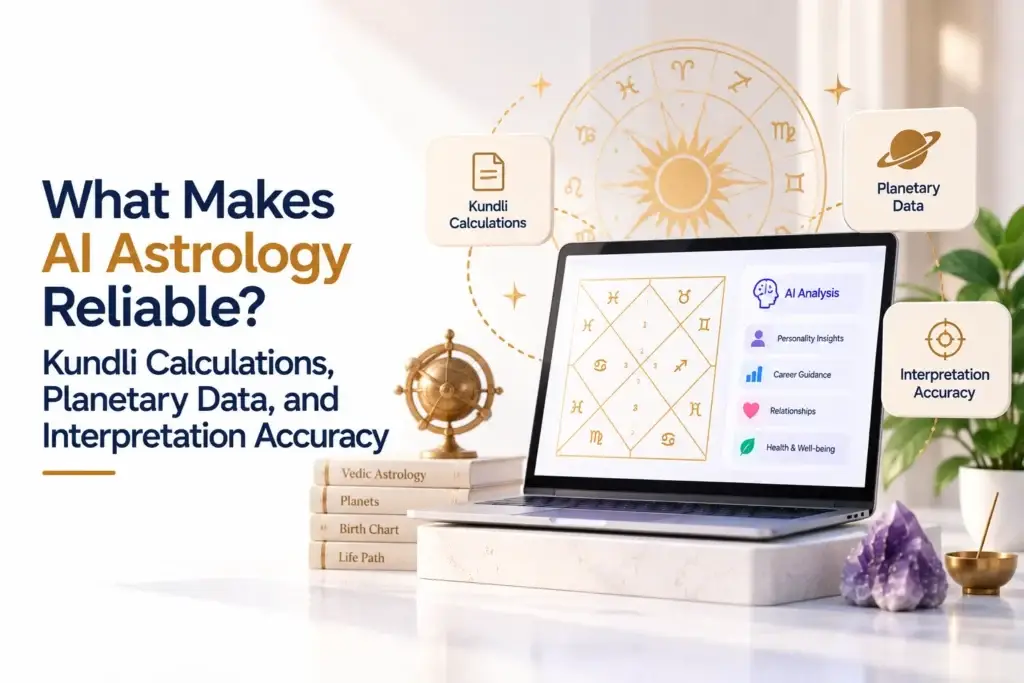
What Makes AI Astrology Reliable? Kundli Calculations, Planetary Data, and Interpretation Accuracy
AI astrology is no longer just a novelty feature inside spiritual wellness apps. Founders are…

Mira AI
AI you own, from day one. Ready-made AI platforms live in 6 working days, or custom AI built by our engineers.
Explore Mira AINot sure where AI fits? Talk it through with an engineer, free.
Talk to an AI engineerFrom a first assistant to agents that run whole workflows. Full source code on every build.
Machine learning, computer vision and language models, on data pipelines built to last.
Production-ready AI products with apps, admin and full source code, branded as yours.
Where AI earns its keep in your market, with the platforms we have already built there.
Bring in AI engineers by the month, or hand us the whole build.
What we have learned shipping AI products, from our blog.
Prompt-to-app generation, credits and an admin console, with the full source code.
Explore the Bolt.new clone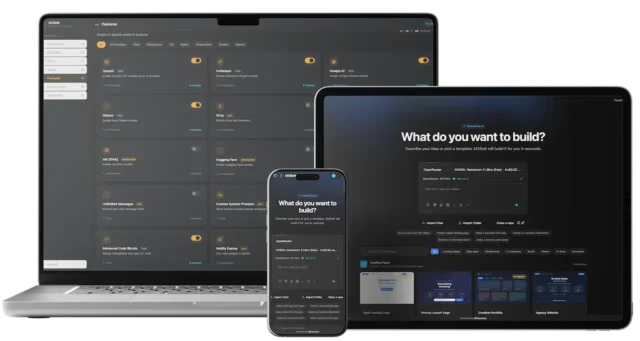
8 ready-made AI platforms24 AI and data services100% source code ownership6 working days to launch
One app, many services
Rides, food, delivery and payments in a single super app, with one wallet and one operations console.
All 6 in Super App →Move people, profitably
Driver and rider apps, dispatch, fare rules and payouts, tuned for city-scale operations.
All 5 in Ride Sharing →Everything to the door
Food, grocery, pharmacy, parcel and alcohol, with dispatch, live tracking and courier payouts.
All 35 in Delivery →The platform underneathWhite Label Food Delivery AppWhite Label Load Board Software
Book a professional in minutes
Home services, healthcare and freelance work, with scheduling, quotes and escrow.
All 13 in On Demand Services →The platform underneathWhite Label AI Astrology Platform
Supply, demand, and the listing in between
Rentals, ecommerce, travel and jobs, with search, inventory and governed payouts.
All 31 in Listings →The platform underneathWhite Label Marketplace SoftwareWhite Label Vacation Rental SoftwareWhite Label Yacht MarketplaceWhite Label Travel Portal
Where audiences gather
Social feeds, messaging, file sharing, AI assistants and website builders.
All 29 in Networks →The platform underneathWhite Label Live Streaming AppWhite Label Messaging App
Attention, monetized
Video on demand, short form, creator subscriptions and betting.
All 16 in Entertainment →The platform underneathWhite Label Video Streaming PlatformWhite Label Micro Drama AppWhite Label Short Video AppWhite Label Creator Monetization PlatformWhite Label Sports Betting Software
Money that moves
Neobanking, brokerage, investment and cross-border remittance, built for compliance.
All 11 in Finance Investment →The platform underneathWhite Label Trading PlatformWhite Label Real Estate Crowdfunding PlatformWhite Label Fractional Real Estate Platform
Exchanges, tokens and NFTs
Spot and P2P trading, launchpads and NFT marketplaces with custody and KYC.
All 13 in Blockchain →The platforms underneath
White Label Food Delivery AppWhite Label Load Board SoftwareWhite Label AI Astrology PlatformWhite Label Marketplace SoftwareWhite Label Vacation Rental SoftwareWhite Label Yacht MarketplaceWhite Label Travel PortalWhite Label Live Streaming AppWhite Label Messaging AppWhite Label Video Streaming PlatformWhite Label Micro Drama AppWhite Label Short Video AppWhite Label Creator Monetization PlatformWhite Label Sports Betting SoftwareWhite Label Trading PlatformWhite Label Real Estate Crowdfunding PlatformWhite Label Fractional Real Estate Platform161 launch-ready platforms across 10 categories, each shipping in 6 days with full source code.
Twenty-five sectors, each with its own page naming what we have already shipped into it and what we would build from zero.
A launch-ready astrology consultation marketplace where every monetizable moment is metered before service. A chat minute, a call minute, a live-stream minute, an AI reading, a kundali PDF, a puja package, a course seat and a gift all debit one prepaid wallet, and every one of them settles through the same commission waterfall.
Four surfaces on one Laravel and MySQL core. A customer web portal, an astrologer portal, a JSON API for both mobile apps and an 89 page operations back office read the same 170 table schema, so a capability shipped once appears everywhere it belongs.
Go Live in 6 Days with ConsultationsLive StreamingAI VerticalsPuja & RemediesWallet & PayoutsWhite-Label
⚡ Platform at a Glance
Revenue Levers
consultations, AI, commerce, puja, courses, gifts
Payment Gateways
India, Gulf, Turkey, Africa, Europe and global rails
Revenue Share
you own the source outright, with no per-seat fee
System Flags
pricing, sections and payouts change without a deploy
Chat, calls, live streaming and AI all debit a prepaid wallet before service, so there is no unbilled minute to reconcile at month end.
A commission waterfall with TDS withholding and a conversion-rate snapshot on every ledger row, so practitioner settlement reconciles itself.
🚀 Ready to launch your own astrology consultation platform?








Live in Action
Open the platform yourself. Three working logins are seeded across the three roles and all three are live. The demo worth running is the money one: recharge the wallet, start a chat and watch the per-minute deduction land in the ledger, then open the same session in the operator console and see the commission split and TDS against it.
CUSTOMER EXPERIENCE
The demand surface. Astrologer discovery with filters, per-minute chat and call, live streams with gifting, the free kundali and matching tools, ten AI verticals, the remedy marketplace, puja booking and the prepaid wallet that pays for all of it.
ASTROLOGER PORTAL
The supply surface. KYC onboarding, live chat and call request queues, availability and slot management, assistant sub-accounts with a permission matrix, profile boosting, stories and blogs, and an earnings wallet with TDS-transparent withdrawals.
OPERATOR CONSOLE
Operator governance across 89 admin pages and 151 views. The 298 flag control plane, feature pricing, commission overrides, withdrawal approval with TDS reports, data monitoring with block-keyword moderation, and role-based access over every page.
ANDROID APPS
Two separate Android builds against the same JSON API: a customer app for discovery, consultation and wallet, and an astrologer app for request queues, availability and earnings. Both carry their own store listing and package name.
Watch It Work
A walkthrough of the platform as an operator sees it rather than a feature reel. It opens on a wallet recharge through a gateway, then follows a chat request from the queue into a live session with the per-minute deduction visible as it happens. The same session is opened in the operator console to show the commission split, the TDS withheld and the conversion-rate snapshot on the ledger row. A live stream runs with gifting, an AI vertical answers when no practitioner is online, and a withdrawal request is approved end to end. If a specific flow matters more than the tour, ask and we will open it live with data in it.
Every Screen Mapped
The interface across the surfaces that matter: astrologer discovery with skill, language, price and rating filters, the chat and call workspaces with mid-session top-up, live streams with gifting and viewer roster, the free kundali and guna milan tools, the ten AI verticals, the remedy marketplace and cart, puja booking with its live broadcast, and the wallet with its recharge plans.


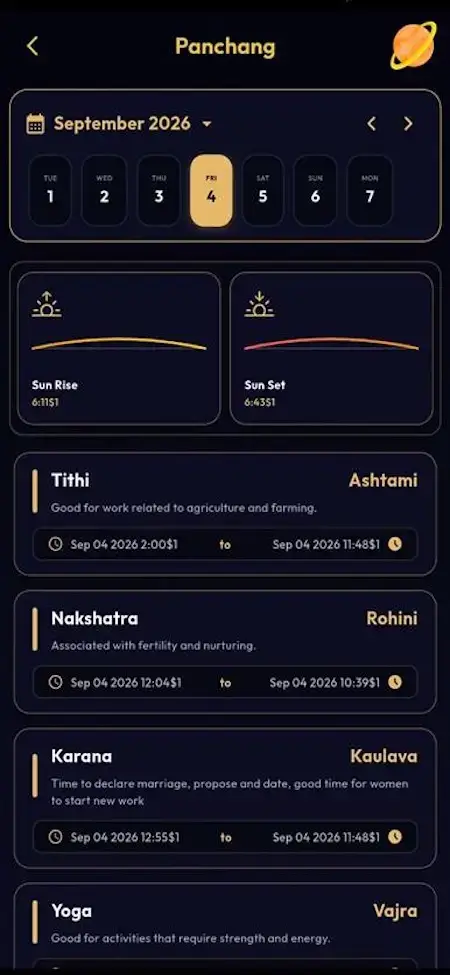
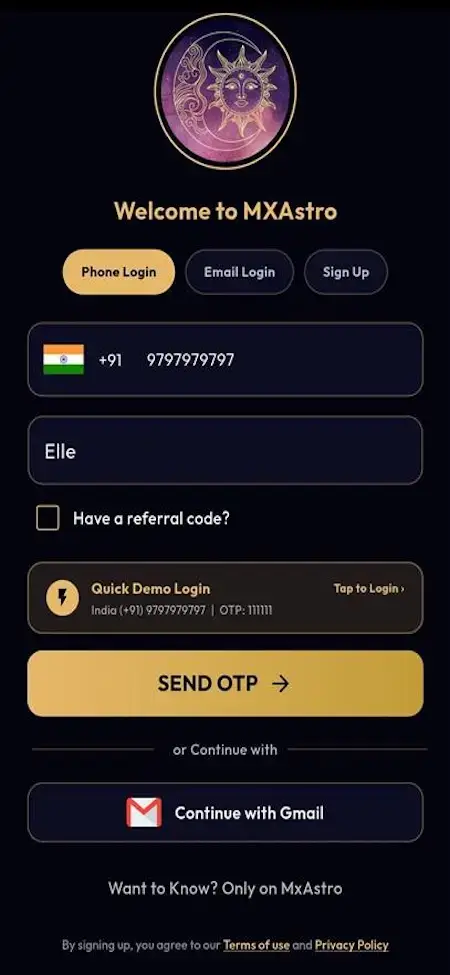
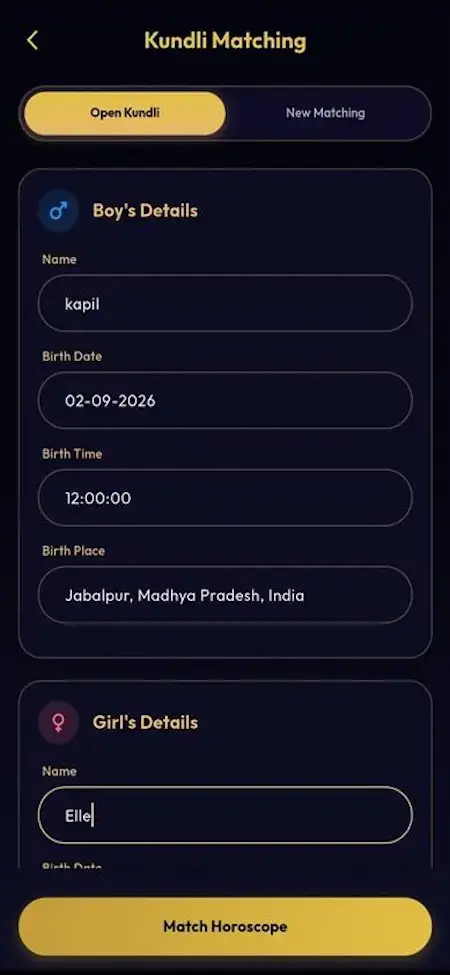
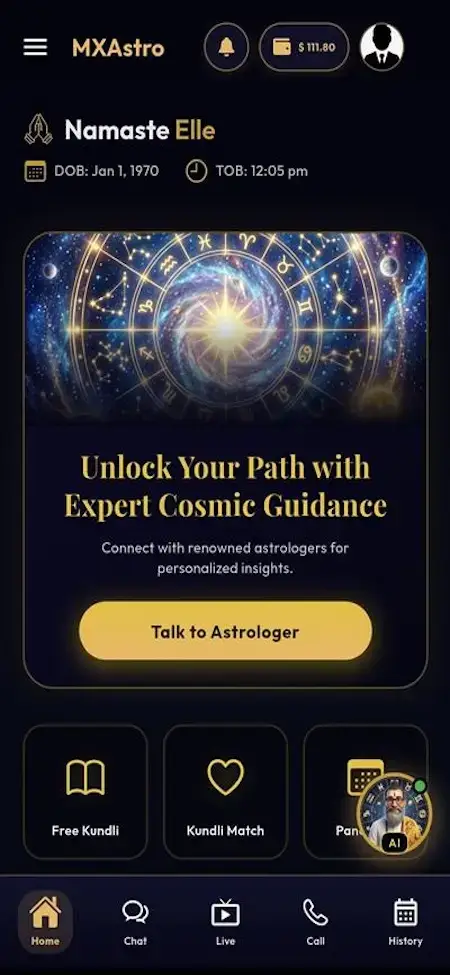
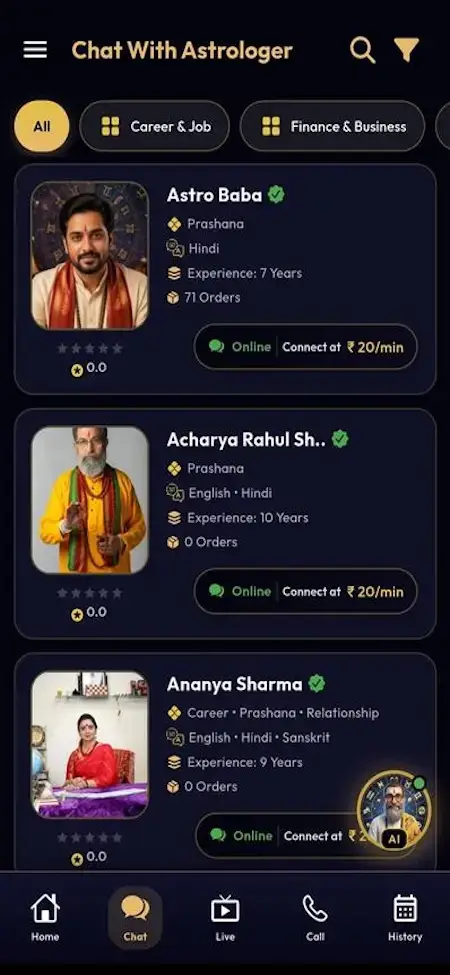

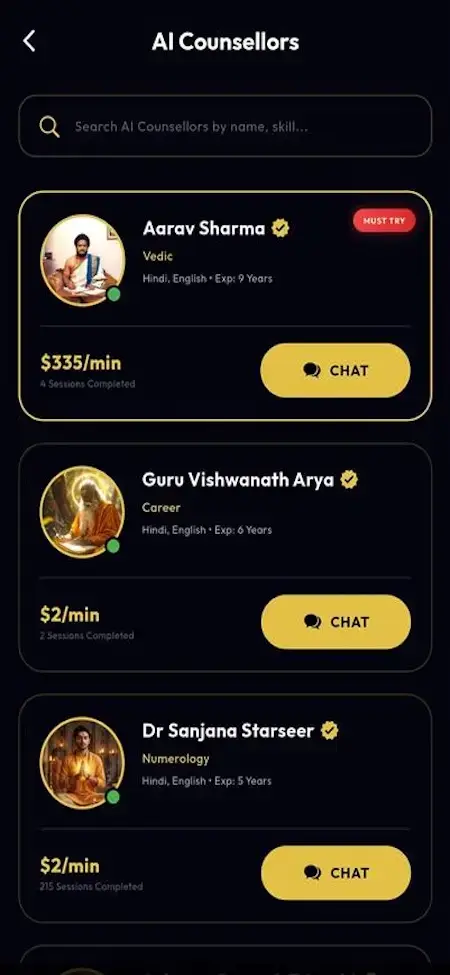
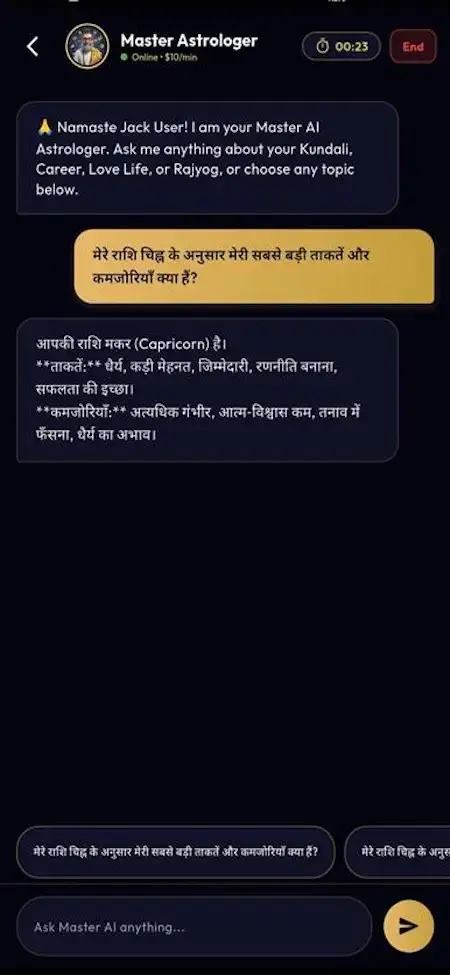
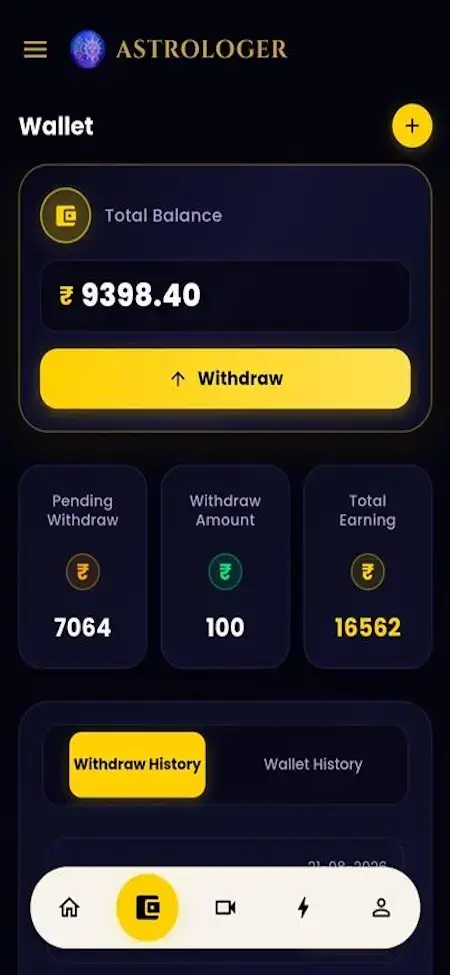


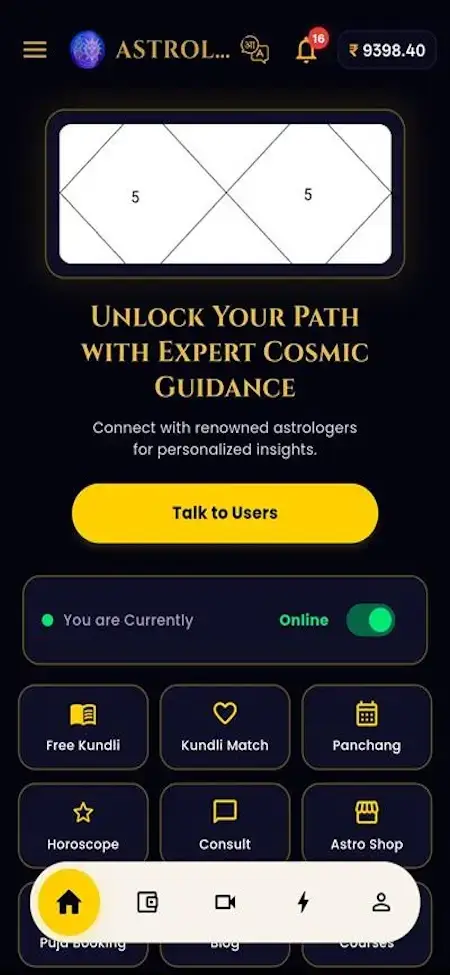
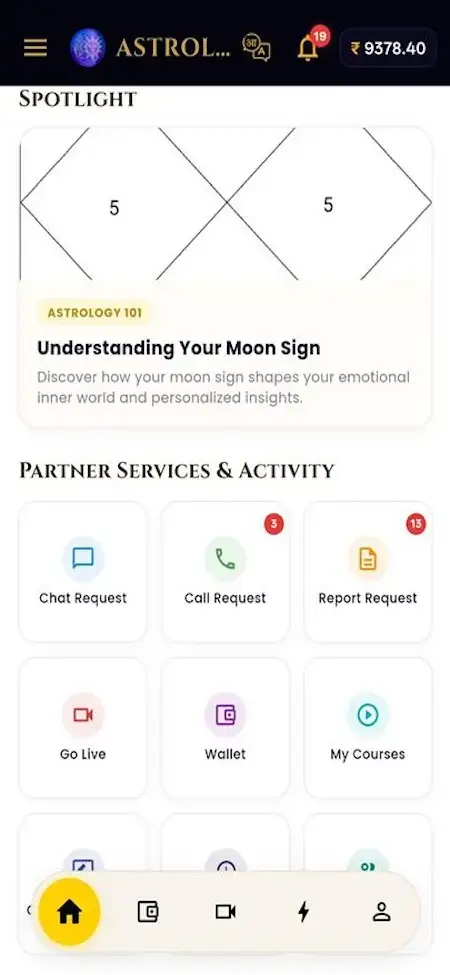

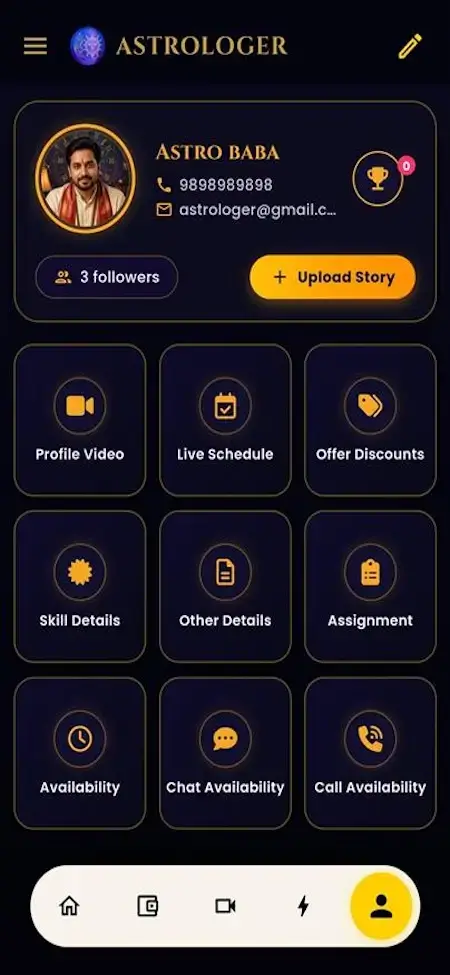
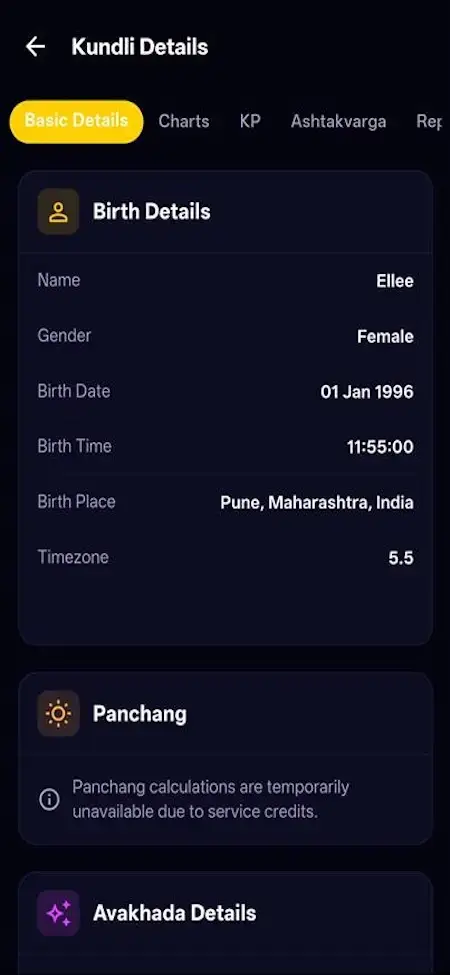
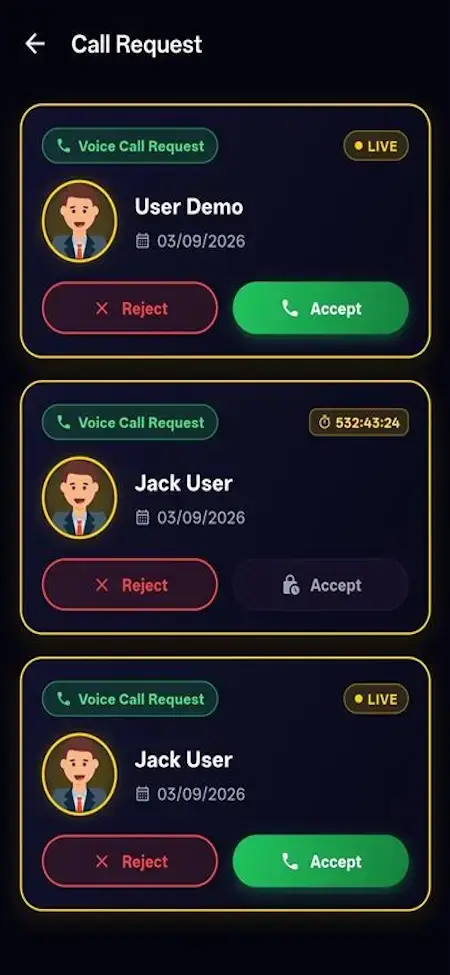
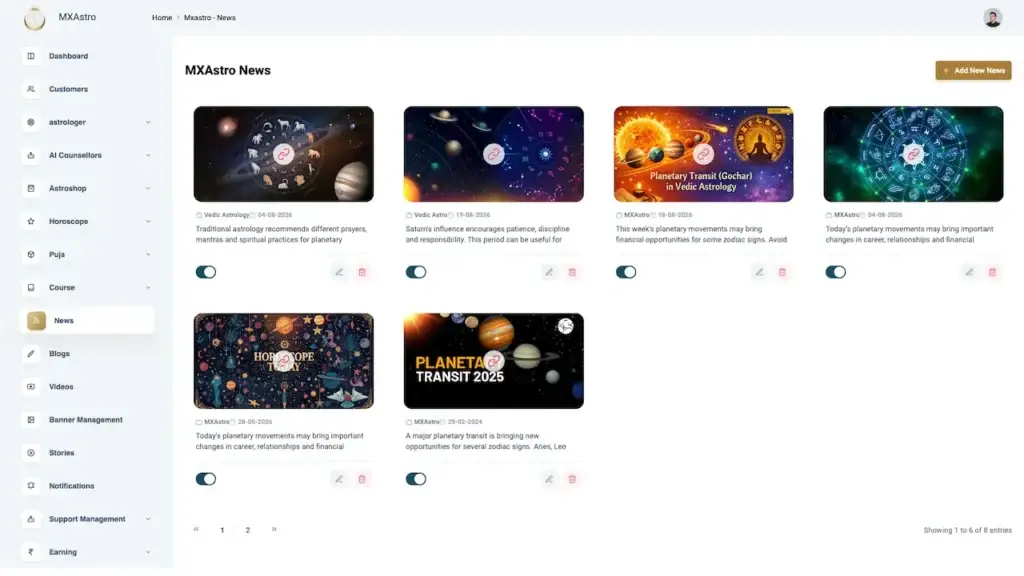
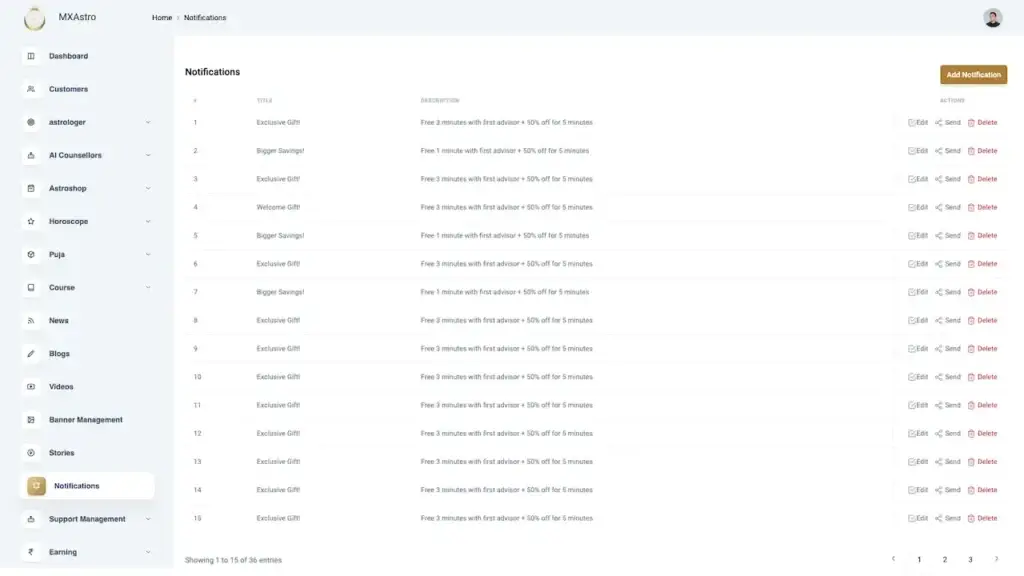
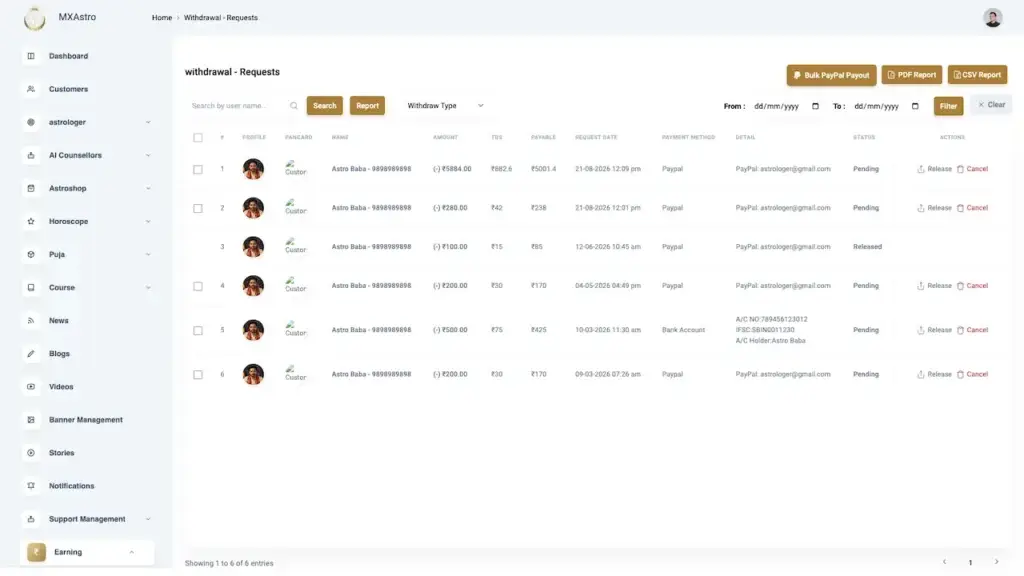
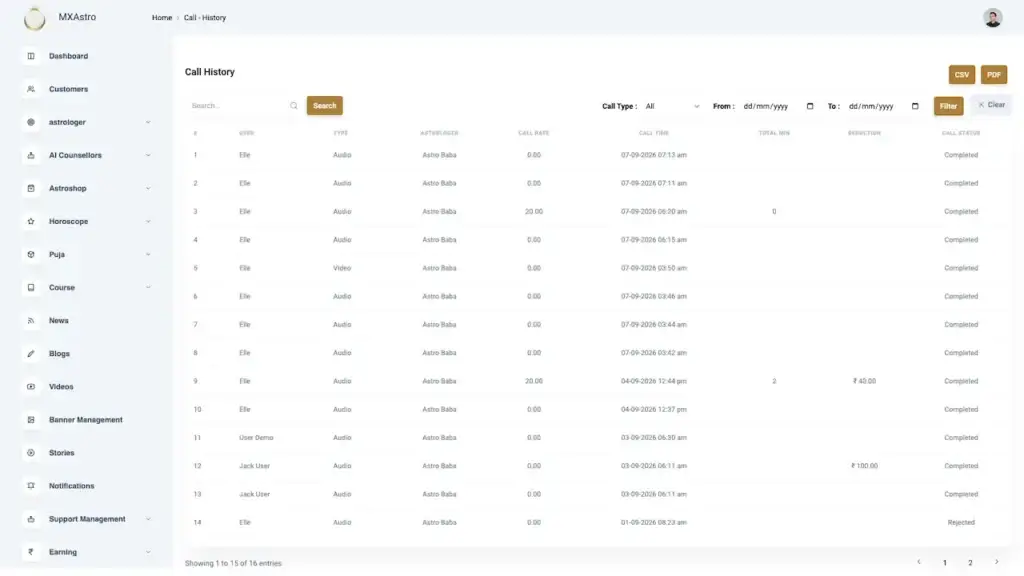
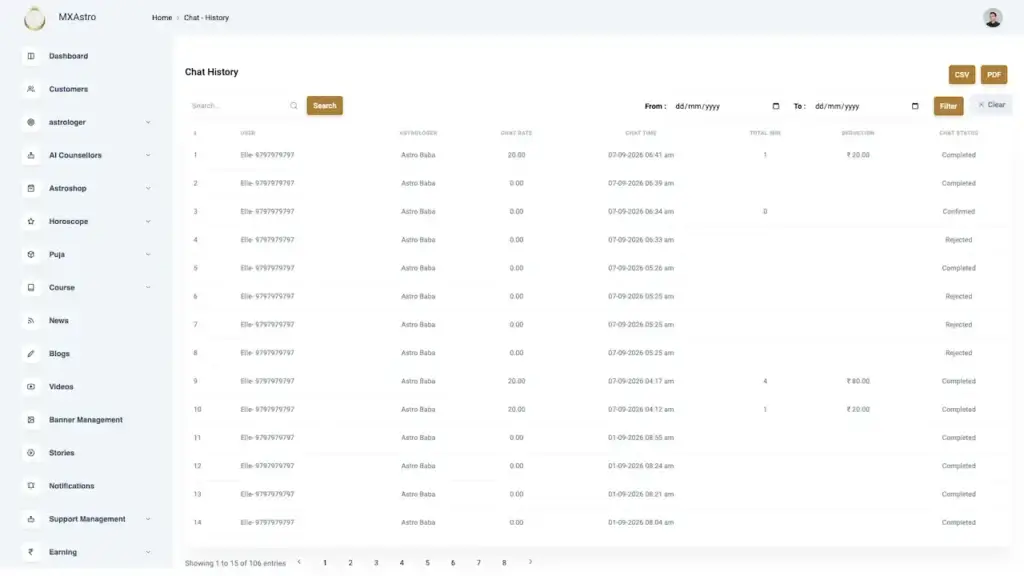
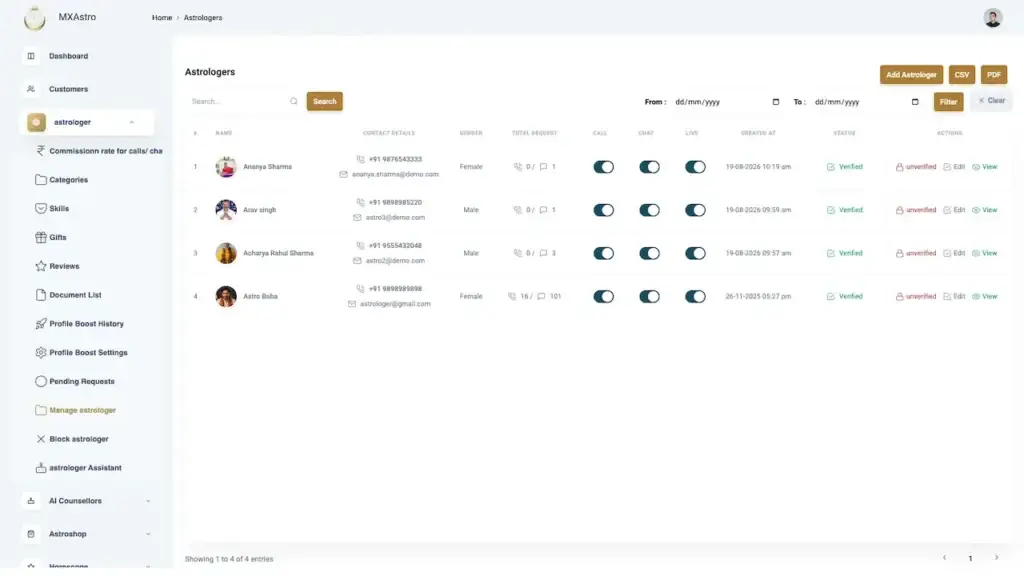
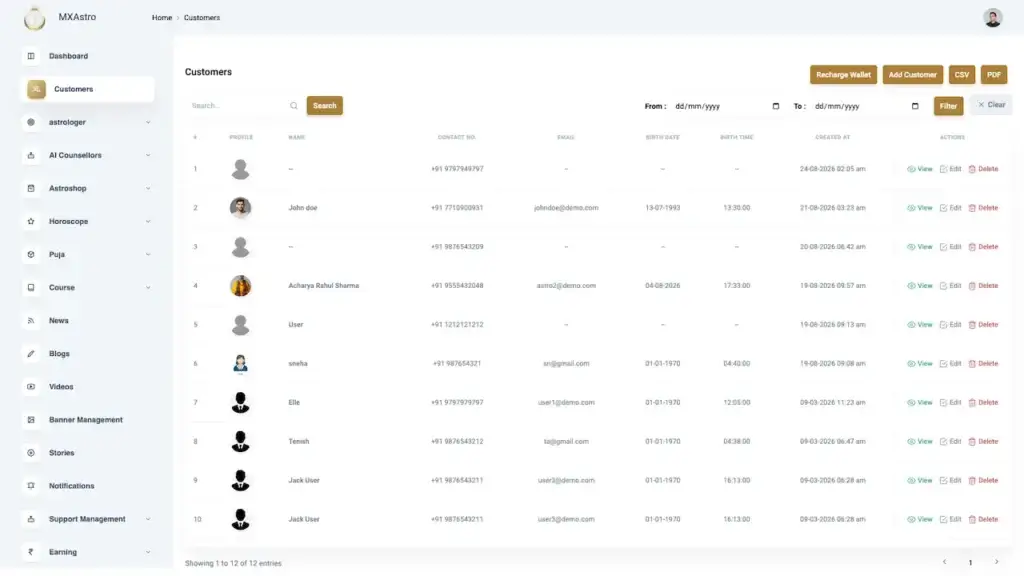
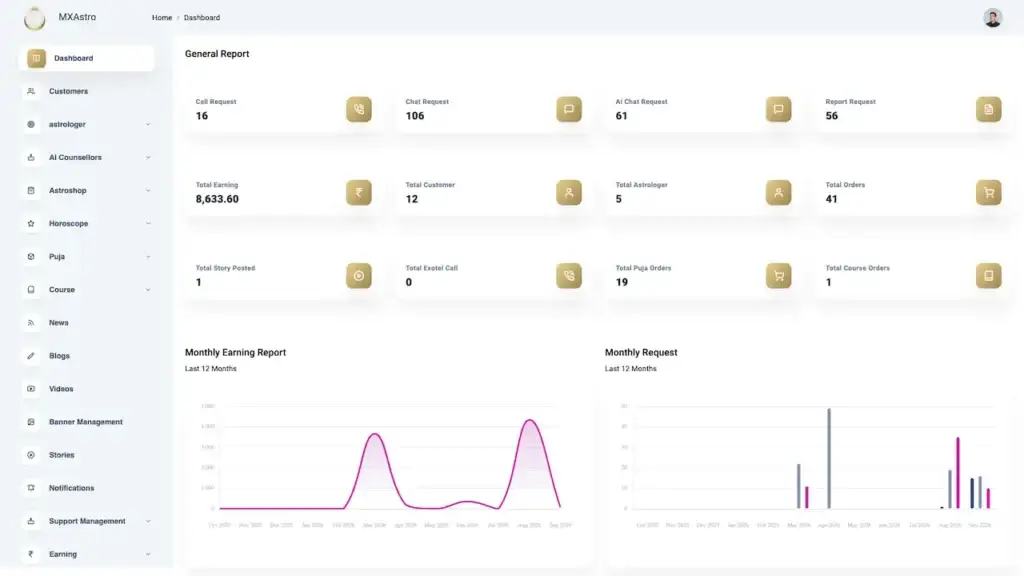
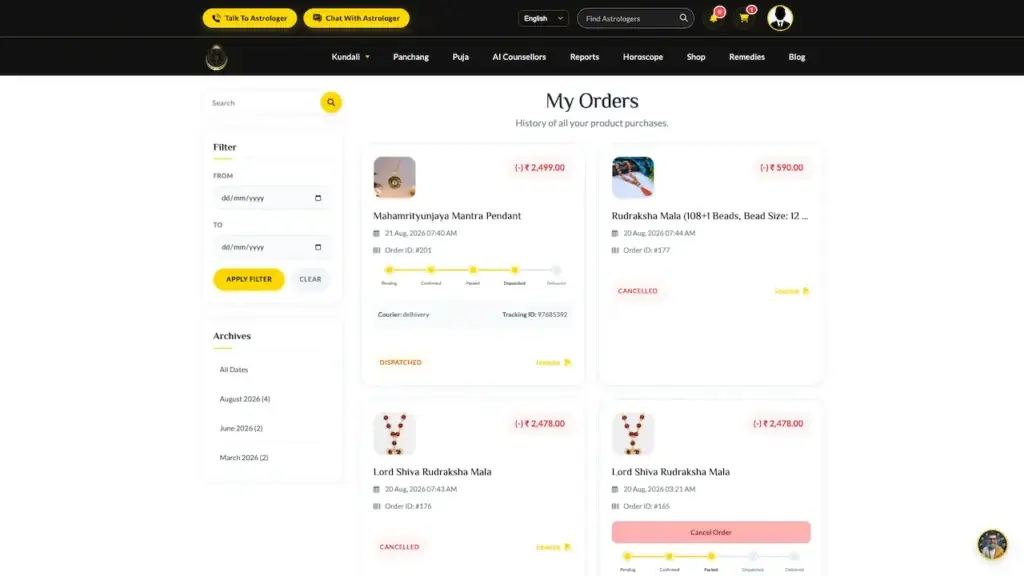
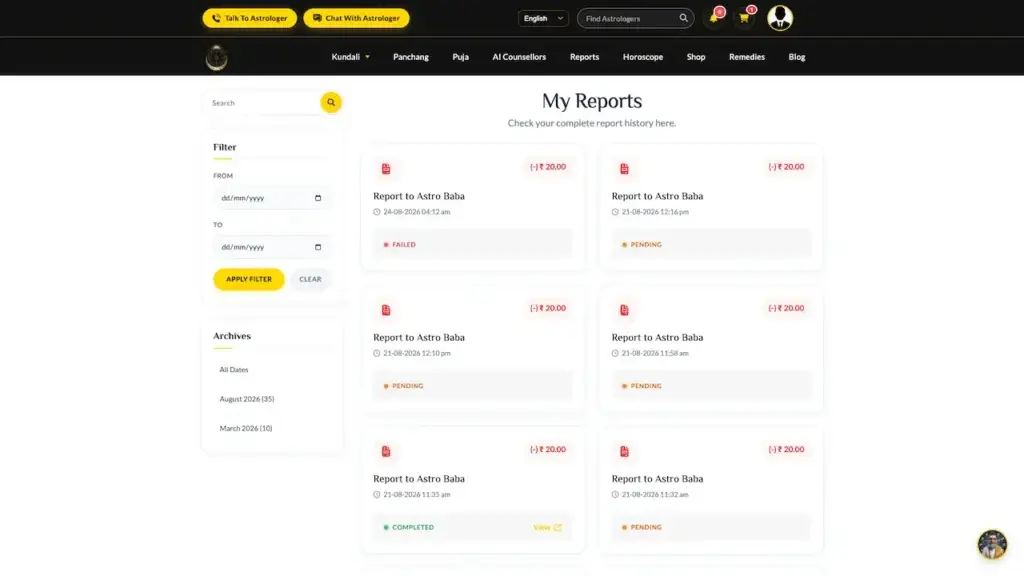
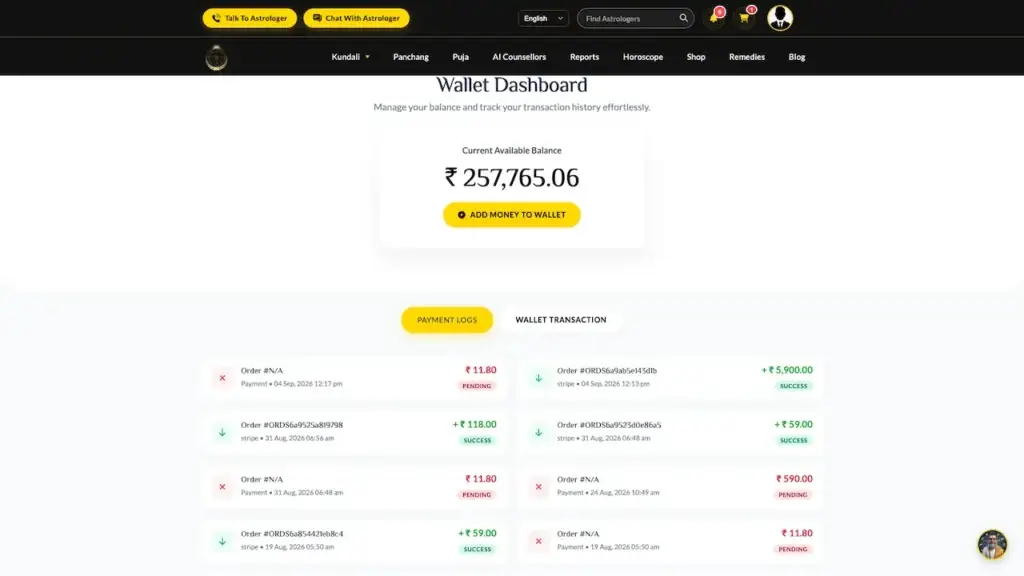
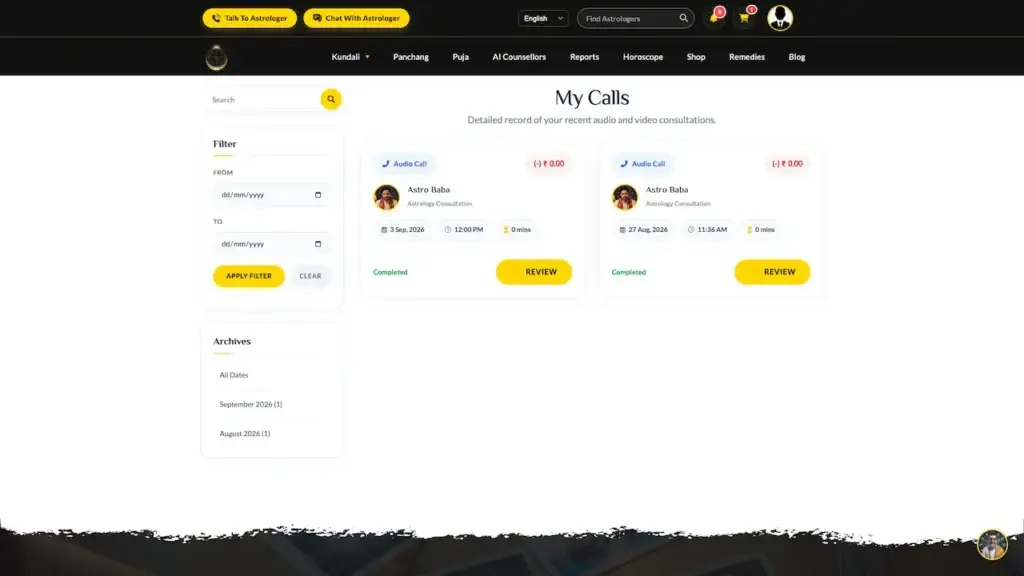
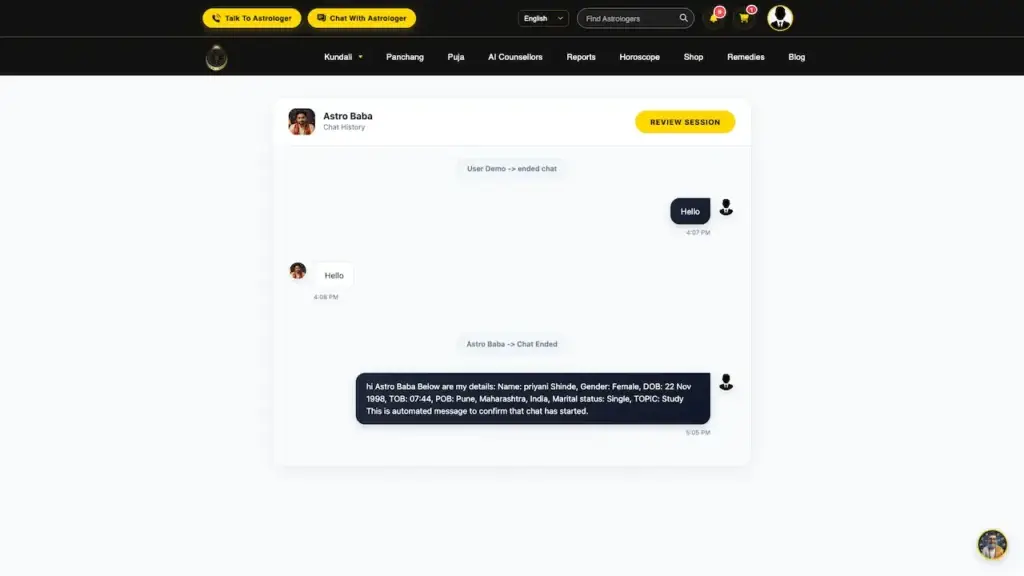
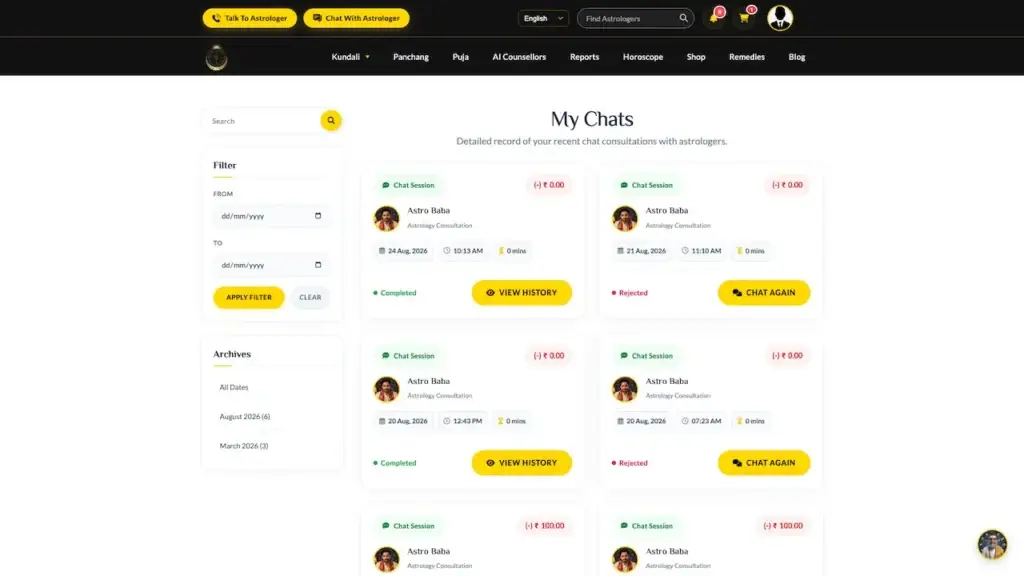
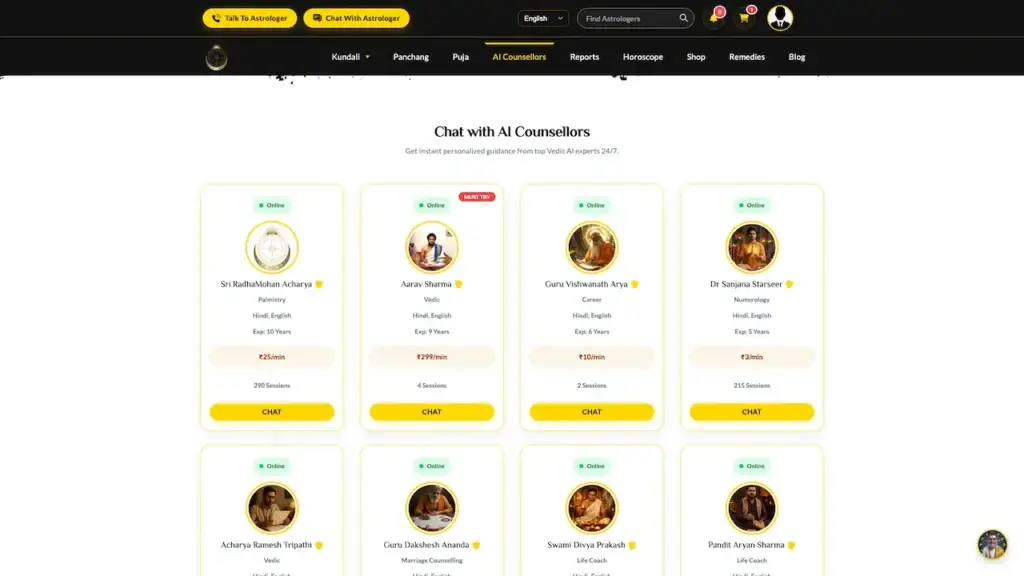
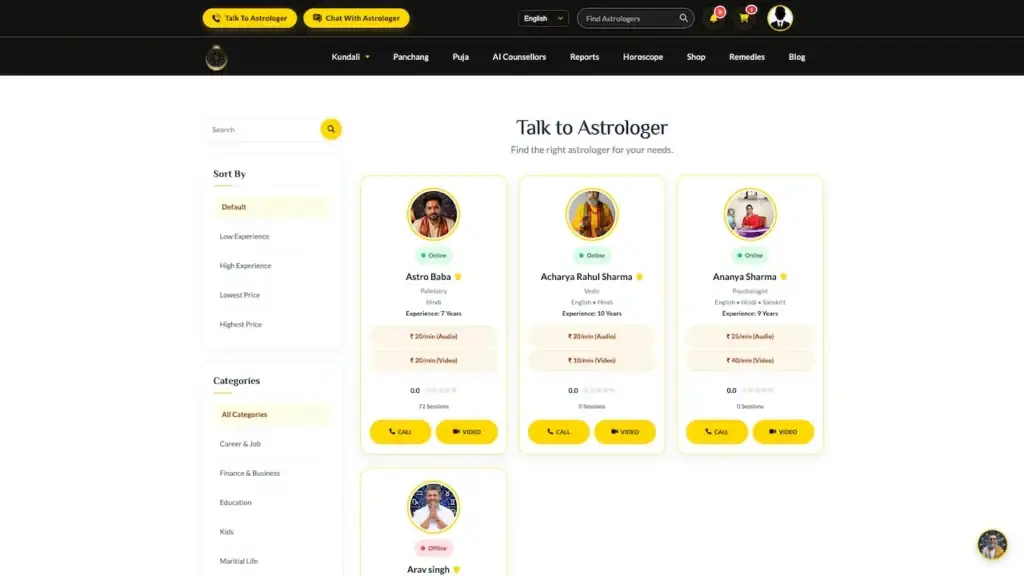
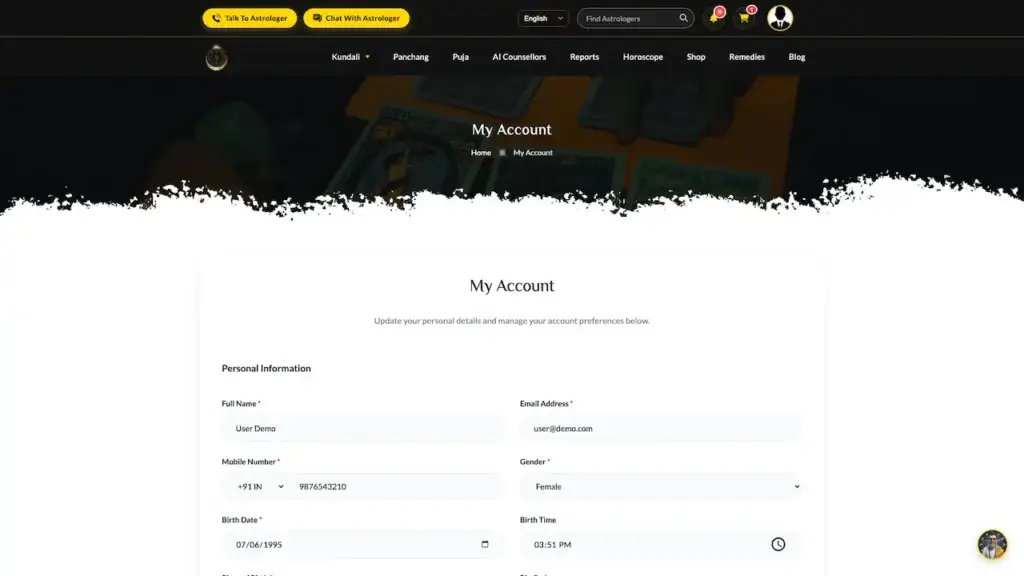
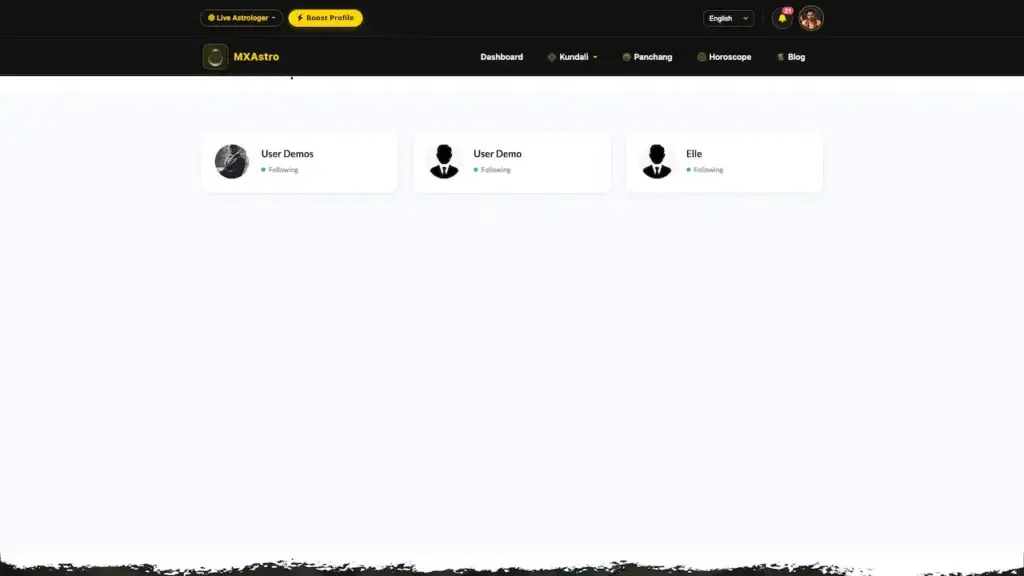
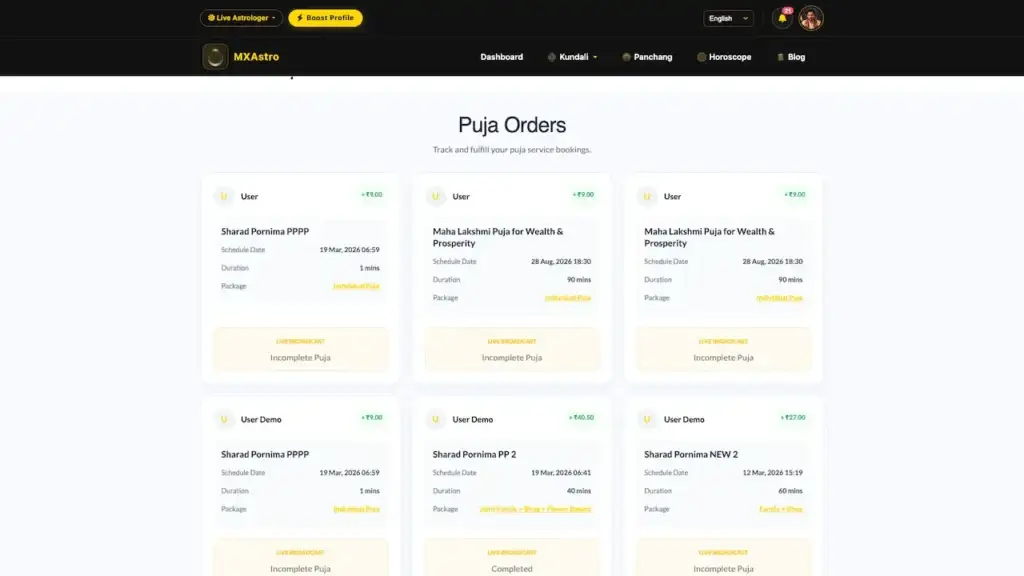
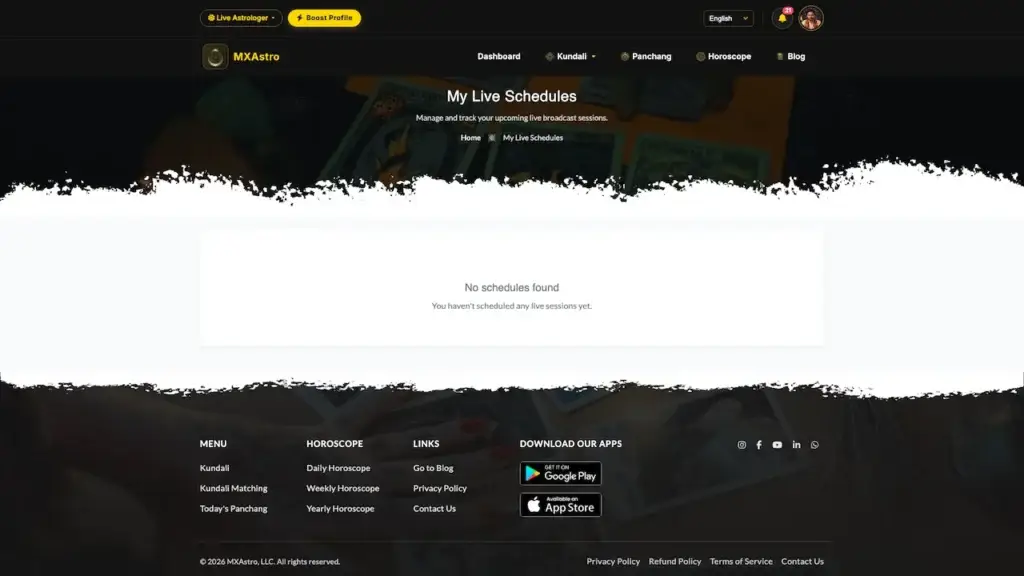
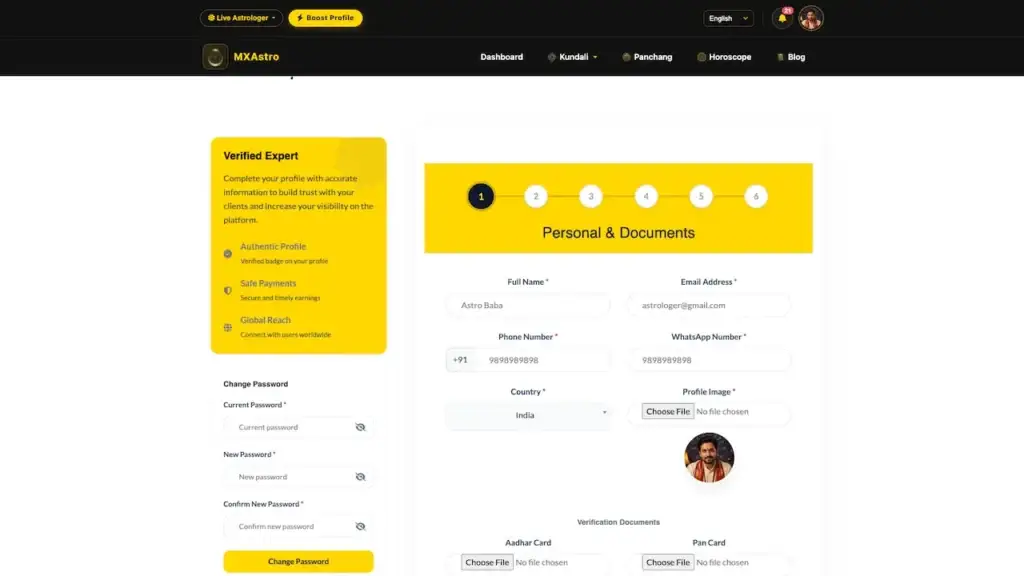
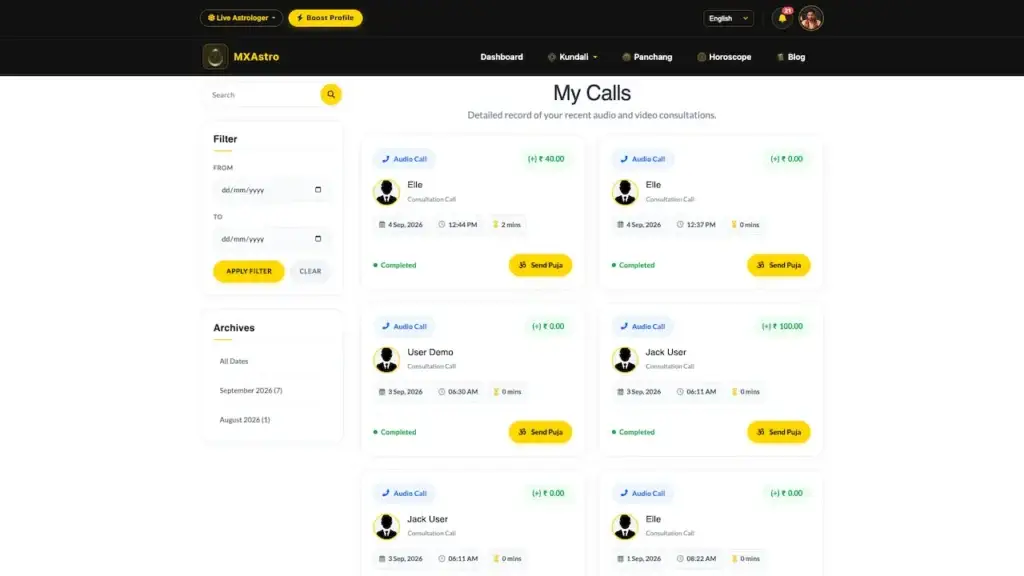
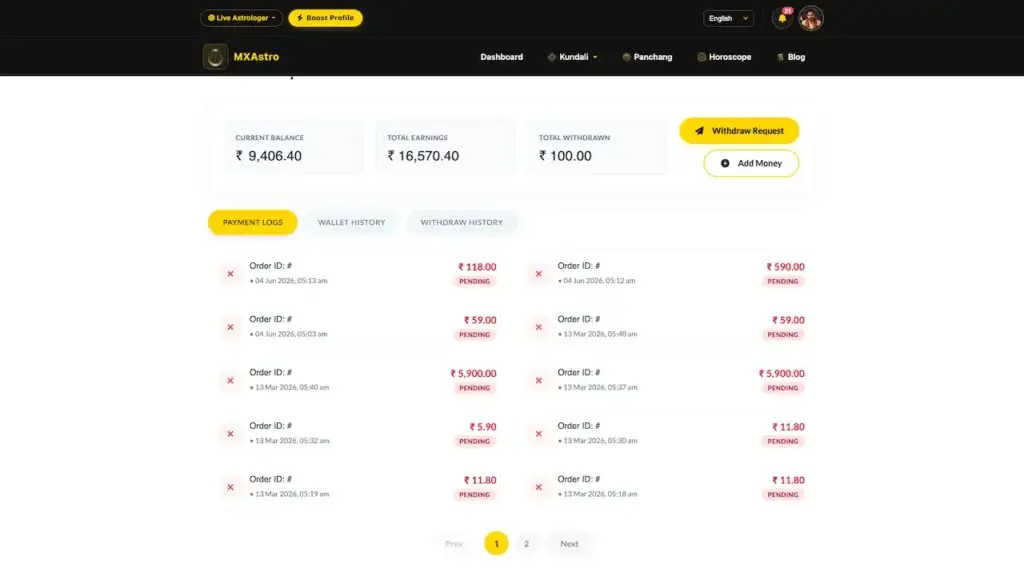
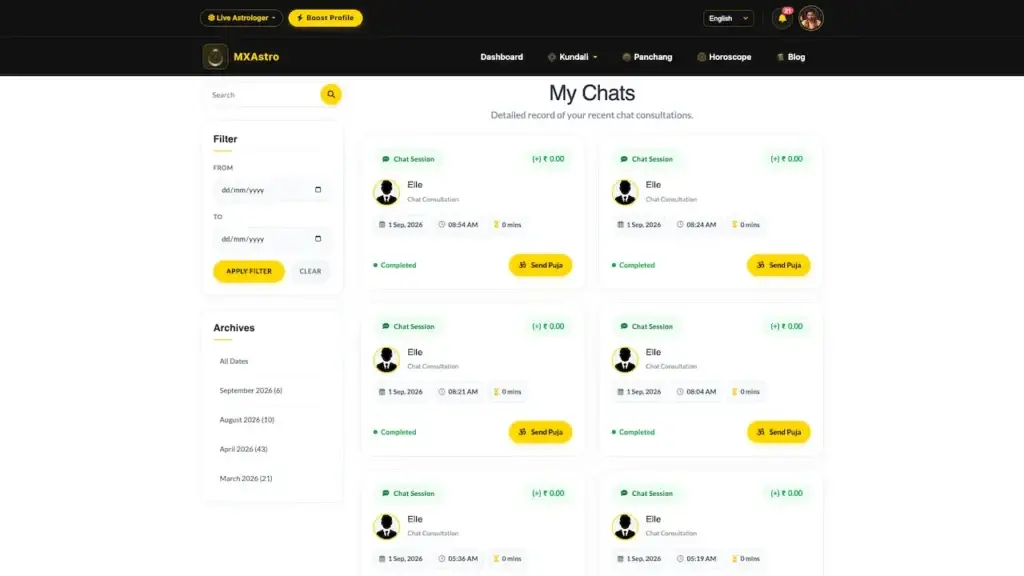
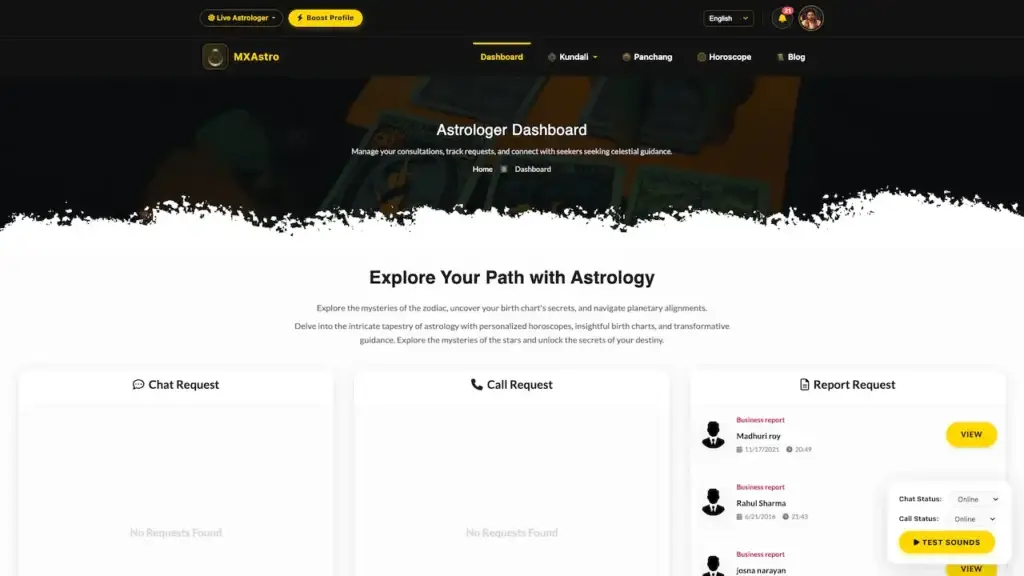
Follow a customer from a free kundali through a wallet recharge to a metered consultation and a remedy purchase. Follow an astrologer from KYC submission through the request queue to an earnings withdrawal with TDS applied. Follow an operator from a flag change to the commission it alters and the ledger row it produces. Want a guided walkthrough of a specific flow? Book a call and we will open the surface you care about with live data in it.
Client Voices
Feedback from operators who launched consultation marketplaces with Miracuves. Client identities withheld at their request.
How It Is Configured
A modelled reference deployment showing how the shipped platform is configured for an operator converting free-tool traffic into prepaid balance. It is an illustrative scenario rather than a client engagement, and every figure in it is a property of the platform rather than a reported outcome.
India
Metered Astrology Consultation Marketplace
How the shipped platform is configured for an operator converting free-tool traffic into prepaid wallet balance, then metering it across consultations, AI verticals, remedies and rituals.
This is a modelled reference deployment, not a client engagement. It shows how the shipped platform would be configured for this market, using platform properties rather than reported outcomes.
The Basics
An Astrotalk Clone is a ready-made astrology consultation marketplace built around billing rather than around content. Customers discover practitioners by skill, language, price and rating, then consult by chat, audio or video call, or join a live stream, and every one of those minutes is metered against a prepaid wallet. Around the consultation sit the free tools that draw the traffic in the first place, the AI verticals that answer when nobody is online, and the commerce, ritual and learning surfaces that spend the same balance.

Listing sites monetize the listing and leave the money outside the product. Here the consultation itself is the transaction, metered before service and settled through the platform, which is what makes commission a real revenue line.
You receive the source, the 170 table schema and the migrations. No per-seat fee, no vendor roadmap dependency, and a standard MySQL underneath that any Laravel team can hire for.
The security posture is a documented pre-production gate, the CRM add-on is five of its twenty-five modules, and three of the twenty gateways carry server-side verification today. All stated here rather than discovered later.
Built for Web, Mobile & API
An Astrotalk Clone Script is the source code behind that: a Laravel 10 application on MySQL 8 carrying 170 database tables, 179 controllers and 133 models, a Blade customer portal across roughly 191 website routes, a separate astrologer portal, a JSON API of roughly 363 routes serving both mobile apps, and an operations back office of 89 menu pages across 151 views. You own it outright and deploy it under your own brand.

In simple words, it is the shortcut to launching a spiritual-services business that actually settles money. The part that is genuinely hard to build is not the birth chart, it is the ledger underneath it: a dual-currency wallet, a commission waterfall of boost override then per-astrologer rate then system default, TDS withholding on payouts, and a conversion-rate snapshot written onto every transaction so a multi-currency month reconciles.
Everything Included
Every capability below is built and demonstrable in the live demo. Where a feature needs a third-party account, or ships as a partial implementation, that is stated against the feature rather than implied away.
Chat, call, live and every AI vertical check and debit the wallet before the service runs, so the platform never carries unbilled consumption and there is nothing to chase afterwards.
A boost-active override first, then the per-astrologer rate, then the system default. One rule set decides the operator share on every consultation without per-session intervention.
Withholding is applied at settlement with PAN captured at withdrawal, and the reports come out as CSV and PDF, which is the part operators usually discover they need after launch.
Each gateway carries its own currency and symbol, and every transaction stores a conversion-rate snapshot, so a month spanning several currencies reconciles against the rate that actually applied.
Participant public keys with wrapped conversation keys and key versioning. The security review calls this the strongest control in the stack, and it is unusual in this category.
Counsellor personas, a master bot, tarot, numerology, vastu, vision reading, transit and paid Q&A, each priced and toggled independently, covering demand at hours no practitioner is online.
OpenAI and OpenRouter sit behind one interface with the provider, model and key held as system flags, so changing model or vendor is a configuration act rather than a release.
Agora, Zego and 100ms are interchangeable behind a provider-agnostic layer, with Exotel PSTN as the fallback path when data calling is not viable.
KYC gating, availability windows, assistant sub-accounts with a permission matrix, paid profile boosting and TDS-transparent withdrawals are what keep practitioner supply healthy.
India, the Gulf, Turkey, Africa, Europe, LatAm and global rails with test and live key pairs, so a second market is a configuration exercise rather than a payments rebuild.
Section toggles, feature pricing, commission defaults, promo mechanics and vocabulary all live in the flag store, which is why most product decisions never reach a developer.
The word astrologer is a single token swapped across more than forty routes and all copy, so the same platform ships as a tarot, vastu or counselling marketplace without a fork.
Note for buyers: The platform ships complete as software, and the operator supplies the outside accounts: MSG91 for OTP, Agora, Zego or 100ms for real-time media, OpenAI or OpenRouter for the AI layer, Exotel for PSTN fallback, FCM and OneSignal for push, Firebase Firestore for admin support chat, Google Maps for geocoding, an astrology chart API, and a merchant account per payment gateway. Two things deserve emphasis. Server-side payment verification is implemented on three gateways today, Tap, Sadad and PhonePe, and those are the template for the rest rather than a claim about all twenty. And the enterprise CRM add-on is five of its twenty-five specified modules; the rest have no tables, models or routes yet.
How Operators Earn
This is the question the search demand actually asks. Queries about how Astrotalk makes money, what it charges and whether it is free draw hundreds of impressions a month, which tells you buyers are trying to understand the model before the features.
The core line. Chat, call and live minutes settle through the boost override, per-astrologer rate and system default waterfall, so the operator share is governed centrally rather than negotiated per session.
Per-minute rate with configurable free minutes and a default 70% astrologer share, plus gifting during the stream, which reaches viewers who would not book a private consultation.
Each AI feature is priced and toggled on its own and runs at near-zero marginal cost beyond inference, which makes overnight demand profitable rather than merely covered.
The remedy marketplace with GST-aware checkout, puja packages settled by a commission job, and course sales all spend the same wallet balance the consultation did.
Practitioners pay for 24 hour visibility at a reduced commission rate, which is a supply-side revenue line most marketplaces in this category never build.
Application names, logos, vocabulary, currency, language and section toggles are all runtime configuration, so the same deployment can be licensed to another operator under their own identity.
The answer is that money enters once and is consumed many times. A customer recharges a prepaid wallet through any of twenty gateway configurations, and the operator then takes a governed share of every consumption event against that balance, whether it is a consultation minute, an AI draw, a remedy, a ritual or a course.
Run It Without a Dev Team
The back office is itself a product here. Eighty-nine menu pages across 151 views, governed by team roles and per-page grants, sitting on a flag store that turns most product decisions into a form field rather than a release.
298 flags across 47 groups with typed inputs. Pricing, sections, promo mechanics, vocabulary and commission defaults all change here, which is why launch configuration rarely reaches a developer.
Every AI vertical, the paid question, the transit analysis and the kundali PDF tiers are priced from one screen, so testing a price point is a form submission rather than a deployment.
System default commission with per-astrologer overrides, boost-conditional rates, an admin commission ledger, TDS reports in CSV and PDF, and withdrawal approval with PAN captured.
Full customer records with wallet, order, call, chat and report history, manual wallet credit and debit, and PDF or CSV export of the customer list.
KYC document review, verification toggle that gates public listing, blocking, profile boost history, earnings dashboards and the top-ten practitioner board.
Chats, calls, user messages and counsellor messages are inspectable with block-keyword moderation, which is what a marketplace needs when strangers talk to strangers about money.
Team roles with per-page grants over all 89 pages, so a support member sees tickets and a finance member sees payouts without either seeing the flag store.
Blogs with reader analytics, news, CMS pages with a slug catch-all, website FAQs, a help-center tree with chat handoff, email templates and training videos.
Categories, packages, FAQs and galleries, astrologer-created pujas awaiting approval, reminder crons, refunds for unstarted rituals and the commission settlement job.
Five home, call and chat design sets activated from the panel, plus dark mode and colour schemes, so the app look changes without a store release.
Need deeper governance? Role-based access covers every admin page through team roles and per-page grants, and the side menu invalidates its own cache on change. What is scoped rather than shipped: an audit trail. The security review rates audit logging weak, with no auth-event or admin-action log, so operator actions are not currently reconstructable after the fact. That is a named pre-launch item rather than something we would let you discover in a review.
Transparent Pricing
The platform itself is a fixed $3,699. Beyond that, the variable is how much of the surface you switch on for day one. Running several payment gateways costs more setup than running one. Wiring MSG91 for OTP, an RTC provider for calls and live, an AI provider, Exotel for PSTN fallback and Firebase for push and support chat is real integration effort. The pre-production security hardening pass is scoped work we complete with you. Store publishing for two apps is quoted separately again.
Not sure which option
is right for you?
Talk to us - we'll understand your goals, timeline, and budget, and point you to exactly what you need. No upselling, just honest advice.
The Full Package
Ownership transfers in full: the Laravel application, both portals, the API, both mobile builds and the schema. That matters here because the flag store and the commission rules are the numbers your margin depends on, and they should not sit inside somebody else’s product.
The Laravel application, both web portals, the JSON API and both mobile builds, yours to change, rebrand and redeploy with no licence conditions attached.
The complete MySQL model with migrations, covering identity, consultations, wallet and ledger, commerce, ritual, learning, content and the flag store.
Per-minute deduction across chat, call and live, an append-only transaction ledger, mid-session top-up and a conversion-rate snapshot on every row.
The boost, per-astrologer and default waterfall, admin commission ledger, TDS reports in CSV and PDF, and withdrawals over UPI, bank or PayPal.
Kundali with sectioned reports and three PDF tiers, guna milan matching, panchang, muhurta across six purposes, transit analysis and horoscope generation.
Counsellor personas, master bot, tarot on a 78-card deck, numerology, vastu, vision reading, transit and paid Q&A, behind a swappable provider interface.
Separate customer and astrologer applications against the same API, each with its own store listing, package name and push configuration.
Schema reference, entity relationships, the API collection, developer and security handbooks, a VAPT posture mapped to the OWASP Top 10, PRD and feature catalogue.
Want to see it running first? Use any of the three demo logins above, or book a walkthrough and we will recharge a wallet, run a metered consultation, settle the commission with TDS against it and approve a withdrawal, against the rates you are actually considering.
Four deeper guides covering features, cost, choosing a builder, and how a metered consultation marketplace earns once the wallet is running.
Per-minute metering against a prepaid balance, a commission waterfall that settles every earning, ten priced AI verticals and puja packages, across 170 tables and 89 admin pages.
See the full breakdown →The fixed $3,699 set against freelancer, agency and custom quotes, with the real variables being gateway count, RTC and AI providers, and the pre-launch hardening pass.
See exact pricing →Agency, freelancer and Miracuves compared on what a consultation marketplace has to get right: a ledger that reconciles, payouts that survive an audit, and metering that never bills after the fact.
Compare options →Six revenue lines on one wallet: consultation commission, ten priced AI verticals, AstroMall product margin, rituals and learning, boosting and gifting, and multi-market licensing.
See the playbook →Know Your Buyer
The platform suits operators whose problem is converting attention into settled transactions. If you already have spiritual-services traffic and no way to bill it by the minute, this is the missing half.
Where it earns its place is the second market and the second revenue line. Twenty gateway configurations, per-gateway currency and a replaceable profession vocabulary mean expanding into another country, or relaunching the same platform as a tarot or counselling marketplace, is configuration rather than a rebuild.
Where It Fits
Launch as a consultation marketplace first. Chat, call and live metering with the wallet and commission engine is the core; the commerce, ritual and learning surfaces can stay switched off behind section flags until the supply side is healthy.
Metered Consultation
Lead with ritual delivery instead. Puja packages with a live Agora broadcast, reminders, refunds for unstarted rituals and a commission settlement job give proof of delivery, which is the trust problem in paid spiritual services.
Live Ritual Delivery
Cover the overnight hours with AI. Ten wallet-metered verticals answer when no practitioner is online, each priced and toggled independently, turning idle demand into margin at near-zero marginal cost.
AI Overnight Coverage
Monetize free-tool traffic. Kundali, matching, panchang, muhurta, horoscope, tarot and numerology are the acquisition surface, and the wallet gate is what converts that intent into prepaid balance.
Free-Tool Acquisition
Build the supply side properly. KYC gating before public listing, availability windows, assistant sub-accounts, paid profile boosting and TDS-transparent withdrawals are what keep practitioners on the platform.
Practitioner Supply
Enter a second market as configuration. Twenty gateway configurations with per-gateway currency, a conversion-rate snapshot per transaction and 143 seeded languages mean expansion does not reopen the payments layer.
Multi-Market Expansion
Every one of these is the same deployment with different flags thrown. Section toggles, feature pricing and the profession-title vocabulary swap are what make the configurations above settings rather than forks, so an operator can move between them without a migration.
Astrology consultation is no longer a content category, it is a transaction category. What separates operators now is whether the platform can bill a minute, settle a practitioner and reconcile a multi-currency month without a spreadsheet.
Market Timing
Astrology consumption moved to mobile and to paid sessions, but most of the software serving it still monetizes listings and advertising. The gap is billing: high-intent moments happen at all hours, and the platforms capturing them are the ones that can meter a minute and settle a practitioner.
Directory sites and free tools monetize attention. A metered marketplace monetizes the session itself, which is a different business with a different multiple and a far harder thing to retrofit later.
Customers hesitate to pay an unknown practitioner for intangible guidance. KYC gating before listing, accumulated ratings and order counts, two-sided reviews and live ritual broadcast are structural answers rather than cosmetic ones.
Demand is 24/7 and practitioners are not. Ten metered AI verticals convert the overnight hours into revenue at near-zero marginal cost, and give every customer a first response in seconds.
Most competitors are single-rail. Twenty gateway configurations spanning India, the Gulf, Turkey, Africa, Europe, LatAm and global rails mean the second market does not reopen the payments layer.
A customer needing guidance typically spans four vendors. One prepaid balance covering consultation, remedy, ritual and learning keeps every subsequent purchase inside the economy the operator controls.
A from-scratch equivalent means payments, real-time media, AI, commerce and a multi-sided back office, which is a 12 to 24 month programme. A white-label deployment is live on your server in under six days.
The second pressure is regional. Collecting money is the hardest part of entering a new market, and a single-rail platform has to rebuild payments to reach its second country. Twenty gateway configurations across five-plus regions is the difference between expansion as configuration and expansion as a project.
Under the Hood
Conventional and easy to hire for. Laravel 10 on MySQL 8 with Blade templating and a Vite build, a JWT-guarded JSON API for both mobile apps, and a system-flag control plane that keeps most product decisions out of the codebase.
Laravel 10 · PHP · MySQL 8 · Blade · Vite
Web portals · JSON API · Admin
Agora · Zego · 100ms · Exotel
AiProviderInterface · OpenAI · OpenRouter
Dual-currency wallet · 20 gateways
systemflag · local / AWS / GCS / DO
Why this stack: Laravel and MySQL are the least exotic choices available for a marketplace of this shape, which matters more than elegance when the operator has to hire for it. The interesting engineering is not the framework, it is the flag store and the ledger: 298 typed flags mean pricing and packaging change without a release, and an append-only ledger with conversion-rate snapshots means a multi-currency month reconciles against the rate that actually applied rather than today’s.
End to End
The loop below is what the platform is built around, and every step of it is enforced server-side rather than in the client, which is what makes the money reconcilable afterwards.

The acquisition surface is the free astrology stack, which is what the organic demand actually searches for. It costs nothing to serve and feeds every discovery grid on the site.

The wallet gate is where intent becomes money. Recharge runs through any configured gateway, and the first-free-chat and promotional offers exist to lower the first payment barrier specifically.

Every consultation debits before and during service rather than invoicing afterwards, so the platform never carries unbilled consumption and the customer never sees a surprise.

The operator share is decided by one waterfall rather than negotiated per session, which is what keeps a marketplace with hundreds of independent practitioners governable.

Settlement is where homegrown builds collapse. Withholding is applied at payout with PAN captured, and the reports come out in the formats an accountant will actually ask for.

The loop closes on both sides: the practitioner is paid cleanly enough to stay, and the customer is given reasons to return before the balance runs down.
Visual Flow Diagram
Free Tools → Wallet Recharge → Metered Session → Commission Split → TDS Withheld → Payout
How It's Built
An append-only transaction ledger records consultation, question, product, puja, course, gift and AI debits side by side with commission and conversion-rate context, so reconciliation is a report rather than a project.
298 typed flags across 47 groups mean section toggles, feature pricing, commission defaults, promo mechanics and even the profession vocabulary are configuration. Most product decisions never reach a developer.
RTC across Agora, Zego and 100ms, AI across OpenAI and OpenRouter, storage across local, AWS, GCS and DigitalOcean. Each sits behind one interface, so a vendor change is a flag rather than a refactor.
The wallet check and debit happen before the service runs, not after. That single ordering decision is what removes the entire class of unbilled-consumption problems from the platform.
The word astrologer is replaceable across more than forty routes and all copy, which is what lets the same deployment ship as a tarot, vastu or counselling marketplace without forking the codebase.
Participant public keys with wrapped conversation keys and key versioning. The security review names it the strongest control in the stack, which is unusual for a marketplace at this price.
Performance Targets
The topology is intentionally ordinary: a Laravel application behind a web server, MySQL as the system of record, a queue for the work that must not block a request, and a scheduler for the recurring jobs.
On a metered marketplace the fastest growing table is not the catalog, it is the transaction ledger, because a row lands for every minute consumed, every recharge, every commission and every refund.
What the ledger carries:
Chat, call and live are long-lived and stateful, so the scaling question is concurrent sessions rather than requests per second, and the media itself is carried by the RTC provider.
What keeps sessions cheap:
Horoscope generation, appointment reminders, puja reminders, commission settlement and notification dispatch are all recurring, and none of them belongs in a web request.
What the scheduler and queues carry:
Adding a market changes the payment rail, the currency and the language rather than the architecture, which is the point of holding all three in the flag store.
What regional expansion actually touches:
Voice, video and live streaming run on the RTC provider rather than through the application, so session concurrency is a provider capacity question rather than a server one.
Roughly 500 raw query fragments all use bound parameters. The security review rates injection resistance strong and near-zero classic SQLi surface, which is not typical at this price point.
Six job classes carry notification dispatch, bulk sends and settlement work off the request path, so a slow third party never becomes a slow page.
Eight scheduled tasks cover horoscope generation, appointment and puja reminders, stale-request rejection and commission settlement without any manual operation.
Local disk, AWS, Google Cloud Storage or DigitalOcean Spaces, selected per deployment, with a CDN in front of the bucket left as your decision.
Audit logging, per-gateway signature verification on the remaining gateways, a cache layer and read replicas are each documented as scoped work rather than quietly implied as present.
The stack is deliberately unexotic so that growing it is ordinary work. Laravel, MySQL, Blade and a JSON API are easy to hire for and easy to reason about under load.
Read replicas, a cache layer and horizontal application instances are the standard next steps, and none of them requires the data model to change.
Note for founders and operators: Launch small and grow into the same deployment. Volume changes how many application instances sit behind the proxy, whether a CDN fronts the storage bucket and how much read capacity the database has. The items worth naming rather than implying: audit logging is not present and is pre-launch work, and server-side payment verification currently covers three of the twenty gateways.
Built to Be Audited
A dedicated VAPT reference maps this platform against the OWASP Top 10, and it is unusually willing to mark its own gaps. The document frames its findings as a pre-production gate rather than as a clean bill of health, and we would rather hand you that framing than a marketing claim.
Test OTP Bypass Ships in the Code
Secrets Live in the Database
Route-Level Auth Needs Tightening
Audit Logging Is Absent
KYC Documents Need Gating
Verification Covers 3 of 20 Gateways
Participant authorization with an RSA-OAEP-256 and AES envelope and key versioning. The review calls this the strongest control in the stack and describes the implementation as reference-grade.
Roughly 500 raw query fragments all use bound parameters rather than concatenation. Injection resistance is rated strong, which is the single most common failure in marketplaces of this age.
The wallet ledger is append-only and every row carries its conversion-rate snapshot, so a disputed settlement is answered from data rather than from memory.
Tap, Sadad and PhonePe implement server-side verification today, including Tap four-way validation. They are the working template for extending verification across the remaining gateways.
Team roles with per-page grants across all 89 admin pages, enforced by a global middleware, so operator scope is a configuration rather than a convention.
OTP bypass removal, secret rotation into env, route-level auth on sensitive endpoints, JWT rotation with blacklisting and per-gateway signature verification are each written down as scheduled work.
The honest summary is that the cryptography and the SQL discipline are genuinely strong, and the pre-launch hardening list is real, specific and short. Every item on it is a configuration change or a code removal measured in developer-hours, not an architectural rework, and we complete that pass with you before your domain is exposed.
Go Further
The platform is complete and demonstrable as it stands. What follows is what operators actually come back and ask for, either because an outside account is involved or because their compliance posture needs controls this does not ship enabled.
OTP bypass removal, secret rotation into env, route-level auth on sensitive endpoints, JWT rotation with blacklisting and repository sanitization. This is scoped work we complete with you before the domain is exposed.
Customer 360, the notification engine and the recommendation engine are built. Leads, deals, tasks, campaigns, lifecycle states, notes and workflow automation are specified but have no tables, models or routes yet.
No auth-event or admin-action log exists today. Building one, with PII masking and a reveal trail on the customer record, is the control an enterprise or regulated buyer raises first.
Three of twenty gateways verify server-side. Extending the same HMAC template across the remaining rails is a bounded, well-understood piece of work and is quoted per gateway.
Lifetime value is computed from payments, but there is no cohort analysis, no per-service revenue split and no wallet liability accounting. A proper revenue BI layer is a scoped addition.
There is no trigger, condition and action builder, so retention playbooks and win-back sequences are manual. Building the automation engine is the CRM module operators ask for after leads.
The ticket lifecycle is complete with CSAT, but there are no SLA policy tiers, no agent collision detection and no ticket analytics. Adding them turns the helpdesk into a measurable operation.
No install attribution, UTM capture or deep linking ships. Wiring an attribution provider through the referral and notification surfaces is what paid acquisition asks for before anything else.
The Astrotalk Clone is one platform in a complete on-demand consultation suite. If your roadmap extends beyond astrology consultations, these connect naturally.

The same consultation platform, presented around free-tool acquisition and content-led discovery.

Doctor consultation marketplace with practitioner onboarding, appointments and per-consultation billing.

Home services marketplace with professional onboarding, scheduling and in-app payments.

Local services marketplace matching customers to vetted professionals with quotes and reviews.
The Commercial Case
Paid spiritual guidance has unusually good unit economics, because the customer arrives at a moment of high intent and the marginal cost of serving them is a practitioner minute or an inference call. The number that decides whether an operator survives is what share of that spend stays inside the platform.
The commission waterfall, AI feature pricing, boost rates and referral rewards are all operator-set. What you earn per session is a number you choose rather than one a platform takes from you.
Consultation commission, live billing, AI verticals, commerce margin, puja packages, course sales, gift commission and boost fees reach different buyers, so revenue does not rest on one behaviour.
Twenty gateway configurations with per-gateway currency and 143 seeded languages mean expansion is a configuration exercise. For most competitors the second country is a payments rebuild.
The codebase and the schema are yours on a standard MySQL, documented across eleven files. There is no proprietary format to unwind and no vendor to renegotiate with at renewal.
Most operators launch with the free astrology tools as the acquisition surface and a single payment gateway wired, then meter chat and call against the wallet. Revenue starts as commission on the first consultations, which arrives as soon as practitioner supply is onboarded and KYC-verified. The AI verticals usually switch on next, because they earn during hours nobody is working and their pricing is a form field rather than a release. Commerce, puja and courses tend to follow once the wallet habit exists, since they spend the same balance. The sequencing constraint is rarely the software, because all of it is in the schema already. It is the outside accounts and the pre-launch hardening pass, which is why those sit at the top of the deployment plan rather than at the end.
Defensibility comes from the balance and the supply, not from the features. A customer with money already in the wallet, a consultation history and a practitioner they trust does not casually move, and every additional surface that spends the same balance deepens that. On the supply side, practitioners stay where payouts are clean and transparent, which is why TDS handling and withdrawal reliability matter more to retention than any feature does. The platform contribution is making both sides measurable from month one: the ledger explains where every unit of value came from, and the commission reports show which practitioners and which services actually earned. Owning the deployment also means the margin levers and the payment rails are yours rather than a platform’s, which matters most precisely when the numbers start working.
Example Revenue Scenarios
That is the argument for owning the software rather than renting a marketplace. The commission waterfall, the AI feature prices, the boost rate and the referral reward are the levers that set your margin, and all four belong to whoever controls the flag store.
Single Market Launch
Payment Rail Live
Consultations and free tools, everything else behind flags.
An operator launching in one country with a single gateway, running chat and call metering against the wallet while commerce, puja and courses stay switched off until practitioner supply is healthy.
Full Marketplace
AI Verticals Live
Commerce, ritual and AI all monetizing the same balance.
A regional operator running the complete surface, where the remedy marketplace and puja bookings spend the same wallet the consultations do, and the AI verticals cover the overnight hours.
Multi-Market Network
Gateway Configs Live
Several countries and currencies on one deployment.
A multi-market operator with per-gateway currency and conversion-rate snapshots, running several language packs and two store listings per market from a single codebase.
Why Miracuves
There are many ways to get a consultation marketplace: generic scripts, freelancers, agencies, or owning the infrastructure.
Per-minute metering, an append-only ledger, the commission waterfall and TDS handling arrive built. Elsewhere these are the change request that lands after launch, once the first payout run has already gone wrong.
Regional payment coverage is the difference between a second market and a second project. A generic script gives you one gateway and leaves the rest to you.
Ten verticals each metered against the wallet before service, priced from one screen. Most builds bolt a chatbot on and never connect it to the money.
Handing over the source matters here specifically because the commission rates, AI prices, boost fees and referral rewards are your margin, and they should not sit inside somebody else's product.
Schema, entity relationships, an API collection, developer and security handbooks and a VAPT posture mapped to the OWASP Top 10. Procurement asks for these long before it asks for a demo.
A pre-launch hardening gate, audit logging absent, verification on three of twenty gateways and a CRM at five of twenty-five modules. You read all of that here rather than discovering it in a security review.
| Criteria | Miracuves Astrotalk Clone | Generic Clone Script | Custom Dev Agency |
|---|---|---|---|
| Time to Launch | 6 days (Production) | Unknown / DIY | 6-9+ months |
| Source-Code Ownership | ✔ Full | Often limited / encrypted | Usually yes |
| Feature Depth (Astrotalk-like) | High (consultations, metering & practitioner payouts) | Basic (onboarding & feed only) | Depends on budget |
| Security & Compliance | Strong (ISO mindset, GDPR-ready) | Minimal | Varies widely |
| Scalability & Performance | Cloud & CDN-optimized | Rarely considered | Depends on architecture |
| Monetization Options | Multiple (ads, gifts, subs) | Limited / needs custom work | Custom (more time & cost) |
| Admin & Analytics | Full-fledged dashboard | Very basic or missing | Custom build (extra cost) |
| Cost vs Speed vs Quality | Balanced | Cheap but risky | High cost, slow |
| Ongoing Support & Updates | Available with clear plans | Usually none | Depends on contract |
Most routes to an astrology platform hold up until the first payout run. Here is where ours differs.
Industries
The Astrotalk Clone suits any operator whose problem is converting attention into settled transactions. Regional wellness operators monetize existing free-tool traffic with per-minute billing. Media and publishing houses add a transactional vertical to an audience they already have. Spiritual-services founders launch the whole journey at once rather than leaking the customer to three other vendors. Multi-market operators treat the second country as configuration because the gateways, currencies and languages are already there. Adjacent consultation verticals reuse the same metered marketplace with a different profession vocabulary, which here is a single replaceable token. Temple and religious organizations deliver rituals with live broadcast proof. Wellness and counselling platforms reuse the consultation and payout spine without any astrology at all. White-label resellers run several branded marketplaces from one codebase.
Miracuves’ Astrotalk Clone is built as a metered consultation marketplace adaptable to any advisory profession, monetized per minute where your business requires it, and white-labelled entirely under your brand.
Changelog
| Version | Date | What's New |
|---|---|---|
| v2026.1 | Sep 2026 | Rebuilt on the current design. Wallet metering, commission waterfall with TDS, 20 gateways, 10 AI verticals, live puja and an 89 page console. |
Blog & Resources
Writing on the business of astrology platforms: how Astrotalk actually makes money, what per-minute consultation billing costs to run, and what separates a directory from a marketplace that settles.
What Makes AI Astrology Reliable? Kundli Calculations, Planetary Data, and Interpretation Accuracy
AI astrology is no longer just a novelty feature inside spiritual wellness apps. Founders are…
From Free Kundli to Paid Consultation: Designing the User Journey in a Digital Astrology Platform
Key Takeaways A digital astrology platform user journey can begin with free Kundli generation, horoscope…
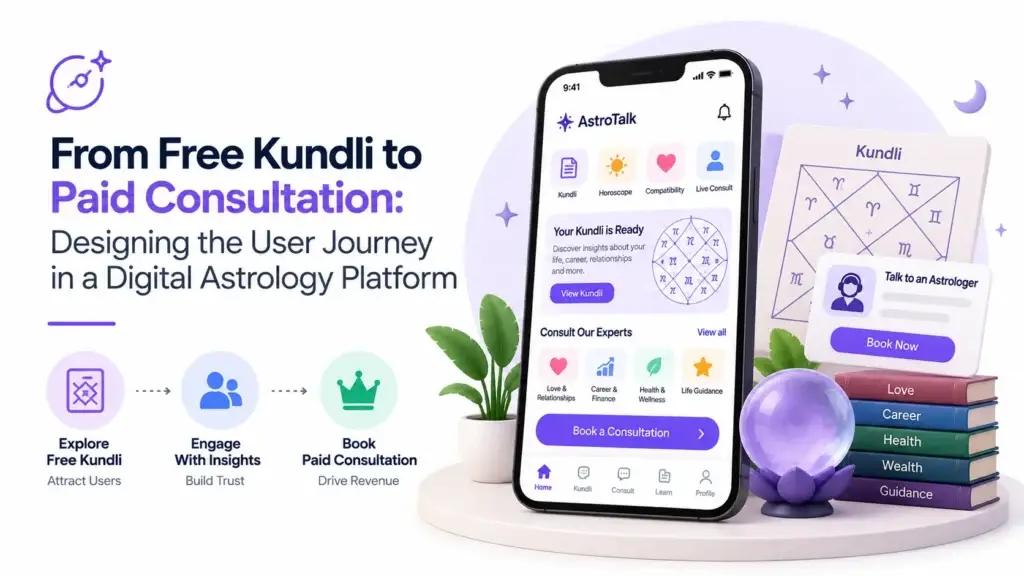
Last Updated on September 21, 2026 by samruddhi kadam Key Takeaways An astrology consultation platform…
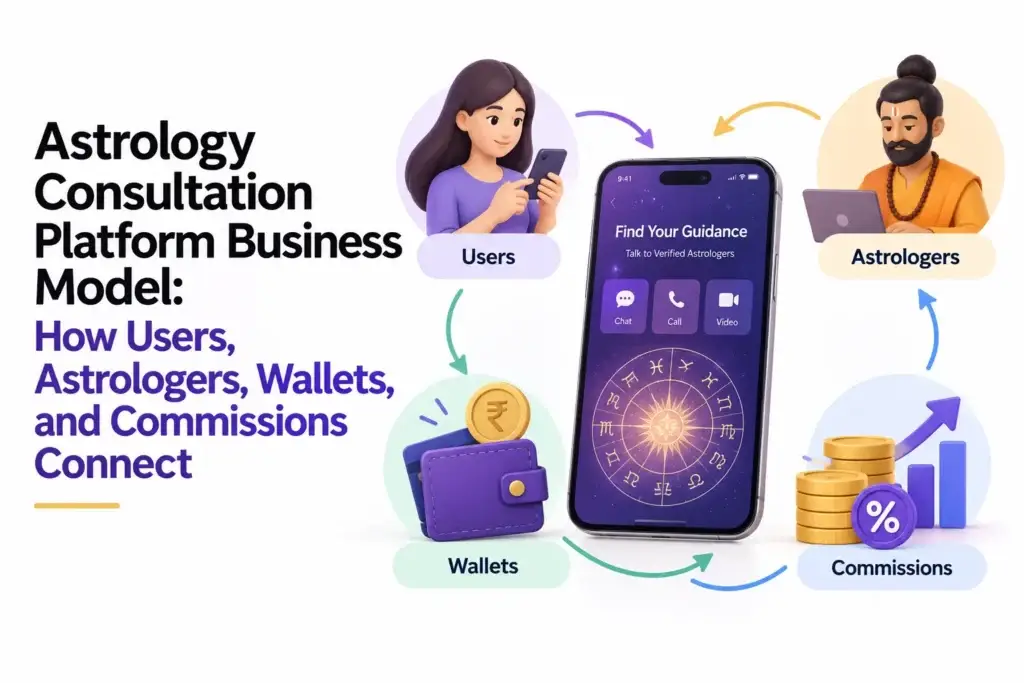
What Should Founders Check Before Launching an Astrology Consultation Platform?
Last Updated on September 21, 2026 by samruddhi kadam Key Takeaways Before launching an astrology…
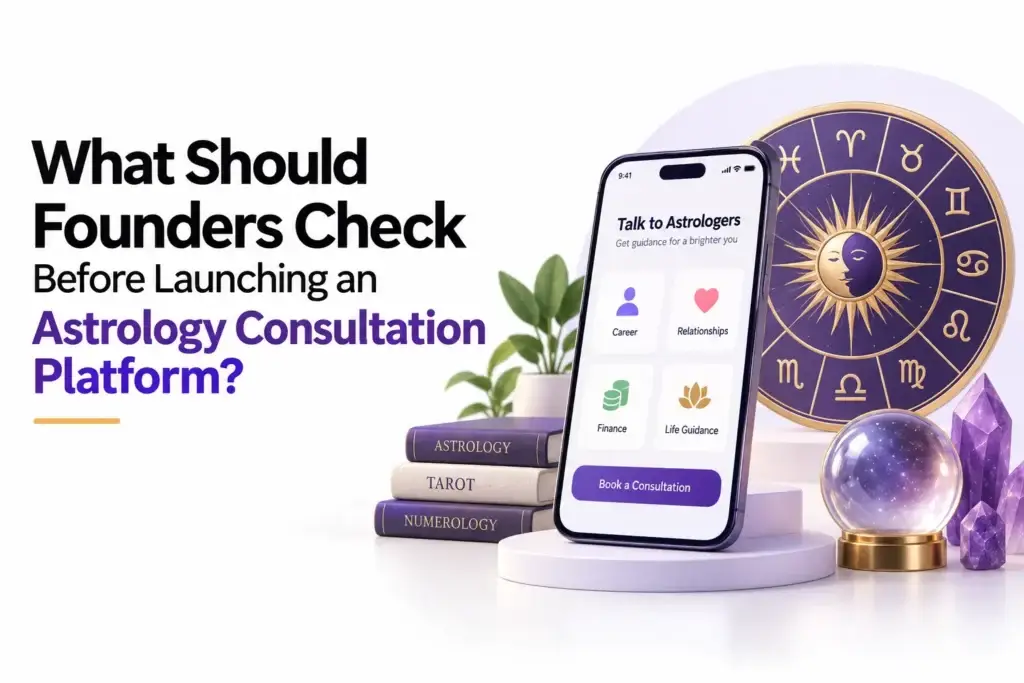
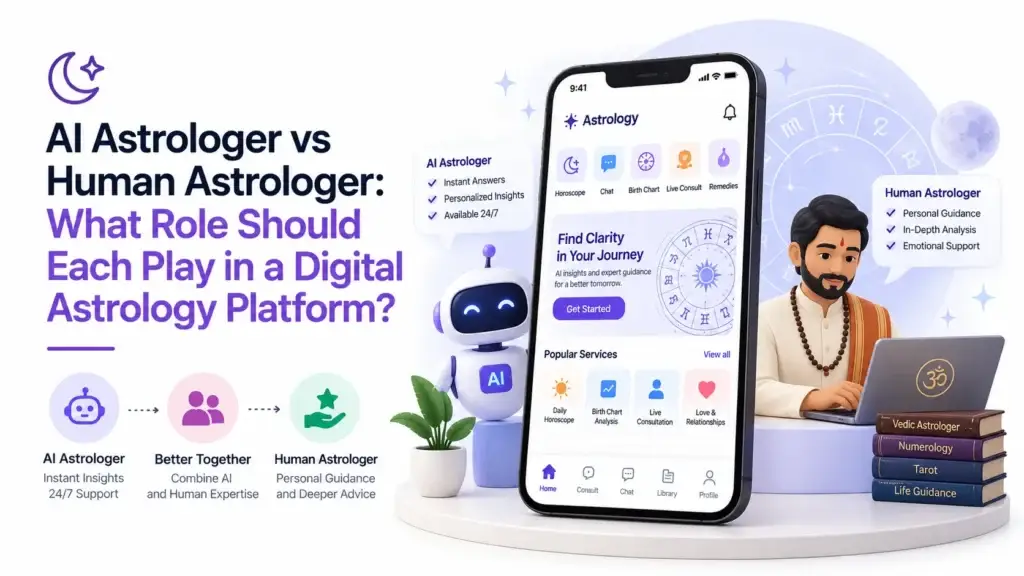
AI Astrologer vs Human Astrologer: What Role Should Each Play in a Digital Astrology Platform?
Key Takeaways A digital astrology platform can combine AI astrologers for instant, scalable guidance with…
FAQ
Everything you need to know about the Miracuves Astrotalk Clone.
It is an astrology consultation marketplace where the transaction, not the content, is the product. Customers find practitioners by skill, language, price and rating, then consult by chat, audio or video call, or join a live stream, and every minute is metered against a prepaid wallet before service. Around that sit the free tools that draw the traffic in, ten wallet-metered AI verticals that answer when nobody is online, a remedy marketplace, puja booking with live broadcast, and courses. Underneath it all is a dual-currency wallet, an append-only ledger, a commission waterfall with TDS withholding, and a 298 flag control plane across 89 admin pages.
It is the codebase rather than a hosted service: a Laravel 10 application on MySQL 8 with 170 tables, 179 controllers and 133 models, a Blade customer portal across roughly 191 routes, a separate astrologer portal, a JSON API of roughly 363 routes serving both Android builds, and an admin back office of 89 menu pages across 151 views. Ownership transfers in full, which matters here because the commission rules and feature prices are your margin. There is no runtime licence and nothing is counted per seat.
This is the question the search demand asks most, so here is the direct answer. Money enters once as a wallet recharge through any of twenty gateway configurations, and the operator then takes a governed share of every consumption event against that balance. Consultation minutes settle through a commission waterfall of boost override, then per-astrologer rate, then system default. Live sessions bill per minute with a default 70 percent practitioner share. Each of the ten AI verticals is priced individually. The remedy marketplace earns product margin, puja packages and course sales settle through the same wallet, gifts carry a commission, and practitioners pay for 24 hour profile boosting. Every one of those rates is a setting rather than a contract.
The Miracuves Astrotalk Clone starts from $3,699 for a launch-ready white-label deployment. Final scope varies with how many payment gateways you run, which real-time and AI providers you wire, the pre-launch security hardening pass, and store publishing for the two mobile apps.
Six working days covers our part, which is rebranding the platform and deploying it to your infrastructure. What lengthens the timeline sits on your side and is almost always external rather than technical: a merchant account per gateway you intend to run, an MSG91 account for OTP, an RTC account with Agora, Zego or 100ms, an AI provider key, and a Firebase project if push and admin support chat must work on day one. The pre-launch security hardening pass is scoped alongside that. Brand assets, hosting access and enough practitioner supply to answer a consultation complete the list.
We would rather answer this plainly than reassuringly. The genuine strengths are real: end-to-end encrypted chat with participant authorization and key versioning, which the security review calls the strongest control in the stack, parameterized bindings across roughly 500 raw query fragments giving near-zero classic SQL injection surface, an append-only wallet ledger with conversion-rate snapshots, and role-based access across all 89 admin pages. The pre-launch list is equally real and is short: the audited codebase ships with a test OTP bypass and test contact hooks that are removed before deployment, live API keys sit in the database rather than in environment variables and need rotating, the system-flag endpoint and several user endpoints need auth middleware applied, the JWT secret needs rotation with blacklisting enabled, practitioner KYC documents need moving behind signed URLs, and server-side payment verification currently covers three of the twenty gateways with the rest to follow the same template. Audit logging does not exist yet and is the item we would close first after the auth gate. Every one of those is a configuration change or a code removal measured in developer-hours, and the pass is completed with you before your domain is exposed.
AI counsellor personas with admin-authored system prompts, a site-wide master chatbot, tarot on a 78 card deck with single and three card spreads, numerology across Chaldean and Pythagorean systems with gemstones and mantras, a vastu compass evaluating eight directions, vision reading from an uploaded palm or face photo, planetary transit analysis, paid ask-a-question with routing between AI and a human astrologer, the remedy engine that maps weak planets and doshas to remedies, and paid downloadable AI remedy reports. Each is priced and toggled independently from the feature pricing screen, and each debits the wallet before the service runs. The provider sits behind an interface with OpenAI and OpenRouter implementations, so changing model or vendor is a flag change. One note for completeness: an AI Pandit persona family exists in the code with its web routes disabled in the current build.
Yes, and this is the part we would point at first, because it is where homegrown builds usually fail. Commission is decided by a waterfall: a boost-active override first, then the per-astrologer rate, then the system default, with an admin commission ledger written per event. Withholding is applied at settlement with PAN captured at the withdrawal request, and TDS reports export as CSV and PDF. Withdrawals run over UPI, bank transfer or PayPal with a configurable minimum, and PayPal Payouts supports bulk disbursement. Every transaction stores a conversion-rate snapshot, so a month spanning several currencies reconciles against the rate that actually applied rather than today’s.
That is the design intent. Twenty gateway configurations cover India through Razorpay, Paytm, PayUmoney, Instamojo and PhonePe, the Gulf through Tap and PayTabs and SADAD, Turkey through Iyzico, Africa through Paystack and Ravepay, Europe through Mollie, LatAm through MercadoPago and PagSeguro, and global rails through Stripe, PayPal, Authorize.net and CoinGate. Each carries its own currency, symbol and test and live key pair. Add 143 seeded languages with ten active on the app side, and per-market store listings for both apps, and the second country becomes a configuration exercise. You still need a merchant account per gateway, which is the part nobody can ship for you.
Most of it. There are 298 system flags across 47 groups covering section toggles for chat, call, live and AI, feature pricing for every paid surface, commission defaults, promotional offers and first-free-chat, referral rewards and caps, withdrawal minimums and TDS percentage, currency and language, storage and streaming provider selection, rate limits, and the store links for both apps. The profession vocabulary is a single token, so relaunching as a tarot or counselling marketplace does not need a fork. On top of that sit five app design sets with dark mode and colour schemes, activated from the panel without a store release.
There is, and we will be precise about it rather than let the word carry more than it should. The specification describes twenty-five CRM modules. Five have functional implementations: a Customer 360 view with a unified timeline assembled from registrations, kundalis, sessions, orders, recharges and refunds, nine computed behavioural tags, customer health metrics covering lifetime value, retention and churn scoring, a recommendation engine producing astrologer, content and AI predictions, and a centralized notification engine. What does not exist yet is lead management, sales pipelines, tasks, campaigns, a lifecycle state machine, internal notes, workflow automation and audit logging, none of which have tables, models or routes. The add-on manager itself is a stub. If the full CRM matters to your operation, it is scoped work we quote rather than something already shipped.
Yes to all of it: the Laravel application, the customer web portal, the astrologer portal, the JSON API, the admin back office, the 170 table schema with migrations, and both Android builds, the customer app and the separate astrologer app, each with its own store listing and package name. You deploy on your own infrastructure under your own brand, with your own accounts for every third party. The documentation suite transfers too, including the schema reference, the entity relationship document, the API collection, the developer and security handbooks and the VAPT posture, which is what a procurement or security review will ask for first.
Let's turn your idea into
a live platform.
Get a free consultation, a clear timeline, and honest answers. We'd rather earn your trust than rush a sale.
Miracuves is an independent software development company. We are not affiliated with, connected to, sponsored by, or endorsed by Astrotalk.
“Astrotalk Clone” is used descriptively. It is how the software industry refers to building a platform with functionality similar to Astrotalk, and how clients search for it.
The entire design and codebase is built by our own team. The product contains no code, design, graphics, or content originating from the Astrotalk website or applications.
Astrotalk and all other third-party names and marks are the property of their respective owners, referenced here solely to describe the category of software offered.
Build Your Branded App - Clone or Custom

Envision. Decide. Deploy.
With Perfection in Just 6 Days
90+ readymade clone apps deployed in 6 days. Schedule a Live Walkthrough Now.
Custom development from 15 days. Free consultation
Launch a ready-made solution under your own brand in 6 working days, with a discount and two bonuses on us.
The discount applies to the published price and depends on the solution. Both bonuses are included with a ready-made solution ordered during the offer. The offer runs in 96-hour windows; the timer shows the current one. The 6 working days start once your branding, hosting and accounts are ready. We reply in under 2 hours, Mon-Sat.