
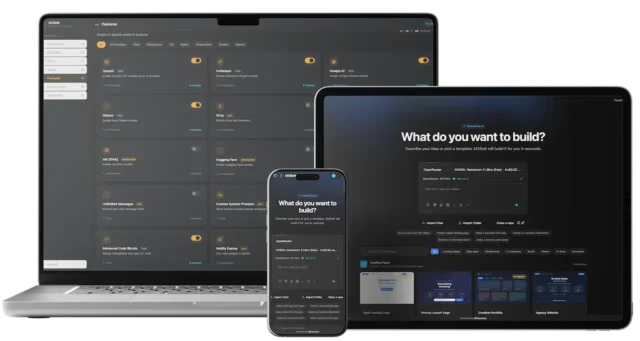
Django App Development Company
White-LabelClone-ReadyFast
Miracuves is an enterprise Django development company. Our Python engineers write Django models, REST APIs and role-restricted admin panels to your specification in 2-8 weeks; if a catalogue product already fits, one of our 90+ white-label platforms goes live under your brand in 6 working days. You hold 100% source code ownership and absolute IP safety from day one.
- 9,000+ Delivered
- 3,900+ Apps Published
- 100% Source Ownership
- NDA Day One
- Django · DRF · CeleryOne Python codebase, web and API
- 90+ Ready-madeSolutions to start from
- Django ORM · DRFOur enforced architecture standard
- 6 DaysReady-made platform, brief to live
- 100% Source CodeDelivered to you on handoff
White-Label Ready
Fully rebrandable on delivery
NDA Day One
IP protected first call
Full Source Code
Delivered at handoff
60-Day Support
Post-launch included
100% IP Ownership
Yours - always
Clutch Reviewed 5.0★
Third-party verified






Miracuves builds Django backends, REST APIs and admin panels for startups and product teams - Django with Django REST Framework, PostgreSQL, Celery and a role-restricted admin, deployed to your cloud. A custom Django build runs 2-8 weeks, and when one of our 90+ catalogue platforms already fits, it goes live in 6 working days. You own 100% of the source code from the first commit.
Our Django Approach
How Miracuves delivers Django applications - from 9,000+ projects of real experience
Over 9,000+ projects and 3,900+ published apps, our Django engineers have settled on a fixed way of building with it. When a catalogue product fits, the work starts from one of our 90+ ready-made platforms, with its payment gateways, live maps, real-time data and login already wired in. A custom Django project starts from the written baseline in the note on this page rather than an empty startproject: a custom user model from the first migration, settings read from the environment, and DRF and Celery configured before your first feature.
Django gives you the parts most teams rewrite badly - authentication, permissions, admin and migrations - as tested framework code rather than bespoke work. Miracuves ships it as a REST or GraphQL API with the ORM as the single source of schema truth, migrations reviewed in pull requests, and the admin restricted by role before launch.
Who this service is built for: Startup founders who need an MVP backend with an admin panel from the first week, product teams replacing spreadsheets or an ageing PHP system with a Django application, and companies that need one REST API behind a web app, mobile apps and internal tools. Miracuves Django development fits when you want one company accountable for the backend - data model, API, admin, background jobs and deployment - with published pricing and full IP ownership, not individual contractors. If your service is a small single-purpose API or needs mostly high-throughput async endpoints, we will say so upfront and recommend Flask or FastAPI instead.
- Query planning reviewed before launch, not after the first slow week
- Migrations reviewed in pull requests and reversible
- Admin locked down by role before go-live
- CI/CD on GitHub Actions configured on every project: tests, migration checks and deploys from the first commit
- Production deployment fully managed: app servers, PostgreSQL, Redis, SSL and environment secrets
Why Django at Miracuves
- Ready-made platform6 days
- Clients one Django API servesWeb · iOS · Android
- Admin panelGenerated from your models
- Clone solutions ready to ship90+ solutions
- Custom Django build2-8 weeks
- Source code ownership100% yours
Each Django project we take on starts from one written baseline: which Django app owns which models is agreed before the first commit, every migration is reviewed in a pull request, SECRET_KEY and credentials are read from environment configuration and never committed, and the API is load-tested on a production-like Gunicorn or Uvicorn deployment before handover. The scope, the stack and every integration are written down before any payment.
Ready-made platforms · 6 days
What Miracuves has deployed - what you can launch today
Six of our 90+ ready-made platforms, each shipping with its apps and admin panel in 6 days.
View All 90+ SolutionsWise Clone
International money transfer platform: transfers at the real exchange rate, multi-currency accounts and low, upfront fees.
Revolut Clone
One financial app for everyday banking, crypto and stock trading, currency exchange and budgeting tools.
LinkedIn Clone
Networking platform for professionals: a feed of updates, open jobs, private messages, suggested connections and tools for recruiters.
Upwork Clone
Clients post projects and freelancers send proposals, while the marketplace holds payment in escrow, logs hours and collects reviews from both sides.
Fiverr Clone
Gig marketplace where sellers list tiered service packages and buyers order, receive the delivery and leave reviews.
Skype Clone
Voice and video calling app with instant messaging, group calls and screen sharing.
Honest noteDjango runs behind the API and the admin, not inside the phone apps. Each catalogue product above arrives in 6 days on the stack it was built with; a Django backend, admin or data layer made for your own product is custom work of 2-8 weeks. We tell you which fits before any commitment.
Technology Comparison
Django vs Rails vs Laravel - which is right for your project?
An agency that writes only one framework will always recommend that one. Miracuves builds backends in Django, Rails and Laravel, so this is the comparison we walk founders through - the framework you choose decides how soon the admin and API exist, who you can hire later, and what maintenance costs for years.
Django
Python · Django REST Framework
Ruby on Rails
Ruby · Active Record
Laravel
PHP · Eloquent
You need an admin panel from day one · your data model is relational and will keep growing · you want Python for the API and for data or ML work · one team owning the backend, the admin and the API.
You need a small single-purpose service (Flask) · most endpoints are high-throughput async APIs (FastAPI) · what you actually need is the phone app rather than its backend. See React Native →
Django guide
What to know before you hire a Django development company
The questions founders and product leads ask us before they sign a Django project, answered for Django specifically - why startups pick it, where it is the wrong tool, and what building and running it involves.
What do Django app development services include?
A Django project is more than views and templates. What decides whether it holds up is the data model and its migrations, the REST API most products now expose through Django REST Framework, the admin your operations team will work in every day, background jobs for anything slower than a request, and a deployment that runs Django under Gunicorn or Uvicorn instead of the development server.
A Miracuves Django engagement delivers all of these: models and reviewed migrations on PostgreSQL, a DRF API with an OpenAPI schema your web and mobile developers can generate clients from, a role-restricted Django admin, Celery workers on Redis, CI on GitHub Actions and a production deployment with Sentry. You receive the repository, the environment setup guide and the runbook.
Why do startups choose Django for an MVP?
Because the parts every MVP needs, and nobody wants to pay to build twice, already ship with the framework - tested, documented and maintained by the Django project.
- Authentication, sessions, password hashing and permissions are built in, so login is configuration rather than a sprint.
- The admin is generated from your models, so founders and support staff can manage users, orders and content from the first week.
- The ORM and migrations keep the schema in version control and let the data model change safely while the product finds its shape.
- Protection against SQL injection, CSRF, XSS and clickjacking is on by default.
- Django REST Framework turns the same models into an API for a React front end or mobile apps.
How does Django REST Framework fit a web and mobile product?
Most Django products we build today are API-first. DRF serializers validate what comes in and shape what goes out, viewsets give each resource its list, detail, create and update endpoints, and permission classes decide who may call what. Token or JWT authentication lets one API serve a React web app, Flutter or React Native mobile apps and partner integrations.
The Django admin stays beside it for internal staff, so one codebase holds the data model, the public API and the back-office tools. When clients need to request exactly the fields they want, we add a GraphQL layer with Strawberry or Graphene next to the REST endpoints rather than replacing them.
When is Django the wrong choice?
Django assumes a relational database, a server that renders pages or serves an API, and a team happy to follow its conventions. When a project does not fit those assumptions, we say so before kickoff.
- A small single-purpose service with no admin or user accounts: Flask carries less framework than the job needs.
- An API made mostly of high-throughput async endpoints, such as a model-serving or aggregation gateway: FastAPI is built around async and typed request models.
- Thousands of long-lived WebSocket connections per server: Django Channels can do it, but a Node.js service is often simpler to run.
- A mostly static marketing site: a CMS costs less to run and to edit.
Does Django support async, and where does it help?
Yes. Django runs under ASGI and views can be written with async def. Async pays off where a request spends most of its time waiting on something outside Django - a payment provider, a shipping API, an LLM - or fans out to several services at once and combines the answers. Django Channels adds WebSockets for chat and live updates on the same codebase.
It helps less than people expect with ordinary database work. The ORM offers async methods such as aget() and acreate(), but Django's database layer was built around synchronous connections, so a plain CRUD endpoint is rarely faster written async. Miracuves keeps standard views synchronous, uses async views for outbound calls, and sends slow work to Celery instead of holding a request open.
How does a Django application scale as usage grows?
Horizontally. Django application servers hold no state, so as traffic grows more Gunicorn or Uvicorn workers and more instances go behind a load balancer, with sessions and cache in Redis. The limits usually show up in the database first, not in Django itself.
- N+1 queries removed with select_related and prefetch_related, and query counts asserted in tests.
- Indexes added from measured slow queries, with heavy reads sent to PostgreSQL read replicas through Django database routers.
- Expensive pages and API responses cached in Redis with explicit invalidation.
- Emails, reports, imports and webhooks moved to Celery workers that scale separately from the web tier.
Should you hire Django developers or a Django development company?
Hiring Django developers directly works when you already have a technical lead who owns the data model, reviews every migration before it touches production and answers for deployment and security settings. Without that person, freelancers make those calls one ticket at a time - and in Django the schema is the hardest thing to fix later.
A development company carries that responsibility for you. At Miracuves you contract with the company, not with individual developers: a Django engineer, a front-end or mobile engineer where the product needs one, QA and a project manager work to a written scope with weekly sprint demos. Once the product is live, the Ongoing Django Development retainer from $2,299/month keeps a dedicated team on it; individual developers are never rented out by the hour.
Technical Architecture
How Miracuves engineers structure Django projects for production
Below are the calls our engineers make on every Django project before the first model is written. They decide whether the codebase can take its twentieth Django app cleanly, or ends up with views, signals and models so tangled that someone has to rewrite it.
- 01
Architecture - Clean, Feature-First Modules
Each Django app in the project owns one business area - its models, serializers, services and URLs - and the layers stay apart: views and serializers present data, services hold the domain rules, models and querysets handle the data. That is how Miracuves adds a new Django app, such as payouts or reviews, in 2 days without breaking what already works.
- 02
Structure - Modules with Dependency Injection
Business rules live in plain service functions that receive what they depend on - the user, the payment client, the clock - as arguments, so behavior is predictable and each rule can be tested without an HTTP request. The problem we inherit most often from other agencies is logic buried in views and model signals, where every test needs a request object and a save() fires side effects nobody expected. Moving it out is a hard standard from day one, not a suggestion.
- 03
Performance - Query Discipline and Caching
The default failure mode in Django is the N+1 query. We resolve relations with select_related and prefetch_related at the queryset level, assert query counts inside tests so a regression fails CI rather than production, and cache expensive reads in Redis with explicit invalidation. Load is measured against a production-like ASGI deployment, never runserver.
Migrations run by hand on production. DEBUG left on, with the SECRET_KEY committed in settings.py. No CI pipeline. Business logic buried in views and signals. No load test before go-live. Miracuves has taken over Django projects with every one of these - starting correctly is always faster than cleaning up.
# DRF viewset behind the customer order API# Related rows load up front: a fixed query count however long the listfrom django.db.models import Prefetchfrom rest_framework import permissions, viewsetsfrom rest_framework.decorators import actionfrom rest_framework.response import Responsefrom .models import Order, OrderItemfrom .serializers import OrderSerializerfrom .services import cancel_orderclass OrderViewSet(viewsets.ModelViewSet): serializer_class = OrderSerializer permission_classes = [permissions.IsAuthenticated] def get_queryset(self): items = OrderItem.objects.select_related("product") return ( Order.objects.filter(customer=self.request.user) .select_related("customer", "shipping_address") .prefetch_related(Prefetch("items", queryset=items)) .order_by("-created_at") ) def perform_create(self, serializer): serializer.save(customer=self.request.user) @action(detail=True, methods=["post"]) def cancel(self, request, pk=None): # Business rules live in services.py, not in the view order = cancel_order(self.get_object(), by=request.user) return Response(self.get_serializer(order).data)Our Service Models
Three ways Miracuves delivers your Django project
Pick whichever model suits the stage your product is at. In all three the contract is with Miracuves the company, never with a loose group of Django freelancers, so one team, one process and one accountable party carry the work.
White-Label Clone Delivery
When a catalogue product fits, Miracuves puts one of our 90+ ready-made platforms live under your brand · web app, admin panel and mobile apps · in 6 working days. Any Django work on top is a separate, custom quote. Source code fully yours.
- Starting from $2,199 · fixed price, with no surprises later
- 90+ solutions matched to your vertical
- Your branding, configuration and white-labeling applied
- Admin panel included in every delivery
- Full source code · NDA · 60-day support
Custom Django Build
Miracuves builds your Django product from your specification - data model, API, admin and background jobs designed for it alone. Full team: a Django backend engineer, a front-end engineer, QA and a project manager.
- Scoped and priced before development begins
- Clean architecture designed specifically for your product
- Weekly sprint demos - working software every sprint
- Production deployment and database migrations managed
- Full source code · IP 100% yours
Ongoing Django Development
After launch, Miracuves can stay on as your Django team on a monthly retainer: new features and releases, Django and Python dependency upgrades, and day-to-day maintenance, with working software demoed every week.
- From $2,299/month - cancel at any time with 2 weeks notice
- Dedicated Miracuves team assigned to your product
- Direct communication - no account manager relay
- Weekly sprint demos - deliverables every cycle
- Scales up or down as your product evolves
Quality Standards
How Miracuves ensures every Django delivery meets production standard
Before any Django repository is handed over, it has to pass the gates listed here. We treat them as the standard every delivery is held to, rather than a list someone ticks off in the final week.
- Clean architecture - Presentation / Domain / Data separatedArchitecture
- Django ORM with select_related and prefetch_related, no N+1 in reviewState
- Query counts asserted in tests so a regression fails CIPerformance
- API contract tests - every endpoint checked against its OpenAPI schemaQA
- CI/CD pipeline - every push runs the tests, checks for missing migrations and builds, from day oneDevOps
- No secrets in the repository - SECRET_KEY, database URLs and API keys come from environment config onlySecurity
- Production-ready - DEBUG off, manage.py check --deploy passed, rollback verifiedDelivery
Enforced QA Gates
Our 6 Continuous Delivery Gateways
Each gate below applies to every line of Python, every migration and every production build, and all six have to be cleared before you receive the repository.
Code Review on Every Pull Request
Every pull request into your main branch is read by a senior Miracuves Django engineer, who checks its queries, migrations and permission logic before approving it. However close the deadline, untested code does not go to your production environment.
Automated Test Coverage Required
Unit tests cover the business rules in the service layer, contract tests check each DRF endpoint's request and response schema, and integration tests run the critical user flows against a real PostgreSQL database. Merges are blocked until test coverage meets an agreed minimum, before any production build is made.
Production Settings Profiled - Not DEBUG Mode
Django Debug Toolbar is a development tool: with DEBUG on, Django keeps every query in memory and returns full tracebacks, so its timings do not reflect production. Miracuves profiles the production configuration instead - query logging, APM traces and a load test - and never accepts development-mode numbers as the result.
Handoff Package - Not Just a Repository
A Django handoff is a package, not a repository link: the source code and its documentation, a setup guide for local and production environments, the OpenAPI schema and API docs, every deployment credential, hosting and database access, and a runbook for the weeks after launch.
Production Release - Deploy, Migrations and Rollback Managed
Miracuves handles the production release: the app under Gunicorn or Uvicorn behind a reverse proxy, migrations applied by the pipeline rather than by hand, static files collected to storage or a CDN, SSL, environment secrets and a rollback path if a release misbehaves.
Post-Launch Monitoring - 60-Day Active Support
Before launch Miracuves wires Sentry for exceptions and an APM tool for request and query timings into the Django project. For the 60 days of post-launch support we watch errors, slow queries and Celery queue backlogs, and fix problems before your users report them.
Technology Stack
The Django stack Miracuves ships with
Each Django project gets the parts of this stack its architecture actually needs - a content platform may never need Channels, while a live-tracking product does.
Our Process
From brief to deployed Django application - what happens and when
A Django engagement runs through the five steps below whether it begins from a readymade clone or from your own specification. At every step you can see what our engineers are working on, what we need from you, and what you get at the end. Timings shown follow our standard clone sprint; a custom Django build is billed per milestone yet goes through the same checkpoints.
- Step 01
Brief & NDA
Share your concept via WhatsApp. NDA signed same day. We ask 6 specific questions.
- Step 02
Scope & Plan
Right solution base, stack, and model confirmed. No payment before scope is agreed.
- Step 03
Build & Demo
Repo created, architecture set. First commit in 24h. Weekly working demo runs.
- Step 04
QA & Polish
API contract, integration and load tests on a production-like setup. Deployment checks passed.
- Step 05
Launch & Handoff
Full code and docs delivered. Production deploy handled. 60 days active support.
Six days is Miracuves build time, not calendar time
The six days are ours, and they do not run past six. What can add time sits on your side: developer account verification, merchant onboarding and compliance approvals are controlled by the app stores and your payment provider, not by us. We list exactly what you need ready on the first call so you can start those in parallel.
Transparent Pricing
What Django development costs at Miracuves
Miracuves prices Django work in public because we know what each kind of build costs to deliver. You will not be asked to "contact us for pricing", and once the scope is agreed nothing is added on top.
Readymade Clone
$2,199 from
Fixed price · 6 day delivery · scoped
- Ready-made platform: web app, admin panel and mobile apps
- Admin panel included as standard
- Branding and white-label applied
- Full source code on handoff
- 60-day post-launch support
- NDA protected from day one
Custom Django Build
$3,699 from
Scoped per project · depends on the work · milestone billing
- Full Django team - engineer + backend + QA
- Custom architecture for your spec
- Weekly sprint demos - working software
- Production deploy to AWS, GCP or your cloud
- Full source code · complete IP transfer
- Milestone billing - no pay before delivery
Ongoing Development
$2,299 /mo
Monthly retainer · cancel with 2 weeks notice
- Miracuves team assigned to your product
- New features, releases, and maintenance
- Weekly demos and sprint planning
- Direct communication - no relay
- Scales up or down as needed
- All code remains 100% yours
Why Miracuves publishes pricesA founder who sees the cost of a Django build up front makes better product decisions. If your scope needs a larger budget, Miracuves shows you which models, integrations or real-time features drive it, instead of simply quoting more.
What affects Django project cost at Miracuves
If your scope matches the base product, readymade clone pricing does not move. A custom Django build is priced on what it contains: how many user roles it serves (customer, driver, admin, vendor), which real-time features it needs through Django Channels (live GPS, chat, video signaling), which payment and compliance integrations it connects (BaaS, KYC, multi-currency), whether it rolls out across several cities or languages, and which third-party SDKs sit beyond the standard stack.
Typical Django budget ranges
- Readymade clonefrom $2,1996 days
- Custom Django backend workfrom $3,699depending on the work
- Custom MVP$8,000-$25,0002-8 weeks depending on scope
- Ongoing retainerfrom $2,299/month for feature work and maintenance
We write every Django quote down before you pay a cent, which is why no surprise invoice turns up after kickoff.
Example engagement
What a typical Django project looks like at Miracuves
An illustrative example of a typical project of this kind, with client details anonymized. Figures show what this kind of build targets, not a named client's results.
A Nigerian fintech processing ₦2B+ in monthly microloans needed to replace a PHP loan management system that couldn't scale beyond 2,000 concurrent users, causing frequent transaction failures during peak hours.
- 01
The Challenge
The legacy system had no automated credit scoring, manual loan disbursement via CSV uploads, and zero fraud detection. Loan officers spent 4+ hours daily on manual approvals. The system crashed weekly during month-end salary advance surges.
- 02
What Miracuves Delivered
Built a Django monolith-to-microservices architecture with Django REST Framework for 12 internal APIs. Integrated Paystack and Flutterwave for automated disbursement. Implemented credit scoring with scikit-learn, trained on 3 years of repayment history. Deployed on AWS Elastic Beanstalk with RDS read replicas.
- 03
Outcome
Production in 8 weeks. Loan processing went from 4 hours to 90 seconds per application. System handles 15,000 concurrent users. Default rates dropped by 28% thanks to ML scoring. Platform processes ₦800M weekly with 99.97% uptime.
- Solution usedDjango REST + Microservices
- Delivery timeline9 days
- Platforms deliveredDjango + AWS + Paystack + Flutterwave
- Key integrationsML Scoring · Paystack · Flutterwave · ORM
- Regulations in scopeCBN + NDPR
- Source code100% client-owned
Client Reviews
What clients say about building with Miracuves
Named clients, in their own words, on backends Miracuves built with them - billing engines, alert pipelines and payment systems. Each card names the product; read every testimonial on our client testimonials page.
"Miracuves's MXBilling base gave us the billing engine, the dunning workflow, and the customer portal. We added our meter-ingestion adapters, our regional tax rules, and a custom multi-tenant reporting layer. We went from kickoff to our first operator live in 11 weeks. The platform has been running for two billing cycles with no major incidents - exactly the reliability profile we needed."
"Multi-tenant structure, alert pipelines and agent collectors were the slow part and they already existed. We added our scoring engine, the playbook library and billing. First customers were onboarded within weeks and the dashboard is now a sales tool rather than an internal screen."
"Miracuves's MXB2B base gave us the catalogue, the order flow, and the payments backbone. We added our custom short-term-credit module, our distributor-tier pricing, and a custom reconciliation engine. From kickoff to first 100 active retailers was 9 weeks. Our credit portfolio is now a real product line, not a spreadsheet."
Why Miracuves
Six places to check us before you ever call us
Each one is either run by someone else or open to anyone. Check them in any order; the whole list takes about a minute.
Why clients choose MiracuvesCompany registration
Miracuves Solutions Pvt. Ltd., CIN U62099MH2023PTC406639. Search the CIN on the Ministry of Corporate Affairs portal.
mca.gov.in 02Every number, sourced
Projects, clients, prices and timelines, each one defined and sourced on our public facts ledger.
miracuves.com/facts 03Reviews on Clutch
Client reviews published by Clutch, an independent B2B review platform, not by us.
clutch.co 04Reviews on GoodFirms
A second, separate review platform. Read what clients wrote there too.
goodfirms.co 05The product itself
Web app, admin panel and APK with printed credentials. Try the real thing before a single call.
miracuves.com/solutions 06Clients, by name
Named clients describing their launches, in their own words.
miracuves.com/client-testimonialsThree promises we would stake the company on
Every promise on this site rests on these three. Each one is something you can check, not something you have to take on trust.
01People you can name
Our leadership is public, with real LinkedIn profiles, not a stock-photo team page. A named team works your build and sends you progress on WhatsApp every working day.
Meet the leadership02Proof over promises
Every number we publish, pricing, timelines, project counts, is defined and sourced on a public facts ledger. If we can't back a claim, we don't make it.
Read the facts ledger03A process with a deadline
Ready-made platforms go from kickoff to live deployment in 6 working days, guaranteed: miss it for reasons on our side and we work free until launch. Custom builds get a fixed quote after a free feasibility study.
Get a feasibility study
Industries
Industries we build Django backends for
The data model, the load pattern and the compliance rules behind a backend change by industry. These industry pages go deeper on each.
Healthcare & Life Sciences
Patient records APIs, appointment engines and audit-logged access to health data.
View industryTelemedicine
Video-visit signalling, scheduling APIs and secure messaging backends.
View industryFintech
Ledgers, payment and KYC integrations, reconciliation jobs and audit trails.
View industryRetail & E-commerce
Catalogue, inventory, order and checkout APIs that hold up on sale days.
View industryMedia & Entertainment
Subscription billing, content APIs and entitlement checks for streaming.
View industryCreator Economy
Payout ledgers, paywall logic and creator analytics pipelines.
View industryTransportation & Mobility
Dispatch, live location and ETA services, and driver payout backends.
View industryFood & Beverage
Order routing, kitchen display feeds and menu and pricing APIs.
View industryRelated Services
Also building with these technologies at Miracuves
A backend rarely ships alone: it needs a front end, a mobile app or an admin panel, and a place to run. These are the services clients most often add.
Frequently Asked
Questions about Django development at Miracuves
Something not covered here? Ask on WhatsApp and you will usually have an answer within two hours.
Ask us directlyHow does Miracuves keep a Django application fast?
Not by itself. Django slows down when the ORM is used carelessly, and almost always through the N+1 query. Miracuves resolves relations with select_related and prefetch_related at the queryset level, asserts query counts inside tests so a regression fails CI rather than production, caches expensive reads in Redis with explicit invalidation, and adds database indexes based on measured slow queries rather than guesswork. Where a workload genuinely needs raw throughput we will say so and put that service behind a dedicated API instead of stretching the ORM to fit.
How much does Django development cost at Miracuves?
If your scope matches a catalogue product, its price is fixed: the ready-made platform - web app, admin panel and mobile apps - starts from $2,199 and ships in 6 days. Custom Django backend work starts from $3,699, depending on the work. Django work built for your product is custom; a Django MVP typically costs $8,000-$25,000 over 2-8 weeks, and where it lands depends on how many user roles it serves, its real-time features, the payment and KYC integrations, any multi-city or multi-language rollout and the third-party SDKs involved. A Django retainer for new features and upkeep starts from $2,299/month. Every quote is written before payment, with no surprise invoices after kickoff.
Does Miracuves deliver the full source code?
Yes - completely. Miracuves hands over the full Django codebase: the repository with its complete commit history, every migration, environment configuration, API documentation and all deployment credentials. There is zero lock-in - your own team, or any other development company, can pick up the work the day after handoff.
How fast can a Django application realistically be delivered?
When one of our catalogue products fits, its web app, admin panel and mobile apps go live under your brand, with your white-label configuration, in 6 working days. Django work is custom: a Django backend, API or admin built for your product takes 2-8 weeks depending on scope, and we state every timeline in writing before asking for any payment.
Django or FastAPI - which does Miracuves recommend?
It depends on what the service has to do. Django earns its place when a product needs authentication, permissions, an admin and a stable schema from day one, which covers most content-heavy platforms and internal tools. FastAPI is the better answer for high-throughput typed endpoints where async matters more than batteries included. Miracuves will run both in one estate when that is the honest answer, with Django owning the domain model and migrations while FastAPI fronts the endpoints that need raw throughput. We put the split in writing before any payment is requested.
What is included in the admin panel with every delivery?
Each catalogue platform comes with its own browser-based admin panel - a separate web application for user management, orders and bookings, analytics, content, payouts and commissions, and platform settings. On a custom Django build the admin is Django's own admin, generated from your models, restricted by role before launch and extended with the screens your operations team needs.
Does Miracuves handle App Store and Google Play submission?
For the ready-made platform, yes: its mobile apps are submitted to the App Store and Google Play as part of the delivery, with signing certificates, store listings, screenshot assets and review coordination handled by Miracuves. Review times are set by Apple and Google and vary. A custom Django backend has no store submission of its own - Miracuves deploys it to your cloud and, when we also build your mobile apps, handles their submission alongside.
What happens after the app is delivered if there are bugs?
Every Miracuves delivery includes 60 days of post-launch technical support, and bugs within the delivered scope - a failing endpoint, a migration problem, a Celery job that stops running - are fixed at no additional cost. Feature additions beyond scope are quoted separately. Monthly maintenance retainers are available at published rates.
How does Miracuves handle NDA and confidentiality?
Miracuves signs a bilateral NDA before you share any project details, covering the technical details, your data model, business logic and IP. An IP assignment agreement transferring 100% ownership of the Django code to you is signed at project start - not at the end.
Can I hire dedicated Django developers from Miracuves?
No - Miracuves does not rent individual developers by the hour. For continuing Django capacity, a monthly retainer from $2,299 puts a dedicated Miracuves team on your product: you talk to them directly, see a sprint demo every week and can cancel with 2 weeks notice. A defined project is handled as a Custom Django Build, scoped and priced before any code is written. We answer first messages in under 2 hours, Mon-Sat 10:00-19:00 IST.
Django or Flask - which should I choose?
Choose Django when the product needs user accounts, permissions, an admin panel and a relational data model that will keep growing - Django ships all of them, so nothing has to be assembled from separate extensions. Choose Flask for a small, single-purpose service or an API where you want to pick every library yourself. Many products use both: Django for the core application and admin, and a Flask or FastAPI service beside it for one narrow job. Miracuves recommends the split in writing before any payment.
Can Miracuves upgrade or take over an existing Django project?
Yes. Common jobs are upgrading an old Django release to a supported one step by step, clearing deprecation warnings at each step, moving settings and secrets out of the repository, adding the tests an upgrade needs, and fixing N+1 queries found under load. We start with a written audit of the codebase - Django and Python versions, dependencies, migrations, test coverage and security settings - and quote the work in stages, so the product keeps running while the code is brought up to date.
Get Started
Ready to build your Django application with Miracuves?
Tell Miracuves what you want to build with Django. Our reply, in writing and before you commit to anything, names the solution base to start from, the service model that suits you and the timeline we will deliver to.
NDA signed before we discuss your project details
Page reviewed by the Miracuves Django Development Team · Last updated May 2026 · Clutch & Google Reviews
