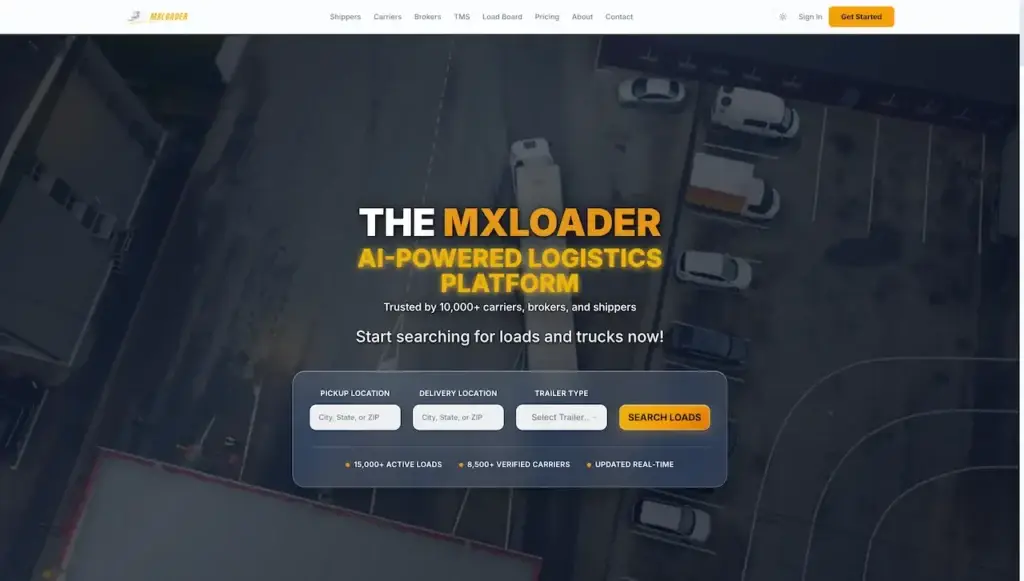
Post Loads, Book Capacity and Run the Whole Lane in One System
Launch a white-label DAT Load Board Clone: a live freight marketplace with a full carrier TMS behind it, where brokers post and negotiate, carriers dispatch and get paid, and every rate change leaves a record.
DAT Load Board Clone Demo - Live Board, TMS & Admin Console
Don’t just take our word for it. Open the Miracuves DAT Load Board Clone yourself. All four roles have a working login and no setup is required. Post a load as a shipper, bid on it as a carrier, negotiate it as a broker, then open the same activity in the operator console.
mxloader.mimeld.com
Live demo
CARRIER WORKSPACE
DAT Load Board Clone - Carrier & Dispatch
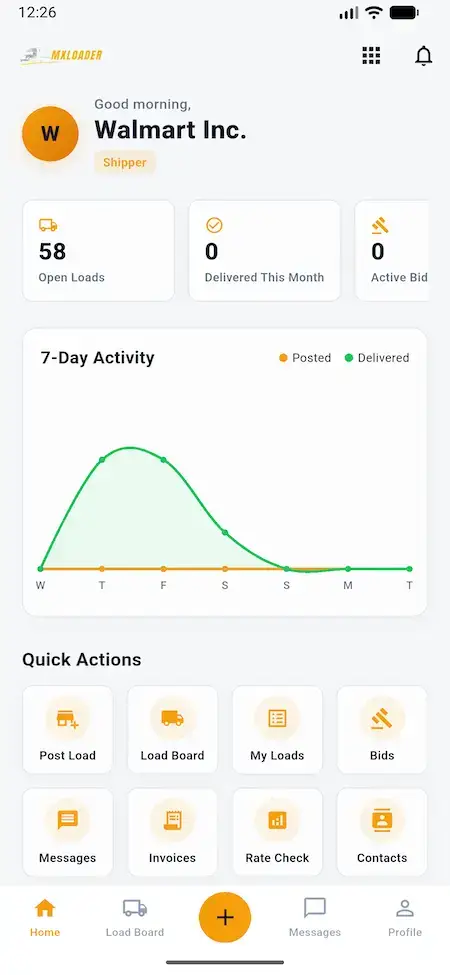
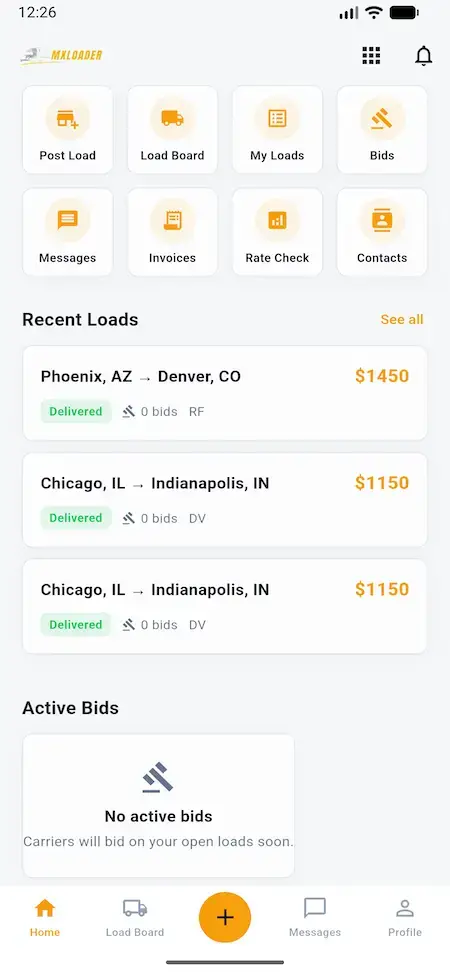
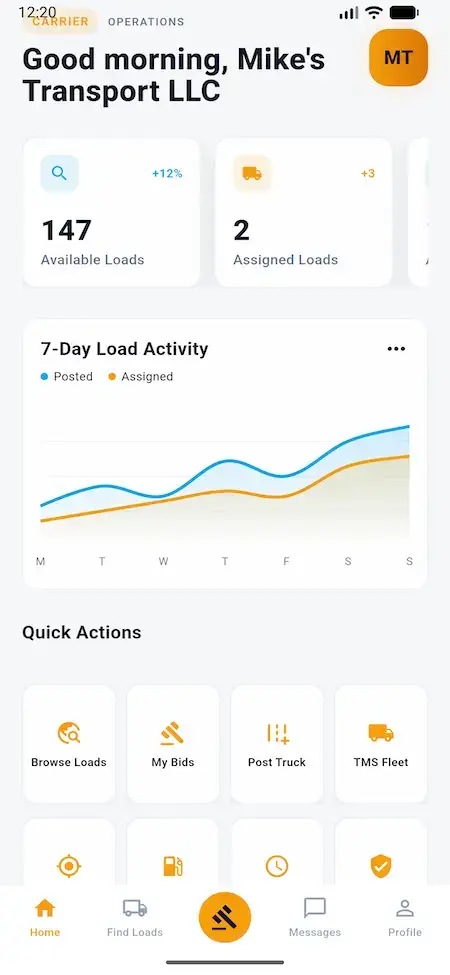
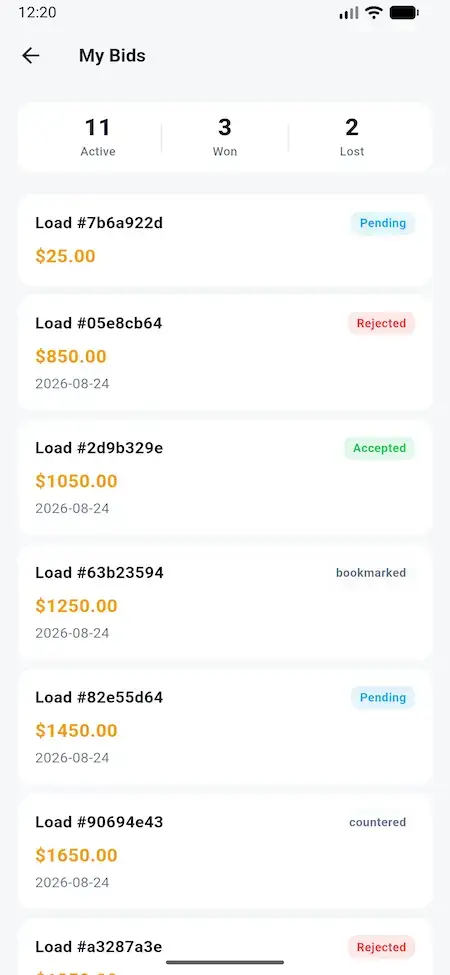
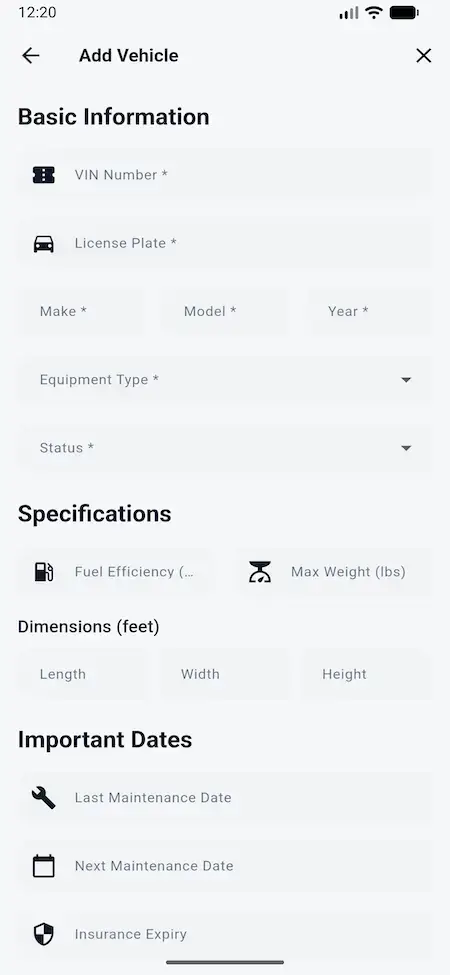
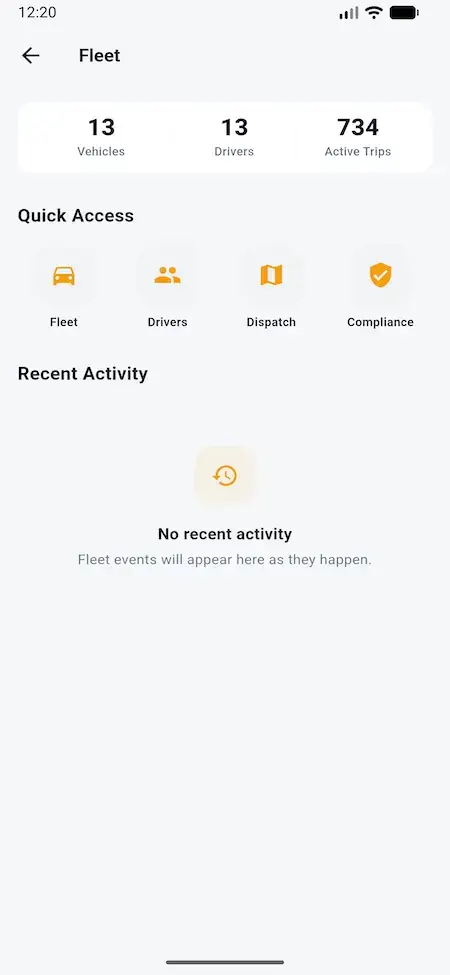
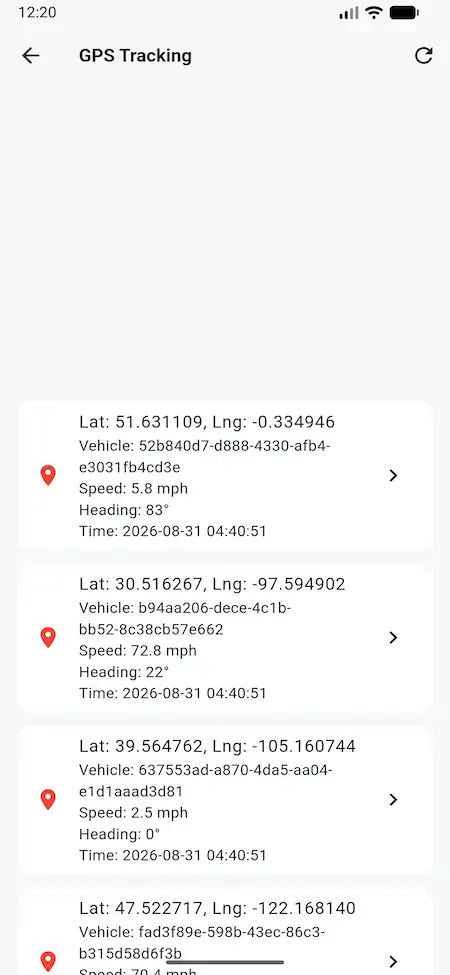
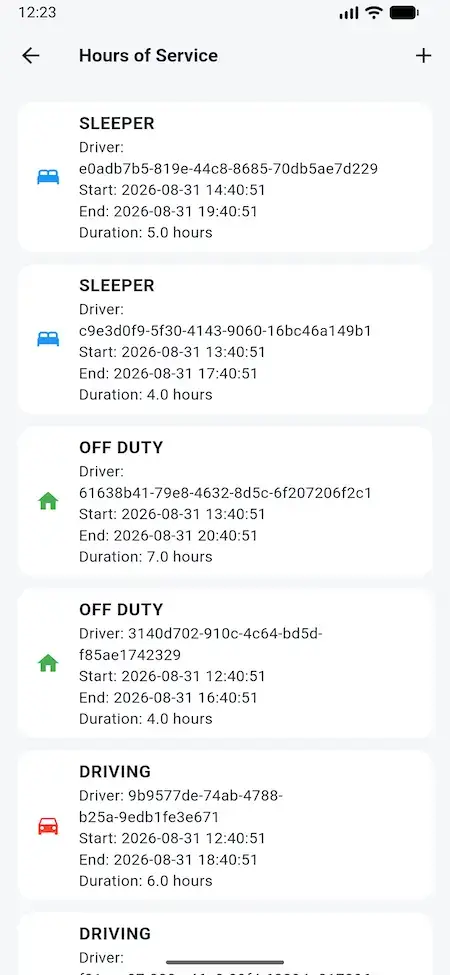
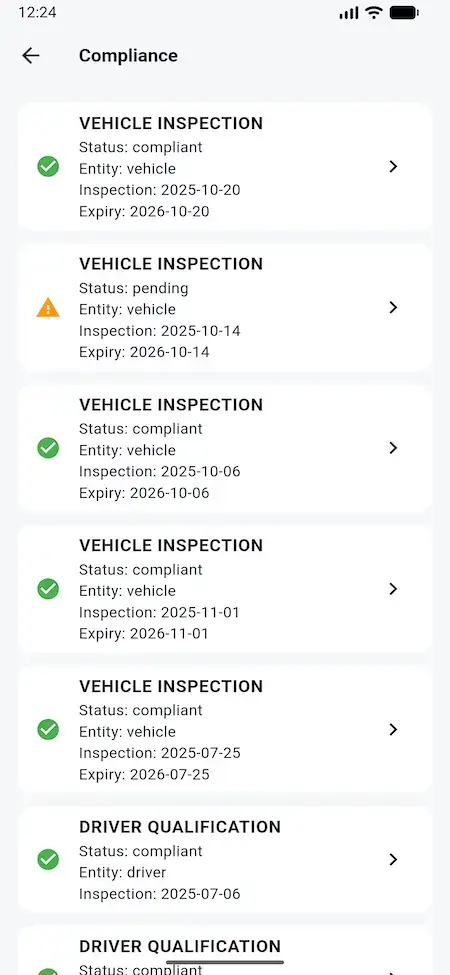
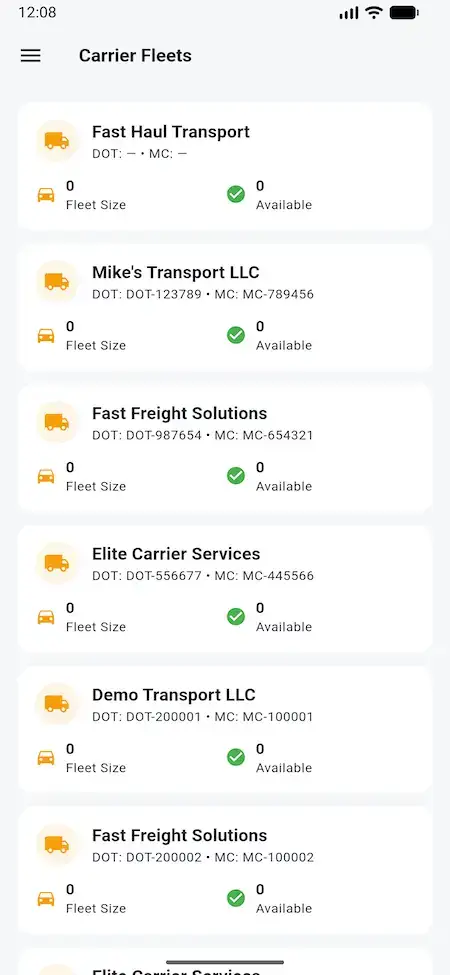
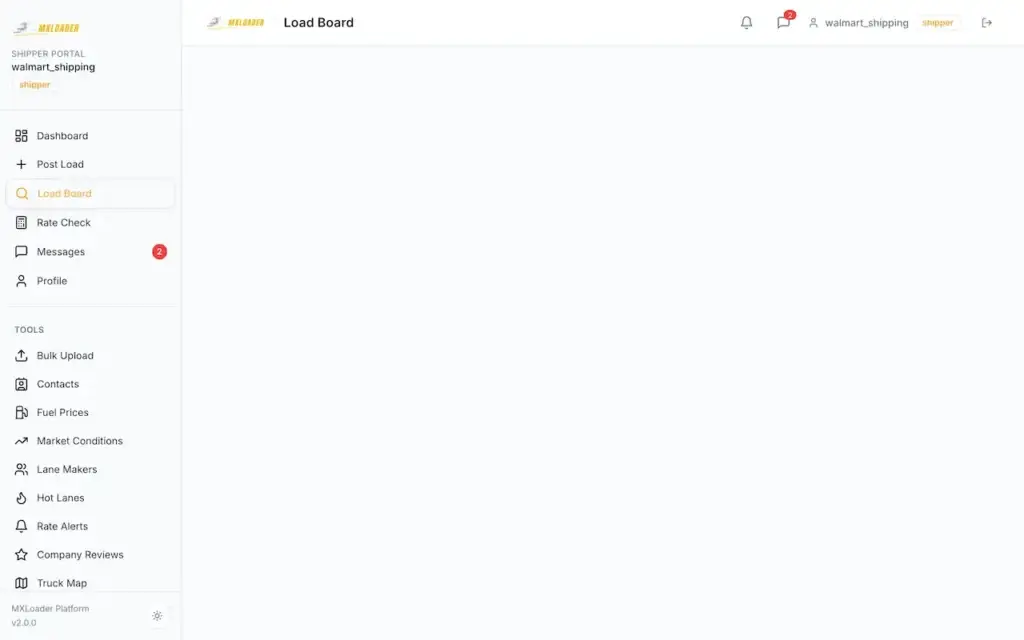
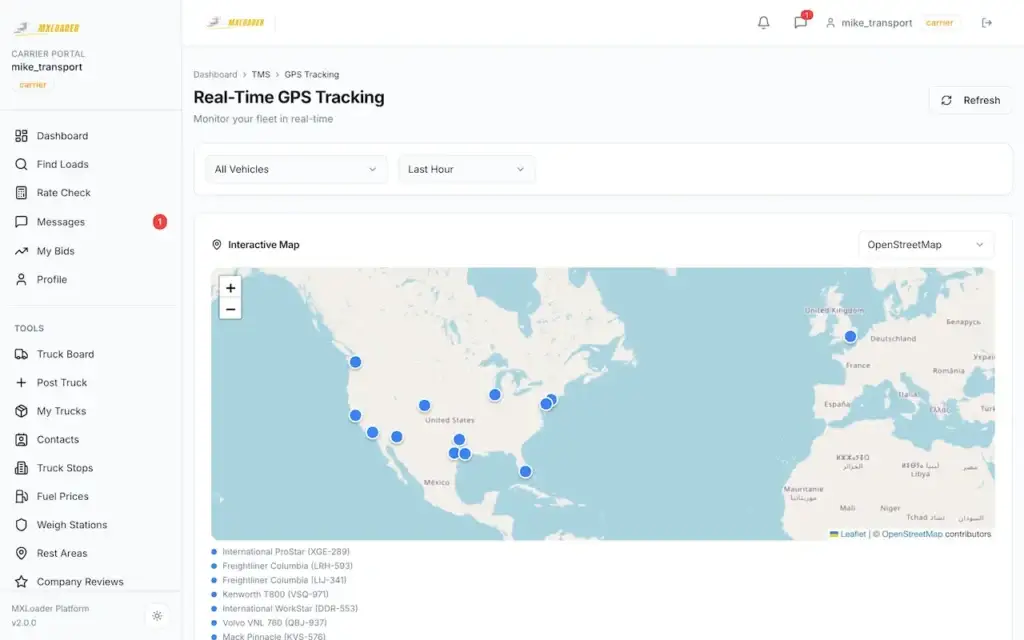
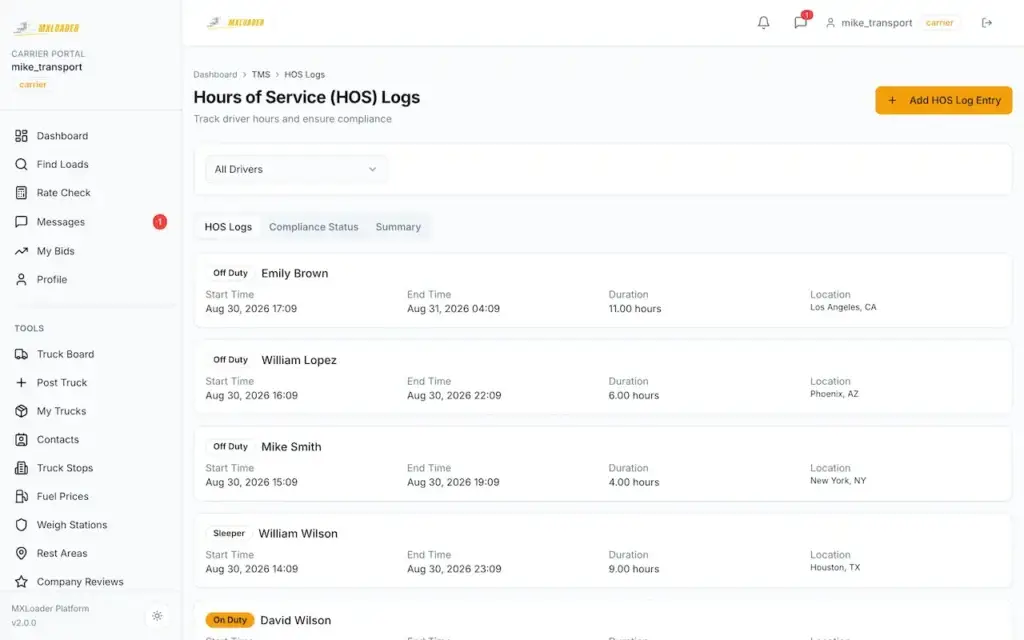
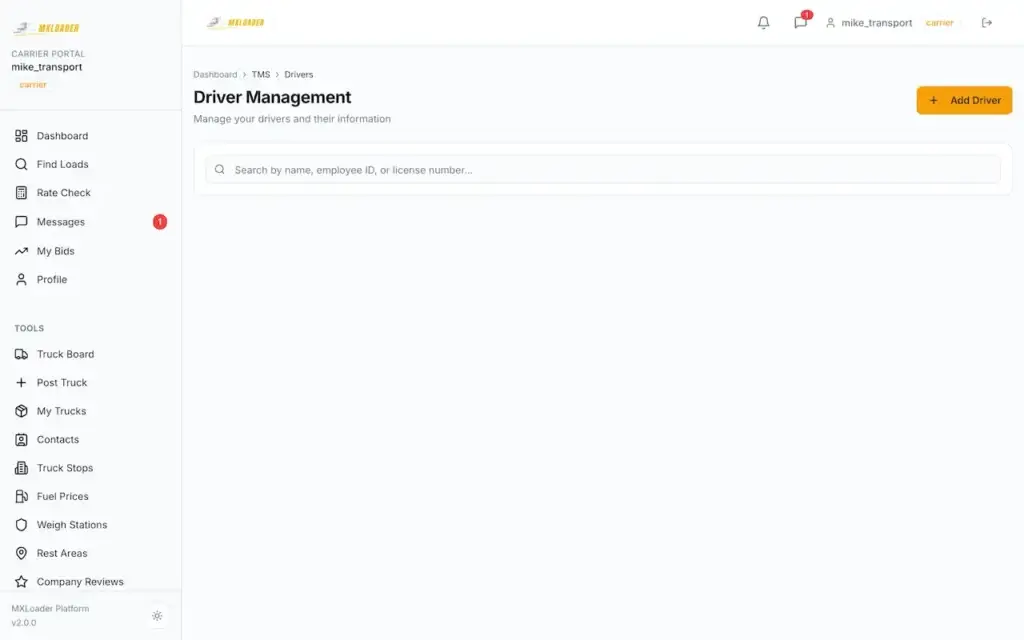
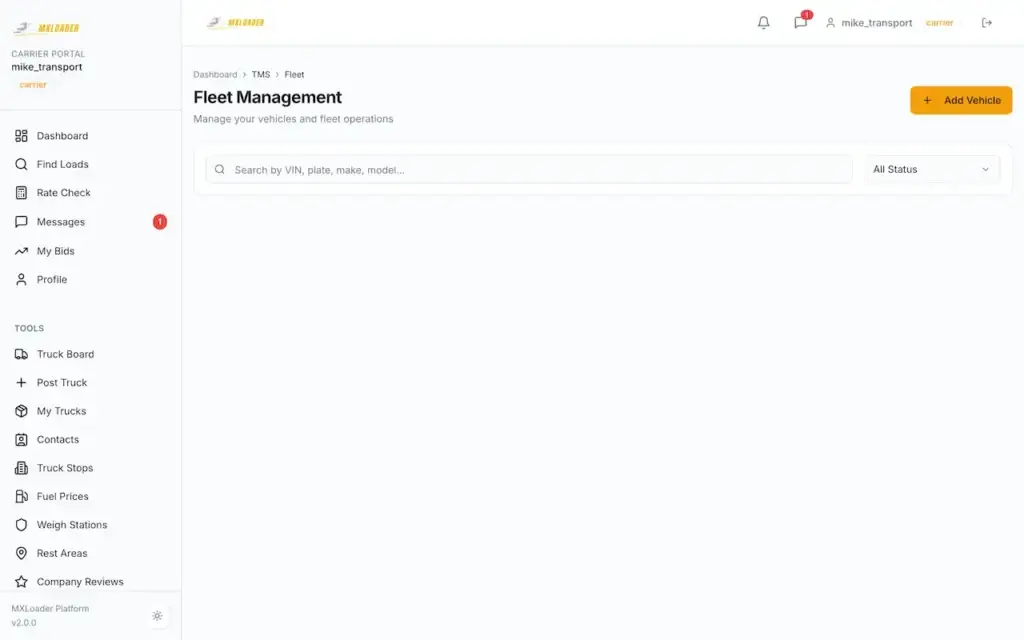
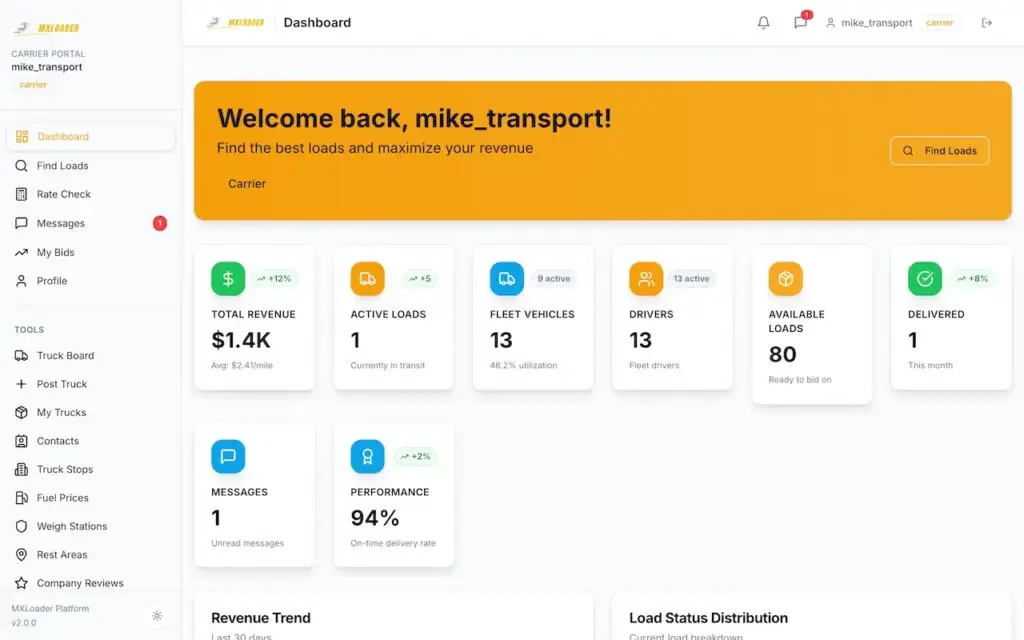
The carrier surface. Search and filter the board, submit bids and counter-offers, post available trucks, then dispatch the won load to a vehicle and driver with routes, GPS tracking, HOS logs, DOT records, fuel purchases, maintenance and geofence alerts.
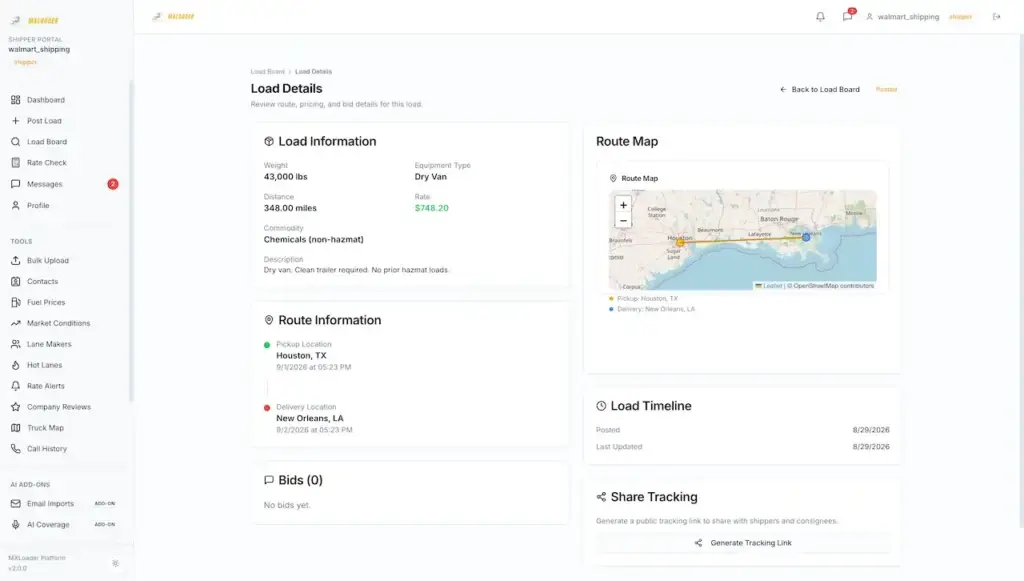
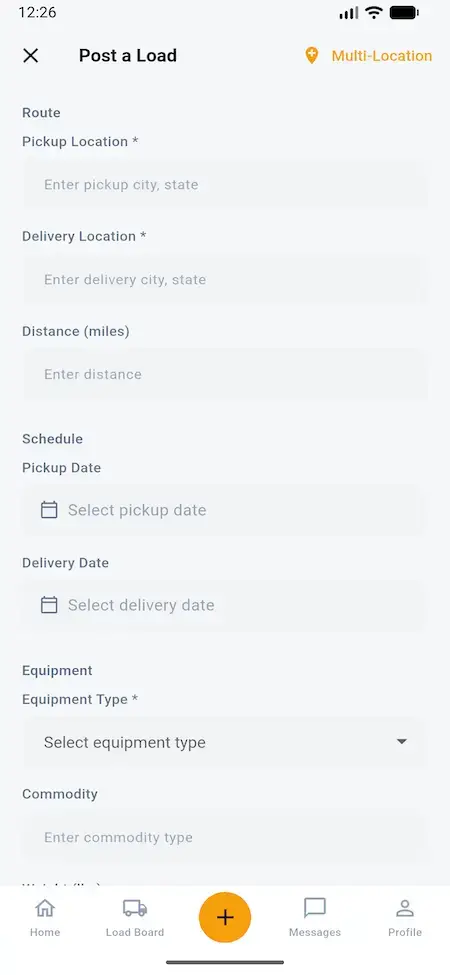
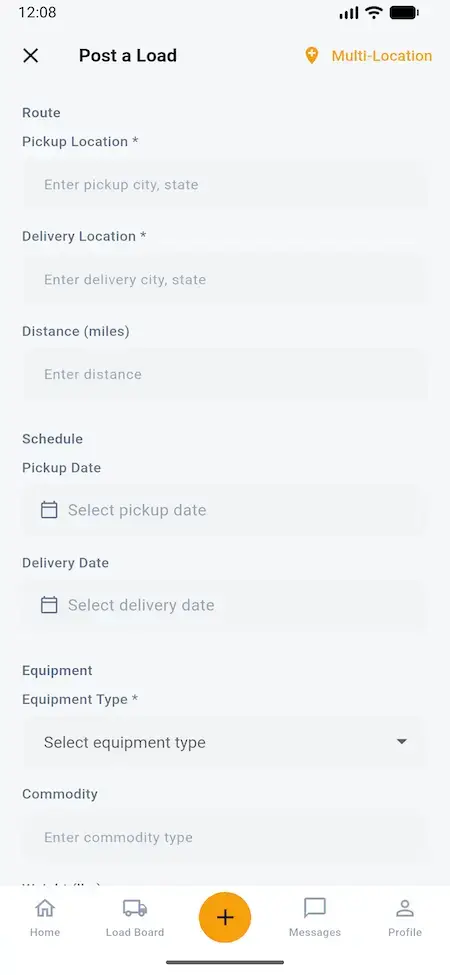
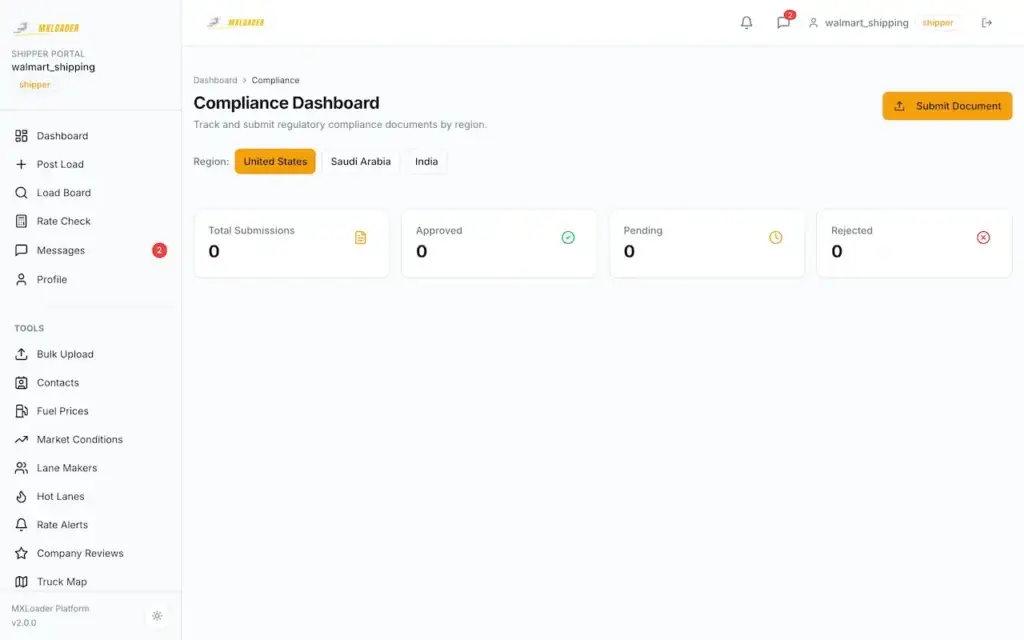
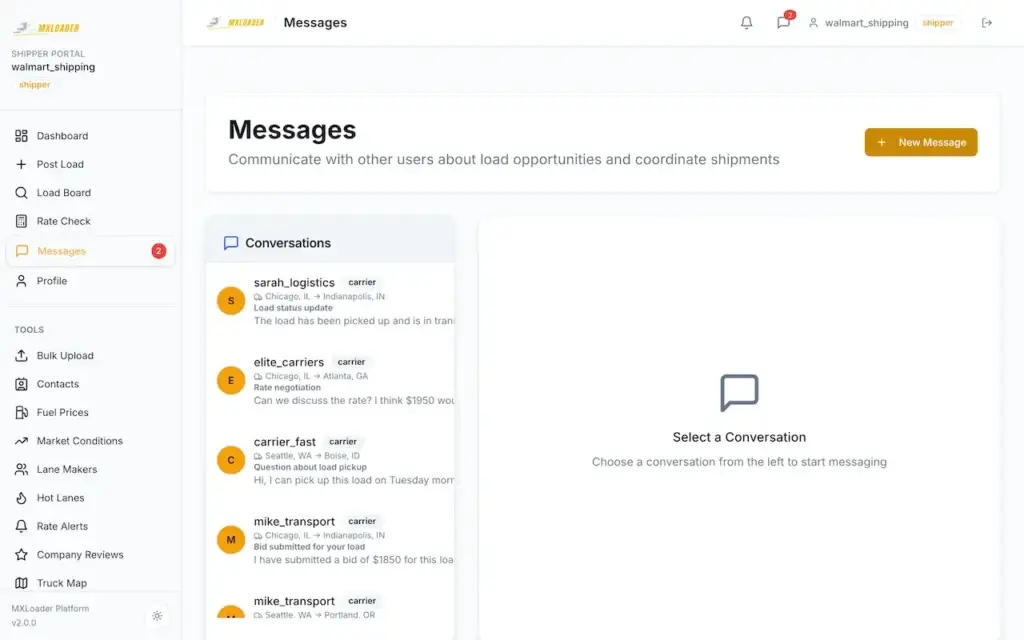
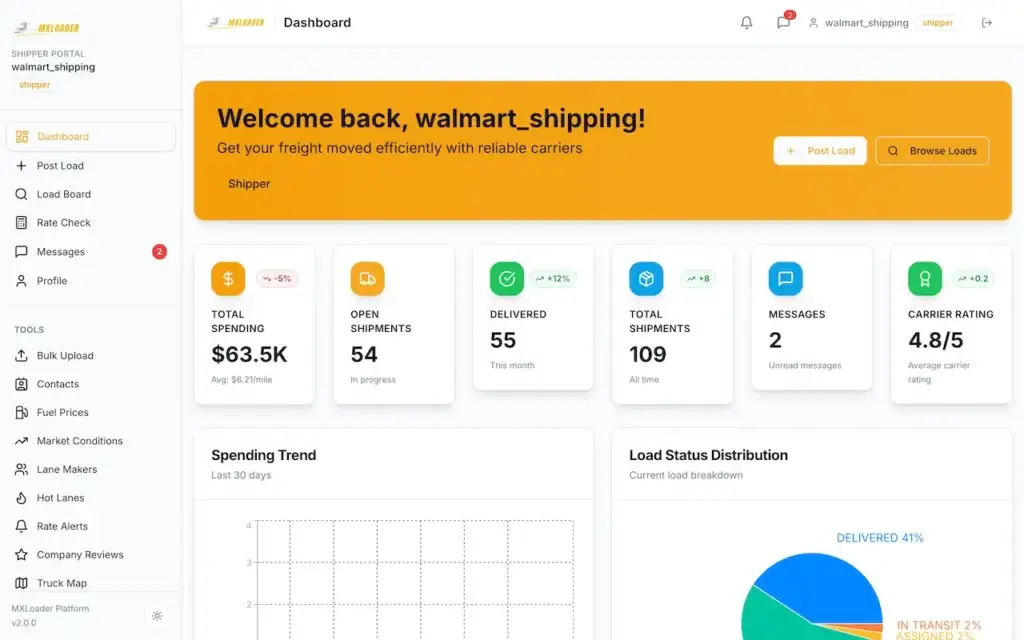
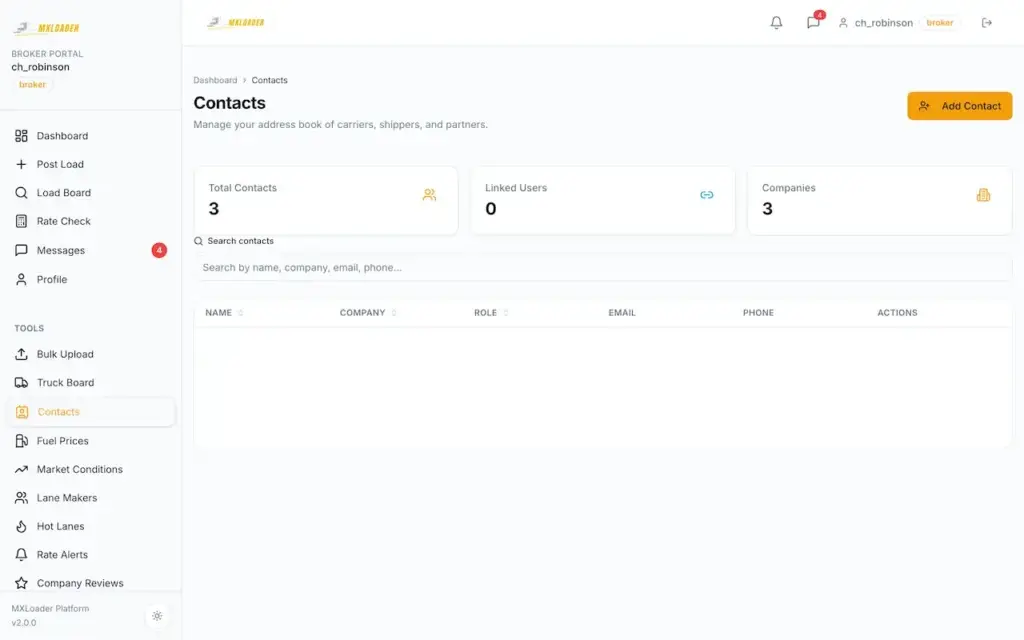
The demand side. Create postings with locations, dates, equipment, weight, commodity, distance and target rate, add multi-stop legs, compare incoming bids against carrier trust signals, then follow arrival, departure and delivery milestones and pull the BOL, rate confirmation and POD.
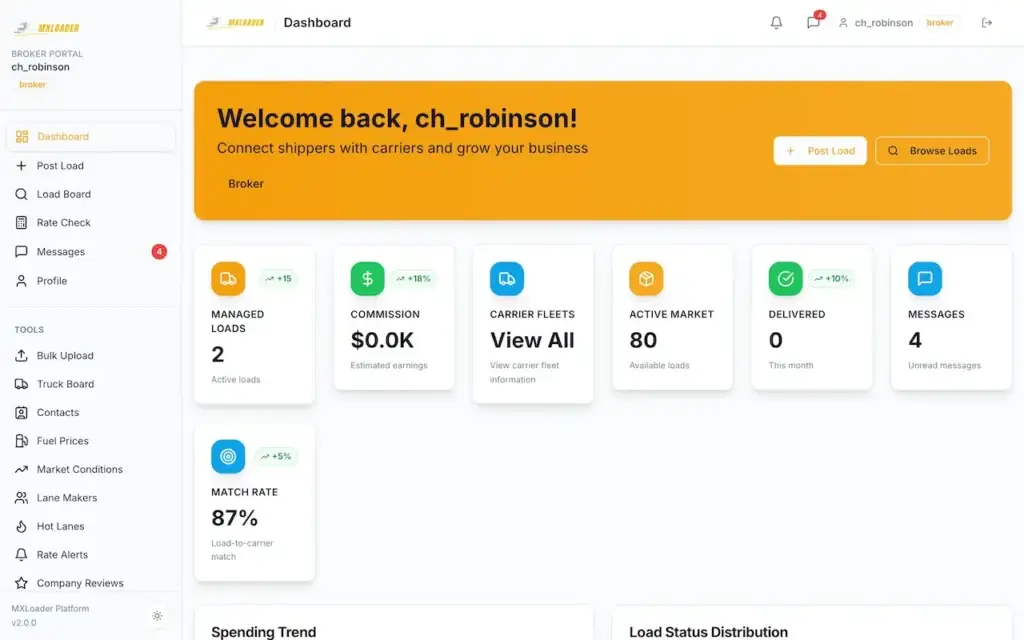
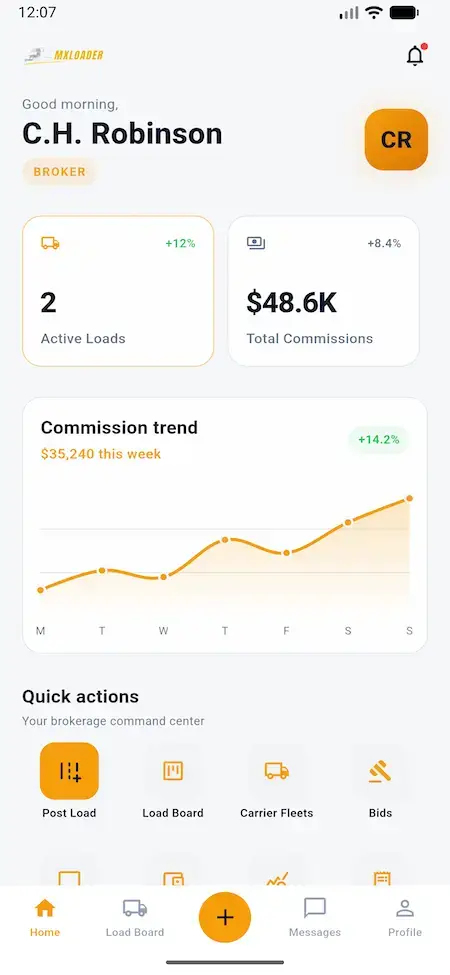
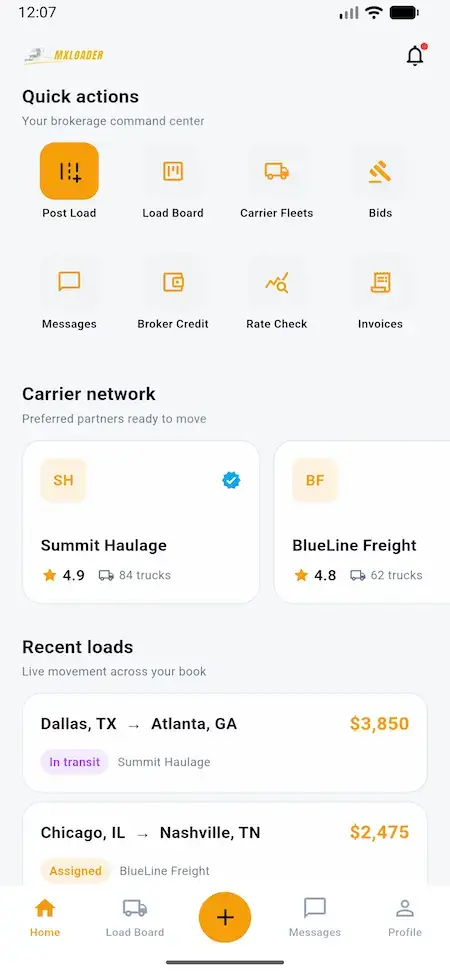
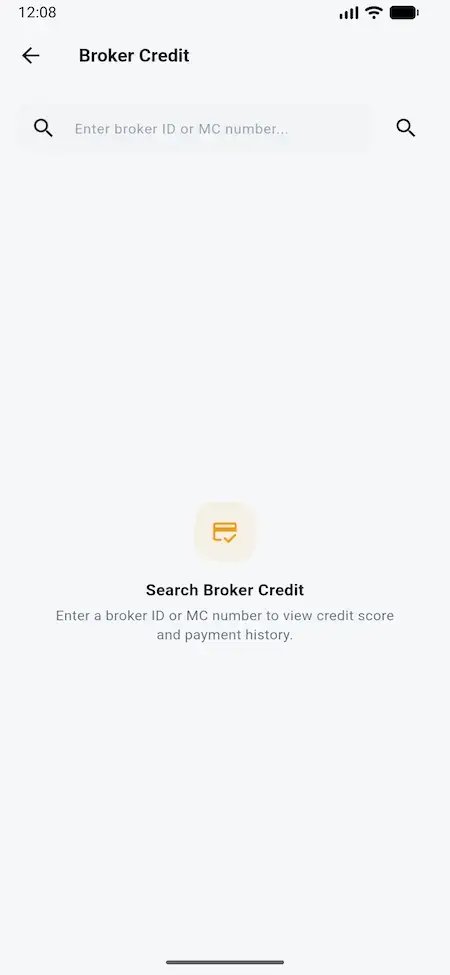
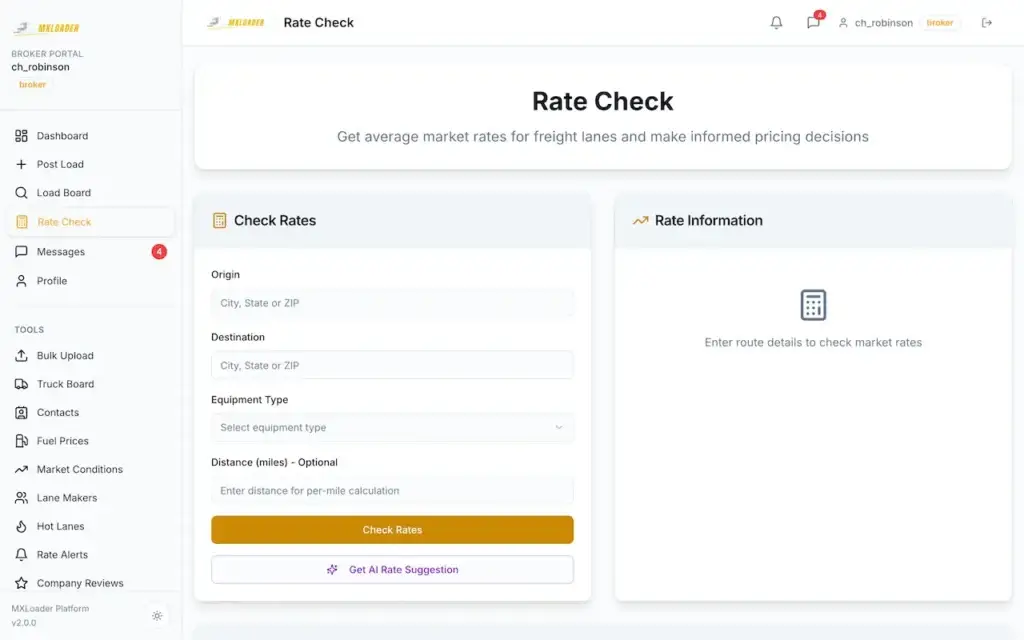
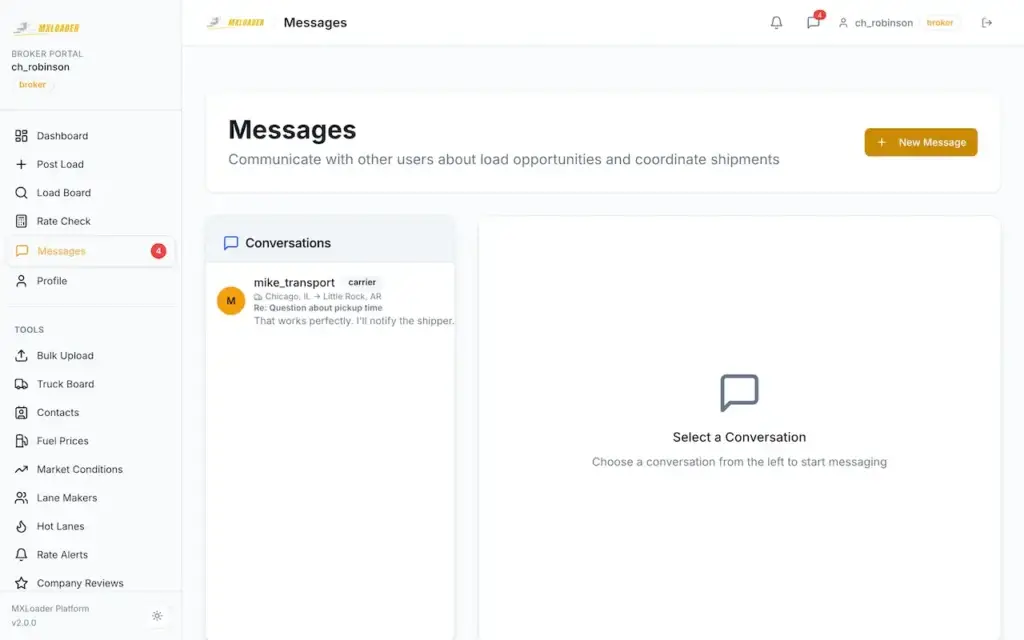
The margin side. Work uncovered and at-risk loads, search by lane, date, equipment and distance, check hot lanes and rate history, review carrier verification, fleet, ratings and credit, then negotiate through counter-offers and hold the conversation record against the load.
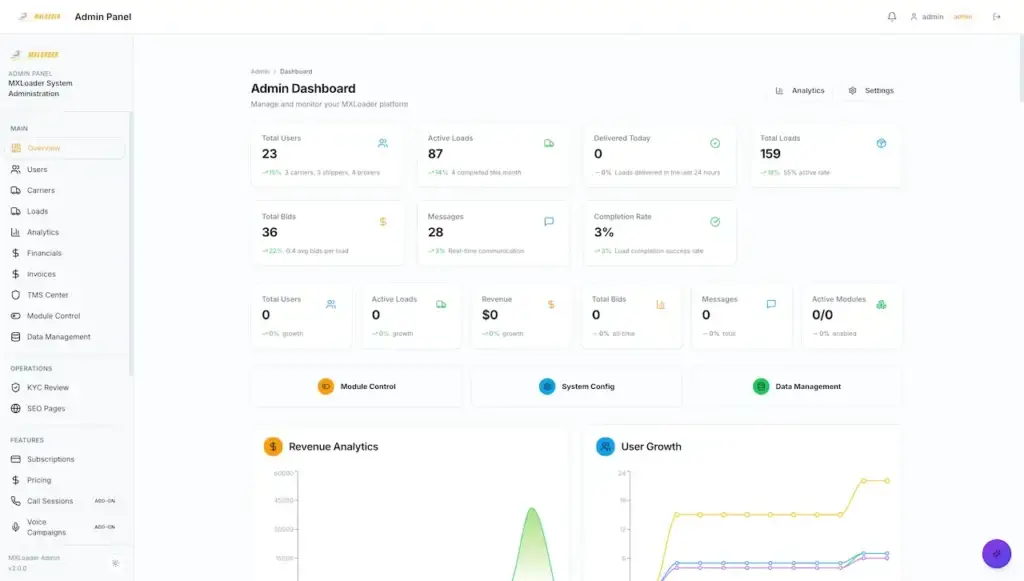
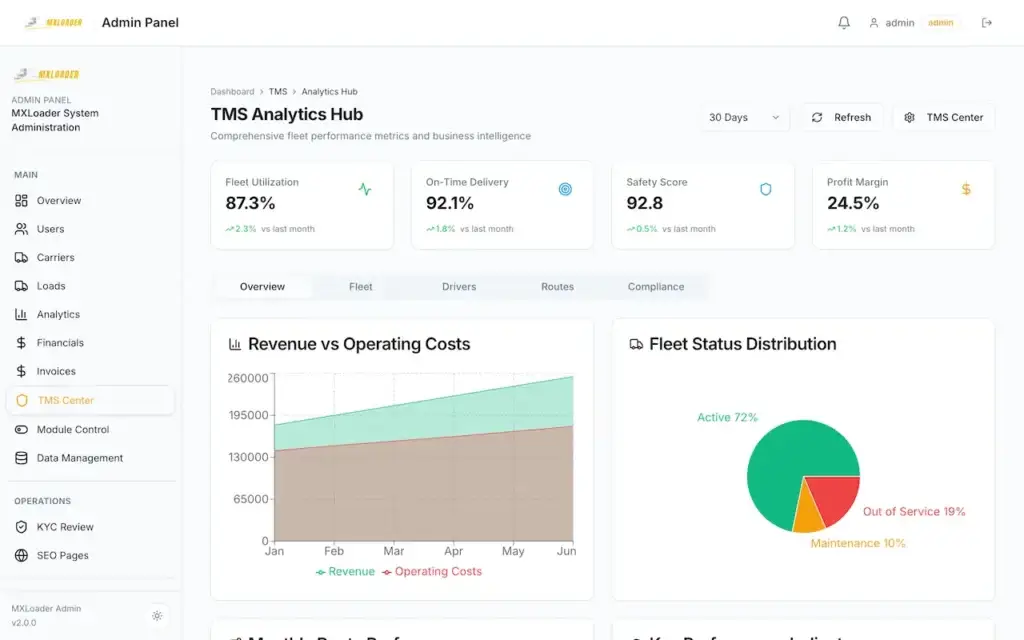
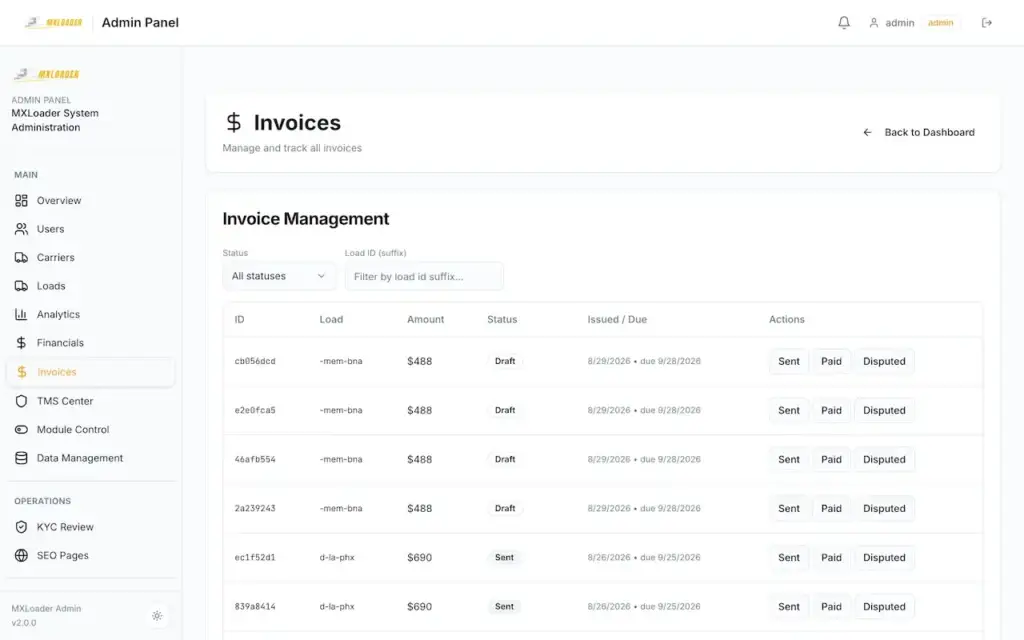
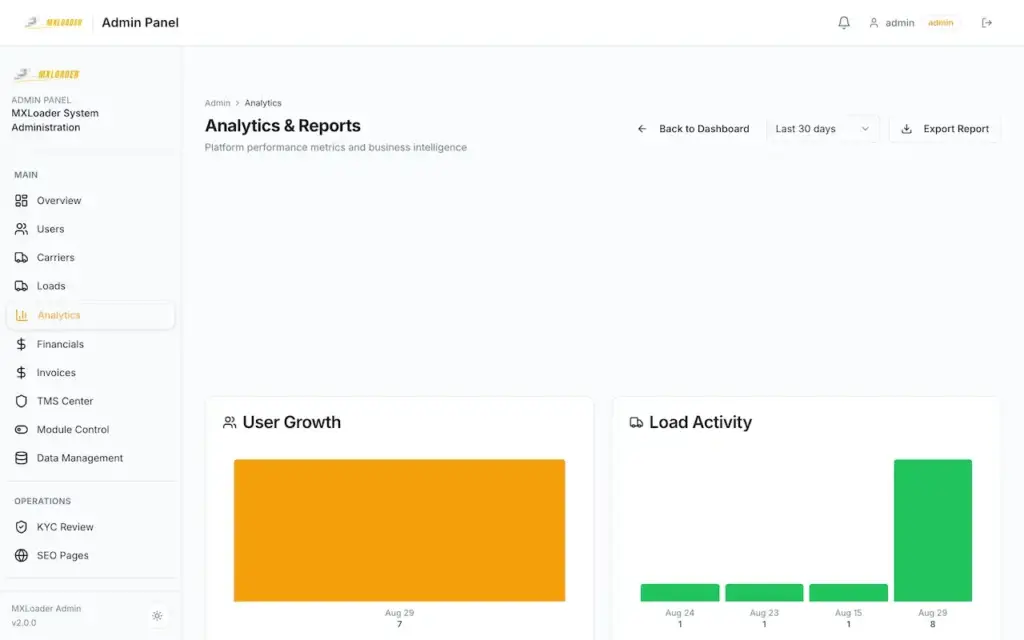
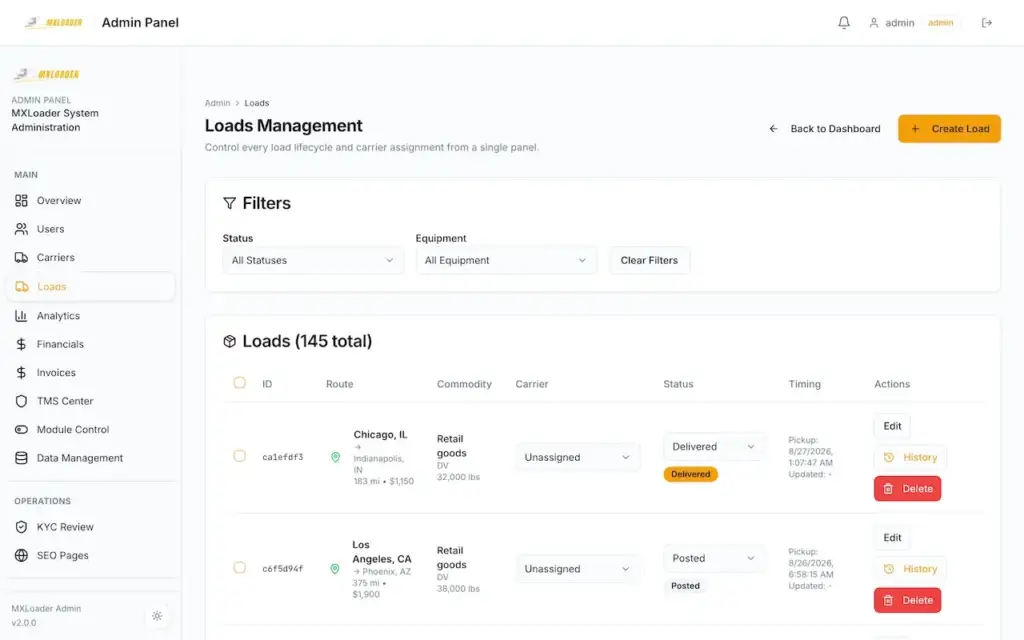
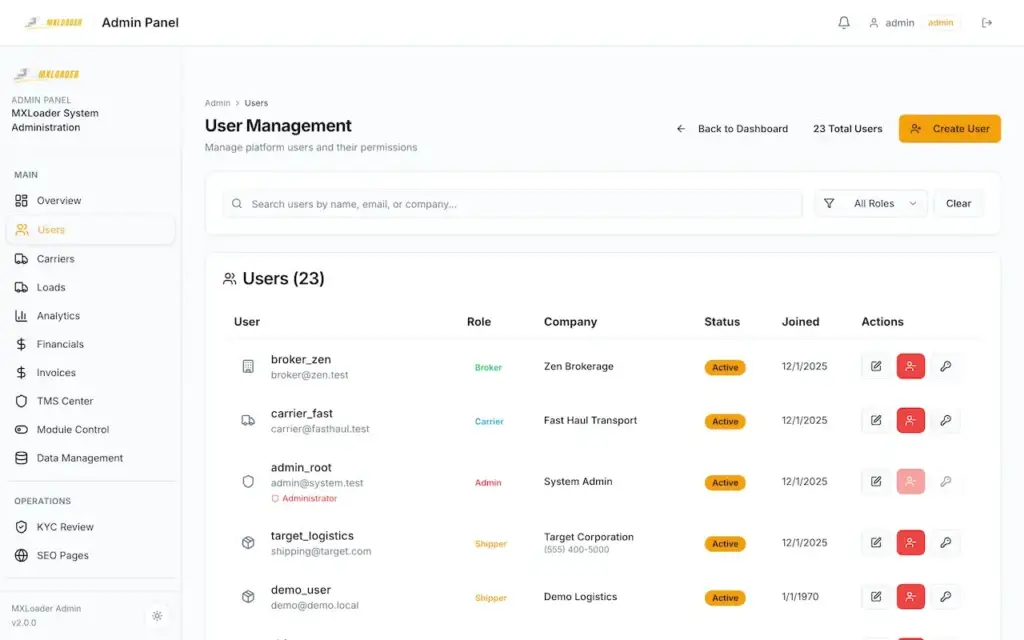
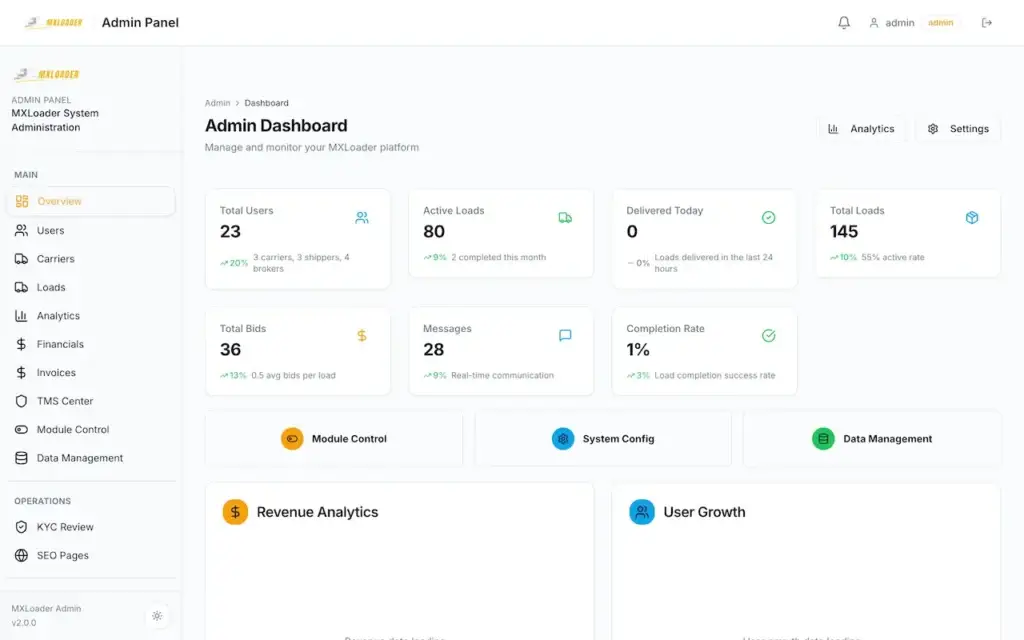
Operator governance. User lifecycle and role management, load intervention, KYC review queues, compliance records, financial overview and invoice ageing, platform analytics, module toggles, pricing plans, SEO surfaces and the audit and activity logs behind every admin action.
DAT Load Board Clone Video Demo: Board, Negotiation, Dispatch & Admin
A walkthrough of the platform as an operator sees it, rather than a feature reel. It opens on the load board with lane, equipment and date filters applied, posts a multi-stop load from the shipper side, and follows the bid arriving on the carrier side. A counter-offer runs a round and is accepted, and the load moves from posted to assigned. Dispatch assigns a vehicle and a driver, a route is created, and GPS positions are followed on the map with a geofence alert firing on arrival. A public tracking link is generated and opened as an outside party would see it. Proof of delivery is uploaded, the document passes MIME and magic-byte validation, and an invoice is raised against the load. The same activity is then opened in the admin console: the KYC review queue, compliance records, the financial overview with invoice ageing, and the audit log showing who changed what. It closes on module toggles and pricing plans. If a specific flow matters more than the tour, ask and we will open it live with data in it.
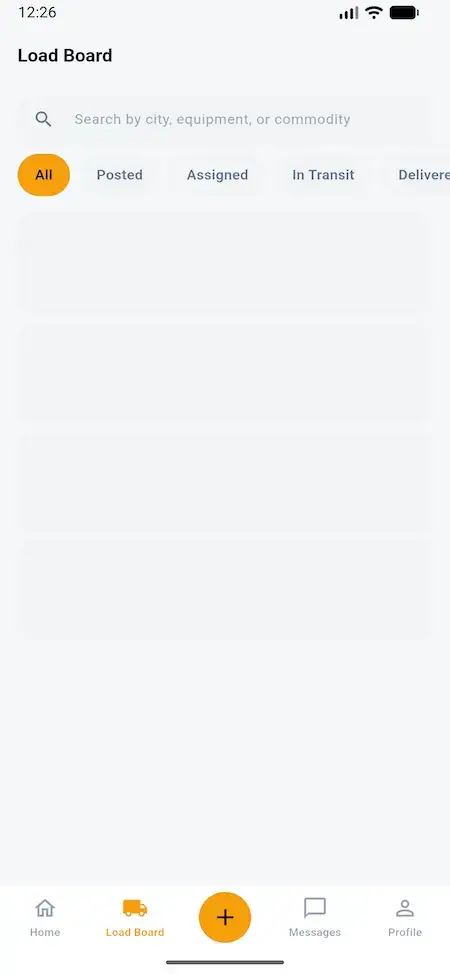
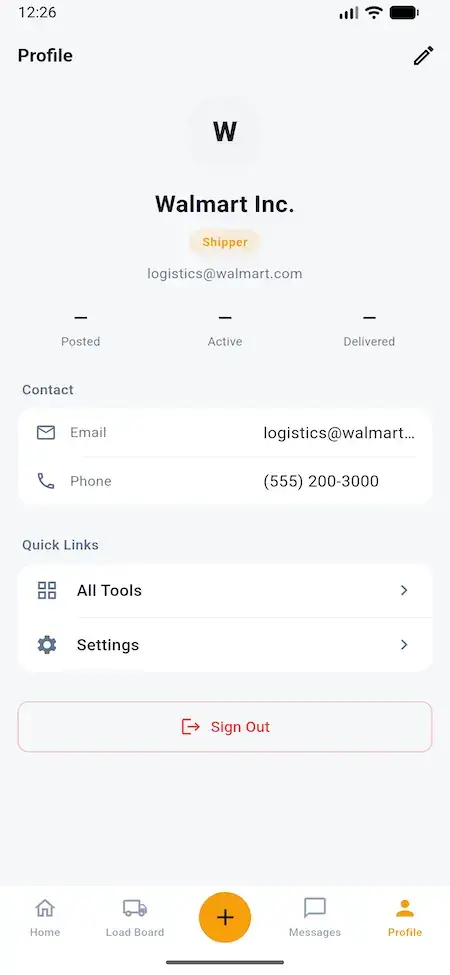
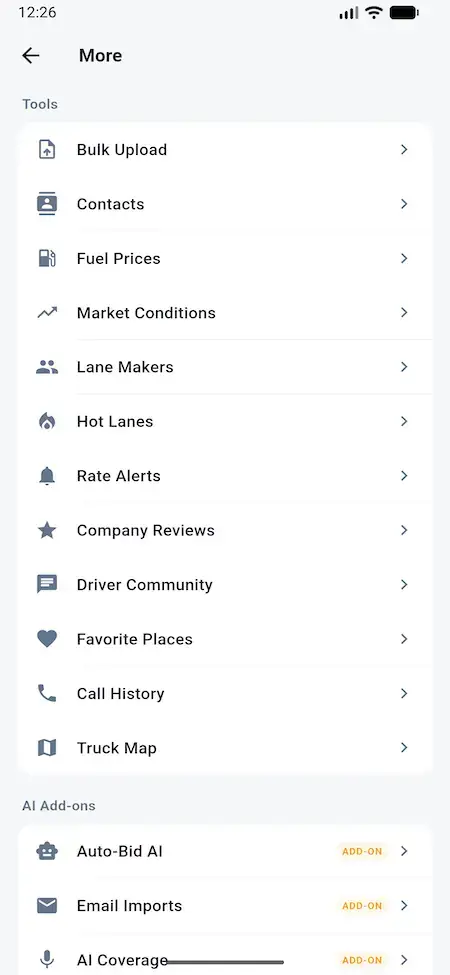
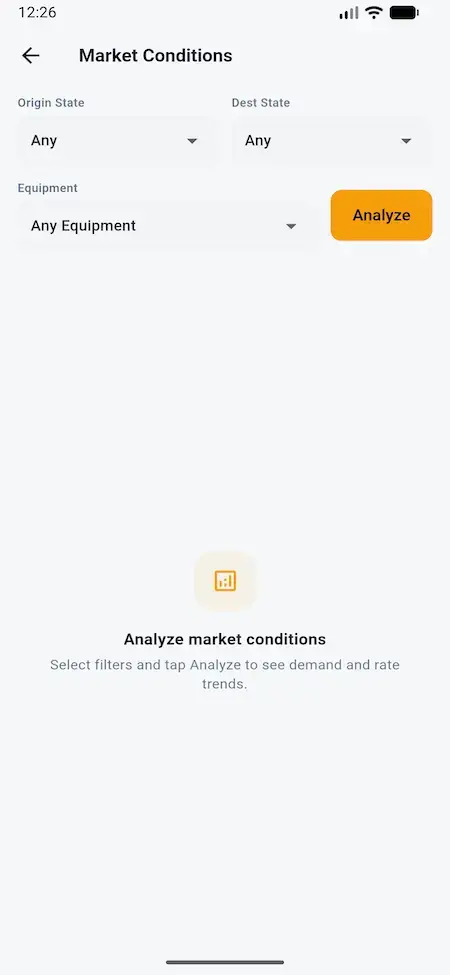
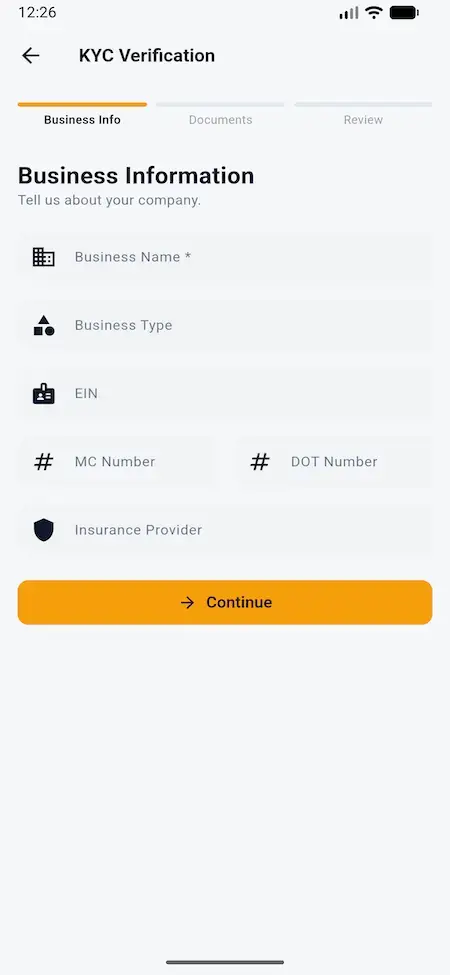
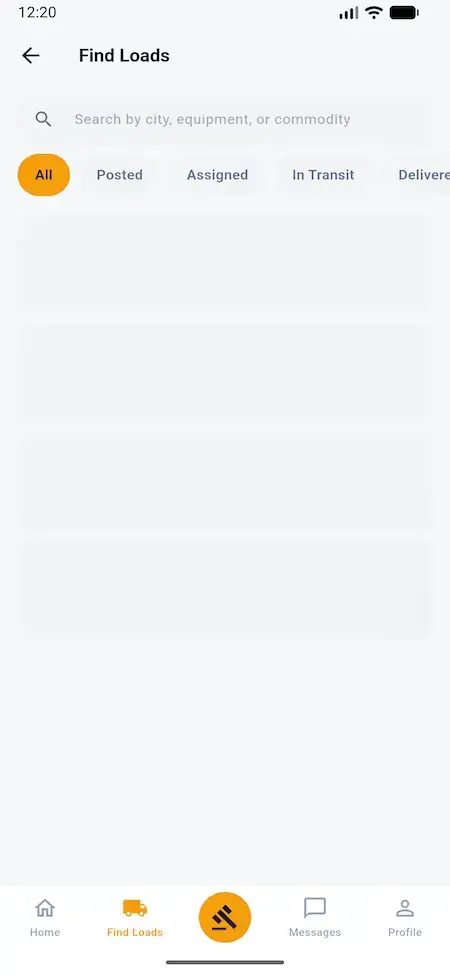
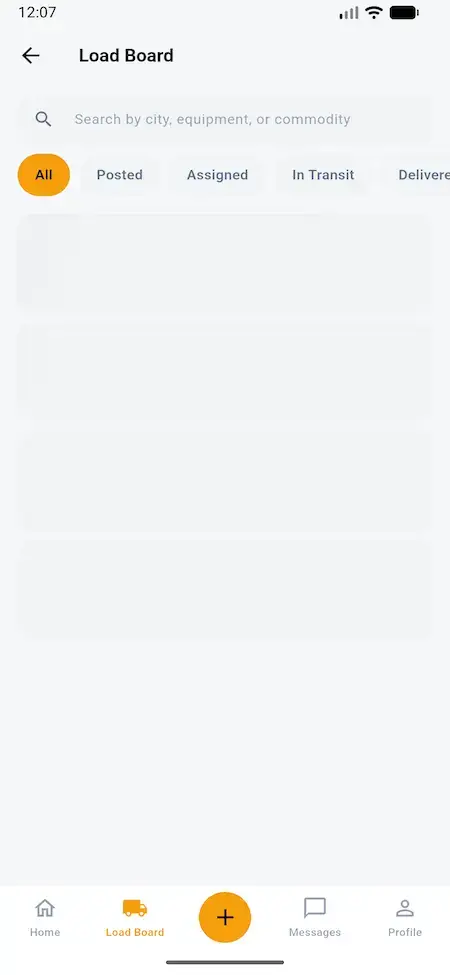
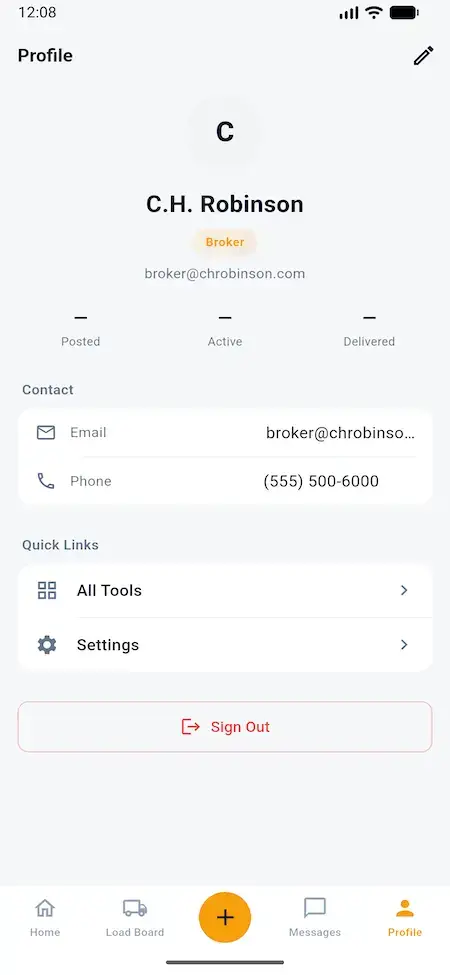
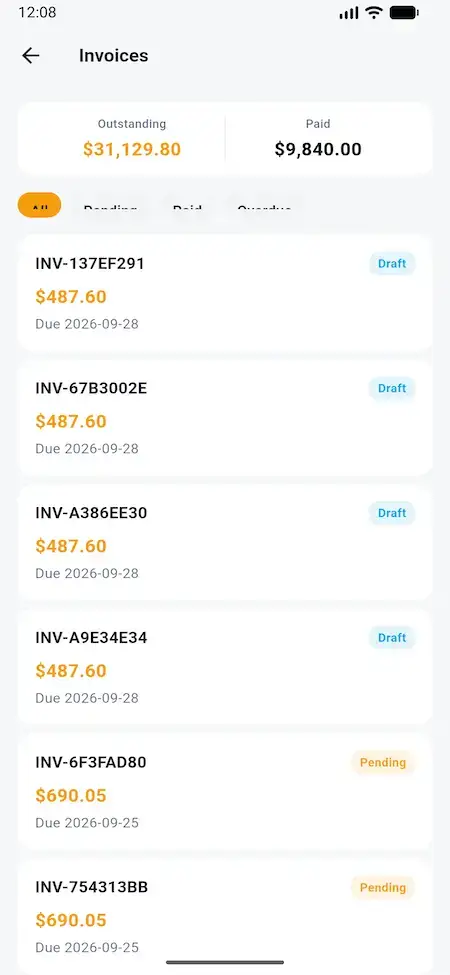
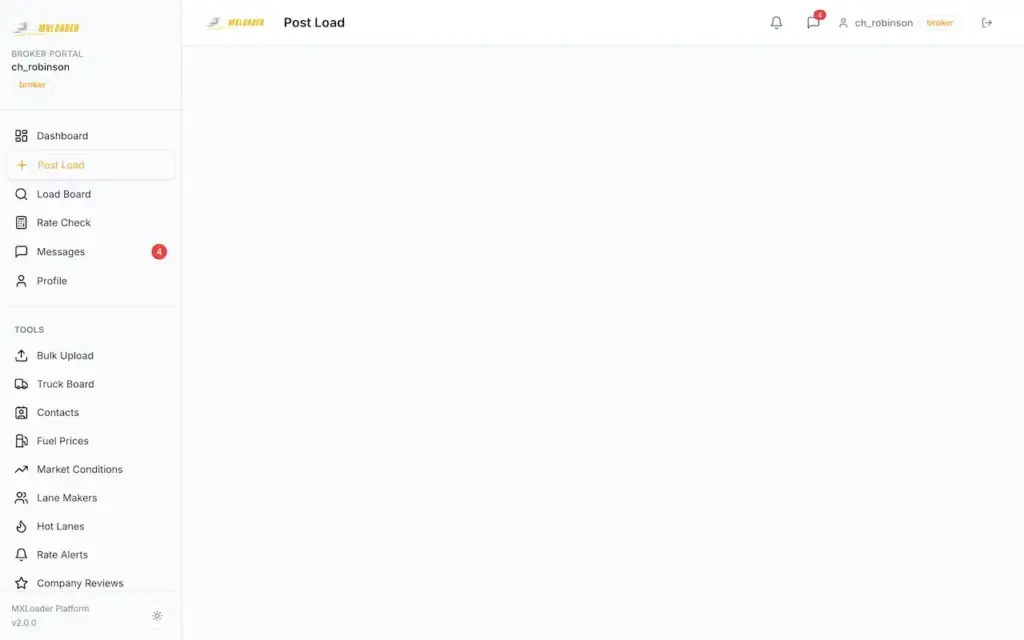
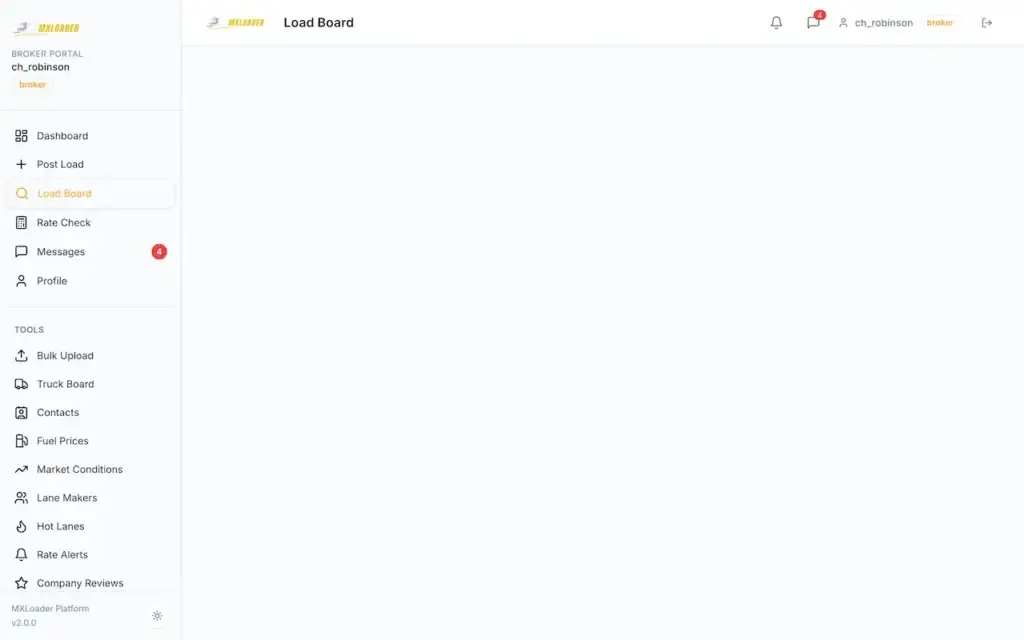
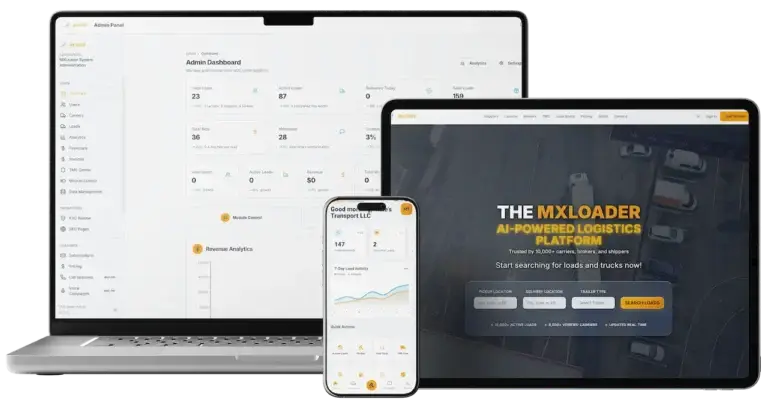
The interface across the surfaces that matter: board search and load detail with multi-stop legs, the bid and counter-offer thread, truck posting, dispatch with vehicle and driver assignment, the live GPS map with geofences, HOS and DOT compliance records, fuel and maintenance logs, the market intelligence views with rate history and hot lanes, carrier verification and credit, document upload and secure download, invoices and subscription plans, and the operator console with its KYC, compliance, analytics and audit queues.
9 screens · scroll →
9 screens · scroll →
9 screens · scroll →
7 screens · scroll →
7 screens · scroll →
7 screens · scroll →
6 screens · scroll →
Follow a load from posting through bid, counter-offer, assignment, dispatch, transit, proof of delivery and invoice. Web and mobile run the same flows against the same API, so a driver milestone checked in on the phone shows in the dispatcher browser without a second integration. Want a guided walkthrough of a specific flow? Book a call and we will open the surface you care about with live data in it.
DAT Load Board Clone Deployment References - What the Platform Actually Does
Miracuves has shipped marketplace, logistics and on-demand platforms, and those engagements are published in the portfolio with their own figures. There is no DAT-class freight platform among them yet, so rather than dress this build in borrowed proof, the statements below are properties of the platform, each demonstrable in the live demo above.
Freight MarketplaceBase build capability
A working load board with seeded demo loads, multi-stop pickup and delivery legs, bids, multi-round counter-offers and truck postings. Demonstrable in the carrier and shipper demos.
Carrier TMSBase build capability
A carrier TMS covering vehicles, drivers, dispatch, routes, GPS tracking, HOS logs, DOT records, fuel with IFTA, maintenance and geofencing. Demonstrable in the carrier demo.
Broker IntelligenceBase build capability
Broker-side carrier intelligence: verification status, fleet visibility, company reviews, broker credit and rate history at the point of tender. Demonstrable in the broker demo.
Operator ConsoleBase build capability
An operator console covering user lifecycle, KYC review, compliance records, financial overview, analytics, module toggles and audit logging. Demonstrable in the admin demo.
DAT Load Board Clone Modelled Reference - Freight Marketplace and Carrier TMS Deployment
A modelled reference deployment showing how the Miracuves DAT Load Board Clone is configured for a mid-market brokerage. This is not a client engagement and the figures are properties of the platform rather than results reported by a customer.
DAT Load Board CloneModelled Reference Deployment
Freight Sector Load Board and Carrier TMS Platform
How this platform is configured for a brokerage that is covering freight on the phone, tracking it in spreadsheets, and invoicing from a third system.
Illustrative scenarioNot a client engagement
Freight and logisticsMarket modelled
Load Board, Carrier TMS and Broker IntelligenceIndustry
74Database tables in the base build
126Mobile screens shipped
6 daysDeployment window
01Challenges
Coverage negotiated by phone, with no record of what was offered or refused
Load status living in a spreadsheet that is already wrong by the time it is read
Carrier vetting done from memory, with no verification, credit or performance history
02Goal
One system holding the board, the negotiation, the dispatch and the invoice
Bids and counter-offers recorded against the load instead of lost in a call log
GPS tracking and public tracking links that stop the “where is my freight” calls
03🛠 Solution by Miracuves
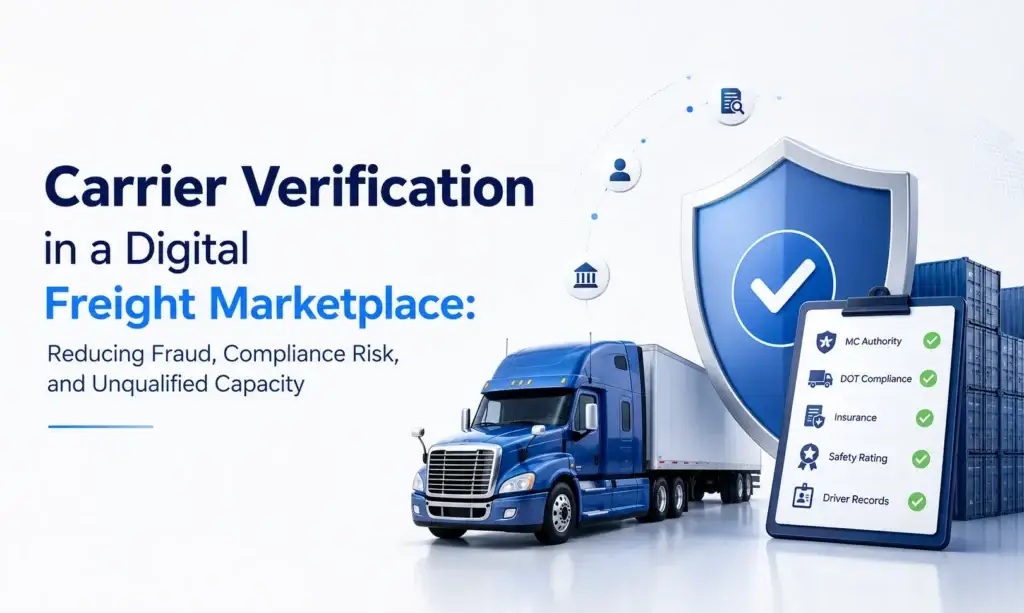
Carrier KYC, DOT compliance and document validation gating who can haul
Subscription tiers and invoice lifecycle running on the same user model
A Flutter app across 126 screens so dispatch and drivers work off the same data
Fleet, driver, HOS, DOT, fuel, maintenance and geofence records in one TMS
Adapter interfaces for payments, calls, email, compliance and market rates
This is a modelled reference deployment, not a client engagement. Every capability listed above ships in the base build and is demonstrable in the live demo. The figures are properties of the platform, not results reported by a customer.Named client deployments are published separately · See the Miracuves portfolio for real engagements with their own reported figures.
Model this against your own freight operationWe will map the board, the TMS, carrier intelligence and the admin plane against how your freight actually moves today.
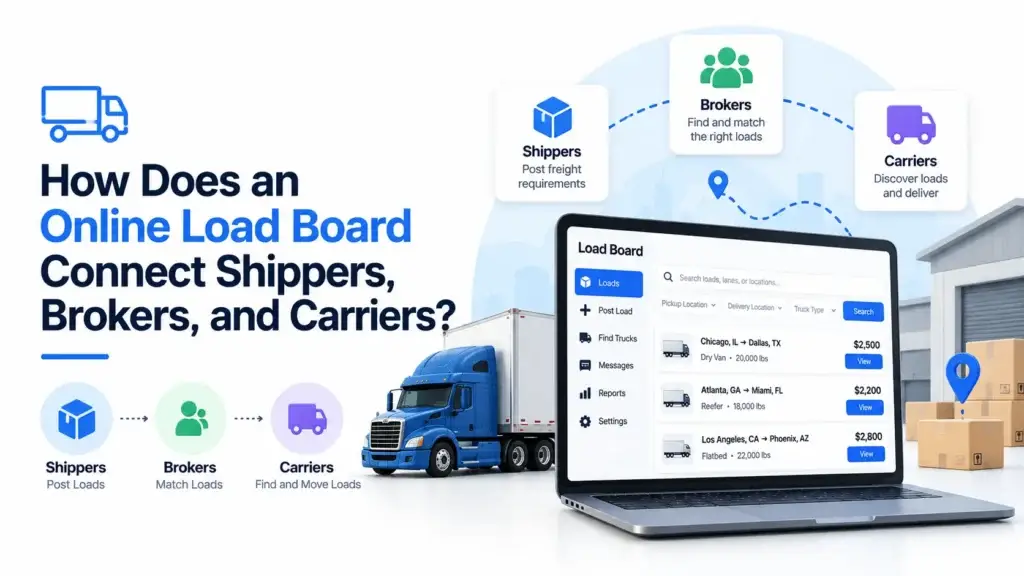
A DAT Load Board Clone is a ready-made freight marketplace with a carrier TMS underneath it. Shippers and brokers post freight, carriers find and bid on it, and the load that gets won is then dispatched, tracked, proven and invoiced inside the same system. The platform handles the parts of this category that are genuinely hard: a load record that survives multi-stop lanes, a negotiation trail that holds up after the fact, and compliance gating that decides who is allowed to haul.
Not a Listings Board
The value sits in what happens after the match: dispatch, GPS, compliance, documents and invoicing on the same load record. A listings script gives you search and leaves execution as your problem.
Not a Rental Platform
You receive the full source, the Drizzle schema and the migration path. No per-seat fee, no vendor roadmap dependency, and standard PostgreSQL underneath.
Built for Three Surfaces
React web, Flutter mobile and the admin console are all first-class and run against the same Express API, rather than a web app with a wrapper shipped as a mobile strategy.
Built for Web, Mobile & API
What Is a DAT Load Board Clone Script?
The difficulty here is never the search filter. It is a status machine that keeps posted, assigned, in transit and delivered honest across four roles at once, a document pipeline that validates what it accepts before anyone relies on a POD, and an ownership model that stops one carrier reading another carrier’s freight. Those are the parts already built.
01Load posting with multi-stop pickup and delivery legs
02Bids, multi-round counter-offers and auto-bid rules
03Carrier TMS with fleet, drivers, HOS, DOT and fuel
04GPS tracking, geofencing and public tracking links
05KYC, regional compliance and secure document handling
The build ships 74 PostgreSQL tables through Drizzle ORM, 280+ REST endpoints across web, admin, mobile and adapter surfaces, a React 18 web app, a 126-screen Flutter application and an operator control plane with audit logging on data and administrative changes.
Everything Included
DAT Load Board Clone Features - Marketplace, TMS, Intelligence, Compliance & AI
Every capability below is built and demonstrable in the live demo. Where a feature needs a third-party account or a deployment decision before it works in production, that is stated against the feature rather than implied away.
01
Feature 01 / 14
Load Posting & Multi-Stop
Equipment, weight, commodity, distance and target rate, with PickupLocation and DeliveryLocation child tables carrying sequence, dates, times, contacts and instructions.
Post loads with equipment, weight, commodity, distance and target rate
Multi-stop pickup and delivery legs with sequence, dates and contacts
Bulk load upload from file for high-volume desks
Status machine across posted, assigned, in transit, delivered and cancelled
02
Feature 02 / 14
Board Search & Filters
Lane, date, equipment and distance filters over the live board, with rate history and hot lane context available at the point of decision.
Search and filter the board by lane, date, equipment and distance
03
Feature 03 / 14
Bids & Counter-Offers
Standard bids plus multi-round counter-offers, bid statistics, bookmarking and lost reasons, all recorded against the load rather than a call log.
Submit and manage bids with bid statistics and bookmarking
Multi-round counter-offers with lost reasons recorded
04
Feature 04 / 14
Auto-Bid Rules
Rules evaluated on lane, equipment, bid ceiling, margin and acceptance threshold, with an automation log preserving the action and its reasoning for review. Configuration-required: it needs your own AI provider key.
Auto-bid rules on lane, equipment, ceiling, margin and acceptance threshold
05
Feature 05 / 14
Truck Postings
Carriers post available capacity by equipment type and location, so a broker with freight can find a truck as easily as a carrier finds a load.
Truck and equipment posting for available capacity
06
Feature 06 / 14
Dispatch & Routes
The won load assigns to a specific vehicle and driver through a route record, and the driver receives the task on the mobile app.
Assign a carrier and transition the load status
Dispatch routes to a specific vehicle and driver
Milestone check-in from the mobile app
07
Feature 07 / 14
GPS & Geofencing
Live position tracking against the assigned vehicle with configurable geofences firing arrival and departure alerts, plus public tracking links for outside parties.
GPS tracking with live maps against the gps_tracking store
Geofence configuration with arrival and departure alerts
Public tracking links shareable outside the platform
Speed violation tracking against the assigned vehicle
08
Feature 08 / 14
Carrier TMS
Vehicles, drivers, HOS logs, DOT compliance records, fuel purchases with IFTA reporting, maintenance scheduling and speed violation tracking in one operational backbone.
Vehicle fleet records with status and assignment
Driver management with performance history
HOS log monitoring and DOT compliance records
Expiring insurance, licence, medical and inspection tracking
Fuel purchase tracking with IFTA reporting
Maintenance scheduling and service history
Cost visibility per vehicle and per route
Trip planning with HOS and fuel optimisers
09
Feature 09 / 14
Market Intelligence
Rate history and lane benchmarks, configurable rate alerts, hot lanes, contract rates and trihaul evaluation for multi-leg positioning.
Rate history and lane benchmarks
Rate alerts on configured lanes
Hot lanes and market condition context
Trihaul and multi-leg route optimization
10
Feature 10 / 14
Carrier Intelligence
Verification status, fleet visibility, company reviews and ratings, broker credit scores, and preferred and blocked company lists for counterparty risk.
Carrier verification status and gating
Company reviews and ratings
Broker credit scores for counterparty risk
Preferred and blocked company lists
11
Feature 11 / 14
Compliance & KYC
KYC submission and review, verification gating, regional adapters for US DOT, Saudi Bayan and India eGST, and cold chain temperature logging.
KYC submission with document upload and admin review
Regional compliance adapters for US DOT, Saudi Bayan and India eGST
Cold chain temperature logging against the load
Verification status gating who can transact
12
Feature 12 / 14
Documents & Invoicing
Validated upload of BOL, rate confirmation and POD with role-scoped download, feeding an invoice lifecycle tracked through to paid.
Document upload for BOL, rate confirmation, POD and compliance
Extension, MIME and magic-byte validation before acceptance
UUID stored filenames with safe path resolution on download
Role-scoped download with ownership checks and virus-scan status fields
13
Feature 13 / 14
Access & Ownership
Session-cookie auth for web and admin via Passport and bcrypt
JWT bearer auth for the Flutter app and external API consumers
Route-level role middleware for admin, carrier and broker
Object-level ownership checks on loads, bids, messages and documents
14
Feature 14 / 14
AI Assistance
Configuration-required: these run on your own AI provider key.
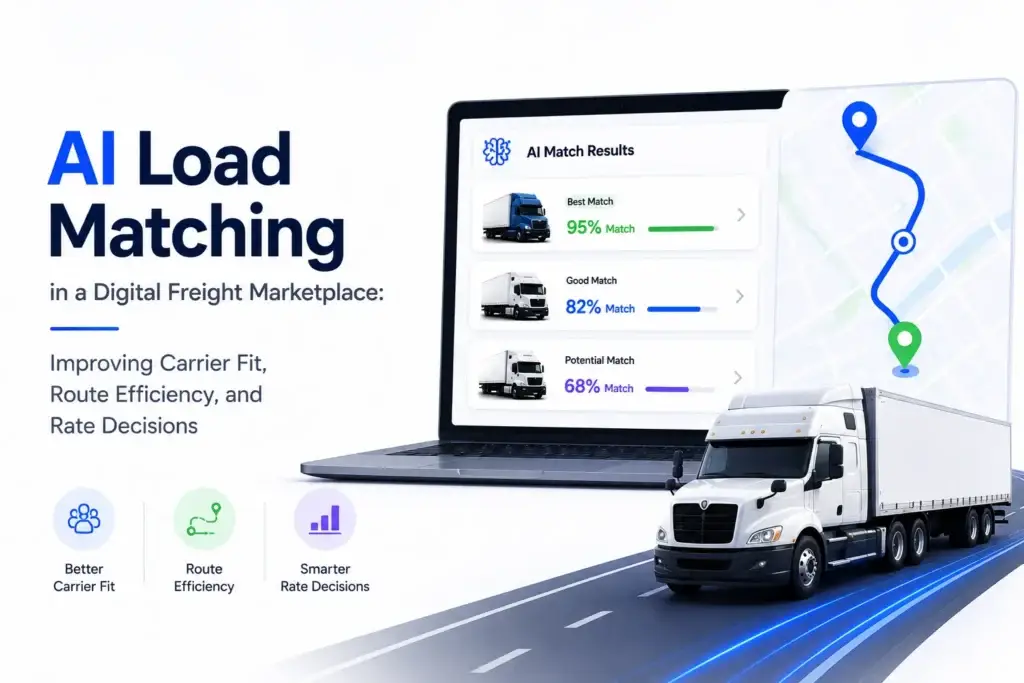
AI rate suggestions from lane, equipment, weight and distance
Voice load posting through speech transcription
Inbound email import converting freight messages into load drafts
AI-assisted message drafting with the user still in control
Want to see it running first?
Open the demo with any of the four role logins above, or book a walkthrough and we will take you through a load posted, a counter-offer accepted, a dispatch created and the same activity in the operator console against your own commercial model.
The operator console is where the platform is governed rather than merely observed, and it is the surface most freight builds defer and then never finish.
User lifecycle across shipper, broker, carrier and admin roles
Role changes, suspension and restoration
Load intervention including reassignment and cancellation
KYC review queue with approve and reject reasons
Compliance records across DOT, HOS and cold chain
Financial overview with revenue, average rate and invoice ageing
Platform analytics on user growth, load and bid activity
Module toggles, pricing plans and SEO surfaces
Admin Console Sections
01
User Lifecycle
Create, edit, suspend and restore accounts across all four roles, with role changes and bans written to the admin activity log.
02
Load Intervention
Inspect any load, correct a bad posting, reassign or cancel, and transition status when the parties cannot resolve a lane themselves.
03
KYC Review Queue
Work submitted identity and company documents, approve or reject with a reason, and gate transacting on verification status.
04
Compliance Records
Review DOT records, HOS exceptions, cold chain logs and regional submissions, and see which carriers are approaching an expiry.
05
Financial Overview
Revenue, average rate, delivered load counts and invoice ageing across paid and outstanding, with the underlying invoices reachable from the same view.
06
Platform Analytics
User growth, load activity, bid activity, message volume and revenue trends, drawn from the same tables the operational screens use.
07
Module Toggles
Turn capability areas on and off per deployment, which is what makes add-on pricing and white-label configuration possible without branching the codebase.
08
Pricing Plans
Create and edit tiers with feature lists and active status, so a commercial change is a console action rather than a release.
SEO Surfaces
Managed public pages and metadata for operators running the platform as a branded marketplace with organic acquisition.
Audit & Activity Logs
Two trails: audit_logs for data mutations with before and after values, admin_activity_log for administrative actions, both attributable to an actor and an IP.
Need deeper governance?
Immutable audit shipping to write-once storage, IP allowlisting on admin endpoints and SSO against an enterprise identity provider are scoped as pre-launch hardening rather than shipped defaults. Tell us the requirement and we will scope it.
What's Included - DAT Load Board Clone Source Code, Apps & Deployment
You receive a complete, deployable platform: the application source, the schema behind it, and the documentation a technical buyer will ask for. Everything transfers with full ownership, with no runtime licence, no per-seat fee and no dependency on our roadmap.
01
Web Application
A React 18 TypeScript build on Vite with wouter routing, TanStack Query for server state, shadcn/ui on Radix, Tailwind, Framer Motion and Recharts.
React 18 web application in TypeScript on Vite
wouter routing with TanStack Query for server state
74 PostgreSQL tables through Drizzle ORM with drizzle-zod co-validation and the migration metadata needed to move the schema forward safely.
74 PostgreSQL tables modelled through Drizzle ORM
drizzle-zod co-validation on inserts and updates
Migration metadata for safe forward movement
better-sqlite3 for local and lightweight deployments
04
Mobile Application
A 126-screen Flutter build for iOS and Android using Riverpod, Dio and go_router, running against the same API and role model as the web client.
126-screen Flutter application for iOS and Android
Riverpod state, Dio networking and go_router navigation
JWT bearer auth against the same REST API
Role parity with the web client across every module
05
Operator Console
User lifecycle, load intervention, KYC review, compliance records, financial overview, analytics, module toggles, pricing plans and both audit trails.
Operator control plane with user lifecycle and KYC
Compliance, financial overview and platform analytics
Module toggles, pricing plans and SEO surfaces
Two audit trails covering data and administrative actions
StripeTwilioWhisperIMAPNodemailerMarket rates
06
Adapter Layer
Payments, calls, voice, email, market rates and regional compliance behind swappable interfaces, each with a mock implementation for offline work.
Adapter layer with real and mock implementations
Stripe payments, Twilio calls and SMS, Whisper voice
IMAP inbound and Nodemailer outbound email
Market rate and regional compliance providers by env var
$ pm2 start your-artifact
Vite + esbuildcPanel / aaPanel / PM2
07
Deployment Stack
Vite and esbuild producing a single artifact packaged for cPanel, aaPanel or PM2, deployed to your infrastructure with environment configuration walked through.
Vite client build and esbuild server bundle
Single artifact packaged for cPanel, aaPanel or PM2
Environment-variable configuration with no secrets in source
PRD, ERD, schema guide, feature catalogue, API collection, technical dossier, developer and security handbook, and the VAPT compliance document.
Want to see it running first?
Open the demo with any of the four role logins above, or book a walkthrough and we will take you through a load posted, a bid countered, a dispatch created and the same activity in the operator console against your own commercial model.
How Much Does It Cost to Build a Load Board Like DAT in 2026?
Building a freight marketplace with a carrier TMS underneath it typically starts from around $4,899 for a launch-ready white-label DAT Load Board Clone, and increases based on regional compliance requirements, payment rails, market-rate provider contracts, mobile scope and infrastructure complexity.
Most Popular
Professional
ReadyMade Turnkey Solution
$4,899/-one-time
Go-live: 6 days
Best for: Freight brokerages, asset-based carriers & digital freight networks
You get the solution as you see our demo with your own branding and self-hosted on your end.
Four deeper guides covering features, cost, choosing a builder, and how a freight platform earns once the board has liquidity.
05Who it is for
Know Your Buyer
Who Is Our DAT Load Board Clone App Built For?
The platform carries four roles and an operator plane, which means it fits several different freight businesses without a fork.
Audience 01 / 06Digital Freight Networks
Matching, execution and network governance across a multi-role membership, with the admin plane deciding who is allowed to transact.
01
MXLoaderBuilt on one product base
Audience 02 / 063PLs and Logistics Operators
One system for the commercial and operational sides, instead of a marketplace subscription bolted to a separate TMS and document store.
02
MXLoaderBuilt on one product base
Audience 03 / 06Cold Chain Operators
Temperature logging against the load and the documentation trail a temperature-controlled lane has to produce afterwards.
03
MXLoaderBuilt on one product base
Audience 04 / 06White-Label Operators
A branded logistics platform on your own domain, using system config, module toggles, pricing plans and SEO surfaces rather than a code fork.
04
MXLoaderBuilt on one product base
Audience 05 / 06Freight Brokerages
Digital load management, carrier vetting and settlement in one place, with the negotiation trail and the margin evidence attached to the load.
05
MXLoaderBuilt on one product base
Audience 06 / 06Asset-Based Carriers
A load board and a real TMS together, so dispatch, compliance, fuel and maintenance sit against the freight the fleet is actually hauling.
06
MXLoaderBuilt on one product base
If your business depends on covering freight quickly, on knowing which carrier is safe to give it to, and on being able to prove afterwards what happened, a DAT-style platform becomes a long-term owned asset rather than a subscription you keep renewing.
DAT Load Board Clone Use Cases - Brokerage, Fleet, Regional & White-Label
The same platform serves quite different operators depending on which side leads. A brokerage leans on coverage and carrier intelligence, a carrier on dispatch and compliance, a network on governance. Each is configuration rather than a fork.
Swipe · 6
BrokerageCoverageBrokerage Digitization
Move a brokerage off the phone and the spreadsheet, so that the board, the counter-offer thread and the assignment record replace the call log and the margin evidence survives the conversation.
01
CarrierTMSCarrier Fleet Operations
Run a fleet that has outgrown a workbook, where HOS, DOT expiries, maintenance, fuel and IFTA reporting sit against the freight the trucks are actually carrying.
02
RegionalBoardRegional Board Launch
Launch a regional board in a market the large incumbents underserve, with the compliance adapter set to the right jurisdiction and the pricing tiers configured for what that market pays.
03
Cold ChainComplianceCold Chain Compliance
Operate a cold chain lane where temperature logging and the document trail are the product, because the customer will ask for both after delivery.
04
3PLConsolidation3PL Tool Consolidation
Consolidate a 3PL toolchain, collapsing a marketplace subscription, a TMS, a telematics feed and a document store into one user directory and one audit trail.
05
White-LabelNetworkWhite-Label Networks
Offer a white-label board to an association or carrier network, with module toggles deciding what each membership tier receives.
06
One platform, many configurations. Every use case above runs on the same schema and the same three surfaces. What changes is the compliance region, the pricing tiers, the module toggles and the integration mix, not a fork you then maintain separately.
Miracuves’ DAT Load Board Clone is built as an execution-first freight platform adaptable to any logistics business, multi-region where your footprint requires it, and white-labelled entirely under your brand.
12sectors one platformMXLoader
01FbFreight Brokerage
02AbAsset-Based Carriers
03DfDigital Freight Networks
04Pl3PL & Logistics
05CcCold Chain
06CnCarrier Networks
07SmShippers & Manufacturers
08DsDispatch Services
09RmRegional Marketplaces
10FfFreight Finance
11EiEDI & Integration
12AbAgencies & Builders
The DAT Load Board Clone suits any operator moving freight between parties who need to agree on price, capacity and proof. Freight brokerages use the full stack from board through settlement. Asset-based carriers lean on the TMS, compliance and fuel reporting. Digital freight networks use the multi-role model and admin governance. 3PLs consolidate a marketplace subscription, a TMS and a document store into one platform. Cold chain operators use temperature logging and the document trail. Carrier networks use KYC, verification gating and performance history across members. Shippers and manufacturers cover freight directly. Dispatch service providers run the TMS on behalf of owner-operators. Regional marketplaces launch with the compliance adapter set to their jurisdiction. Systems integrators deliver client builds on a documented REST API.
06Under the hood
End to End
How the DAT Load Board Clone Works - Post, Bid, Dispatch, Track & Invoice
A load board looks like a search screen from the outside and runs on a tightly sequenced identity, negotiation, dispatch, compliance and settlement pipeline underneath. Here is the path a load takes from posting to payment.
Load Journey - From Posting to Payment
Swipe · 6
1Posting & Publication
A shipper or broker creates the posting, and the load becomes discoverable the moment it publishes.
Equipment, weight, commodity, distance and target rate captured on the load
Multi-stop pickup and delivery legs with sequence, dates, times and contacts
Bulk upload from file for high-volume desks
Status enters posted and the load becomes discoverable on the board
2Discovery & Bidding
Carriers find the load on the board and price it against real lane context rather than instinct.
Board search and filters across lane, date, equipment and distance
Rate history, lane benchmarks and hot lane context at the point of decision
Bids submitted with statistics and bookmarking
Auto-bid rules can act within a configured ceiling and margin threshold
3Negotiation & Vetting
Price moves in rounds, and every round stays attached to the load instead of ending in a call log.
Multi-round counter-offers recorded on the same load record
Lost reasons captured when a bid is refused
Carrier verification status, fleet visibility, ratings and reviews
Broker credit score consulted for payment risk before acceptance
4Assignment & Dispatch
Acceptance turns a listing into an operation, with equipment, a driver and a compliance check behind it.
Acceptance moves the status from posted to assigned
A vehicle and a driver are allocated from the fleet
A route record joins the driver, the vehicle and the load
Licence, medical, insurance, inspection and HOS availability checked before movement
5Transit & Tracking
The load moves, and the platform keeps every party honest about where it actually is.
Status enters in transit and GPS positions record against the vehicle
Geofences fire arrival and departure alerts
Public tracking links share progress without an account
Speed violations and cold chain readings logged where the lane requires it
6Delivery & Settlement
Delivery is proven, documented and invoiced on the same record the load started on.
Status enters delivered and the POD is uploaded from web or mobile
Extension, MIME and magic-byte validation before the file is accepted
Invoice raised against the load and tracked through to paid
Stripe handles subscription and payment events, with a mock path before a live key exists
One Load Aggregate01Modular Monolith02One API03Ownership Checks Before Logic04Validation at the Boundary05Adapters at the Edge06
01
Layer 01
One Load Aggregate
Pickup legs, delivery legs, bids, counter-offers, routes, GPS positions, documents and invoices all hang off a single load record, which is what lets a status question be answered without joining external systems.
02
Layer 02
Modular Monolith
Domain services grouped by marketplace, TMS, payments, compliance, AI, admin and notifications. Boundaries are drawn where a service would later be extracted, without paying distributed-system cost on day one.
03
Layer 03
One API, Three Surfaces
React web, Flutter mobile and the admin console consume the same Express API and the same role model. Nothing in the mobile client talks to a parallel backend.
04
Layer 04
Ownership Checks Before Logic
Route-level role middleware and object-level ownership checks run in auth middleware before any handler executes, which is what closes the IDOR surface on loads, bids, messages and documents.
05
Layer 05
Validation at the Boundary
Strict Zod schemas on sensitive updates reject unknown fields outright rather than silently dropping them into a service, which closes the mass-assignment path on those mutations.
06
Layer 06
Adapters at the Edge
Payments, calls, voice, email, market rates and compliance each sit behind an interface with a real and a mock implementation, selected by environment variable at boot.
A modular monolith rather than premature microservices: clear domain boundaries and adapter-based extensibility, without the operational cost of running a distributed system before there is traffic to justify it.
01React 18
Web Frontend
React 18 · TypeScript · Vite
React 18TypeScriptVite
wouter for lightweight hook-based routing
TanStack Query for caching and optimistic updates
shadcn/ui on Radix primitives with Tailwind CSS
Framer Motion transitions and Recharts dashboards
02Express
API and Transport
Node.js 20 · Express 4.21.2
Node.js 20Express 4.21.2
Routing, middleware, sessions and file uploads
WebSocket upgrades handled on the same server
Security headers, CORS, rate limiting and request logging
Vite dev middleware and static serving in production
03PostgreSQL
Data Layer
Drizzle ORM · Zod · PostgreSQL
Drizzle ORMZodPostgreSQL
74 tables modelled in one shared schema
drizzle-zod co-validation on inserts and updates
pg and @neondatabase/serverless drivers
better-sqlite3 for local and lightweight deployment
04Passport
Auth and Security
Passport · bcrypt · JWT · Helmet
PassportbcryptJWTHelmet
Session cookies for web and admin, JWT for mobile
CSP, X-Frame-Options DENY, nosniff and a CORS allowlist
1000 requests per 15 minutes on the API, 5 logins per 15 on auth
Extension, MIME and magic-byte upload validation
05Flutter
Mobile
Flutter · Riverpod · Dio · go_router
FlutterRiverpodDiogo_router
126 screens with role parity to the web client
Dio networking against the same REST API
JWT bearer auth on mobile-protected routes
flutter_test alongside Vitest on the server
06Vite
Build and Deploy
Vite · esbuild · PM2
ViteesbuildPM2
Vite bundles the client, esbuild bundles the server
Single artifact for cPanel, aaPanel or PM2
Environment-driven config with no secrets in source
Vitest and Testing Library for server coverage
Note for Tech Buyers:
The stack is deliberately conventional. React, Express, PostgreSQL and Flutter are choices your own engineers will already know, which matters more than novelty when you take the codebase in-house. Every third party sits behind an adapter with a mock implementation, so nothing in the domain logic depends on a specific vendor.
Built to Scale - Single Artifact, Indexed Reads & Growth Headroom
The architecture is deliberately conventional at the edges and specialized where a freight platform demands it: a single deployable artifact that runs on ordinary hosting, a relational model indexed for the queries a board actually makes, and an adapter layer that contains a slow third party rather than letting it block a request path.
01
client bundled by Viteserver bundled by esbuildone artifact on PM2
Deployment That Fits Real Hosting
Vite bundles the client and esbuild bundles the server into one artifact packaged for cPanel, aaPanel or PM2. That matters commercially: an operator can run this on hosting they already have rather than standing up a container platform before the first load is posted.
Single artifact rather than a multi-service deployment
Environment-variable configuration with no secrets in source
Request logging on every API call
Vertical headroom well beyond what most regional boards reach
02
Indexed for the Queries That Actually Run
The schema guide flags temporal and composite indexes for the paths that get hit hardest at volume rather than indexing uniformly and hoping. Those are GPS positions, HOS logs, violations, fuel purchases, predictions and nearby-place lookups.
Temporal indexes on append-oriented operational histories
Composite indexes on the board search paths
Drizzle typed queries rather than an opaque ORM layer
JSONB used for genuinely variable shapes, not as a schema escape hatch
03
Adapter Isolation Under Load
Every third party sits behind an interface with a mock implementation. A slow payment provider, a rate API that rate-limits you, or a compliance endpoint that times out is contained at the adapter rather than blocking the request path that a dispatcher is waiting on.
Real and mock implementations behind one interface
Provider selected by environment variable at boot
Regional provider swaps without touching domain logic
Offline development and testing without live credentials
04
Integrity Under Concurrency
A freight platform has genuine concurrency problems: two carriers bidding on the same load, a status transition racing a dispatch, a webhook arriving twice. Validation runs at the boundary, ownership is checked before logic, and the status machine is explicit rather than implied.
Explicit status machine across posted, assigned, in transit, delivered and cancelled
Strict Zod schemas rejecting unknown fields on sensitive updates
Object-level ownership checks before any state change
Audit trail capturing before and after values on data mutations
05
Single Deployable Artifact
Vite and esbuild produce one bundle packaged for cPanel, aaPanel or PM2, which is what makes ordinary hosting viable rather than requiring a container platform on day one.
06
Indexed for the Hot Paths
Temporal and composite indexes prioritized for GPS positions, HOS logs, violations, fuel purchases and nearby-place lookups, which are the queries that grow fastest.
07
Adapter Isolation
A slow or failing third party is contained behind its interface, and the mock implementation keeps the surface testable without live credentials.
08
Explicit Status Machine
Posted, assigned, in transit, delivered and cancelled are modelled explicitly, so a load cannot drift into a state nobody defined under concurrency.
09
Validated at the Boundary
Strict Zod schemas on sensitive updates reject unknown fields before a value reaches a service, closing the mass-assignment path on those mutations.
10
Observable by Default
Request logging on every API call with method, path, status and duration, alongside two audit trails covering data and administrative change.
11
Built for Customization and Long-Term Growth
Domain services are grouped by concern with adapter interfaces at every external boundary. Adding a capability means adding to a bounded area rather than editing a shared file every other feature also depends on, which is what determines whether a platform is still extensible two years after launch.
Domain boundaries drawn where a service would later split out
Module toggles so capability areas are configuration
REST API and adapter interfaces documented for extension
Full source and migration path handed over on standard PostgreSQL
Note for Founders and CTOs:
You can start lean and still be ready for scale. The same codebase runs on a single cPanel host for a regional launch and on a larger provisioned instance as volume grows. What changes is configuration and capacity, not architecture.
A freight platform holds company identities, commercial terms and proof documents, so the security posture is documented rather than asserted. The build ships with a developer and security handbook and a VAPT compliance document covering the web app, admin console, mobile API, AI assistant, voice and third-party adapters.
01 · Evidence
ISO 27001 / SOC 2 Aligned
Control structure and evidence trails organized so an operator pursuing certification has the audit logging, access control and change records the assessment will ask for.
Documented Posture: A developer and security handbook plus a VAPT compliance document ship with the build, including an endpoint-by-endpoint authorization summary rather than a marketing checklist.
02 · Privacy
GDPR Ready
A documented PII inventory, role-scoped access to personal data, and audit trails that make a subject access or erasure request answerable rather than archaeological.
03 · Encryption
Encrypted Data
HTTPS with HSTS in production, session cookies marked httpOnly with same-site and secure flags driven by environment, and bcrypt password hashing.
Your Own Provider Accounts: Stripe, Twilio, OpenAI, your SMTP and IMAP hosts, and any market-rate or compliance provider run on your credentials, so keys and liability stay with you rather than with us.
04 · Auth
Secure Auth
Passport local sessions with server-side revocation for web and admin, JWTs for mobile and API consumers, both extensible to MFA or SSO at the middleware layer.
Pre-Launch Hardening: Immutable audit shipping to write-once storage, IP allowlisting on admin endpoints and SSO against an enterprise identity provider are scoped as hardening before you go live.
05 · Abuse
DDoS and Abuse Protection
Rate limiting at 1000 requests per 15 minutes across the API and 5 login attempts per 15 minutes on auth routes, with Helmet headers and a CORS origin allowlist.
06 · Files
File and Content Validation
Extension, MIME and magic-byte signature checks on every upload, UUID stored filenames, size limits, safe path resolution on download and virus-scan status fields ready for a scanner.
Note for Serious Operators: The VAPT document includes an endpoint-by-endpoint authorization summary, a Zod schema coverage inventory and a PII inventory. That is deliberately harder reading than a marketing checklist, and it is the document your own security reviewer will ask for. We would rather hand it over before purchase than have it surface during a procurement review.
DAT Load Board Clone Freight Readiness - What the Software Provides and What Stays Yours
A DAT load board clone is software, not operating authority, a licence or a certification. Miracuves builds and hands over the freight controls this page describes. Running a freight marketplace lawfully – who may broker or haul, how drivers and vehicles stay compliant, how cargo is insured and taxed, and how money reaches carriers – stays with you as the operator.
Built ready for a freight-compliance programme, not certified for one.
The build ships the controls an operator needs to run carriers and loads responsibly: KYC submission with document upload, admin review and verification status gating who can transact; DOT compliance records, HOS log monitoring and expiring insurance, licence, medical and inspection tracking; regional compliance adapters for US DOT, Saudi Bayan and India eGST, each running on the provider keys you supply; cold chain temperature logging against the load; extension, MIME and magic-byte validation on BOL, rate confirmation and POD uploads; object-level ownership checks on loads, bids, messages and documents; and two audit trails covering data and administrative change. ELD integration, immutable audit shipping, IP allowlisting and SSO are add-ons or pre-launch hardening, as this page names them. The software carries no certification, and Miracuves displays no compliance badge on your behalf.
What the Software Provides
A freight marketplace with multi-stop loads, bids and counter-offers, a carrier TMS with fleet, drivers, HOS, DOT, fuel with IFTA reporting and maintenance, GPS tracking with geofences and public tracking links, carrier verification and broker credit, validated document handling, invoicing, and an operator console with KYC review and audit logs. Delivered as source code you own.
What Stays the Operator’s Job
Holding the authority your model needs – for example US FMCSA operating authority and a broker bond where you broker freight – and deciding which carriers may haul. Driver and vehicle compliance, hours-of-service rules and any ELD mandate, cargo insurance, e-way bills and transport tax where they apply, and drivers’ consent to location tracking are yours. The software gives your team the tools; it does not make the decisions.
Payments and Payouts
Subscriptions, invoices and payment events run through the payment adapter, which ships with a mock implementation; real money movement, carrier payouts and any factoring run through the providers you connect, on your own merchant credentials with your own licensed provider.
Local Law Decides the Rules
Freight and transport rules differ by market: for example US DOT and FMCSA rules, Saudi Arabia’s Bayan requirements and India’s GST e-way bill rules, alongside local data-protection, consumer and tax law wherever you operate. Confirm what applies to you with qualified counsel. Miracuves does not provide legal advice.
08Grow the platform
Included coreMXLoader
Freight marketplace & bids
Carrier TMS & GPS
KYC & compliance
Operator console
How add-ons work
1
Pick the modules
Choose at launch, or add later - the core never needs a rebuild.
2
Scoped & quoted per module
Each module is scoped and priced on its own, in writing.
Out of the box the platform is complete and demonstrable. The modules below are what freight operators most often add, either because they need a third-party contract, or because their scale, security review or procurement process demands it.
Drag to explore · hover to pause
01
Integrations and data
ELD and Telematics Integration
GPS tracking and HOS logs are built. Connecting a certified ELD provider so hours flow automatically rather than by entry is the integration step for a regulated fleet.
ELD · Telematics
02
Integrations and data
Market Rate Contracts
The market rate adapter is built with DAT and Greenscreens.ai as modelled providers. What you add is your own commercial agreement and API credentials with whichever provider you choose.
Rates · Contracts
03
Security and governance
Immutable Audit Logging
Two audit trails are visible in the console today. Shipping an append-only trail to write-once storage for a compliance review is scoped as pre-launch hardening.
Audit · Immutable
04
Security and governance
Enterprise Single Sign-On
Role middleware is in place and extensible. Connecting an enterprise identity provider is the integration step for a regulated or internal deployment.
SSO · Enterprise
05
Integrations and data
Analytics Warehouse
Platform analytics ship in the admin plane. Streaming operational events into a warehouse for BI is the step once the commercial team needs lane-level analysis.
Analytics · Warehouse
06
Payments and finance
Regional Payment Rails
Stripe is the modelled provider. Adding a market-specific rail plugs into the same payment adapter rather than touching domain code.
Rails · Regional
07
Payments and finance
Factoring Workflow
Factoring invoices are modelled in the schema and the admin surface. The full carrier-facing workflow is marked future in the docs and is scoped as a module.
Factoring · Finance
08
Integrations and data
EDI and Partner Integration
The REST API and adapter interfaces are documented. EDI translation for enterprise shipper partners is a scoped integration on top of the same load model.
EDI · Integration
More Logistics Platforms
Building in Logistics & Delivery? We Have the Whole Market Covered.
The DAT Load Board Clone is one platform in a complete logistics suite. If your roadmap extends beyond freight brokerage and carrier TMS, these connect naturally.
01
Pick it if: You want rides, food and delivery in one super appGojek Clone
On-demand multi-service platform integrating rides, food and delivery.
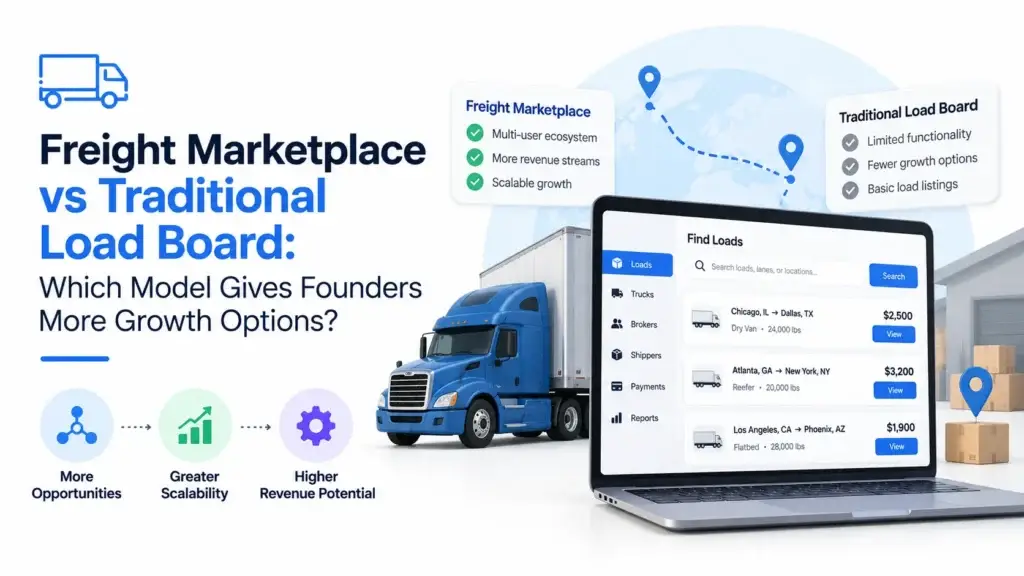
A freight platform earns from several places at once, and this build models each separately so an operator can tune one lever without disturbing the others.
010203040506
01
Subscription Tiers
Recurring seat or tier-based plans through Stripe. The docs model Basic at $49 to $99 per user, Professional at $149 to $299, and custom Enterprise pricing, all held in the pricing_plans table as configuration rather than code.
02
Transaction Fees
Per-load placement fees or commission on an accepted bid. Because the bid and the assignment both land on the same load record, the fee event has an unambiguous thing to attach to.
03
Payment Processing Margin
A margin on processing once Stripe is connected. The payment adapter ships with a mock implementation, so the flow is demonstrable before any live key exists.
04
Managed Dispatch Services
Operator-led brokerage or dispatch run through the admin control plane. The console that governs the platform can also run desk operations on behalf of customers.
05
Add-On Modules
AI coverage, cold chain monitoring, compliance submissions, advanced analytics and extra storage sold as modules. Module toggles mean an add-on is switched on, not deployed.
06
White-Label Licensing
License the platform to partners under their own brand. System config, module toggles, branding, pricing plans and SEO surfaces are what make that possible without a fork.
The two that move the numbers most are subscription tiers and transaction fees. One is predictable recurring revenue, the other scales with the volume the board actually clears.
Freight still runs on a phone call, a spreadsheet and four subscriptions that do not talk to each other. That reconciliation tax is exactly what a single platform removes, and the operators winning are the ones who can tell a customer where the freight is without making three calls first.
01
Four Roles, One Schema
Shipper, broker, carrier and admin share one users model and one loads table. The alternative is four tools with four user directories and a reconciliation job between them.
02
The Execution Half Is Included
Most board scripts stop at the match. Dispatch, GPS, geofencing, compliance, documents and invoicing are where freight actually goes wrong, and they are in the base build.
03
Evidence at the Point of Decision
Carrier verification, ratings, credit and rate history sit next to the load, not in a separate subscription a broker has to remember to open.
04
Mobile Is Not an Afterthought
126 Flutter screens at role parity against the same API and session model, so a driver milestone and a dispatcher view never disagree.
05
Auditable by Design
Two separate trails, one for data mutations with before and after values and one for admin actions, both attributable to an actor and an address.
06
Buy-Versus-Build Is Settled
A from-scratch equivalent spans identity, marketplace, negotiation, dispatch, telematics, compliance, documents, billing and mobile across multiple years. This deploys in six working days.
Platform by the Numbers
74
Database Tables
280+
REST Endpoints
126
Mobile Screens
6
Days to Deploy
Building this layer from scratch is what consumes the years. A status machine that stays honest across four roles at once, ownership checks that survive a penetration test, an upload pipeline that validates before anyone relies on a POD, and mobile parity across 126 screens are each unglamorous, mandatory and slow to get right.
The Commercial Case
Marketability, Revenue Potential & Business Prospects
Freight platform economics are unusual because the data compounds. Every load that clears the board adds lane-level rate history, carrier performance and on-time percentage. That accumulated evidence is what makes the board more useful in year two than in year one, and it belongs to whoever operates the infrastructure.
01
Six Revenue Levers
Subscription tiers, transaction fees, payment processing margin, managed dispatch services, add-on modules and white-label licensing, each tunable independently.
02
The Data Compounds
Lane rate history, carrier performance, on-time percentage and broker credit accumulate on the shared schema, and that density is what makes the board defensible.
03
Carriers Are the Moat
A carrier running dispatch, compliance, fuel and maintenance inside your TMS does not move easily. The operational dependency is stickier than the board listing.
04
Exit Optionality
The source and schema are yours on standard PostgreSQL. Seventy-four documented tables are an asset in diligence rather than a black box to explain.
Main Revenue Levers
Subscription Tiers
Transaction Fees
Payment Processing Margin
Managed Dispatch Services
Add-On Modules
White-Label Licensing
Long-Term Value
The network and the data density are the asset:
01lane-level rate history
02an operational dependency
03an asset in diligence
04a licensing business alongside it
Example Revenue Scenarios
The commercial argument for owning the platform rather than renting subscriptions is that the network and the data density are the asset. A board subscription gives you access; it does not give you the history, and it does not give you anything to sell if you later want to license the platform to a partner.
Regional Launch250Active Members
Subscription tiers carry revenue while liquidity forms.
A launch where the board and the TMS do the work, and transaction fees exist mainly to prove the model rather than to fund it.
Growth Stage2KActive Members
Subscriptions plus transaction fees, with the TMS cutting churn.
A scale operation where carriers stay because dispatch and compliance live here, and the fee on cleared loads becomes a genuine second line.
Network Scale10K+Active Members
Transaction fees rival subscriptions, and white-label licensing opens a second business.
A multi-region platform where the same deployment is licensed to partners, turning an operating product into a licensing business alongside it.
Miracuves vs Other DAT Load Board Clone Developers
There are many ways to get a freight platform: generic board scripts, freelancers, agencies, or owning the infrastructure.
Why Founders Choose Miracuves
01
The Execution Half Included
A board gives you posting and bidding. Dispatch, native GPS with geofencing, DOT and HOS compliance, validated document handling and invoicing are where freight actually goes wrong, and they are in the base build.
02
Full Mobile Parity
A 126-screen Flutter build for iOS and Android on the same API and role model, not a responsive web wrapper shipped as a mobile strategy.
03
Operator Console Included
User lifecycle, KYC, compliance, financials, analytics, module toggles and two audit trails. Admin tooling is the part usually deferred and then never finished.
04
Full Source Ownership
The complete monorepo across React, Express and Flutter on standard PostgreSQL is yours to modify and deploy. No per-seat fee, no provider who can change terms.
05
Auditable for Diligence
PRD, ERD, schema guide, feature catalogue, API collection, technical dossier, security handbook and VAPT posture, enough for a procurement review rather than a demo.
06
Provider-Agnostic Integrations
Payments, calls, voice, email, rates and compliance each behind an adapter with a mock fallback, so a regional provider is a configuration change rather than a refactor.
Compare & Discover Why Clients Choose Us as #1 Ready-Made Clone Solution Partner
Criteria
MiracuvesMiracuves DAT Load Board Clone
Generic Clone Script
Custom Dev Agency
Time to Launch
6 days (Production)
Unknown / DIY
6-9+ months
Source-Code Ownership
Full
Often limited / encrypted
Usually yes
Feature Depth (DAT Load Board-like)
High (board, negotiation, carrier TMS)
Basic (posting & search only)
Depends on budget
Security & Compliance
Strong (ISO mindset, GDPR-ready)
Minimal
Varies widely
Scalability & Performance
Single artifact, ordinary hosting
Rarely considered
Depends on architecture
Monetization Options
Multiple (subscriptions, fees, licensing)
Limited / needs custom work
Custom (more time & cost)
Admin & Analytics
Full-fledged dashboard
Very basic or missing
Custom build (extra cost)
Cost vs Speed vs Quality
Balanced
Cheap but risky
High cost, slow
Ongoing Support & Updates
Available with clear plans
Usually none
Depends on contract
Not every route to a load board survives contact with real freight. Here is where we differ.Talk to Our Team
Changelog
DAT Load Board Clone Release Log - Version History & Updates
Version
Date
What's New
v2026.1
Sep 2026
Initial release. Marketplace with multi-stop loads and counter-offers, carrier TMS, GPS and geofencing, KYC and compliance, invoicing and admin plane.
Let’s build together
Let’s turn your idea into a live platform.
Get a free consultation, a clear timeline, and honest answers. We’d rather earn your trust than rush a sale.
A DAT Load Board Clone App is a ready-made freight marketplace in the model DAT made familiar, with a carrier TMS underneath it. In the Miracuves DAT Load Board Clone, shippers and brokers post loads with multi-stop legs, carriers search and bid, counter-offers run multi-round, and the won load dispatches to a vehicle and driver, tracks on GPS, collects a validated POD and raises an invoice on the same record. It ships with an operator control plane, a 126-screen Flutter app and 280+ documented REST endpoints.
02Does DAT rate data come with the build?
No. The Miracuves DAT Load Board Clone includes a market rate adapter with DAT and Greenscreens.ai as modelled providers, but each is gated on API credentials you supply under your own commercial agreement with that provider. No third-party rate data ships with the source.
03Is the mobile app a wrapper?
No. The Miracuves DAT Load Board Clone ships a native Flutter application across 126 screens using Riverpod, Dio and go_router, running against the same REST API and role model as the web client. It is not a webview.
04How does it handle multi-stop loads?
Loads carry PickupLocation and DeliveryLocation child tables with sequence ordering, dates, times, contacts and instructions. In this freight load board, multi-stop is a first-class shape in the schema rather than free text in a notes field.
05What does the carrier TMS actually cover?
The carrier TMS in the Miracuves DAT Load Board Clone covers vehicle fleet records, driver management with performance history, dispatch and route assignment, GPS tracking with geofence alerts, HOS log monitoring, DOT compliance records, expiring licence, medical, insurance and inspection tracking, fuel purchases with IFTA reporting, maintenance scheduling and speed violation tracking.
Pricing, launch & business8 questions
06How much does it cost to build a load board in 2026?
The Miracuves DAT Load Board Clone starts from $4,899 for a launch-ready white-label deployment, as a one-time price with no revenue share. Final scope varies with regional compliance requirements, payment rails, market-rate provider contracts, mobile scope and infrastructure.
07How long does it take to launch?
Six working days from the Miracuves side. The DAT Load Board Clone is ready-made, so our work is rebranding it and deploying to your server, and we publish the apps to your own developer accounts as part of delivery; only the Apple and Google review is outside our control. What extends the calendar is anything we need from you: brand assets, hosting access, your pricing tiers, and merchant or provider accounts for payments and any market-rate or compliance integration.
08What exactly do I receive?
The full monorepo of the Miracuves DAT Load Board Clone: the React 18 web client, the Express API across 280+ endpoints, the shared Drizzle schema of 74 PostgreSQL tables, and the 126-screen Flutter mobile application. Plus the admin control plane, the adapter layer, deployment to your infrastructure and the full documentation set.
09Do I own the source code?
Yes. Full source ownership with no per-seat fee, no revenue share and no vendor roadmap dependency on Miracuves. The load board runs on standard PostgreSQL, so you are not tied to a proprietary datastore either.
10Can I run it as a white-label platform?
Yes. System config, module toggles, branding through the TypeScript design tokens and CSS custom properties, pricing plans and SEO surfaces are what make an operator deployment of the DAT Load Board Clone work without forking the codebase.
11What actually drives revenue here?
Subscription tiers are the predictable line and transaction fees are the line that scales with volume. Everything else in the product exists to increase the number of loads that clear the board rather than falling back to a phone call.
12Why does the TMS matter commercially?
A board is easy to leave, because a carrier can search somewhere else tomorrow. A carrier who runs dispatch, HOS, DOT records, fuel and maintenance inside your platform has an operational dependency, and that is what turns a listing subscription into retained revenue.
13What does the operator control at runtime?
Pricing plans and tiers, module toggles per deployment, KYC approval and verification gating, load intervention where parties cannot resolve a lane, compliance configuration by region, and SEO surfaces, all from the admin console without a deployment.
Compliance, payments & security5 questions
14What compliance regimes are covered?
US DOT, Saudi Bayan and India eGST sit behind one compliance adapter in the Miracuves DAT Load Board Clone, selected by region and provider key; each needs that provider's account and setup before it runs live. KYC review with verification gating and cold chain temperature logging are in the base build. The software is not a licence: operating authority, insurance and local transport rules stay with you as the operator.
15Which payment providers are supported?
Stripe is the modelled provider for checkout sessions, subscription lifecycle and payment events. Because payments sit behind an adapter with a mock implementation, the flow is demonstrable before a live key exists and a regional provider can be substituted without touching domain logic.
16How is it secured?
The Miracuves DAT Load Board Clone uses Helmet with CSP, X-Frame-Options DENY and nosniff, a CORS origin allowlist, rate limiting at 1000 requests per 15 minutes on the API and 5 login attempts per 15 minutes on auth, strict Zod schemas rejecting unknown fields on sensitive updates, bcrypt hashing, session cookies with httpOnly and environment-driven secure flags, and extension, MIME and magic-byte validation on every upload. It carries no security certification.
17Is there an audit trail?
Two. audit_logs records data mutations with before and after values, actor, entity type, entity id, IP and user agent. admin_activity_log separately records administrative actions such as module toggles, config updates, user bans and load deletions.
18What stops one carrier seeing another carrier's freight?
Object-level ownership checks on loads, bids, messages and documents, applied in auth middleware before the handler runs, alongside route-level role gating and UI route guards. This is the IDOR surface of a freight load board and it is checked server-side, not hidden in the interface.
About Miracuves2 questions
19Is this affiliated with DAT?
No. Miracuves is an independent software development company and this product is not affiliated with, connected to, sponsored by or endorsed by DAT Freight & Analytics. The phrase “DAT Load Board Clone” is used descriptively, because it is how the software industry refers to building a platform with comparable functionality and how buyers search for it. The full position is set out in the disclaimer at the foot of this page.
20Why choose Miracuves to build a DAT load board clone?
Miracuves has delivered 9,000+ projects for 6,000+ clients since 2010 and offers 90+ ready-made clone solutions, including logistics and delivery platforms. The DAT Load Board Clone carries the freight marketplace, the carrier TMS and the operator console in one codebase, sells at a fixed $4,899 rather than a range, deploys in six working days, and names every item that needs your own provider account. Every ready-made solution carries 60 days of platform guidance, 6 months of priority bug fixes and 12 months of product evolution, with a first response in under 2 hours, Monday to Saturday, 10:00-19:00 IST. Each company figure is published with its scope on the Miracuves facts page.
“DAT Load Board Clone” is used descriptively. It is how the software industry refers to building a platform with functionality similar to DAT Load Board, and how clients search for it.
Who built this
The entire design and codebase is built by our own team. The product contains no code, design, graphics, or content originating from the DAT Load Board website or applications.
Trademarks
DAT Load Board and all other third-party names and marks are the property of their respective owners, referenced here solely to describe the category of software offered.
top
MiracuvesHuman reply in under 2 hrs · Mon-Sat
Got an app in mind? Let's talk on WhatsApp.
Miracuves on WhatsAppFastest
Hi! What are you building? Pick one and a real person replies in under 2 hrs.
Hi Miracuves! I am interested in a ready-made app.
Got a project in mind?Message us on WhatsApp. A human replies in under 2 hrs.
MIRACUVES LAUNCH PASSCLASS · READY-MADE
Leaving already? Take this with you.
Your app. Launch-ready in 6 working days.
Pick any of our 90+ ready-made solutions. We brand it, launch it and hand over 100% of the source code.
DEPARTSDAY 1Kick-off
ARRIVESDAY 6Launch-ready
A WORD FROM FOUNDERS WHO LAUNCHED WITH US
A regulator-ready offering, delivered with room to spare.
"We had a hard regulator date for a cross-border neobank. Accounts ledger, KYC and card issuing came off their shelf; we added the corridor FX engine and our partner bank's settlement layer. We hit the milestone with room to spare, which would not have happened from a standing start."
Peter Lu · Managing Director, Apex Vertex Capital Holdings Ltd
PROJECTS9,000+
CLIENTS6,000+
APPS PUBLISHED3,900+
SINCE2010
ON BOARD BEFORE YOU
PASSENGER
Claim your launch pass
Tell us what you are building. A real person replies in under 2 hrs, Mon-Sat.
A real person replies in under 2 hrs, Mon-Sat, with your launch plan. Want it sooner? Pick a 15-minute slot.
A WORD FROM FOUNDERS WHO LAUNCHED WITH US
A regulator-ready offering, delivered with room to spare.
"We had a hard regulator date for a cross-border neobank. Accounts ledger, KYC and card issuing came off their shelf; we added the corridor FX engine and our partner bank's settlement layer. We hit the milestone with room to spare, which would not have happened from a standing start."
Peter Lu · Managing Director, Apex Vertex Capital Holdings Ltd
PROJECTS9,000+
CLIENTS6,000+
APPS PUBLISHED3,900+
SINCE2010
ON BOARD BEFORE YOU
Launch bundle
Launched,not just delivered.
25%OFFAny ready-made solutionFlat off the published price, till 30 Oct 2026Plus Same price. fourFour extras with every ready-made solution, and the option to pay in three steps.
Included with your order
Launch-ready packWe submit your apps and fix technical rejections until approved$690FREE
Support after launch60 days of support, plus 6 months of bug fixes$450FREE
1 month of SEO6 blogs, 60 backlinks and 150 social signals$499FREE
1 additional languageAny language you choose, across your apps and admin panel$649FREE
Bonus value$2,288FREE
Or pay as it's built
60%20%20%
60%Upfrontto start your build
20%Up for testingwhen your apps are ready to test
20%Final deliveryon handover and store publishing
Optional. Paying in full works too.
6 daysto go liveLive demobefore you paySource codefully yours
25% off the published price of any ready-made solution ordered by 30 October 2026. The extras are included with every ready-made solution order. We submit to your own Google Play and Apple developer accounts and fix any technical rejection until the apps are approved. Rejections over store listing details (descriptions, screenshots, policy links and other metadata) are yours to update; review times are set by Apple and Google. The 6 working days start once your branding, hosting and accounts are ready. We reply in under 2 hours, Mon-Sat.
25% off till 30 Oct 2026, extras includedSame price, nothing extra to pay