
9flats Clone App: White-Label Short-Stay Rental Marketplace
Miracuves' ready-made, white-label 9flats clone is built host-first: you own the source code for a guest marketplace, a host console and an operator admin with over twenty modules, plus Android and iOS apps in Flutter, all running on your servers within six working days.
Each room keeps its own calendar, so one property cannot double-sell a night; the server recomputes every total, and the commission is locked onto the record once a stay is confirmed. Hosts set cleaning fees and deposits and request payouts you approve. Housekeeping and smart rate suggestions are available as paid add-ons. Custom work, like a minimum-stay rule for one city or a monthly co-living plan, is agreed in writing and usually takes 2-8 weeks.
Launch in 6 Days with
- Source Code
- Guest Marketplace
- Host Console
- Operator Admin
- Android + iOS
- Laravel 10 API
StackFlutter · Vue.js · Blade · Laravel 10 · PHP 8.1 · MySQL 8 · Pusher
Live host activity stream
- Host approvedOnboarding
- Booking confirmed, commission frozenBookings
- Payout request completedPayouts
- Date clash refusedAvailability
- Guest review went liveReviews
- Peak-season price kicked inPricing
- Deposit releasedDeposits
- iCal export syncedCalendar
- Host approvedOnboarding
- Booking confirmed, commission frozenBookings
- Payout request completedPayouts
- Date clash refusedAvailability
- Guest review went liveReviews
- Peak-season price kicked inPricing
- Deposit releasedDeposits
- iCal export syncedCalendar

- 2Booking Modesinstant confirmation or enquiry-first, chosen per listing
- 3Payout Queue Statesrequest, review and completion stages the host can follow
- 0%Revenue Share With Miracuvesno cut of any stay, host plan or service fee
- 100%Laravel 10 Sourcebackend, admin and public site handed over unencrypted, with migrations
- 6Days to Launchand if the delay is ours, we keep going free
- $3,099Paid Once, Not Rentedsource code yours, no per-seat fee, no monthly rental
Live in six working days, or we keep working free until you launch. Every build carries 60 days guidance, 6 months bug fixes and 12 months updates.Verify every figure
Ischia Booking Was Built on It
On Ischia, Miracuves delivered this platform to Ischia Booking S.r.l in 2024 for short-stay rentals and hotel rooms, carrying 17 modules over as-is and adding a channel manager.
One API Behind Every Screen
The Android and iOS builds read the same REST API as the web marketplace, so a rate rule changed once applies on every surface at the same moment.
Signed Webhooks Before a Stay Confirms
Stripe, PayPal, PayStack or Payrexx captures and tokenizes the card, so no card number lands in your MySQL, and a booking changes state only after an HMAC-checked webhook.
01See it live
Live in Action
9flats Clone Demo: Android Build, Admin Panel, Host Console and Guest App
Miracuves runs four live surfaces of its 9flats clone, opened with three sets of credentials. Start as a guest, then log in as a host to handle listings and payouts, and last as the operator, where you see the console behind the marketplace. The Android build runs this same platform on a handset.
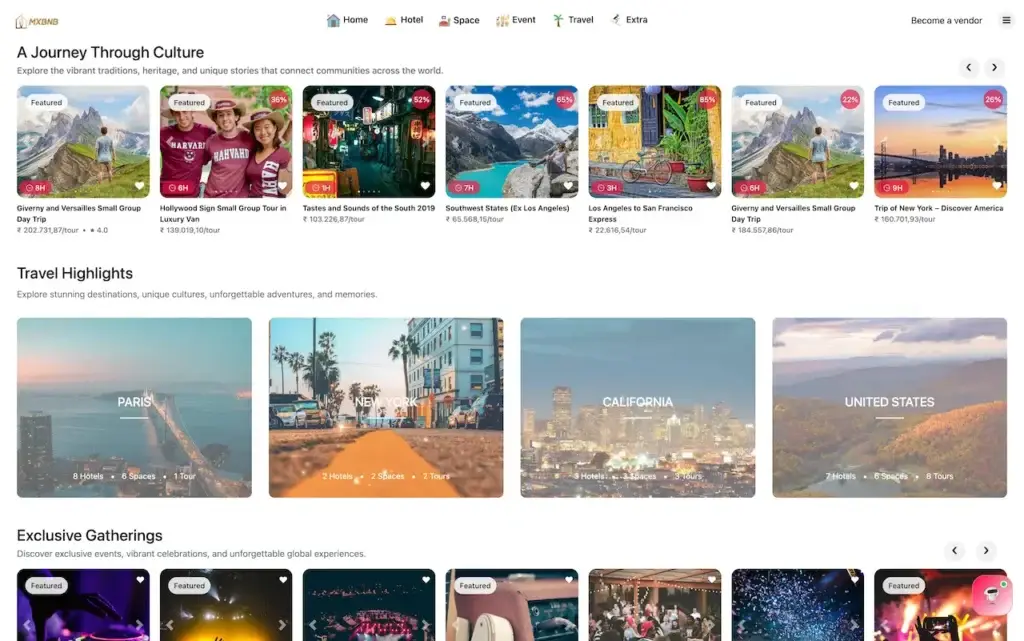
9flats Clone: Search, Book and Pay
Guest side: browse every service type you turn on, narrowing by place, dates, party size and price. A listing opens with its gallery and map, shows live availability, accepts a coupon, and takes payment via whichever gateway you set up.
- 1Open the web app using whichever browser you like
- 2Sign in using the guest credentials listed below
- 3Explore: Search, Listing, Availability, Checkout
user@demo.com | User_321
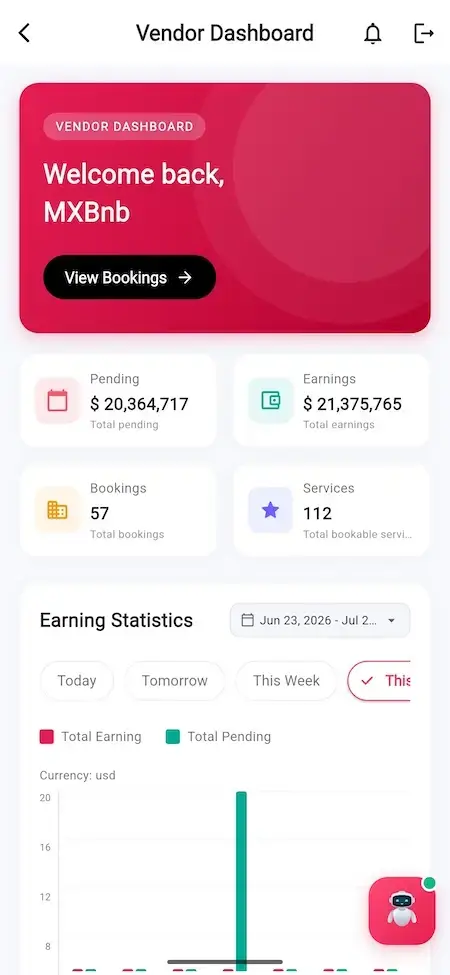
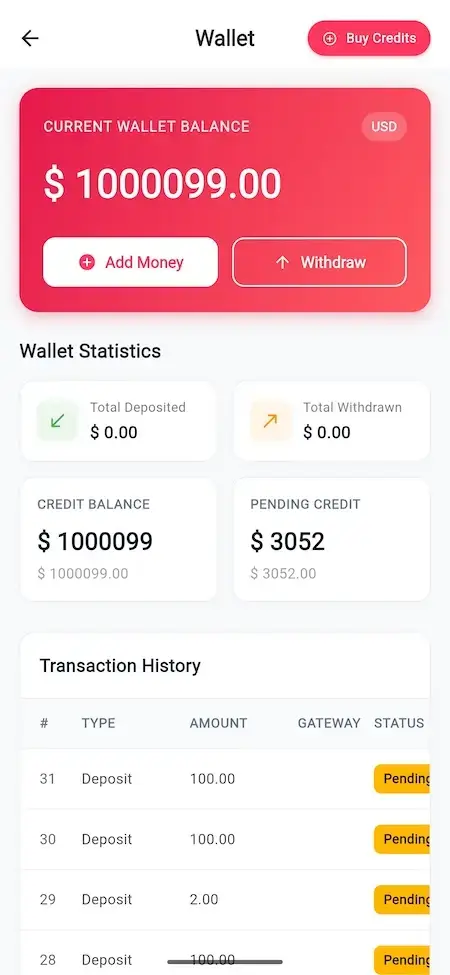
Listing Setup, Availability Calendar, Earnings, Payouts
Hosts get their own area: they build and maintain listings, price by season or by specific dates, run the availability calendar, reply to enquiries, review booking analytics and statistical reports, ask for a payout, and bring in team members who each hold a role of their own.
- 1Go to the same web app and log in as a host
- 2Use the vendor credentials shown below to enter
- 3Explore: Listings, Calendar, Enquiries, Payouts
vendor@demo.com | Vendor_321
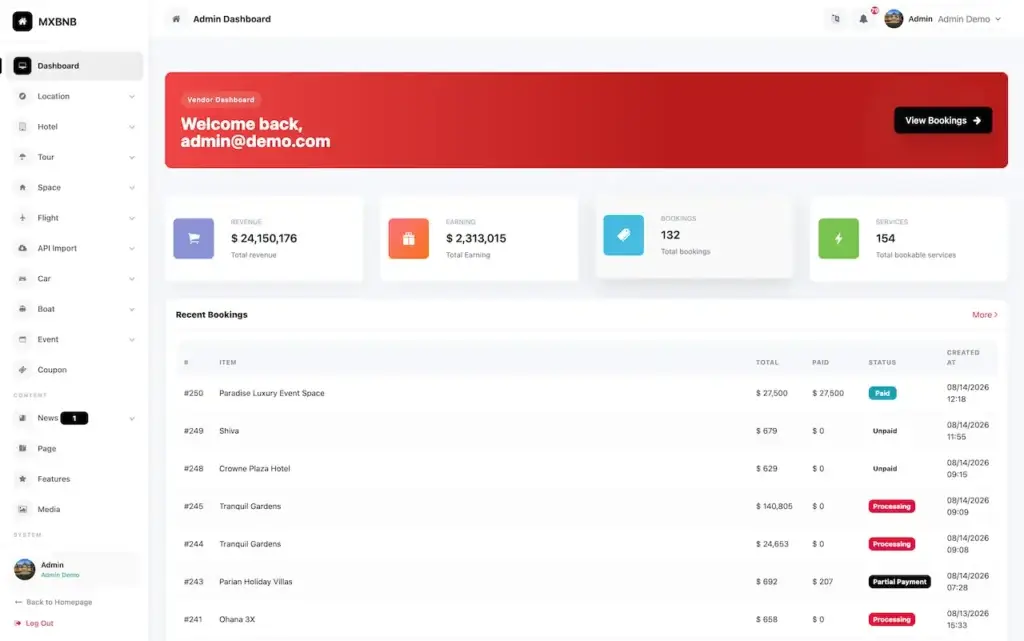
The Operator Console Behind the Marketplace
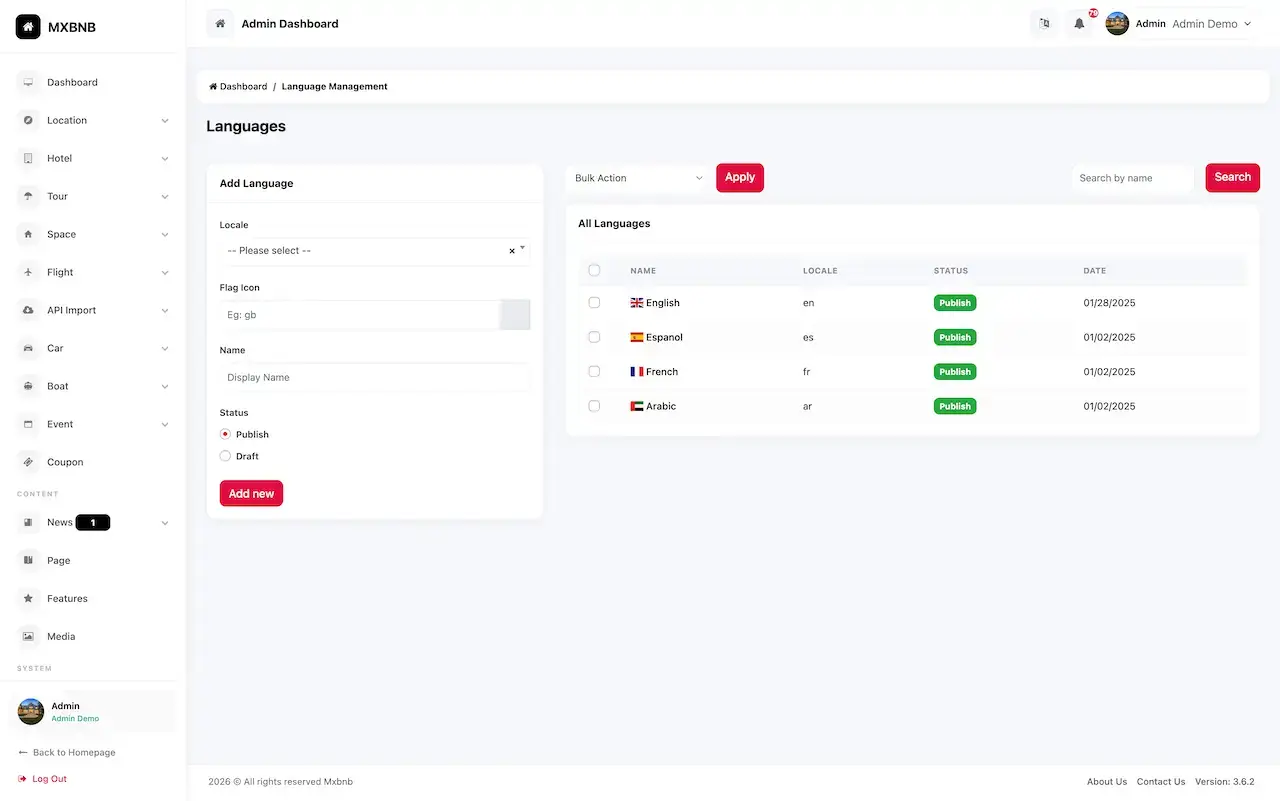
The admin side has over twenty modules, covering users and roles, host approval with identity verification, moderation of listings in all service types, bookings, payments, refunds, payouts, commission, coupons, templates, media, languages, locations and system logs.
- 1Visit the admin console from your browser
- 2Log in using the admin credentials given below
- 3Explore: Users, Bookings, Payouts, Settings
admin@demo.com | Admin_$321
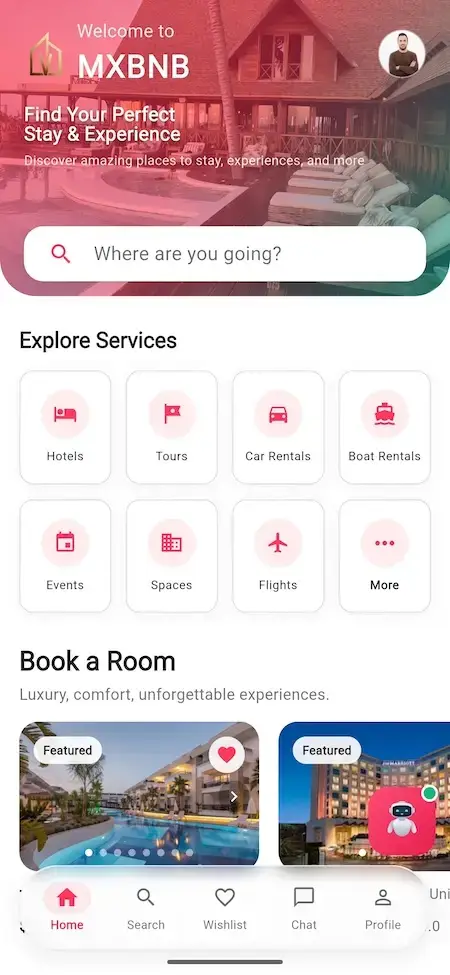
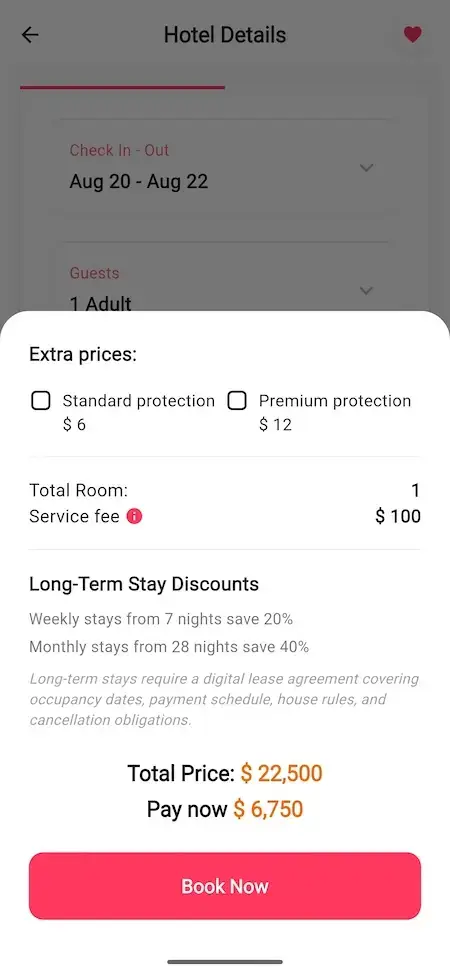
The Platform, Now on a Mobile Device
Over the REST API shared with the web app, the mobile build delivers the guest and host experience: searching and booking, managing bookings, messaging a host, submitting a review, the host dashboard, verification document uploads and payout requests.
- 1Download the Android build
- 2Log in using either the guest or host credentials
- 3Explore: Search, Book, Messages, Host Tools
Credentials match the web demoGuided Product Video
Video Walkthrough of a Short-Stay Rental App Like 9flats: Admin, Host Tools and the Booking Flow
A recorded walkthrough of the platform: a guest searching and booking, a host managing a calendar and requesting a payout, and the operator console sitting behind both.
Schedule a WalkthroughBooking Journeys
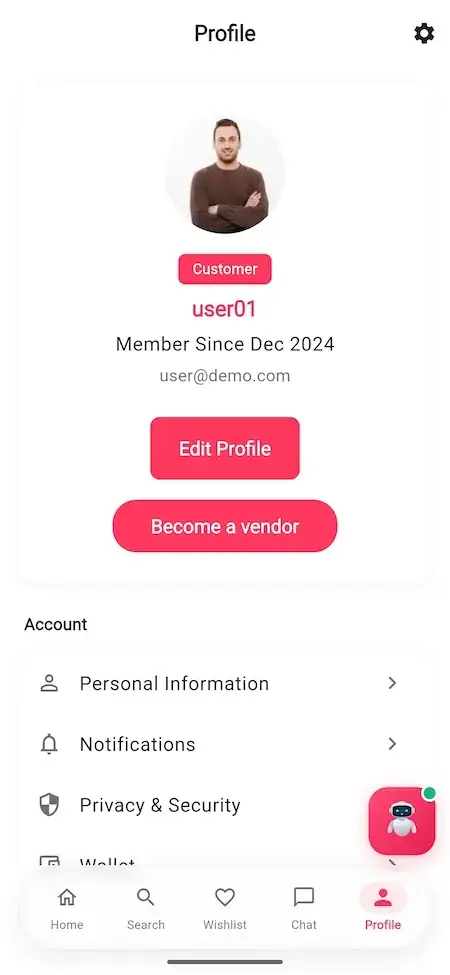
Screens of a 9flats-Style Apartment Booking App: Guest, Host and Back-Office Views
See the interface where it counts: search and discovery, a listing page with its gallery and map, availability checks through to checkout, the host dashboard with its calendar, and the operator console.
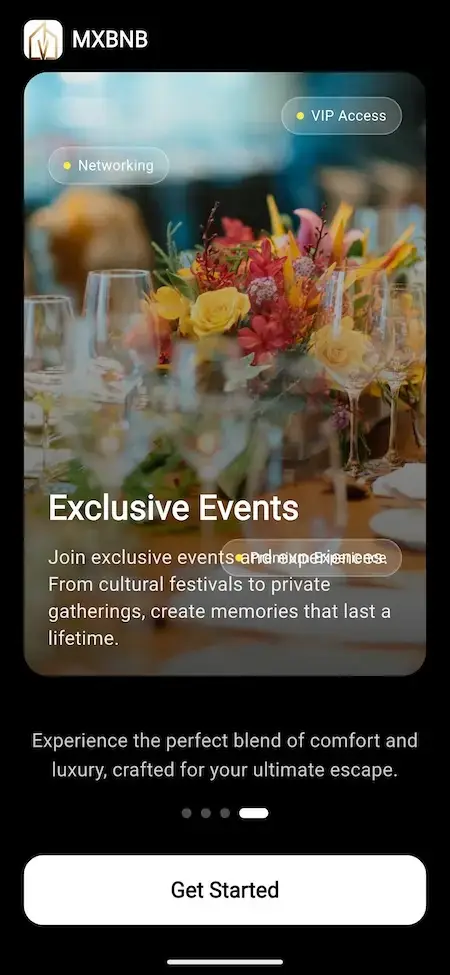
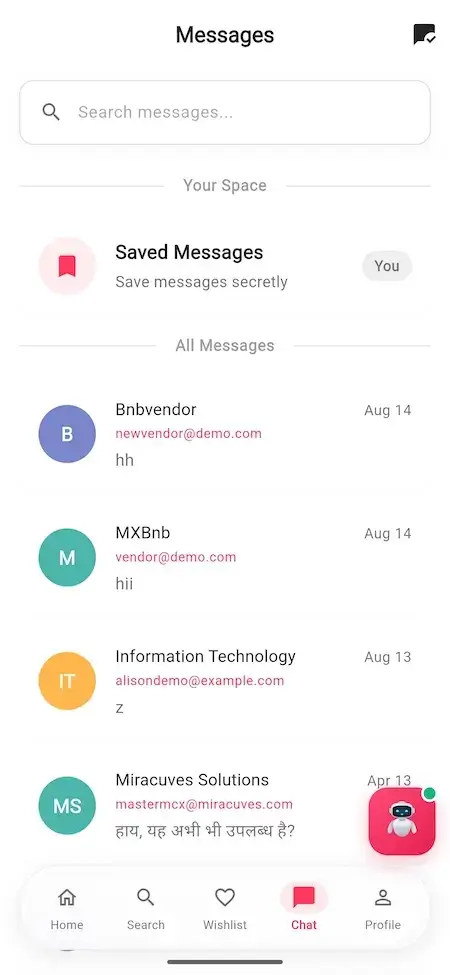
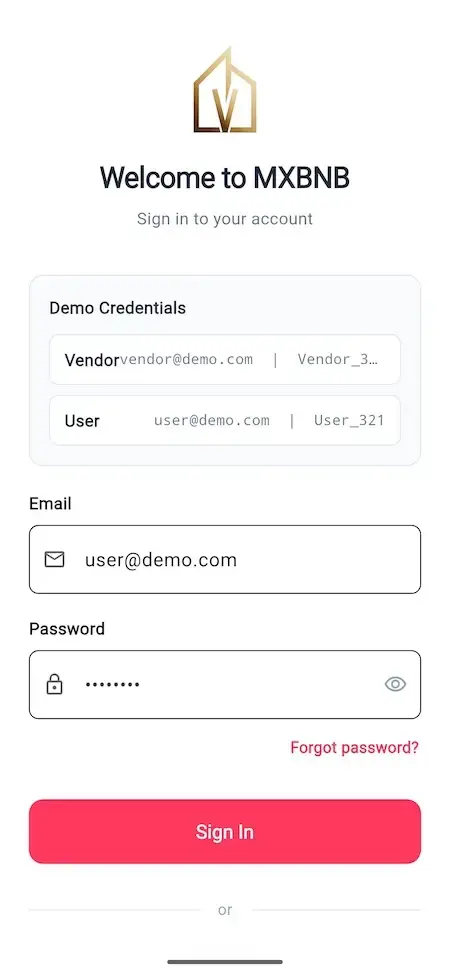
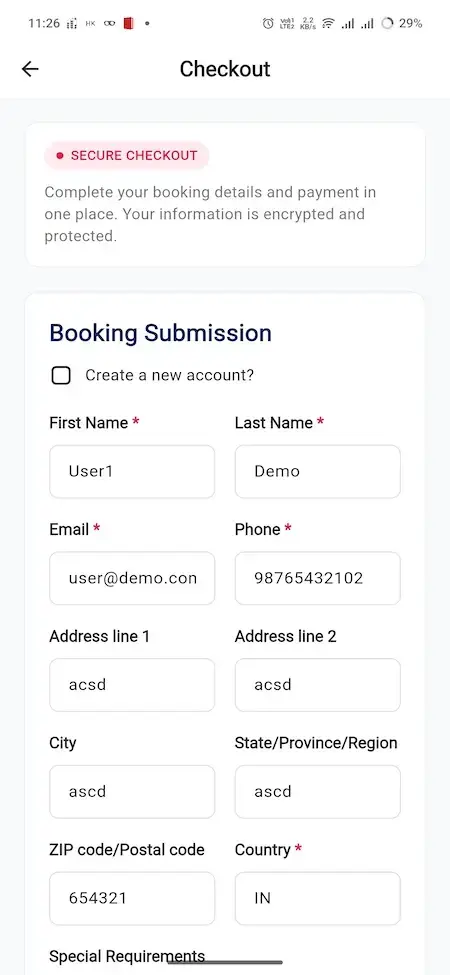
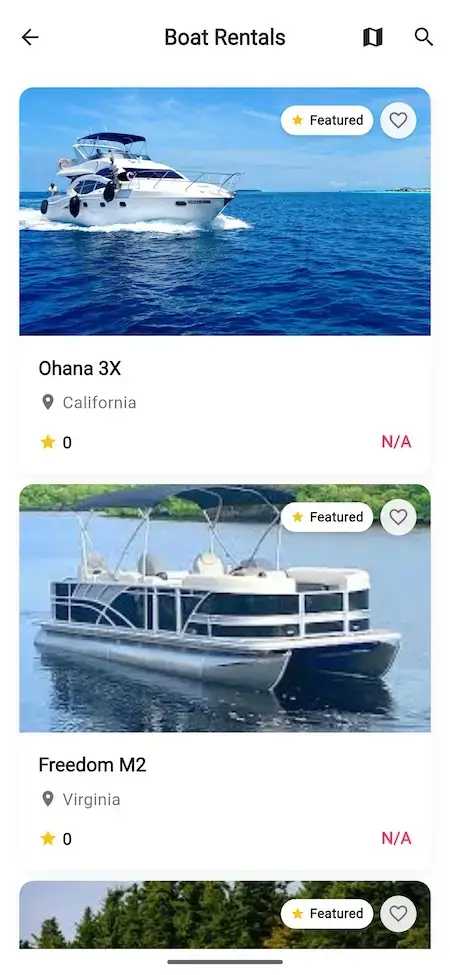
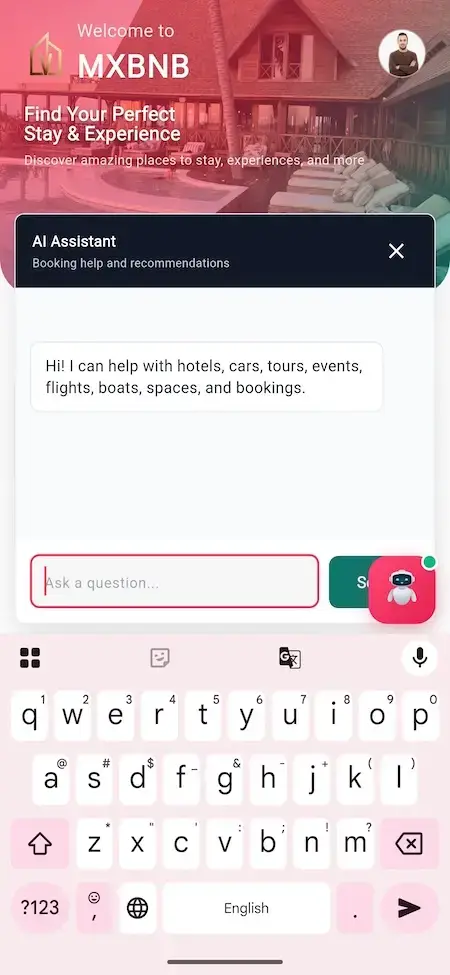

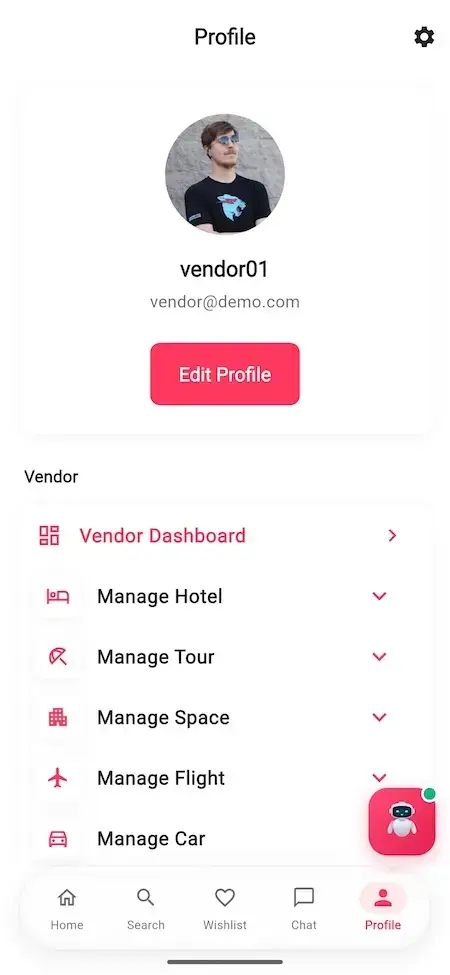
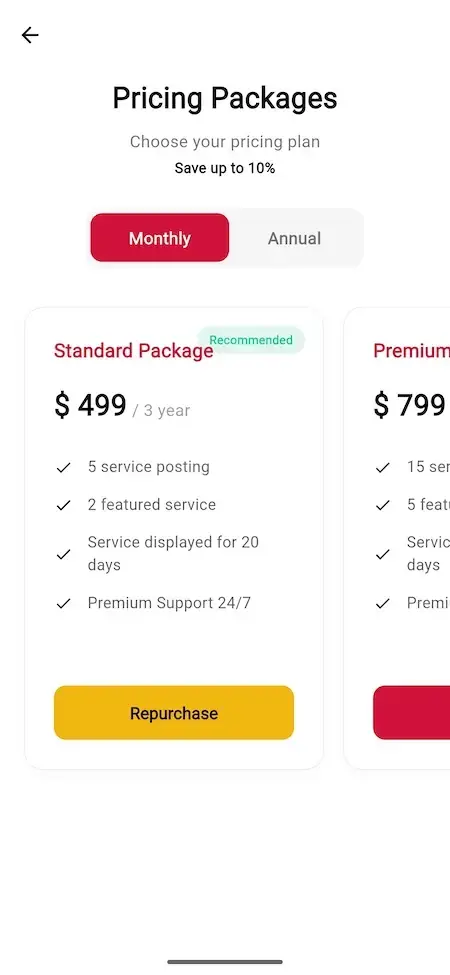
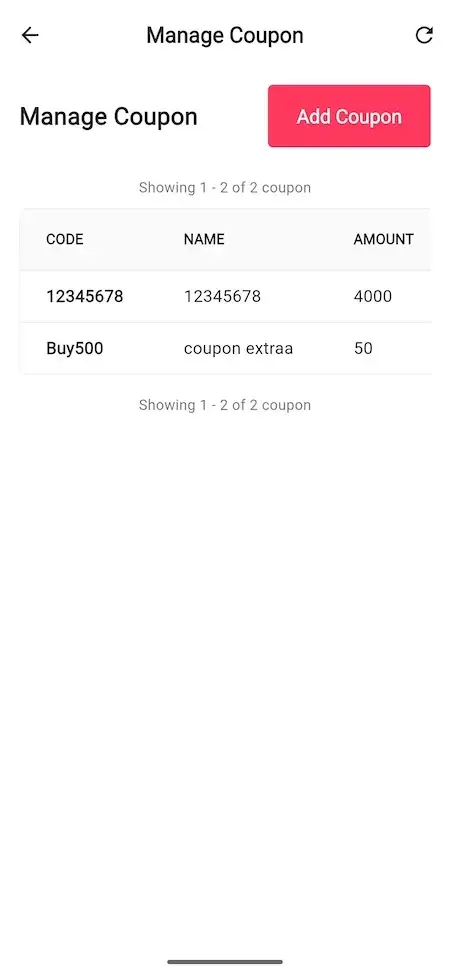
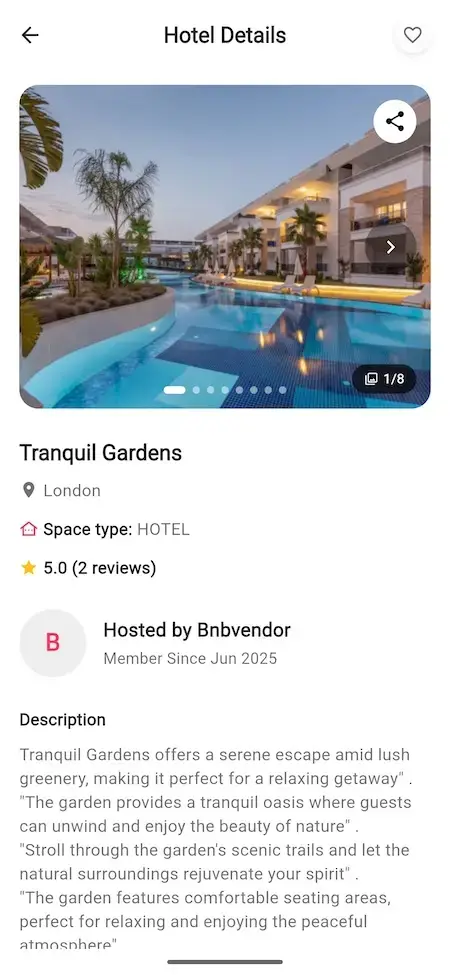
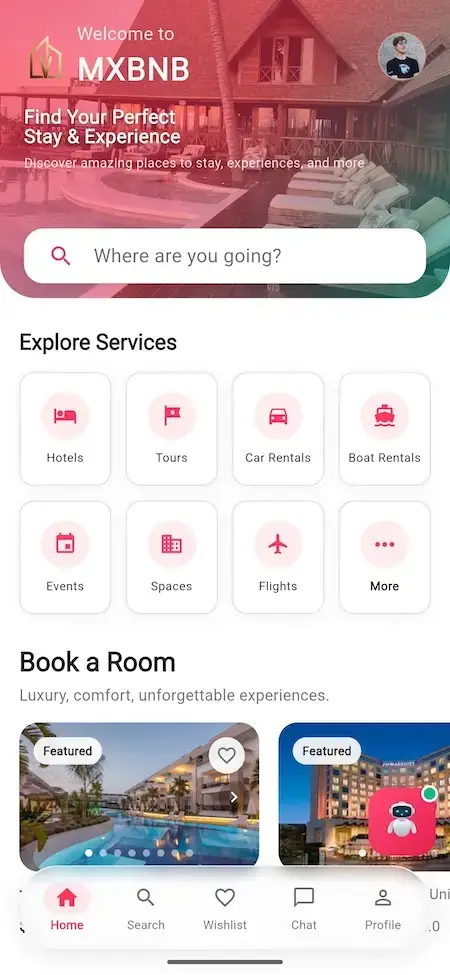
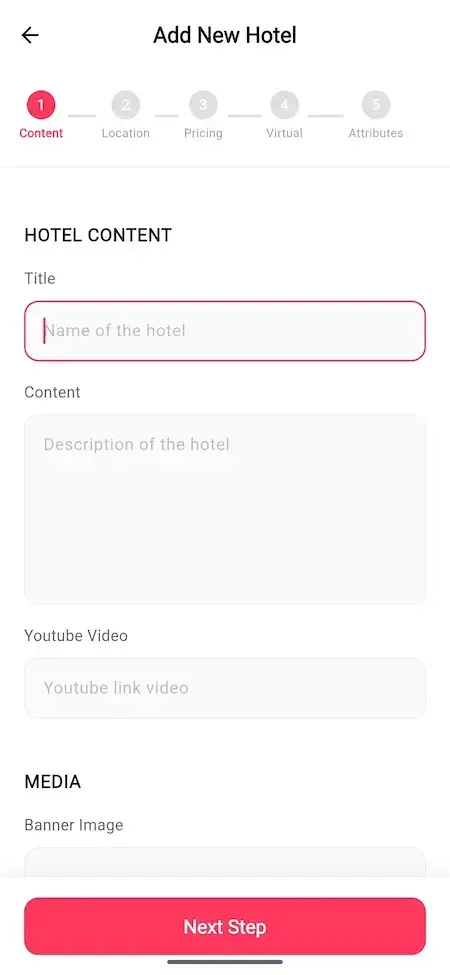
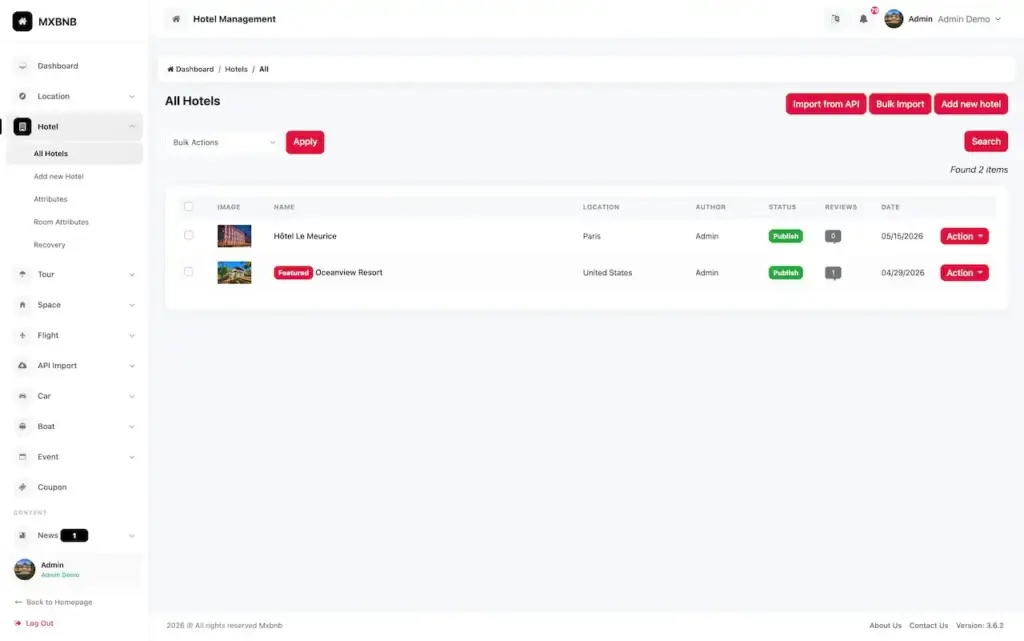
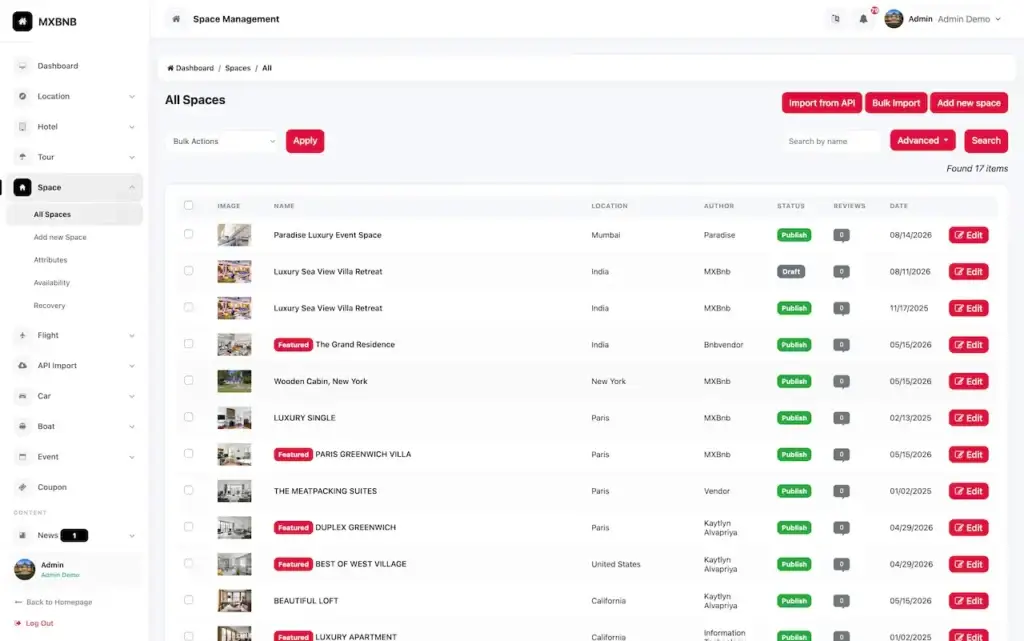
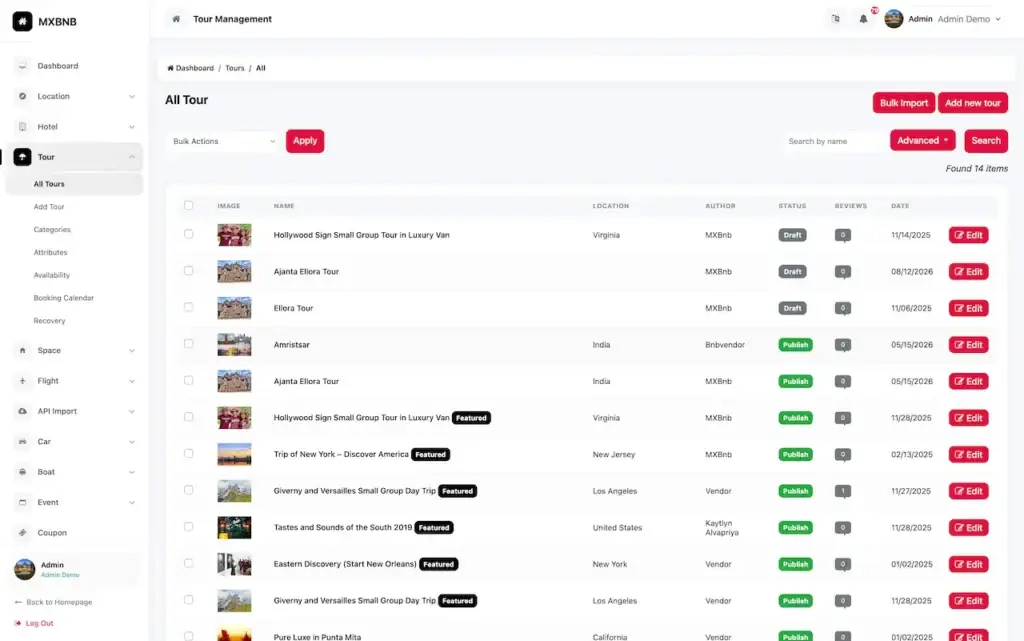
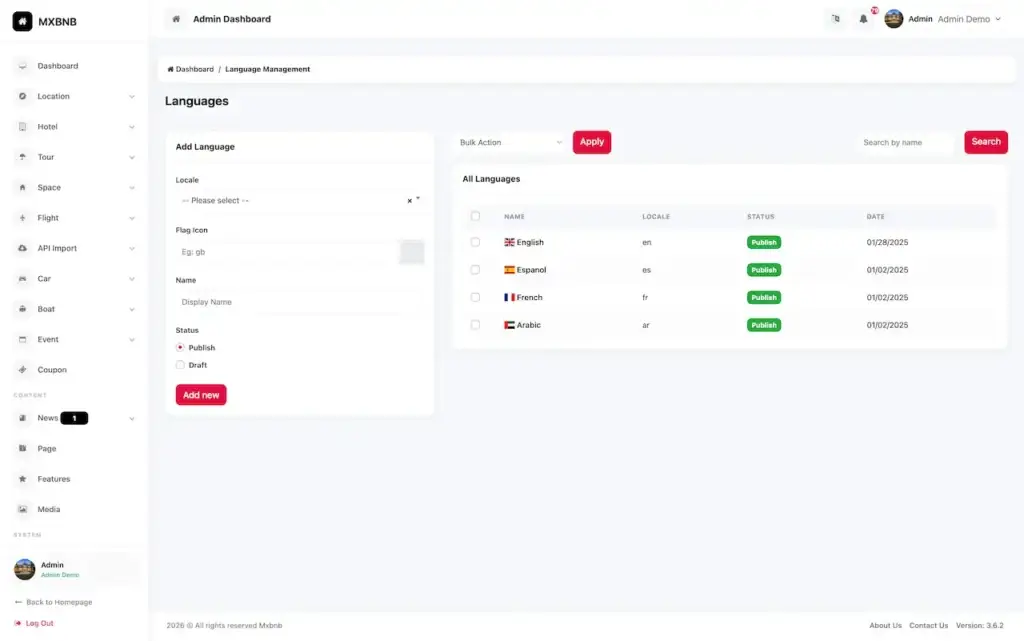
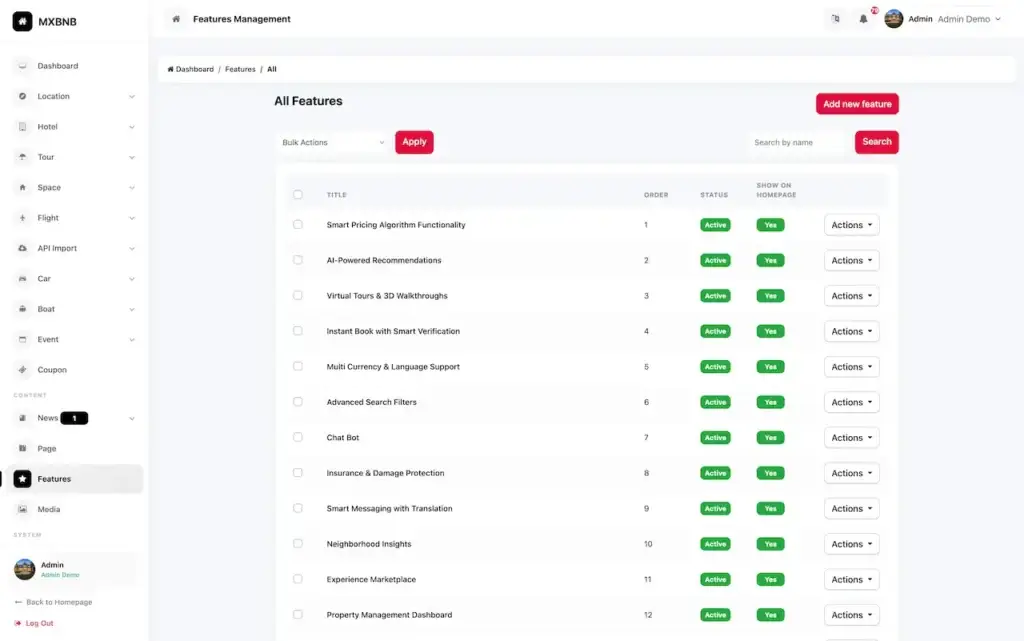
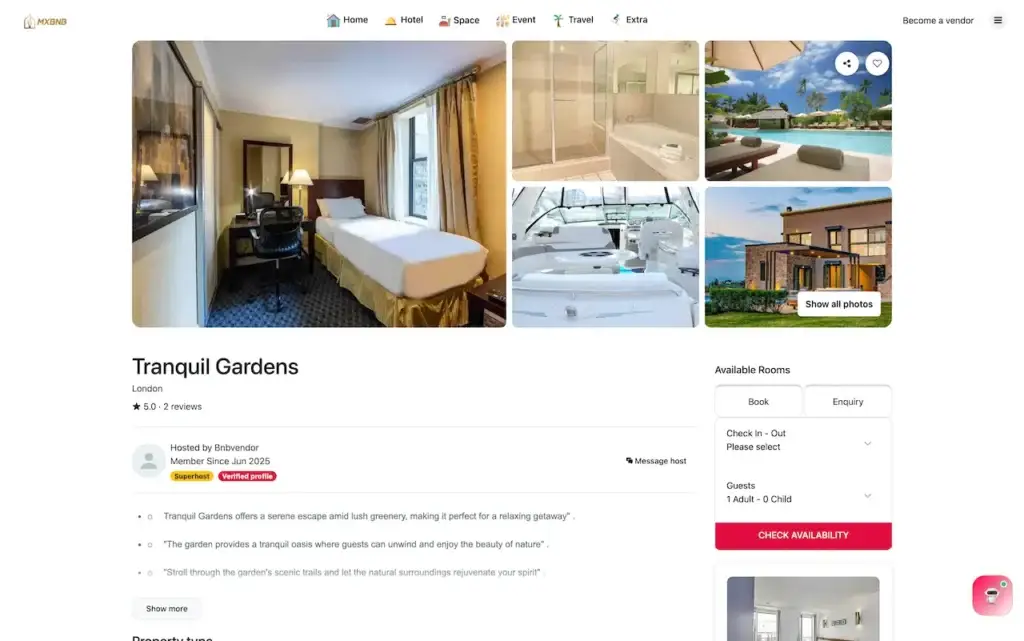
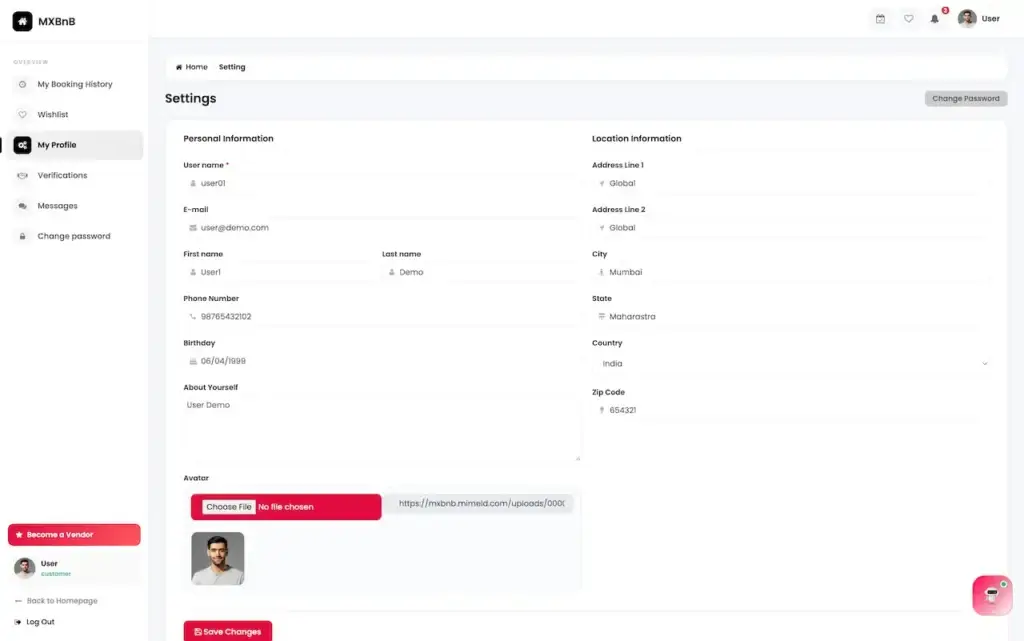
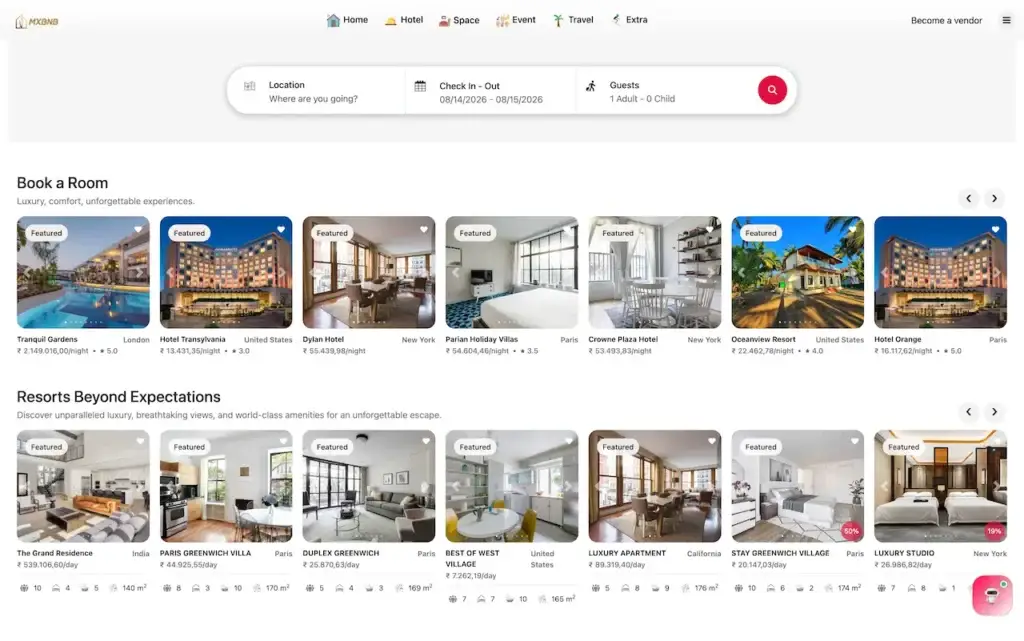
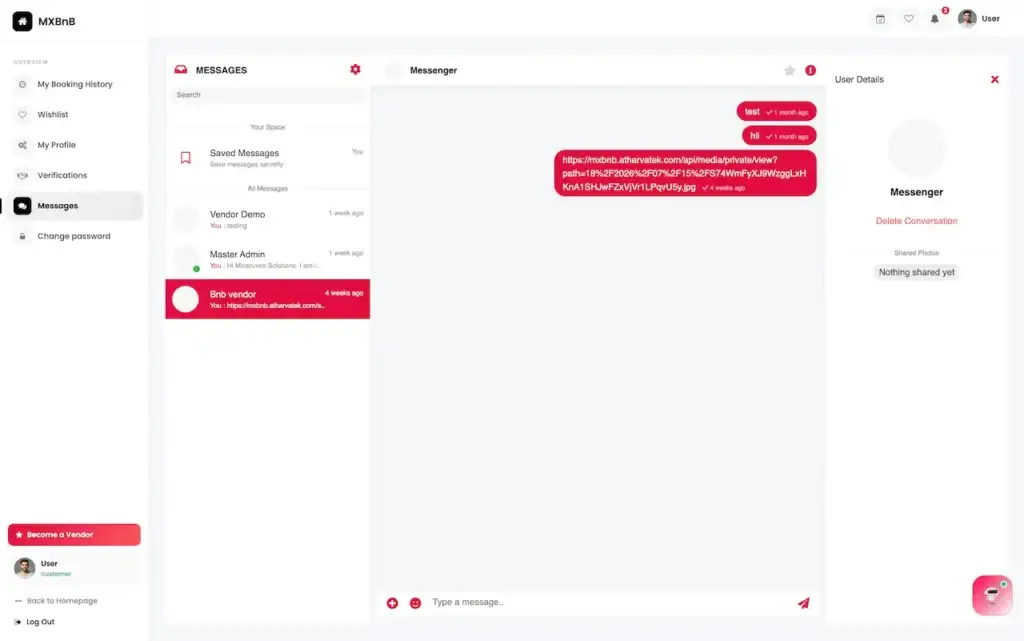
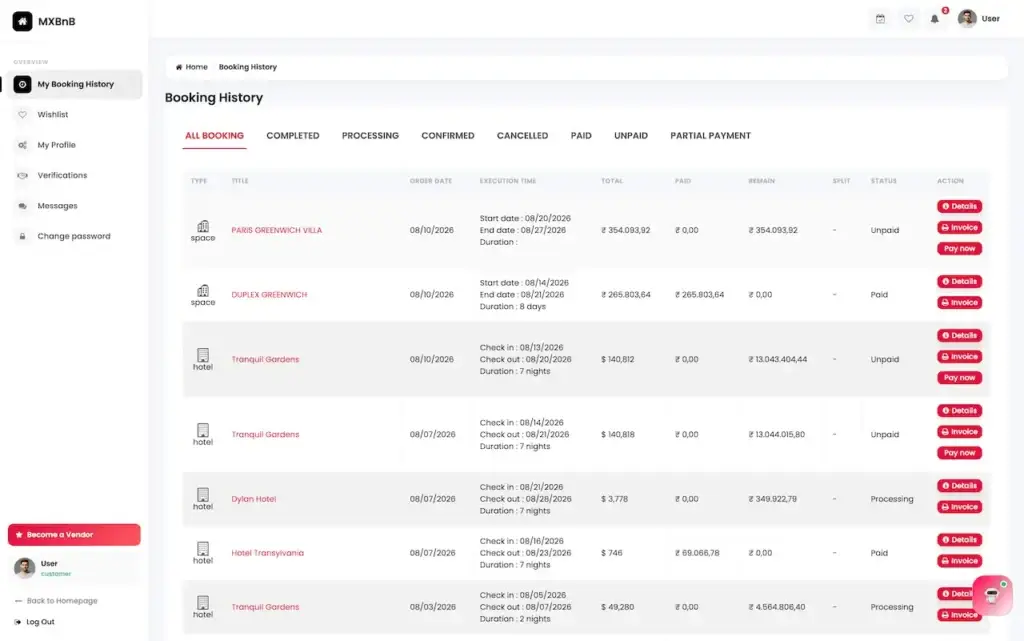
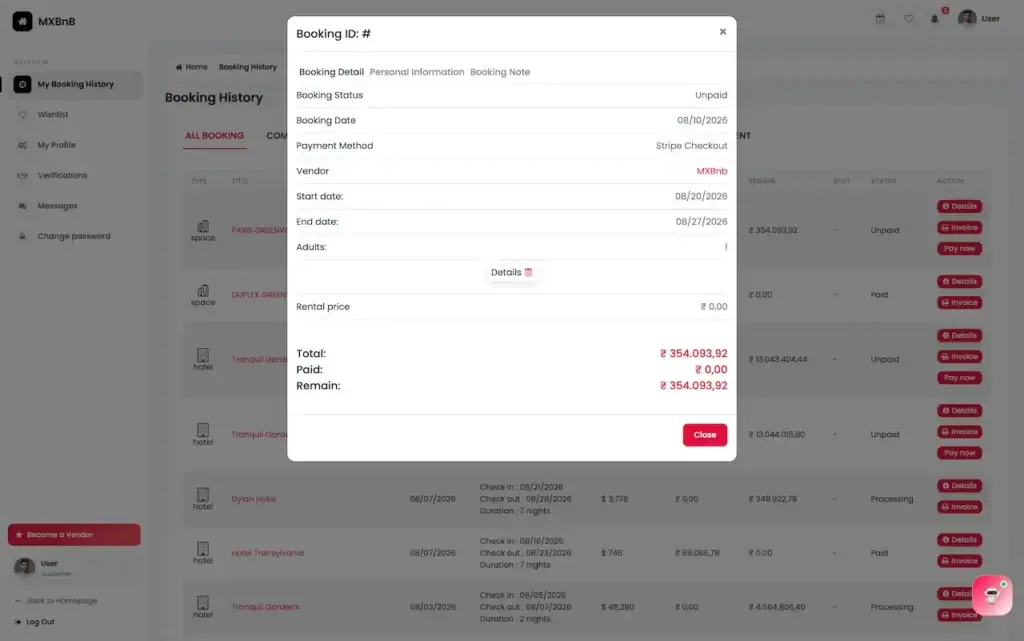


Schedule a call and we will bring up whichever surface matters most to you, populated with live data.
02Proof
Client Voices
What Miracuves Clients Say: Live Marketplaces, Proven Outcomes
Feedback from operators running rental marketplaces built by Miracuves. Ischia Booking, BNBinGreece and GoToRawanda run this platform, and each is a named client with a published case study in our portfolio; Best Cabo Yacht Rentals runs our charter marketplace.
“We were running a few dozen properties off a static site, email and a phone. Calendar, booking flow and the property manager came off the shelf. They added a channel manager for our OTAs, a guest portal and a multilingual interface. The operations team no longer lives in the inbox.”
“Listings, calendar, booking flow and payments came off the shelf. We added the property types and the seasonal pricing rules that matter here, plus a multilingual guest experience. Online bookings replaced the inbox inside a month.”
“Hosts, listings, calendars and payments were solved. Our work was the local payment methods, the languages our guests use and the property types we actually list. It replaced a phone-and-email process inside a month.”
“We were running charters off a paper calendar and losing bookings to the OTAs. Calendar, booking flow and payments came off the shelf; they added boat listings with availability windows, crew management and a multilingual guest portal. The ops team finally has a live view of the fleet.”
Case Studies
Italy Case Study: A 9flats Clone Delivered for Short-Stay and Hotel Inventory
On the island of Ischia, Ischia Booking S.r.l operates short-stay rentals alongside hotel inventory. Listings, calendars and payments were already part of this platform, which let the project effort go into what was particular to their business. On attribution: the 9flats Clone and Airbnb Clone are built from one MXBnb codebase, which makes Ischia Booking, BNBinGreece and GoToRawanda deliveries of the same platform, not separate clients of separate products.
It swaps a phone line, a shared inbox and a static website for a live booking engine, serving short-stay rental and hotel guests on Ischia.

- A few dozen properties handled via a plain website, email and the phone
- The same rooms were sold by OTAs while availability lived in a single place
- Arrivals speaking several languages, and no self-service portal for them
- Bring the full property list online with a proper booking engine
- Free the operations team from working out of an email inbox
- Calendars that stay accurate on each channel selling the rooms
- Base platform supplies the listings, calendar and booking flow
- A channel manager connected to the OTAs they were already selling on
- Guest portal in multiple languages for visitors from several markets
- Property manager console covering everyday operations
- On handover, the source code moves into the client account
“We were running a few dozen properties off a static site, email and a phone. Calendar, booking flow and the property manager came off the shelf. They added a channel manager for our OTAs, a guest portal and a multilingual interface. The operations team no longer lives in the inbox.”Martin K · Founder, Ischia Booking S.r.l
03The product
The Basics
What Is a 9flats Clone App?
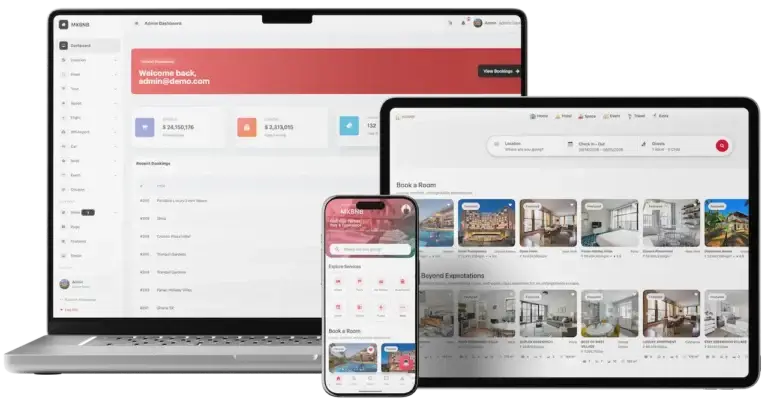
A 9flats clone script is a ready-made short-stay holiday rental marketplace; in the Miracuves build, room-level calendars, host-set cleaning fees and a payout queue hosts can follow put the host side first. Hosts list apartments and private rooms, guests reserve them by date, and your commission is taken on every transaction. The host side is the spine of it: onboarding, a room-level calendar, rate rules and a payout queue.
A Transaction Engine, Not a Directory
Everything that matters happens after the guest presses book: availability revalidated on the server, the total recomputed instead of trusted from the browser, commission written onto the record, money queued to the host. A directory hands over a phone number and wishes you luck.
The Host Console Is the Product
Hosts run their own calendar, rates, minimum stays, fees and payout requests without routing anything through you. That surface decides whether they stay past their third month, so it ships complete rather than as a cut-down view of the admin.
One API Behind Every Screen
The Android and iOS builds read the same REST API as the web marketplace. A rate rule you change once takes effect on every surface at the same moment, and the store build never disagrees with the website about what a guest has actually reserved.
The Engine
What Is a 9flats Clone Script?
Listing pages are the easy half. What decides whether a short-stay platform survives its first busy weekend is narrower than that. Does availability hold when two guests reach the same room in the same minute? Does the total still add up once a coupon meets a seasonal rate? Is the host paid the amount they were quoted, at the rate that applied on the day they accepted? Those three answers are built into the booking path rather than bolted beside it.
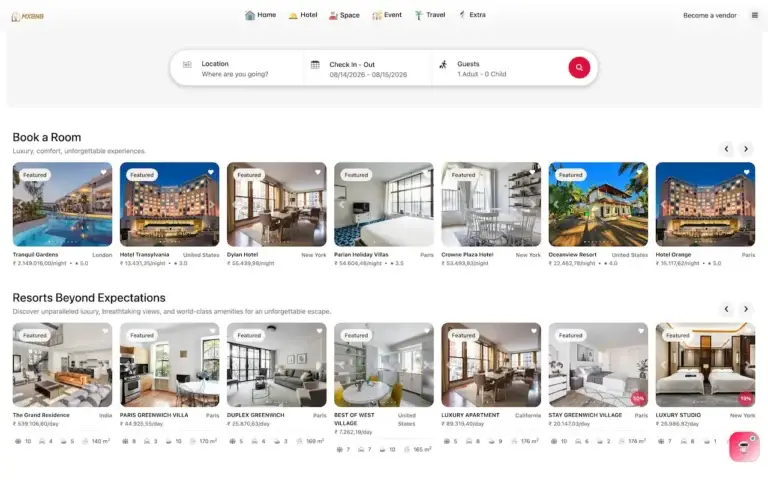
- 01Per-room calendars, so one property cannot double-sell a single room
- 02Instant confirmation or enquiry-first booking, chosen per listing
- 03Seasonal rates, length-of-stay discounts and host-set cleaning fees
- 04A payout queue hosts can see, with request, review and completion states
- 05Per-listing translation across fifteen languages, right-to-left included
Underneath sits Laravel 10 on MySQL: more than forty tables, and six payment gateways. There are over twenty admin modules, plus fifteen pre-configured languages that include right-to-left layouts. Six further inventory types (spaces, cars, tours, boats, events and flights) live in the same codebase, switched off until a market asks for them.
Features
9flats Clone Features: Listings, Calendars, Pricing and Host Payout Schedule
Everything below ships in the base platform and is demonstrable in the live demo. Miracuves ordered these 9flats clone features by where a short-stay operator actually spends their time, which is the host side.
Listings and Room Types
Apartments, private rooms and whole homes, with several room types under one property, each carrying its own rate, occupancy ceiling and bed configuration.
- Apartment, room and whole-home listings
- Several room types per property, each priced on its own
- Occupancy ceilings and bed configuration per room
- Check-in windows, house rules and minimum stay
Host Onboarding and Verification
Self-service signup with document upload, reviewed by you before anything publishes, with commission and listing allowance agreed at approval.
- Self-service onboarding with document upload
- Identity and business details captured before publishing
- Per-host commission agreed at approval
- Host roles carrying a listing allowance
Room-Level Calendar
Availability held per room rather than per property, with blocked dates, stay limits, booking windows and iCal export to keep outside calendars honest.
- Room-level calendar, not property-level
- Blocked dates, advance-booking window, min and max stay
- iCal export so external calendars stay in step
- Conflicts refused at request time, not after payment
Pricing Rules
Seasonal and date-range rates, weekly and monthly discounts, extra guest charges, and coupons bounded by usage limits and minimum totals.
- Seasonal and date-range rates
- Length-of-stay discounts for weekly and monthly guests
- Extra guest charges above a base occupancy
- Coupons bounded by usage limit, window and minimum total
Fees and Deposits
Host-set cleaning charges and security deposits running through the platform total, alongside your own service fee, all itemized on the record.
- Cleaning fees set by the host, not by you
- Security deposits held and released on platform
- Platform service fee carried into both sides of the total
- Every charge itemized on the booking record
Host Payout Schedule
Earnings accrue net of commission, the host requests, you review and complete, and the history stays available for reconciliation and tax.
- Earnings accrue net of commission and fees
- Host requests payout, operator reviews and completes
- Bank transfer and PayPal supported out of the box
- Payout history retained for reconciliation and tax
Guest Search and Discovery
Location, dates, guests, price band, amenities and rating, with autocomplete, map view and distance sorting.
- Search by location, dates, guests, price and amenities
- Autocomplete on locations and listing names
- Map view with coordinates and distance sorting
- Listing pages with gallery, video, reviews and map
Booking Rules and States
Instant or enquiry-first per listing, availability revalidated before payment, and eight booking states with operator override.
- Instant confirmation or enquiry-first, set per listing
- Availability revalidated server side before payment
- Eight booking states from draft through to completed
- Manual operator intervention on any booking
Payments and Partial Payment
Six gateways plus the wallet, deposit models, balance reminders, invoicing and refunds from the admin.
- Internal wallet alongside six gateways
- Partial payment where a deposit model is used
- Balance reminders ahead of arrival
- Invoicing and refunds handled from the admin
Reviews, Messaging and Enquiries
Reviews limited to completed stays, a moderation queue with host replies, live messaging and structured enquiry threads.
- Reviews restricted to stays that actually completed
- Moderation queue with host right of reply
- Live guest to host messaging over Pusher
- Structured enquiry threads for quoted stays
Languages and White-Label
Per-listing content by locale, fifteen languages, right-to-left support, and full branding across every surface.
- Per-listing translation, not just interface strings
- Fifteen languages pre-configured
- Arabic and Hebrew supported with a right-to-left layout
- White-label branding applied to web, apps and email
Six More Types, Switched Off
Spaces, cars, tours, boats, events and flights already share the booking and payout path. Enable any of them from the admin when your market asks.
- Spaces, cars, tours, boats, events and flights
- Each shares the booking, payment and payout path
- Switched off in the admin until you want them
- Enabling one later needs no rebuild
all the capabilities listed above come with the base platform and are white-label. Anything that runs on a third-party account, for instance OTA sync or a further payment rail, comes as an add-on module.
Monetization Engine Behind It
9flats Clone Revenue Models: Commission, Plans, Fees and Boosts
Short-stay margin is thin per night, so the 9flats clone from Miracuves earns it from more than one place. Each lever below is modeled separately, which means you can raise one without quietly breaking another.
- 01
Commission, Frozen per Booking
Your cut of each stay, set platform-wide or overridden for an individual host, as a percentage or a flat amount. The rate in force on the booking date is stored on that record, so last quarter's reporting stays true after you reprice.
- 02
Host Plans With Listing Caps
Subscription tiers carrying their own price, duration and annual option. Each maps to a role with a listing allowance, so a host on the entry tier hits a ceiling and upgrades to publish more. This is the line that keeps paying in a quiet season.
- 03
Platform Service Fee
A fee on top of the stay total, set once and carried into both the figure the guest is shown and the figure the host is owed, so neither side meets a surprise at checkout.
- 04
Cleaning and Deposits, On Platform
Hosts attach their own cleaning charges and security deposits, and those run through the same total calculation as everything else instead of being collected in cash at the door where you can neither see nor insure them.
- 05
Sponsored Listings
Promotion sold as position rather than as a share of a booking. It earns whether or not the listing converts, which is the only line here that is indifferent to occupancy.
- 06
Held Balance Float
Guest credit and accrued host earnings rest in the platform wallet between payout runs. The balance sits with you until it is withdrawn, and every movement against it is auditable per transaction.
| Revenue stream | How it is charged | Take rateTypical range | What sets the ceiling |
|---|---|---|---|
| Commission per Booking | A share of each stay, or a flat amount, deducted from the host payout once the booking is confirmed. | Airbnb host-only fee: 15.5% for most hosts, 14%-16% range. Vrbo US: 5% plus 3% processing. | What hosts already pay elsewhere. Airbnb is phasing out its split fee, and a Vrbo help article cites a flat 12% all-in, so a rate far above that band needs a clear reason. |
| Host Plans With Listing Caps | A flat fee per period that unlocks a larger listing allowance, due whether or not the host books a stay. | A price point, not a percentage. Vrbo's annual listing subscription is closed to new partners. | The commission a host would pay anyway. Vrbo is moving its remaining subscribers to pay-per-booking from October 2026, so the incumbent is retreating from flat fees. |
| Platform Service Fee | A guest-side charge added to the stay total and shown at checkout, separate from the host commission. | Airbnb split-fee guests pay 14.1%-16.5% of the booking subtotal; hosts pay about 3%. | Competitor fees and disclosure law. The top of Airbnb's range applies to cross-currency bookings, and the FTC rule in force since May 12, 2025 makes US lodging sellers show the total price upfront. |
| Cleaning and Deposits | Host-set cleaning charges and refundable deposits that travel through the platform's own payment flow. | Vrbo: 3% processing on taxes and deposits; its 12% flat fee also covers cleaning charges. | Whether add-ons count toward the commissionable total. Vrbo commissions cleaning but not deposits, which lifts the effective rate on a stay above the headline percentage. |
| Sponsored Listings | Paid search position, sold either as a fixed fee or as extra commission on the bookings it produces. | No fixed rate. Booking.com adds a percentage to base commission for paid visibility programs. | Measured payback. Booking.com reports Preferred partners average 65% more search views and 20% more bookings, and Expedia Group reported advertising, media and other at 8% of 2025 revenue. |
How to read this. The service-fee and host-only commission figures are published on the Airbnb Help Center. Vrbo's rates come from its host page and a pay-per-booking help article, which describe different structures, so both are quoted; its subscription help page confirms the closure to new partners. Booking.com's commission guide says programs add a percentage but gives no flat uplift, and its Preferred Partner page carries the 65% and 20% averages. The advertising share is from Expedia Group's 2025 10-K, and the disclosure rule is the FTC fees rule guidance. All of this is published platform pricing, which makes it raw material for scenario testing; the table offers no pricing and implies no earnings figure.
9flats Clone Revenue Model, Stage by Stage
Thin nightly margins mean this 9flats clone earns from several lines, opening with commission per stay and adding host plans, sponsored listings and the guest service fee as hosts settle in.
First season
Commission per stay carries the opening months, with cleaning charges and deposits kept on platform so every part of a stay shows on the record.
Steady hosts
When hosts stay on past their first months, plans with listing caps become the line that pays in a quiet season, and sponsored listings sell search position.
Several cities
Across more markets, the guest service fee and the float in the platform wallet between payout runs add income that no single city's occupancy decides.
Each stay stores the rate in force on its booking date, so repricing never touches what a host was already owed.
Commission and host plans are the two that decide the shape of the business, because they price different things: what a booking is worth, and what being listed at all is worth. Commission is stamped onto each booking as it is created, so a rate change next quarter cannot reach backwards into what a host already earned.
Design My Revenue ModelControl Center
Admin Dashboard for a Host-First Rental Marketplace: Compliance, Payouts, Bookings, Hosts and Users
More than twenty modules, each sitting behind its own permission. On a stay platform the daily work is narrow, and the admin Miracuves built for the 9flats clone is laid out for it: approve the hosts worth having, keep listings honest, and move money out on time. Everything else is periodic.


Owner Oversight Tools
- 01
Operations Dashboard
Revenue, bookings and growth on one screen, with the two things needing a decision today, host applications and payout requests, raised as actions instead of buried in a list.
- 02
Host Approval and Verification
The upgrade workflow end to end: identity documents reviewed, business details captured, commission agreed, listing allowance set. A host is checked before anything they own reaches a guest.
- 03
Property Listing Review
One queue you can filter by status, with bulk approve and reject, control over featured placement, and complete edit access to any listing when a host uploads something you cannot publish.
- 04
Payouts and Reconciliation
The payout queue with review, approval and completion tracking, per-gateway transaction monitoring, and retained history so month end and tax season are lookups rather than investigations.
- 05
Reservation Monitoring
Every stay on the platform with status filters, detail view, manual status change, payment state and refund processing for when a guest situation needs a human.
- 06
Commission and Coupons
Commission platform-wide or per host, percentage or fixed, plus a coupon engine bounded by usage limit, validity window, minimum total and per-user restriction.
- 07
Accounts and Permissions
Search and filter accounts, assign roles, block or publish, override email verification, and compose custom roles by picking permissions module by module.
- 08
Locations and Languages
A nested location tree: country, then state, then city, then neighborhood. A translation surface covers both interface strings and per-listing content.
Content and Templates
CMS pages, a news engine, templates for email and pages, a media library whose watermark module protects host photography, and a menu builder.
- Pending host applications waiting on your decision
- The payout queue, with review and completion states
- Occupancy, revenue and booking volume on one screen
- Payment state and refunds per individual booking
System and Extensibility
Switch capability on or off for each deployment through module and plugin management, along with cache and optimization tools and a log viewer that has its own permission.
- Location tree from country down to neighborhood
- Translation for interface strings and listing content
- Email and page templates under your branding
- Media library with watermarking for host photography
Governance beyond this, such as territory-scoped administrators or finance-system exports on a schedule, plugs in via the module and hook system, so nobody has to rebuild the admin.
Request an Admin Walkthrough04What ships and what it costs
Deliverables
Included With the 9flats Clone Script: Deployment, Apps and Source Code
Miracuves hands you the 9flats clone system itself, not permission to operate someone else's copy of it. No usage is metered later, so there is no fee per booking and no cut of revenue. What you still pay for sits with your own providers: hosting, gateway accounts and the effort of signing up hosts.
Android App
A branded build on the same REST API, carrying both the guest journey and the host dashboard so an owner can clear a calendar conflict from a phone.
- Branded Android build for guests and hosts
- Book, message and review from the phone
- Hosts manage calendar and request payouts on mobile
- Push notifications and document upload

iOS App
Identical features powered by the shared API; App Store submission is covered within publishing support.
- iOS build against the same shared API
- Parity with the Android feature set
- Your icon, splash screen and color scheme
- We take care of the App Store submission


Guest Marketplace and Host Console
The public site guests book through, plus the surface hosts actually live in: calendar, rates, enquiries, earnings and payout requests.
- Guest marketplace with full search and listing pages
- Host console for calendar, rates, enquiries and earnings
- Listing pages built to be indexed
- Responsive from desktop down to phone

Owner Admin Console
More than twenty modules: users and hosts, listings and bookings, payments and payouts, plus content and system logs.
- More than twenty admin modules
- Granular per-module permissions
- Host approval and listing moderation
- Commission, coupons and payout processing
$ git clone your-platform Complete Laravel 10 Codebase
The whole backend, admin and public site arrive unencrypted, yours to change, rebrand and redeploy without asking us.
- Complete Laravel 10 source, nothing encrypted
- The REST API every client is built on
- Database schema with migrations
- Upgrade scripts between versions
APIs and Integration Layer
Six gateways behind one common interface, plus mail drivers, Pusher realtime, Google Maps and social login.
- Six payment gateways pre-integrated
- SMTP, Mailgun, Postmark and SES mail drivers
- Pusher for live chat and notifications
- Google Maps and social login
Branding and Re-Skinning
Swap the name, logo, splash screens, colors, fonts and transactional email, leaving nothing of ours visible anywhere.
- Your own colors, plus the splash screen, the logo and the app’s name
- Transactional email under your branding
- Custom domain configuration
- White-label on every surface, with no vendor mark
Deployment and Post-Launch Support
Server setup with SSL, mail and gateways, then 60 days of guidance, 6 months of priority bug fixes and 12 months of updates.
- Servers configured at the provider you pick
- SSL, mail and gateway configuration
reserve a walkthrough and we will bring up the guest app, host console and operator admin populated with live data, followed by the repository layout you would own.
Straightforward Price Tiers
How Much Does a 9flats Clone Cost?
A launch-ready white-label 9flats Clone is $3,099, paid once, and goes live in 6 working days under your branding on hosting you own. That figure is fixed rather than a starting point. What is quoted separately is work beyond the base: additional payment rails, a channel manager, housekeeping, extra languages, or publishing scope on the stores.
Professional
Launch-Ready Packaged BuildWell matched to: Tourism boards, vacation rental operators & travel brands offering several services
The product matches what our demo shows, carrying your branding and hosted on your own infrastructure.
Get StartedEnterprise
Bespoke, Regulated, High-TrafficWell matched to: Enterprise travel operators, OTAs, property managers & hotel groups
Built to order around your circumstances and what the business requires.
Request a Quote9flats Clone Development Cost in 2026
A single $3,099, fixed and paid once, covers the whole 9flats clone rather than a starting quote: guest marketplace, host console, operator admin, Android and iOS Flutter builds and the unencrypted Laravel 10 source, set up on hosting you own in six working days.
Costs that sit with your own providers
- Hosting at the provider you pick
- Gateway merchant accounts your company contracts
- Signing up hosts and moving their apartments onto the platform
- Store developer accounts in your company's name
- Add-ons such as housekeeping, smart rates or the channel manager
Booking logic beyond the base is written against its hooks for booking creation and price calculation, priced in a written scope and built over 2-8 weeks; OTAs and hotel groups take the Enterprise quote.
Compare Your Options
Ready-Made 9flats Clone vs Custom Development vs SaaS
Host-first short-stay marketplaces come from three places: buying this 9flats clone outright, commissioning developers, or renting a booking platform. Here is what each means for launch date, cost and control.
| Criteria | MiracuvesReady-Made 9flats Clone | Custom Development | SaaS |
|---|---|---|---|
| Launch time | A branded marketplace live in 6 working days | Custom builds run 6 to 9 months | Opens fast on a shared template |
| Upfront cost | A single $3,099 | A written quote per scope | Monthly plan from day one |
| Source code ownership | Full Laravel 10 and mobile source in your own account, unencrypted | Normally assigned by contract | Remains with the vendor |
| Customization | Open code; a city minimum-stay rule or co-living plan is quoted, usually 2-8 weeks | Built to the brief you fund | Confined to vendor options |
| Ongoing fees | No booking fee or revenue share; hosting and gateway accounts are your own bills | Support retainer per contract | Recurring fees that grow with use |
| Branding & app-store listing | Your name, icon and colors; Miracuves handles submission in publishing support | Your brand; listing costs extra | A vendor-branded app is common |
| Best for | Apartment and room operators who want hosts to stay | A booking model nobody sells ready-made | A first season before buying software |
Same product, other editions: Airbnb Clone · White Label Vacation Rental Software · Peerspace Clone · Browse all Rentals solutions
Use-Case Fit
Where an App Like 9flats Fits: City Stays, Owner Portfolios, Hotels & Seasonal Markets
One platform underneath all six. What changes is which host problem leads and which rules get tightened.
Swipe · 6
Apartments and private rooms in a single city, with host onboarding, a room-level calendar, guest payment and a payout queue under your own brand. Miracuves delivered BNBinGreece and GoToRawanda in this shape, and in each case the base carried listings, calendars and payments while the effort went into local payment methods, guest languages and the property types those markets actually list.

A manager with owners who can see exactly what the OTAs deduct. Going direct only holds if the owner-facing side is better than what they left, which means a calendar that cannot double-sell, commission fixed at the moment of booking, and a payout they can watch move through review to completion without asking anyone.

Room-type inventory gives each category its own rate, occupancy ceiling and minimum stay, while a whole-apartment listing alongside it works the way a private rental does. Ischia Booking was built with precisely this mix, with a channel manager holding the OTAs selling the same rooms in step.

Longer bookings, recurring billing and turnaround states that matter more than review scores. Length-of-stay discounts do the pricing work, and housekeeping tracking is available as an add-on when room status becomes the daily operational question.

Markets where the year is decided by twelve weeks. Seasonal rate tables carry the peak, minimum-stay rules protect the weekends worth having, and advance-booking windows stop next summer being sold at this summer’s prices.

Agencies and networks that run one branded marketplace for each client or territory, every one a separate deployment, share an operating model while data and branding stay completely separate.

9flats Clone Business Model: Three Ways to Run It
Keeping hosts decides a short-stay business, so each of these three operating models leans on the same room calendars, per-booking commission and host payout queue.
City marketplace
Recruit apartment and room hosts in one city, earn commission per stay, and keep them with a room-level calendar and a payout queue they can watch.
Owners going direct
A property manager moves owner portfolios off the OTAs onto a branded channel, keeping the commission and the guest list that used to go elsewhere.
Serviced and seasonal stays
Corporate or coastal operators lean on length-of-stay discounts, seasonal rate tables and minimum-stay rules, adding housekeeping as a paid module once turnaround becomes the daily question.
Flights, events, boats, tours, cars and spaces already sit in the codebase behind a switch, so a later vertical starts from the same bookings table.
Shared pattern: the calendar, the wallet, the review system and the payout pipeline are identical in all six. What differs is which rules you tighten, and every one of those is an admin setting.
Discuss My Use CaseMarket Timing
What Makes 2026 the Time to Open a Rental Marketplace?
Two things decide whether owning a 9flats-style platform from Miracuves beats listing on one. The commission is the obvious one: the large platforms take a double-digit percentage of every night sold, and an operator running their own marketplace simply does not pay it. The second is quieter and worth more over time. On a third-party platform the guest is not yours. You cannot email them, you cannot bring them back, and if your ranking slips one season you discover how little of that audience you ever held.
01The Commission Stays With You
Every night booked pays your rate instead of somebody else's. On a portfolio already turning real volume, that single line usually pays for the platform inside the first season.
02The Guest List Is Yours
Email addresses, stay history and who came back last year sit in a database you control. Repeat guests are the cheapest occupancy there is, and they are impossible to build on rented ground.
03You Already Have the Hard Part
Short-stay platforms fail for want of supply, not software. Whoever already manages the apartments has solved the expensive half and is only missing the machinery.
04Where the Incumbents Are Weak
A regulatory requirement, a property type, a guest language or a local payment rail that the global platforms treat as an edge case is a durable opening. All four are configuration here rather than development.
05Depth Where Hosts Actually Leave
Hosts churn over calendar conflicts, unclear payouts and pricing they cannot control. Room-level availability, per-booking commission frozen at booking time, and a payout queue they can see are the retention levers, and they are the whole product here.
06Not a Year-Long Build
What consumes a custom build is the unglamorous work: permissions, payouts, pricing, availability and a console. Here that work is already done, which is why 6 working days to launch is realistic.
Platform in Figures Today
Booking Statuses
Checkout Gateways Supported
Back-Office Module Count
Supported Languages
The honest counter-argument: the incumbents supply demand and you will not. Owning a platform makes sense when you already hold the supply, when you have an audience of your own, or when your market runs on a payment method or a language the global platforms handle badly. If none of those is true of you, listing on an existing platform is the better answer and we would rather say so now.
Industries
Industries We Serve
Miracuves' 9flats clone fits anyone renting space by the night and paying somebody else a share of it. Apartment managers lean on room types, seasonal rates and the payout queue. Hotel groups lean on per-category inventory and channel sync. Serviced and corporate providers run longer cycles with recurring billing and housekeeping states. Student and co-living operators price by month rather than by night. Property managers going direct care most about what their owners can see. Agencies launch one branded marketplace per client or territory.
one platformMXBnb
- 01VrHoliday Homes
- 02HrHotel & Resort Groups
- 03TbDestination Boards
- 04CrVehicle Hire Sites
- 05McBoats & Yacht Charters
- 06EtEvents & Ticketing
- 07TeActivities & Excursions
- 08ChBusiness Stays
- 09DpRegional Portals
- 10PmProperty Managers
- 11TaBooking Agencies
- 12AbStudios & Dev Shops Reselling
Underneath every one of them it is the same thing: inventory sold by date, priced by rules you set, under a brand that is entirely yours.
06Under the hood
Behind the Scenes
How a 9flats Clone App Works: Search, Book, Hosting, Payout
Between a guest arriving and a host being paid, the 9flats clone app Miracuves builds runs six stages. Every decision in the chain is made on the server, which is the whole difference between a booking engine and a form that sends you an email.
Booking to Payout
Swipe · 6
- 1Find a Short-Stay Apartment
A guest arrives, narrows the results to a place worth booking and opens that listing.
- Filter by place, dates, number of guests, price range, amenities and rating
- Autocomplete on place names and listing titles
- Map view with coordinates and sorting by price, rating or distance
- Listing page carrying gallery, video, amenities, house rules and reviews
- 2Check the Dates Are Free
Real room inventory is checked first, before any payment field appears.
- Checked against the date tables and every booking already held
- The booking window, shortest stay and longest stay are all enforced
- Clashes refused at source rather than reconciled afterwards
- Room-level, so two rooms in one property never collide
- 3See the Final Price and Discounts
The server rebuilds the total and its discounts, so the figure in the browser carries no weight.
- Seasonal and date-range rates applied over the base nightly rate
- Length-of-stay discount, extra guest charges, cleaning fee, security deposit
- Coupon tested against usage limit, validity window and minimum total
- Your service fee and the host's own fees folded into one figure
- 4Reserve the Apartment and Pay
The guest fills in their details, the reservation is recorded and payment runs on the gateway you enabled.
- Booking created with a unique code, opening in draft state
- Stripe, PayPal, PayStack, Payrexx, offline transfer or platform wallet
- Partial payment where you run a deposit model
- Gateway webhook verified by signature before anything advances
- 5Receive Booking Confirmation
Confirmation locks the nights in the calendar and alerts the guest, the host and your team.
- Dates blocked and pushed out to any iCal consumer
- The guest gets a confirmation and the host gets a booking alert
- Live in-app notification through Pusher
- The commission is worked out and fixed on the booking record
- 6Stay, Review and Release the Payout
When the guest checks out, guest reviews open and the host payout moves forward.
- Booking flips to completed once the end date passes
- Review invitation sent, and only a completed stay can leave one
- Once commission and fees are deducted, the host's earnings become available
- Host requests payout, you review it, you mark it complete
Behind The Scenes
How a 9flats-Like Platform Is Put Together: Architecture & Backend Flow
- 01Layer 01
Availability Is Computed, Never Cached
Every request is checked against the date tables and the bookings that already exist, rather than trusting a flag someone set earlier. It costs a query and it is the single control standing between you and selling the same room twice on a bank holiday.
- 02Layer 02
Commission Frozen on the Record
The rate and its type are written onto the booking as it is created. Repricing the platform next quarter cannot reach back and change what a host earned last quarter, which is what makes historical payout reporting defensible.
- 03Layer 03
One API Behind Every Client
Guest web, host console and both mobile builds speak to the same REST API against the same booking contracts, so the app and the website can never disagree about what a guest has reserved.
- 04Layer 04
One Bookings Table, Any Inventory
Bookings attach to inventory through an object type and id pair, so payments, reviews, reporting and payouts were written once and already work for the six types you have switched off.
- 05Layer 05
Drivers, Not Rewrites
Cache, queue, session, mail and storage all sit behind driver interfaces. Moving from file to Redis, or from local disk to S3, takes one line of configuration rather than a migration with a project plan attached.
- 06Layer 06
Extend Through Hooks, Skip Forks
Action and filter hooks plus a plugin directory let your own logic attach to booking creation or price calculation without touching core files, so the next platform update does not quietly delete your customization.
Technology
Tech Stack Behind This Short-Stay Rental Software: Flutter, Vue.js, MySQL and Laravel 10
Laravel 10, MySQL 8, Vue.js and Flutter carry this 9flats clone from Miracuves, and none of it is fashionable, which is the entire argument. You can hire a Laravel developer in any city on earth, and the day you decide to stop working with us the platform keeps running without a single call.
Core Logic & Endpoints
- Modular monolith, 20+ domain modules
- Eloquent throughout, parameters always bound
- Sanctum tokens and JWT on the API
- Hook and plugin system for your own code
Reservations, Properties & Payments
- 40+ tables covering every domain
- One bookings table serving all inventory types
- Composite indexes on the object type and id pair
- Full-text indexes where guests actually search
Guest & Admin Front Ends
- Blade rendering the public marketplace
- Vue components inside the admin surfaces
- Responsive from desktop down to phone
- Theme system with template overrides
Guest and Host Apps
- One codebase producing Android and iOS
- Same REST API as the web marketplace
- Push notifications and camera upload
- Guest journey and host console both present
Live Chat & Real-Time Updates
- Guest to host messaging
- Notifications delivered live in app
- Unseen counts and read receipts
- Images and files shared in thread
Hosting & Scalability
- Cache, session and queue behind drivers
- Queue workers supervised
- Galleries on S3 or Google Cloud via CDN
- Read replicas available for reporting
this is a modular monolith and not microservices, deliberately. Twenty-odd modules each hold their own models, controllers, views, routes and migrations, all packaged in a single deployable application, which gives you the separation without paying to operate a distributed system a stay marketplace does not yet need. When it does need one, cache, queue, mail and storage are already behind drivers, so the change is configuration rather than architecture.
Build to Scale
Ready for Growth: Storage, Queues and Caching That Keep Pace
Short-stay traffic is spiky in a specific way: a city fills up on the same fortnight every year, and search gets hammered long before anything is booked. Miracuves kept the scaling path of the 9flats clone deliberately unremarkable, because unremarkable is what survives that.
Replicas Keep Reporting Away From Booking
Browsing outnumbers booking heavily, so the two are kept apart.
- Read and write splitting sends reporting and heavy search to a replica
- The booking path keeps the primary to itself
- A heavy occupancy report cannot slow down a guest trying to confirm a stay
Redis for Session, Cache and Queue
Three drivers, one configuration change, and the single highest-value move when you outgrow one box.
- Once session and cache sit on Redis the application is stateless
- Placing a second app server behind a load balancer counts as infrastructure work, not a development project
- Because each module is self-contained, whichever one gets hot can be tuned without disturbing the rest
Galleries on a CDN
A short-stay listing carries thirty images and a rental platform carries thousands of listings.
- Galleries move to S3 or Google Cloud behind a CDN by switching the storage driver
- Thumbnails are cut on upload rather than on request
- A watermark module protects host photography from being lifted onto a competing listing
Queues Under Supervisor
Mail, image processing, exports and report generation run as queued jobs under Supervisor, with failed jobs captured and retried on a backoff.
- A booking surge cannot stall a page render
- A mail provider having a bad afternoon degrades delivery instead of checkout
Indexed on Dates and Types
Date ranges on bookings, composite indexes on the object type and id pair, full text on searchable content.
Eager Loaded, Always Paginated
The calendar and listing views stay off the N+1 path, and no endpoint returns an unbounded set.
- Related models are eager loaded
- Every list endpoint paginates
starting on one modest instance costs you nothing later. Every step above is a driver or a server, not a rewrite, so the code you launch with is the code you scale with.
07Security and operator duties
Built to Be Audited
Security in a Short-Stay Rental App: Mapped to OWASP, Ready for GDPR, Documented Candidly
Any 9flats clone, the Miracuves build included, holds two things worth stealing: money owed to hosts, and the home addresses of people who are demonstrably away from home. Those two paths are the ones documented hardest in the OWASP-mapped VAPT reference that ships with the platform, and the ones any penetration test you commission should be pointed at first.
- 01 · PaymentsCard Numbers Never Reach You
The gateway captures and tokenizes, so no primary account number is written to your MySQL instance at any point. That is what keeps the deployment assessed under PCI DSS SAQ A instead of the far heavier SAQ D. Payment webhooks are checked by HMAC signature before a booking is allowed to change state, which means a forged callback can never confirm a stay nobody paid for.
- 02 · UploadsHost Documents Checked by Content
Host verification means identity documents on your disk. Each upload is read with finfo and judged on its magic bytes rather than its filename, so a renamed executable is refused before the controller sees it. What survives is rewritten to a random forty character name, stored at 0600, and resolved through realpath so no traversal sequence walks out of the uploads directory.
- 03 · QueriesInjection Closed at the ORM
Queries go through Eloquent using bound parameters, so no string concatenation is left for SQL injection to exploit. Host and guest rich text is passed through HTML Purifier against an allow-list of tags set per field, and Blade escapes output by default, so a stored payload would have to get past three independent layers before it renders for anyone.
- 04 · AccountsLayered Account Security
Bcrypt password hashing, expiring signed URLs for email verification, and TOTP two-factor through Laravel Fortify with single-use backup codes. API access uses Sanctum tokens with explicit abilities that can be revoked individually, and a password reset is a signed link good for sixty minutes rather than a guessable string.
- 05 · TenancyOne Host Cannot Read Another
Hosts can reach only their own records, and that is the control preventing someone from incrementing an id in the URL and reading a competitor's bookings and payouts. Operator permissions are granular per module, so a finance clerk settles payouts without reaching user management, and every admin route sits behind middleware rather than obscurity.
- 06 · PrivacyGuest Privacy in the Schema
A GDPR export returns profile, stays, reviews and payment history as a structured file. Deletion anonymizes instead of orphaning: financial records you are legally obliged to keep retain their totals, and only the personal data is removed. Soft deletes hold a thirty day recovery window and retention is configurable per data class.
That document is unusual mainly for what it refuses to do. It keeps controls enforced in code separate from controls set at deployment, and names the second group item by item rather than blending both into a single table. The cards here are the first group. The list below them is the second, named rather than implied. We build to what the common frameworks expect and we say which parts are configuration. Miracuves codes to the requirements of ISO 27001, SOC 2 and GDPR; the independent audit partners we bring in take you through the audit, and the attestation carries your company name, not ours. Scope is covered in FACT-010 on audit scope.
Request the Security Brief- 01No CAPTCHA Is Bundled
- 02Logging Is Baseline, Not Observability
Daily rotating logs, payment transaction trails and login history are all present from day one. Failed login alerting, permission denial logging and shipping events to Papertrail, Datadog or another aggregator you run are set up as deployment options.
- 03Dependencies Need an Owner
Every version is pinned by Composer and npm lock files, yet OWASP A06 is not something code can solve. What it takes is a named person applying patches after handover, a subscription to Laravel security advisories, and composer audit run on a schedule. We set that schedule with you instead of pretending the risk is closed.
- 04Gateway Certificate Verification
- 05
- 06Headers and HTTPS Live on the Server
Web server and environment configuration is where APP_HTTPS, HSTS, X-Frame-Options, Referrer-Policy and Content-Security-Policy get set, never application code. Each one is an item on the hardening checklist we work through at deployment.
Operator Responsibilities
Readiness of a 9flats Alternative: What the Software Does and What Stays With the Marketplace Owner
A 9flats clone is software, and it does not come with permission to rent out property. What Miracuves builds and hands over is the platform layer covered on this page: hosts onboard by uploading documents and passing a manual review before anything publishes, then listing moderation, calendars per room, itemized booking records, reviews restricted to completed stays, payouts that run through a queue you can see, anonymizing deletion plus GDPR export, and login history alongside payment transaction trails. Each city or country where you operate a short-stay marketplace brings its own duties, and software cannot take those on for you; they remain with your operating company.
“Ready” means the tooling is in the product: documents are captured before a host goes live, every charge on a stay is itemized on the record, card numbers stay with the gateway, and personal data can be exported or anonymized on request. Each city’s rules are applied by you as the operator, and Miracuves does not provide legal, tax or regulatory advice.
Software Capabilities Overview
Hosts sign up and give identity and business details before anything goes live; from there it covers operator approval, listing moderation, availability set per room, itemized cleaning fees plus deposits, moderation of reviews, iCal export, payout requests that pass through review, then completion, and deletion or export of data under GDPR. The source code is delivered and owned by you.
Short-Stay Registration and Local Rules
Many cities and countries require a registration or license number per rental unit, cap nights per year or restrict letting in certain zones; across the EU, Regulation (EU) 2024/1028 adds unit registration and data-sharing duties for platforms. Which rules apply, and whether a listing may go live, is decided by your market and enforced by your own policies.
Occupancy and Tourist Taxes
Tourist, city and occupancy taxes, VAT on your commission and service fee, and any reporting of host income to tax authorities are set by each jurisdiction. The platform itemizes every charge on the booking record; who collects, remits and files is your decision and your filing.
Host Verification and Payouts
The software captures documents and gives you an approval step; the verification standard you apply is your policy. Guest payments and host payouts run through the gateways and the payment provider you contract, under that provider’s license and terms. Confirm your setup with local counsel and your payment provider.
08Grow the platform
- Listings & calendars
- Pricing rules
- Bookings & payments
- Host settlements
How add-ons work
- 1Choose your modules a la carte
Add modules before go-live or at a later date, and the core is left untouched, no rebuild needed.
- 2Quoted per module on scope
A written scope and a separate price accompany each module.
- 3Merged into your repo
Same as the core product, modules arrive with source code that belongs to you.
Go Further
Add-Ons for a Host-First Rental App: Custom Connections, Dynamic Pricing & Channel Manager
Miracuves' 9flats clone is complete and demonstrable before any of this. What follows is what operators come back for once they have real hosts and a real season behind them, usually because it needs a third-party account or because their volume finally justifies it. Each is scoped and priced on its own.
Hover to pause · drag to look around
- 01Channels & distribution
Channel Manager and OTA Sync
Two-way sync with the OTAs your hosts already sell through, so rates and availability agree and no room is ever sold twice in two places. Ischia Booking was delivered with exactly this.
OTA · Channel Manager Sync - 02Pricing & payments
Smart Rates
Rate suggestions from demand, competitor movement and your own occupancy history, written into the seasonal rate tables that already exist rather than parked in a second system beside them.
Rates · Demand-Based - 03Operations & finance
Housekeeping and Turnaround
Room states of clean, dirty, inspected and out of service, plus turnaround scheduling and staff assignment. The module that matters most once same-day changeovers start.
Cleaning · Turnover Ops - 04Operations & finance
Identity Verification and KYC
Automated document checking for hosts or guests where your jurisdiction demands it, in place of the manual admin review that ships as standard.
Verification · KYC
- 05Pricing & payments
Extra Payment Methods Add-On
Beyond the six included, you can add local gateways and mobile money. Gateways sit behind one interface, so supporting a new rail means writing a class that implements it, not surgery on the booking flow.
Payments · Regional Methods - 06Operations & finance
Accounting and Finance Export
Bookings, payouts and commission exported on a schedule into QuickBooks, Xero or your own ledger, so month end stops being someone reconciling by hand.
Accounting · Finance Sync - 07Channels & distribution
Apple App Store Release, Included
Your iOS app comes with the base, and we take it through App Store submission on your own Apple account: build signing, review responses and the metadata reviewers always ask for. Apple keeps its review clock outside the six days.
App Store · iOS Release - 08Multi-brand
Multi-Brand and Multi-Region
For agencies and networks running more than a single territory: several branded marketplaces on separate deployments that share one operating model.
Growth · Multi-Brand Rollout
More Travel and Rental Platforms
Working in Travel and Rentals? Compare Four Neighboring Rental Platforms.
Each platform below is a sibling of this one, delivered the same way, and each ends in a handover of the source code.
01A marketplace for boat and yacht charters, with vessel types, tiers by duration, deposits and captain options.
Explore Solution
02Car rental between peers, covering host fleets, the trip flow, driver verification and insurance handling.
Explore Solution
03An online travel agency for flights, hotels and packages, running on supplier inventory and booking management.
Explore Solution
04The same rental platform positioned for breadth: it runs all seven bookable service types on one engine, covering stays, spaces and cars as well as tours, boats, events and flights.
Explore Solution09The business case
Market Benchmarks
Vacation Rental Market: Independent 2025-2026 Benchmarks
Our own revenue models were set out earlier. What follows comes from other publishers: the annual reports of Airbnb and Booking Holdings, together with Eurostat and UN Tourism, shown unchanged. Read together, they indicate the share of each booking that a large short-term rental marketplace retains, and the travel demand behind it, so the business case can be tested against sources you are able to check.
Airbnb Turned 13.4% of Its Gross Booking Value into Revenue
Airbnb's annual report for 2025 is a Form 10-K filed on 12 February 2026. It reports $91,273 million of gross booking value and $12,241 million of revenue, with Nights and Seats Booked reaching 533 million. Revenue therefore equals roughly 13.4 percent of the total value booked, a benchmark for the portion of host and guest fees that a scaled marketplace holds on to.
Booking.com Lists 3.9m Alternative Stays
According to Booking Holdings' annual report for 2025, a Form 10-K filed on 18 February 2026, alternative accommodation properties on Booking.com, homes and apartments among them, numbered approximately 3.9 million at 31 December 2025. In 2025 these stays accounted for approximately 36 percent of room nights booked, compared with approximately 35 percent in 2024.
EU Guests Booked 951.6m Short-Stay Nights Online
Eurostat reports that short-stay accommodation booked online accounted for 951.6 million guest nights across the EU in 2025, up 11.4 percent from 2024. Bookings via Airbnb, Booking and Expedia make up the data. Eurostat gave the number in a news item dated 1 April 2026.
In 2025, International Tourist Arrivals Reached 1.52bn
UN Tourism estimates that the world recorded 1.52 billion international tourists in 2025, 4 percent more than in 2024, with Europe leading all regions at 793 million arrivals. Tourism export revenues set a record at USD 2.2 trillion. The source is its World Tourism Barometer, released on 20 January 2026.
Airbnb, Inc., Annual Report on Form 10-K for fiscal year ended 31 December 2025, filed 12 February 2026 - sec.gov
Booking Holdings Inc., Annual Report on Form 10-K for fiscal year ended 31 December 2025, filed 18 February 2026 - sec.gov
Eurostat, Tourism nights booked via platforms hit nearly 1 billion, news article, 1 April 2026 - ec.europa.eu
UN Tourism, International tourist arrivals up 4% in 2025 reflecting strong travel demand around the world, World Tourism Barometer, 20 January 2026 - untourism.int
Every number is the publisher’s own reported result or statistic, repeated without change. The only figure of ours is the 13.4 percent ratio: we took revenue of $12,241 million and divided it by gross booking value, $91,273 million. These describe the market. They say nothing about how a platform built by Miracuves performs, and none of it is intended as a revenue forecast for your business.
The Business Case in Brief
Marketability, Revenue Potential & Growth Outlook for Owners
The durable part of this model is that the lines do not rise and fall together. Commission tracks occupancy, host plans bill whether or not a room sells, and featured placement charges for position rather than for a transaction. A soft quarter therefore dents one line rather than all three.
- 01
Lines That Do Not Move Together
Commission follows occupancy, host plans bill regardless, placement charges for position. A quiet season costs you one of the three rather than all of them. The rate is yours to set, for every host or one at a time, and Miracuves takes no slice of the bookings.
- 02
Hosts Are the Scarce Side
Short-stay platforms die on supply long before demand. Whoever already manages the apartments starts with the expensive half of the problem behind them.
- 03
Retention Beats Acquisition by Year Two
A host who leaves takes their calendar, their photography and their repeat guests. Payout clarity and calendar reliability are what stop that, and both are core here.
- 04
Own the Platform Outright
The commission rate, the guest data and the source code are all yours, so what you are running is your own business and not a shopfront rented from someone else.
- Commission per stay, platform-wide or set for an individual host
- Host subscription tiers with listing allowances
- A platform service fee carried into guest total and host payout
- Cleaning charges and deposits kept on platform, not taken at the door
- Featured placement sold as position rather than as a cut
- Wallet float resting with you between payout runs
- 01A booking channel you own instead of a listing you rent
- 02Guest emails and stay history sitting in your own database
- 03A host roster that is itself the hardest asset to replace
- 04You pick the commission rate; nobody picks it for you
- 05Source code you can extend, license or sell with the business
Treat the figures below as illustrative operating scenarios you can adapt to model your own numbers; they are not results we are reporting. Our client outcomes are the named case studies on this page, and those are the numbers we vouch for.
Commission-led, one city, direct supply. Nearly every operator starts here, usually by moving inventory they already manage. Supply is the constraint, not demand: an empty marketplace converts nothing no matter how much traffic you buy, so the first year is won on host acquisition.
Commission plus host plans and fees. Enough hosts that subscription tiers begin to matter and the plan line starts covering fixed costs on its own. Retention overtakes acquisition as the number to watch, because a host lost in year two took their calendar and their repeat guests with them.
Subscription income on top of commissions. Separate branded deployments per territory or per client, with plan revenue and placement income arriving regardless of season. Revenue stops being purely transactional, which is the point at which the business gets valued on a different multiple.
10Why Miracuves
Why Miracuves
How Miracuves Stacks Up Against Other 9flats Clone Developers
A rental marketplace can come from several routes: stock scripts, freelancers, agencies, or full ownership of the infrastructure. Test any vendor, Miracuves included, by asking how one property avoids clashing bookings, whether commission can differ per host and where that rate is stored.
Why Founders Back Miracuves Builds
- 01
Six Days, Not Six Months
Your branded marketplace, deployed in 6 working days, against a custom build of 6 to 9 months. The parts nobody enjoys quoting, availability logic, pricing rules, payout workflow and permissions, are the parts already finished.
- 02
Source Code You Actually Own
The whole Laravel codebase, nothing encrypted, transferred into your account. Most script vendors hand over partial or obfuscated source, which quietly means every future change has to come back through them.
- 03
Depth on the Side That Churns
Generic scripts give you a listing page and stop. Hosts leave over calendar conflicts, opaque payouts and rates they cannot control, so room-level availability, a visible payout queue and full pricing rules are the product rather than the roadmap.
- 04
Security You Can Hand to a Reviewer
OWASP-mapped controls, a VAPT reference that separates what ships from what needs configuring, and working GDPR export and deletion. We build to what the frameworks require, and the audit that follows runs with an independent partner in your company's name.
- 05
Named Deployments, Not Testimonial Stock
Ischia Booking, BNBinGreece and GoToRawanda are published, named case studies. Each owns its code, transferred when the work was handed over.
- 06
A Priced Next Step
Channel manager, dynamic pricing, extra payment rails and multi-brand deployments are scoped add-ons with numbers attached, so you know the cost of your second year before committing to your first.
How to Choose a 9flats Clone Development Company
Ask a short-stay vendor to show room calendars and host payouts live, since hosts leave over those first.
What to look for Miracuves
- Room-level calendars Two rooms in one property never collide
- Commission locked per booking Stamped onto each stay at creation
- A payout queue hosts can see Request, review and completion states on the host dashboard
- Delivered operators Ischia Booking moved short-stay and hotel inventory here in 2024
- Code you own Unencrypted Laravel 10 and mobile source in your account
- Support terms Twelve months of updates, six months of priority fixes, sixty days of coaching
Walk away from any vendor who
- Holds availability per property, not per room
- Lets repricing reach back into last quarter's earnings
- Gives hosts a cut-down copy of the admin
- Collects cleaning fees and deposits off platform
- Hands over obfuscated source
See Why Operators Pick Us When They Need Packaged Rental Marketplaces
| Criteria | MiracuvesMiracuves 9flats Clone | Generic Clone Script | Custom Dev Agency |
|---|---|---|---|
| Time to Launch | 6 days (Production) | Unknown / DIY | 6-9+ months |
| Source-Code Ownership | Full | Often limited / encrypted | Usually yes |
| Feature Depth (short-stay marketplace) | High (host tools, calendars, payouts) | Basic (one listing type only) | Depends on budget |
| Security & Compliance | Strong (built against the controls, ready for GDPR) | Minimal | Varies widely |
| Scalability & Performance | Cloud & CDN-optimized | Rarely considered | Depends on architecture |
| Monetization Options | Multiple (commission, plans, fees) | Usually commission only | Custom (more time & cost) |
| Admin & Analytics | Full-fledged dashboard | Very basic or missing | Custom build (extra cost) |
| Cost vs Speed vs Quality | Balanced | Cheap but risky | High cost, slow |
| Ongoing Support & Updates | Available with clear plans | Usually none | Depends on contract |
Most routes to a stay marketplace look fine until the first real booking weekend. What actually separates them is narrow: what you own when it is finished, how long you waited, and whether anyone can still change it twelve months later.
Talk to Our TeamChangelog
Release Log for the Host-First Booking Software: Version History & Updates
| Version | Date | What’s New |
|---|---|---|
| v4.0 | Aug 2026 | VR gallery for stays and spaces. Features module added. Room-level availability and seasonal pricing extended. |
| v3.6 | 2023 | Wallet integration that adds transaction tracking and balance management for admins. |
| v3.5 | 2023 | Payment integration for plans, plus subscription billing across host tiers. |
| v3.0 | 2023 | A wallet system was added, and the booking workflow now supports partial payment. |
Let’s build together
Let’s get your concept running as a running business.
We offer a no-cost consultation, a defined timeline and straight answers. Winning your confidence counts for more with us than a rushed sale.
- Reply in 24 hrs
- Free consultation
- No lock-in contracts
- Full source code ownership
11Learn more
Blog & Resources
Latest Reading for a 9flats-Style Rental Launch
Writing on short-stay platforms: winning hosts, keeping them, pricing a seasonal market, and what going direct actually costs.


Product5 questions
01What is a 9flats Clone App?
A 9flats Clone App is a ready-made, white-label short-stay rental marketplace in the style 9flats made familiar: hosts put up apartments and private rooms, guests book by date, and you take commission on each stay. The Miracuves 9flats Clone puts the weight on the host side: onboarding with document review, a calendar held per room rather than per property, seasonal and length-of-stay pricing, and a payout queue hosts can watch. You receive a guest web marketplace, a host console, and an operator admin with more than twenty modules, plus Android and iOS builds that run on the same REST API. Six more inventory types (flights, events, boats, tours, cars and spaces) are in the codebase, off until a market asks for them.
02Where does this clone differ from the Airbnb Clone?
It is the same Miracuves platform, one MXBnb codebase, presented for a different first year. The Airbnb Clone page argues breadth: seven bookable inventory types live on one engine from day one. The 9flats Clone page argues depth in one of them. Host onboarding, room-level calendars, rate rules and the payout queue are treated as the spine, and the other six types ship switched off until you want them. If your opening year is apartments and nothing else, start here. The delivered system and the price are identical either way.
03Can I launch with stays only?
Yes, and most operators of a 9flats-style marketplace do. Every other inventory module is turned off from the admin, which takes it out of search, navigation and the host console entirely. Turning one on later needs no rebuild, because spaces, cars, tours, boats, events and flights already use one booking, payment and payout path, the same one your apartments use.
04What does a host actually get?
Their own console in the Miracuves 9flats Clone, on web and on mobile. They create and edit listings, manage a calendar held per room, set seasonal rates, length-of-stay discounts, cleaning fees and deposits, answer enquiries and guest messages, watch earnings accrue net of your commission, and request a payout they can then see move through review to completion. The point of the detail is retention: hosts leave short-stay platforms over calendar conflicts and payouts they cannot see, so both are built rather than promised.
05Does the platform support several languages?
Yes, and it goes beyond interface strings. In the 9flats Clone, every listing, page and category holds its own content for each locale. Fifteen languages come pre-configured, and Arabic and Hebrew work with right-to-left layout. A new language is added by an admin, with no deployment needed.
Price, ownership & support4 questions
06What is the price, and what is the delivery time?
Miracuves sells the white-label 9flats Clone for $3,099 in a single one-off purchase, delivered on your own hosting under your branding within 6 working days. The price is fixed, not a starting point. Anything beyond the base is custom work, quoted at between 2 and 8 weeks according to scope, and larger projects receive a written scope and quote before they start.
07Do I receive the full source code at handover?
Yes. At handover, Miracuves transfers the full Laravel 10 codebase for the 9flats Clone to your own account, nothing encrypted, along with the mobile source, the schema and migrations for the database, and the upgrade scripts. There is no per-booking fee, and you do not depend on us to keep it running afterwards.
08What does support cover?
Every 9flats Clone includes twelve months of product evolution updates, six months of priority bug fixes and sixty days of launch guidance. The Miracuves team first responds in under two hours, between 10:00 and 19:00 IST, Monday to Saturday.
09Why choose Miracuves to build a 9flats clone?
Because the hard parts of a short-stay marketplace are already finished and checkable. Miracuves delivered 9,000+ projects across 6,000+ clients, while this platform has been delivered to named operators: Ischia Booking, BNBinGreece and GoToRawanda each have a published case study. You get room-level availability, commission frozen per booking and a visible payout queue on day one, the full Laravel source with nothing encrypted, a fixed price of $3,099 and a launch in 6 working days. The security documentation separates what ships from what is set at deployment, so your reviewers see both lists.
Gateways & payouts4 questions
10Which payment gateways come included?
The 9flats Clone ships with six ready to go: the platform wallet, Stripe, PayPal, Payrexx for European methods, PayStack for African markets, and an offline bank transfer flow with manual confirmation in the admin. Extra local rails are a customization, and because every gateway sits behind one common interface, adding another does not disturb the booking flow. The merchant accounts themselves are contracted by your operating company with each provider.
11How are host payouts handled?
Earnings accumulate net of commission and fees, each booking calculated at the rate stored on that booking. The host requests payment from their dashboard, you review the request in the payout queue, and you mark it complete once the transfer is made. Bank transfer and PayPal work out of the box, and the full history stays available for reconciliation and tax. The money itself moves through your own payment provider; the Miracuves software records, queues and audits it.
12Is it possible to alter the commission rate afterwards?
Yes, either platform-wide or for a single host, set as a percentage or as a fixed amount. The 9flats Clone writes the rate onto each booking as it is created, so a change applies to future stays only and can never rewrite what a host has already earned. That is precisely what keeps your historical reporting and payout records defensible.
13What prevents two guests booking the same stay?
Availability is worked out at request time from the date tables and the live bookings, not from a cached flag, and it is held per room, so two rooms inside one property cannot collide. If your hosts also sell through OTAs, iCal export keeps those calendars aligned, and a two-way channel manager is available as a Miracuves add-on.
Security & launch9 questions
14Is this platform safe enough for a live marketplace?
The Miracuves 9flats Clone ships with signature-verified payment webhooks, bcrypt hashing, magic-byte validation on uploads, two-factor authentication, role-based access control, bound parameters on every query, HTML Purifier on rich content and Sanctum API tokens. Card numbers never reach your database, which keeps card-handling scope minimal. Controls follow what the common frameworks expect. The VAPT reference also names the controls that are set as deployment configuration, such as security headers.
15Will Miracuves submit both apps to the app stores?
Yes. Both 9flats Clone builds carry your name, icon, splash screen and color scheme, and submission is handled by Miracuves as part of publishing support, including review responses and the metadata store reviewers ask for. Store approval itself is decided by Apple and Google.
16Is a ready-made 9flats clone better than custom development?
For a host-first short-stay marketplace, usually yes. Building room calendars, server-side pricing, locked commission and host payouts from scratch takes 6 to 9 months of custom work. This base has them running today, deployed in 6 working days for one fixed price, and the open source lets you add city-specific rules later as quoted work.
17What is the business model of an app like 9flats?
A host-first marketplace lives on host retention. It earns a commission on each stay, membership tiers for hosts who want more tools or reach, guest service charges, fees hosts set themselves such as cleaning or deposits, and promoted placement for properties. Payout float from approved but unpaid host balances is a minor line and should not carry the plan.
18What is the step-by-step process to launch my 9flats clone?
Walk through the demo as guest, host and admin. Then we review your inventory and scope, apply your brand to the four surfaces, go live on your hosting and connect your accounts. Inside the 6 working days a booking and a payout are run end to end before the admin and host tools are handed over with the code. Store submission follows within publishing support, with approval set by Apple and Google.
19Can a 9flats clone connect to the OTAs our hosts already use?
It can, through the optional channel manager add-on, which keeps availability in step across the channels a property is listed on. The base build on its own runs your marketplace calendar only. Links to a particular OTA or property management system beyond that are custom connections, priced in a written quote, with most finished in 2-8 weeks.
20Can a 9flats clone handle both apartments and hotel rooms?
Yes. Apartment managers use room types, seasonal rates and the payout queue, while hotel groups use per-category inventory and channel sync. Availability is held per room, so several rooms inside one property never collide. Ischia Booking, delivered on this platform in 2024, combines short-stay rentals with hotel inventory.
21Who can launch a 9flats clone marketplace?
Anyone renting space by the night and paying someone else a share of it. That includes apartment managers, hotel groups, serviced and corporate housing providers, student and co-living operators, and property managers going direct. Agencies can also launch one branded marketplace per client or territory, each on their own hosting.
22Can I price stays by the month on a 9flats clone?
Yes, the platform suits monthly stays as well as nightly ones. Student and co-living operators price by month rather than by night, and serviced or corporate providers run longer cycles with recurring billing and housekeeping states. Hosts can also set seasonal rates, length-of-stay discounts, cleaning fees and deposits in their own console.
Go Deeper on a Short-Stay Platform Like 9flats
How-to guides, the fixed cost, an industry hub and a Miracuves service, collected for this product.
Fixed price, paid once
See pricing→Travel app development
See the service→IndustryTravel and hospitality
See the industry→GuideRevenue model
A breakdown of the revenue streams and fee structure.
Read the guide→Disclaimer
Miracuves is an independent software development company. We are not affiliated with, connected to, sponsored by, or endorsed by 9flats.
Read our full Legal Notice & Disclaimer →“9flats Clone” is used descriptively. It is how the software industry refers to building a platform with functionality similar to 9flats, and how clients search for it.
The entire design and codebase is built by our own team. The product contains no code, design, graphics, or content originating from the 9flats website or applications.
9flats and all other third-party names and marks are the property of their respective owners, referenced here solely to describe the category of software offered.