Space Rental App · Production Ready

Peerspace Clone App: White-Label Hourly Venue & Studio Booking Marketplace

Miracuves' ready-made, white-label Peerspace clone opens an hourly venue marketplace under your brand: a guest website, a host workspace, an operator admin, Android and iOS apps and the full Laravel source to keep, ready in six working days.

Hosts price each studio, meeting room or event venue by the hour or by the day and set the window it can be booked in; guests choose a date, a start time and how many hours, and overlapping hours are refused before payment. Extra space categories, minimum-hour rules or a buffer between bookings are scoped and priced in writing, usually delivered in 2-8 weeks.

Launch in 6 Days with

  • Full Source Code
  • Guest Website
  • Host Workspace
  • Operator Admin
  • Hourly Booking
  • Android + iOS

StackFlutter · Vue.js · Laravel 10 · PHP 8.1 · MySQL 8 · Pusher

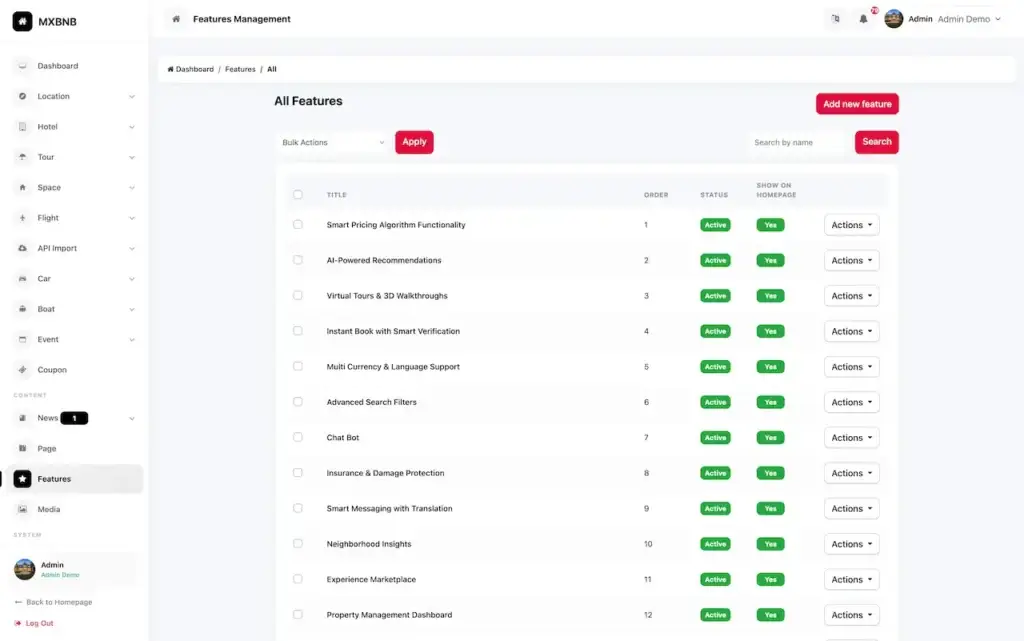
MXBnb admin · OperationsIllustrative
Bookings today1,284
Payouts queued46
Spaces booked today7

Booking activity ticker

App in action
Hours checked before paymentoverlapping bookings are refused
  • 2Ways to Price a Spaceby the hour and by the day
  • 6Income Linescommission, a service fee, host plans, promoted spots, host extras and wallet float
  • 0%Revenue Share With Miracuvesno cut of any hour booked, host plan or fee
  • 3Checks Before Paymentthe host's booking window, no overlapping hours and a server-side price
  • 6Days to Launchand if the delay is ours, we keep going free
  • $3,099Paid Once, Not Rentedsource code yours, no per-seat fee, no monthly rental

Live in six working days, or we keep working free until you launch. Every build carries 60 days guidance, 6 months bug fixes and 12 months updates.Verify every figure

Priced by the Hour or the Day

Each space carries an hourly and a daily rate, with date overrides on the calendar; guests pick a start time and hours, and cleaning or equipment extras can be charged per hour.

Same Engine as Live Clients

Ischia Booking, BNBinGreece and GoToRawanda run this codebase and own their source; guest, host and admin demo logins sit on the page.

Six Ways to Pay, No Card Numbers Kept

Stripe, PayPal, Paystack, Payrexx, bank transfer and the wallet cover checkout; card data never reaches your servers, which keeps PCI scope to SAQ A, and payment webhooks are verified by signature.

Planning a venue marketplace where spaces book by the hour?Book a Strategy Call

Over 6,000 businesses worldwide build with Miracuves


Miracuves named one of the best managed IT service providers in New York City by Expertise.comMiracuves is an official member of Forbes Business CouncilMiracuves is a verified agency with design rush. Miracuves is reviewed on TrustpilotMiracuves is one of the top managed service providers, companies by themanifest. Miracuves ranked as a top software development company by Design Rush. Miracuves is recognized as top software developed company by goodfirms. Miracuves Ranked among top 1000 companies globally by ClutchMiracuves is a top-minus service provider in the United States by Clutch

01Try it yourself

Hands-On Demo

Peerspace Clone Demo: Guest Site, Host Workspace, Operator Console and Android App

Four working surfaces of the Peerspace clone engine are open to you, with three sets of logins. Browse as a guest, switch to the host side to manage spaces and earnings, then enter the operator console that governs the whole marketplace. The Android app runs the very same engine in your pocket.
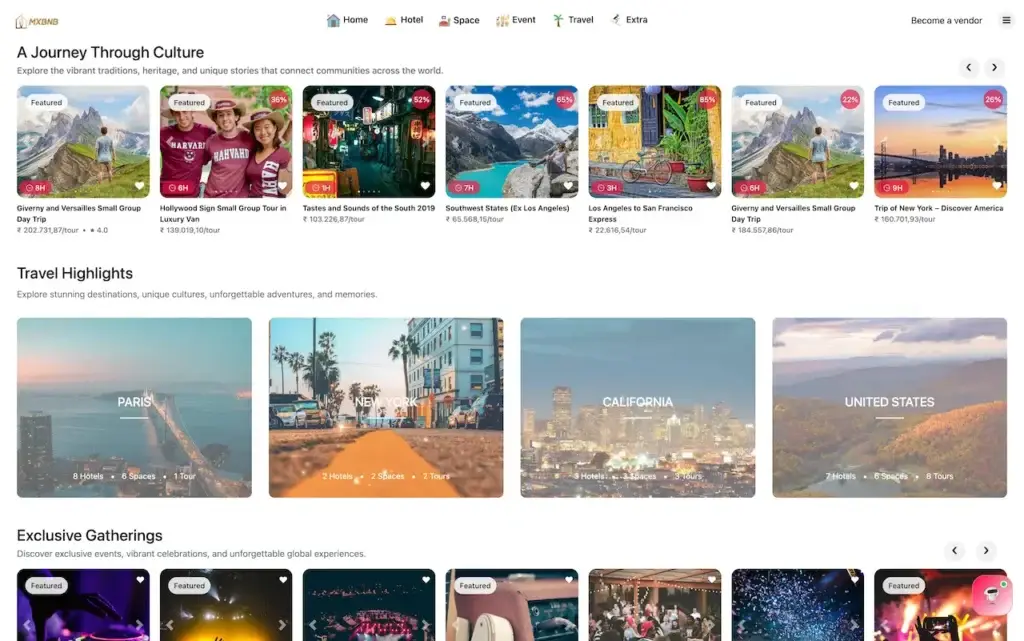
Peerspace Clone Guest Discovery Homepage
Guest Website

Peerspace Clone: Find, Reserve, Pay

What a guest sees on the Peerspace clone website: one search across the space categories you run, filters for place, date, group size and budget, a listing page with photos and a map, an availability check, coupon entry and payment through the gateway you connect.

  1. 1Load the website in a browser tab
  2. 2Use the guest login printed below
  3. 3Try: Search, Space Page, Calendar, Checkout
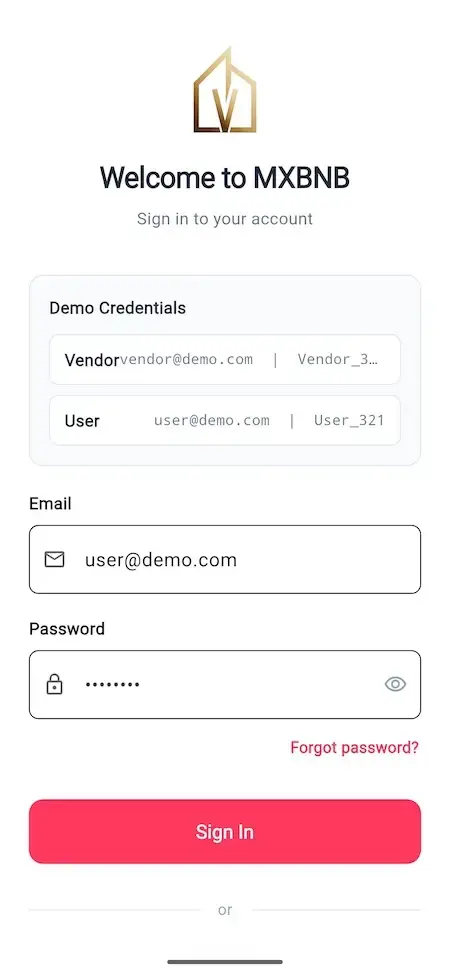
Try:user@demo.com | User_321
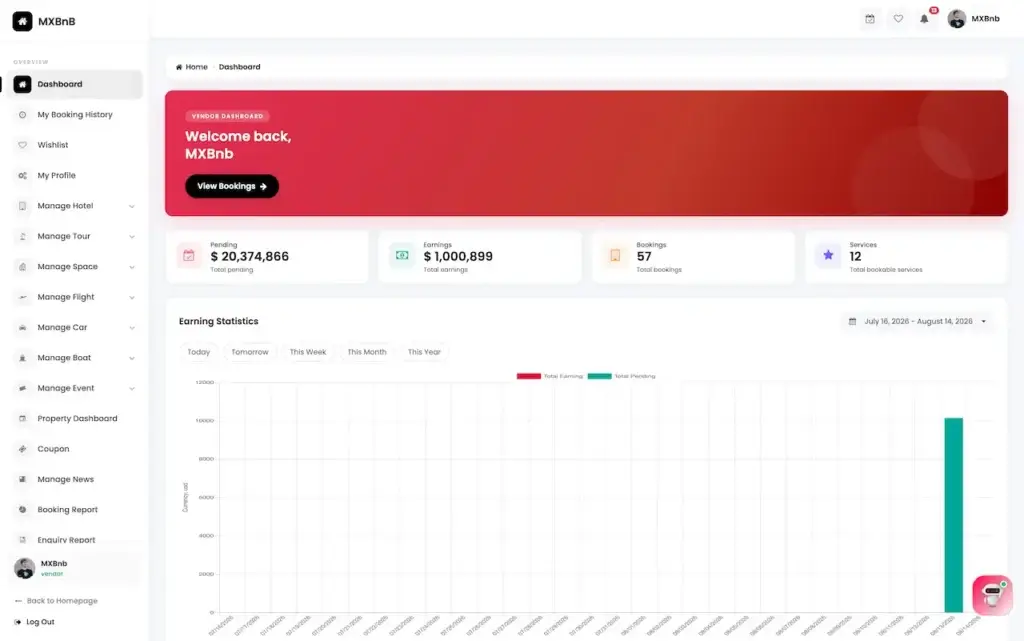
Peerspace Clone Host Earnings Dashboard
Host Workspace

Spaces, Rates, Calendar and Earnings

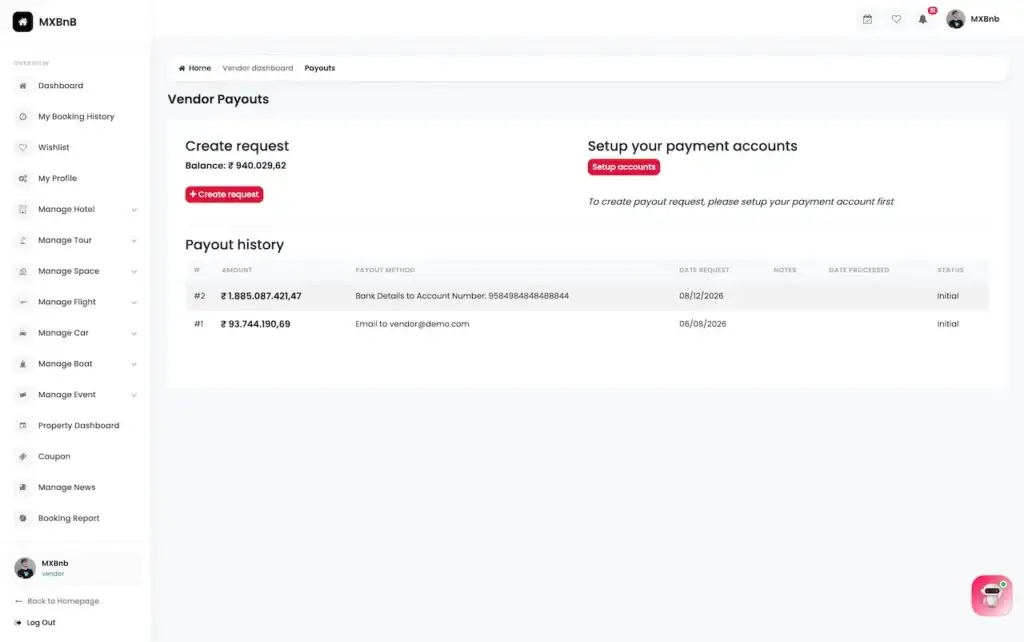
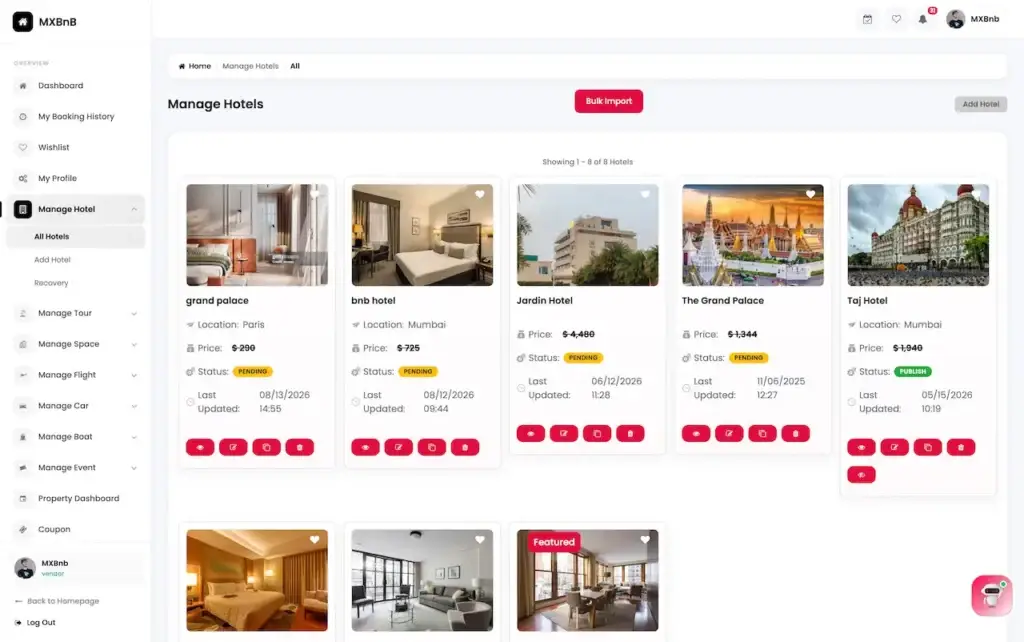
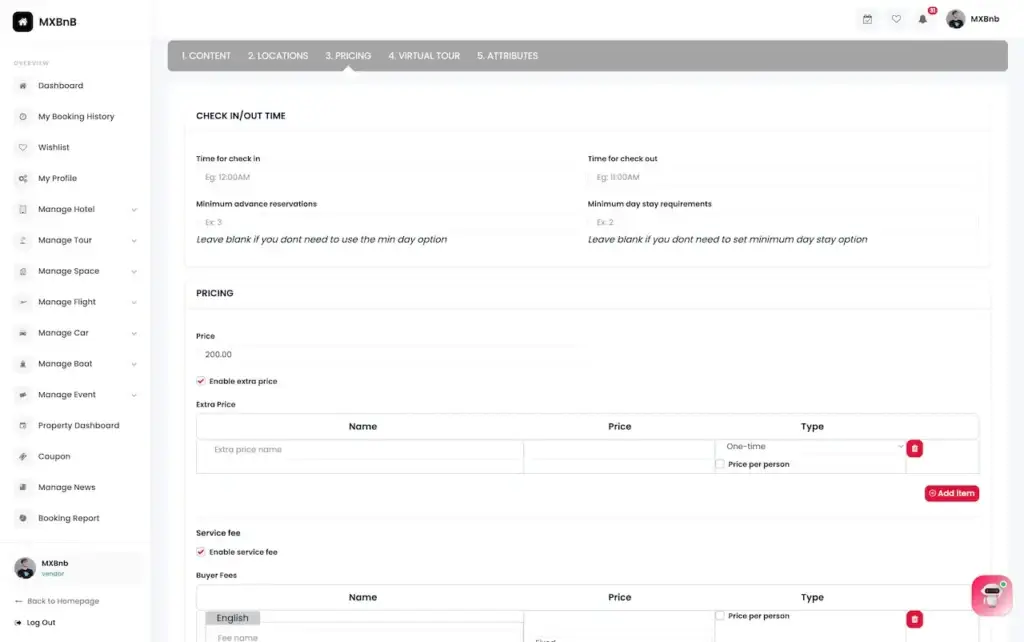
Where a venue owner works: publish and edit spaces, set rates by date or season, open and block the calendar, reply to booking enquiries, follow booking reports, ask for a payout and invite staff with roles of their own.

  1. 1Use the same website and log in as a host
  2. 2Enter the vendor login shown under this card
  3. 3Try: Spaces, Calendar, Enquiries, Earnings
Try:vendor@demo.com | Vendor_321
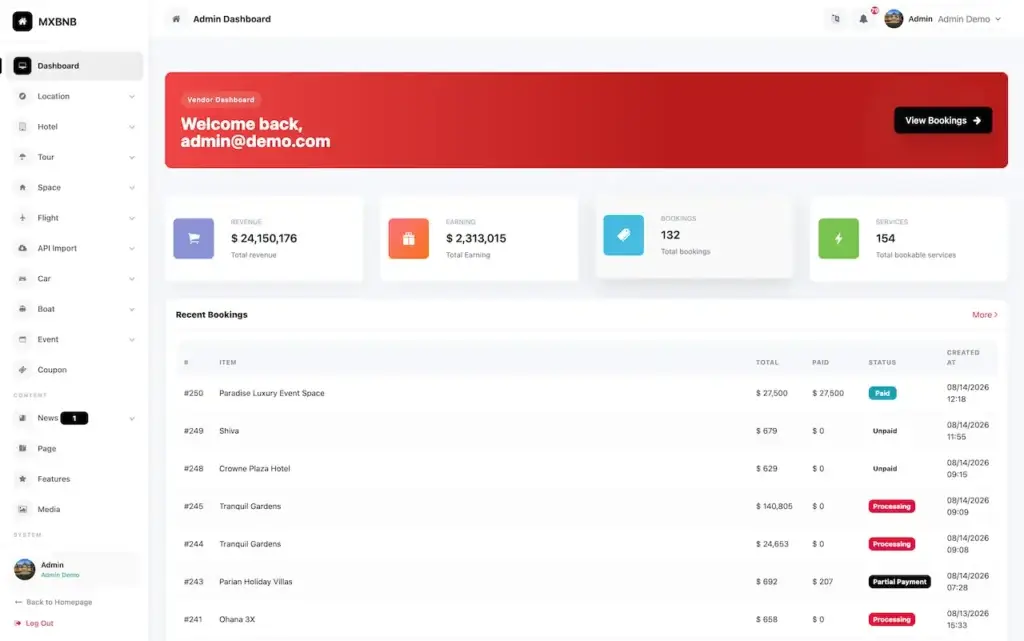
Peerspace Clone Operator Revenue Dashboard
Operator Console

One Console Governs Every Space

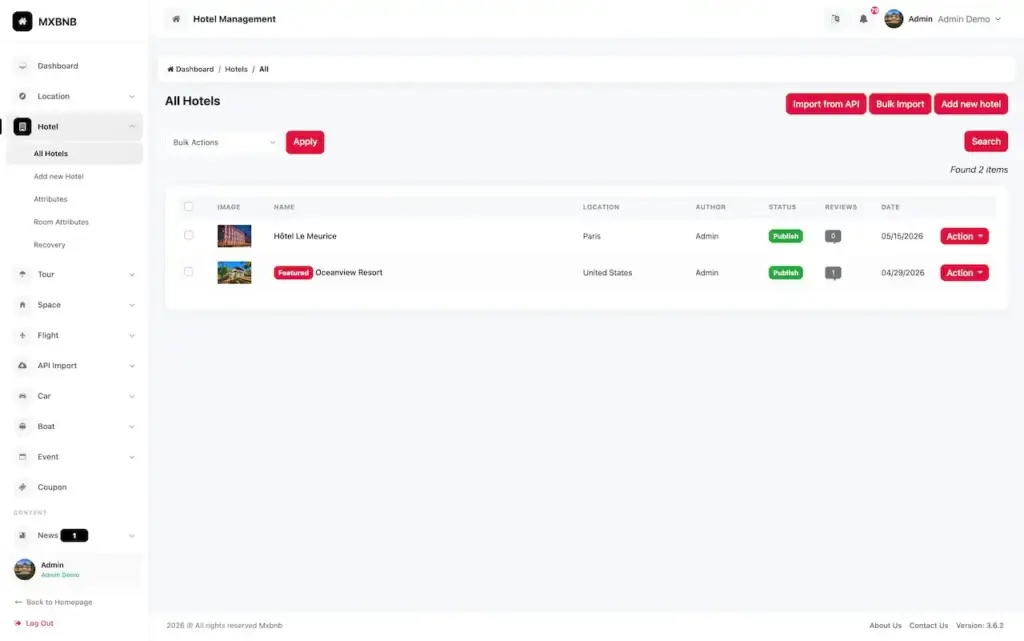
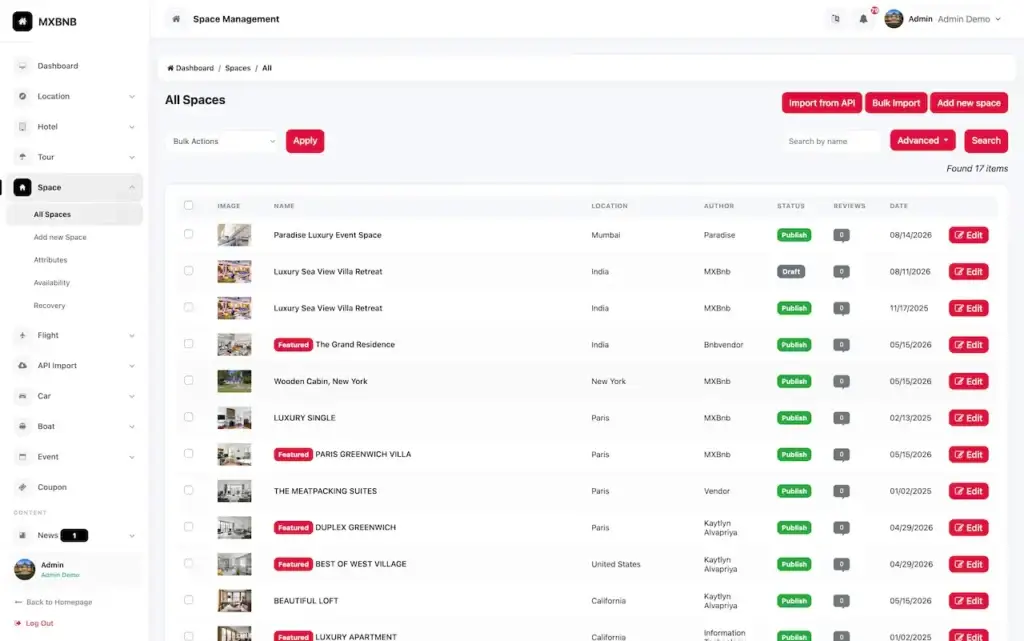
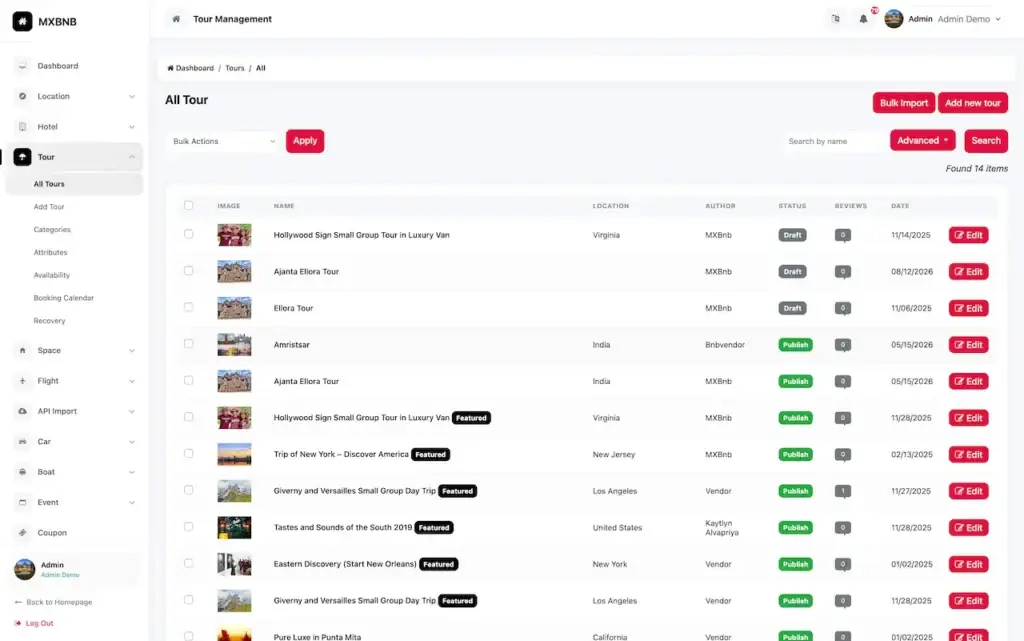
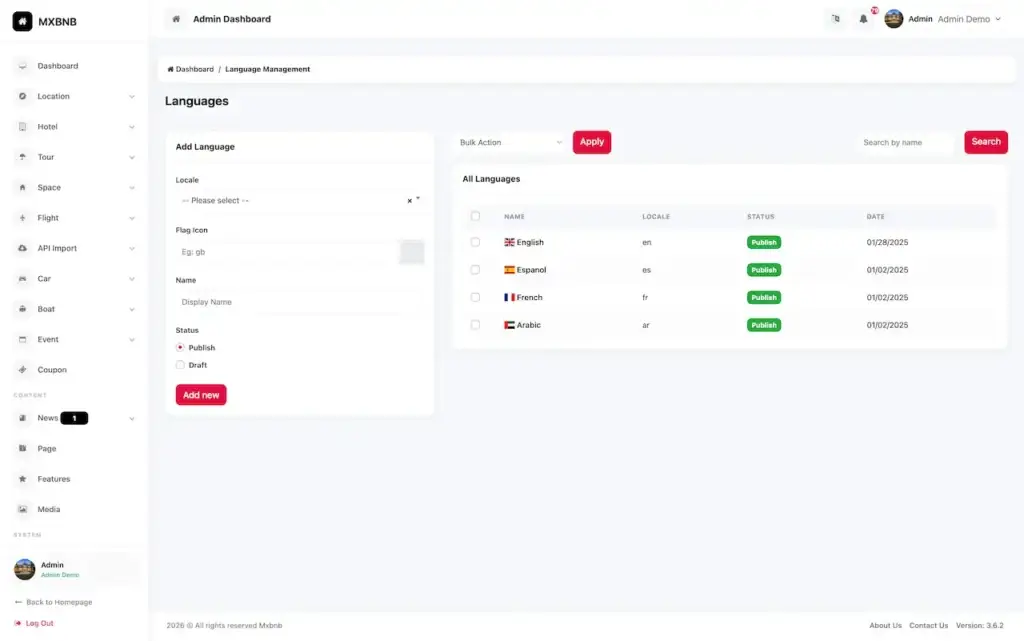
More than twenty admin modules: accounts and roles, host vetting with ID review, moderation for every space and listing type, bookings, payments and refunds, payouts, commission, coupons, locations, languages, templates, media and the system log.

  1. 1Load the admin console in any browser
  2. 2Enter the admin login shown under this card
  3. 3Try: Accounts, Bookings, Payouts, Settings
Try:admin@demo.com | Admin_$321
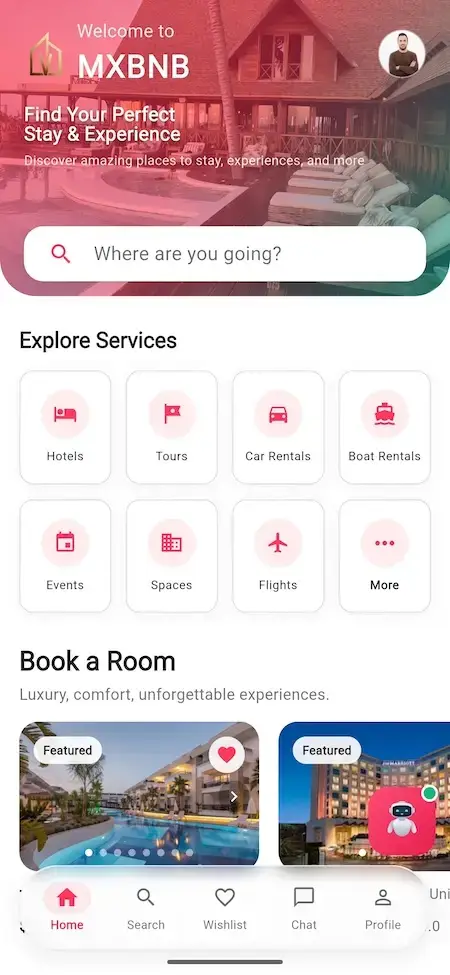
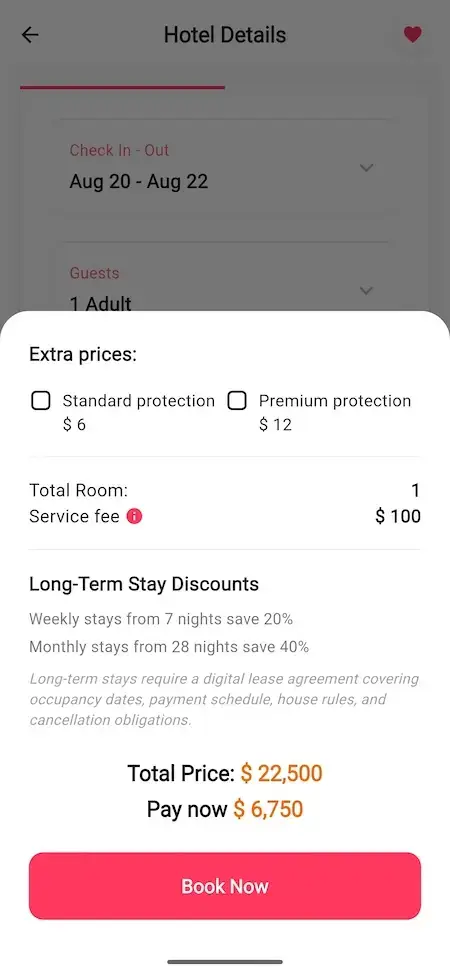
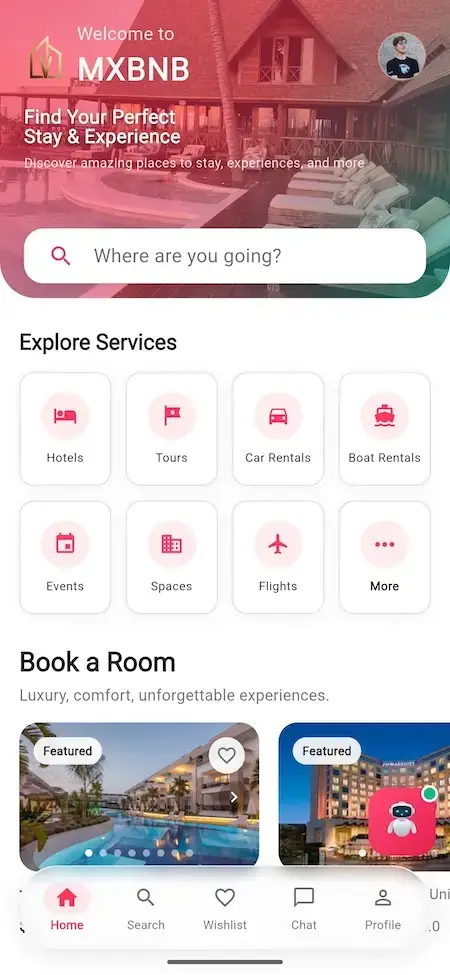
Peerspace Clone Guest Home and Space SearchPeerspace Clone Price Breakdown and Booking Screen
Android App

The Marketplace in a Phone

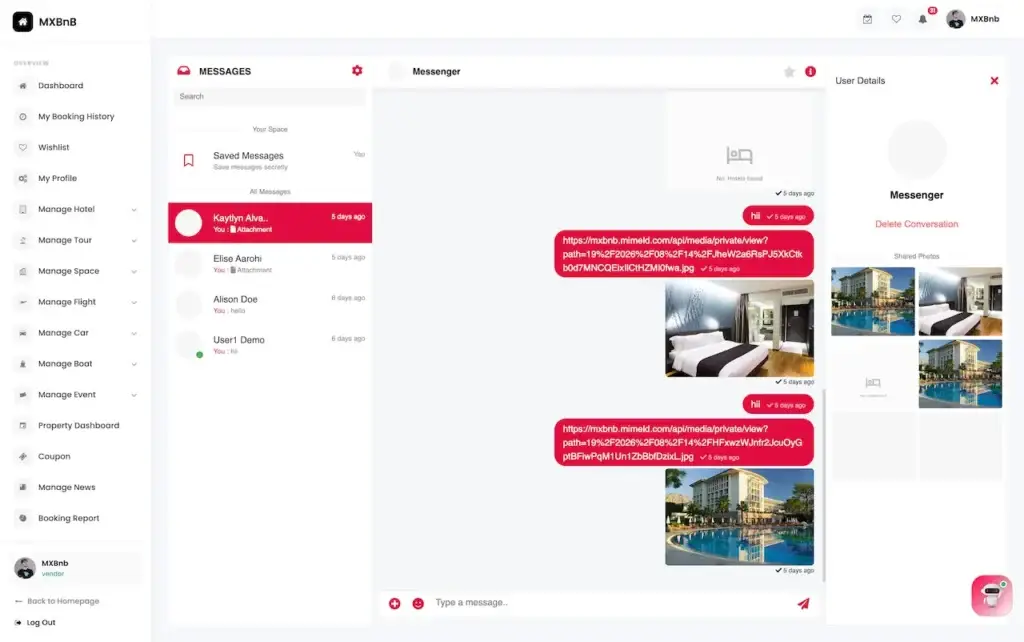
The app gives guests and hosts the full experience over the REST API the website already calls: find and book a space, track bookings, chat with a host, leave a review, run the host dashboard, upload ID documents and ask for payouts.

  1. 1Install the Android app
  2. 2Log in with the guest or host details
  3. 3Try: Search, Book, Chat, Host Tools
Same credentials as the web demo

Recorded Product Tour

Video Demo of a Venue Booking App Like Peerspace: Guest Booking, Host Tools and Operator Console

This recording follows the engine through three roles. On the guest side you watch a search across the categories that are switched on, a listing opened with photos and a map, availability checked for chosen dates, a coupon applied and checkout finished through a connected gateway. On the host side a listing is published, rates are set against the calendar, an enquiry gets a reply and a payout is requested from the earned balance. On the operator side a host is approved after ID review, a listing clears moderation, a booking status is edited by hand and a payout is closed. Want one flow in detail? The logins above open the same engine, and on a call we also take you through the hourly space booking that ships in your Peerspace build.

Speak With Our Team

Screens, Role by Role

Screens of a White-Label Venue Booking App: Guest, Host and Operator Views

A space marketplace lives or dies on a handful of screens, and these are them. Search and discovery, with filters that change by category. The space page with photos, amenities, ratings, reviews and a map. The booking and checkout path, where the dates or hours a guest picks turn into a priced reservation. The host dashboard with calendar, earnings and requests for payouts. Then the operator console, where hosts are vetted and listings cleared. Tabs split the screens by role, since a guest and a venue owner come with different questions, and each of them deserves screens that feel designed for them instead of patched in as a second thought.
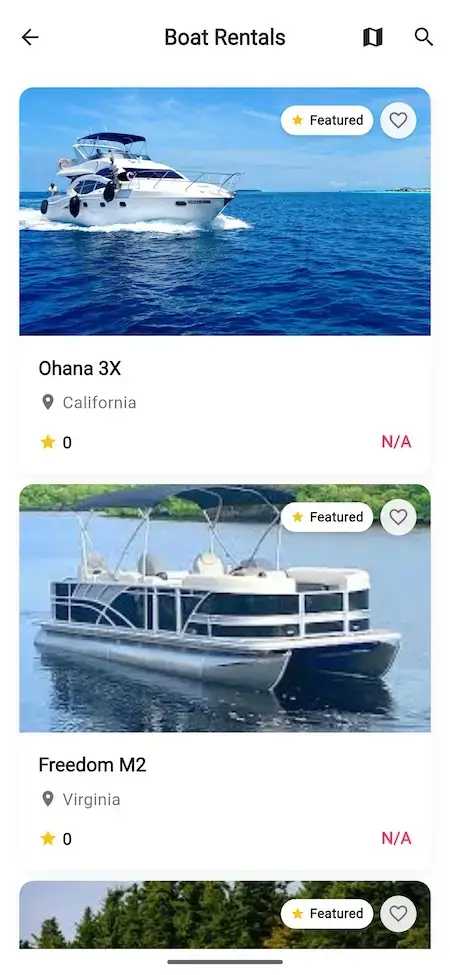
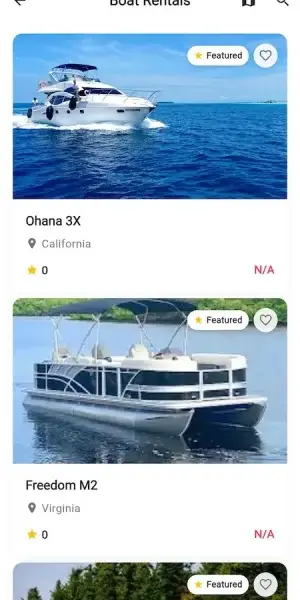
Peerspace Clone Boat Listings Screen
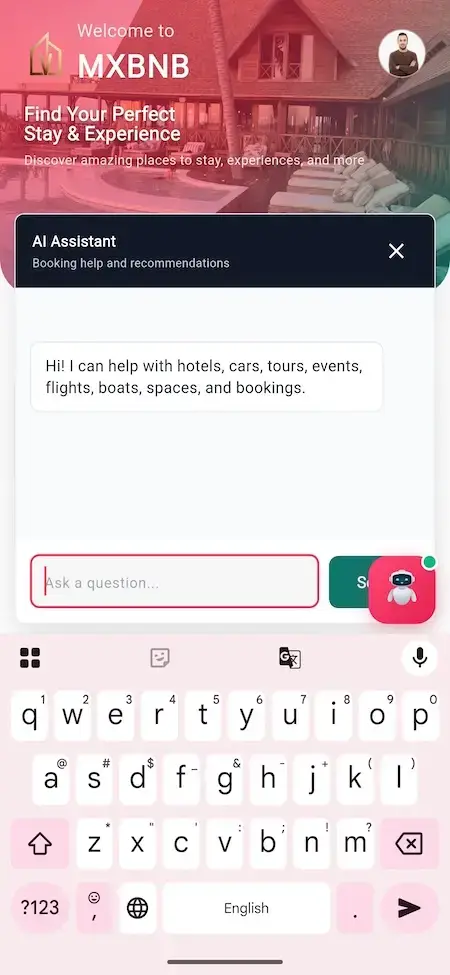
Peerspace Clone AI Assistant Screen
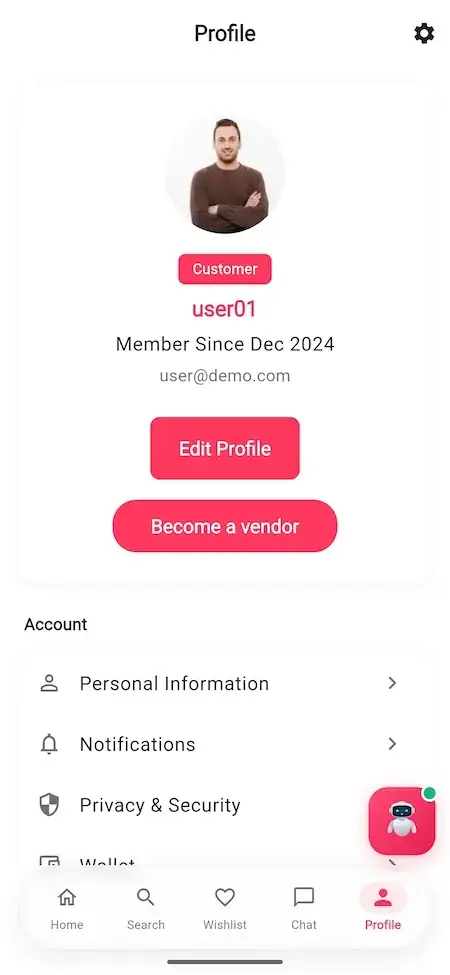
Peerspace Clone Guest Account Menu
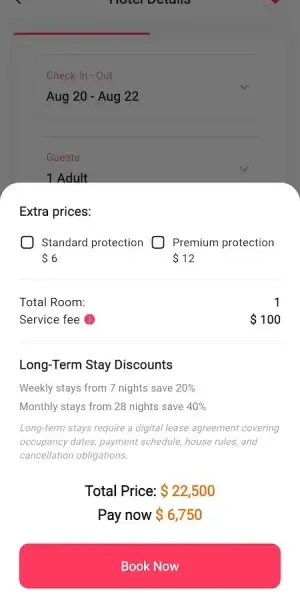
Peerspace Clone Booking Price Breakdown Screen
Peerspace Clone Guest Welcome Screen
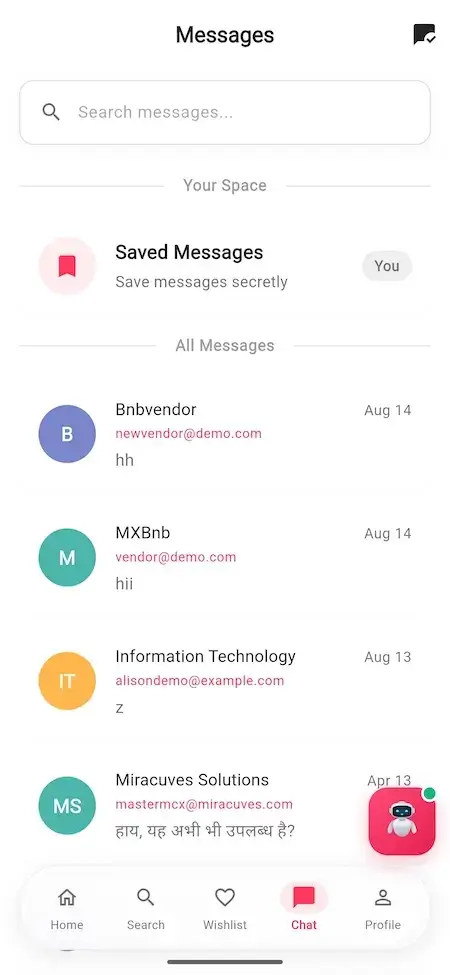
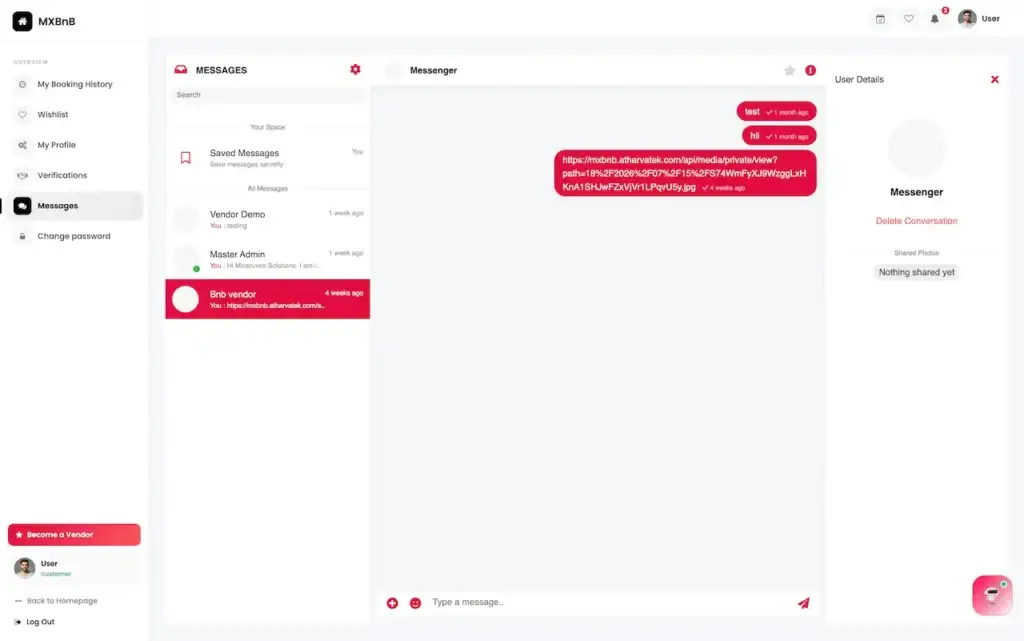
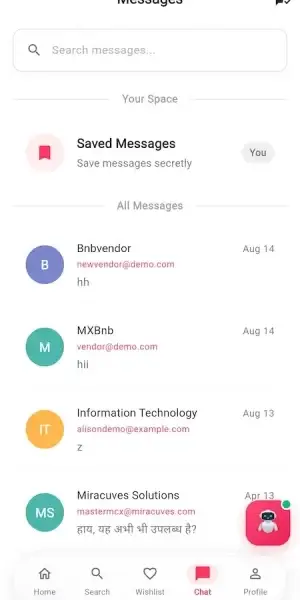
Peerspace Clone Guest Inbox Screen
Peerspace Clone Guest Login Screen
Peerspace Clone Guest Home and Category Search
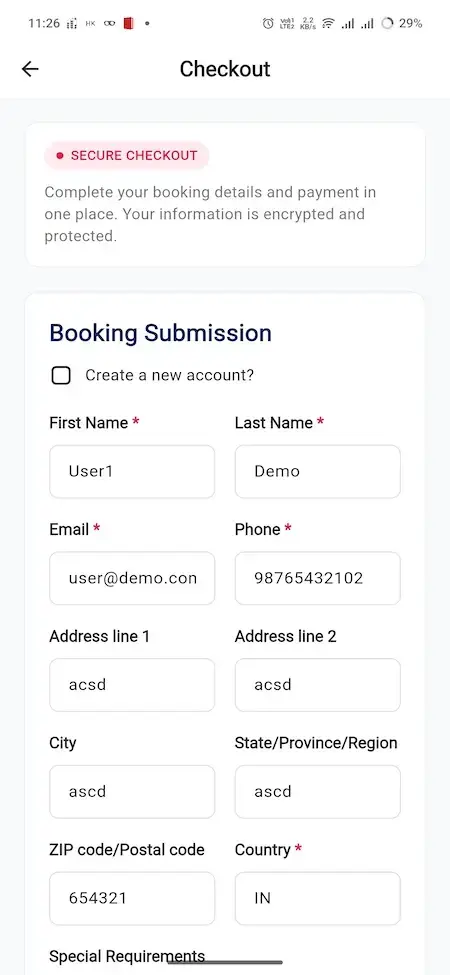
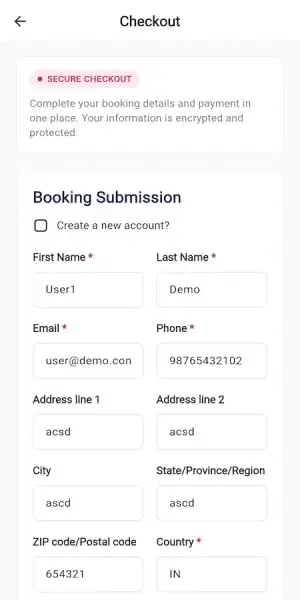
Peerspace Clone Checkout Contact Details
9 screens · swipe →
Peerspace Clone Host Home and Category Search
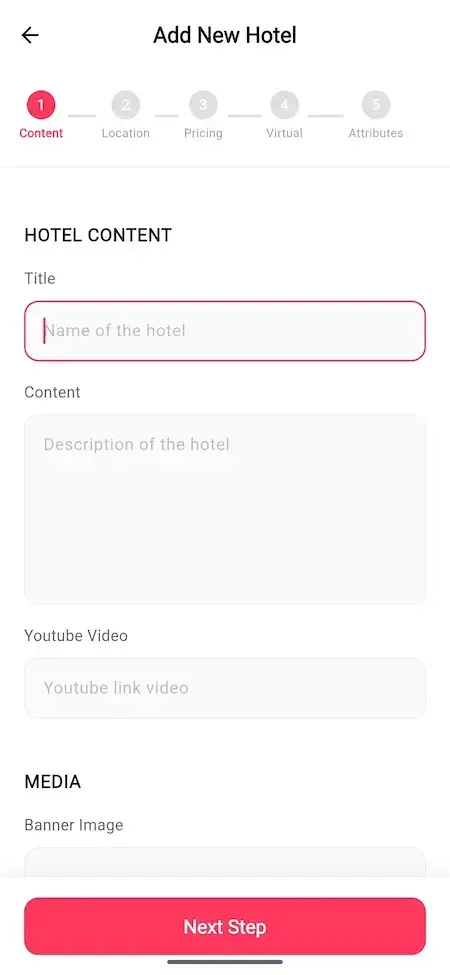
Peerspace Clone Host Add Listing Form
Peerspace Clone App Launch Screen
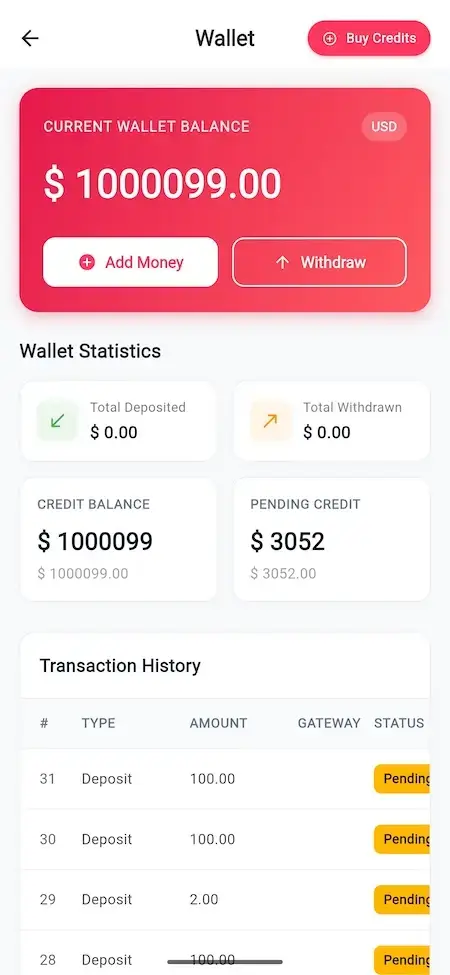
Peerspace Clone Host Wallet and Transaction List
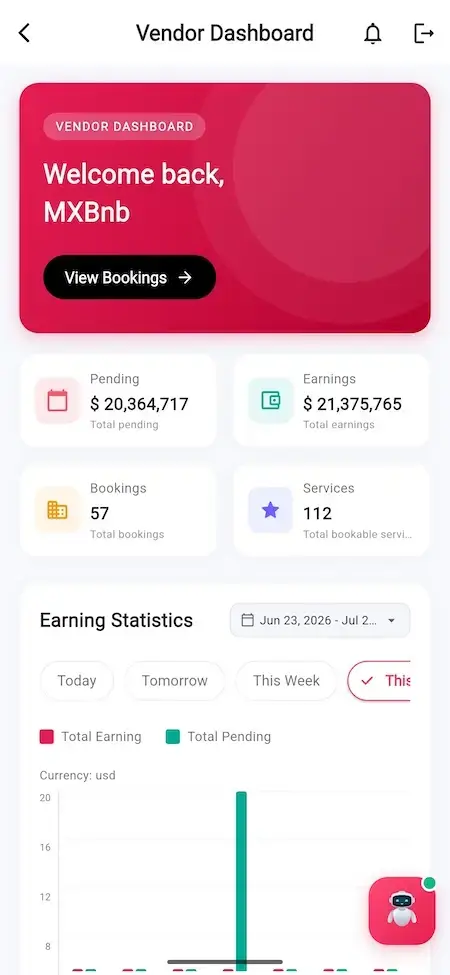
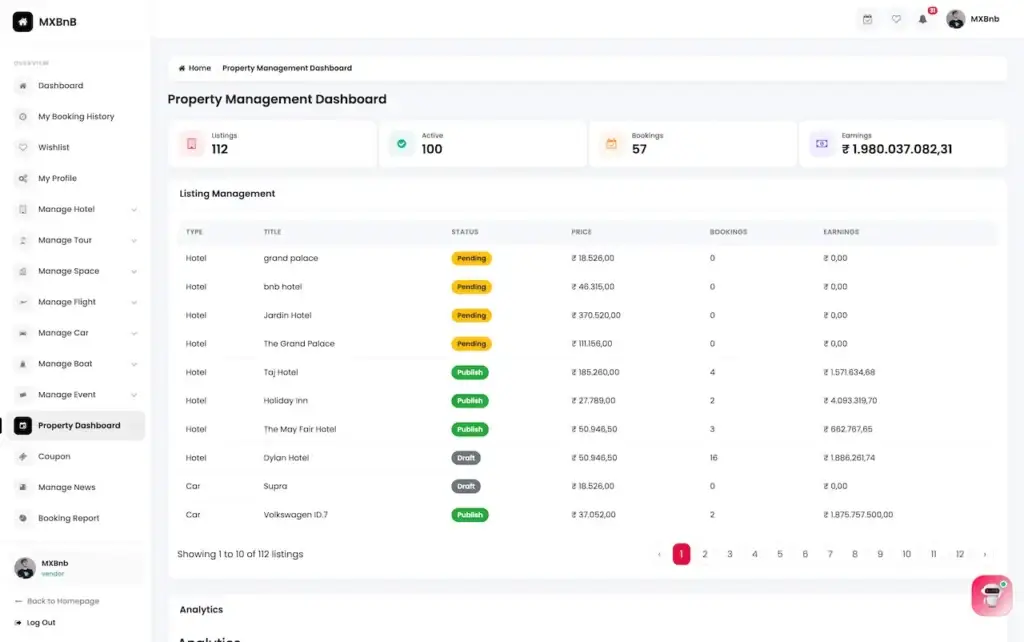
Peerspace Clone Host Performance Overview
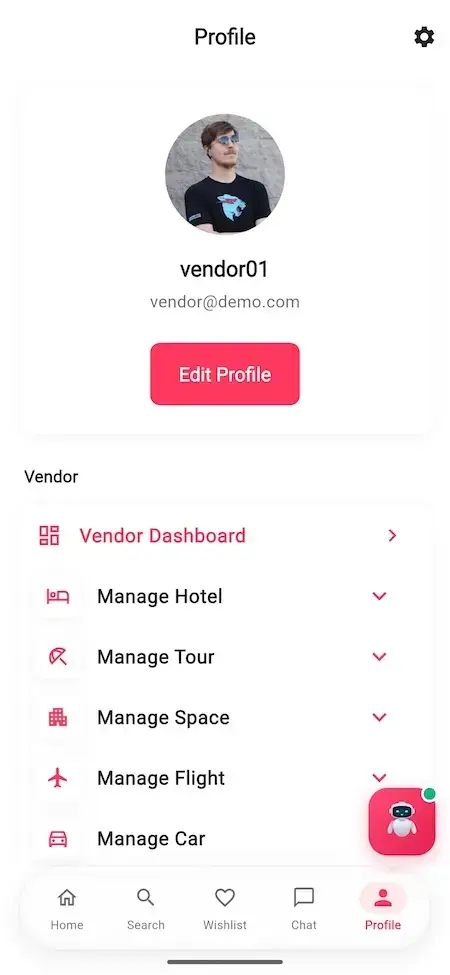
Peerspace Clone Host Profile and Settings Menu
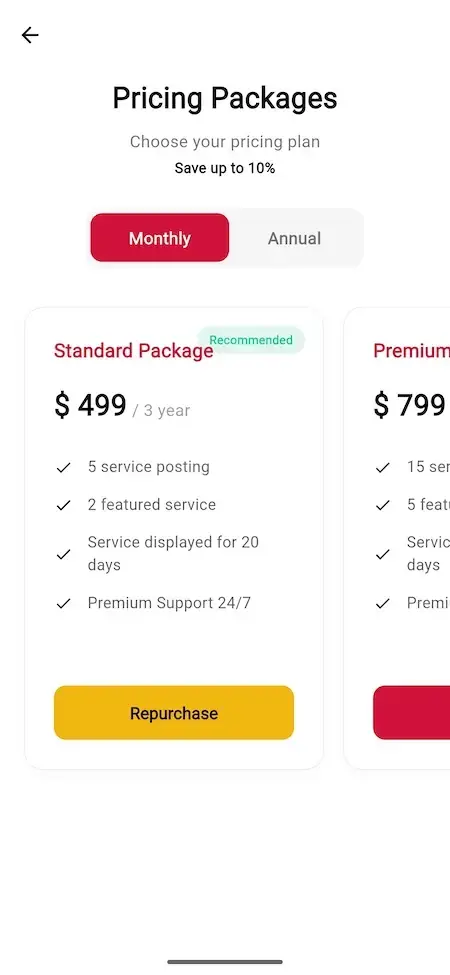
Peerspace Clone Host Plan Options
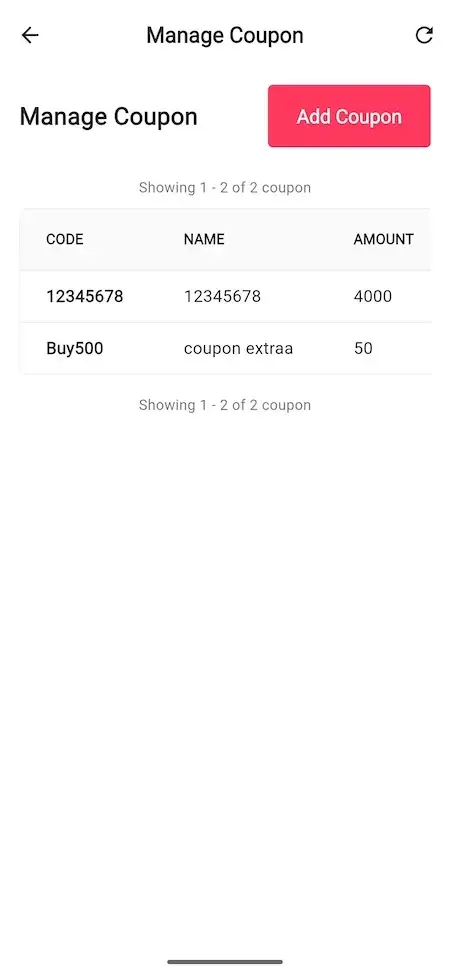
Peerspace Clone Host Coupon Manager
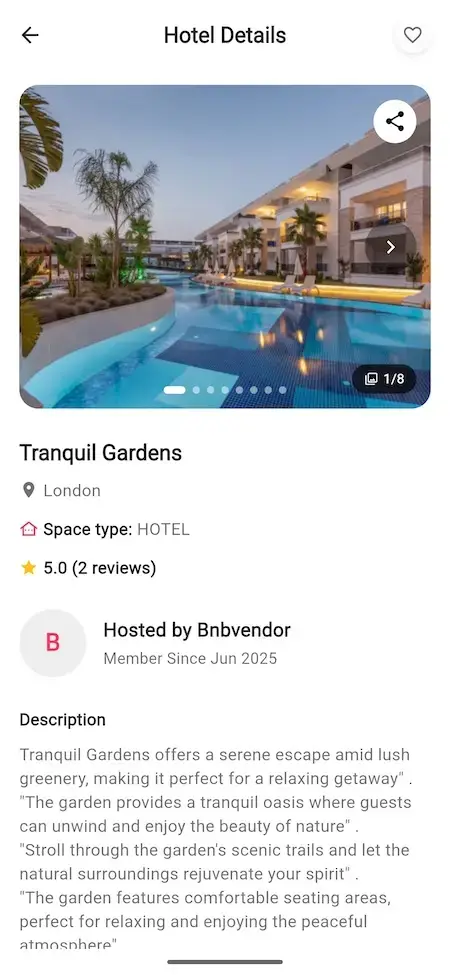
Peerspace Clone Host Listing Details
9 screens · swipe →
Peerspace Clone Admin Module Switches
Peerspace Clone Admin Accommodation Inventory
Peerspace Clone Admin Earnings Overview
Peerspace Clone Admin Space Listings Manager
Peerspace Clone Admin Experiences Inventory
Peerspace Clone Admin Language Settings
6 screens · swipe →
Peerspace Clone Booking Invoice and Payment Screen
Peerspace Clone Space Listing Details Page
Peerspace Clone Admin Profile Settings
Peerspace Clone Search Results With Listings
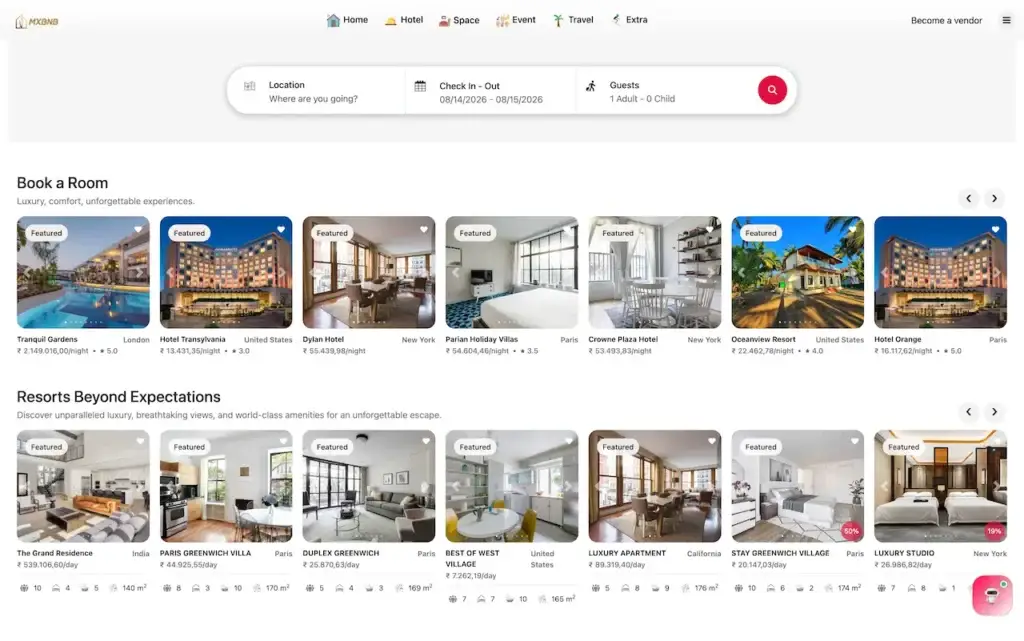
Peerspace Clone Guest Discovery Homepage
Peerspace Clone Admin Message Center
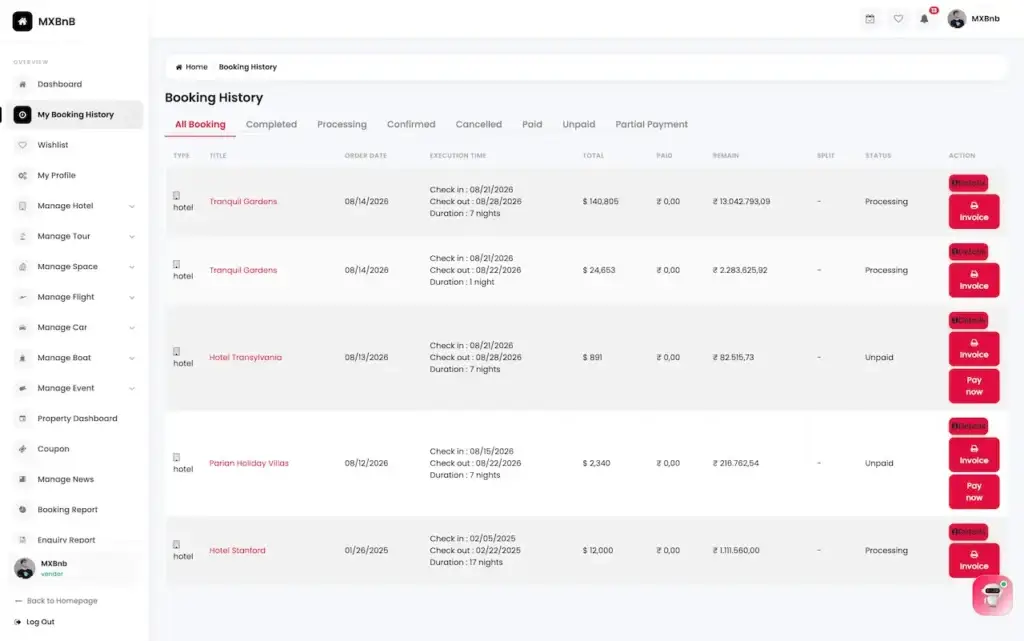
Peerspace Clone Admin Bookings Log
7 screens · swipe →
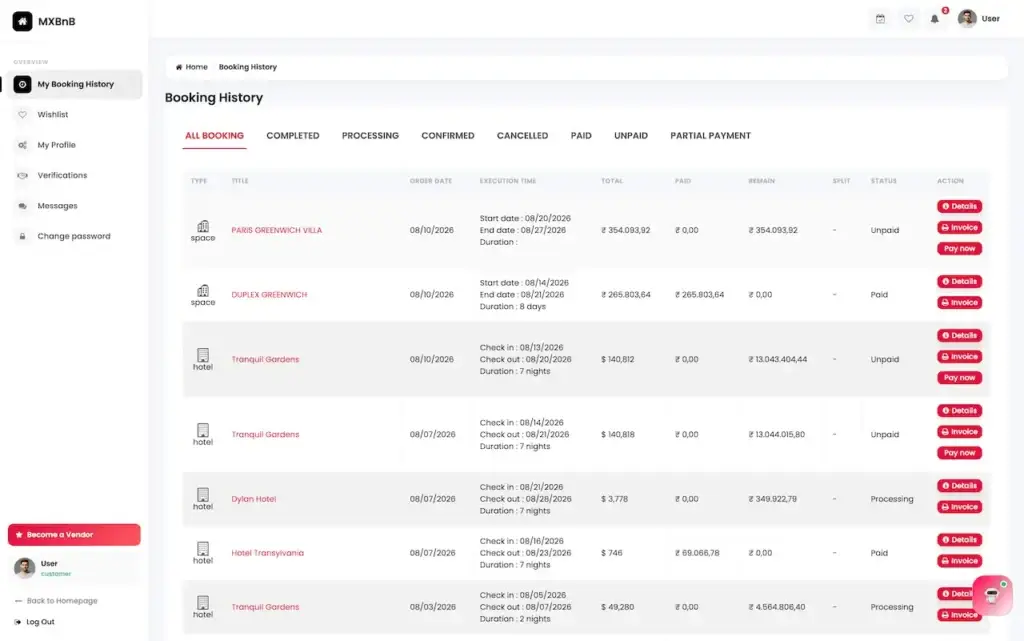
Peerspace Clone Host Bookings Log
Peerspace Clone Host Earnings Overview
Peerspace Clone Host Bookings Dashboard
Peerspace Clone Host Payout Requests
Peerspace Clone Host and Guest Chat Thread
Peerspace Clone Host Listings Portfolio
Peerspace Clone Host Listing Editor
7 screens · swipe →

Each image comes straight from the running demo, not from a design file, so the screens you see are the screens you get. All of them carry your identity once configured: brand name, logo, launch screen, colors and fonts change by setting, not by rebuilding. Want one flow shown in depth? Book a call and we open that view with data on it and take your questions.

Browse All Our Solutions

02Proof

Client Voices

Reviews from Miracuves Clients - Actual Platforms, Actual Outcomes

Feedback from operators running rental marketplaces on this platform and on our sister boat-charter platform. Each is a named client with a published case study in our portfolio.

BBNBinGreece TeamFounding team, BNBinGreece
“Listings, calendar, booking flow and payments came off the shelf. We added the property types and the seasonal pricing rules that matter here, plus a multilingual guest experience. Online bookings replaced the inbox inside a month.”
GGoToRawanda TeamFounding team, GoToRawanda
“Hosts, listings, calendars and payments were solved. Our work was the local payment methods, the languages our guests use and the property types we actually list. It replaced a phone and email process inside a month.”
TTiffany DandreaOperations Director, Best Cabo Yacht Rentals
“The ops team finally has a live view of the fleet. A charter platform with a live backbone under it, plus a multilingual guest portal.”
MMartin KFounder, Ischia Booking S.r.l
“We were running a few dozen properties off a static site, email and a phone. Calendar, booking flow and the property manager came off the shelf. They added a channel manager for our OTAs, a guest portal and a multilingual interface. The operations team no longer lives in the inbox.”
Read More ReviewsOperators and founders on our client testimonials page

Case Studies

Airbnb Clone Case Study: A Short-Stay and Hotel Platform in Italy

Ischia Booking S.r.l runs short-stay rentals and hotel inventory on the island of Ischia. The mechanics of listings, calendars and payments already existed in this platform, so the engagement went into the parts that were specific to them.

Case Study
Ischia Booking
Short-Stay & Hotel Platform

A short-stay rental and hotel booking platform for the island of Ischia, replacing a static site, a shared inbox and a phone line with a live booking engine.

Ischia Booking S.r.lClient
ItalyRegion
Short-Stay Rentals & Hotel BookingIndustry
3Applications shipped
17Blocks reused unchanged
6 daysOur build time on the base
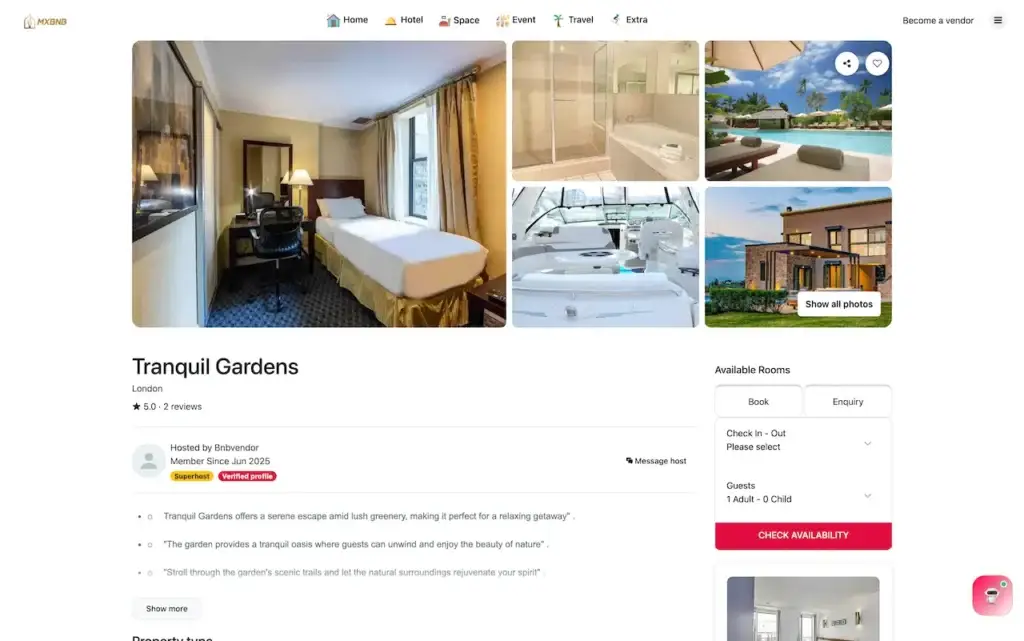
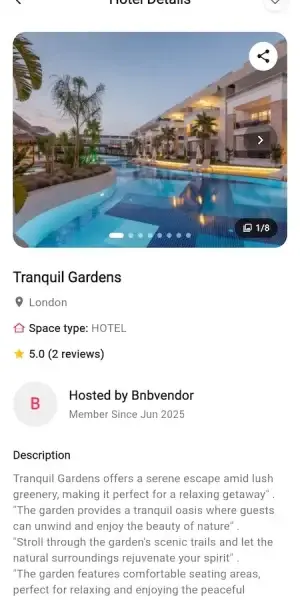
Airbnb Clone Tranquil Gardens Property Details
Challenges
  • A few dozen properties run from a static site, email and a phone
  • Availability held in one place while OTAs sold the same rooms
  • Guests arriving in several languages with no self-service portal
Goal
  • Put the whole property list online behind a real booking engine
  • Stop the operations team living inside an email inbox
  • Keep calendars honest across every channel that sells the rooms
Supplied by Miracuves
  • Listings, calendar and booking flow taken from the base platform
  • A channel manager wired to the OTAs they already sold through
  • A multilingual guest portal for arrivals from several markets
  • A property manager console for day to day operations
  • Source code transferred to the client account on handover
“We were running a few dozen properties off a static site, email and a phone. Calendar, booking flow and the property manager came off the shelf. They added a channel manager for our OTAs, a guest portal and a multilingual interface. The operations team no longer lives in the inbox.”Martin K · Founder, Ischia Booking S.r.l
Go to the Ischia Booking case studyA look at how a short-stay and hotel platform was deployed end to end.
Two more deployments on this platformBNBinGreece launched a short-stay rental marketplace in 2022, and GoToRawanda followed in 2023. Both own their source code.

03The platform

Start Here

What Is a Peerspace Clone App?

A Peerspace clone is a ready-made marketplace for renting spaces by the hour: guests find a studio, meeting room or event venue and reserve the hours they need, hosts publish spaces and collect their earnings, while you, the operator of the Miracuves build, keep a commission on each booking. Day bookings run on the same engine, and the wallet, reviews and payouts are shared by every space type.
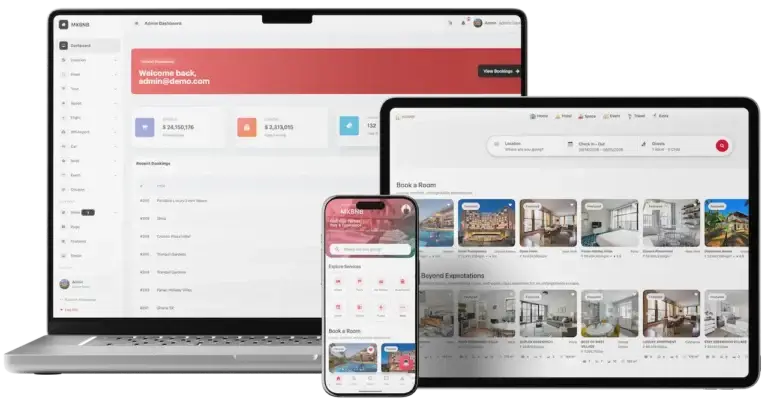
Peerspace Clone Across Guest, Website and Admin Screens

More Than a Venue Directory

The money is made inside the booking: free hours confirmed on the server, totals rebuilt by the server instead of accepted from the browser, the commission locked into each reservation, and a payout run that settles every host. A listing directory passes along a phone number and ends there.

Hours or Days, Same Engine

Every reservation links to its space through one shared booking model, so a two-hour shoot and a three-day pop-up travel the same payment path, review flow and reports. Hourly booking ships in this Peerspace build, delivered by Miracuves, without a second codebase beside the first.

One Rulebook for Web and Apps

The Android and iOS apps call the very REST API the website calls, so a policy you edit in the admin reaches every screen at once and nobody has to code it twice.

Runs on Web, Android, iOS & API

What Is a Peerspace Clone Script?

Putting a venue page online is quick work. The hard parts of an hourly space marketplace are stopping two guests from booking overlapping hours, keeping the total right once a date-specific rate and a coupon meet, and paying hosts net of a commission nobody can edit later. This build ships handling all three.
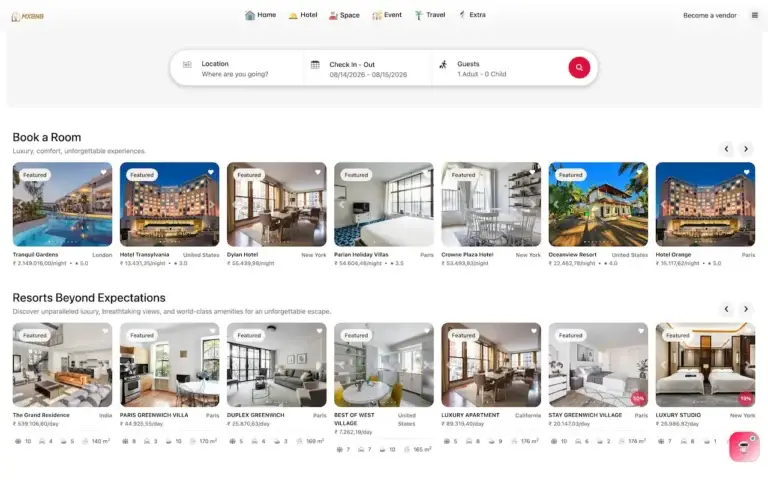
Peerspace Clone Search Results With Listings
  1. 01Hourly and daily space booking, both included
  2. 02Book-now and request-to-book, chosen per space listing
  3. 03Six payment gateways and a built-in wallet
  4. 04Host payouts moving from request to review to paid
  5. 05Fifteen languages ready, with translations per listing

Put simply, it is the quick route to a space rental marketplace where a team books a meeting room for the morning, a photographer takes a studio for four hours and a company hires a venue for an evening, all through one checkout. Under it sit Laravel 10 and MySQL, over forty database tables, six payment gateways, more than twenty admin modules and fifteen preset languages with right-to-left layouts.

Inside It

Peerspace Clone Features: Hourly Venue Booking on One Marketplace Engine

From an hourly studio slot to a full-day venue hire, every tab below is part of the Peerspace build Miracuves hands over. Categories you have no use for are turned off in the admin, with no developer needed.

Feature 01 of 12

Hourly Space Booking

Hosts price a space by the hour and by the day; guests choose a date, a start time and how many hours they need.

  • Per-hour and per-day rate on every space
  • Guest picks the date, start time and hours
  • Host sets the earliest and latest bookable start
  • Overlapping hours blocked before payment
Feature 02 of 12

Venue Profiles

Space pages that answer the planner up front: capacity, size, rules, extras and where it is on the map.

  • Photo gallery, video and a 360 view
  • Guest capacity, plus room and bathroom counts
  • Floor area plus posted house rules
  • Cleaning fee and security deposit as extras
Feature 03 of 12

Photo Studios

Photo and film studios, lofts and backdrops listed under categories you define, with gear priced on top.

  • Studio and location categories you set up
  • Amenity tags such as lighting, power or parking
  • Equipment extras charged once, daily or hourly
  • Per-listing FAQ for crew and production questions
Feature 04 of 12

Workshops & Classes

Classes and workshops hosted at a venue, with length, group size and inclusions spelled out before anyone pays.

  • Session length in hours or days
  • Smallest and largest group the host accepts
  • Meeting point and a step-by-step agenda
  • What is and is not included, with its own FAQ
Feature 05 of 12

Stays, Cars & Boats

The same checkout can also sell overnight stays, car hire and boat trips if your market wants them.

  • Stays with room types and night-based rates
  • Cars with pickup and return points
  • Boats with crew and half- or full-day tiers
  • Each type switched on or off from the admin
Feature 06 of 12

Events & Ticketing

Ticketed events at your venues, sold by date or by time slot, with flight seats available as a further type.

  • Event date, venue and organizer on one page
  • Ticket limits and minimum age per event
  • Time-slot tickets measured in hours or minutes
  • Flight routes and seats for transfer sellers
Feature 07 of 12

Searching for a Space

One search box across categories or a search inside one, with filters, autocomplete and a map.

  • Search every live category at once
  • Filter by place, date, group size, price and rating
  • Suggestions for places and space names as you type
  • Map results, sorted by price, rating or distance
Feature 08 of 12

Availability & House Rules

Every request is tested against what is free before checkout, with lead times and limits applied by the server.

  • Free hours and days read from the space calendar
  • Minimum day count for full-day hires
  • Lead time before a booking starts
  • Calendar sync by iCal with outside calendars
Feature 09 of 12

Rates & Coupons

Hourly and daily rates, rates that change by date, multi-day discounts, fees and a coupon system.

  • Different hourly rate on chosen calendar dates
  • Discounts for multi-day hires
  • Service fee and host extras added to the total
  • Coupons capped by use count and order value
Feature 10 of 12

Payments & Deposits

Six gateways and a wallet, deposits, invoices and refunds handled from the admin.

  • Six gateways with the built-in wallet
  • Pay a deposit now, settle the rest later
  • Reminders for any balance still due
  • Invoices created and refunds issued by admin
Feature 11 of 12

Reviews, Chat & Requests

Reviews from real bookings, moderation, live chat and request threads for custom quotes.

  • Only finished bookings can leave a review
  • Review moderation, with replies from hosts
  • Live chat between guests and hosts over Pusher
  • Request threads for events that need a quote
Feature 12 of 12

Languages & Branding

Listings written per language, fifteen languages set up, and your brand on every surface.

  • Each listing and page translated on its own
  • Fifteen languages ready to switch on
  • Right-to-left screens for Arabic and Hebrew
  • Your brand on the website, apps and emails
Before you decide:

each tab above comes with your Peerspace build, hourly booking included, all of it white-label. Anything that runs on an outside account, such as a channel manager or another payment method, is available as a separately quoted add-on.

All Features

How the Platform Earns

Peerspace Clone Revenue Models: Commission, Host Plans, Fees and Promoted Spaces

An hourly space marketplace collects money at several points, and the Miracuves Peerspace clone keeps each one apart, so lowering your commission does not touch plan income, service fees or the sale of promoted spots.

  1. 01

    Commission per Booking

    Your cut of each hourly or daily booking, set for the whole marketplace or host by host, in percent or as a flat amount. The rate in force at the moment of booking is saved with that booking, so last quarter still adds up after you change the rate today.

  2. 02

    Host Membership Plans

    Plan tiers with their own length, price and a yearly billing choice. Each plan sits on a role and sets how many spaces a host may publish, so a starter host lists a few venues and moves up a tier to list the rest.

  3. 03

    Marketplace Service Fee

    A fee placed on top of the booking total and set once for the platform, built into the figure the guest pays and into the payout the host receives.

  4. 04

    Host-Added Charges

    Venue owners add their own charges, such as cleaning, a security deposit or equipment by the hour, and all of them run through the same total instead of being paid on the side.

  5. 05

    Promoted Spaces

    Paid placement that moves a space higher in results, sold as a spot instead of a percentage, which brings income that holds steady even in a quiet booking week.

  6. 06

    Wallet Balances

    Guest top-ups and host earnings wait in the platform wallet until the next payout run. The money stays on your side until someone withdraws it, and every movement sits in a ledger you can audit line by line.

Peerspace clone revenue and commission table: the six ways the marketplace makes money, how each one is charged, what you as the operator decide, and what listed booking companies report earning on the matching line in their audited accounts.
Income lineHow it is billedYou controlWhat you setWhat listed companies report
Commission per BookingA marketplace fee on each booking, deducted from what the host is paid once the booking is done.A percentage or a flat fee, for the whole marketplace or a single host. The rate is stored with each booking when it is made, so a later change leaves earlier reports untouched.The line the listed companies depend on. Booking Holdings booked revenue equal to 14.5% of its gross bookings in 2025; run the same sum on Airbnb and it lands at 13.4%.
Marketplace Service FeeAdded to the total at checkout, shown to the guest, with the host payout worked out around it.A single platform-wide rate, built into the total the guest pays and into the payout the host gets.Both listed companies roll guest and host fees into one take. Airbnb divides its figure by a booking value that already counts cleaning fees and taxes, so any quoted rate means little until you know what it was divided by.
Host Membership PlansA repeating fee per host for a listing tier, charged monthly or once a year.Plan price, length, yearly billing and how many spaces each tier may list. Every plan sits on a role, so a starter tier has a cap and hosts move up to list more.No match among the listed companies. Neither Airbnb nor Booking bills a host simply for being listed, which leaves this line open to you without any fight over commission.
Promoted SpacesA placement fee that raises a space in results, sold per listing for a set period.The fee, how long it runs and where the promoted spot appears.Booking Holdings lists $1.19 billion in advertising and other revenues for 2025 apart from commission, which is this same idea running at scale.
Host-Added ChargesCleaning, deposits, gear and similar charges, set by the host and paid through the platform instead of in cash.Whether hosts can add extras at all, and whether your commission is charged on them too.The listed companies count these inside booking value as well, which is why a reported take rate and a commission rate differ.
Wallet BalancesGuest top-ups and host earnings kept in the wallet until the next payout run.How often payouts run, which sets how long the balance sits with you.Airbnb says it keeps the guest payment until check-in and pays the host the following business day, and that this timing drives its free cash flow.

How to read this. The middle columns describe this platform. The last one is what the two listed incumbents disclose in their own audited accounts, so you can size a rate against a filed number rather than a rumour. We have deliberately not printed a typical rate for you to copy. Commission here is configurable per booking and per host, and the right number depends on your category, your city, and whether you already hold the supply - an operator listing their own inventory can price very differently from one competing to attract hosts. Sources. Booking Holdings, Form 10-K for FY2025: total revenues $26,917m, stated as 14.5% of total gross bookings, and advertising and other revenues of $1,194m. Airbnb, Form 10-K for FY2025: revenue $12,241m against gross booking value of $91,273m, which Airbnb defines as inclusive of host earnings, service fees, cleaning fees and taxes. Both filed with the SEC in February 2026. Figures describe those companies, not any platform Miracuves builds.

Commission and host membership plans move the totals most, because they price two separate things: the worth of a booked hour, and the worth of being visible at all. The commission is fixed onto every booking when it is made, so a new rate later leaves past earnings exactly as they were.

Revenue Model

Peerspace Clone Revenue Model, Phase by Phase

Every one of the six income lines comes inside the Peerspace clone, and the phases below follow your supply: meeting rooms and studios earn first, then event venues, workshops and extra categories as more hosts sign up.

Launch

Open with commission per host and host extras such as cleaning and equipment, so those charges stay on platform, across the one or two space categories you can already fill.

Traction

When the calendar fills, switch on the marketplace service fee and sell promoted spots, then open workshops or ticketed events so a venue earns beyond its hourly rate.

Scale

At volume, host membership plans turn listing limits into recurring income, wallet balances grow between payout runs, and pairing a venue with catering, gear or tickets raises the value of each order.

Every booking keeps the commission rate it was made under, so payouts match line for line, and Miracuves takes 0% of any of the six streams.

Need a revenue model shaped for your space marketplace?Plan My Revenue Model

Operator Console

Admin Dashboard for a Venue Booking Marketplace: Accounts, Hosts, Bookings, Payouts and Oversight

The Peerspace clone admin from Miracuves is split into more than twenty modules, and each one has its own permission. Roles are fine-grained, so a finance clerk can clear payouts without opening user records, and a moderator can approve a new studio without seeing a single setting.

Peerspace Clone Admin Earnings Overview
Peerspace Clone Admin Accommodation Inventory

Running the Marketplace

  • 01

    Operator Overview

    Earnings, bookings, signups and the latest activity on a single screen, with host and payout requests waiting as tasks instead of hiding in a long list.

  • 02

    Accounts & Roles

    Find and filter accounts, give out roles, block or reactivate a user, confirm an email by hand, and build custom roles with rights picked module by module.

  • 03

    Host Vetting & ID Review

    A request flow for new venue owners with ID document checks, business details and the commission they will pay, so every host is reviewed before a space goes live.

  • 04

    Space Moderation Queue

    A single queue for every space and listing type, with status filters, approve or reject in bulk, promoted-spot control and the right to edit any listing.

  • 05

    Booking Control

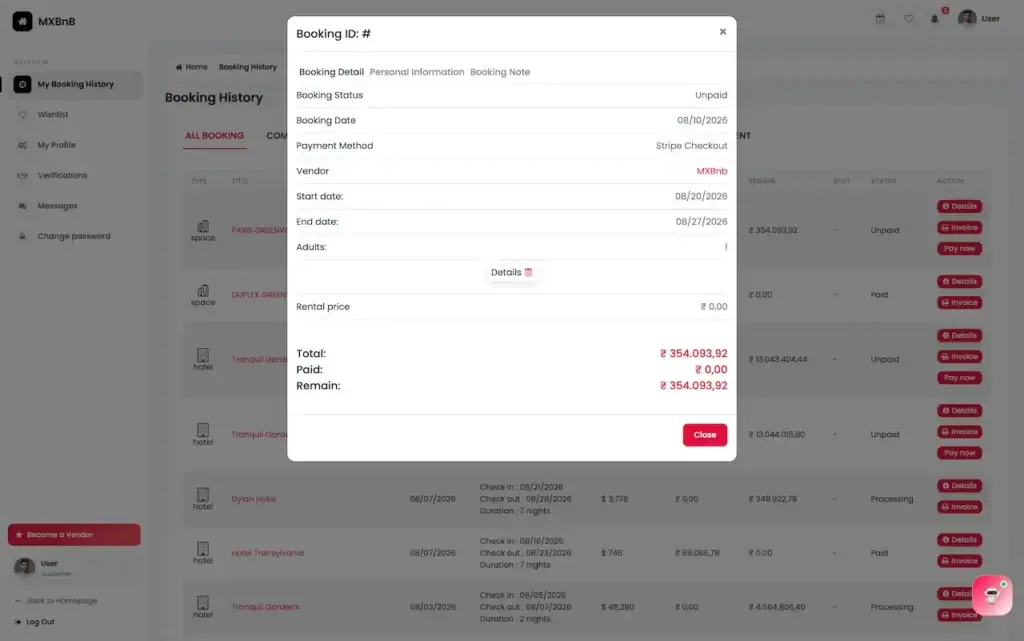
    All hourly and daily bookings in one list, with status filters, a detail view, manual status edits, payment state and refunds for when a guest needs help.

  • 06

    Payments & Host Payouts

    Each gateway has its transactions watched, payouts move through review, sign-off and completion, and the full payout record stays on file for reconciling accounts and tax.

  • 07

    Commission & Discount Codes

    Commission for everyone or per host, in percent or fixed, plus discount codes with use caps, start and end dates, order minimums and limits per guest.

  • 08

    Places & Languages

    A location tree that runs from country to state to city to neighborhood, and a translation screen for interface text and for each listing or page.

Pages & Templates

Site pages, a news section, email and page templates, a menu editor and a media library with watermarking to guard photos of your spaces.

  • Earnings, bookings and signups on one screen
  • Host requests waiting as tasks to act on
  • Payout queue tracked from review to paid
  • Refunds and payment status for each booking

Modules & Upkeep

Turn modules and plugins on or off for each deployment, run cache and speed tools, and read the system log under a permission of its own.

  • Location tree from country down to neighborhood
  • Translation screen for interface and listing text
  • Email and page templates kept in one place
  • Media library that watermarks space photos
Want more control, such as admins limited to one city or a scheduled export to your accounting system?

Both are added through the module and hook system, without a rebuild.

Book a Tour of the Admin

04What you get, and what it costs

In the Box

What's Included: Peerspace Clone Script Source Code, Apps and Launch

Miracuves hands you the whole Peerspace clone system, hourly space booking included, not a license to run on someone else's platform. Nothing is billed by usage later: no fee per booking, no share of revenue, no charge per seat. What stays outside the software price is your hosting, the accounts you open with gateways and the work of bringing venue owners on board.

01

Android App

An app under your brand that talks to the same REST API as the website, covering guest booking and the host dashboard.

  • Android app in your brand for guests and hosts
  • Find, reserve, chat and review from a phone
  • Host dashboard with the calendar and earnings
  • Push alerts and ID document upload
Peerspace Clone Guest Home and Category Search
02

iOS App

Every feature on iOS too, served by the shared API, and our team files the App Store submission as part of publishing.

  • iOS app running on the shared API
  • Same features as the Android app
  • Your icon, launch screen and color palette
  • App Store filing done by our team
Peerspace Clone Host Performance Overview
Peerspace Clone Guest Discovery Homepage
03

Guest Website & Host Workspace

The public marketplace and the host area for spaces, calendar, hourly and daily rates, enquiries, earnings and payouts.

  • Public site with search across all spaces
  • Host workspace for spaces and earnings
  • Search-friendly space pages
  • Fits laptop, tablet and phone screens alike
Peerspace Clone Admin Earnings Overview
04

Operator Admin Console

Over twenty modules for accounts, hosts, spaces, bookings, payments, payouts, content and system logs.

  • Over twenty modules in the admin
  • Fine-grained roles and permissions
  • Host vetting and space moderation
  • Commission, discount codes and host payouts
05

Complete Laravel 10 Source Code

Backend, admin and public site in full with nothing encrypted, free for you to change, rebrand and deploy again.

  • All Laravel 10 source, nothing encrypted
  • One REST API serving web and apps
  • Database schema plus migrations
  • Upgrade scripts between versions
06

Integrations & API

Six gateways behind one interface, with mail drivers, Pusher live messaging, Google Maps and social sign-in.

  • Six payment gateways already wired in
  • Mail via SMTP, Mailgun, Postmark or SES
  • Pusher for live chat and alerts
  • Google Maps plus social sign-in
07

Branding & Theming

App name, logo, launch screens, colors, fonts and branded system emails on every surface you run.

  • Colors, launch screen, logo and app name
  • System emails in your own branding
  • Your own domain set up
  • Your brand on every screen, no trace of ours
08

Deployment & Support After Launch

Server setup with SSL, mail and gateways connected, followed by 60 days of guidance, bug fixes for 6 months and product updates for 12 months.

  • Server set up at the host you pick
  • SSL, mail and gateways connected
  • 60 days of guidance after launch
  • Bug fixes first for 6 months, product updates for 12 months
Want to see exactly what you will own?

Book a walkthrough and we open the guest site, the host workspace and the operator admin with data in them, then show the structure of the code repository that becomes yours.

See What You Receive

Clear Pricing

What Does a Venue Booking Marketplace Like Peerspace Cost to Build in 2026?

The launch-ready, white-label Peerspace Clone costs $3,099 as a single payment and launches within 6 working days under your brand on your own hosting, hourly space booking included. The final cost moves with the space categories you switch on, your gateways, the number of languages, calendar or channel integrations, and how much store publishing you need.

Most Chosen Plan

Professional

Ready-to-Launch Edition
$3,099fixed fee
Live in 6 days

Suits: Venue networks, studio collectives, coworking brands & event-space startups

What you get is the demoed product with hourly booking added, wearing your brand and running on your own servers.

Start Now

Enterprise

Bespoke, Regulated, High-Volume
Customquote
Go-live: Set by agreed scope

Suits: Hospitality groups, real estate owners, venue chains & large event operators

Or let us build it to your own specification, fitted to your situation and the way your business runs.

Ask for a Quote
Development Cost

Peerspace Clone Development Cost in 2026

The Peerspace clone from Miracuves is priced at $3,099, a single payment for the guest, host and admin web surfaces, the Android and iOS apps, hourly and daily space booking and every other listing type, and the complete Laravel 10 code deployed in your name within six working days.

$3,099 One-time purchase
6 working days Branded and live
0% Share of revenue

Costs that sit outside the software price

  • Hosting with the server company you pick
  • Merchant accounts for each gateway you switch on
  • Signing up venue owners in each city you open
  • App Store and Google Play developer accounts in your company name
  • Add-ons such as calendar channel sync, AI dynamic pricing or KYC checks

Further work, such as a new space category or a host flow built for your market, is quoted in writing before any coding starts and usually ships in 2-8 weeks; hospitality groups and venue chains are priced on the Enterprise tier.

Weigh the Routes

Ready-Made Peerspace Clone vs Custom Build vs SaaS

An hourly venue marketplace can begin from the ready-made Peerspace clone, a custom Peerspace clone app build or a hosted space platform you rent. The table compares the three on what an operator pays for and gets to keep.

FactorMiracuvesReady-Made Peerspace CloneCustom BuildSaaS
Time to launch6 working days to a venue marketplace in your brand6 to 9 months to build from scratchFast to open inside the vendor layout
Cost up front$3,099, one-timePriced in writing once scopedSmall sign-up cost, then a monthly bill
Who owns the codeFull Laravel and Flutter source, moved into your accountNormally yours by contractKept by the platform vendor
FlexibilityChange anything in code; a new space category or host flow is quoted, most within 2-8 weeksAs far as the budget stretchesOnly what vendor settings permit
Running costsZero per-booking fees and zero revenue share; hosting and gateways invoiced by your own providersUpkeep as the contract definesMonthly plan, at times with a booking fee
Brand & store listingYour name across the site, host workspace and apps; store filing part of publishing supportYour brand; store work priced extraStarter plans often show vendor branding
Best fitOperators renting studios, meeting rooms and venues by the hour or dayA model no ready base fitsSingle venues trying direct bookings first

Who It Is Built For

Space Rental Use Cases for an App Like Peerspace: Meetings, Shoots, Events & Day Workspace

All six cases run on one platform. What changes is which space categories are live and which part of the business takes the lead.

RoomsBy the HourMeeting Rooms Booked by the Hour

Boardrooms, training rooms and quiet offices listed by owners who have spare hours in the week. A team lead searches by city and headcount, books 9 to 11 on a Tuesday, pays at checkout and gets a confirmation, while the host sees the hours fill on the calendar. Hourly booking ships in the Peerspace build, so a room can earn through the morning and again after lunch from two separate guests.

01
Peerspace Clone Guest Home and Category Search
Studio HireProductionPhoto and Film Studio Network

Photo studios, lofts and film sets with gear and crew rules on the listing, hourly or full-day rates, and lighting or backdrops charged as extras by the hour. Every studio owner is approved through one host pipeline and paid from one payout queue, so the operator runs a city-wide studio network from a single console instead of a spreadsheet of contacts.

02
Peerspace Clone Guest Discovery Homepage
EventsEvent HallsEvent Venues for Parties and Launches

Rooftops, galleries and halls hired for birthdays, product launches and dinners, priced by the hour for an evening or by the day for a full build-out. Capacity, house rules, a cleaning fee and a security deposit sit on the listing, and large or unusual requests go through an enquiry thread so the host can quote before anything is charged.

03
Peerspace Clone Admin Accommodation Inventory
ClassesSkillsWorkshops and Classes Inside Venues

Cooking classes, art sessions and team workshops run at a host venue need a session length, a group cap, an agenda and a clear list of what is included. The experiences module carries all of that, and ticketed time slots from the events module let a venue sell seats for a class instead of the whole room.

04
Peerspace Clone Boat Listings Screen
WorkspaceDay PassesCoworking Desks and Day Passes

A coworking brand or office owner sells desks and private rooms by the day, with weekly discounts for longer use, alongside hourly meeting rooms in the same building, all from one marketplace instead of a separate booking tool per site.

05
Peerspace Clone Admin Module Switches
AgencyOwn BrandsBranded Space Marketplace for Clients

Agencies and property groups launch a marketplace under each client brand or city, each as a separate deployment, using the same operating playbook while every data set and brand stays fully apart.

06
Peerspace Clone Admin Language Settings
Business Model

Peerspace Clone Business Model: Three Ways to Operate

Who owns the spaces, independent hosts, a venue chain or a blend of both, decides which of three businesses this Peerspace clone runs, since one engine sells studios, rooms and venues by the hour or the day.

Open host marketplace

Independent venue owners list their studios, rooms and halls, and you earn commission and a service fee on every hour booked, then sell host plans once owners want more listings.

Venue chain platform

A coworking or venue group lists its own rooms first, sets its own hourly and daily rates, then invites partner venues and takes commission on their bookings.

Space plus experiences

A city platform pairs venue hire with workshops and ticketed events, so one checkout carries the room, the class and the seats, each paying commission.

Switching between these models is a settings change, not a fork, because each space and listing type runs through one booking, payment and payout path.

Shared core: whichever model you run, bookings, the wallet, reviews and host payouts stay identical. Adding a category is a toggle in the admin, never a second build.

Talk Through My Use Case

Timing Matters

Why Launch an Hourly Space Marketplace in 2026?

Two plain reasons make owning a venue marketplace, built for you by Miracuves, worth more than a profile on someone else's. The first is the fee: Peerspace, by its own help pages, takes a host fee in the 15-20% range on each booking, and an operator with its own platform keeps that share. The second is the customer: on a third-party marketplace the planner who booked your studio is not yours to email, and slips away the day your listing drops in the results.

The Booking Business, in Audited Figures

The size of the fee pool is on record, not projected. The two largest listed booking companies report what they keep in audited annual accounts lodged with the SEC in February 2026.

$91.3bn

Gross booking value on Airbnb in 2025, 12% above the prior year.

13.4%

The share Airbnb kept as revenue, $12.2bn.

14.5%

Revenue at Booking Holdings as a share of gross bookings, per its filing.

533m

Airbnb nights and seats booked during 2025, against 492m a year before.

Read those four figures as both the opportunity and the warning. Booking platforms keep roughly one dollar in seven of what passes through them, and that is the money you hold onto when the marketplace is yours. Those same companies also bring demand you will not have on launch day, and software alone does not change that.

So the opening is a niche, not size: hours instead of nights, a studio instead of a bedroom, a meeting room in a city the big names barely cover, a local payment method or language. The figures above are what two listed companies disclose; the case for an hourly space marketplace is ours to make, not theirs.

Sources. Airbnb, Inc., 2025 annual report on Form 10-K: revenue $12,241m on gross booking value of $91,273m, with 533m nights and seats booked. Booking Holdings Inc., 2025 annual report on Form 10-K: revenues of $26,917m, given as 14.5% of total gross bookings. Airbnb includes taxes, cleaning fees, service fees and host earnings in gross booking value, so a take rate against it reads lower than a pure commission rate. Peerspace host fee range: Peerspace help center. None of these figures forecasts any platform Miracuves builds.

01

The Fee Stays With You

Each booking on your own marketplace pays your commission, not someone else's. Once a venue business has steady volume, that gap alone often justifies the platform.

02

The Planner Is Your Customer

Contact details, booking history and repeat bookings live in your own database, which is what lets you run direct offers and reward regular bookers.

03

Spaces You Already Hold

If you run coworking floors, manage buildings or know the venue owners in your city, the hardest part is behind you. The missing piece is the platform, not the supply.

04

Gaps the Big Names Leave

A city, a language, a payment method or a space type the global players overlook is a lasting opening, and each of those is a setting on this build.

05

Hours, Days and Tickets Together

A planner booking a room for three hours, a studio for a full day and seats for a workshop in one checkout is something a single-format site cannot sell. That mix is the edge here.

06

Launch Without a Year of Building

Availability, rates, payouts, permissions and the console are the dull parts that swallow a custom project. Here they are finished, which is why launching in 6 working days holds up.

Platform Figures at a Glance

7

Bookable Listing Types

6

Payment Gateways Built In

20+

Console Modules

15

Languages Preset

The other side deserves a straight answer. Big marketplaces bring buyers and a new one does not, so owning yours pays off when you already have spaces or an audience, when your city needs a payment method or language the big names handle poorly, or when you sell hours, days and tickets together. If none of that fits, listing on an existing marketplace is the more honest advice.

Who Buys It

Markets We Build For

The Miracuves Peerspace clone fits any business that rents out space in blocks of time. Meeting-room owners sell hours between their own bookings. Photo and film studios price by the hour with gear as extras. Event venues hire out evenings and full days with deposits. Coworking operators sell desks and day passes beside hourly rooms. Workshop hosts sell seats in timed sessions. Restaurants offer private dining rooms by the hour. Property owners turn empty floors into bookable space. Agencies and networks launch a branded marketplace for each client or city.

  1. 01Meeting Rooms
  2. 02Photo Studios
  3. 03Film & Video Sets
  4. 04Event Venues
  5. 05Coworking Spaces
  6. 06Workshops & Classes
  7. 07Private Dining Rooms
  8. 08Pop-Up Retail
  9. 09Galleries & Lofts
  10. 10Property Owners
  11. 11Event Planners
  12. 12Agencies & Networks

Miracuves’ Peerspace Clone is a booking-first space marketplace for any room, studio or venue rented by the hour or the day, priced on your terms and carrying only your brand.

06How it runs

The Booking Path, Stage by Stage

How a Peerspace Clone App Works: Find, Reserve, Host, Get Paid

The Peerspace clone app from Miracuves moves through six stages between a planner landing on the site and the venue owner getting paid. The server enforces each one, which is what separates a booking engine from an enquiry form.

  1. Peerspace Clone Guest Home and Category Search
    1Find a Space That Fits

    Planners search the space categories you run, filter each one its own way, and open the listing that suits the job.

    • One search across categories, or a focused search with its own filters
    • Place, date, headcount, budget, amenities and rating
    • Map results by coordinates, with suggestions for places and spaces
    • Space page with photos, video, amenities, reviews and a map
  2. Peerspace Clone Boat Listings Screen
    2Confirm the Hours Are Free

    The chosen hours or days are tested against the calendar before the guest pays anything.

    • Requested hours read against existing bookings for that space
    • Start time kept inside the window the host allows for bookings
    • Any overlap with a confirmed booking turned away by the server
    • Lead time and minimum days applied to full-day hires
  3. Peerspace Clone Booking Price Breakdown Screen
    3Price the Booking, Discounts In

    The server calculates the price and every discount on its own, so nothing sent by the browser can alter it.

    • Hourly or daily rate, with any date-specific rate applied
    • Cleaning, deposits and gear extras added per hour, day or once
    • Discount code checked for use limits, dates and order minimum
    • Marketplace service fee and host fees built into the shown total
  4. Peerspace Clone Checkout Contact Details
    4Reserve the Space and Pay

    Booker details are stored, the reservation is created and the charge runs through the gateway you connected.

    • Reservation made with its own code, starting as a draft
    • Pay by Stripe, PayPal, PayStack, Payrexx, bank transfer or wallet
    • Deposit now and balance later, where you turn deposits on
    • Gateway callback checked by signature before the booking advances
  5. Peerspace Clone Guest Inbox Screen
    5Tell the Guest and the Host

    Once confirmed, the hours are locked and the guest, the host and the operator are all notified.

    • Hours or days marked taken on the space calendar
    • Confirmation email to the guest, new-booking alert to the host
    • Live in-app alert pushed through Pusher
    • Commission worked out and locked into the reservation
  6. Peerspace Clone Host Listing Details
    6Wrap Up, Review, Pay Out

    When the session ends the review opens and the earnings head to the host, which closes the cycle.

    • Status turns to completed once the booked time is over
    • Review request sent; only finished bookings may review
    • Host balance released minus commission and fees
    • Host asks for a payout, the operator checks and pays it
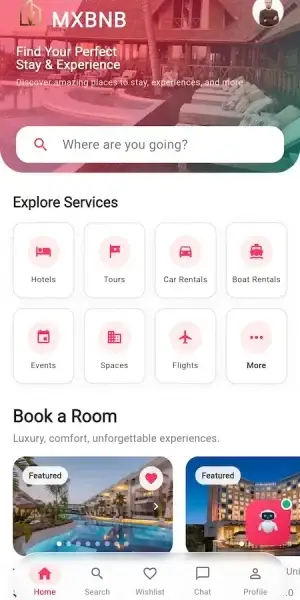
Booking Path at a GlanceSearchHours CheckPricingPaymentConfirmationSessionReviewHost Payout

Under the Surface

Platform Architecture of a Venue Booking App Like Peerspace: Shared API, Booking Model & Live Calendar

Speak With an Architect
  1. Layer 01

    Shared API for Web and Apps

    The guest website, the host workspace and the Android and iOS apps all call one REST API with one set of booking rules, so a phone and a laptop can never disagree on which hours a planner has reserved.

  2. Layer 02

    One Booking Model

    Every reservation lives in one bookings table linked to its space or listing by type and id, so payments, reviews, reports and payouts are built once and serve hourly and daily bookings alike.

  3. Layer 03

    Free Hours Checked Live, Never Guessed

    Free time is confirmed when the request arrives, against the space calendar and every existing booking instead of a stored flag, and that check is what stops the same hours being sold twice.

  4. Layer 04

    Commission Locked In at Booking

    Rate and type of commission are saved with each reservation at the moment it is made, so a rate change next season never rewrites what a venue owner earned this season.

  5. Layer 05

    Swappable Drivers Everywhere

    Cache, queues, sessions, mail and file storage each run behind a driver, so moving from files to Redis or from a local disk to S3 is a settings edit, not a migration.

  6. Layer 06

    Extend Without Forking

    Action and filter hooks and a plugin folder let your own code run when a booking is created or a price is calculated, with core files left alone, so an update never wipes out your changes.

The Stack

Peerspace Clone Tech Stack: Laravel 10, MySQL, Vue.js & Flutter

The Miracuves Peerspace clone stands on a plain, widely used stack on purpose. Nothing here is rare, and that matters: any capable Laravel team can look after it, so keeping your marketplace running never depends on us.

Backend

Booking Rules & API

PHP 8.1+ LARAVEL 10
  • Modular monolith split into 20+ domain modules
  • Eloquent ORM using bound query parameters
  • API sign-in via Sanctum tokens and JWT
  • Hooks and plugins in the WordPress style
Database

Spaces, Bookings & Payments

MYSQL 8 MARIADB
  • More than 40 tables across the domains
  • One booking model for hourly and daily types
  • Composite indexes on each type and id pair
  • Full-text indexes on the content people search
Frontend

Guest & Operator Screens

VUE.JS BLADE BOOTSTRAP
  • Blade templates for the public marketplace
  • Vue.js components inside the admin
  • Fits laptop, tablet and phone screens
  • Theme layer with overridable templates
Mobile

Apps for Android & iOS

FLUTTER
  • One codebase builds Android and iOS
  • Calls the very REST API the website calls
  • Push alerts and photo upload by camera
  • Every guest and host feature on mobile
Realtime

Live Chat & Alerts

PUSHER CHATIFY
  • Direct chat between guest and host
  • In-app alerts delivered as they happen
  • Unread counters and read receipts
  • Photos and files shared inside chat
Infrastructure

Hosting & Growth

REDIS S3 GCS NGINX
  • Drivers for cache, sessions and queues
  • Supervisor keeps queue workers running
  • Space photos on S3 or Google Cloud via a CDN
  • Read replicas for heavy reporting
A note for technical buyers:

this is a modular monolith, not a set of microservices. Each of the twenty-plus modules carries its own routes, models, migrations, controllers and views, and all of them ship as one deployable app. You get clean separation without paying to run a distributed system your venue marketplace does not need yet, and when it does, the cache, queue, mail and storage drivers switch by configuration.

Ask Our Engineers

Growth Ready

Ready for Growth: Caching, Queues and Storage That Scale Out

Growing the Peerspace clone Miracuves hands over follows a familiar, proven route, which is exactly what infrastructure should do. Cache, sessions and queues move from files to Redis by switching a driver, and slow tasks run outside the request.

01

Queued Background Work

Emails, image resizing, exports and reports are handed to a queue that Supervisor keeps running, with failed jobs logged and retried after a pause.

  • A rush of Friday bookings never slows a page
  • A mail provider outage slows email delivery, never the checkout
02

Redis Behind Cache, Sessions and Queues

A settings change moves all three from files to Redis, the most useful step once traffic outgrows one server.

  • With sessions and cache on Redis, any server can answer any request
  • Putting another app server behind a load balancer is hosting work, with no code to change
  • Because the code is modular, a busy module can be tuned without touching the others
03
BookingsReportsAnalytics

Replicas Carry the Reports

Splitting reads from writes stops heavy reports from slowing the booking flow.

  • Separate read and write connections supported
  • Reports grow heavy as a marketplace matures
04
OriginalThumbnailsWatermark

Space Photos on a CDN

Venue photo galleries weigh more than anything else a space marketplace serves.

  • The storage driver puts media on S3 or Google Cloud Storage with a CDN in front
  • Thumbnails in several sizes made on every upload
  • Optional watermark to protect venue photos
05

Indexes Matched to Real Searches

Composite indexes cover each type and id pair, date-range indexes cover bookings, and full-text indexes cover the content guests search.

06

Related Data Loaded Up Front

Linked records are eager loaded so the busiest screens stay clear of N+1 queries.

  • N+1 queries are the first thing to bite as listings grow
  • Every list is paged on the server, never returned all at once
For founders and CTOs:

one modest server is plenty on day one, and the path to a bigger setup holds up because nothing gets thrown away on the way. Drivers change; the code stays put.

Plan for Growth With Us

07Security and safety

Open to Audit

Security in a Space Booking Marketplace: OWASP-Mapped, GDPR-Ready and Written Out in Full

For every booking flow in the Miracuves Peerspace clone, a dedicated VAPT reference maps the security posture to the OWASP Top 10. The document is unusually frank: it splits the controls enforced in code from the ones that belong to deployment and configuration, and it names that second group openly instead of hiding it inside one green chart. The cards below list what the platform enforces by itself; the closing bullets on each card, headed "Set up with you before launch", are the items we configure together, spelled out rather than assumed.

  1. 01 · Payments

    Card Numbers Never Touch Your Database

    The gateway captures and tokenizes each card, so a full card number is never stored in your MySQL database. That holds the deployment to PCI DSS SAQ A instead of the much heavier SAQ D. Each payment webhook has its HMAC signature checked before a booking changes status, so a faked callback can never confirm hours that nobody paid for.

    • Set up with you before launch: Gateway SSL Verification Is Switched On:
  2. 02 · Uploads

    Every Upload Checked Byte by Byte

    Each uploaded file is read with finfo and matched on its magic bytes, not its extension, so an executable with a fake extension is refused before any controller sees it. Files that pass get a random 40-character name generated by a secure generator, are stored at 0600 permissions, and every path is resolved with realpath, so no path trick can climb out of the uploads folder.

  3. 03 · Queries

    Injection Shut Out at the ORM

    Eloquent runs every query with bound parameters, cutting out the string building that SQL injection relies on. Rich text from hosts and guests is cleaned by HTML Purifier against a tag allow-list per field, and Blade escapes all output by default, so a stored script would have to beat three separate layers to ever run.

    • Set up with you before launch: HTTPS and Security Headers Live in Server Config: HSTS and Referrer-Policy, plus X-Frame-Options, the Content-Security-Policy and APP_HTTPS, are set in the web server and environment config, not in the app code, and our deployment hardening checklist covers each one.
    • Set up with you before launch: Dependency Risk Is Ongoing Upkeep: Composer and npm lock files fix every package version, yet OWASP A06 cannot be closed by code alone. It takes scheduled composer audit runs, a watch on Laravel security advisories and a named owner for patching after handover, and we plan those checks together rather than pretending the risk is gone.
  4. 04 · Auth

    Sign-In Protected in Layers

    Passwords are stored as bcrypt hashes, email checks use signed links that expire, and two-factor sign-in runs TOTP through Laravel Fortify with one-time backup codes. API calls use Sanctum tokens with stated abilities that can be revoked one by one, and password reset links are signed and last sixty minutes, so they cannot be guessed.

  5. 05 · Access

    Permissions That Fence the Data

    Access is controlled by role, module by module, so a finance clerk can pay hosts without opening user management. Each host only sees their own records, which stops one venue owner from viewing another's bookings by changing an id in the address bar, and every operator page sits behind admin middleware instead of a hidden link.

    • Set up with you before launch: Security Logging Ships as Standard: Rotating daily logs, payment trails and sign-in history work from day one. Alerts on failed logins, logs of denied permissions and forwarding to Papertrail, Datadog or a similar service are deployment options you can pick.
  6. 06 · Privacy

    Privacy Designed Into the Data

    A GDPR export delivers one structured file with the profile, bookings, reviews and payment history. Deleting an account anonymizes it instead of leaving loose ends: records the law says must stay keep their amounts while personal details are removed. Soft deletes allow thirty days to recover, and retention is set per type of data.

For the operator: the build ships bcrypt hashing, two-factor sign-in and signed payment webhooks. On a venue marketplace the areas with real exposure are guest personal data and host payouts, which is why they get the most careful documentation and come first in any VAPT round you plan before launch.

Get the Security Overview

Rules and Responsibility

Trust and Safety on a Peerspace-Style Platform: What the Software Covers and What Remains Yours

A Peerspace clone gives you space booking software. It does not grant a permit to host events in a building, nor a license to hold guest money. Miracuves builds the platform and hands it over; the operator stays responsible for local permits, occupancy and noise rules, tax collection, vetting hosts as far as your market expects, and paying hosts through a licensed payment provider. Miracuves does not give legal, tax or regulatory advice.

Ships with the controls a venue marketplace relies on; legal duties remain the operator's.

“Ready” means the tools come with the platform: ID document checks before a host goes live, moderation for every space, reviews limited to finished bookings, account blocking, admin rights limited by role, signed payment webhooks, data export with anonymized deletion and system logs. Venue permits and local licenses remain with you as the operator.

What the Software Delivers

Each host is approved and their ID documents checked before a space can go live. You also get one moderation queue for every listing, verified reviews with host replies, a queue for reviewing payouts, account blocking, detailed roles, and export and deletion flows. The source code is handed over and belongs to you.

Venue and Event Rules

Many cities set rules for venues that host gatherings: occupancy caps, noise limits, fire safety, event permits and sometimes business licenses for the host. The platform can show what a host declares on the listing, but permits, inspections and tax filings are the job of the operator and the host.

Host Payouts and Booker Funds

Booker payments and host payouts move through accounts you own at your chosen gateways. Wallet balances held for guests can fall under financial rules in some countries, and automated ID checks for hosts are available as an add-on where your market calls for them.

Data and Consumer Rules

As operator you control the guest and host data, under the GDPR in the EU or the local law where you operate, and your cancellation and refund terms must satisfy consumer rules in every market you serve. Check your setup with a local lawyer.

08Extend the platform

Inside the coreMXBnb
  • Hourly & daily booking
  • Rates & checkout engine
  • Wallet & host payouts
  • Operator console

How add-ons are added

  1. 1
    Pick only the modules you need

    Add modules at launch or months later; the core never needs a rebuild.

  2. 2
    Scoped first, priced per module

    Every add-on is scoped and quoted in writing on its own.

  3. 3
    Lands in your repository

    Just like the core, it comes as source code you own.

Ask About Add-On Modules

Go Beyond

Add-Ons for Your Peerspace Alternative: Calendar Sync, AI Dynamic Pricing & Custom Integrations

Straight out of the box, the Peerspace clone from Miracuves is a full space marketplace, hourly booking included, that you can test from search to payout. Operators usually add the modules below once they know their market, either to plug in an outside account or because volume demands it. Each one is scoped and quoted on its own.

  • Reach & pricing

    Calendar & Channel Sync

    Two-way sync with the outside listing sites and calendars your hosts already use, so free hours and rates stay matched and nothing is sold twice. Ischia Booking chose this module for its rooms.

    Sync · Channels
  • Reach & pricing

    AI Dynamic Pricing

    AI rate suggestions shaped by demand, nearby prices and past bookings, fed into the hourly and date-based rate tables you already use instead of sitting beside them.

    Pricing · AI
  • Payments & payouts

    Additional Payment Methods

    Local gateways and mobile wallets on top of the six included. Every gateway sits behind one shared interface, so a new payment method is one class that implements it, with no change to the booking flow.

    Payments · Local Methods
  • Publishing & brands

    App Store Filing, Included

    Part of the base package: we sign the iOS app, file it with Apple using the developer account in your name and handle reviewer questions with the details Apple asks for. Apple decides how long approval takes, which sits outside the 6 working days.

    Store · iOS Filing
  • Operations & trust

    Automated ID & KYC

    Automatic document checks for hosts or guests where local law asks for them, taking over from the manual admin review that comes as standard.

    Trust · KYC
  • Operations & trust

    Venue Turnover & Crew

    Track each space through ready, needs cleaning, inspected and closed, assign staff and schedule the reset between back-to-back bookings for operators who run their own venues.

    Ops · Turnover
  • Payments & payouts

    Accounting & Finance Sync

    Bookings, payouts and commission sent on a schedule to QuickBooks, Xero or your own finance tool, so closing the month is no longer a manual matching job.

    Finance · Export
  • Publishing & brands

    Several Brands & Cities

    Multiple branded marketplaces on their own deployments sharing one way of operating, suited to agencies or networks that operate in several cities.

    Growth · Multi-Brand

Sister Rental Platforms

Renting Out More Than Rooms by the Hour? Boats, Cars, Trips and Monthly Stays.

The platforms below share this one's delivery model, and each is handed over with its full source code.

GetMyBoat Clone01
Pick it if: you run boat hire or charters onlyGetMyBoat Clone

Charter marketplace for boats and yachts, with vessel types, trip lengths, deposits and an optional captain.

View This Solution
Turo Clone Banner Car keys to Client02
Pick it if: owners lend their own cars to driversTuro Clone

Car sharing between owners and drivers, with host fleets, trip steps, insurance handling and driver checks.

View This Solution
Expedia Clone03
Pick it if: you resell flights, hotels and holiday packagesExpedia Clone

Travel agency software selling flights, hotels and holiday packages, with supplier stock and booking management built in.

View This Solution
Blueground Clone04
Pick it if: guests stay for months at a timeBlueground Clone

Furnished mid-term and company housing with longer leases, tenant screening and recurring rent billing.

View This Solution
CatalogBrowse 90+ solutions

09The business case

Market Benchmarks

Vacation Rental Market Benchmarks - Independent 2025-2026 Data

Those revenue models above come from us; the figures below do not. They are numbers published in the annual reports of Airbnb and Booking Holdings, plus Eurostat and UN Tourism, and appear here unchanged. Together they indicate what a large short-term rental marketplace retains per booking and the amount of travel demand behind it, so the business case can be tested against sources you are able to verify yourself.

Airbnb 10-K01

13.4% of Airbnb Gross Booking Value Became Revenue

Airbnb's 2025 annual report (Form 10-K, filed 12 February 2026) shows gross booking value of $91,273 million and revenue of $12,241 million across 533 million Nights and Seats Booked. Revenue was therefore about 13.4 percent of the value booked, a reference point for what a scaled marketplace retains from host and guest fees.

Booking Holdings02

3.9m Alternative Stays Listed on Booking.com

Booking Holdings' 2025 annual report (Form 10-K, filed 18 February 2026) states that Booking.com had approximately 3.9 million alternative accommodation properties, including homes and apartments, at 31 December 2025. Alternative stays made up approximately 36 percent of its room nights booked in 2025, up from approximately 35 percent in 2024.

Eurostat03

951.6m Short-Stay Nights Booked Online in the EU

Eurostat reports that guests spent a total of 951.6 million nights in short-stay accommodation booked online across the EU in 2025, an increase of 11.4 percent on 2024. The data covers bookings made through Airbnb, Booking and Expedia. Eurostat published the figure in a news article dated 1 April 2026.

UN Tourism04

1.52bn International Tourist Arrivals in 2025

UN Tourism estimates that 1.52 billion international tourists were recorded globally in 2025, a 4 percent increase on 2024, with Europe the largest region at 793 million arrivals. Export revenues from tourism reached a record USD 2.2 trillion. The figures come from its World Tourism Barometer release of 20 January 2026.

Cited sources.

Airbnb, Inc., Annual Report on Form 10-K for fiscal year ended 31 December 2025, filed 12 February 2026 - sec.gov

Booking Holdings Inc., Annual Report on Form 10-K for fiscal year ended 31 December 2025, filed 18 February 2026 - sec.gov

Eurostat, Tourism nights booked via platforms hit nearly 1 billion, news article, 1 April 2026 - ec.europa.eu

UN Tourism, International tourist arrivals up 4% in 2025 reflecting strong travel demand around the world, World Tourism Barometer, 20 January 2026 - untourism.int

Every figure is a result or statistic the publishers themselves reported, shown as published. The sole figure that is ours is the 13.4 percent ratio, calculated from reported figures: dividing $12,241 million in revenue by $91,273 million in gross booking value. These numbers describe the market. They say nothing about how any platform built by Miracuves performs, and nothing here projects revenue for your business.

The Business Case

Marketability, Earning Potential & Where the Market Is Heading

An hourly space marketplace earns through several channels at the same time, and that spread is what keeps it steady. Commission rises with bookings, host plans bring recurring income that does not, and promoted spots sell visibility instead of transactions.

  1. 01

    Four Ways to Earn

    Commission, host membership plans, marketplace and host fees, and promoted spots. They add up on top of each other, and only one depends on how many hours get booked. You decide the commission, for everyone or per host, and Miracuves takes no share of any of it.

  2. 02

    Supply Sets the Pace

    Space marketplaces stall for lack of good venues far more often than for lack of bookers. Operators who already control rooms, studios or a network of venue owners begin with the hard half done.

  3. 03

    Hours, Days and Tickets Lift Value

    A planner booking a morning studio, an afternoon meeting room and workshop seats in one visit is worth far more than one booking. One checkout across formats allows it.

  4. 04

    The Asset Is Yours

    The code, the booker data and the commission rate all belong to you. That is what separates owning a business from renting a stall in someone else's market.

Main Revenue Drivers
  • Commission on each booking, set for all or per host
  • Host membership plans with listing limits
  • Marketplace service fee plus host-set extras
  • Promoted spots sold as paid placement
  • Wallet balances held until payout runs
  • Venue, class and ticket sold in one basket
Long-Term Platform Value
  1. 01Your own booking channel, not a rented profile
  2. 02A list of bookers you can reach directly
  3. 03A venue owner network worth something on its own
  4. 04Your commission rate, set by you alone
  5. 05Code you can sell, license or keep building on
Sample Earnings Scenarios

The scenarios below are illustrations to help you model your own numbers, not results we report. The real client results shown here come from the named case studies, which hold the only figures we vouch for.

Single-City Space Marketplace100-500Spaces, One CityCommission-led, one category, one city.

Where most operators begin, often by bringing on spaces they already manage. Early on, supply matters more than traffic: a marketplace with no good rooms books nothing, however many planners arrive.

Multi-Format Venue Hub1K-5KSpaces Across FormatsCommission and fees, several formats live.

Hourly rooms, day hires, workshops and event tickets on one platform, where order value grows because a planner books more than one thing per project. Selling across formats lifts margin more than raw listing count.

Enterprise & White-Label10K+Spaces, Several CitiesRecurring plan income beside commission.

Host membership tiers, promoted spots and city or brand partners running on your servers. Income turns recurring instead of only per booking, which changes how investors value the business.

10Why choose us

Why Pick Us

Miracuves vs Other Peerspace Clone Developers

There are a few roads to a space booking marketplace: buy a script off the shelf, hire a freelancer or an agency, or take the Miracuves Peerspace clone, a codebase you own outright. Whoever you shortlist, ask how free hours are checked, where the commission rate is stored, and to watch one payout followed from booking to host before you sign anything.

Why Founders Choose Miracuves

  • 01

    Live in Days, Not Months

    A venue marketplace in your brand, deployed in 6 working days, while building one from scratch runs 6 to 9 months. The tedious parts, availability, rates, payouts and permissions, are already finished.

  • 02

    All the Source Code Is Yours

    The whole Laravel codebase with nothing encrypted, moved into your own account. Many script sellers ship encrypted or partial code, which rules out real changes.

  • 03

    Hourly Booking Built In

    A generic clone script sells nights and leaves hours to you. Here hourly space booking comes with the Peerspace build, and adding workshops or event tickets is a switch in the admin, all on the same booking and payout path.

  • 04

    Security a Reviewer Can Check

    Controls mapped to OWASP, documentation ready for VAPT, and GDPR export and deletion flows, all described plainly. Our work follows what the frameworks ask for, and we never claim a certificate we do not hold.

  • 05

    Real, Named Clients

    Our published case studies name Ischia Booking, BNBinGreece and GoToRawanda as clients, with no anonymous claims. Each one owns its source code and went live on a date set in writing.

  • 06

    A Clear Path to Grow

    Calendar sync, AI dynamic pricing, more payment methods and multi-brand setups are priced add-ons, not vague talk. Before you agree, you see what the next step will cost.

Development Company

How to Choose a Peerspace Clone Development Company

Ask every space marketplace vendor to show one host payout on a running system.

What to check Miracuves

  • Demo logins that work Guest, host and admin logins open the running build before any payment
  • Hours and days, one engine Hourly and daily bookings share one booking and payout path
  • Named clients in production Ischia Booking, BNBinGreece and GoToRawanda run this codebase
  • Source with no encryption Every line of the Laravel 10 code moves to your account
  • A fixed go-live date Six working days; if Miracuves causes a delay, the extra work is free
  • Help once you are live Launch guidance for sixty days, priority fixes for six months, updates for twelve months

Walk away from a vendor who

  • Only sells nightly stays
  • Trusts a stored flag to say hours are free
  • Changes old host earnings when a rate changes
  • Hands over encrypted or partial code
  • Cannot trace one payout from request to paid

Compare & See Why Operators Pick Us for Ready-Made Space Marketplaces

FactorMiracuvesMiracuves Peerspace CloneOff-the-Shelf ScriptCustom Build Agency
Launch Time6 days to productionUnclear / DIY6 to 9+ months
Who Owns the CodeFullOften partial or encryptedNormally yes
Feature Depth (Peerspace-like)High (hourly and daily booking, payouts, plans)Basic (nightly stays only)Set by the budget
Security & Data DutiesStrong (designed around the controls, GDPR-ready)SparseDiffers a lot
Scaling & Page SpeedCloud- and CDN-readySeldom plannedDown to the architecture
Ways to Make MoneySeveral (commission, plans, fees)Mostly commission aloneBespoke (extra time & cost)
Admin & ReportsComplete operator consoleBare or absentBuilt to order (extra cost)
Price vs Speed vs QualityEven mixLow cost, high riskCostly and slow
Support & Updates LaterOffered with defined plansMostly nonePer the contract

Some routes to a space marketplace break the moment the first booker pays. Counting features tells you little. What matters is what you end up owning, how soon you get there, and whether the platform can still change a year later.

Speak With Our Team

Releases

Space Booking Engine Release Log: Versions & Changes

VersionDateWhat Changed
v4.0Aug 2026VR gallery added for stays, spaces, cars and boats. New features module. All seven listing types run on one booking engine.
v3.62023Wallet connected, with transaction tracking and balance control for admins.
v3.52023Plan payments wired in, with subscription billing for host tiers.
v3.02023First wallet system, plus partial payment added to the booking flow.

Ready when you are

Let's turn your idea into a live space marketplace.

The first call is free, and you leave with a clear timeline and straight answers. Winning your trust counts for more with us than a fast signature.

  • Reply inside 24 hrs
  • First consult free
  • No lock-in contract
  • You own all the source code

11Learn more

Blog & Resources

Building a Space Rental Marketplace: Latest Reading & Resources

Guides and analysis on rental marketplaces, host acquisition, commission models and multi-service travel platforms.
Product & hourly booking4 questions

01What is a Peerspace Clone App?

A Peerspace Clone App is a ready-made marketplace for booking spaces by the hour, modeled on the format Peerspace made popular: planners find a studio, meeting room or venue and reserve the hours they need, hosts list spaces and get paid, and you earn commission on each booking. The Miracuves build ships hourly and daily space booking on one engine, with a guest website, a host workspace, an operator admin with over twenty modules, and Android and iOS apps on the same REST API.

02Do I have to sell every space category?

No. Categories and listing types in the Peerspace Clone can each be turned off in the admin, which hides them from search, menus and the host workspace. Most operators open with meeting rooms or studios and add venues, workshops or tickets once owners sign up. Switching one on later needs no rebuild, since all of them run through one booking, payment and payout path.

03How is the Peerspace Clone different from your Airbnb Clone?

Both ship from the same MXBnb codebase at the same price, so the core engine, admin and apps are identical. The Peerspace Clone is the venue-first edition: Miracuves delivers it with hourly space booking included (hourly and daily rates, start time and hours picked by the guest, a host-set bookable window, overlap blocking), set up around studios, meeting rooms and event venues. The Airbnb Clone page leads with stays and multi-service travel. Pick the page that matches your supply.

04Can the Peerspace clone run in more than one language?

Yes, down to each listing rather than only the interface. Every space, page and category in the Peerspace Clone holds its own text per language, fifteen languages come preset, and Arabic and Hebrew get right-to-left layouts. A new language is added from the admin, with no redeploy.

Price & ownership4 questions

05What does the Peerspace clone cost, and how long until launch?

The white-label Miracuves Peerspace Clone is priced at $3,099, paid once, with hourly space booking included, and goes live in 6 working days, branded and deployed on servers you choose. Work outside the base package usually takes 2 to 8 weeks, and anything larger is scoped and priced in writing before it begins.

06Will the Peerspace Clone source code be mine?

Yes. On handover you get the full Laravel 10 code of the Peerspace Clone with nothing encrypted, the source of the mobile apps, the schema and migrations, and the upgrade scripts, all moved into your own account. No fee per booking applies, and you never need Miracuves to keep it running.

07Can I adjust the commission rate later?

Yes, for the whole marketplace or per host, in percent or as a flat amount. Each booking stores the rate in force when it was made, so a change applies to new bookings only and never alters what a venue owner already earned, which keeps reports and payout records sound.

08Why choose Miracuves to build a Peerspace clone?

Because the difficult parts of a space marketplace (free-hour checks, rates, payouts, permissions and the operator console) already exist and run live with named clients, and the source code belongs to each of them: Ischia Booking, BNBinGreece and GoToRawanda. With 9,000+ projects delivered to 6,000+ clients, Miracuves launches the Peerspace Clone with hourly booking in 6 working days, and writes up its security controls plainly instead of claiming certificates it lacks.

Payments & reservations3 questions

09Which payment gateways come included?

Six come wired into the Peerspace Clone: Stripe and PayPal, PayStack serving African markets, Payrexx serving European methods, an offline bank transfer confirmed by the admin, and the platform wallet. More local methods are custom work, and because every gateway sits behind one interface, adding a new one leaves the booking flow untouched.

10How are host payouts handled?

Each booking adds to the host balance after commission and fees, worked out at the rate saved on that booking. The venue owner asks for a payout from the dashboard; it waits in your payout queue for review, and you close it once the money is sent. Payouts by PayPal or bank transfer are ready from day one, and the payout record is kept for reports and tax.

11How does the Peerspace clone prevent double-booking?

Every request is checked when it arrives against the space calendar and existing bookings, never a stored flag, so two planners cannot hold the same hours. Hourly bookings must start inside the window the host sets, and day hires respect lead time and minimum days. iCal export keeps outside calendars in line, and two-way channel sync is available as an add-on.

Security, launch & aftercare10 questions

12Is the Peerspace clone secure enough for a live marketplace?

Passwords are bcrypt hashed, and the build adds TOTP two-factor sign-in, role-based access control, Sanctum API tokens, HTML Purifier for rich text, bound Eloquent queries, file checks by magic bytes and signed payment webhooks. Card details never reach your database, since the gateway handles payment. Miracuves documents each control in the open, so your reviewers can match every one to the code.

13Do you publish the Android and iOS apps to the stores?

Yes. The Android and iOS apps ship with your name, icon, launch screen and colors, and we handle store submission as part of publishing support, including reviewer replies and the listing details the stores request.

14Which support comes included?

Sixty days of launch guidance; priority fixing of bugs for six months; product evolution updates across twelve months. First replies arrive within two hours during support hours, 10:00 to 19:00 IST from Monday through Saturday.

15Is a ready-made Peerspace clone better than custom development?

For most space operators, yes. A marketplace built from scratch needs 6 to 9 months, because free-hour checks, pricing, payouts and permissions must be written and tested first. Here they already work for one fixed price, live in 6 working days, and since you own the full source, a new category or host flow can follow later as quoted work.

16What is the business model of a Peerspace-style app?

A Peerspace-style marketplace runs several income lines side by side: commission on each hourly or daily booking, paid membership tiers for hosts, a service fee on the guest side, host extras such as cleaning, deposits or equipment, and paid placement for spaces that want to rank higher. Only commission rises and falls with bookings, so plans and placement steady the income in slow weeks.

17How do I launch my Peerspace clone, step by step?

Try the guest site, host workspace and admin in the demo. Then send your brand, the space categories you want live and your gateway choice. Within 6 working days the four surfaces carry your brand, the platform runs on your hosting with hourly booking set up and accounts connected, and a test booking runs to payout before the admin is handed over. Store filing is part of publishing support; Apple and Google approve on their own timing.

18Can the Peerspace clone sync with the listing sites we already use?

Yes, through the channel sync module, a paid extra outside the base build. It keeps your space calendars matched with the other sites you list on, so the same hours are never sold twice. Links to a particular listing site or venue system beyond that are priced in writing first, and most arrive within 2-8 weeks.

19What technology stack does the Peerspace clone script use?

The Peerspace Clone is built on Laravel 10, and the guest website and the Android and iOS apps all call one REST API. The API signs in with Sanctum tokens, passwords are bcrypt hashed and every database query is parameterized through Eloquent. You get the complete source with nothing encrypted, plus the schema and migrations, so your developers can keep building on it.

20Can I run a meeting room or coworking site on the Peerspace clone?

Yes. Meeting rooms book by the hour and desks or offices by the day on the same space listing type, and any category you do not need can be hidden from the admin, leaving a workspace-only site. Hosts list rooms, teams search and book, and you earn commission on each booking, with no rebuild needed for a workspace-only launch.

21Can I launch a Peerspace clone for one city or region?

Yes. This codebase already runs regional platforms for BNBinGreece, Ischia Booking and GoToRawanda, and each owns its source. PayStack is built in for African markets and Payrexx for European methods, fifteen languages are preset with right-to-left support, and the location tree runs down to neighborhoods, so a single-city launch fits. Further local payment methods are custom work that leaves the booking flow as it is.

Disclaimer

Miracuves is an independent software development company. We are not affiliated with, connected to, sponsored by, or endorsed by Peerspace.

Read our full Legal Notice & Disclaimer →
How we got the name

“Peerspace Clone” is used descriptively. It is how the software industry refers to building a platform with functionality similar to Peerspace, and how clients search for it.

Credits for this build

The entire design and codebase is built by our own team. The product contains no code, design, graphics, or content originating from the Peerspace website or applications.

Trademarks

Peerspace and all other third-party names and marks are the property of their respective owners, referenced here solely to describe the category of software offered.