


Key Takeaways
What You’ll Learn
- Building a Rover clone can fail quickly when founders ignore trust-first product design, because pet care platforms depend heavily on reliability, caregiver quality, and booking confidence.
- Many startups overfocus on app features while underestimating caregiver onboarding, verification, support systems, and operational discipline.
- Common mistakes include weak service validation, poor marketplace balance, overbuilding too early, and unclear local launch strategy.
- The most costly mistakes usually come from operational gaps, not just technical issues, because pet owners judge the full care experience, not the interface alone.
- A successful Rover-like platform requires strong execution across trust, service quality, supply readiness, and repeat-use convenience.
Stats That Matter
- Trust-related gaps are one of the biggest risks in pet care apps, because users need confidence before handing pet care responsibilities to strangers.
- Caregiver supply quality matters as much as user acquisition, since weak onboarding can damage reviews, retention, and marketplace credibility.
- Overloading the first version with too many features often slows launch and distracts from core booking, trust, and communication flows.
- Local launch strategy is critical, because pet care demand, service expectations, and caregiver availability vary heavily by market.
- A strong Rover clone performs better when technology, trust systems, and operational readiness are built together from the beginning.
Real Insights
- The biggest mistake is treating a Rover clone like a basic service app, when in reality it is a trust-heavy marketplace that needs stronger screening and reliability systems.
- Founders often launch before caregiver quality is strong enough, which can create bad first impressions that are hard to recover from.
- Trying to scale too many services or cities too early usually increases complexity before the platform has proven service consistency.
- Ignoring post-booking experience is risky, because communication, updates, support, and repeat trust are what turn first-time users into loyal customers.
- For most startups, the smartest path is to avoid feature bloat, launch with strong caregiver operations, and build trust step by step before scaling aggressively.
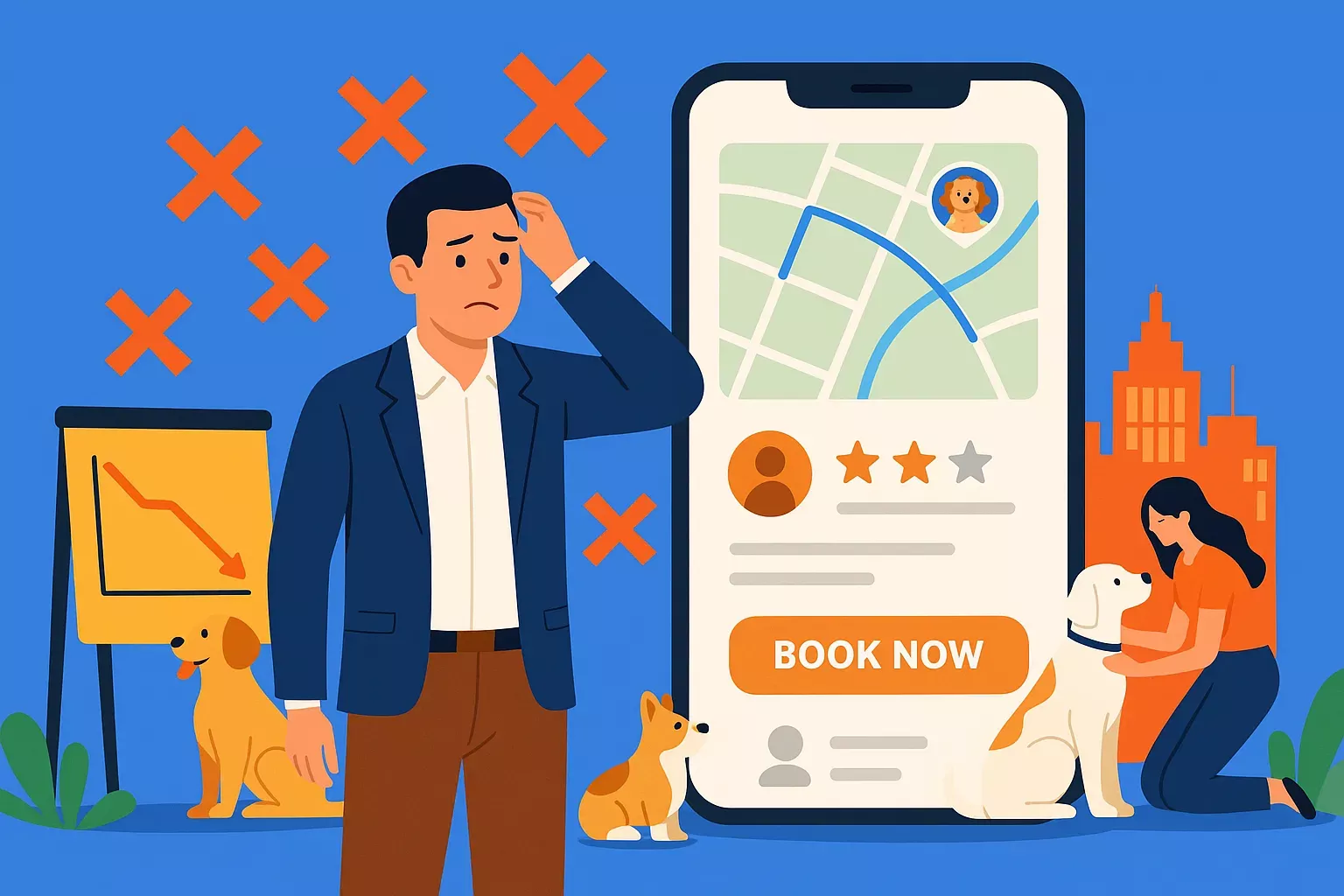
You’ve seen the success of Rover — the app that made dog-sitting as easy as swiping right — and you’re probably thinking, “Hey, I could build that!” You’re not wrong. The pet care market is booming, app usage is through the woof (pun intended), and people are literally looking for love… for their Labradoodles. But here’s the catch — cloning an app like Rover isn’t just about copying its UI or launching a dog-walking feature.
Let’s face it — every startup founder dreams of launching the next big pet app, but many don’t realize how slippery the trail can get. One wrong turn in user experience, or a misstep in trust-building, and your app may never even leave the doghouse. I’ve seen startups invest thousands into a Rover clone, only to end up with something that feels more like a lost puppy than a tech unicorn.
At Miracuves, we’ve helped tons of entrepreneurs dodge these digital landmines. So today, we’re breaking down the top 5 mistakes founders make when building a Rover clone — and how you can steer clear of them.
Mistake 1: Thinking It’s Just About “Booking a Sitter”
Why It’s a Problem
Most clones focus solely on the booking mechanism — sitter meets pet parent, boom, done. But Rover’s true magic is in its community trust loop. Background checks, profile reviews, real-time updates, and GPS-tracked walks? That’s what makes users stay. Without that emotional reassurance, your app becomes just another Craigslist for pets — and no one wants that.
Real-Life Example
One client thought a booking calendar was enough. But without sitter reviews, emergency contacts, and insurance toggles, users bailed after one session.
What To Do Instead
Bake trust-driven UX into the core: verified IDs, in-app messaging, sitter vetting, push-notified walk summaries.
Mistake 2: Ignoring Niche Pet Segments
Why It’s a Problem
Most Rover clones go after dogs and cats — and that’s great. But there’s a booming demand for care around exotic pets, senior animals, and even temporary fosters. The more personalized your offering, the higher your retention.
Stat Attack
According to Statista, 9% of U.S. households own reptiles, and over 6% own birds. That’s millions of potential users — ignored!
What To Do Instead
Start with dogs, but leave room to scale to ferrets, parrots, or even therapy goats. Let users filter sitters by pet type, skill level, and certifications.

Mistake 3: Treating Safety Like an Afterthought
Why It’s a Problem
When you’re sending your furry child to a stranger’s house, safety isn’t optional — it’s table stakes. Startups often skip incident reporting, GPS tracking, or sitter insurance integration — only to panic post-launch.
Emotional Cue
One user left a 1-star review: “My sitter went MIA for hours. No tracking. No response. I deleted the app.” That kind of review can kill your app in weeks.
What To Do Instead
Integrate emergency protocols, live chat support, and real-time location sharing from day one. Trust = retention.
Mistake 4: Not Monetizing from the Get-Go
Why It’s a Problem
Founders often delay revenue models until “we hit 100k users.” That’s a trap. Without monetization, you can’t afford support, updates, or user acquisition.
Real Talk
Rover didn’t wait. They took a cut from every service. Smart clones offer tiered pricing, subscriptions for sitters, and even upsells like “puppy cam access.”
What To Do Instead
Build in your revenue model early. Options include:
- Commission cuts (10–20%)
- Premium sitter profiles
- Add-on purchases (treats, video check-ins)
Mistake 5: Using Off-the-Shelf Templates That Aren’t Scalable
Why It’s a Problem
Yes, templates are cheap. But if your app crashes when 100 users book at once, that savings evaporates fast. Many founders build on rigid, poorly architected stacks.
Technical Conundrum
We’ve seen clones that couldn’t handle notifications, payments, and geo-fencing simultaneously because their backend was spaghetti-coded.
What To Do Instead
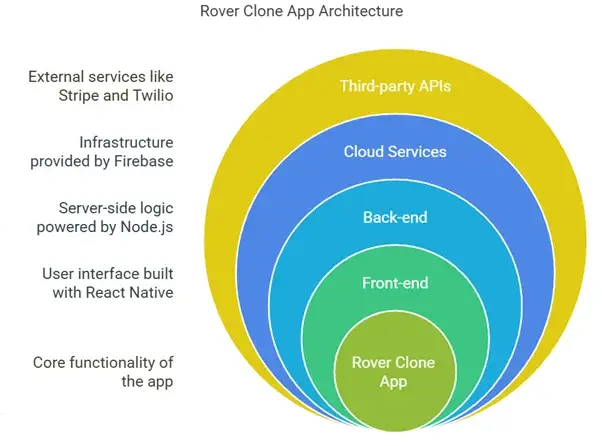
Go with a modular, API-first architecture. Think Firebase for auth, Stripe for payments, Twilio for messaging. Better yet, work with a partner who builds scalable Rover clone apps tailored for growth — like, say, Miracuves.
Conclusion
Building a Rover clone isn’t just about cute paws and app installs — it’s about trust, safety, and meaningful pet-parent experiences. Dodge these five mistakes, and you’ll have more than just a Rover lookalike — you’ll have a real chance at building a profitable, beloved platform.
At Miracuves, we help innovators launch high-performance app clones that are fast, scalable, and monetization-ready. Ready to turn your idea into reality? Let’s build together.
FAQs
1. What’s the typical cost of building a Rover clone?
The cost to build a Rover-like app typically ranges from $6,000 to $112,000+, depending on the tech stack, features, and scalability requirements; however, with Miracuves, you can launch a Rover-like platform using PHP/Laravel with Flutter apps for just $2,499 (one-time cost) through a ready-to-deploy, scalable solution.
2. Can I add video consultations for vets?
Absolutely! Many clients add vet-on-demand modules with in-app video and prescriptions.
3, How do I ensure sitter trustworthiness?
Implement sitter background checks, video intros, review systems, and user verification workflows.
4, What tech stack works best for a Rover clone?
PHP/Laravel is best for a Rover clone due to fast development and low cost, while Node.js or microservices are only needed for advanced real-time scalability.
5. Can I build this for a specific country or region?
Yes — and you should! Localization features like language, currency, and regulations are essential for traction.