



How to Hire the Best Twitter Clone Developer
Create a powerful, customizable social platform with Miracuves’ Twitter Clone, equipped with high-performance features and next-gen technology.
So, you’ve got the concept. You’ve outlined your target audience. Maybe you’ve even sketched out how your version of Twitter will stand apart — perhaps it’s niche-focused, feature-rich, or hyper-local. Now comes the most pivotal decision in your journey: Who’s going to build your Twitter clone?
This isn’t a gig for a one-size-fits-all dev shop. You need a developer (or a development team) who understands how real-time social platforms operate — from scalable architecture to user behavior loops. In this guide, we’ll walk you through how to hire the best Twitter clone developer for your project. Whether you’re aiming to build a community-first microblogging app or a full-featured social platform, this checklist will help you find the perfect fit.

Look for Domain Expertise
When it comes to social media platforms — especially one mimicking Twitter’s core — domain expertise isn’t optional. It’s what separates teams who just “build apps” from those who understand the mechanics of engagement.
Here’s what to check:
Previous clone work → Have they built or contributed to microblogging, chat, or real-time feed apps?
Functional depth → Can they explain how to implement retweets, hashtags, threaded replies, or trending topics — not just build a timeline?
Case studies or live demos → Look for proof of scalability, uptime performance, and clean UX.
Understanding of retention mechanics → A true expert knows it’s not just about features — it’s about daily active usage, push strategy, and personalization.
Domain-focused developers will hit the ground running, reducing your time spent explaining every nuance.
Tech Stack & Scalability
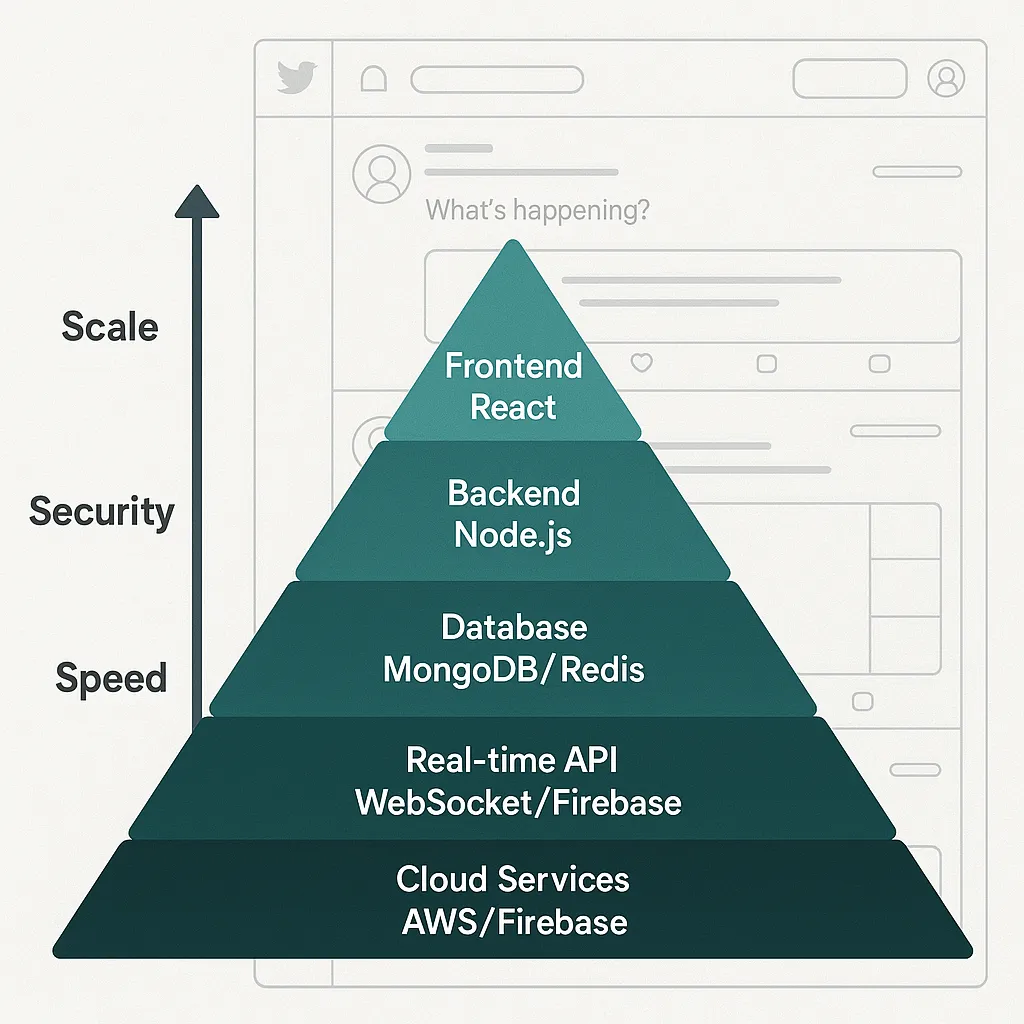
A Twitter-like app isn’t static. You’ll likely deal with real-time updates, media uploads, mentions, and trending content — all of which demand a solid technical foundation.
Here’s what to look for:
Modern tech stack → Think React or Vue.js for the frontend, Node.js or Django for the backend, and real-time frameworks like WebSockets or Firebase.
Database choices → Do they support scalable, fast-access DBs like PostgreSQL, MongoDB, or Redis for caching?
Modular builds → You should be able to add or replace features later (like Spaces, Polls, or Subscriptions) without rewriting core code.
Security baked in → OAuth, 2FA, rate limiting, and encryption should all be part of their baseline offering.
Load handling → Ask how they plan for traffic surges, data backups, and server-side rendering where needed.
Without this kind of planning, even the most beautiful app will crumble under real-world usage.
![Comparison of generic vs. customized UI-]UX for Twitter clone app, highlighting responsive layouts, mobile design, and brand-tailored interfaces.](https://miracuves.com/wp-content/uploads/2025/07/Comparison-of-generic-vs.-customized-UI-UX-for-Twitter-clone-app-highlighting-responsive-layouts-mobile-design-and-brand-tailored-interfaces.webp "How to Hire the Best Twitter Clone Developer 3")
UI/UX Capabilities
Let’s face it: if your app feels clunky or dated, users will bounce — no matter how strong the backend is. Your Twitter clone needs to look sharp, behave predictably, and adapt fluidly across devices.
Here’s what matters:
Responsive, intuitive design → Smooth onboarding, tweet composition, profile views, and notifications should be second nature.
Custom branding → You want to stand out, not be a cookie-cutter clone. Your developer should support custom themes, colors, and layouts.
Role-based UI → Admins, moderators, and end users should each have tailored controls.
Mobile-first thinking → Given most users will be on phones, performance and design on smaller screens must be seamless.
Accessibility compliance → Ensure your UI doesn’t alienate users with disabilities.
User experience is often your first — and last — impression. Make it count.
Communication & Workflow
Hiring a Twitter clone developer isn’t a one-and-done transaction — it’s an ongoing relationship. Clear communication and workflow transparency are crucial.
Ask about:
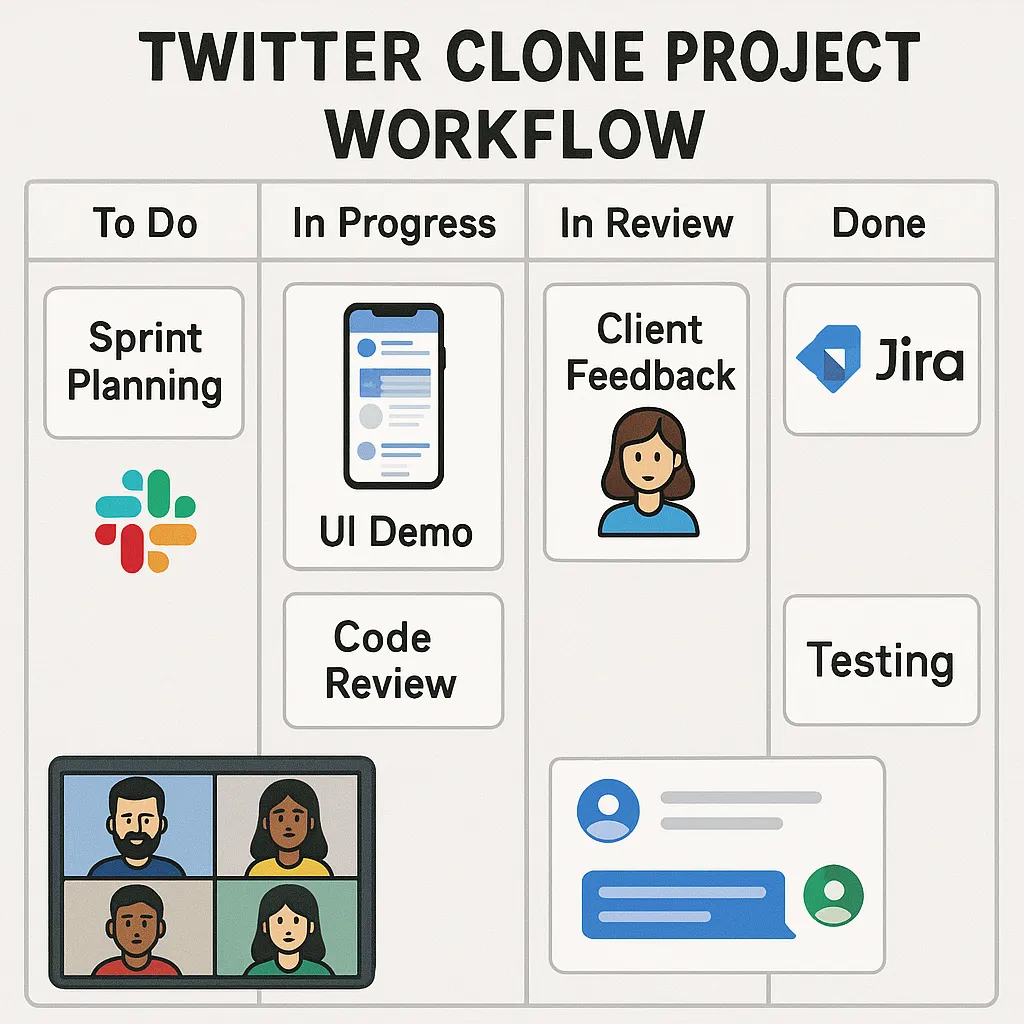
Project management tools → Are they using Trello, Jira, Asana, or similar to track tasks and timelines?
Point of contact → Will you talk to a project manager, a lead dev, or get bounced between reps?
Update frequency → Weekly check-ins? Sprint demos? Regular test builds?
Flexibility with feedback → Are they open to pivots, new ideas, and iteration without drama?
Post-launch support → Will they fix bugs, improve performance, or help with version upgrades later?
Smooth collaboration now saves a world of pain later.
Pricing Models & Quality
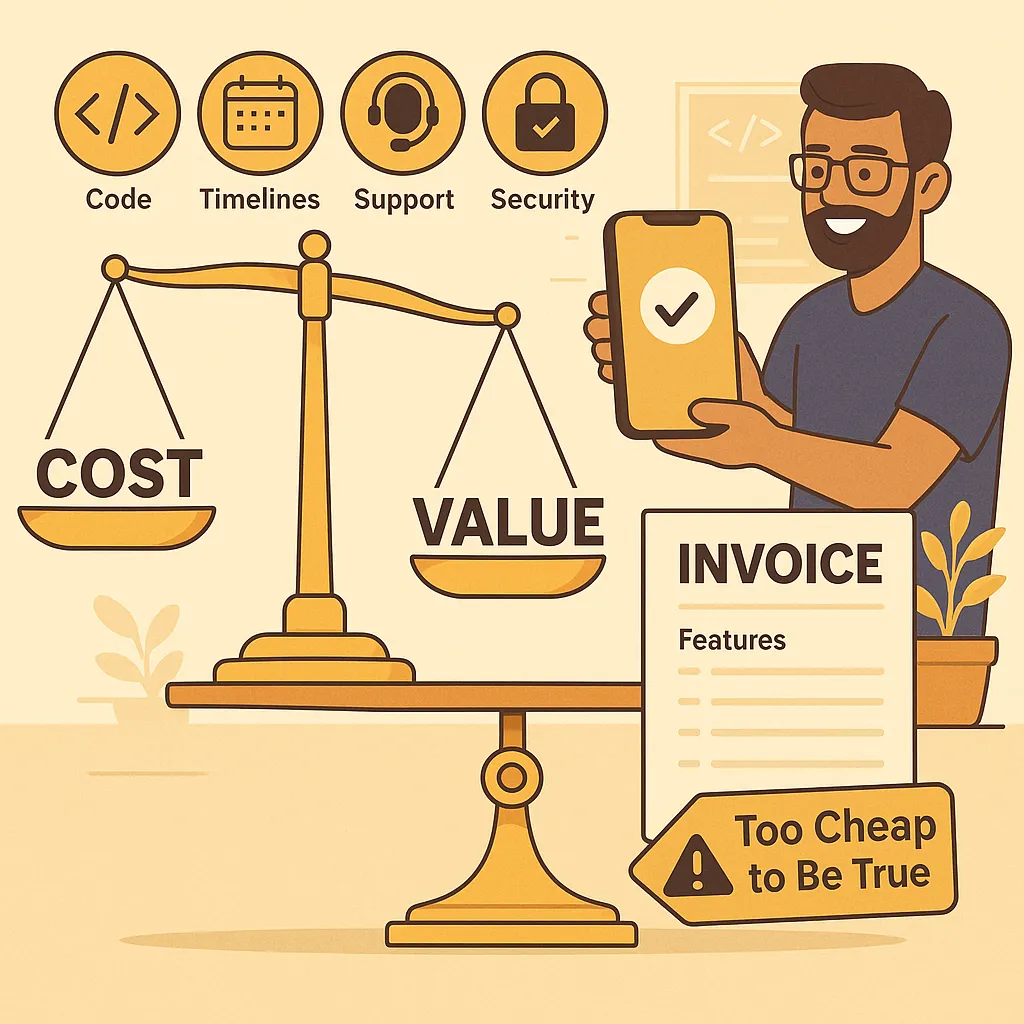
Cost is important — but only when considered alongside what you’re actually getting. A $5K quote that delivers nothing useful is far more expensive than a $20K build that scales.
Here’s how to be smart about pricing:
Detailed proposals → Look for line-by-line breakdowns of features, timelines, tools, and support.
Clarity on what’s included → Does the quote include testing? Deployment? QA? Maintenance?
Avoiding underbidding traps → If a developer severely underprices the market, ask how they plan to deliver quality at that cost.
Licensing and IP rights → Ensure your codebase and branding belong to you, not the developer.
TCO (Total Cost of Ownership) → Think beyond launch — hosting, updates, and potential integrations all add up.
Choose value, not just price. It pays off in speed, quality, and long-term sustainability.
Choose the Right Development Partner
Even with a solid plan, building a real-time microblogging platform isn’t easy — you need a development team that truly understands the dynamics of fast-paced social interaction, real-time updates, and user engagement loops. Partnering with the right Twitter clone development company can save you time, minimize risks, and help you avoid common product and scalability pitfalls.
Look for a partner that offers:
Demonstrated expertise in building real-time social platforms and microblogging apps
A portfolio showcasing scalable, secure, and performance-optimized solutions
End-to-end services — from feature planning and UI/UX design to launch, scaling, and maintenance
At Miracuves, we don’t just build Twitter clones — we engineer growth-ready platforms that align with your unique goals. From real-time feed architecture to custom branding and monetization features, our team ensures your product isn’t just functional — it’s future-proof. Let Miracuves handle the technology, while you focus on growing your audience and brand.
Conclusion
Hiring the best Twitter clone developer isn’t just about comparing portfolios or price tags — it’s about finding someone who understands your vision, knows the architecture of social platforms, and can deliver at scale. From domain experience to communication workflows and pricing clarity, every piece matters.
Take your time. Ask the right questions. And align with a developer who’s as invested in your product’s success as you are.
Frequently Asked Questions
They should build core features like real-time feeds, likes, retweets, mentions, DMs, and notifications — along with admin controls, analytics, and customization options.
With Miracuves, a Twitter clone app starts at $2,899. We build, test, and deploy a ready-to-launch platform in 3–9 days only, depending on the features you choose.
Yes, if the app is built with a modular architecture. Make sure your developer structures the backend for easy expansion.
With Miracuves, a Twitter-like platform can be built and delivered in 3–9 days only, including setup, testing, and deployment—ready to launch fast.
You should — always clarify this in your contract to avoid future conflicts.