


Key Takeaways
What You’ll Learn
- BigBasket is an online grocery platform that delivers fresh produce, daily essentials, and household products.
- Users order groceries through a simple app or website with scheduled delivery options.
- Warehousing and supply chain play a key role in maintaining quality and timely delivery.
- Private labels and partnerships help improve margins and product control.
- Efficient logistics execution is what drives customer retention and repeat purchases.
Stats That Matter
- BigBasket serves millions of users across multiple cities in India.
- India’s online grocery market is expected to grow rapidly beyond $30 billion in the coming years.
- Repeat purchases are a major driver of revenue in grocery platforms.
- Private label brands contribute significantly to higher profit margins.
- Quick commerce and scheduled delivery are becoming a key part of urban consumer behavior.
Real Insights
- Convenience and reliability drive daily usage in grocery platforms.
- Strong businesses optimize supply chain, inventory, and delivery operations.
- Subscription models and memberships help build predictable recurring revenue.
- Local sourcing and pricing impact customer trust and retention.
- Growth depends on operational efficiency, not just discounts.
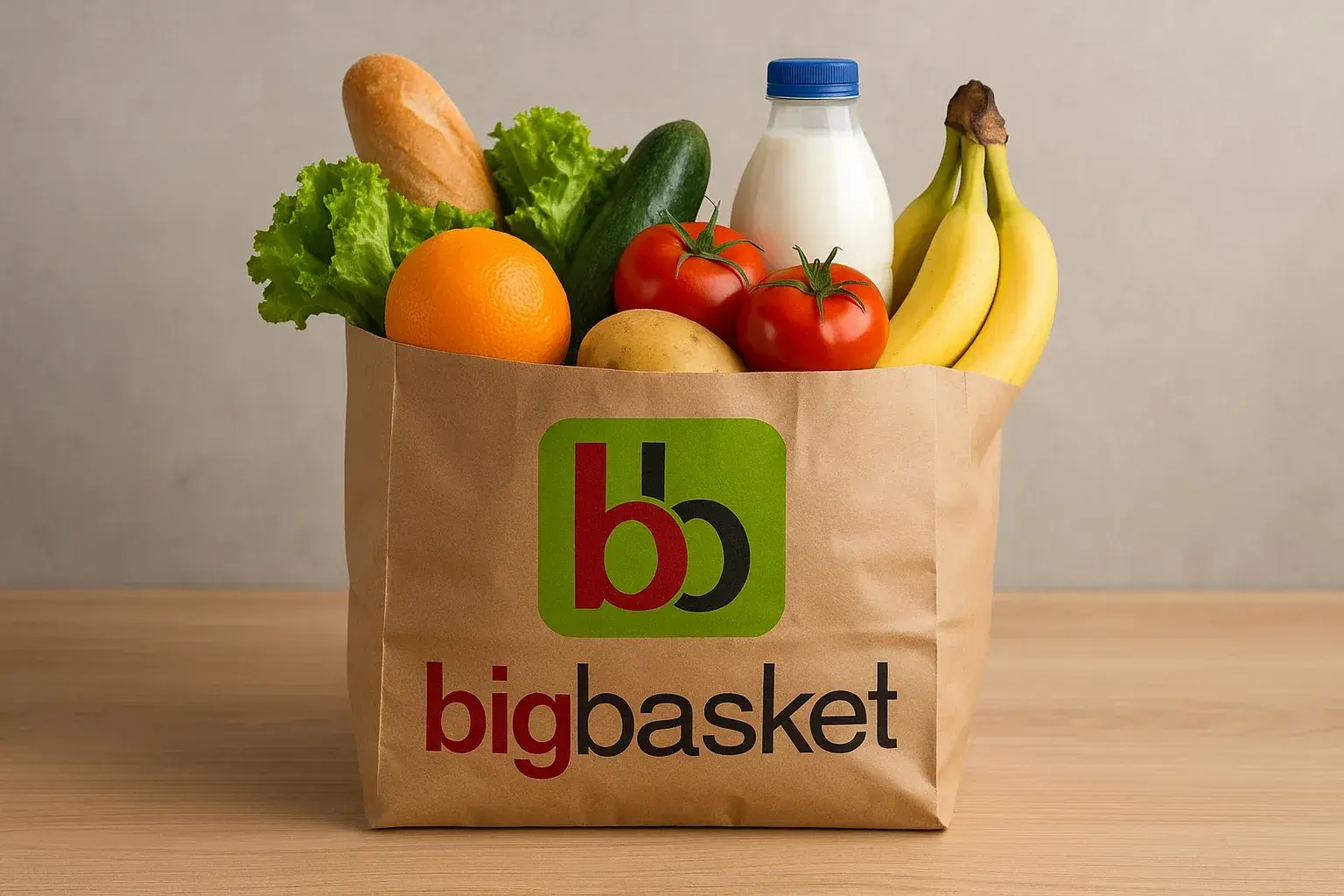
BigBasket has become the go-to online grocery store for millions of Indian households. Whether it’s fresh fruits, vegetables, dairy, household staples, or gourmet products, BigBasket delivers it all — straight to your doorstep. As consumer habits shift towards convenience and speed, BigBasket has grown into a trusted name in India’s e-grocery sector.
Since its inception in 2011, the company has witnessed exponential growth, eventually becoming part of the Tata Group ecosystem. As of 2026 BigBasket serves over 30+ Indian cities, with a user base of more than 20 million customers and an ever-expanding fleet of delivery partners and warehouse hubs.
But what fuels this massive operation? In this blog, we’ll break down the revenue model of BigBasket — how it earns, scales, and stays competitive — and how startups can replicate its monetization success with a ready-made BigBasket clone from Miracuves.
Turn your grocery idea into reality with a reliable app development company that blends technology, design, and growth strategies.
How BigBasket Makes Money
BigBasket’s revenue model is a multi-channel system that combines direct sales, private labels, delivery fees, and data-driven monetization. Here are the core ways it earns revenue:
- Product Margins on Grocery Sales – BigBasket buys from suppliers in bulk and sells to consumers with a margin.
- Private Label Brands – Sells its own in-house brands like BB Royal, BB Popular, and Fresho at higher profit margins.
- Delivery Fees – Charges customers for express or low-value deliveries.
- Subscription Plans (BB Star) – Offers paid membership for exclusive benefits, free deliveries, and cashback.
- Ad Revenue from Sellers – Brands and vendors pay for banner ads, featured placements, and category highlights.
- B2B Supply (HoReCa) – Supplies groceries in bulk to hotels, restaurants, and catering businesses.
- Flash Sales & Bundled Deals – Drives volume via high-frequency deals with built-in margins.

Together, these streams create a stable and scalable revenue engine that balances everyday needs with strategic monetization.
Detailed Breakdown of Revenue Channels
Product Margins on Grocery Sales
BigBasket functions on a classic retail model — purchasing groceries in bulk from manufacturers, farmers, and suppliers, then selling them to end consumers. The margin varies between 10% and 25%, depending on the product category.
- Who Pays? End users.
- Why It Scales? Daily-use items create consistent repeat purchases, driving high order volume and predictable revenue.
Private Label Brands
BigBasket’s in-house brands like Fresho, BB Royal, and BB Popular are high-margin products sold alongside third-party brands. Since these products bypass intermediaries, the company controls the supply chain and pricing — often earning up to 40%+ margins.
- Who Pays? Customers buying branded essentials.
- Why It Scales? Higher margins, brand loyalty, and competitive pricing.
Delivery Fees
Standard orders above a minimum amount are delivered for free, but low-value orders (e.g., below ₹600) or express deliveries (within 90 minutes) incur an additional charge of ₹30–₹99. These fees help offset logistics and delivery costs.
- Who Pays? Consumers opting for speed or placing smaller orders.
- Why It Scales? High-frequency orders and customer willingness to pay for convenience.
Subscription Plans (BB Star)
BB Star is BigBasket’s loyalty subscription that offers members benefits like free delivery, cashback, early access to sales, and exclusive pricing. It’s priced at ₹299–₹599 per year and builds recurring revenue.
- Who Pays? Loyal, high-frequency shoppers.
- Why It Scales? Enhances customer retention while driving predictable income.
Ad Revenue from Sellers
BigBasket monetizes its traffic by allowing brands to advertise within the platform. Vendors pay for sponsored product listings, homepage banners, and category-level promotions to boost visibility.
- Who Pays? FMCG brands, suppliers, and food manufacturers.
- Why It Scales? Large user base and purchase intent = valuable ad real estate.
B2B Supply (HoReCa)
BigBasket also caters to the Hotel, Restaurant, and Catering (HoReCa) segment with bulk ordering solutions. B2B clients place large recurring orders, offering stable cash flow and predictable revenue.
- Who Pays? Restaurants, cloud kitchens, hotels, and institutional buyers.
- Why It Scales? Fewer clients, larger orders, and long-term contracts.
Flash Sales & Bundled Deals
BigBasket runs frequent flash sales and bundle offers (e.g., “Buy 2, Get 1 Free”) to increase basket size. These deals often use in-house brands or slow-moving SKUs with higher margins baked in.
- Who Pays? Value-seeking shoppers.
- Why It Scales? Increases average order value and inventory turnover.
Bigbasket grew from a startup to a household name with smart campaigns and loyalty programs—explore the Bigbasket marketing strategy behind its success.
Why This Revenue Model Works in 2026
BigBasket’s revenue strategy aligns well with evolving consumer behaviors, technological innovation, and India’s maturing digital economy. Here’s why it remains strong in 2026:
Rise of Online Grocery Shopping
The Indian e-grocery market is expected to surpass $25 billion by 2026. Consumers now prefer buying essentials online, driven by time savings, convenience, and better pricing — all of which BigBasket supports via app and web platforms.
Demand for Subscription-Based Convenience
In the post-pandemic era, users are increasingly comfortable paying for predictable benefits. BB Star’s success mirrors this shift, offering free delivery, exclusive deals, and early access that users happily subscribe to — creating recurring income.
Higher Margins Through Private Labels
With rising trust in in-house brands like Fresho and BB Royal, BigBasket continues to grow its private label share. These products not only build brand loyalty but offer better margins than third-party brands.
AI & Personalization in Grocery Retail
BigBasket uses AI-driven recommendations, dynamic pricing, and personalized offers to upsell and cross-sell — increasing average order value and reducing cart abandonment.
B2B Grocery Demand from Cloud Kitchens
The explosive growth of cloud kitchens, co-working cafes, and small restaurants has created a booming demand for reliable grocery suppliers. BigBasket’s HoReCa channel addresses this niche with high-volume, recurring orders.
Sustainable, Scalable Logistics
With micro-warehouses, dark stores, and hyperlocal delivery hubs, BigBasket has optimized last-mile delivery — ensuring faster turnaround and better control over operations, even in Tier 2 and Tier 3 cities.
From fresh produce to household essentials, BigBasket delivers it all—explore the BigBasket app features that make shopping effortless.
Miracuves BigBasket-Like App Solution Cost and Tech Stack
Miracuves Pricing for BigBasket-Like Grocery Delivery App developed in PHP/Laravel with Flutter Apps for $2,199 USD (One-Time Price) in just 6 days
Get a fully developed, deployment-ready platform modeled after BigBasket. Built on a rock-solid PHP/Laravel foundation, this complete package includes everything you need to launch and scale:
Core Workflows: Grocery ordering, inventory-based delivery management, and multi-category marketplace operations.
Built-in Finance: In-app wallet logic, pricing operations, and payout setups.
Management Hub: Comprehensive store/vendor management and a centralized admin backend.
Launch-Ready: Fully prepped for your custom branding, configuration, and immediate market entry.
Why is it so affordable?
Most complex grocery delivery platforms force you into expensive architectures like Node.js or Go. Building from scratch with those frameworks requires highly specialized, expensive engineering teams, which drives the cost into the tens or hundreds of thousands of dollars.
We took a smarter, more practical approach:
You Aren’t Paying for Ground-Up Development: Our multi-vendor grocery engine is already developed, battle-tested, and ready to deploy. You skip the inflated costs and months of waiting associated with building from scratch.
The Power of PHP / Laravel: We built this on one of the most reliable, globally adopted frameworks in the world. Not only does this keep our upfront costs down, but it also protects your future budget. PHP has a massive global talent pool, making it incredibly easy and cost-effective for you to find developers for future scaling or customizations. You get an enterprise-capable, heavy-duty foundation without the inflated Silicon Valley price tag.
Note: This cost is for the solution, re-branding, deployment and source code only.
Understanding how BigBasket works shows why it leads online grocery, while startups prefer our clone to save time and money, launch faster with the best clone scripts in 2026, and plan ahead using the cost guide for full development.
Conclusion
BigBasket has built a resilient and multi-faceted revenue model that thrives on scale, efficiency, and smart monetization strategies. By combining product margins, private labels, delivery charges, subscriptions, advertising, and B2B supply, the company continues to lead India’s online grocery revolution.
For startups eyeing this lucrative space, replicating such a model may seem daunting — but it doesn’t have to be.
With Miracuves’ BigBasket Clone, you can launch your own grocery delivery platform with ready-to-go monetization features. Whether you want to earn via service fees, in-app promotions, or loyalty plans, the infrastructure is already in place.
FAQs
How does BigBasket generate revenue?
BigBasket generates revenue through product margins, private label sales, delivery fees, subscription plans like BB Star, advertising from sellers, and B2B bulk orders for hotels and restaurants.
Is BigBasket profitable in 2026?
While operational profitability is challenging due to logistics costs, BigBasket is steadily improving margins through private labels, subscriptions, and supply chain optimization under the Tata Group.
What are the main income sources for BigBasket?
Key income streams include grocery sales with markups, high-margin private label products, paid subscriptions, delivery charges, and advertising from vendors for product placements.
Can startups use the same revenue model as BigBasket?
Yes, startups can replicate BigBasket’s revenue model using a pre-built solution like Miracuves’ BigBasket clone, which supports all major monetization methods from day one.
Does Miracuves offer a BigBasket clone with monetization features?
Absolutely. Miracuves’ BigBasket clone includes built-in modules for delivery fees, vendor ads, loyalty programs, private label management, and B2B ordering — fully customizable for your business model.