


Key Takeaways
What You’ll Learn
- Launching an on-demand app needs more than development because business validation and operations matter too.
- Real-time booking, provider matching, payments, and tracking are core platform features.
- Different industries use the same on-demand model across transport, food, healthcare, and home services.
- Revenue can come from commissions, subscriptions, delivery fees, and premium listings.
- Long-term success depends on market fit, a clear MVP, and scalable operations.
Stats That Matter
- The guide defines an on-demand app as a platform that connects users with service providers instantly and in real time.
- Real-time requests, instant matching, in-app payments, location tracking, ratings, and automated service management are listed as core platform traits.
- Transportation, food delivery, home services, healthcare, and logistics are highlighted as major on-demand categories.
- The launch process starts with market demand, competitor analysis, customer pain points, and target location research.
- Custom apps usually take 2 to 3 months, while ready-made solutions can be launched much faster.
Real Insights
- Convenience is the main growth driver because users expect services instantly through mobile apps.
- Provider acquisition is a real business challenge because the platform cannot scale without enough service supply.
- Logistics and scheduling complexity increase quickly once the platform starts handling real demand.
- Ready-made solutions help reduce cost and technical complexity for early-stage launches.
- The strongest launches happen when founders validate early, launch fast, and scale strategically.
The on-demand economy has transformed how people access services. From ride-hailing and food delivery to home services and healthcare, customers now expect services to be available instantly through mobile apps. This shift has created huge opportunities for entrepreneurs and startups who want to build scalable digital platforms.
Launching an on-demand app, however, is more than just building a mobile application. It involves validating a business idea, designing a reliable service marketplace, developing scalable technology, and ensuring a seamless experience for both customers and service providers.
Companies like Miracuves help startups and businesses launch digital platforms faster with ready-made apps, SaaS platforms, clone apps, and custom development services. If you’re planning to enter the on-demand market, this guide will walk you through everything you need to know — from idea validation to launching a successful platform.
What Is an On-Demand App?
An on-demand app is a digital platform that connects customers with service providers instantly. These platforms allow users to request services in real time, while service providers can accept and complete those requests through the same system.
The core idea behind on-demand apps is convenience. Customers can request services anytime and anywhere using their smartphones.
Key Characteristics of On-Demand Apps
- Real-time service requests
- Instant matching with service providers
- In-app payments
- Location tracking
- Ratings and reviews
- Automated service management
Popular Examples of On-Demand Apps
Some of the most successful startups in the on-demand economy include:
These platforms have successfully built large digital marketplaces by connecting customer demand with service providers through advanced mobile technology and smart logistics systems. If you’re exploring opportunities in this growing space.
you can also discover : – Most Profitable On-Demand Delivery Apps to Launch
Why On-Demand Apps Are Growing Rapidly
The on-demand economy continues to expand as consumer expectations evolve. Modern users prefer convenience, speed, and digital accessibility.
Several factors have fueled the growth of on-demand platforms.
Smartphone Penetration
With billions of smartphone users worldwide, mobile apps have become the easiest way to access services instantly.
Convenience Economy
Consumers prefer apps that save time. Instead of visiting stores or service centers, they can simply request services with a few taps.
Rise of Digital Payments
Secure payment gateways and mobile wallets make transactions seamless and safe.
Gig Economy Expansion
More professionals and freelancers are joining digital platforms to provide services on flexible schedules.
Because of these trends, launching an on-demand app has become one of the most attractive opportunities for startups and entrepreneurs.
Read more : – How to Turn Your Startup Idea Into a Mobile App
Types of On-Demand Apps
The on-demand business model can be applied across multiple industries.
Transportation Apps
Ride-hailing apps connect drivers with passengers instantly.
Examples include Uber and Lyft.
Food Delivery Apps
Restaurants partner with delivery drivers to fulfill food orders quickly.
Examples include DoorDash, Uber Eats, and Grubhub.
Home Service Apps
Users can book professionals such as electricians, cleaners, and plumbers.
Example: Urban Company.
Healthcare On-Demand Apps
Patients can book doctor appointments or request telemedicine services.
Logistics and Delivery Apps
Businesses use these apps for parcel delivery and courier services.
Each industry requires slightly different features and workflows, but the core on-demand concept remains the same.
Essential Features of an On-Demand App
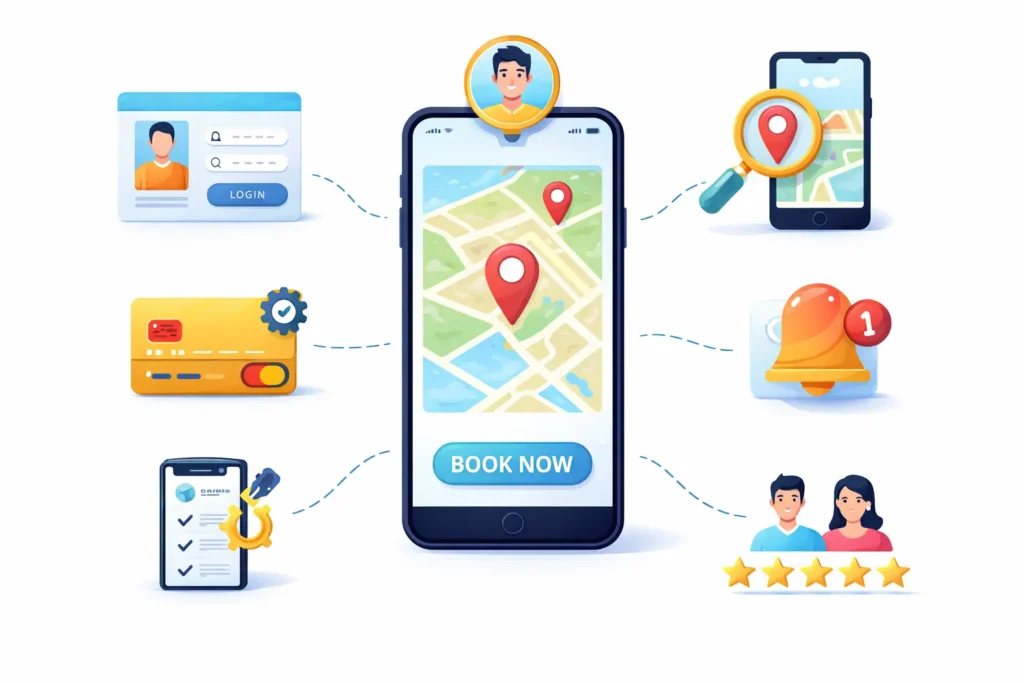
Successful on-demand platforms usually consist of three main components: the customer app, the provider app, and the admin dashboard.
Customer App Features
Customers need a smooth experience from booking to payment.
Service Provider App Features
Service providers manage requests and track their work.
Important features include:
- Job request notifications
- Accept or reject requests
- Schedule management
- Earnings tracking
- Job completion updates
Admin Panel Features
The admin dashboard controls the entire platform.
Core capabilities include:
- User management
- Service provider verification
- Commission control
- Analytics and reports
- Payment management
- Customer support tools
A well-designed feature structure ensures that the platform operates smoothly for all stakeholders.
Process to Launch an On-Demand App
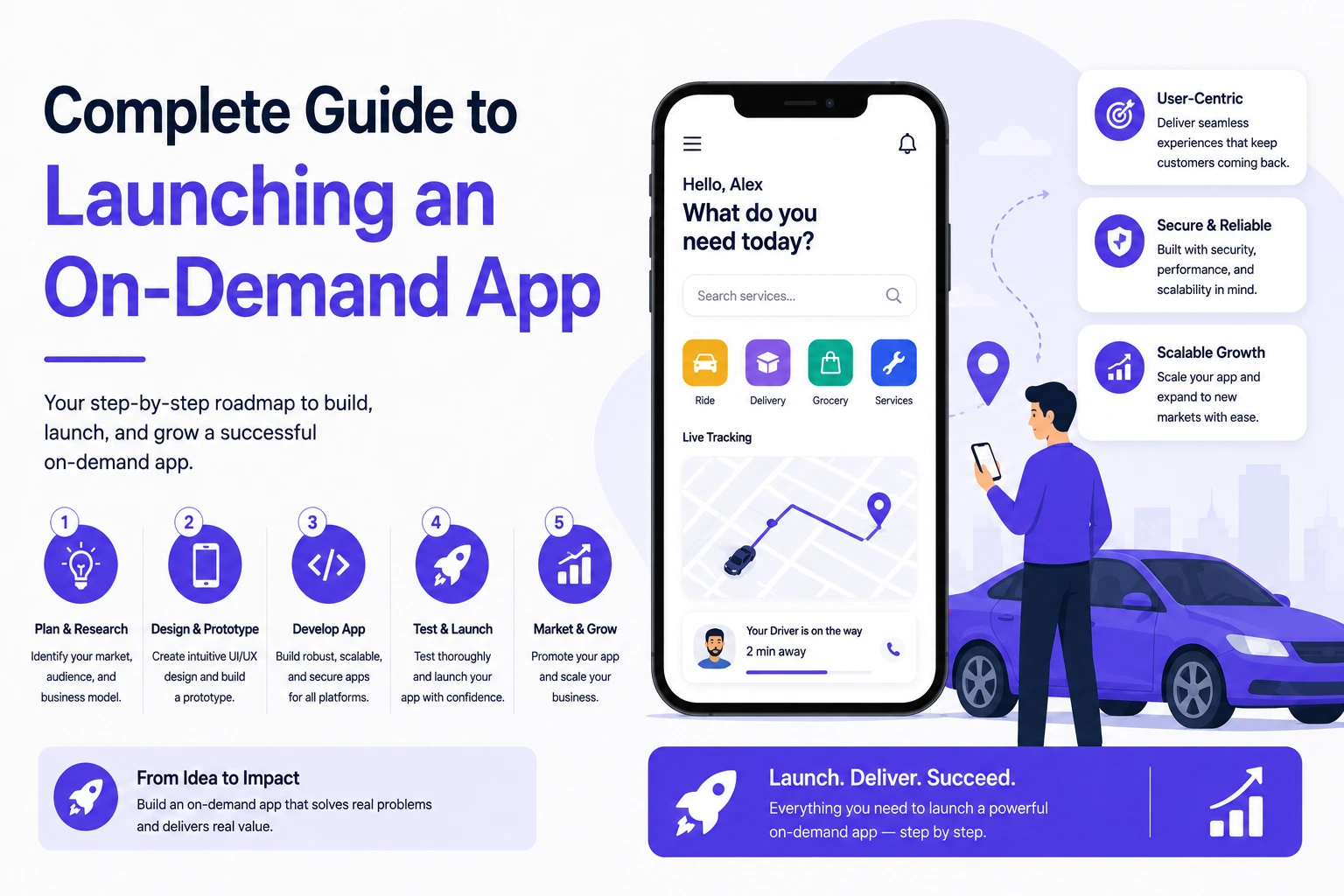
Building an on-demand platform requires careful planning and execution. Below is a structured roadmap for entrepreneurs.
Step 1: Market Research
Before building an app, it is important to validate the idea.
Research should include:
- market demand
- competitor analysis
- customer pain points
- target location and audience
Understanding the market helps ensure that your platform solves a real problem.
Step 2: Define the Business Model
On-demand platforms usually generate revenue through different monetization strategies.
Common options include:
- commission from service providers
- subscription plans
- surge pricing
- advertising
- premium listings
Choosing the right model depends on your industry and user behavior.
Step 3: Define Your MVP
An MVP (Minimum Viable Product) focuses only on essential features required to launch the platform.
Launching with too many features can delay development and increase costs. Instead, startups should focus on core functionalities such as booking, payments, and provider matching.
Step 4: Design User Experience
User experience is critical for marketplace platforms.
Important UX elements include:
- simple booking process
- clear service categories
- fast loading speed
- intuitive navigation
A smooth experience increases user retention and trust.
Step 5: Development Phase
Once planning and design are complete, development begins.
Entrepreneurs usually choose between:
- custom app development
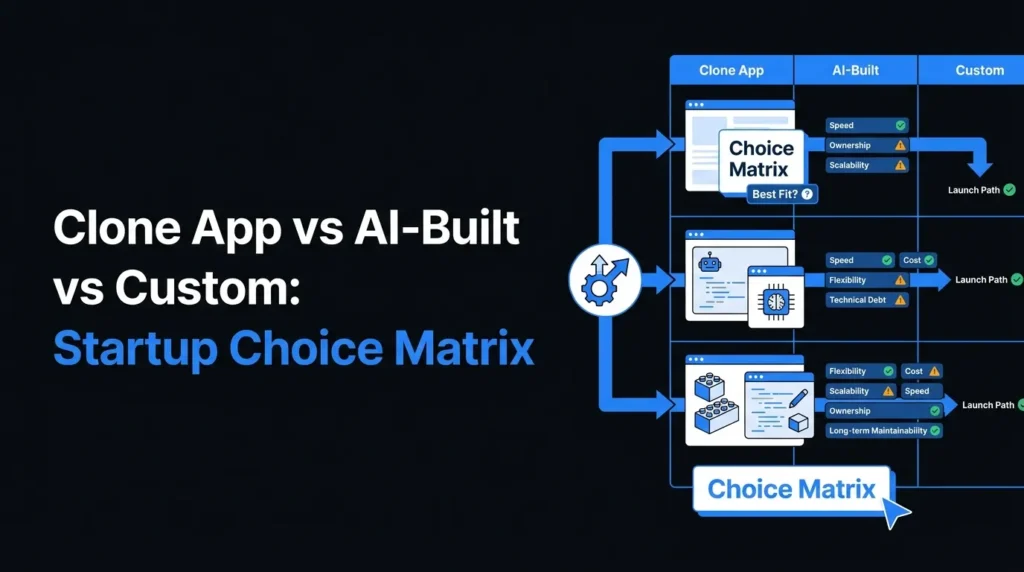
- clone apps
- ready-made solutions
Custom development offers flexibility but requires higher investment and longer timelines. Ready-made solutions help startups launch much faster.
Step 6: Testing and Quality Assurance
Testing ensures that the platform functions correctly before launch.
Testing should cover:
- performance testing
- payment security
- bug fixes
- user experience validation
Step 7: Launch Strategy
Launching the app requires marketing and user acquisition strategies.
Early-stage tactics may include:
- local partnerships
- referral programs
- promotional discounts
- influencer marketing
Step 8: Scaling and Optimization
After launch, platforms must continuously improve their systems.
Growth strategies include:
- adding new features
- expanding to new locations
- implementing AI automation
- improving logistics efficiency
Cost to Build an On-Demand App
The cost of developing an on-demand app varies depending on complexity, features, and development approach.
Several factors influence the final cost.
App Complexity
More features require more development time and resources.
Platform Choice
Developing for iOS, Android, and web simultaneously increases costs.
Technology Infrastructure
Cloud servers, APIs, and integrations also affect pricing.
Below is a general comparison of development approaches.
| Development Type | Estimated Cost | Development Time |
|---|---|---|
| Custom Development | High | 6–12 months |
| Clone App Development | Medium | 2–4 months |
| Ready-Made Solutions | Low | 6 days |
Startups often prefer ready-made platforms because they significantly reduce development time and investment.
Monetization Models for On-Demand Apps
Successful platforms rely on sustainable revenue models.
Commission Model
The platform takes a percentage from each transaction.
Subscription Model
Service providers pay a monthly or yearly fee to access the platform.
Service Fees
Customers pay a small fee when booking services.
Advertising
Businesses pay to promote their services within the platform.
Premium Listings
Providers pay to appear higher in search results.
Combining multiple monetization strategies can maximize revenue potential.
Challenges When Launching an On-Demand App
Although the on-demand model is powerful, startups often face several challenges.
Service Provider Acquisition
Without enough providers, the platform cannot fulfill user demand.
Logistics and Operations
Managing service availability, routes, and scheduling can be complex.
User Trust
Customers must trust both the platform and the service providers.
Technology Scalability
As the platform grows, the system must support increasing user traffic.
Overcoming these challenges requires careful planning and strong technology infrastructure.
How Miracuves Helps Launch On-Demand Platforms Faster
Launching a marketplace platform from scratch can take months or even years. Many startups choose faster approaches using pre-built solutions and scalable infrastructure.
Miracuves provides several solutions designed to help entrepreneurs launch digital platforms efficiently, including:
- ready-made app solutions
- clone apps based on proven business models
- SaaS platforms for scalable marketplaces
- custom app development services
- AI-powered automation platforms
These solutions help startups reduce development time, lower costs, and focus on business growth instead of technical complexities.
If you’re planning to build an on-demand platform, contact Miracuves today to discuss your project and explore the best solution for launching your app successfully.
Conclusion
The on-demand economy continues to expand across industries, creating new opportunities for entrepreneurs and businesses. With the right strategy, technology, and marketplace model, startups can build scalable platforms that connect customers with services instantly.
Launching an on-demand app requires careful planning, market validation, and a strong technology partner. By focusing on a clear MVP, reliable infrastructure, and efficient user experience, entrepreneurs can successfully enter the growing service marketplace ecosystem.
Whether you’re building a delivery platform, service marketplace, or booking app, the key is to launch quickly, validate the market, and scale strategically.
FAQS
1. How long does it take to launch an on-demand app?
Custom apps usually take 2 to 3 months, while ready-made solutions can launch in a 6 days.
2. How much does it cost to develop an on-demand app?
The cost depends on features and complexity. Ready-made platforms are much more affordable than custom development.
3. What features should an MVP include?
An MVP should include user registration, booking, payments, provider matching, and notifications.
4. Can startups build on-demand apps with a small budget?
Yes. Many startups start with ready-made apps or clone solutions to reduce development costs.
Related Articles