


Key Takeaways
What You’ll Learn
- Liquor delivery apps connect users with nearby stores for fast and legal alcohol delivery.
- Users can browse and order products easily with real-time availability and pricing.
- Retailers manage inventory and orders through a centralized platform.
- Secure payments and age verification ensure compliance and safe transactions.
- Local regulations play a key role in how liquor delivery apps operate and scale.
Stats That Matter
- Online alcohol sales are growing rapidly, especially in urban and metro areas.
- The global alcohol eCommerce market is expected to cross $40 billion in the coming years.
- On-demand delivery has increased consumer convenience and repeat purchases.
- Mobile-first ordering is driving most of the platform engagement.
- Compliance-based platforms are becoming a key part of regulated digital commerce.
Real Insights
- Convenience drives demand when users can order alcohol like any other product.
- Successful apps balance users, retailers, delivery agents, and compliance.
- Real-time tracking and availability improve trust and user retention.
- Regulatory compliance is more important than feature expansion.
- Growth depends on reliable delivery and legal operations, not just app features.
The on-demand economy has transformed how people order essentials—and alcohol delivery is no exception. Platforms like Drizly have made it possible for users to browse local liquor stores, compare prices, and get their orders delivered quickly.
For entrepreneurs, building an on-demand liquor delivery app presents a strong business opportunity. However, this space is highly regulated, logistics-driven, and requires a well-planned approach to technology, compliance, and user experience.
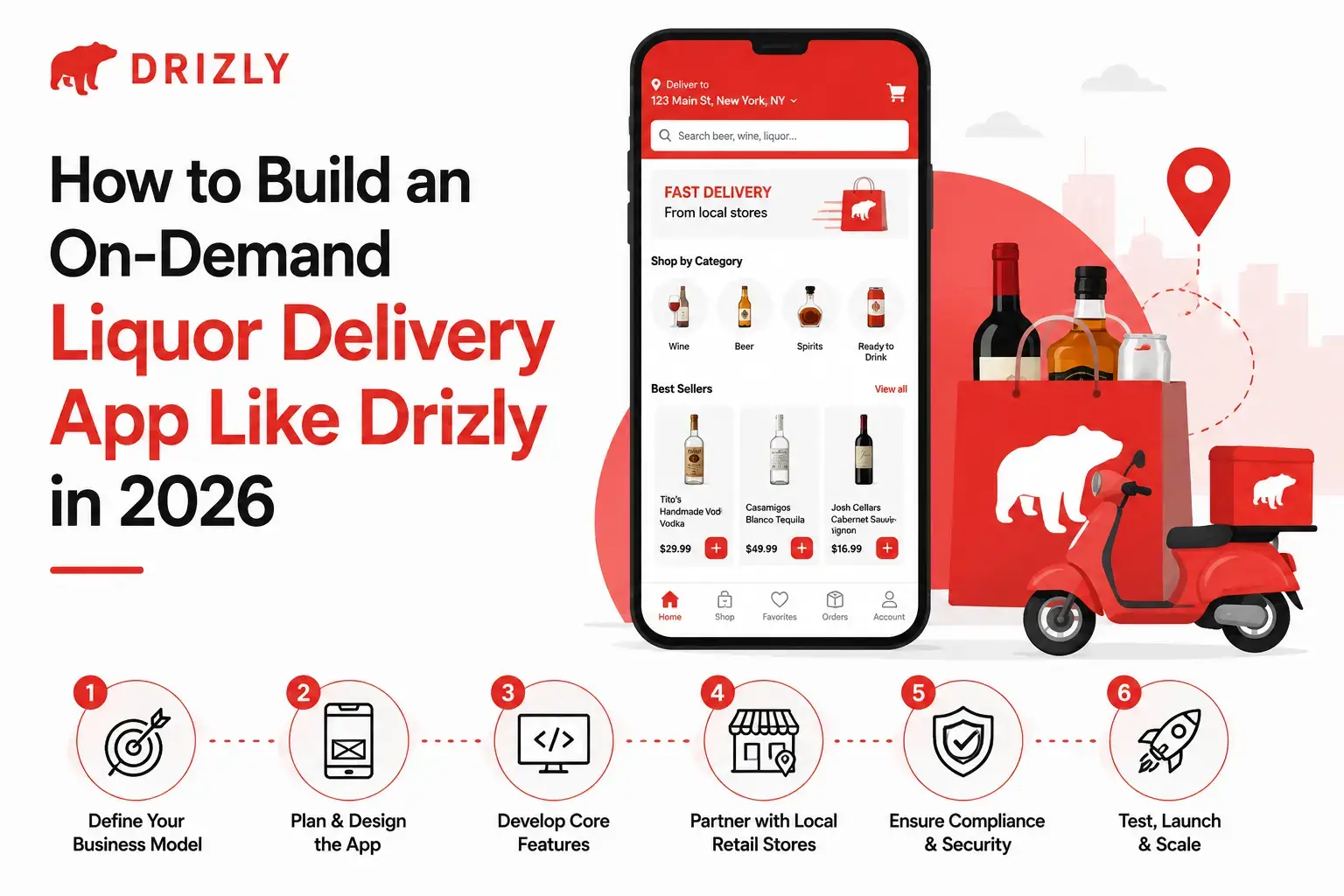
This guide explains how to build an on-demand liquor delivery app like Drizly, covering features, business models, development steps, challenges, and best practices to help you launch successfully in 2026.
What Is an On-Demand Liquor Delivery App?
An on-demand liquor delivery app connects customers with nearby licensed liquor stores. Users can browse available products, place orders, and receive deliveries at their doorstep.
Unlike traditional eCommerce, these platforms operate in real-time, relying on local inventory, delivery partners, and strict compliance rules.
How It Works
- User opens the app and enters location
- The app shows nearby liquor stores and available products
- User selects items and places an order
- Store prepares the order
- Delivery partner picks it up and delivers it
- ID verification happens at delivery
Key Market Insights (Why This Business Works)
- Growing demand for convenience-based shopping
- Increasing urban lifestyle and late-night delivery needs
- High-margin product category compared to groceries
- Repeat purchase behavior (high customer lifetime value)
- Expansion of digital payments and hyperlocal logistics
This combination makes liquor delivery a strong and scalable business model.
Business Models for Liquor Delivery Apps
Choosing the right business model is critical before development.
1. Marketplace Model (Like Drizly)
- Connects users with local liquor stores
- No inventory ownership
- Revenue from commissions
2. Inventory-Based Model
- You own and manage stock
- Higher control but more compliance complexity
3. Hybrid Model
- Combines marketplace + owned inventory
- Useful for scaling and improving margins
Must-Have Features of a Liquor Delivery App
A successful app requires three main panels: User App, Store Panel, and Admin Panel.
User App Features
- Easy signup/login
- Location-based store discovery
- Product browsing with filters
- Real-time availability
- Secure checkout
- Order tracking
- Push notifications
- Ratings and reviews
Store Panel Features
- Inventory management
- Order acceptance/rejection
- Pricing updates
- Sales analytics
Delivery Partner App
- Order notifications
- Route optimization
- Status updates
- Earnings tracking
Admin Panel Features
- User and vendor management
- Commission management
- Analytics dashboard
- Compliance monitoring
Step-by-Step Process to Build a Liquor Delivery App
Step 1: Market Research & Legal Understanding
Before development, understand:
- Local alcohol delivery laws
- Licensing requirements
- Delivery restrictions (timings, regions)
Compliance is the foundation of this business.
Step 2: Define Your Business Model
Choose between marketplace, inventory-based, or hybrid depending on your budget and region.
Step 3: Design the User Experience
Focus on:
- Simple navigation
- Fast product discovery
- Clear pricing
- Smooth checkout
User experience directly impacts retention.
Step 4: Choose the Right Technology Stack
Typical stack includes:
- Frontend: Flutter / React Native
- Backend: Node.js / Laravel
- Database: PostgreSQL / MongoDB
- APIs: Payment gateways, maps, notifications
Step 5: Develop Core Features
Start with an MVP (Minimum Viable Product):
- User app
- Store onboarding
- Order system
- Delivery tracking
Avoid building unnecessary features in the initial phase.
Step 6: Integrate Compliance Features
- Age verification system
- ID scanning at delivery
- Geo-restrictions
- Legal disclaimers
Step 7: Testing & Launch
- Functional testing
- Performance testing
- Compliance checks
- Soft launch in a limited area
Key Challenges You Must Consider
1. Legal Restrictions
Liquor delivery laws vary by region and can change frequently. Non-compliance can shut down your business.
2. Logistics Management
Ensuring timely delivery while coordinating with stores and drivers is complex.
3. Inventory Accuracy
Real-time inventory sync is crucial to avoid order cancellations.
4. Age Verification
Strict verification is required at delivery to prevent legal issues.
Best Practices for Success
- Start in a single city or region
- Partner with licensed liquor stores
- Focus on user retention through offers and loyalty
- Build strong logistics operations
- Ensure compliance from day one
When Should You Use a Ready-Made Solution?
A ready-made (clone) solution is ideal if you want:
- Faster launch
- Lower upfront investment
- Pre-built tested features
- Easy scalability
This approach is widely used by startups entering competitive markets quickly.
If you’re planning to launch an on-demand liquor delivery platform, Miracuves can help you accelerate the process with scalable, ready-made solutions tailored for real-world business needs.
Contact us today to explore how you can launch your liquor delivery app faster, smarter, and with full control over your platform.
Conclusion
Building an on-demand liquor delivery app like Drizly is a promising business opportunity in 2026—but it requires careful planning, compliance awareness, and strong execution.
From choosing the right business model to ensuring smooth logistics and legal adherence, every step plays a crucial role in your success. Entrepreneurs who focus on user experience, operational efficiency, and scalability are more likely to build a sustainable platform.
FAQs
1. Is it legal to start a liquor delivery app?
It depends on your region. You must follow local alcohol laws and obtain necessary licenses.
2. How do these apps make money?
Through commissions, delivery fees, surge pricing, and promotional listings.
3. Do I need to manage inventory?
Not necessarily. You can start with a marketplace model without holding stock.
4. What is the biggest challenge in this business?
Regulatory compliance and logistics coordination are the biggest challenges.
Related Article :