

Key Takeaways
What You’ll Learn
- FedEx is a global logistics platform that connects shipping, delivery, and supply chain services.
- Users and businesses ship parcels with real-time tracking and reliable delivery timelines.
- Couriers and logistics networks operate through structured systems and routing tools.
- Digital logistics management improves efficiency, visibility, and delivery accuracy.
- Operational efficiency is key to scaling logistics platforms globally.
Stats That Matter
- Global logistics market is expected to cross $12 trillion by 2027.
- E-commerce growth continues to drive parcel delivery demand worldwide.
- Last-mile delivery is one of the most critical and competitive segments.
- Real-time tracking systems improve customer trust and operational control.
- Logistics platforms are becoming a core infrastructure for global trade.
Real Insights
- Speed and reliability are the biggest drivers of customer satisfaction in logistics.
- Strong platforms optimize routes, warehouses, and delivery networks together.
- Transparent tracking builds trust and repeat usage.
- Scalable infrastructure matters more than just adding features.
- Growth comes from efficient operations, not just expansion.
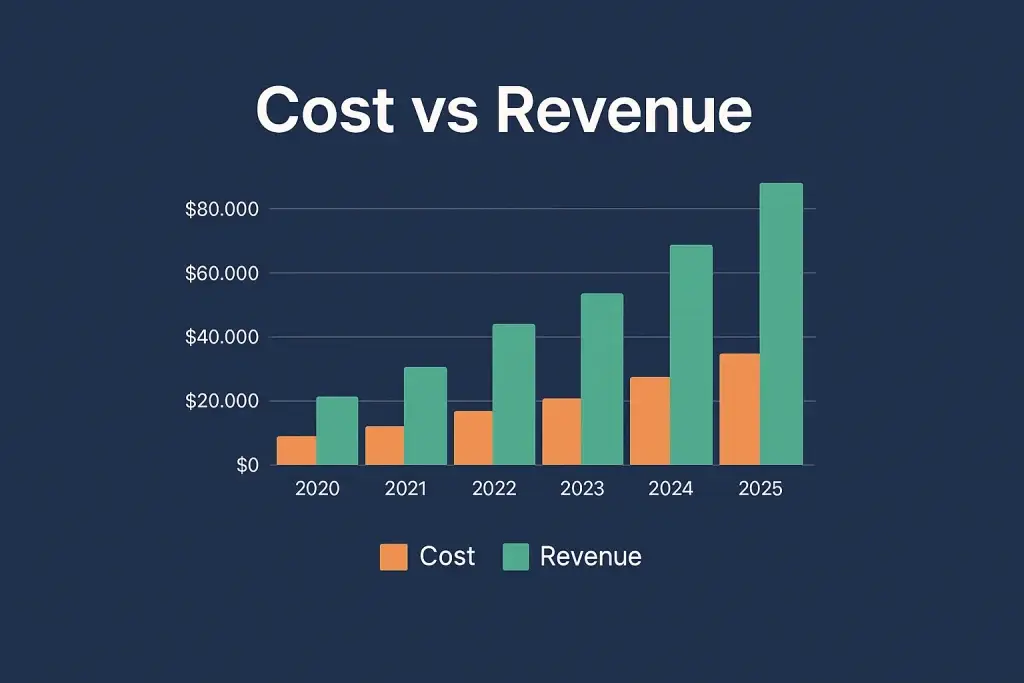
FedEx — one of the world’s largest logistics and courier service providers — made $88.2 billion in fiscal 2026, despite global economic shifts and supply chain disruptions. This incredible revenue stems from a well-diversified business model spanning express shipping, freight, e-commerce logistics, and data-driven services.
For entrepreneurs planning to launch a FedEx clone app, understanding its revenue system is key. Every charge, from parcel handling to customs fees, contributes to a networked monetization model that blends scale with precision. Let’s break down exactly how FedEx makes money — and how you can adapt this blueprint for your own courier platform using Miracuves’ advanced FedEx clone solutions.
FedEx Revenue Overview – The Big Picture
Current Valuation and Revenue
In 2026 FedEx reported $88.2 billion in annual revenue, a modest 2.5% YoY increase, reflecting its shift toward automation and digital transformation.
Market capitalization stands around $70 billion, cementing FedEx as a logistics leader alongside UPS and DHL.
Year-over-Year Growth
While overall growth has slowed post-pandemic, FedEx’s e-commerce-driven deliveries and freight services continue to perform strongly, supported by last-mile demand and AI routing optimizations.
Revenue Breakdown by Region
- United States: ~68% of revenue
- Europe: ~17%
- Asia-Pacific: ~10%
- Latin America & Others: ~5%
Profit Margins Analysis
FedEx operates on ~8% operating margins — higher in Express and lower in Ground. Its focus on automation and EV fleets aims to lift long-term profit ratios toward 10–12%.
Market Position vs Competitors
Globally, FedEx competes with UPS, DHL, and Amazon Logistics. While DHL dominates Europe, FedEx leads U.S. ground and express freight by leveraging technology integration.
Read More: Build an app like FedEx – Full Developer Guide for JavaScript & PHP
Primary Revenue Streams Deep Dive
FedEx’s success comes from multiple service lines. Here’s how each contributes to total revenue.
1. FedEx Express Services
How it works:
Charges customers for time-definite air and ground deliveries across countries.
Share of revenue: ~50%
Pricing: Based on package weight, size, distance, and speed. Premium express delivery costs up to 2–3× standard rates.
Trend: Demand remains strong for time-sensitive e-commerce and B2B shipments.
Example: A 5 kg U.S.–U.K. parcel costing $70 nets ~$12–15 in margin after transport costs.
2. FedEx Ground & Home Delivery
How it works:
Charges per parcel delivered within domestic regions (especially U.S.).
Share: ~35%
Pricing: Dynamic — per-mile, per-weight, or zone-based rates.
Growth: Driven by e-commerce parcel volume, subscription commerce, and returns.
Example: A $10 local parcel delivery generates ~$1.50 net profit post-costs.
3. Freight & Logistics Services
How it works:
Offers less-than-truckload (LTL) and full-truckload freight options to businesses.
Share: ~10%
Pricing: Based on cargo class, weight, and route.
Growth: Rising as B2B supply chains diversify post-pandemic.
4. Surcharges and Value-Added Fees
How it works:
Fuel surcharges, residential fees, oversized package charges, and customs clearance add to revenue.
Share: ~4%
Pricing: Fuel surcharges average 5–15% depending on fuel index.
Trend: Increasingly automated with AI-based cost indexing.
5. Technology and Data Services
How it works:
FedEx monetizes logistics data analytics, tracking APIs, and integrated business solutions.
Share: ~1% (but growing rapidly).
Trend: Expected to expand with IoT and AI-powered route intelligence.
Estimated Revenue Breakdown
| Revenue Stream | Share of Total |
|---|---|
| Express Delivery | 50% |
| Ground / Home Delivery | 35% |
| Freight & Logistics | 10% |
| Surcharges & Add-ons | 4% |
| Data & Tech Solutions | 1% |
The Fee Structure Explained
User-Side Fees
- Shipping Fees: Based on delivery speed, distance, and dimensions.
- Fuel Surcharge: Floating rate tied to fuel prices.
- Handling Charges: For fragile or oversized parcels.
- Insurance: Optional coverage for parcel loss or damage.
- Customs & Duties: For international shipments.
Provider-Side Fees (Partners, Vendors)
- Commission on Contract Work: Local carriers and fleet partners share revenue per trip.
- Platform Fees: White-label FedEx clones can charge vendors a listing or integration fee.
Hidden Revenue Tactics
- Automated fuel surcharges
- Dimensional pricing (based on size, not just weight)
- Weekend or holiday premium rates
- Remote area delivery surcharges
Regional Pricing Variations
Domestic rates are cheaper than international; urban areas yield tighter margins but higher volume.
Read More: Best FedEx Clone Scripts in 2025: Features & Pricing Compared
How FedEx Maximizes Revenue Per User
User Segmentation
Corporate, SME, and individual users — each receive tailored pricing and service tiers.
Upselling
FedEx promotes faster shipping (Express), package protection, and tracking tools.
Cross-Selling
Bundled freight + express packages, loyalty discounts for business accounts.
Dynamic Pricing
AI sets real-time rates based on demand, delivery urgency, and route congestion.
Retention Monetization
Reward programs, API integrations, and volume discounts retain long-term clients.
Lifetime Value Optimization
Business accounts generate recurring transactions with contractual pricing models.
Psychological Pricing
Tiered options like “Standard,” “Priority,” and “Overnight” nudge customers toward mid-tier upsells.
Example:
An SME shipping 300 parcels/month at $12 average creates ~$43K annualized revenue with margin uplift from surcharges.
Cost Structure & Profit Margins
Major Cost Categories
- Transportation & fuel
- Sorting & warehousing
- Fleet maintenance
- Labor (drivers, logistics)
- Technology & automation
- Marketing & admin
Unit Economics
For every $100 in delivery value:
- ~$60 cost (labor, fuel, operations)
- ~$30 overhead & logistics
- ~$10–12 net profit (post expenses)
Profitability Path
FedEx’s automation, EV fleet rollout, and data analytics reduce delivery cost per mile — increasing overall margin sustainability.
Margin Improvement Strategies
- Route optimization with AI
- Electrified fleets
- Hub automation
- Tiered delivery plans
- Consolidated freight routes
Future Revenue Opportunities & Innovations
New Revenue Streams
- On-demand courier APIs for e-commerce apps
- White-label delivery-as-a-service for small retailers
- Subscription models for predictable parcel volume
- Real-time tracking data monetization
AI/ML Monetization
Predictive analytics for logistics planning, automated pricing, and route forecasting.
Expansion Markets
High-growth regions include South Asia, LATAM, and Africa — with SMEs driving new demand.
Emerging Features
- Drone delivery
- EV-based “green logistics” fees
- Partner dashboard monetization
- Smart locker network integration
Predictions (2025–2027)
- Revenue may cross $95B
- Freight digitization accelerates
- AI-based pricing mainstream
- Data services contribute 3–5% of total
Threats
- Amazon Logistics in-house capacity
- Labor shortages & regulation
- Rising fuel costs
Opportunity for New Players
Local clones can win through region-specific pricing, real-time app visibility, and low-cost partnerships.
Lessons for Entrepreneurs & Your Opportunity
Key Takeaways
- FedEx’s revenue relies on volume, automation, and diversification.
- Layered fees create resilience.
- Automation improves profitability.
Market Gaps
- Mid-market courier tools for SMEs
- Hyperlocal on-demand delivery
- Transparent, flat-rate models
Revenue Innovations
- Tiered subscription for merchants
- Carbon-neutral delivery add-ons
- Integrated route-sharing network.
Final Thought
FedEx’s $88B empire proves that logistics profitability thrives on scale, automation, and smart pricing. Entrepreneurs can mirror this with regional, tech-enabled FedEx clones powered by Miracuves — built for instant monetization and long-term growth.
FAQs
How much does FedEx make per transaction?
On average, around 8–10% of each shipment after operating costs.
What’s FedEx’s most profitable stream?
Express deliveries and freight services yield the highest margins.
How does FedEx pricing compare to others?
FedEx balances speed and cost — slightly higher than USPS but competitive with UPS. With Miracuves, you can build a FedEx-style clone with all core logistics features for just $2,499
What percentage does FedEx take from partners?
Commissions vary by contract — typically 15–20% for subcontracted logistics.
How has FedEx’s model evolved?
From manual shipping to AI-driven logistics, data monetization, and EV fleets.
Can small courier platforms use similar models?
Yes. Regional FedEx clones can replicate the multi-stream revenue design.
What’s the minimum scale for profitability?
Usually 500–1000 daily shipments to cover infrastructure and fixed costs.
What are alternatives to FedEx’s model?
Flat-fee courier apps, subscription delivery, or hyperlocal gig logistics.
Related Articles:
Miracuves is an independent software development company. We are not affiliated with, connected to, sponsored by, or endorsed by any company or product named in this article.
Terms such as “X Clone” are used descriptively. It is how the software industry refers to building a platform with functionality comparable to a known service, and how clients search for it.
The entire design and codebase of our products is built by our own team. Our products contain no code, design, graphics, or content originating from any third-party website or applications.
All third-party names and marks referenced in this article are the property of their respective owners, referenced solely to identify the services discussed.