


Key Takeaways
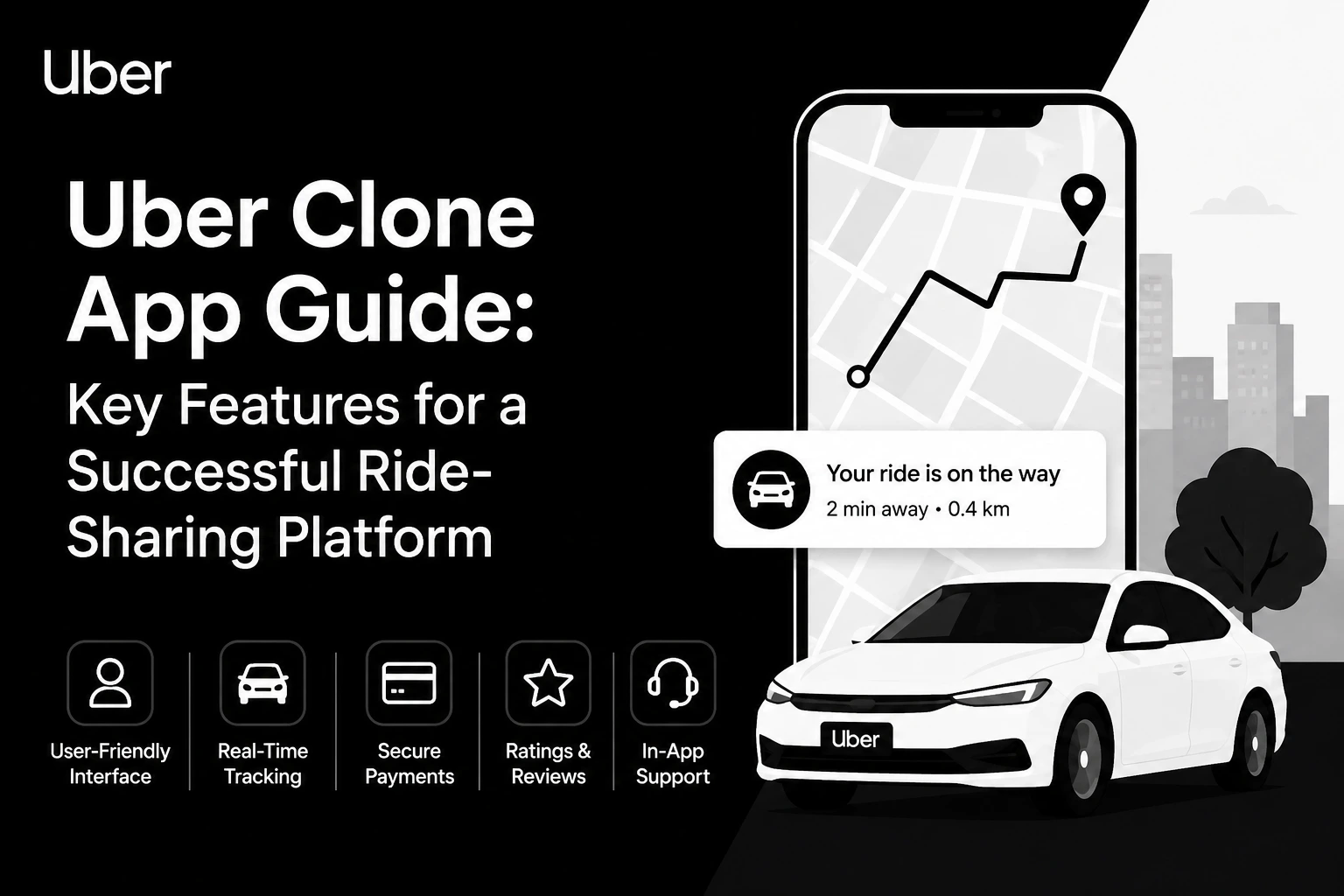
- A successful Uber clone app needs more than ride booking; it requires real-time tracking, secure payments, driver management, and smooth user experience.
- Core features usually include rider app, driver app, admin dashboard, GPS tracking, fare estimation, ride history, ratings, and notifications.
- Modern ride-sharing platforms also support wallet systems, scheduled rides, SOS safety tools, multilingual support, and dynamic pricing.
- The best Uber clone apps focus on operational efficiency, fast ride matching, transparent pricing, and reliable communication between riders and drivers.
- Long-term scalability depends on backend performance, dispatch automation, analytics, payment flexibility, and city-level expansion readiness.
Platform Signals
- Real-time GPS tracking and ETA calculation are essential because users expect accurate driver visibility and faster pickups.
- Multiple payment methods including cards, wallets, UPI, and cash improve accessibility across different markets and customer groups.
- Safety features like SOS alerts, trip sharing, driver verification, and masked calling help increase trust and platform retention.
- Driver-side tools such as earnings tracking, ride management, incentives, and availability controls improve operational stability.
- Admin dashboards help businesses manage rides, commissions, disputes, surge pricing, analytics, customer support, and fleet performance more efficiently.
Real Insights
- An Uber clone app is not just a transportation product; it is a real-time logistics and coordination platform.
- The strongest ride-hailing apps succeed because booking, dispatch, payments, and communication work together without friction.
- Features alone do not guarantee growth; rider trust, driver reliability, pricing transparency, and app performance matter equally.
- Founders should prioritize scalable architecture because ride requests, GPS updates, and payment processing create heavy concurrent backend load.
- The future of Uber-style platforms will depend on AI dispatch systems, electric vehicle integration, predictive pricing, automation, and multi-service mobility ecosystems.
The global ride-sharing industry continues to evolve rapidly in 2026, with the modern Uber Clone App becoming far more than a simple taxi-booking solution. Today’s ride-sharing platforms are powered by AI-driven logistics, real-time tracking, digital payments, and scalable cloud infrastructure to deliver seamless mobility experiences. Modern users now expect faster bookings, accurate ETAs, secure payments, and personalized ride experiences across every device
For startups and entrepreneurs entering the mobility industry, building a scalable Uber clone app is no longer just about launching a ride-booking platform. Success depends on designing a reliable, secure, and feature-rich ecosystem that serves riders, drivers, fleet operators, and administrators efficiently.
Today’s ride-sharing founders must think beyond basic booking functionality. Competitive platforms focus heavily on driver retention, intelligent route optimization, surge pricing automation, customer engagement, safety systems, and real-time analytics. Businesses entering this market need a strong product strategy, scalable backend architecture, and a clear monetization model from the beginning.
Miracuves has observed that many mobility startups fail not because of poor demand, but because they underestimate the technical complexity behind modern ride-sharing platforms. Real-time operations, location tracking, dynamic pricing, and dispatch algorithms require careful planning from day one.
Why Ride-Sharing Platforms Continue to Grow Globally
The ride-sharing market remains one of the strongest digital mobility sectors because urban transportation behavior continues to change. Consumers increasingly prefer app-based convenience instead of traditional transportation systems.
Several major trends continue driving industry growth:
Urban Mobility Demand
Growing cities create transportation challenges including parking limitations, traffic congestion, and unreliable public transit. Ride-sharing apps provide faster and more flexible alternatives.
Smartphone Penetration
Mobile-first behavior has made on-demand transportation highly accessible. Users expect instant booking experiences directly from their smartphones.
Digital Payment Adoption
Integrated payment systems simplify transactions and improve customer convenience across regions.
Gig Economy Expansion
Ride-sharing platforms create income opportunities for independent drivers and fleet operators.
AI-Powered Logistics
Modern ride-sharing platforms now use AI for:
- Smart ride matching
- Route optimization
- Fraud prevention
- Driver performance analysis
- Predictive demand forecasting
These advancements continue making ride-sharing businesses more efficient and scalable.
Understanding the Core Architecture of a Ride-Sharing Platform
A modern Uber clone app is not just one application. It is a complete ecosystem consisting of multiple interconnected systems.
Main Components of a Ride-Sharing Ecosystem
| Platform Component | Purpose |
| Rider App | Ride booking and customer experience |
| Driver App | Driver operations and ride management |
| Admin Dashboard | Platform monitoring and business control |
| Dispatch System | Real-time ride allocation |
| Payment Infrastructure | Transaction processing |
| Analytics Engine | Business intelligence and reporting |
| Notification System | Alerts and communication |
| GPS & Mapping Services | Real-time location tracking |
Every module must operate together in real time to ensure smooth platform performance.
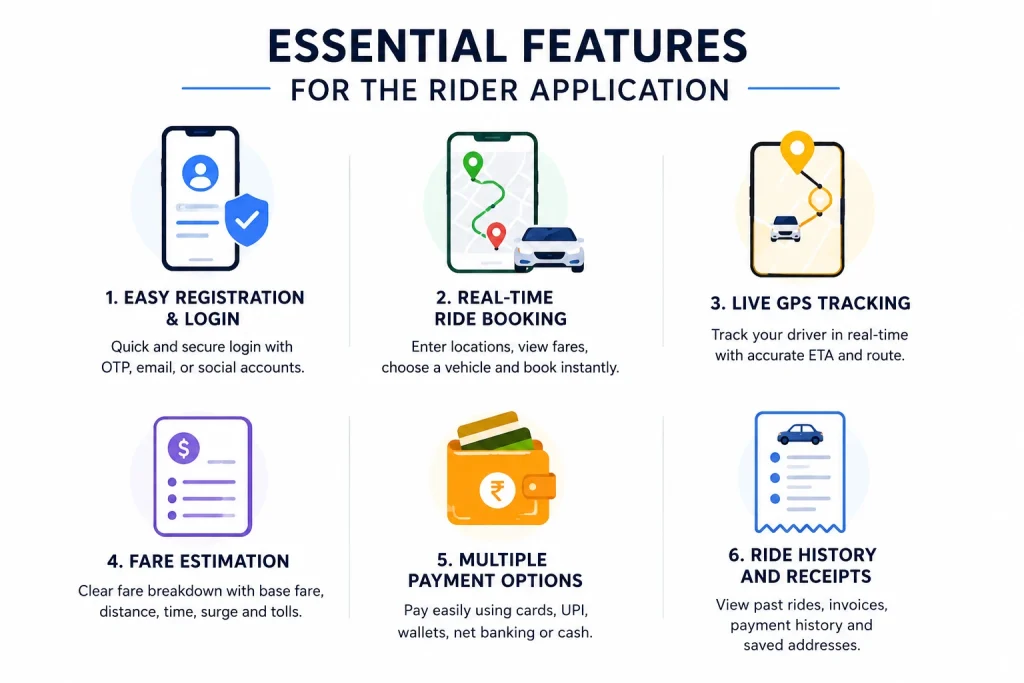
Essential Features for the Rider Application
The rider application represents the customer-facing side of the platform. User experience quality directly impacts retention and growth.
Easy Registration and Login
Modern users expect frictionless onboarding. Common login options include:
- Mobile OTP login
- Email registration
- Social login integration
- Apple and Google authentication
Fast onboarding improves user conversion significantly.
Real-Time Ride Booking
The core functionality of every ride-sharing app is instant booking capability.
Users should be able to:
- Enter pickup and drop locations
- View estimated fares
- Choose vehicle categories
- Confirm rides instantly
Real-time ride processing is critical for customer satisfaction.
Live GPS Tracking
Modern riders expect transparent trip visibility.
Important capabilities include:
- Driver live location
- Accurate arrival estimates
- Route visualization
- Trip progress tracking
Reliable GPS tracking improves trust and safety perception.
Fare Estimation System
Users want pricing clarity before confirming rides.
Pricing systems usually calculate:
- Base fare
- Distance cost
- Time cost
- Surge multiplier
- Toll charges
Transparent fare systems reduce disputes and cancellations.
Multiple Payment Options
Flexible payments improve platform adoption.
Common payment integrations include:
- Credit/debit cards
- UPI payments
- Digital wallets
- Net banking
- Cash payments
Regional payment support becomes especially important for global expansion.
Ride History and Receipts
Users should easily access:
- Previous rides
- Digital invoices
- Payment history
- Saved destinations
This improves user convenience and business transparency.
Advanced Features Modern Ride-Sharing Startups Need
Competition in the mobility market requires advanced platform capabilities beyond basic ride booking.
AI-Powered Ride Matching
Modern dispatch systems use AI algorithms to:
- Match nearby drivers
- Reduce rider wait times
- Optimize driver utilization
- Improve trip efficiency
AI-driven dispatching significantly improves operational performance.
Dynamic Surge Pricing
Demand fluctuations require automated pricing management.
Surge pricing systems analyze:
- Demand volume
- Driver availability
- Traffic conditions
- Peak-hour congestion
- Regional events
Dynamic pricing helps maintain platform balance during high demand.
Real-Time Analytics Dashboard
Data-driven decision-making is essential for scaling mobility businesses.
Analytics dashboards track:
- Active users
- Ride completion rates
- Revenue performance
- Driver activity
- Customer retention
- Cancellation rates
Business intelligence systems help founders optimize operations efficiently.
In-App Communication Systems
Communication tools improve ride coordination and safety.
Essential communication features include:
- In-app chat
- Voice calling
- Emergency support
- Push notifications
Secure communication systems protect user privacy.
Safety Features Every Ride-Sharing Platform Must Include
Safety has become one of the biggest competitive differentiators in the ride-sharing industry.
SOS Emergency Button
Emergency assistance systems allow users to:
- Contact emergency services
- Share live trip status
- Notify trusted contacts
Safety-focused platforms improve customer confidence.
Trip Sharing
Users should be able to share:
- Driver details
- Vehicle information
- Live trip progress
This feature significantly improves perceived security.
Driver Ratings and Reviews
Rating systems help maintain service quality.
Platforms can identify:
- Low-performing drivers
- Customer complaints
- Fraudulent behavior
Reputation systems strengthen platform reliability.
AI Fraud Detection
Modern platforms increasingly use AI to detect:
- Fake bookings
- Payment fraud
- Location spoofing
- Driver manipulation
Fraud prevention reduces operational losses.
Read more : Top 14 Must-Have Features in an Uber Clone for Ride-Hailing Success
Monetization Models for Ride-Sharing Platforms
A successful Uber clone app requires multiple revenue streams for long-term sustainability.
Commission-Based Revenue
The platform earns a percentage from every completed ride.
Surge Pricing Margins
Platforms generate higher revenue during peak demand periods.
Subscription Plans
Premium memberships may include:
- Priority rides
- Discounted fares
- Loyalty rewards
Advertising Revenue
Ride-sharing platforms increasingly monetize:
- In-app advertising
- Partner promotions
- Sponsored listings
Fleet Partnerships
Enterprise fleet partnerships create additional B2B revenue opportunities.
Challenges Ride-Sharing Startups Must Prepare For
Despite strong market potential, ride-sharing businesses face operational and technical challenges.
Driver Acquisition
Attracting quality drivers requires:
- Competitive incentives
- Fast payouts
- Flexible schedules
Regulatory Compliance
Different countries require:
- Transport licenses
- Insurance policies
- Driver verification
- Tax compliance
Customer Retention
User retention depends heavily on:
- Ride availability
- App performance
- Pricing consistency
- Customer support
Platform Scalability
Rapid growth can create:
- Server overload
- GPS latency
- Payment failures
- Notification delays
Scalable infrastructure planning becomes essential from the beginning.
Future Trends in Ride-Sharing App Development
The ride-sharing industry continues evolving with emerging technologies.
Electric Vehicle Integration
EV-based ride-sharing fleets are becoming increasingly common due to sustainability goals.
Autonomous Mobility
Self-driving vehicle research continues influencing future platform development strategies.
AI-Based Demand Prediction
Predictive analytics now help platforms:
- Position drivers strategically
- Reduce wait times
- Improve ride availability
Multi-Service Mobility Platforms
Many ride-sharing companies are expanding into:
- Food delivery
- Courier services
- Bike rentals
- Carpooling
- Logistics
Super-app strategies continue gaining momentum globally.
Why Product Strategy Matters Before Development
Many startups focus heavily on app development while ignoring long-term operational planning.
Founders should first define:
- Target market
- Business model
- Regional transportation gaps
- Pricing strategy
- Driver acquisition model
- Expansion roadmap
A strong product strategy helps reduce development mistakes and improves scalability.
Modern ride-sharing app development is no longer just about replicating Uber’s interface. Founders must build platforms that prioritize operational efficiency, user safety, scalability, and intelligent automation from the start.
Conclusion
The ride-sharing industry remains one of the most scalable digital mobility opportunities in 2026. However, launching a successful Uber clone app requires more than basic ride-booking functionality. Modern platforms must combine real-time infrastructure, AI-powered logistics, scalable cloud architecture, secure payment systems, and safety-focused user experiences to compete effectively.
Startups entering the mobility space should focus on building feature-rich, operationally efficient, and scalable ecosystems rather than simply copying existing platforms. From driver management to analytics dashboards and intelligent dispatch systems, every component plays a critical role in long-term growth.
For founders planning to enter the transportation industry, understanding these essential ride-sharing platform features is the first step toward building a competitive and sustainable mobility business.
Build a smarter ride-sharing business with advanced technology and scalable architecture.
Contact Miracuves to develop a feature-rich Uber clone app tailored for modern transportation startups.
FAQs
1. What is an Uber clone app?
An Uber clone app is a ready-made ride-sharing platform that includes rider apps, driver apps, and admin dashboards designed to help businesses launch transportation services quickly.
2. Which features are essential in a modern ride-sharing platform?
Core features include real-time GPS tracking, ride booking, fare estimation, digital payments, driver management, live notifications, and safety systems.
3. How do ride-sharing apps generate revenue?
Ride-sharing platforms commonly earn through ride commissions, surge pricing, subscription plans, advertisements, and fleet partnerships.
4. Can a ride-sharing app be customized for different business models?
Yes. A ride-sharing platform can be customized for taxi services, bike taxis, carpooling, logistics, rental services, and regional transportation needs.
5. Why is scalable infrastructure important for ride-sharing app development?
Scalable infrastructure helps the platform manage real-time ride requests, live tracking, payment processing, and increasing user traffic without performance issues.
Related Article :