


Key Takeaways
- A Cameo clone booking engine requires real-time scheduling, live video infrastructure, secure payments, and creator-fan interaction management.
- Core platform features include celebrity profiles, booking calendar, availability management, video calls, wallet system, payments, and admin controls.
- Live video monetization depends on smooth booking workflows, reliable streaming quality, payout automation, and creator scheduling flexibility.
- Modern creator platforms increasingly combine video calls, shoutouts, fan engagement, tipping, subscriptions, and personalized experiences.
- Long-term platform success depends on low-latency communication, trust systems, moderation tools, payment security, and scalable creator infrastructure.
Booking Engine Signals
- Real-time scheduling systems are critical because creators need flexible availability management across time zones, booking slots, and live sessions.
- Secure payment infrastructure helps manage booking fees, creator payouts, refunds, commissions, taxes, and transaction tracking.
- WebRTC-based video systems improve interaction quality by reducing latency during live fan conversations and personalized sessions.
- Automated reminders, notifications, and session management help reduce missed bookings and improve customer experience.
- Admin dashboards help platforms manage creators, disputes, scheduling conflicts, moderation, analytics, commissions, and engagement performance.
Real Insights
- A Cameo-style platform is not only a booking marketplace; it is a creator monetization ecosystem built around personalized fan interaction.
- The strongest platforms succeed because scheduling, payments, notifications, and live streaming work together without friction.
- Trust is essential because users expect secure payments, verified creators, reliable sessions, and smooth communication experiences.
- Founders should design scalable booking and payout architecture early because creator growth increases operational complexity very quickly.
- The future of Cameo-like platforms will depend on AI scheduling, virtual gifting, creator subscriptions, live commerce, and interactive fan engagement models.
A Cameo clone script is not just a celebrity profile directory with a payment button. At the business level, it is a creator booking marketplace where users pay for personalized interactions and creators earn from their audience through scheduled experiences, video messages, live calls, paid sessions, and premium engagement.
For founders, the real challenge begins after the user clicks “Book Now.”
Can the platform confirm creator availability in real time? Can it prevent two users from booking the same slot? Can it hold payments safely until the session happens? Can it refund users automatically if a creator misses the call? Can the admin team manage cancellations, payout rules, complaints, and reschedules without manual chaos?
That is where the booking engine becomes the heart of the platform.
A basic Cameo-style app may list creators, display prices, and accept requests. But a scalable creator marketplace needs deeper logic across scheduling, payments, live video infrastructure, notifications, creator payouts, and admin control. This is where a ready-made and customizable solution from Miracuves helps founders reduce development risk while still building a platform aligned with their business model.
Why a Cameo Clone Script Needs More Than Basic Booking Features
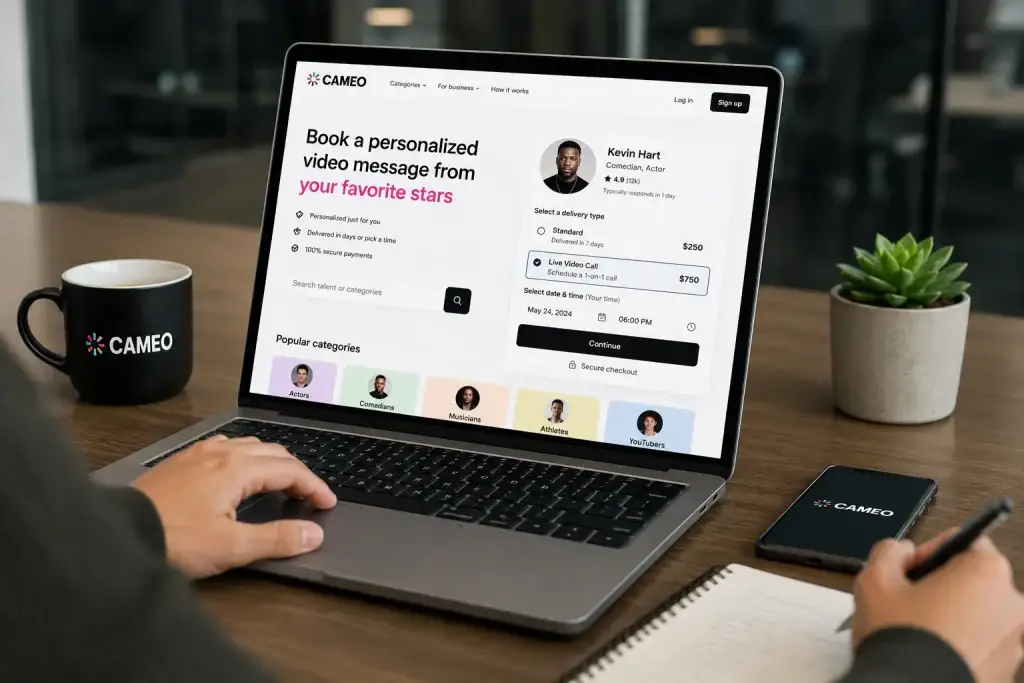
Many founders start with a simple idea: users should be able to book celebrities, influencers, experts, coaches, or creators for personalized videos or live calls. That sounds straightforward, but the operational reality is more complex.
A creator booking platform has multiple moving parts:
- Users want instant confirmation and reliable sessions.
- Creators need flexible availability and payout visibility.
- Admins need control over disputes, cancellations, pricing, content, and commissions.
- The platform needs to prevent failed sessions, double bookings, and payment confusion.
This is why a Cameo clone script should be treated as a marketplace engine, not just a video app. Cameo itself is known for personalized celebrity videos and fan interactions, and current marketplace competitors often discuss shoutouts, paid livestreams, subscriptions, and creator tips. But founders building a similar platform need to think deeper: how does the system handle live bookings when thousands of users and creators are active at once?
The booking engine decides whether the business feels trustworthy.
If a fan pays for a birthday call and the creator does not show up, the issue is not just technical. It becomes a customer experience problem, a refund problem, a creator accountability problem, and a brand trust problem.
Read more: Preventing Content Scraping: Advanced Watermarking for Subscription Apps
How a Cameo-Style Booking Engine Works
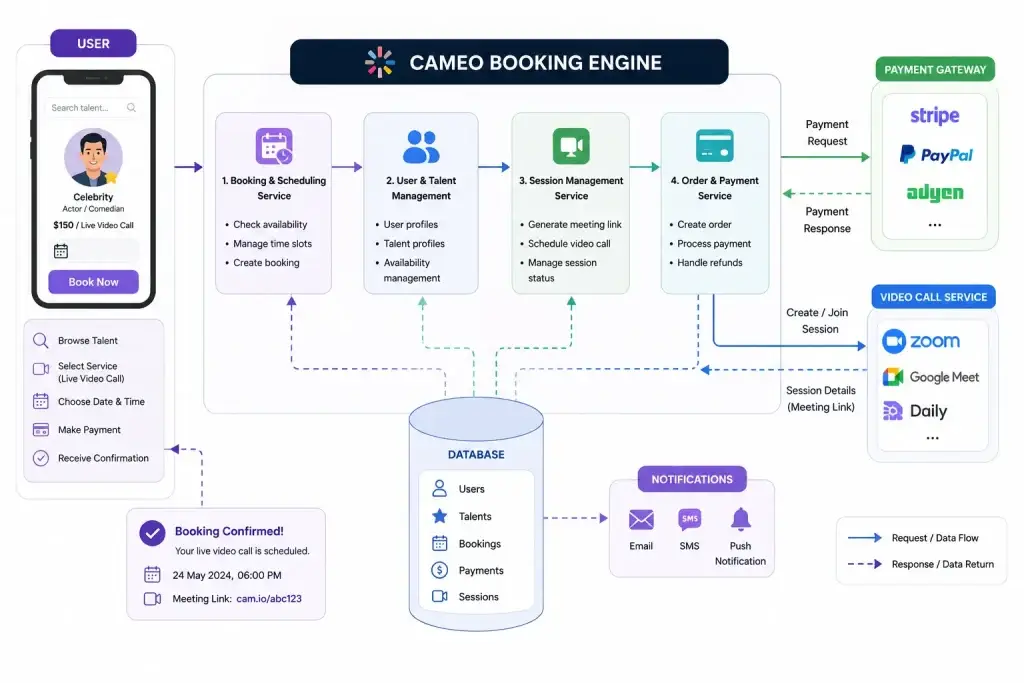
A Cameo-style booking engine connects four major layers:
| Layer | What It Controls | Why It Matters |
|---|---|---|
| Creator availability | Available dates, time slots, blackout periods, approval rules | Prevents unavailable or overloaded creators from receiving bookings |
| User booking flow | Slot selection, payment, confirmation, reminders | Creates a smooth fan experience |
| Payment logic | Authorization, escrow, commissions, refunds, payouts | Protects both platform revenue and user trust |
| Session management | Video room creation, call start, call end, attendance, recording rules | Ensures paid live sessions happen securely |
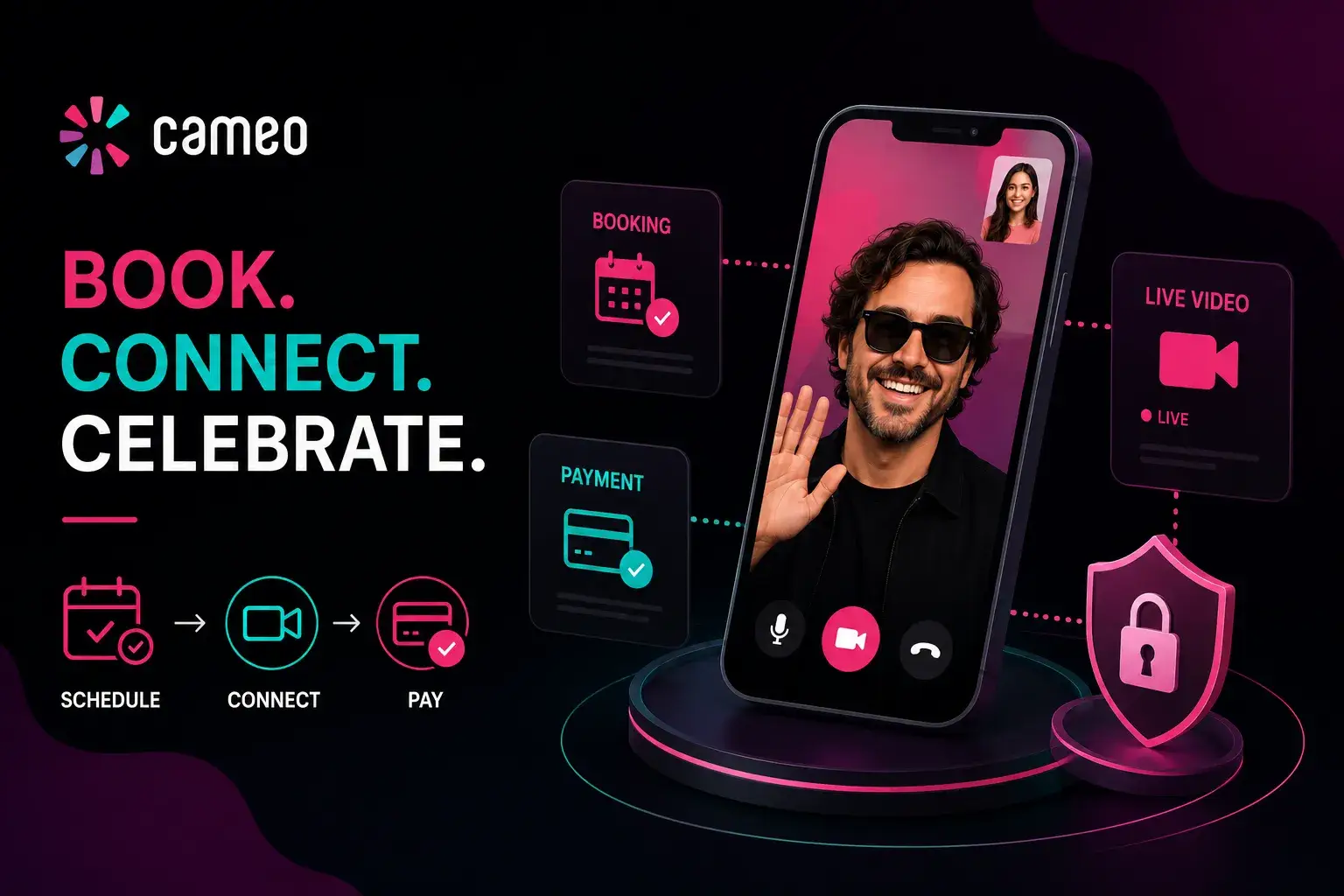
The booking journey usually works like this:
- A creator sets availability inside the creator dashboard.
- A user chooses a live video call slot.
- The system temporarily locks the slot.
- The user completes payment.
- The booking is confirmed.
- Notifications are sent to both sides.
- A secure video room is generated before the session.
- The session is tracked as completed, missed, cancelled, or disputed.
- Payment is released, refunded, or held for review.
This flow sounds simple, but each step needs backend safeguards. Without them, the platform can face double bookings, failed payments, missed sessions, delayed payouts, and support overload.
Core Modules Behind Live Video Call Scheduling
A scalable creator booking platform needs a dedicated scheduling system. This is different from a normal appointment booking tool because creator marketplaces involve public profiles, variable pricing, high emotional expectations, and multiple monetization models.
Creator Availability Management
Creators should be able to define when they are available for live calls. This can include:
- Weekly recurring availability
- One-time available slots
- Blackout dates
- Minimum notice period
- Maximum daily bookings
- Session duration options
- Approval-based or instant booking rules
For example, one creator may allow instant 10-minute fan calls every Friday. Another may require manual approval before accepting paid business calls. A strong Cameo clone script should support both models.
Timezone Synchronization
Timezone logic is one of the most underestimated parts of live video call booking.
A creator may be in Los Angeles, a user may be in Dubai, and the platform operator may be managing support from India. If the system does not convert timezones correctly, both sides may believe they are attending at the correct time while actually missing each other.
A reliable booking engine should:
- Store all booking times in UTC
- Display times based on the user’s local timezone
- Show creator timezone context clearly
- Send reminders in each participant’s local time
- Handle daylight saving changes where applicable
This is not just a technical detail. It directly affects attendance, refund rates, and customer trust.
Calendar Sync Logic
Many creators already manage their time through Google Calendar, Apple Calendar, Outlook, or personal assistants. A creator booking platform becomes more reliable when it can sync with external calendars.
Calendar sync can help the platform:
- Block unavailable times automatically
- Reduce manual creator effort
- Avoid accidental scheduling conflicts
- Improve creator adoption
- Support professional creators and consultants
For founders targeting experts, coaches, consultants, influencers, or business personalities, calendar sync becomes even more important than in a pure celebrity shoutout app.
Slot Reservation Expiration
When a user selects a slot, the platform should not leave that slot open for everyone else while the payment is being completed.
A better approach is temporary reservation logic.
For example:
- User selects a creator’s 7:00 PM slot.
- System locks the slot for 5–10 minutes.
- User is redirected to payment.
- If payment succeeds, booking is confirmed.
- If payment fails or user abandons checkout, the slot is released.
This prevents confusion and keeps availability accurate.
Preventing Double Bookings in Creator Booking Platforms
Double booking happens when two users are allowed to book the same creator for the same time slot. In a low-volume system, this may happen rarely. In a high-demand creator marketplace, it can happen quickly if the booking engine is weak.
A serious Cameo clone script should use concurrency control.
Booking Locks
A booking lock temporarily reserves a slot while payment is happening. This lock can be managed using tools such as Redis or another fast in-memory data layer.
The logic may look like this:
| Step | System Action |
|---|---|
| User selects slot | Platform checks if the slot is available |
| User proceeds to checkout | Temporary lock is created |
| Payment succeeds | Slot becomes confirmed |
| Payment fails | Lock expires and slot returns to availability |
| User abandons checkout | Slot unlocks after timeout |
This protects the user experience and prevents creators from receiving overlapping live sessions.
Optimistic Locking
Optimistic locking is useful when multiple users are trying to book the same slot at nearly the same time. The platform checks whether the slot has changed before confirming the booking.
If two payment attempts happen at once, only the first valid confirmation succeeds. The second user sees a message such as:
“This slot was just booked. Please choose another available time.”
That is a much better experience than confirming two bookings and fixing the mistake manually later.
Real-Time Availability Sync
Real-time availability sync helps users see updated booking options without refreshing the page manually.
This matters for popular creators where slots may disappear quickly. Real-time sync can be handled through WebSockets, event-driven updates, caching, or short-polling depending on platform scale.
The founder takeaway is simple: availability should feel live, not stale.
Payment Architecture for Paid Creator Calls
Payments are not just checkout screens. In a creator booking marketplace, payment logic controls trust, monetization, commissions, refunds, and creator satisfaction.
A paid video call platform can support several payment models:
| Payment Model | How It Works | Best For |
|---|---|---|
| Fixed session fee | User pays a fixed price for a defined call duration | Celebrity calls, expert sessions, birthday calls |
| Pay-per-minute | User is billed based on call duration | Coaching, consulting, advice platforms |
| Subscription access | User pays monthly for creator access | Creator communities |
| Tips and add-ons | User adds tips, priority booking, or extended time | Fan engagement and premium experiences |
| Business bookings | Brands book creators for campaigns or team events | B2B creator marketplace |
Paid video call tools increasingly combine booking, payments, subscriptions, tipping, pay-per-minute access, and revenue dashboards. A Cameo-style marketplace needs similar monetization flexibility if it wants to support multiple creator categories.
Escrow-Based Payment Flow
Escrow-style payment logic means the platform collects payment before the session but does not immediately release the full creator payout.
A practical flow looks like this:
- User books a session and pays.
- Platform confirms the booking.
- Funds are held by the platform/payment system.
- Creator and user attend the call.
- Session is marked completed.
- Platform deducts commission.
- Creator payout is released.
This helps protect users from missed sessions and protects creators from unpaid bookings.
Split Payout Systems
A Cameo clone script should support commission logic. For example, the platform may keep a percentage of every booking and release the remaining amount to the creator.
The payout system should support:
- Platform commission
- Creator earnings
- Payment gateway fees
- Refund deductions
- Tax or invoice references where required
- Payout status tracking
- Manual payout review for suspicious activity
For fintech-like payout flows, security and compliance language should stay careful. The platform can support payment and verification workflows, but final compliance depends on the target jurisdiction, legal review, payment partners, and operating model.
Refund Automation
Refunds are essential for customer trust.
Refund workflows may be triggered when:
- Creator cancels
- Creator misses the session
- User cancels within an allowed window
- Video call fails due to technical issues
- Admin approves a dispute
- Booking expires without creator approval
A good refund system should not depend entirely on manual support. Admins should have override control, but common rules should be automated.
Cancellation Workflows
Cancellation rules need to be visible before payment.
For example:
| Scenario | Possible Rule |
|---|---|
| User cancels 24 hours before session | Full or partial refund |
| User cancels 10 minutes before session | No refund or platform credit |
| Creator cancels | Full refund or reschedule option |
| Creator misses call | Auto-refund or admin review |
| Both sides face technical failure | Reschedule or dispute workflow |
Clear cancellation rules reduce support tickets and protect platform credibility.
Live Video Infrastructure for Real-Time Creator Sessions
Many Cameo clone pages simply say “video calling integration.” That is not enough for founders evaluating product quality.
Live video sessions need architecture.
WebRTC-Based Video Calls
WebRTC allows real-time audio and video communication directly inside web and mobile applications. It is commonly used for browser-based and app-based video calls.
A platform can build with WebRTC directly or use a video SDK provider such as Twilio Video, Agora, Daily, Vonage, or Zoom SDK depending on cost, scale, region, and feature needs.
Video SDK Comparison
| Option | Strength | Founder Consideration |
|---|---|---|
| WebRTC custom setup | More control and customization | Requires stronger engineering depth |
| Twilio Video | Reliable APIs and communication tooling | Pricing and regional performance should be evaluated |
| Agora | Strong real-time engagement and low-latency use cases | Useful for interactive creator sessions |
| Zoom SDK | Familiar call experience | May feel less native depending on implementation |
| Daily / similar SDKs | Developer-friendly video infrastructure | Good for fast integration and embedded calls |
The right choice depends on session volume, geography, call quality expectations, recording needs, and budget.
Secure Session Tokens
A paid creator call should not be accessible through a public link that anyone can share.
The system should generate secure session tokens so that only the booked user and creator can enter the video room. Tokens can expire after a defined window and should be tied to booking ID, user ID, creator ID, and session time.
TURN and STUN Servers
For live video calls, some users may be behind restrictive networks, firewalls, or mobile carriers. TURN and STUN servers help establish reliable connections in these situations.
Founders do not need to manage every low-level detail personally, but they should know whether their development team or SDK provider has accounted for network reliability.
Recording Rules
Some platforms may want to record sessions for moderation, quality review, or user access. Others may avoid recordings because of privacy or creator comfort.
Recording logic should be configurable:
- Record all sessions
- Record only business sessions
- Record only with consent
- Do not record live calls
- Store recordings temporarily
- Allow admin review for disputes
This decision affects privacy, infrastructure cost, storage, and policy design.
Handling Cancellations, No-Shows, Refunds, and Disputes
No-shows are one of the most important trust problems in paid creator calls.
A no-show can happen when:
- User misses the session
- Creator misses the session
- Both sides join at different times due to timezone confusion
- Network failure prevents connection
- User claims creator did not attend
- Creator claims user did not attend
The platform should track attendance events carefully.
Useful attendance signals include:
- User joined time
- Creator joined time
- Session start time
- Session end time
- Call duration
- Failed connection logs
- Reminder delivery status
- Chat or support messages
- Admin notes
This gives the admin team evidence for refunds and disputes.
No-Show Automation Logic
| Situation | Recommended Platform Response |
|---|---|
| Creator does not join within grace period | Auto-refund, reschedule, or admin review |
| User does not join | Mark user no-show based on policy |
| Both join but call fails | Offer reschedule or support review |
| Creator joins late | Partial refund, extension, or warning |
| Repeated creator no-shows | Creator penalty, lower ranking, or account review |
No-show workflows should be configurable from the admin panel because different creator categories may need different rules.
Admin Dashboard Logic for Platform Operators
The admin dashboard is where the platform operator controls the business.
For a Cameo-style creator booking platform, the admin panel should include:
- User management
- Creator approval and verification
- Booking management
- Live session status tracking
- Commission settings
- Refund controls
- Payout management
- Dispute resolution
- Category management
- Creator pricing rules
- Featured creator placement
- Review moderation
- Notification templates
- Analytics and revenue reporting
A strong admin dashboard reduces dependency on developers for daily operations. Founders should be able to change booking rules, monitor revenue, review disputes, approve creators, and adjust commissions without needing code-level changes for every decision.
This is one reason Miracuves focuses on admin control as part of a launch-ready app foundation.
Scaling a Creator Booking Marketplace
A creator marketplace may start with a small group of influencers, but if it grows, the architecture needs to support traffic spikes.
Spikes can happen around:
- Celebrity announcements
- Festival greetings
- Creator promotions
- Viral social posts
- Sports events
- Holiday campaigns
- Brand collaborations
- Limited-time fan calls
A scalable booking engine should support:
| Scaling Area | Why It Matters |
|---|---|
| Redis caching | Speeds up availability and booking checks |
| Queue systems | Handles notifications, payouts, and background tasks |
| Event streams | Tracks booking events, payment events, and session events |
| CDN | Improves media delivery and platform performance |
| Microservices | Separates booking, payment, video, notification, and user modules |
| Monitoring | Helps detect failed sessions, payment errors, and system slowdowns |
For creator and entertainment platforms, infrastructure directly affects revenue. If users cannot book during peak demand, the platform loses transactions and trust.
Founders exploring short video or creator-led platforms can also review Miracuves’ guide on video streaming infrastructure for short video apps and cloud infrastructure for short video platforms for related scaling concepts.
AI Features Modern Cameo-Style Platforms Can Add
AI is becoming useful in creator marketplaces, especially for discovery, booking recommendations, and operations.
A modern Cameo clone script can include AI-assisted features such as:
- Smart creator recommendations based on user intent
- AI-powered search for creators by occasion, language, niche, or personality
- Dynamic pricing suggestions based on demand
- Availability prediction for high-demand creators
- Automated support responses for booking questions
- Fraud or abuse pattern detection
- Creator ranking signals based on completion rate and user satisfaction
- AI-assisted content moderation for public creator profiles
These features should not distract from the core booking engine. The priority is still reliable scheduling, payments, and session completion. AI works best when it improves decision-making and reduces operational friction.
Why a White-Label Cameo Clone Script Helps Founders Launch Faster
Building a creator booking platform from zero can take significant time because the product is not just one app. It usually includes:
- User app or website
- Creator dashboard
- Admin dashboard
- Booking engine
- Payment module
- Notification system
- Video call integration
- Payout workflow
- Review and dispute system
- Analytics
- Security and role permissions
A white-label Cameo clone script gives founders a ready-made foundation that can be customized for a specific market.
For example, the same core model can be adapted for:
- Celebrity fan calls
- Influencer shoutouts
- Paid coaching sessions
- Astrologer video consultations
- Fitness trainer calls
- Expert advisory calls
- Creator communities
- Business greeting videos
- Language tutor sessions
- Niche consulting marketplaces
Miracuves helps founders create white-label, source-code-owned creator booking platforms with branding, admin control, monetization workflows, and faster deployment. For founders who want to validate a creator economy idea without building every module from zero, this can reduce avoidable development risk.
You can also explore related Miracuves resources such as Cameo Clone Script: Features & Pricing, How to Build a Profitable Cameo Clone App, and the TikTok clone app solution for broader creator platform planning.
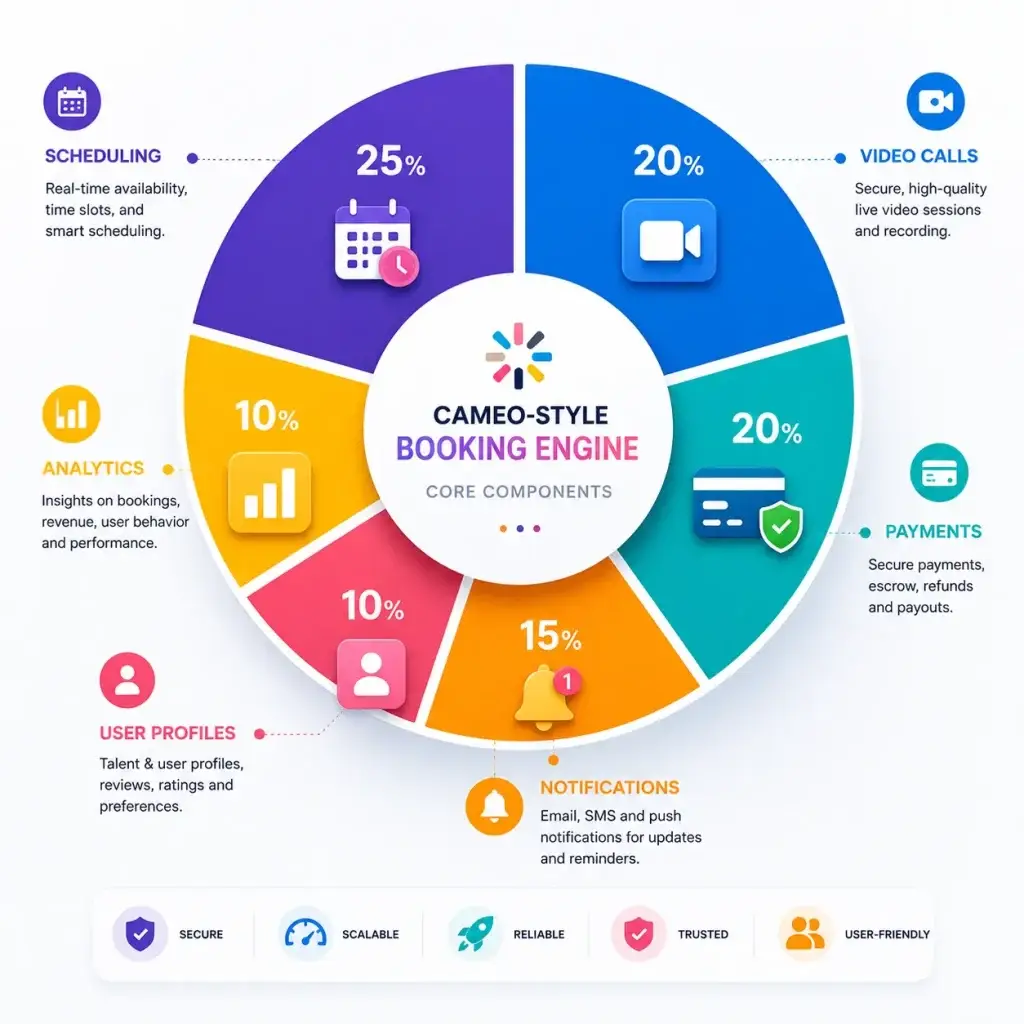
Founder Decision Signals Before Building a Cameo Clone Script
Founder Decision Signals
Speed
A ready-made Cameo clone script helps founders avoid building every user, creator, booking, payment, and admin module from zero.
Cost
Final pricing depends on features, integrations, video SDKs, payment workflows, branding, and customization scope.
Scalability
The platform should support booking locks, real-time availability sync, secure sessions, queue systems, and payout automation.
Market Fit
Founders should validate whether their audience wants celebrity calls, expert sessions, creator shoutouts, coaching, or niche paid video consultations.
Founders should evaluate the business model before choosing the technology.
| Decision Area | Question to Ask | Why It Matters |
|---|---|---|
| Creator category | Are you targeting celebrities, influencers, experts, coaches, or niche creators? | Different creator types need different booking and pricing rules |
| Booking type | Will sessions be instant, scheduled, approval-based, or request-based? | This affects booking engine complexity |
| Payment model | Fixed fee, subscription, pay-per-minute, tips, or business bookings? | Monetization logic changes the backend |
| Refund policy | What happens if the creator misses the call? | Trust depends on clear rules |
| Video infrastructure | Will you use SDKs or custom WebRTC? | Impacts cost, quality, and scalability |
| Admin control | Can your team manage disputes, payouts, and creators easily? | Operations decide long-term platform stability |
| Source-code ownership | Do you need long-term control over product customization? | Important for scaling and investor confidence |
Common Mistakes Founders Should Avoid
Treating the Platform Like a Simple Booking Calendar
A creator marketplace is not the same as a salon appointment system. It includes creator reputation, fan expectations, paid access, refunds, disputes, and session proof. The booking engine needs marketplace-grade logic.
Ignoring Timezone Complexity
Timezone mistakes create missed calls and refund requests. Store booking times carefully and display local times clearly for both users and creators.
Releasing Creator Payouts Too Early
If payouts are released before session completion, refund handling becomes difficult. Escrow-style logic or controlled payout release protects the platform.
Using Public Video Links Without Access Control
Paid sessions should use secure room access. Public links can be shared, misused, or accessed by unauthorized users.
Building Without Admin Dispute Tools
Manual support through email or spreadsheets does not scale. Admins need booking evidence, attendance logs, refund controls, and payout review tools.
Final Thoughts: The Booking Engine Is the Real Product
The real value of a Cameo clone script is not only in copying the visible features of a celebrity video platform. The value is in building a reliable creator marketplace where users can book confidently, creators can earn consistently, and the platform operator can manage operations with control.
A strong booking engine handles availability, payments, live video sessions, cancellations, refunds, and payouts without creating chaos behind the scenes.
For founders, the smarter decision is not just to ask, “Can we build an app like Cameo?” The better question is, “Can we build a creator booking platform that users and creators can trust at scale?”
Miracuves helps founders move from idea to launch faster with ready-made, white-label app solutions built for branding, admin control, monetization, and source-code ownership. To discuss your creator booking platform, visit the Miracuves contact page
FAQs :-
What is a Cameo clone script?
A Cameo clone script is a ready-made software foundation for building a creator booking platform where users can pay for personalized videos, live video calls, shoutouts, consultations, or creator-led experiences. It usually includes user profiles, creator profiles, booking flows, payments, admin control, and monetization features.
How does a Cameo clone script handle live video call bookings?
It manages creator availability, lets users select available slots, temporarily locks the selected slot, processes payment, confirms the booking, sends reminders, generates a secure video room, and tracks whether the session was completed, cancelled, missed, or disputed.
How can a creator booking platform prevent double bookings?
A platform can prevent double bookings using booking locks, real-time availability sync, optimistic locking, reservation expiration, and backend validation before payment confirmation. This ensures two users cannot successfully book the same creator for the same time slot.
What payment features should a Cameo-style app include?
A Cameo-style app should include secure checkout, platform commissions, creator payouts, refund workflows, cancellation rules, wallet or payout tracking, payment status logs, and admin review tools. For live calls, escrow-style payment logic is especially useful.
What happens if a creator misses a paid video call?
The platform should follow predefined no-show rules. Depending on the policy, the user may receive a refund, platform credit, or reschedule option. The admin dashboard should track attendance logs so the support team can review disputes fairly.
Which video technology is best for a Cameo clone app?
The best option depends on scale, budget, geography, and feature needs. A platform can use WebRTC directly or integrate video SDKs such as Twilio Video, Agora, Zoom SDK, Daily, or similar providers. The key requirement is secure, reliable, time-bound access to paid sessions.
Can a Cameo clone script support creators beyond celebrities?
Yes. The same model can support influencers, coaches, consultants, astrologers, fitness trainers, language tutors, musicians, business experts, and niche creators. The booking rules, pricing, and creator approval workflows can be customized for the target market.
Why choose a white-label Cameo clone script instead of custom development from zero?
A white-label Cameo clone script gives founders a launch-ready foundation with core modules already in place. This can reduce development time and help founders focus on branding, creator onboarding, monetization, and market validation instead of building every workflow from scratch.