


Key Takeaways
- Poorly coded apps can create hidden API expenses.
- Maps, OTP, and payment APIs increase monthly costs fast.
- Repeated API calls waste server and billing resources.
- Caching and queues help reduce operational costs.
- Cheap clone scripts may become expensive after scaling.
API Cost Signals
- Repeated map requests increase geolocation costs.
- Weak OTP systems can trigger duplicate SMS billing.
- Polling payment APIs wastes unnecessary requests.
- Poor notification logic creates duplicate API events.
- Background jobs help optimize heavy workflows.
Real Insights
- API waste becomes dangerous as user traffic grows.
- Low development cost does not mean low running cost.
- Founders should audit API efficiency before scaling.
- Optimized backend systems improve startup runway.
- Miracuves builds scalable clone apps with optimized API architecture.
A $299 clone script can look like a smart shortcut when you are trying to launch fast. For bootstrapping founders, that number feels safe. It protects cash, reduces hesitation, and creates the impression that the technical risk is already solved.
But the real cost of software rarely ends at the checkout page.
In many app businesses, especially delivery, ride-hailing, logistics, local services, marketplace, fintech, and communication-heavy platforms, external APIs quietly become part of your monthly cost structure. Google Maps, Twilio, payment gateways, email services, push notification services, fraud tools, identity verification APIs, and analytics platforms all charge based on usage patterns. If the app is coded inefficiently, it does not simply perform badly. It consumes money repeatedly.
That is the hidden API tax.
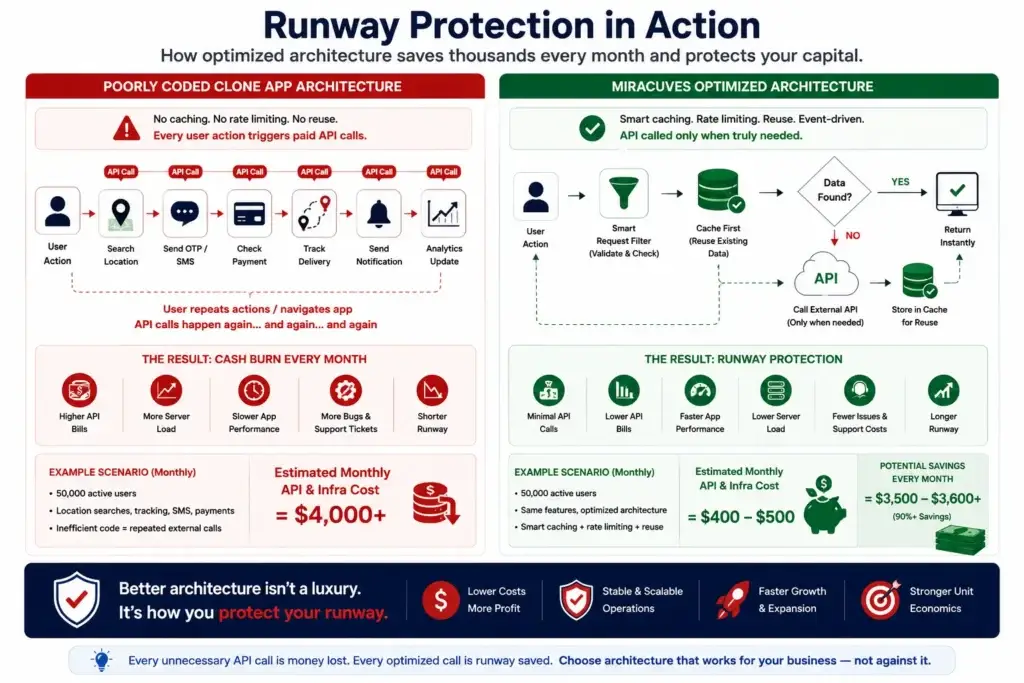
A poorly written clone app may call Google Maps every time a user refreshes a screen. It may trigger OTP messages more often than needed. It may check payment status again and again instead of relying on proper webhook logic. It may reverse-geocode the same location repeatedly instead of caching the result. None of these problems looks dramatic in a demo. But after launch, they can turn into thousands of dollars in avoidable monthly costs.
For a founder, this is not just a technical issue. It is a runway issue.
Miracuves approaches clone app development from a business engineering perspective: the app must not only launch faster, but also respect the founder’s monthly operating budget after launch.
Why a $299 Script Costs You Thousands Later
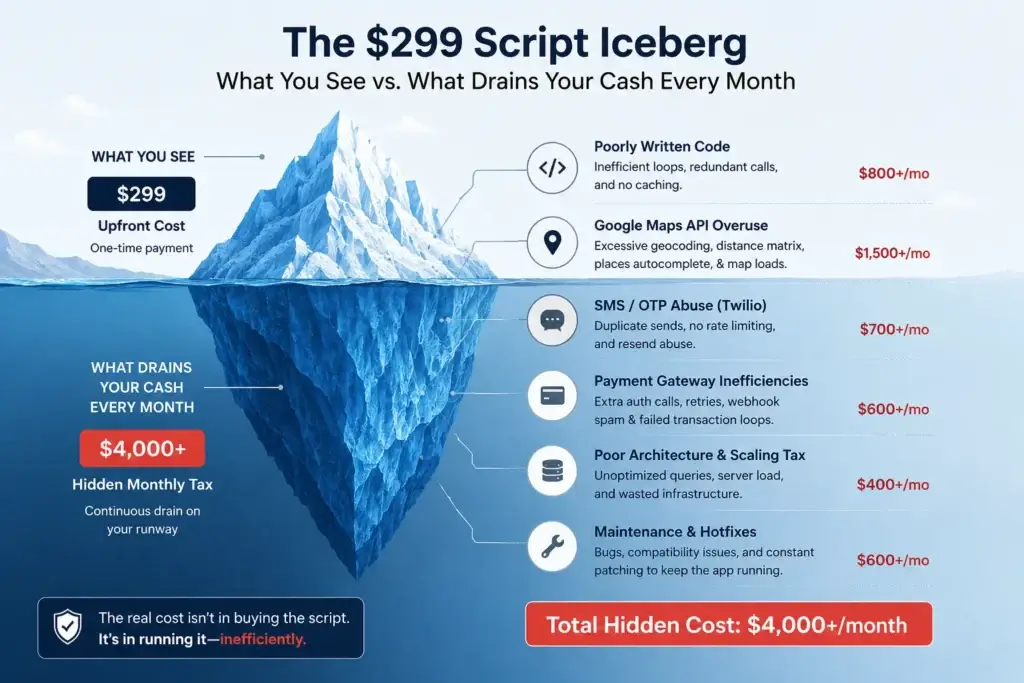
The lowest upfront software price is not always the lowest business cost.
A low-cost clone script can appear attractive because it promises the same visible screens: customer app, provider app, admin panel, login, payments, map view, notifications, and order tracking. To a non-technical buyer, the difference between a $299 script and a professionally engineered app foundation is not immediately obvious.
The problem is that API waste usually hides beneath the interface.
Two apps can show the same map on the screen, but one may call the Maps API once and reuse the result intelligently, while the other may call it repeatedly every few seconds. Two apps can send OTPs, but one may throttle requests, validate session state, and prevent abuse, while the other may allow repeated resend actions that trigger unnecessary SMS charges. Two apps can show payment status, but one may use webhook-based event handling, while the other may poll the payment gateway again and again.
The user sees the same button.
The founder pays a very different monthly bill.
This is why software cost should be judged across the full business lifecycle:
| Cost Layer | What Founders Notice | What Often Gets Missed |
|---|---|---|
| Purchase price | Script cost, license cost, setup cost | Whether the code is efficient enough for real usage |
| Launch cost | Branding, deployment, configuration | Whether core workflows are production-ready |
| API cost | Maps, SMS, payments, notifications | Whether requests are cached, throttled, batched, or repeated unnecessarily |
| Maintenance cost | Bug fixes and small changes | Whether poor architecture creates recurring developer dependency |
| Scaling cost | Hosting and server upgrades | Whether inefficient logic forces higher infrastructure and API usage |
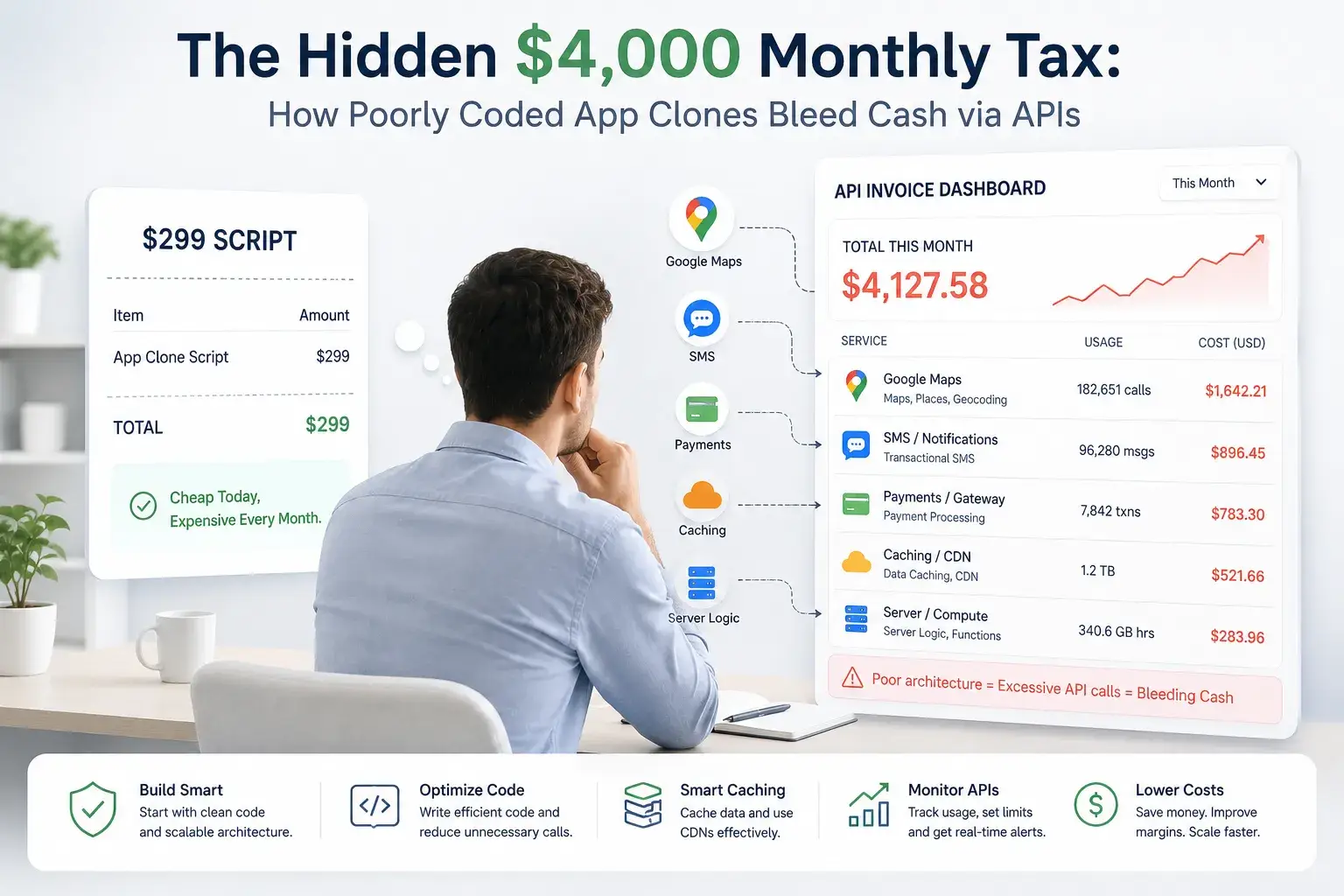
A $299 product that creates $4,000 in monthly waste is not cost-efficient. It is delayed expense disguised as savings.
The “$4,000 monthly tax” is not a fixed number for every founder. It is a scenario that can happen when high-frequency app workflows are coded without API discipline. The danger is especially high in location-heavy apps, delivery platforms, ride-hailing apps, courier marketplaces, logistics tools, local service apps, and any product using repeated SMS or OTP verification.
The Hidden API Tax: Where Clone Apps Quietly Lose Money
Most founders budget for app development, hosting, and marketing. Fewer founders budget for inefficient API behavior.
That is where poorly coded app clones become dangerous.
An external API is not just a feature provider. It is a meter. Every unnecessary call can become a cost event depending on the provider’s pricing model. Google Maps Platform prices many services by SKU and billable event, and monthly usage is calculated based on activity linked to the billing account. Twilio’s SMS pricing is also pay-as-you-go, with final cost depending on the destination, message type, number type, and carrier-related charges.
A lean app treats every paid API call like a business resource.
A weak clone script treats APIs like unlimited utilities.
That difference matters.
Common API waste patterns include:
Repeated geocoding:
The app converts the same address into coordinates multiple times instead of saving the result.
Repeated reverse geocoding:
The app converts the same coordinates into a readable address again and again whenever the user opens the screen.
Unthrottled driver or delivery partner tracking:
The app sends location updates too frequently, even when movement is minor or irrelevant.
Uncached search suggestions:
The app requests fresh place suggestions for every keystroke without session control or caching.
Duplicate OTP triggers:
The app sends multiple SMS messages because resend limits, cooldown periods, or session validation are weak.
Payment status polling:
The app repeatedly asks the payment gateway whether a transaction succeeded instead of relying on event callbacks and webhooks.
Notification duplication:
The same event triggers multiple push, SMS, or email messages due to poor backend event handling.
None of this feels like a “feature problem” during the sales demo. The app may appear functional. But once real users arrive, inefficient loops start converting traffic into cost.
Where Poorly Coded Clone Apps Waste API Spend
| API Area | Common Waste Pattern | Capital-Efficient Fix |
|---|---|---|
| Google Maps | Repeated geocoding, reverse geocoding, and unfiltered location checks. | Cache coordinates, reuse saved addresses, filter internally before external calls. |
| Twilio SMS | Duplicate OTP sends, weak resend limits, and repeated status notifications. | Use OTP cooldowns, session validation, resend limits, and event deduplication. |
| Payment Gateways | Repeated payment status polling after checkout or refresh. | Use secure webhook-first payment status updates and transaction logs. |
| Notifications | Multiple messages triggered by the same order, booking, or delivery event. | Centralize event handling and prevent duplicate notifications. |
The Geometry Problem: How Unoptimized Geofencing Explodes Your Google Maps Bill
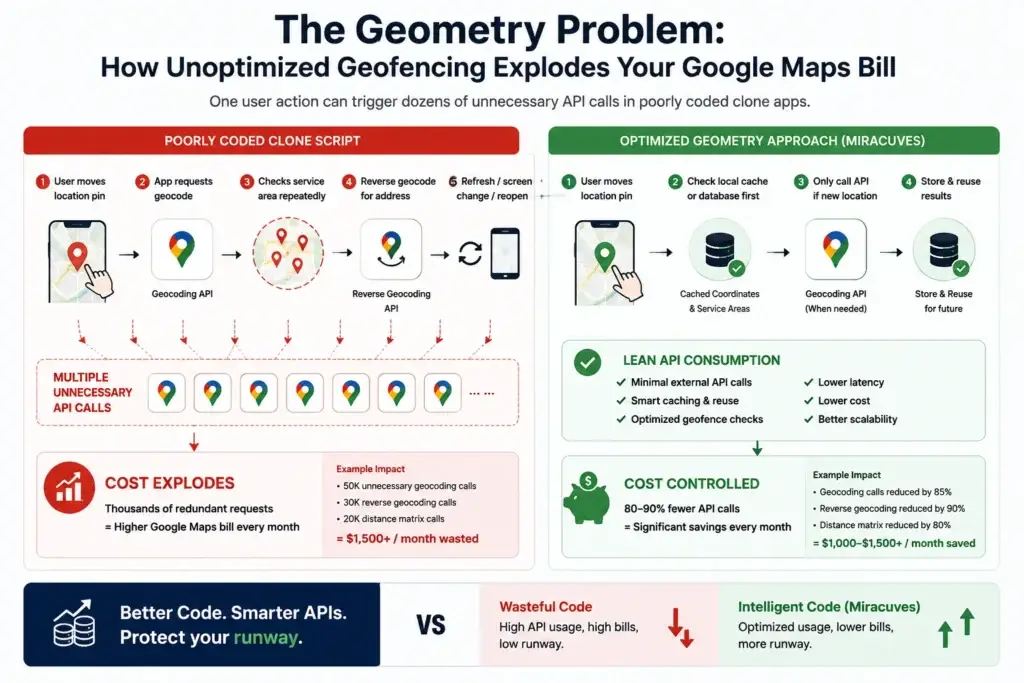
Location-based apps are especially vulnerable to API waste.
A delivery or ride-hailing app does not simply use maps once. It may use maps during signup, address entry, service availability checks, distance calculation, driver matching, route display, ETA estimation, delivery tracking, order history, and admin monitoring.
That is why one weak geofencing decision can create a cost multiplier.
Imagine a food delivery app where the system needs to check whether a customer is inside a restaurant’s service zone. A well-structured platform may store restaurant service areas, cache known coordinates, and perform efficient server-side calculations before deciding whether another external request is needed.
A poorly coded clone script may do the opposite.
It may call the Maps API every time the user moves the map pin. It may reverse-geocode the same coordinates repeatedly. It may calculate distance from scratch across multiple restaurants without filtering by city, radius, or saved location data. It may run the same availability check when the user opens the home screen, updates the cart, changes the address, views checkout, and confirms the order.
The geometry problem is simple:
- One user action can trigger many location calculations.
- Many calculations can trigger many API calls.
- Many API calls can become a recurring bill.
A non-technical founder might think, “We only have 5,000 users.” But the real question is not just user count. The real question is API events per user session.
Here is a simplified example:
| Workflow | Lean Architecture | Poorly Coded Clone Script |
|---|---|---|
| User enters address | Validate once, cache coordinates | Geocode repeatedly on page refresh |
| User searches nearby stores | Filter local database first, call API only when needed | Call external API for every search state |
| Delivery partner tracking | Send location updates at controlled intervals | Push location updates too frequently |
| Service radius check | Use stored polygons/radius logic | Recalculate using paid external calls repeatedly |
| Checkout address confirmation | Reuse saved address metadata | Reverse-geocode again before payment |
This is where the “cheap script” argument breaks down. A clone script is not cost-efficient if it turns routine user activity into unnecessary paid requests.
Google’s own Maps pricing model is built around usage and billable events, which means request efficiency directly affects cost exposure. Google also notes that Places API usage is pay-as-you-go by features/SKUs and that limiting requested fields can help control costs.
That last point is important.
Cost control is not only about choosing the right API provider. It is also about how intelligently your software asks for data.
SMS, OTP, and Notification Loops: The Twilio Cost Leak Founders Miss
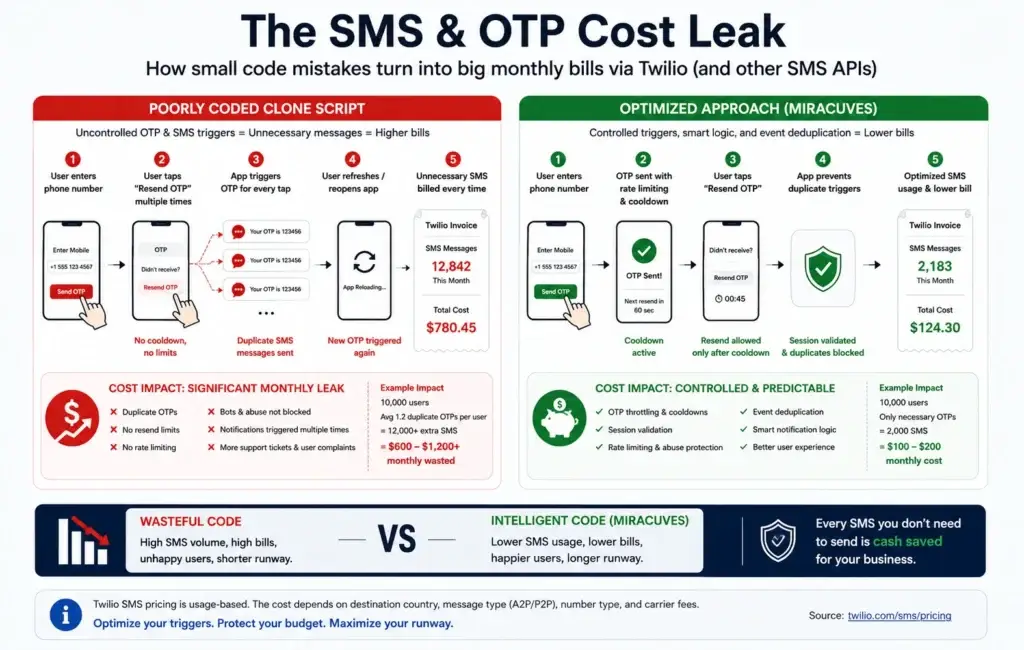
SMS costs look small until the product starts leaking messages.
OTP verification is a common example. A founder may assume that OTP cost equals one message per login. But poor backend logic can create many more billable events than expected.
For example:
A user taps “resend OTP” five times.
A weak app sends five SMS messages.
A user has poor network connectivity.
A weak app triggers duplicate OTP requests.
A user refreshes the login screen.
A weak app restarts the verification workflow.
A bot tests phone numbers.
A weak app sends SMS without strong throttling.
A delivery status update fires twice.
A weak app sends duplicate customer messages.
Twilio’s pricing is usage-based, and the cost to send messages depends on destination and message type. That means SMS efficiency is not just a communication feature. It is a recurring cost control system.
A stronger app architecture should include:
- OTP cooldown timers
- Resend limits
- Phone-number validation
- Session-based verification
- Abuse prevention
- Retry logic that does not duplicate messages
- Admin visibility into SMS volume
- Fallback rules for failed delivery
- Event deduplication
For a bootstrapped founder, these details matter because communication APIs are tied directly to customer acquisition, onboarding, retention, and trust. If the app wastes SMS during onboarding, the founder pays more before the user even becomes active.
Read more : How to Customize a Clone App to Create a Unique Brand Experience
Payment Gateway Polling: Why “Checking Again” Can Become Expensive
Payment gateway inefficiency is less visible than Maps or SMS, but it can still create operational waste.
A poorly written app may keep asking the payment gateway whether a transaction has succeeded. It may trigger repeated status checks when the user returns from checkout, refreshes the page, opens order history, contacts support, or restarts the app.
A better system relies on event-driven payment architecture.
That usually means:
- The payment gateway sends a webhook when payment status changes.
- The backend verifies the event securely.
- The order status updates once.
- The admin panel records the transaction state.
- The customer receives one confirmation.
- The merchant or provider gets one update.
- The support team can view the payment trail.
Poor payment logic does not only increase API usage. It also creates business confusion. Orders can appear pending even after payment. Customers may contact support. Admin teams may manually verify transactions. Refund and dispute handling becomes harder.
This is why payment integration should never be treated as a checkbox in clone app development. It is a financial operations layer.
Intelligent Caching: The Miracuves Approach to Lean API Consumption
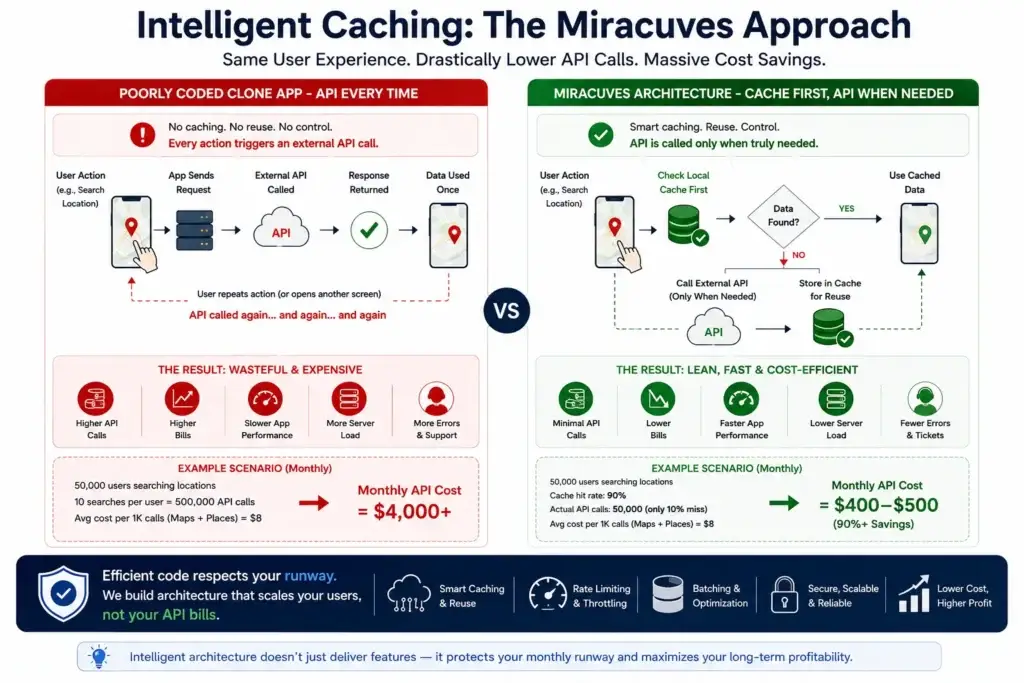
Caching is not just a performance technique. It is a capital-efficiency strategy.
When used correctly, caching allows an app to avoid paying repeatedly for the same information. If the platform already knows that a user’s saved address maps to certain coordinates, it should not ask an external API for the same answer again and again. If the app already calculated a common service zone, it should not repeat expensive checks unnecessarily. If an OTP was just sent, the app should not allow unlimited new message requests.
Miracuves focuses on building app foundations that respect a founder’s monthly runway, not just the launch deadline. A ready-made solution should help founders move faster, but it should also include the architectural discipline needed for real-world operations.
A lean API architecture usually includes:
- Server-side caching for repeated data
- Address and coordinate reuse
- Controlled map refresh logic
- Smart geofence checks
- Rate limits for expensive events
- OTP throttling and resend control
- Webhook-first payment status handling
- Background job queues for heavy workflows
- Admin dashboards for monitoring API-related activity
- Fallback logic when external services fail
- Clean separation between user actions and billable API events
This matters because software quality is not only visible in design. It is visible in your monthly bills.
A founder who saves money upfront but bleeds cash through avoidable API usage has not reduced risk. They have moved the risk into operations.
How a $4,000 Monthly API Tax Can Happen
The number does not come from one bad request. It usually comes from small inefficiencies repeated across many users and workflows.
Here is a simplified runway model.
| API Waste Source | What Happens in a Poorly Coded App | Why It Becomes Expensive |
|---|---|---|
| Repeated geocoding | Same address is converted multiple times | Every unnecessary request adds to usage |
| Reverse geocoding loops | Coordinates are repeatedly converted into readable addresses | High-frequency location workflows multiply cost |
| Excessive location tracking | Driver or provider app sends updates too often | Small intervals create large event volume |
| SMS resend abuse | OTP resend is not throttled properly | Each duplicate SMS can create a paid event |
| Payment polling | App repeatedly checks payment status | Unnecessary API calls and support confusion increase |
| Unfiltered search | External APIs are called before internal filtering | Paid APIs do work that the app database could handle first |
A $4,000 monthly leak can emerge when several of these issues happen together: high user activity, frequent location workflows, repeated SMS events, inefficient search, and weak caching.
The founder does not experience it as one obvious failure.
They experience it as a surprise invoice.
Why This Is a Business Engineering Problem, Not Just a Developer Problem
Non-technical buyers often ask the wrong question.
They ask:
“Does the app have Google Maps?”
A better question is:
“How does the app control Google Maps usage?”
They ask:
“Does it support OTP?”
A better question is:
“How does it prevent duplicate OTP cost?”
They ask:
“Does it integrate with payment gateways?”
A better question is:
“Does it use secure webhook-based transaction updates?”
They ask:
“Is the script affordable?”
A better question is:
“Will this architecture protect my monthly runway?”
This is the difference between software buying and business engineering.
A founder does not need to become a developer. But they do need to understand which technical decisions affect cash flow. Cheap code becomes expensive when it turns every user interaction into an unnecessary paid event.
What Founders Should Audit Before Buying Any Clone App
Before buying a clone app, founders should ask vendors architecture questions, not only feature questions.
Use this checklist before committing:
- Does the app cache geocoded addresses?
- Does it reuse saved coordinates?
- Does it throttle location updates?
- Does it limit OTP resend requests?
- Does it prevent duplicate SMS messages?
- Does it use payment gateway webhooks?
- Does the admin panel show transaction and notification logs?
- Does the app separate internal database checks from external API calls?
- Does it support rate limits for high-cost workflows?
- Does it allow API keys to be managed securely?
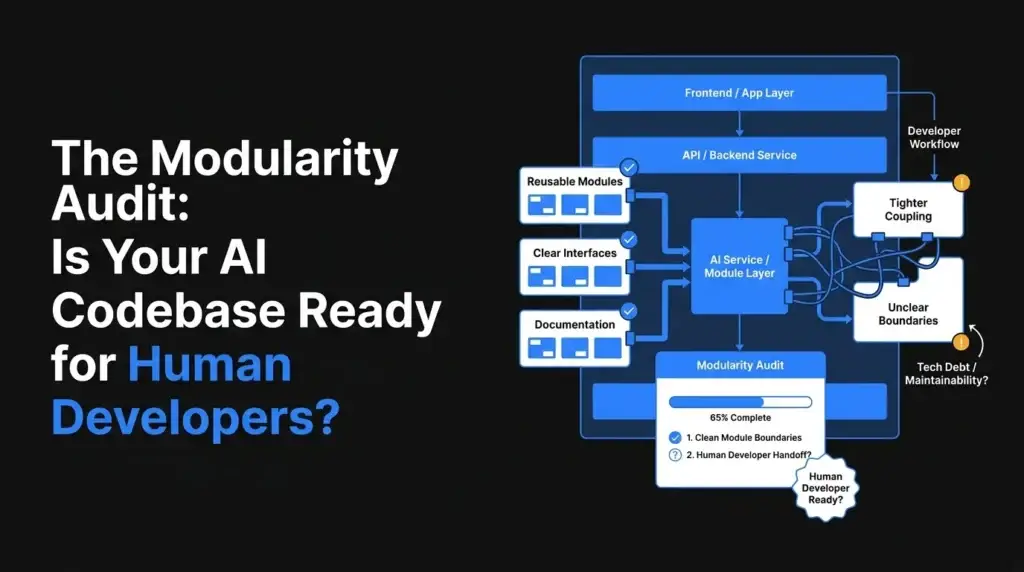
- Does it provide source-code access for future optimization?
- Does the vendor explain monthly operating cost risks clearly?
A vendor who cannot explain API consumption patterns may not understand your operating cost exposure.
This is especially important for founders building delivery, ride-hailing, courier, logistics, grocery, home services, marketplace, fintech, or creator platforms. These app categories rely heavily on external services, and recurring API bills can become part of the business model.
Ready-Made Does Not Mean Carelessly Built
There is nothing wrong with using a ready-made app foundation.
In fact, for many founders, it is the smarter path. Starting from zero can increase development time, delay market validation, and consume capital before the business model is proven. A ready-made solution can reduce launch friction and help founders focus on branding, operations, supply, demand, monetization, and customer acquisition.
The risk is not “ready-made.”
The risk is poorly engineered ready-made software.
Miracuves helps founders launch ready-made and white-label clone app solutions with source-code ownership, admin control, and faster deployment where applicable. The stronger decision is not always the most expensive custom build. It is the product foundation that balances launch speed, customization, operating efficiency, and long-term control.
For founders exploring broader app categories, the Miracuves solutions hub can help identify the right ready-made foundation:
For teams building location-heavy apps such as food delivery, taxi booking, grocery delivery, courier delivery, or on-demand services, the architecture should be reviewed through an API-efficiency lens before launch.
The Miracuves View: Protect the Founder’s Runway After Launch
A founder’s runway is not only spent during development.
It is spent every month through hosting, APIs, support, marketing, staff, refunds, customer acquisition, and maintenance. That is why the true cost of app development should include post-launch behavior.
Miracuves’ approach is built around practical execution:
- Launch faster where a ready-made solution fits
- Customize the product around the founder’s business model
- Provide source-code ownership where applicable
- Support admin control for operations
- Avoid unnecessary dependency on repeated developer intervention
- Think through API usage, external integrations, and cost exposure
- Build for monetization, not just screens
This is the difference between buying a script and building a product foundation.
Mistakes Founders Should Avoid
Judging software only by upfront price
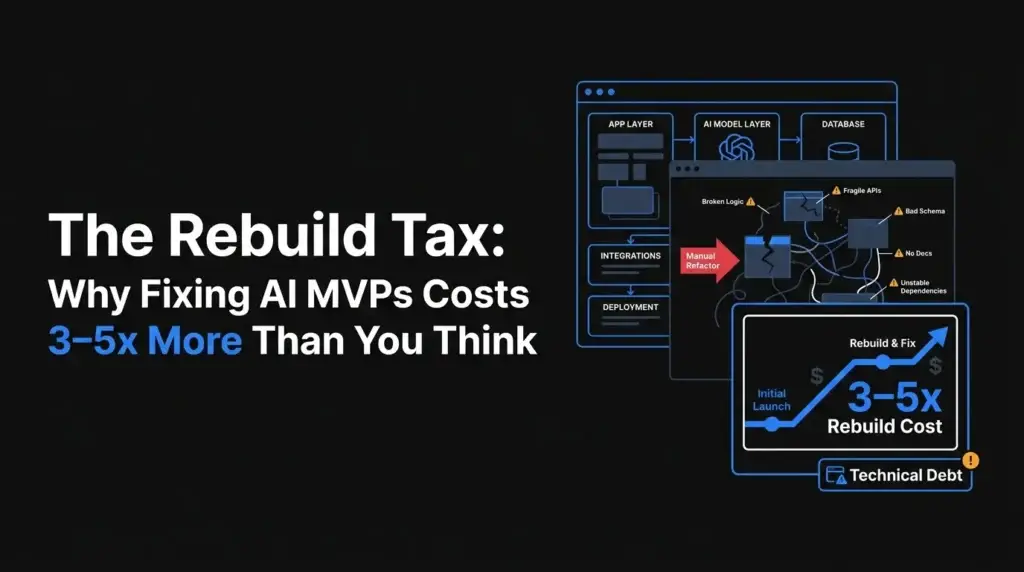
A low script price can hide long-term API waste, maintenance dependency, and refactoring costs after launch.
Ignoring API consumption patterns
Founders should ask how the app handles geocoding, SMS, payment status updates, notifications, and caching before buying.
Buying without source-code control
Without source-code access, founders may struggle to optimize API logic, improve workflows, or reduce recurring technical waste later.
Founder Decision Signals
Founder Decision Signals
Speed
A low-cost script may launch quickly, but weak architecture can slow you down after launch through bugs, API waste, and repeated fixes.
Cost
The real cost is not only the script price. Founders should measure monthly API usage, support load, refactoring needs, and operational waste.
Scalability
Apps with poor caching, unthrottled tracking, and repeated external calls become harder and more expensive to scale as usage grows.
Market Fit
A capital-efficient app foundation helps founders test demand without letting API bills consume the runway needed for marketing and operations.
Choose a low-cost script only if:
You are testing a very small internal concept, have technical resources to audit the code, and can afford to refactor before real users arrive.
Choose a better-engineered ready-made solution if:
You need a launch-ready product, want source-code ownership, care about admin control, and cannot afford monthly waste caused by inefficient APIs.
Choose custom development if:
Your product model is highly unique, your workflows are not covered by existing app patterns, and you have the capital and timeline for a deeper build.
For most bootstrapping founders, the real decision is not “clone script vs custom app.” It is “uncontrolled code vs capital-efficient architecture.”
Final Thoughts: The Real Cost of Software Is Not the Purchase Price
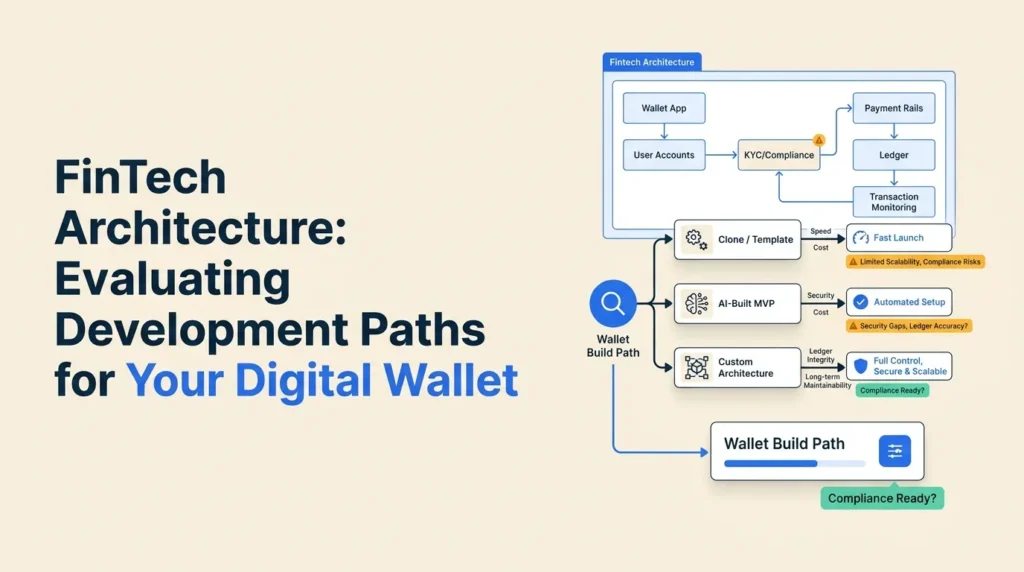
A $299 clone script can feel like a smart financial decision. But if the code creates unnecessary Google Maps calls, duplicate SMS messages, repeated payment checks, and poor caching patterns, the real cost appears later.
The hidden API tax is dangerous because it does not show up in the demo.
It shows up in monthly invoices.
For founders, the better question is not “How little can I pay today?” It is “Will this app protect my capital when users start using it?”
The strongest clone app foundation is not the one that simply looks complete. It is the one that launches fast, gives you control, supports your business model, and avoids turning normal user behavior into unnecessary recurring cost.
Miracuves helps founders build ready-made and white-label app solutions that are designed for faster launch, source-code ownership, admin control, and practical business scalability.
FAQs
Why do cheap clone scripts become expensive after launch?
Cheap clone scripts can become expensive when they use inefficient backend logic, repeated API calls, weak caching, poor payment handling, and duplicate SMS workflows. The upfront software price may be low, but monthly operating costs can rise when the app wastes paid services like Maps, SMS, payment gateways, and notifications.
What is the hidden API tax in clone app development?
The hidden API tax is the avoidable recurring cost created when an app makes unnecessary external API calls. This can include repeated geocoding, duplicate OTP messages, excessive location updates, repeated payment status checks, and unoptimized search requests.
Can Google Maps API costs increase because of bad app code?
Yes. Since Google Maps Platform pricing is usage-based by SKU and billable event, inefficient app behavior can increase billable usage. Poorly coded apps may call Maps services repeatedly instead of caching coordinates, filtering internally, or reusing saved location data.
How can Twilio SMS costs increase in a poorly coded app?
Twilio SMS pricing depends on usage, destination, message type, number type, and related charges. If an app allows repeated OTP resends, duplicate notifications, or weak abuse controls, SMS usage can increase faster than expected.
How does caching reduce app operating costs?
Caching reduces operating costs by storing frequently used information so the app does not need to request the same data repeatedly from paid APIs. This is useful for saved addresses, coordinates, service zones, route metadata, user sessions, and repeated lookup workflows.
Is every low-cost clone script bad?
No. A low-cost product is not automatically bad. The issue is whether the code is production-ready, optimized, secure, and maintainable. Founders should evaluate API logic, caching, admin controls, source-code access, and vendor support before buying.
What should non-technical founders ask before buying a clone app?
They should ask how the app handles API calls, geocoding, OTP resends, payment webhooks, caching, rate limits, notification duplication, admin logs, and source-code ownership. These questions reveal whether the app is designed for real operating efficiency.
How does Miracuves help reduce long-term clone app cost risk?
Miracuves helps founders build ready-made and white-label app solutions with source code, admin dashboards, branded design, and faster launch support. The goal is to help founders avoid starting from zero while still building on a more practical, scalable, and business-aware product foundation.