


Key Takeaways
- A boat rental app business model connects boat owners, renters, captains, and operators through a digital booking marketplace.
- Main revenue streams include booking commissions, service fees, featured listings, subscriptions, insurance add-ons, cancellation fees, and partner services.
- Core features include boat listings, availability calendar, location search, secure payments, owner dashboard, renter verification, reviews, and booking management.
- The model works best when the platform solves trust, safety, pricing, availability, payment, and compliance challenges together.
- Long-term success depends on verified listings, smooth booking, secure payouts, strong support, local boating compliance, and repeat customer demand.
Revenue Model Signals
- Commission-based revenue allows the platform to earn a percentage from every completed boat rental booking.
- Owner subscriptions can create recurring revenue by charging boat owners for premium tools, visibility, analytics, or higher listing limits.
- Featured listings and promoted placements help owners get more visibility while creating advertising-style revenue for the platform.
- Add-ons such as captain services, fuel packages, insurance, fishing gear, water sports equipment, and cleaning fees can increase average booking value.
- Development complexity changes based on booking logic, payment flow, location search, owner verification, insurance handling, admin controls, and third-party integrations.
Real Insights
- A boat rental app is not just a booking platform; it is a trust-based marketplace where safety, availability, payments, and liability matter together.
- The strongest platforms make renting easy for customers while helping boat owners manage bookings, pricing, rules, and payouts efficiently.
- Founders should choose a clear launch market because boating rules, seasonality, pricing, and customer demand vary heavily by location.
- Admin automation is important for handling listing approvals, booking disputes, refunds, cancellations, verification, and support workflows.
- The best boat rental app business model combines marketplace commissions, premium owner tools, add-on services, verified listings, and location-based growth strategy.
In 2026, building a digital business isn’t just about selling products—it’s about enabling experiences. That’s exactly what a boat rental app does. Instead of owning a fleet, you build the bridge between people who have boats and people who want to rent them. Whether it’s paddleboarding for a few hours or hosting a birthday bash on a yacht, there’s a rising tide of users hungry for water-based experiences.
The best part? You don’t need to own a single boat. Just like Airbnb didn’t start by buying apartments, or Uber by buying cars, you can create value by connecting supply with demand. But if you want to create a business—not just an app—you need a clear, scalable model that works.
This article breaks down exactly how the boat rental app business model works. We’ll cover platform mechanics, revenue logic, user roles, operational layers, and monetization strategies. Whether you’re building your MVP or preparing for scale, this is your ultimate roadmap.
What Is a Boat Rental App?

A boat rental app is a peer-to-peer marketplace that connects boat owners (supply) with individuals or businesses looking to rent boats (demand). The platform handles:
- Listings and discovery
- Availability and booking
- Payments and receipts
- Communication and logistics
- Ratings and reviews
It works like a two-sided marketplace, with your app sitting in the middle as the facilitator.
Core Components of the Business Model
1. Value Proposition
Your app offers convenience, choice, and security for both sides:
- For renters: Easy access to verified boats, clear pricing, location filters, and optional add-ons.
- For boat owners: A hassle-free way to monetize idle boats with tools to manage listings and bookings.
You’re not selling boats—you’re selling access, freedom, and unforgettable experiences.
2. Customer Segments
- Individual Travelers: Tourists, adventurers, digital nomads.
- Event Organizers: Weddings, birthdays, corporate retreats.
- Local Residents: Short recreational use.
- Boat Owners: Individuals or companies monetizing vessels.
- Resorts & Hotels: Integration or partnership opportunities.
3. Platform Structure
A typical boat rental app operates in three layers:
- Frontend (User Layer): Mobile/web app interface for renters and hosts.
- Admin Layer: Controls, analytics, dispute resolution, and compliance.
- Backend (Core Engine): Booking engine, payment processing, scheduling, APIs.
Your app is the infrastructure—not the service provider.
How the Business Model Works (Step by Step)
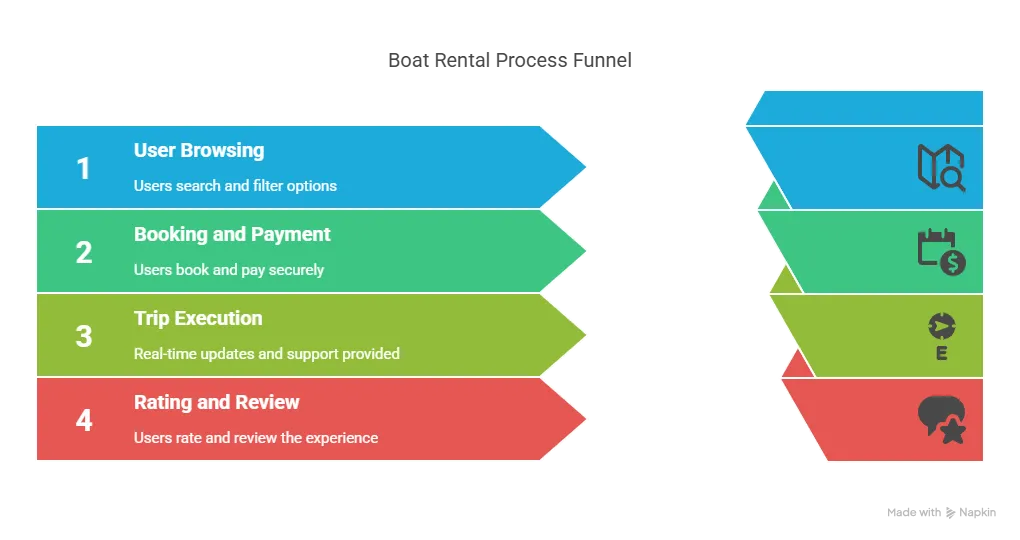
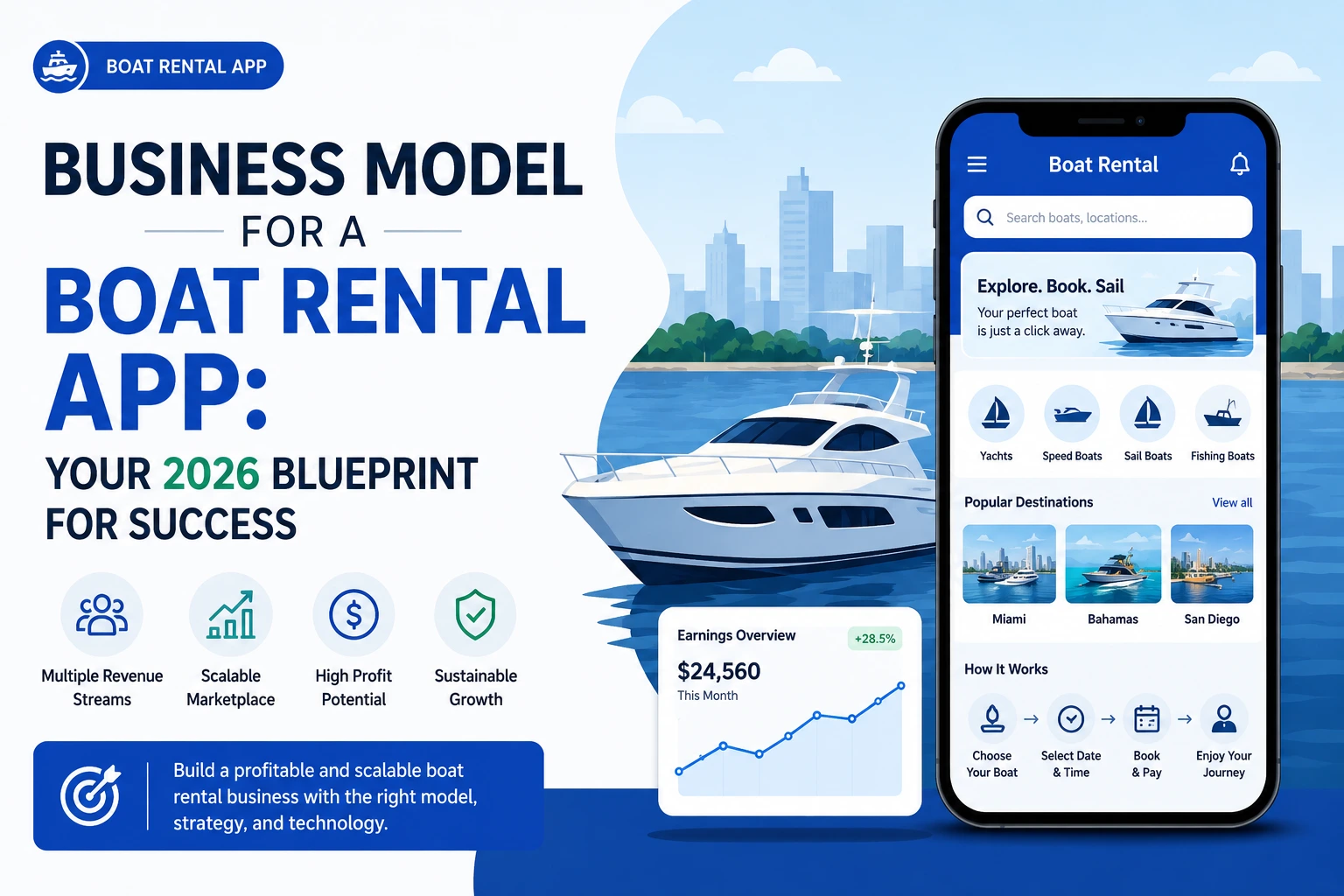
- Boat Owner Lists Vessel
Upload details, pricing, photos, location, and availability. - User Browses and Books
Filters by destination, type (sailboat, speedboat, jet ski), price, captain options, etc. - Payment Processed In-App
Full or partial payment collected securely. Platform takes a cut (commission). - Confirmation and Trip Execution
Real-time updates, navigation help, messaging, and support. - Rating and Review
Both sides rate each other. The platform improves with every transaction.
Revenue Streams: How You Make Money
| Revenue Source | Description |
| Commission Fees | Percentage from each completed booking (10–25%) |
| Listing Upgrades | Paid visibility boost for hosts in search results |
| Add-On Services | Insurance, meals, crew, equipment rentals |
| User Subscriptions | VIP features: discounts, concierge support, loyalty points |
| Corporate Packages | Bulk bookings, white-label access for travel brands |
| API Licensing | Allow others to use your tech for localized versions |
Read more : Build a GetMyBoat Clone in 2026: Boat Rental App Guide
Cost Structure
Every business model needs to factor in its operating costs. Here’s what you’ll spend on:
- App Development and Maintenance
- Payment Gateway Fees
- Insurance and Legal Support
- Marketing and User Acquisition
- Customer Support
- Server and Infrastructure Hosting
As you scale, your costs will shift from fixed (dev and launch) to variable (support, marketing, hosting).
Key Partners
Partnerships are crucial in making your app successful:
- Boat owners/fleets: Your supply-side anchors.
- Payment processors: Stripe, Razorpay, etc.
- Marine insurance providers: For safety and liability coverage.
- Local tourism boards: For integrations and visibility.
- Event management firms: To drive bulk use-cases.
Growth Levers and Marketing Channels
- SEO and Content Marketing: Rank for terms like “boat rental in Goa” or “Dubai yacht party.”
- Referral Programs: Incentivize users to invite friends or hosts.
- Influencer Collaborations: Lifestyle vloggers, travel bloggers.
- Hotel/Resort Integrations: Offer your service as part of their booking journey.
- Email Campaigns: Promote seasonal offers, new locations, and featured listings.
Pros and Cons of the Business Model
| Pros | Cons |
| Low inventory cost (no boat ownership) | Regulatory complexity varies by region |
| High market demand in tourist areas | Dependence on host quality and compliance |
| Flexible monetization options | Seasonal usage patterns in some locations |
| Scalable across geographies | Platform trust takes time to build |
Real-World Examples
- GetMyBoat: Global leader with 140,000+ boats. Uses P2P and B2B.
- Boatsetter: Focused on US market with verified captains.
- Sailo: Combines rentals with tailored packages for events.
Your goal isn’t to copy, but to innovate. Find gaps in pricing, UX, niche verticals, or regional coverage.
Conclusion
A boat rental app isn’t just a cool travel product—it’s a serious business with real potential. The model works because it solves real problems: idle boats, hard-to-find rentals, clunky booking processes, and lack of trust. Your job is to streamline all that into a beautiful, secure platform that users love.
Whether you go all-in on luxury yachts or focus on budget-friendly experiences in coastal towns, the opportunity is massive. Choose a business model that reflects your target market, keep the revenue streams diversified, and build something that truly floats.
Ready to build your own boat rental platform? Contact today and let’s turn your app idea into a scalable, revenue-generating business.
FAQs
How does a boat rental app generate revenue?
Primarily through commissions, subscriptions, premium listings, and add-ons like insurance and trip extras.
Is this business model scalable?
Yes. Once your platform works in one city, you can replicate it in others with similar demand.
Do I need to own boats to start?
No. The platform acts as a middleman—boat owners list, and renters book.
Is seasonality a problem?
It can be in some markets, but you can offset it by operating in multiple hemispheres or adding off-season activities.
What if there are regulatory hurdles?
Start in boat-friendly cities with low restrictions and scale once your model matures.
Can I run this business remotely?
Yes. With the right partners, tech stack, and support model, you can operate this business from anywhere.