


Key Takeaways
What You’ll Learn
- Modern service booking apps require smart filters and fast workflows to reduce user friction and improve conversions.
- Time-slot management is critical for showing availability, rescheduling, and avoiding booking conflicts.
- Location-based matching improves user experience by connecting customers with nearby service providers instantly.
- Detailed ratings and review filters help users make confident decisions beyond simple star ratings.
- Category and price-based filters directly impact how quickly users find the right service.
- Strong admin tools are essential for managing bookings, providers, payments, and platform operations efficiently.
Stats That Matter
- Poor UX, weak filters, and slow loading are highlighted as major reasons why booking apps fail.
- Category filters, attribute filters, and pricing filters are key drivers of user engagement.
- Centralized dashboards are required for tracking bookings, payments, and cancellations.
- Provider management systems help control onboarding, availability, and performance.
- Real-time notifications improve conversions by keeping users informed instantly.
- Flexible monetization models like subscriptions and booking fees support long-term revenue growth.
Real Insights
- Filters are not just UI elements — they directly influence conversion and retention.
- User retention depends on smooth micro-experiences across booking, search, and payments.
- Backend control is as important as frontend experience for scaling operations.
- Operational simplicity helps founders scale faster without internal complexity.
- Successful booking apps combine speed, trust, and discoverability.
- The best platforms focus on reducing friction at every step of the booking journey.
Ever tried to book a spa session and ended up rage-quitting the app halfway through? Been there, tapped that. Whether you’re a founder planning your next platform or a digital business owner trying to streamline chaos into clicks, booking service experiences shouldn’t feel like assembling IKEA furniture — blindfolded.
Here’s the truth: convenience is currency. In the TikTok-scroll generation, your app has maybe 3 seconds to impress — or get uninstalled. That’s why the future of service booking is all about intuitive features, smart filters, and tools that actually help founders scale without losing sleep or sanity.
In this post, we’re going deep — not into “corporate brochure” fluff, but into the real-world anatomy of a winning booking app. From the under-the-hood tools that power retention to UI tweaks that turn users into brand evangelists, this is your ultimate walkthrough. And if you’re wondering who’s building founder-friendly clones that don’t suck? Miracuves is already on it.
Why the Service Booking Experience Is Broken (and Ripe for Disruption)
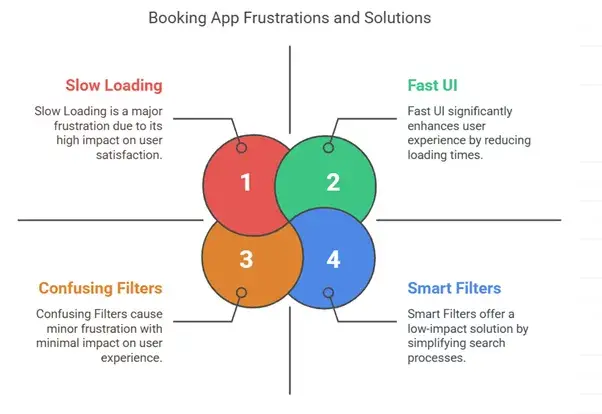
Let’s be honest: most service booking apps today feel like relics from the dial-up era. Long load times. Filters that filter nothing. UX so clunky you’d think it was designed as a puzzle game.
The Problem
- Fragmented UX: Users bounce between service categories without a unified flow.
- Poor personalization: Irrelevant results frustrate users and drain ad budgets.
- Lack of retention hooks: No incentives to rebook or stay loyal.
- Operational black holes: Founders can’t see what’s really working — or leaking.
The Core Engine: Features That Make or Break Service Booking Apps
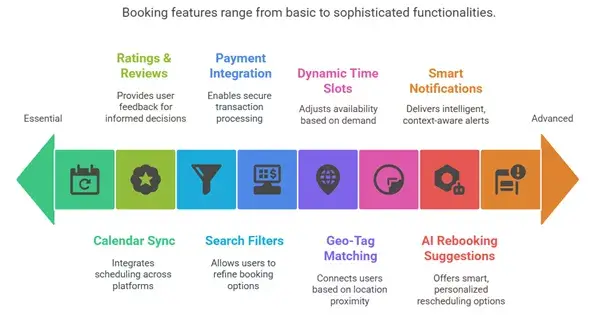
Whether you’re building the next UrbanClap or a localized handyman service, you need more than a calendar and a checkout button. Here’s the must-have menu:
Real-Time Availability Sync
No one likes ghost appointments. Syncing real-time calendars across providers avoids double-booking and builds trust.
Dynamic Time Slot Management
Offer peak-hour pricing, instant rescheduling, and cancellation buffers. Let users see what’s actually available, not what was.
Location-Aware Matching
Geo-tagging ensures users get the nearest, fastest option. UberEats does it for food — why not for plumbers?
Built-In Ratings & Reviews
Not just stars — think deep-dive feedback. Let users filter based on “punctuality,” “cleanliness,” or “value for money.”
Read More : Try the Future of Local Services Free
Filters That Actually Filter (and Convert!)
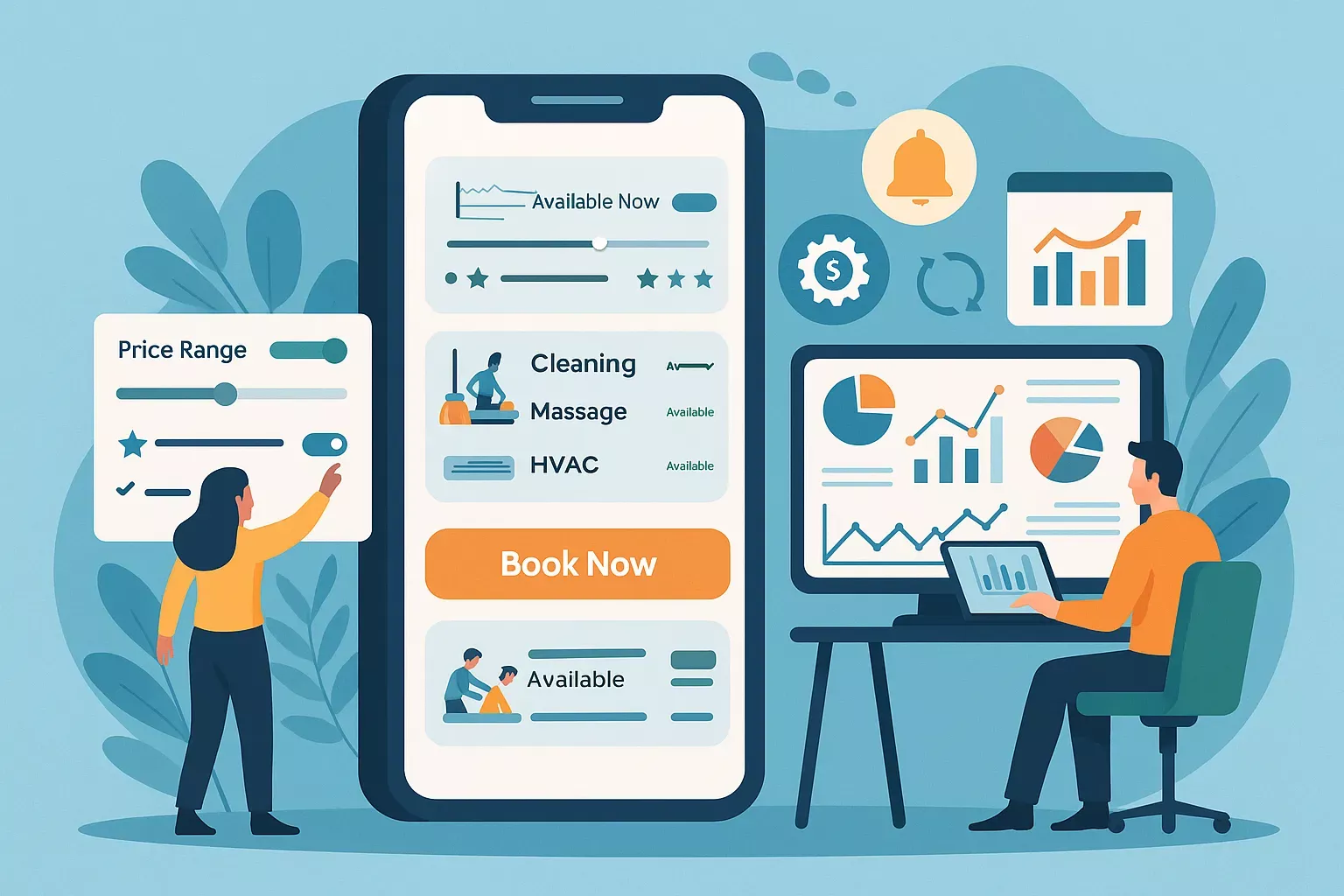
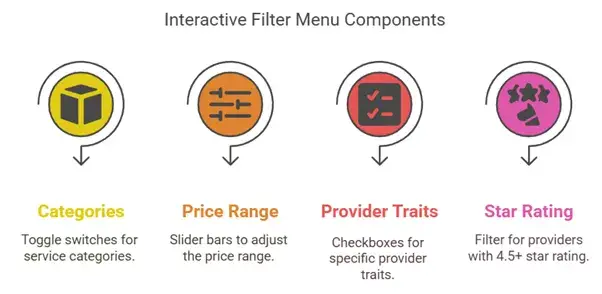
Filters are either your UX superpower or your app’s Achilles’ heel. If users can’t find what they need in under 5 taps, they’re gone.
Category-Based Filters
Let users filter services by categories (e.g., Cleaning, Salon, Fitness). This is UX 101 — skip it and suffer the churn.
Attribute Filters
Allow refinement by “Ratings 4.5+”, “Available Now”, “Eco-Friendly”, or even “Pet-Friendly”. Bonus: These boost niche loyalty.
Price Range & Packages
Bundled pricing is your friend. Show savings, time estimates, and package deals in one tap.
Founder-Friendly Tools Behind the Curtain
Here’s the part that really matters when you’re not just using the app — you’re running the whole operation.
Centralized Dashboard for Admins
Track bookings, user activity, cancellations, payments — all from one visual panel. Think of it as Google Analytics for your app’s soul.
Provider Management Suite
Onboard, verify, and manage service providers with rating history, availability rules, and performance tracking.
Real-Time Notifications & Alerts
Instant updates for users and providers — because nothing kills conversions like silence after a click.
Customizable Monetization Models
Whether you charge per booking, via subscriptions, or freemium — your backend should support pivots without dev meltdowns.
The Hidden Retention Flywheel: Booking Apps That Keep Users Coming Back
Retention isn’t built on one feature — it’s the result of compounding micro-moments.
One-Tap Rebooking
Let users rebook past services instantly. Add a “Favorite Providers” option. Loyalty lives here.
Smart Reminders & Nudges
Automated nudges like “It’s been 30 days since your last haircut” outperform generic email blasts by 3x.
Loyalty Programs & Gamification
Give points. Offer credits. Make users want to come back. Think: ClassPass meets Duolingo.
Monetization: Because Great UX Alone Won’t Pay Your Bills
Let’s talk revenue — because VC funding can’t be your long-term strategy.
Commission per Booking
Simple. Scalable. Still the default model for many.
Subscription Plans
For users who book regularly or providers who want higher visibility.
Featured Listings
Upsell to providers: “Get seen first, get booked faster.”
Onboarding That Doesn’t Scare Users Off
First impressions are your only impressions.
Guided User Flows
Use visual prompts, tooltips, and skip-less walkthroughs. Make onboarding feel like discovery, not a chore.
Instant Booking Without Login
Let users explore before committing. Reduce friction. Increase love.
Conclusion
Service booking apps are no longer a novelty — they’re a necessity. In an age of hyper-personalized, on-demand experiences, your users expect fast filters, intelligent features, and tools that make their lives easier (and your business scalable). As founders, you don’t need to reinvent the wheel — you need to grease it, optimize it, and launch it faster.
Trends like AI-based scheduling, voice search, and hyper-local targeting are shaping the next frontier of service apps. The smart play? Build on a foundation that’s already proven.
At Miracuves, we help innovators launch high-performance app clones that are fast, scalable, and monetization-ready. Ready to turn your idea into reality? Let’s build together.
FAQs
1. What’s the fastest way to launch a service booking app?
Using a pre-built, customizable clone from a trusted platform like Miracuves can reduce development time by 70%.
2. How can I make my booking app stand out?
Focus on intuitive filters, real-time availability, and post-booking retention features like rebooking and loyalty perks.
3. Do I need a separate app for providers?
Not always. Many apps today use a unified app with separate user views or access levels — easier to manage and scale.
4. Can I monetize from day one?
Absolutely. With commission models, subscriptions, and provider upsells, you can start generating revenue from your very first user.
5. What tech stack should I consider?
Go for scalable, mobile-first frameworks with APIs for location, payments, and real-time notifications — React Native, Firebase, Node.js, etc.