


Key Takeaways
What You’ll Learn
- Rover earns through a multi-stream revenue model built around booking commissions, service fees, premium visibility, and platform-based pet care monetization.
- The main revenue engine usually comes from commissions on completed bookings, where the platform takes a share from pet care transactions between owners and service providers.
- Its monetization model works because it organizes a trust-based pet care market into a structured digital platform with convenience, transparency, and repeat usage.
- Additional revenue streams can include service fees, premium listings, promotional visibility, and other partner-focused monetization layers.
- The strength of the model depends on repeat demand, caregiver quality, customer trust, and service consistency across the platform.
Stats That Matter
- Commission-based monetization drives the core business because every successful pet care booking creates direct platform revenue.
- Rover’s model benefits from recurring pet care needs such as dog walking, boarding, sitting, daycare, and repeat service bookings.
- Verified caregiver profiles, app-based booking, and secure payments improve customer trust and increase platform conversion.
- Revenue grows more sustainably when the platform balances pet owner demand with caregiver supply across each market.
- A pet care marketplace becomes stronger when its revenue is diversified beyond commissions through premium exposure, add-on monetization, and service-related upsell opportunities.
Real Insights
- Rover’s revenue model works because it monetizes trust and convenience, not just bookings, in a market where reliability matters deeply.
- Commission alone is not always enough for long-term scale, which is why additional revenue channels make the business model more resilient.
- High caregiver quality directly supports revenue growth because satisfied pet owners are more likely to return and rebook services.
- The more efficiently the platform manages bookings, communication, and trust signals, the stronger its retention and monetization can become.
- For entrepreneurs, the biggest lesson is that a successful Rover-style platform earns best when it combines strong monetization with reliable pet care execution and repeat customer engagement.
Rover has revolutionized pet care by turning everyday animal lovers into trusted service providers. From dog walking and pet sitting to drop-in visits and boarding, Rover acts as the go-to marketplace for pet parents needing help. But behind its furry charm lies a sophisticated revenue engine that startup founders and digital agencies should pay close attention to.
With more people treating pets like family and seeking reliable, app-based services, Rover tapped into a massive market opportunity. Understanding the revenue model of Rover is more than a case study—it’s a blueprint for monetizing peer-to-peer marketplaces in the pet care or local service sector. Whether you’re launching a Rover clone or planning a vertical-specific solution, there’s a lot to learn from how Rover earns money and sustains its platform growth.
What Rover Does and Its Market Impact
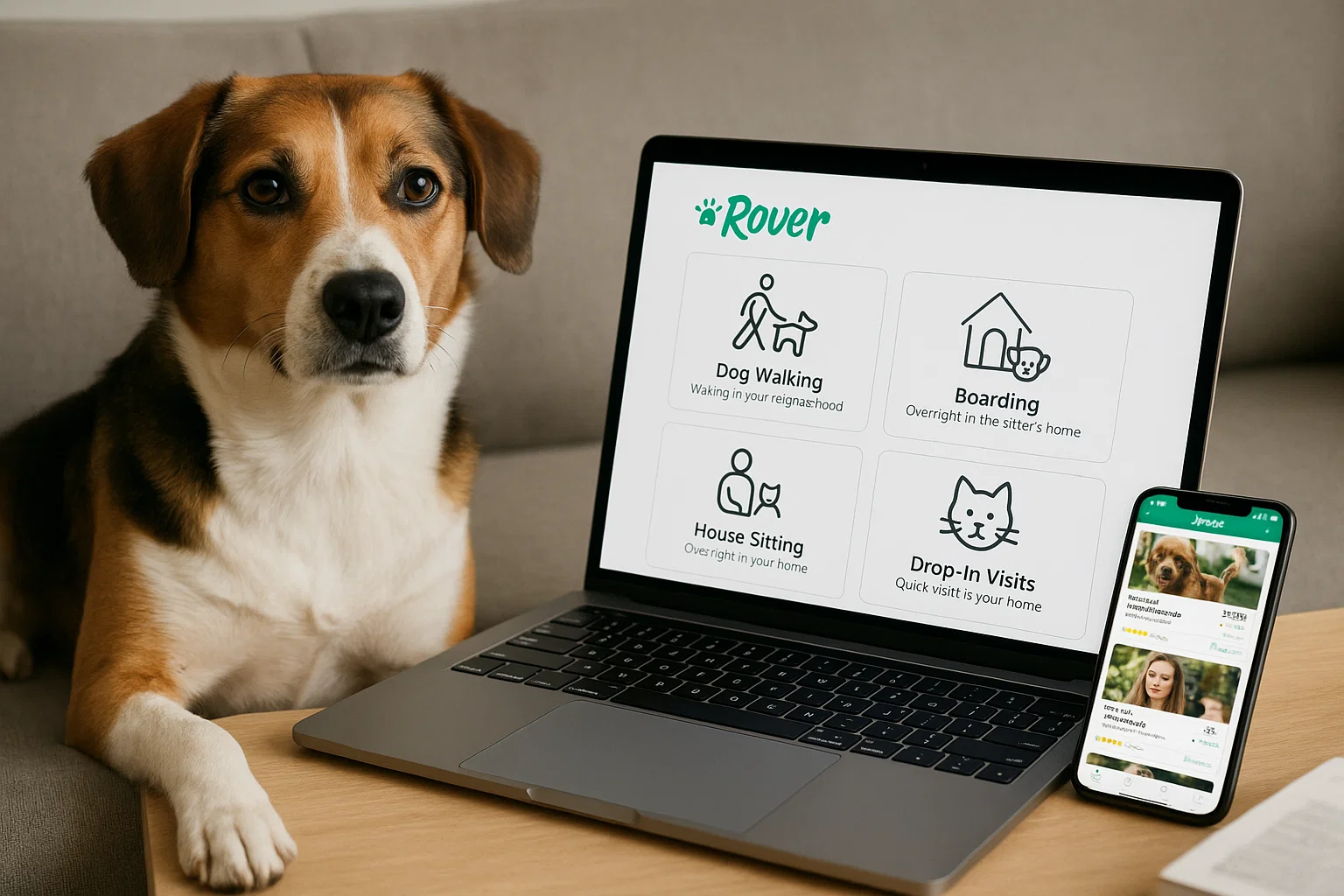
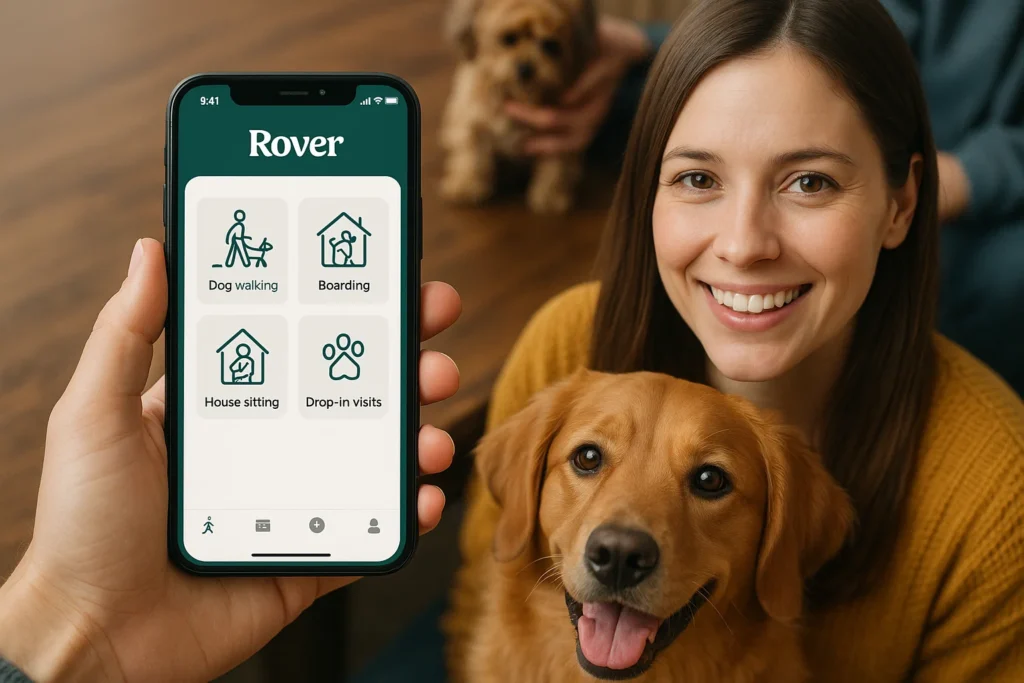
Rover is the largest online marketplace for pet care services in North America. It connects pet owners with independent pet service providers who offer services like dog walking, pet sitting, overnight boarding, grooming, and drop-in visits. Think of it as Airbnb—but for pets.
The platform’s success lies in its ability to streamline booking, communication, payments, and reviews within one easy-to-use app. With features like GPS-tracked walks, photo updates, and secure payments, Rover offers convenience and trust—two non-negotiables for pet owners.
Key Market Stats:
- Valuation: Estimated at over $1.3 billion after going public via SPAC in 2021
- Annual Revenue: Exceeded $180 million in recent years
- Active Users: Over 2 million pet parents and 500,000 service providers
- Market Opportunity: Global pet care market projected to reach $358 billion by 2027
Rover’s impact has been both financial and emotional—it’s made pet care accessible, dependable, and tech-enabled.
Rover’s traction isn’t by chance—it’s built on trust with features like sitter background checks, secure payments, and a review system that users rely on. Discover exactly how this trust-first approach fuels growth in the Rover marketing strategy.
Why Studying Its Revenue Model Matters
For founders building two-sided marketplaces or service platforms, Rover is a masterclass in monetization. It has figured out how to:
- Earn recurring revenue without owning any service infrastructure
- Build trust between strangers using app features and policy-backed guarantees
- Scale locally driven services using centralized technology
Understanding Rover’s revenue model reveals what works (and what to avoid) when designing a scalable pet care or on-demand platform.
Now, let’s break down how Rover actually makes money.
How Rover Makes Money
Rover monetizes its platform through multiple income sources, each contributing to sustainable and recurring revenue:
- Service Commission Fees: Rover takes a percentage of every booking made through its platform.
- Booking Fees from Pet Owners: Customers pay a small fee per transaction in addition to the sitter’s rate.
- Premium Placement for Pet Sitters: Service providers can pay to rank higher in search results.
- Rover Guarantee Fee: A protection plan for pet care mishaps, partly funded by user charges.
- Affiliate Marketing: Occasional income from promoting pet-related products or insurance.
These streams work together to create a profitable, scalable model—without Rover providing any pet care themselves.
Discover how Rover earns through commissions and premium services in the business model of Rover, and see exactly how the Rover app works to connect pet owners with trusted sitters.
Detailed Breakdown of Revenue Channels
To truly understand Rover’s monetization strategy, we need to dig into each revenue stream and how it contributes to the company’s financial engine. Here’s how each one works:
Service Commission Fees
Rover charges pet care providers a commission on every booking—typically ranging from 15% to 25% depending on factors like experience, service type, and tenure on the platform. This fee is deducted before the provider receives their payout.
- Who pays: The pet service provider
- Why it scales: More bookings = more revenue without additional operational cost
- Example: A $50 dog-sitting service would net Rover $7.50 to $12.50 per booking
This is the primary revenue stream, and it’s highly sustainable due to the growing number of active sitters and repeat customers.
Booking Fees from Pet Owners
Rover also adds a service fee to the pet owner’s bill—typically around 5% to 7%, with a minimum threshold per booking.
- Who pays: The pet owner
- Why it scales: Adds incremental revenue without affecting the provider’s payout
- Example: A $60 service may come with an additional $3–$4 fee to the customer
This small, transparent fee supports platform maintenance, security, and customer support.
Premium Placement for Pet Sitters
Sitters and walkers can choose to promote their listings by paying for premium placement in search results—essentially a paid boost model.
- Who pays: Pet service providers
- Why it scales: Like Google Ads for pet sitters—more visibility = more bookings
- Example: A sitter may pay $10–$30/month for local lead prioritization
This creates a second monetization layer for serious professionals looking to grow their pet care business.
Rover Guarantee and Protection Fee
Rover includes a protection policy (the Rover Guarantee) that helps cover emergencies like pet injuries or sitter cancellations. While the guarantee is marketed as “included,” it is partially funded by the fees built into the booking process.
- Who pays: Mostly pet owners (indirectly), partially subsidized by commission
- Why it scales: Provides peace of mind, which increases platform trust and usage
- Example: If a mishap occurs, Rover may reimburse costs—backed by user-funded guarantees
It also serves as a competitive differentiator in the pet care app space.
Affiliate & Partner Marketing
Though not a primary stream, Rover occasionally partners with pet product brands, insurance companies, or wellness apps to promote offers within the app or email newsletters.
- Who pays: Third-party advertisers or affiliate programs
- Why it scales: Low-effort, passive revenue from a pet-loving audience
- Example: Recommending a pet insurance provider with a referral link for commissions
This revenue stream complements core monetization by leveraging Rover’s large and targeted user base.
Building a pet care platform starts with a solid plan, and our guide to developing an app like Rover shows you every step. To turn that plan into reality, learn how to hire the best Rover clone developer and bring your idea to life with expert support.
Optional Chart: Rover Revenue Channels Breakdown
| Revenue Channel | Who Pays | Est. Contribution | Scales With |
|---|---|---|---|
| Commission Fees | Pet Providers | ~60% | Booking Volume |
| Booking Fees | Pet Owners | ~25% | User Transactions |
| Premium Listings | Providers | ~5–10% | Provider Demand |
| Rover Guarantee (Indirect) | Users | ~5% | Trust Factor |
| Affiliate Marketing | Partners | <5% | Audience Size |
Why This Revenue Model Works in 2026
Rover’s revenue model isn’t just surviving—it’s thriving in 2026 thanks to several macro trends and evolving consumer behaviors. Let’s break down why it continues to be both profitable and scalable.
Rise of the Pet Economy
Globally, pet ownership is at an all-time high. Post-pandemic habits solidified pets as family members, not just companions. Pet parents are more willing to spend on convenience, wellness, and premium services.
- Pet care spending in the U.S. alone is expected to exceed $150 billion in 2026
- 70% of millennials say they’d rather cut back on dining out than compromise on pet care
This shift fuels demand for platforms like Rover that offer quality, flexible services backed by tech.
Trust-Driven Digital Platforms
Consumers now expect transparency, convenience, and security in service apps. Rover’s integration of:
- Verified reviews
- GPS tracking
- In-app messaging
- Secure payments
- Emergency guarantees
…makes it a trusted platform—helping convert one-time users into loyal customers.
Peer-to-Peer Marketplace Resilience
Unlike inventory-heavy startups, Rover doesn’t manage kennels or hire dog walkers—it enables peer-to-peer interactions. This asset-light model remains profitable in uncertain economies because:
- Overhead is low
- Providers bear operational costs
- Revenue scales with usage, not infrastructure
In 2026, platforms that empower individuals and reduce operating liabilities have a clear edge.
AI and Dynamic Pricing
Rover has started exploring dynamic pricing suggestions based on location, demand, and historical data. This increases average order value and helps providers earn more—resulting in higher commissions for Rover.
AI also helps match sitters with ideal clients, reduce cancellations, and boost customer satisfaction—all of which support recurring revenue.
Can Startups Replicate Rover’s Revenue Model?
Absolutely—but with caution. While the revenue model of Rover is proven and profitable, replicating it from scratch is no easy feat. Startups face several challenges when trying to build a peer-to-peer pet care marketplace like Rover:
Key Challenges for Startups
- Building Trust Infrastructure: Verification systems, reviews, guarantees, and insurance all require complex backend support.
- Developing Matching Algorithms: Dynamic provider search, availability syncing, and pricing suggestions need smart technology.
- Handling Secure Payments: You need robust, compliant systems to manage multi-party payments and commissions.
- Time-to-Market Pressure: Creating a full-stack platform from zero can take 12–18 months .
These obstacles can drain your resources long before you start generating revenue.
Global Cost Factors & Pricing Breakdown for a Rover-Like App
The technology stack behind your platform plays a key role in shaping development cost, launch speed, and scalability. Some businesses aim for a quick and cost-effective launch to validate their idea, while others require a more advanced architecture to handle real-time bookings, location tracking, and large-scale service operations.
Here is a simple comparison of common global development approaches for a Rover-like pet care and service marketplace platform:
PHP / Laravel is best for quick and affordable launches, Node.js / Python for real-time service operations, and Go microservices for large-scale platforms.
Rover Clone App Development Cost & Miracuves Pricing Breakdown
Miracuves Pricing for a Rover-Like Pet Care Services App developed in PHP/Laravel with Flutter Apps for $2,499 USD (One-Time Price) in just 6 days
Get a fully developed, deployment-ready platform modeled after Rover. Built on a stable PHP/MySQL backend with Flutter mobile apps, this complete package gives you everything needed to launch and scale a modern pet care marketplace with efficiency, flexibility, and real-time service management.
- Core Service Flow: Pet owner onboarding, sitter registration, service listings, booking management, and scheduling workflows.
- Built-in Operations: Pricing logic, commission setup, booking management, secure communication, and payout handling.
- Management Hub: Centralized admin backend for users, service providers, bookings, categories, and overall platform operations.
- Launch-Ready Setup: Fully prepared for branding, deployment, API setup, and app store launch support.
Why is it so affordable?
Most pet care marketplaces like Rover require complex booking systems, provider verification flows, messaging systems, and payment handling. Building this from scratch demands significant development time, technical resources, and operational planning, which increases overall cost. Miracuves simplifies this by offering a ready-made Rover-style platform that already includes these essential business workflows.
We took a smarter, more practical approach:
- You Aren’t Paying for Ground-Up Development: Our Rover-style engine is already developed, tested, and structured, helping you avoid months of development and high engineering costs.
- The Strength of PHP / MySQL with Flutter Apps: This stack is reliable, scalable, and cost-effective, making long-term maintenance and feature expansion easier.
- Fast Launch Advantage: Instead of waiting months to build a service marketplace, you can launch a fully branded pet care platform in just 6 days with all core workflows ready.
You get a complete, business-ready pet services platform without the inflated cost of custom marketplace development.
Note: This cost includes the solution, re-branding, deployment support, source code, backend/API setup, admin panel configuration, and publishing support for Google Play Store and Apple App Store.
Launching a pet care platform is easier when you start with the best Rover clone scripts in 2026, see why startups prefer our Rover clone over custom development, and plan smart with a clear Rover app cost estimate from MVP to full-scale.
Conclusion
Rover’s revenue model is a textbook example of how marketplaces can earn consistent income by enabling others to earn. With commissions, booking fees, premium placement, and trust-backed guarantees, Rover has built a monetization system that’s both user-centric and business-smart.
The good news? This model isn’t exclusive to Rover. With the right technology partner, you can replicate—and even improve—this approach in your local market or niche vertical.
FAQs
How does Rover generate revenue?
Rover makes money primarily through commissions on bookings, service fees from pet owners, premium listing options for sitters, and occasional affiliate partnerships.
Is Rover profitable in 2026?
Rover has shown steady revenue growth with improving margins, benefiting from the rising pet economy and low overhead of its peer-to-peer model.
What are the main income sources for Rover?
Rover’s main income sources include commission fees, booking fees, paid provider promotions, Rover Guarantee fees, and partner referrals.
Can startups use the same revenue model as Rover?
Yes, startups can replicate Rover’s model, but it requires robust tech infrastructure, trust systems, and scalable monetization logic—something clone solutions like Miracuves can deliver.
Does Miracuves offer Rover clone with monetization features?
Yes, Miracuves provides a fully customizable Rover clone with built-in monetization tools including commissions, service fees, featured listings, and more.
Related Articles :-