


Key Takeaways
What You’ll Learn
- Vivino clone scripts help launch a wine marketplace platform faster than building from scratch.
- Strong feature sets should support product discovery, reviews, catalog browsing, and user engagement.
- Pricing differences usually depend on feature depth, white-label flexibility, and platform readiness.
- White-label control matters when branding, ownership, and customization are important.
- The right script choice depends on usability, scalability, and long-term platform goals.
Stats That Matter
- This solution is placed under the Alcohol Delivery category.
- It is presented as a readymade white-label platform for faster launch.
Real Insights
- Prebuilt marketplace scripts work best when speed-to-market matters more than building everything from zero.
- Strong platforms combine product discovery, reviews, and catalog control in one system.
- A script is useful only if it supports real customization and future scaling.
- Admin control and content structure matter as much as the user-facing experience.
- The smart choice comes from usable value, not feature overload.
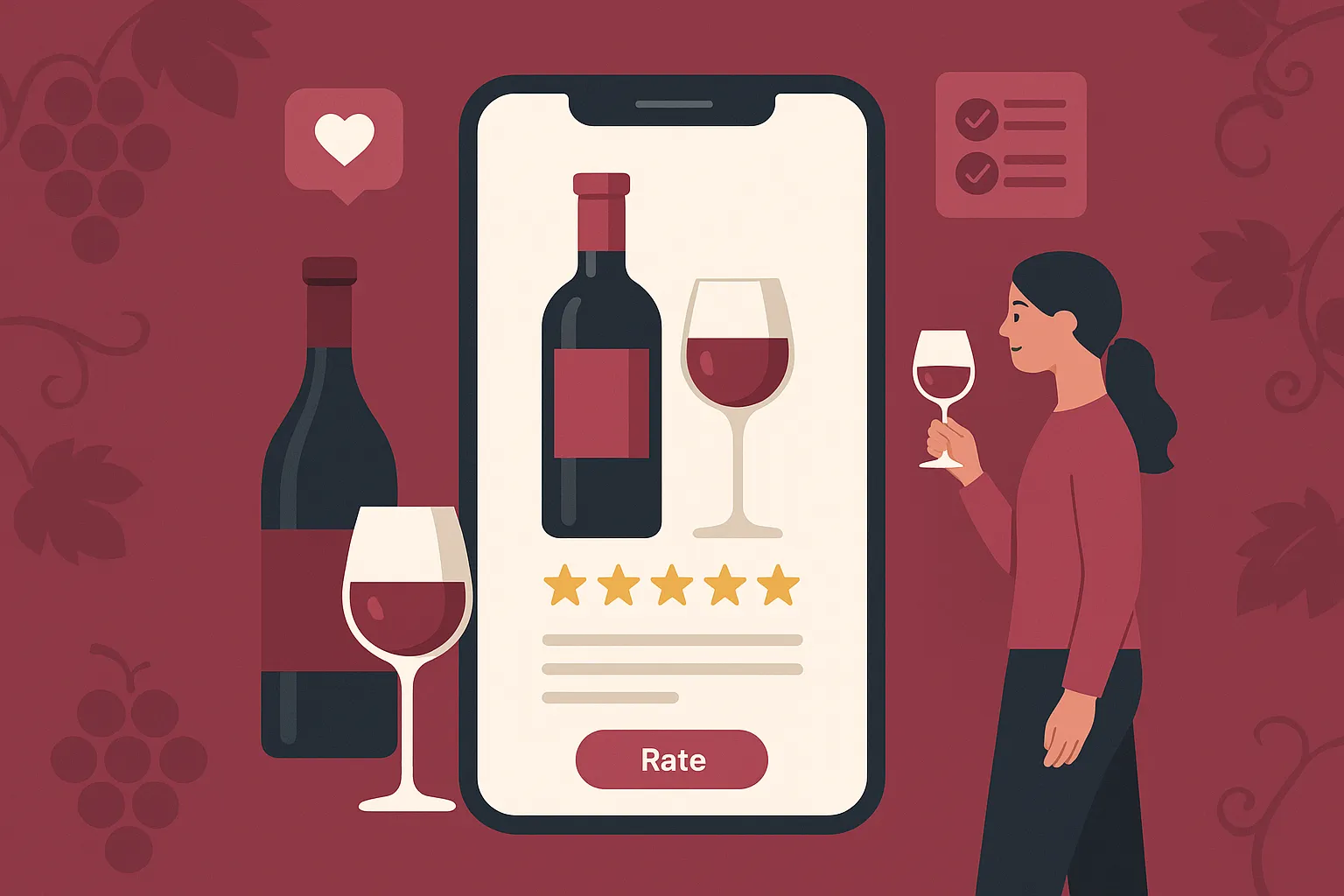
The days of picking wine based on guesswork or pretty labels are long gone. Thanks to apps like Vivino, wine lovers now turn to their phones for instant reviews, ratings, food pairing suggestions, and price comparisons. It’s a digital sommelier in your pocket—and it’s made wine discovery more accessible than ever. But here’s the good part: Vivino doesn’t have a monopoly on wine tech. Entrepreneurs are now building their own wine discovery platforms using Vivino Clone Script , tailored for different regions, tastes, and communities.
If you’re a founder looking to blend technology with the wine experience, a Vivino Clone app is your shortcut to a full-bodied product launch. This guide compares the best Script available in 2026, unpacks the must-have features, and breaks down pricing so you know exactly what to expect.
Why Build a Vivino Clone in 2026?
Vivino revolutionized how wine is bought, rated, and explored. But it’s also a general-purpose global platform. What if you want to launch a curated app for French wines only? Or a tasting-focused app for small vineyards? Or an exclusive app that pairs wine reviews with direct-to-consumer ordering? A Vivino Clone gives you that flexibility.
What Makes Vivino’s Model So Powerful?
- User-Generated Reviews: People trust peer recommendations, especially when wine knowledge feels intimidating.
- Image Recognition: Snap a label, get instant data—grape variety, origin, average price, and reviews.
- Marketplace Integration: Users can often purchase the wine directly through the app.
- Personalization: Vivino recommends wines based on past reviews, locations, and preferences.
A clone script that replicates these strengths while letting you customize for your audience is a solid foundation for success.
Read More : Top Vivino Features Every Wine App Needs
Must-Have Features in a Vivino Clone Script
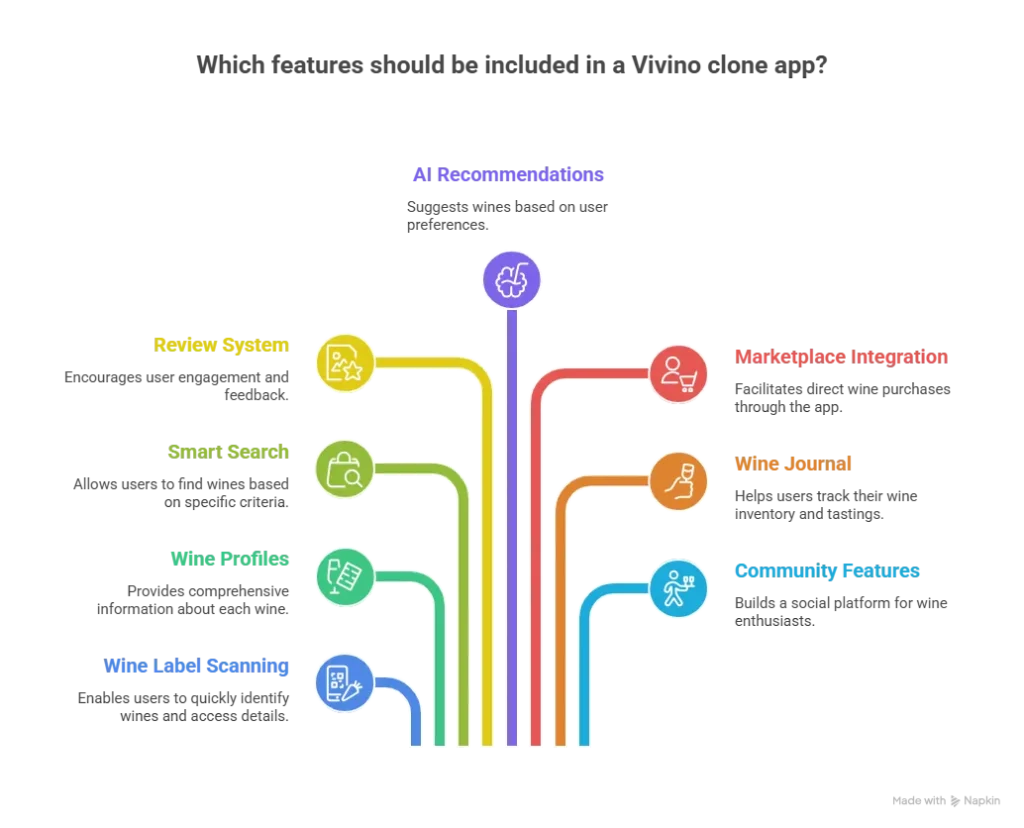
In 2026, wine buyers are savvy, mobile-first, and expect intuitive design. Your app can’t just show ratings—it has to enhance the entire wine discovery process. Here’s what a good Vivino Clone must deliver:
1. Wine Label Scanning
Image recognition is non-negotiable. Users should be able to scan a label and immediately get key details—winery, region, varietal, vintage, and price.
2. Wine Profiles with Deep Metadata
Each wine should have a dedicated page with:
- Grape composition
- Tasting notes
- Aging potential
- Best food pairings
- User reviews and average ratings
- Price trends and availability
3. Smart Search and Filtering
Search by taste profile (fruity, dry, earthy), price range, region, vintage, or even specific vineyards. This is crucial for wine enthusiasts who know what they like.
4. Review System with Photos and Notes
Users should be able to leave star ratings, detailed reviews, and even upload tasting photos. Think of it as Yelp meets CellarTracker.
5. AI-Based Recommendations
Machine learning can suggest wines based on a user’s review history, search behavior, or regional trends.
6. Direct Marketplace Integration
Allow users to buy wine through the app by integrating with local sellers or affiliate networks. Include shipping info, delivery tracking, and dynamic pricing.
7. Wine Journal or Cellar Tracker
Let users log their favorites, track their personal wine inventory, and rate past tastings.
8. Community and Social Sharing
In-app groups, regional discussions, and event-based chats (like “Napa Valley Tastings 2026”) help turn the app into a community, not just a catalog.
Technical Requirements for a Smooth Wine Experience
A good wine app must taste as smooth as a fine Pinot Noir—on both the frontend and backend. Here’s what to look for under the hood:
- Frontend: Flutter or React Native for seamless iOS and Android performance
- Backend: Laravel or Django for flexible architecture and scalable APIs
- AI Layer: TensorFlow Lite or Amazon Rekognition for label scanning and ML-based suggestions
- Database: PostgreSQL or Firebase to handle complex wine metadata and user histories
- CMS Integration: Admin panel for adding/editing wine entries, reviews, and promotions
Clone Script Evaluation: What to Compare
When reviewing Vivino Clone Script , use this list to separate the bold cabernets from the watery table wines:
- Accuracy of Image Recognition: How well does it match scanned labels to the correct database entry?
- Customizability: Can you control which wines get featured, or build curated lists like “Under $20 Bordeaux”?
- Multi-Language Support: Wine is global. Your app should be too.
- Monetization Flexibility: Does it support affiliate links, marketplace selling, ad placements, or premium memberships?
- Analytics: Are you getting actionable data on user searches, top-rated wines, and purchase trends?
- UI/UX Polish: Is the interface clean, smooth, and engaging? Poor UI will kill repeat usage.
Read More : Most Profitable Alcohol Delivery Apps to Launch in 2025
Global Cost Factors & Pricing Breakdown
Vivino-Like App Development — Market Price
These values reflect global development cost estimates. Final pricing varies based on feature scope, team location, and platform complexity.
These amounts reflect the broader market cost of building a Vivino clone script based on the selected backend architecture, catalog and order workflow complexity, real-time operational needs, and long-term scalability goals.
Miracuves Vivino-Like App Solution Cost and Tech Stack
Miracuves Pricing for a Vivino-Like App developed in PHP/Laravel with Flutter Apps for $2,199 USD (One-Time Price) in just 6 days
Get a fully developed, deployment-ready platform modeled after Vivino. Built on a rock-solid PHP/Laravel foundation, this complete package includes everything you need to launch and scale:
- Core Workflows: Wine label scanning, wine discovery, review and rating systems, personalized recommendations, and marketplace-style wine browsing.
- Built-in Finance: In-app wallet logic, pricing operations, and payout setups.
- Management Hub: Comprehensive seller and content management and a centralized admin backend.
- Launch-Ready: Fully prepped for your custom branding, configuration, and immediate market entry.
Why Miracuves’s Vivino Like App is so affordable?
Most complex wine discovery and marketplace platforms force you into expensive architectures like Node.js or Go. Building from scratch with those frameworks requires highly specialized, expensive engineering teams, which drives the cost into the tens or hundreds of thousands of dollars.
We took a smarter, more practical approach:
- You Aren’t Paying for Ground-Up Development: Our wine discovery platform engine is already developed, battle-tested, and ready to deploy. You skip the inflated costs and months of waiting associated with building from scratch.
- The Power of PHP / Laravel: We built this on one of the most reliable, globally adopted frameworks in the world. Not only does this keep our upfront costs down, but it also protects your future budget. PHP has a massive global talent pool, making it incredibly easy and cost-effective for you to find developers for future scaling or customizations.
You get an enterprise-capable, heavy-duty foundation without the inflated Silicon Valley price tag.
Note: This cost is for the solution, re-branding, deployment and source code only.
Use Cases for Vivino Clone Script
A wine discovery app doesn’t have to be global to be successful. In fact, going niche often works better. Here are some smart use cases:
- Local Wine Clubs: Build a private-label app for wine clubs that offers curated selections and event invites
- D2C Wineries: Allow boutique vineyards to showcase, sell, and get rated by fans directly
- Wine Tourism Guides: Combine wine discovery with geo-location to guide users to nearby tastings and vineyards
- Subscription Services: Integrate monthly curated wine boxes with in-app profiles and review prompts
Common Mistakes to Avoid
- Ignoring Label Scanner Quality: Users will drop off if scanning fails or gives irrelevant results
- No Seller Integration: Ratings are good, but being able to buy directly is better
- Too Much Complexity Up Front: Make onboarding simple. Don’t bombard new users with too many options
- Overlooking Wine Metadata Accuracy: If your wine data is wrong or inconsistent, user trust disappears
Conclusion
Building your own Vivino-style app doesn’t mean copying. It means creating a refined, engaging, and purpose-built wine experience for your community. Whether you want to serve wine tourists, club members, or serious sommeliers, a well-designed Vivino Clone script gives you the flexibility to deliver something special. In the world of wine tech, the real flavor lies in personalization, data, and delight. At Miracuves, we help innovators launch high-performance app clones that are fast, scalable, and monetization-ready. Ready to turn your idea into reality? Let’s build together.
FAQs
Can I launch a wine marketplace and community app together?
Yes, modern clone Script allow both product listings and user forums or social interactions in a single platform.
Is label scanning reliable enough for real-world use?
High-quality Script use machine learning and large datasets to ensure label scans match the correct wine entry 90%+ of the time.
Can I integrate with local sellers or POS systems?
Yes, if the clone script is API-ready, you can sync with wine retailers, delivery services, or POS systems.
How do I get a wine database for my app?
Some Script include starter databases. You can also source public wine data or work with local suppliers to populate the list.
Can I add my own branding and theme?
Absolutely. Most white-label clone Script let you choose your color palette, fonts, and homepage layout.
Is it possible to launch a region-specific app only?
Yes, and in fact, region-specific platforms often perform better due to community trust and local partnerships.
Related Articles