


Key Takeaways
What You’ll Learn
- Zillow Rentals is an online marketplace where landlords list properties and renters search for homes.
- It connects renters directly with property owners or managers through listings and messaging.
- Users can filter rentals by location, price, amenities, and property type.
- The platform supports applications, screening, and rent payments in one place.
- It simplifies the rental process for both renters and landlords.
Stats That Matter
- The platform connects renters with property listings across multiple regions.
- Listings can be created quickly with property details, pricing, and images.
- Tools are available for tenant screening, lease management, and rent collection.
- Renters can search, apply, and track applications through a dashboard.
- It operates as part of a broader real estate listing ecosystem.
Real Insights
- Landlords list properties while renters browse and apply online.
- Communication happens directly between renters and property owners.
- Integrated tools reduce the need for third-party services.
- Digital applications and screening speed up the rental process.
- Its strength lies in combining property discovery with end-to-end rental management.
Imagine you’re moving to a new city and need to find a rental home quickly. You start searching online, but rental listings are scattered across different websites, local agencies, and social media posts.
Instead of browsing dozens of sources, many renters now use Zillow Rentals.
Zillow Rentals allows people to search thousands of rental properties — from apartments and houses to condos and townhomes — in one centralized platform.
How Zillow Rentals Started and Why It Matters
Zillow was founded in 2006 as an online real estate marketplace designed to help people find homes and property information. Over time, Zillow expanded beyond home sales and introduced Zillow Rentals, a dedicated section for rental property listings.
Today, Zillow Rentals has become one of the most widely used rental search platforms in the United States. Renters use it to explore available properties, while landlords and property managers use it to market listings and find tenants.
What You’ll Learn in This Guide
By the end of this guide, you’ll understand:
• What Zillow Rentals is and how it works
• How renters and landlords use the platform
• Zillow Rentals’ business model and revenue streams
• Key features that make it successful
• The technology behind the platform
• How entrepreneurs can build a similar rental marketplace
What Is Zillow Rentals? The Simple Explanation
What Is Zillow Rentals ?
Zillow Rentals is an online rental marketplace where people can search for apartments, houses, condos, and other rental properties. It connects renters with landlords and property managers by allowing property listings to be displayed on Zillow’s platform, making it easier for people to discover available rental homes in their desired location.
The Core Problem Zillow Rentals Solves
Finding rental homes used to involve browsing classified ads, contacting local agents, or driving around neighborhoods looking for “For Rent” signs. This process was slow and often limited to a small number of options.
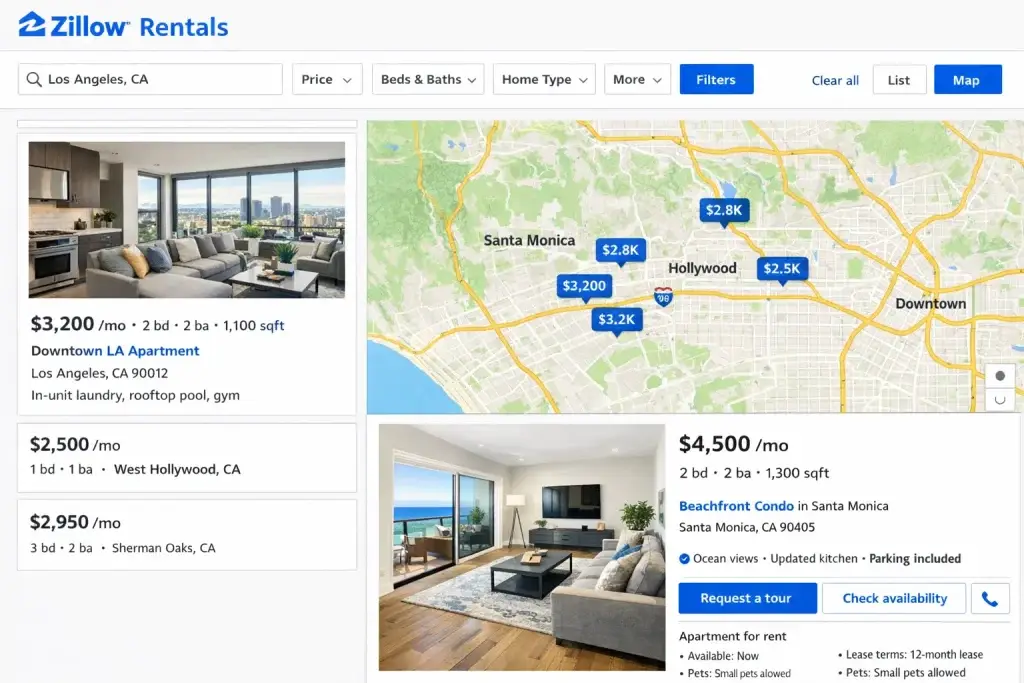
Zillow Rentals solves this problem by providing a centralized platform where thousands of rental listings can be searched and compared online. Renters can filter properties based on location, price, number of bedrooms, and amenities.
In simple terms, Zillow Rentals simplifies the rental home search process.
Who Uses Zillow Rentals?
Zillow Rentals serves multiple groups in the housing market:
• Renters searching for apartments or houses
• Landlords listing available rental properties
• Property management companies managing rental portfolios
• Real estate agents helping clients find rental homes
• Investors marketing rental units
Because the platform aggregates a large number of listings, it attracts millions of renters looking for housing.
Zillow Rentals’ Market Position
Zillow Rentals is one of the largest rental listing platforms in the United States. It benefits from Zillow’s broader real estate ecosystem, which includes home sales listings, property data, and housing market insights.
The platform receives heavy traffic from renters searching for housing opportunities in cities and suburbs across the country.
Why Did Zillow Rentals Become Successful?
Zillow Rentals grew rapidly because it simplified rental discovery and offered useful tools for both renters and landlords.
Its success is driven by:
• Large database of rental listings
• Easy property search tools and filters
• Property images and detailed listing information
• Online rental applications
• Direct communication between renters and landlords
These capabilities allow renters to explore multiple housing options quickly and efficiently.
What Makes Zillow Rentals Different from Traditional Rental Searches?
Traditional rental searches often relied on local agents or classified ads with limited property information.
Zillow Rentals introduced a digital marketplace where renters can search, compare, and apply for rental homes online, making the process faster and more transparent
How Does Zillow Rentals Work? Step-by-Step Breakdown
Zillow Rentals works as an online rental marketplace that connects renters with landlords and property managers. The platform allows renters to search for available homes while enabling landlords to market their rental properties to a large audience.
How Zillow Rentals Works for Renters
Account Creation and Property Search
• Renters visit Zillow or open the mobile app
• They enter a city, ZIP code, or neighborhood
• Filters allow users to refine results based on price, property type, bedrooms, and amenities
Renters can also filter by features such as:
• Pet-friendly rentals
• Furnished properties
• Parking availability
• Laundry facilities
• Move-in availability
This helps renters quickly narrow down properties that match their needs.
Exploring Property Listings
Each rental listing contains detailed information about the property.
Typical listing details include:
• Photos of the property
• Monthly rent price
• Property description and amenities
• Number of bedrooms and bathrooms
• Map location
• Contact details for the landlord or property manager
These details allow renters to evaluate properties before contacting the owner.
Saving and Comparing Listings
• Renters can save favorite listings
• Compare multiple properties
• Track price changes or new listings in selected areas
This helps users monitor the rental market more efficiently.
Applying for a Rental
Zillow Rentals allows renters to submit applications directly through the platform.
Typical steps include:
• Completing an online rental application
• Providing financial and background information
• Submitting credit checks through Zillow’s system
Landlords can review applications and select qualified tenants.
How Zillow Rentals Works for Landlords and Property Managers
Listing Rental Properties
Landlords or property managers create listings by uploading property details such as:
• Rental price
• Property photos
• Description and amenities
• Lease terms
• Availability dates
Once published, the property becomes visible to renters searching in that area.
Managing Rental Inquiries
Landlords can receive messages from interested renters directly through the platform.
They can:
• Respond to renter inquiries
• Schedule property viewings
• Review rental applications
This simplifies communication between renters and landlords.
Tenant Screening and Application Management
Zillow provides tools that help landlords evaluate potential tenants.
Landlords can review:
• Rental applications
• Credit reports
• Background checks
• Income verification
These tools help landlords choose reliable tenants more efficiently.
Technical Overview Explained Simply
Zillow Rentals operates as a large-scale online housing marketplace platform powered by property databases, search engines, and communication systems.
Core platform components include:
• Rental property listing databases
• Search and filtering systems
• Landlord dashboards for listing management
• Online rental application tools
• Web and mobile applications
Landlords upload rental listings into the system, and renters search those listings using filters and location-based tools.
In simple terms, Zillow Rentals acts as a digital marketplace that connects renters with landlords and simplifies the rental search process.
Zillow Rentals’ Business Model Explained
Zillow Rentals operates as a digital rental marketplace and advertising platform. Instead of earning commissions from rental agreements, Zillow primarily generates revenue by offering marketing tools, listing promotions, and software services for landlords and property managers.
How Zillow Rentals Makes Money
• Paid listing promotions for landlords and property managers
• Rental application and tenant screening services
• Advertising and marketing solutions
• Property management tools and software services
• Premium rental listing visibility
Most of Zillow Rentals’ revenue comes from landlords and property managers who pay for enhanced listing visibility and tenant screening services.
Listing Promotion and Advertising
While basic rental listings may be free, Zillow offers paid promotion tools that increase visibility for rental properties.
Examples include:
• Featured property placements in search results
• Priority visibility for rental listings
• Sponsored listings appearing at the top of search pages
Why It Matters: Higher listing visibility helps landlords attract more potential tenants quickly.
Technical Innovation: Search ranking algorithms determine which listings appear first based on relevance and promotional placement.
Rental Applications and Tenant Screening
Zillow offers an online rental application system that allows renters to apply for properties directly through the platform.
This service may include:
• Credit checks
• Background checks
• Income verification
• Application management tools
Why It Matters: Landlords can screen potential tenants efficiently without using separate services.
Technical Innovation: Integrated tenant screening systems connect with credit reporting and identity verification services.
Landlord and Property Management Tools
Zillow provides digital tools that help landlords manage rental listings and tenant communication.
These tools may include:
• Rental listing management dashboards
• Communication tools for responding to inquiries
• Application review systems
• Property marketing insights
Why It Matters: These tools simplify the process of managing rental listings and applications.
Technical Innovation: Cloud-based landlord dashboards allow property managers to control listings and tenant interactions.
Advertising and Marketing Services
Because Zillow attracts millions of home searchers each month, it also provides advertising opportunities for businesses related to housing.
Examples include:
• Real estate agent advertising
• Property service promotions
• Mortgage and housing-related ads
Why It Matters: High website traffic makes Zillow a valuable advertising platform for real estate services.
Market Size and Industry Demand
The rental housing market in the United States includes millions of rental units across apartments, houses, and multifamily properties.
Digital rental platforms benefit from:
• Growing demand for rental housing
• Increased mobility among renters
• Rising adoption of online property searches
• Expansion of property management companies
As renters increasingly search for housing online, rental marketplaces like Zillow continue to attract large audiences.
Revenue Model Breakdown
| Revenue Stream | How It Works | Why It Matters |
|---|---|---|
| Listing Promotions | Paid visibility for rental listings | Helps landlords attract tenants faster |
| Tenant Screening | Fees for rental applications and background checks | Simplifies tenant evaluation |
| Landlord Tools | Property management and listing services | Supports landlords managing rentals |
| Advertising | Ads from real estate and housing-related businesses | Monetizes platform traffic |
Zillow Rentals’ business model focuses on providing a large rental discovery platform for renters while offering marketing and management tools for landlords and property managers.
Read More :- Business Model for Real Estate App
Key Features That Make Zillow Rentals Successful
Zillow Rentals has become one of the most widely used rental platforms in the U.S. because it combines renter-friendly search tools with landlord tools like applications, screening, lease support, and rent collection in one connected ecosystem. Zillow Rental Manager says landlords can list properties, screen tenants, create leases, and collect rent from a single platform, while renters can search, tour, and apply online.
Advanced Rental Search Filters
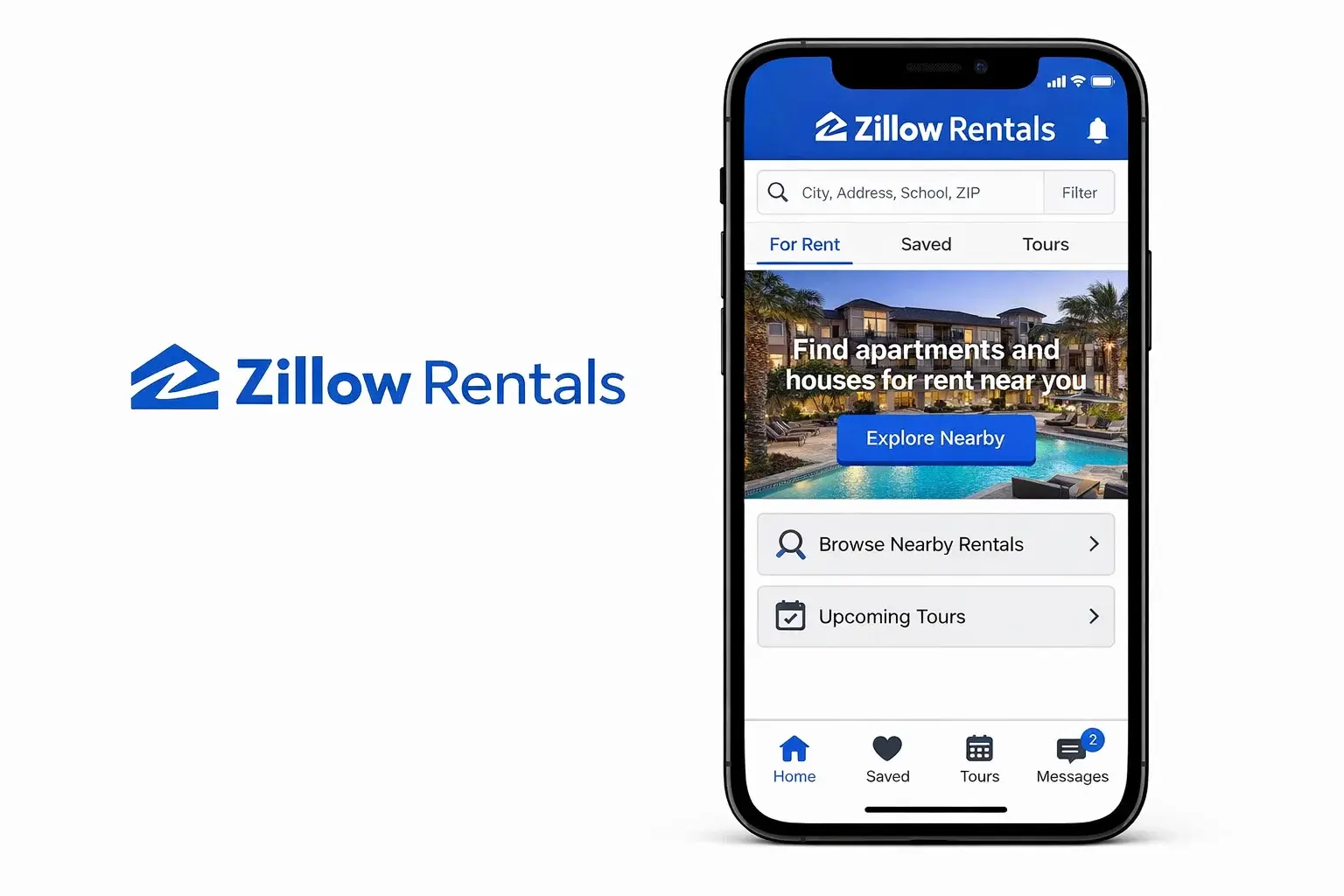
Zillow Rentals lets users search by city, ZIP code, address, or custom map area, then narrow results by home type, size, price, and amenities. The Rentals app also highlights filters such as in-unit laundry, pet-friendly options, and parking.
Why It Matters: Renters can find relevant homes faster without wasting time on poor matches.
Technical Innovation: Search indexing, map-based search, and mobile filtering tools work together to surface listings quickly across a very large rental inventory.
Saved Searches and Listing Alerts
Renters can save searches and get notified when new listings hit the market. Zillow’s Rentals app specifically promotes alerts for new listings.
Why It Matters: In competitive rental markets, speed matters. Alerts help renters react before a good unit disappears.
Technical Innovation: Event-triggered notification systems monitor saved search conditions and send updates automatically.
Detailed Listing Pages
Rental listings typically include photos, pricing, location details, property descriptions, and amenity information. Zillow also gives landlords more direct control over listing quality through Rental Manager.
Why It Matters: Better listing detail means renters can compare homes with more confidence before reaching out.
Technical Innovation: Structured listing fields and listing-quality controls help standardize how rental information appears across the network.
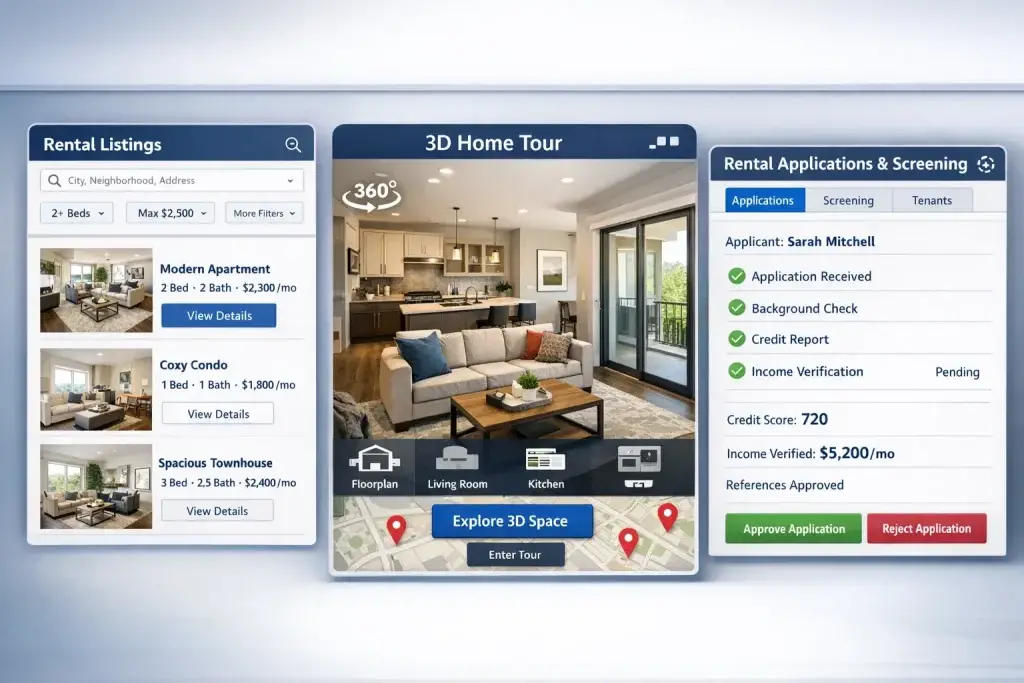
3D Home Tours and Virtual Viewing Tools
Zillow supports 3D Home tours through its free 3D Home app, and Rental Manager highlights free virtual tours as a feature landlords can use to improve listings.
Why It Matters: Virtual tours help renters understand a home before visiting and can improve listing engagement.
Technical Innovation: Mobile capture tools and immersive listing media make remote viewing much easier.
Instant Apartment Tour Scheduling
Zillow offers a rental tour feature that lets renters schedule guided, virtual, and self-guided apartment tours.
Why It Matters: Tour scheduling reduces friction between discovery and decision-making.
Technical Innovation: Real-time scheduling workflows connect listing availability with renter booking actions.
Online Rental Applications
Zillow Rental Manager supports online rental applications. Zillow says renters pay a $35 application fee, and that application can be used for an unlimited number of participating rentals for 30 days, while landlords receive the reports at no charge.
Why It Matters: This makes applying faster for renters and more efficient for landlords.
Technical Innovation: Digital application workflows centralize documents, identity details, and application reuse across participating listings.
Built-In Tenant Screening
Zillow Rental Manager gives landlords access to eviction history, income documents, credit history, and background checks for applicants.
Why It Matters: Landlords can evaluate applicants more confidently without relying on separate screening vendors.
Technical Innovation: Integrated screening workflows connect application data with credit and background-report systems.
Online Lease Support
Zillow says Rental Manager includes online lease signing and, in select states, a free lease-building tool.
Why It Matters: Landlords can move from listing to signed paperwork faster, and renters get a smoother experience.
Technical Innovation: Digital document workflows and e-sign support reduce manual paperwork.
Online Rent Collection
Zillow Rental Manager allows landlords to collect rent, utility payments, and security deposits online. Zillow also says tenants can set up autopay, receive automated reminders, and in some cases build credit with on-time payments made through Rental Manager.
Why It Matters: This turns Zillow from a discovery platform into an ongoing rental operations tool.
Technical Innovation: Integrated payment systems, reminders, and recurring-payment logic help automate cash flow management.
Mobile-First Rental Experience
Zillow’s Rentals app is built for on-the-go search, alerts, and direct contact with landlords and property managers.
Why It Matters: Most renters browse from their phones, so a strong mobile experience directly improves engagement.
Technical Innovation: Native mobile app workflows support map search, notifications, and quick lead submission.
Recent Updates and Current Rental Trends
Zillow has continued adding renter-focused tools. In July 2025, Zillow announced new features including a Rentals Costs & Fees Breakdown tool and Tour Itineraries, both aimed at helping users understand total costs and organize property visits more easily. Zillow’s rental research also shows today’s renters are highly budget-sensitive, and its 2026 rentals trends report was based on a survey of more than 36,000 renters conducted between March and July 2024.
What Sets Zillow Rentals Apart
What makes Zillow Rentals stand out is that it is not just a listing site. It combines search, tours, applications, tenant screening, lease support, and rent collection in one connected flow. That gives renters a smoother experience and gives landlords a practical operating toolkit instead of just ad space.
The Technology Behind Zillow Rentals
Zillow Rentals runs on a large consumer real estate platform layered with rental-specific tools for search, applications, tours, leases, payments, and landlord operations. Zillow Rental Manager positions the product as a single place to post listings, screen tenants, create leases, collect payments, and manage tours, which means the underlying system is built more like a connected rental workflow platform than just a listings board.
Cloud-Based Rental Platform
Zillow Rentals operates through web and mobile products, with Rental Manager available as both a browser-based system and a mobile app. Zillow says landlords can use Rental Manager “anywhere, anytime,” which points to a cloud-based architecture designed for constant access and synchronized updates across devices.
Why It Matters: Landlords and renters expect always-available access to listings, messages, tours, and payments.
Technical Innovation: Cloud-hosted account systems keep rental data, activity, and listing workflows synced across web and mobile surfaces.
Large Listing and Search Infrastructure
Zillow Rentals depends on a large searchable inventory of rental listings, combined with filters, maps, photos, and listing-quality controls. Zillow also offers listing recommendations and price and market insights to landlords through Rental Manager Premium, showing that listing visibility is supported by performance data and search-ranking logic.
Why It Matters: Search speed and listing quality directly affect whether renters find relevant homes and whether landlords get leads.
Technical Innovation: Search indexing, listing-standardization systems, and ranking models help organize and surface the right rentals at scale.
Pricing and Market Insight Tools
Zillow says landlords can use pricing tools to price rentals competitively and optimize return on investment, and Premium users get price and market insights tied to listing performance and market trends.
Why It Matters: Better pricing decisions can help reduce vacancy and improve response quality from renters.
Technical Innovation: Data-driven pricing tools likely combine listing activity, local market signals, and property attributes to support rent recommendations. That last part is an inference based on the product’s stated pricing and market-insight functions.
Online Applications and Screening Systems
Zillow Rental Manager includes digital applications and tenant screening. Zillow states that landlords can screen tenants using credit and background checks, and that screening includes eviction history, income documents, credit history, and background checks.
Why It Matters: This reduces manual paperwork and speeds up the renter evaluation process.
Technical Innovation: Secure application workflows integrate with third-party identity, credit, and background-report systems to return structured screening data inside the landlord dashboard.
Lease Creation and E-Sign Workflows
Zillow says landlords can build a new lease online or upload their own lease for signing.
Why It Matters: It moves the platform beyond discovery into actual transaction workflow support.
Technical Innovation: Digital document generation and e-signature workflows let landlords manage lease execution without external document tools.
Integrated Payment Infrastructure
Zillow says Rental Manager lets landlords collect rent, utility payments, and security deposits online for free.
Why It Matters: Payment processing turns Zillow Rentals into an operational platform, not just a marketing channel.
Technical Innovation: Integrated payments infrastructure supports recurring rent collection, deposit handling, and online cash-flow tracking within the same system.
Tour Scheduling Technology
Zillow offers tour scheduling for guided, virtual, and self-guided apartment tours, while Rental Manager also promotes showing-management tools.
Why It Matters: Tour coordination is one of the biggest friction points in renting.
Technical Innovation: Scheduling systems connect listing availability, renter requests, and showing formats into a unified booking workflow.
Visual Media and 3D Tour Support
Zillow supports 3D Home virtual tours through its own 3D Home app.
Why It Matters: Rich visual content helps renters evaluate a home remotely and improves listing engagement.
Technical Innovation: Mobile 3D capture and immersive media rendering allow landlords or property teams to publish virtual walkthrough experiences directly into Zillow’s ecosystem.
Mobile App and Cross-Device Experience
Zillow offers a dedicated Rental Manager app and a Rentals search app experience. Rental Manager is presented as usable on the go, while Zillow Rentals also emphasizes renter-facing mobile discovery and alerts.
Why It Matters: Modern renters search on phones, and landlords want quick lead response from anywhere.
Technical Innovation: Cross-device syncing, push notification systems, and mobile-optimized workflows support both sides of the marketplace in real time.
Why This Technology Matters for Business
The technology behind Zillow Rentals matters because it connects the full rental funnel in one ecosystem: listing creation, search visibility, tours, applications, screening, leases, and payments. That makes Zillow Rentals more valuable than a basic classifieds site and helps explain why it remains a major platform for both renters and landlords.
Also Read :- How to Develop a Real Estate App
Zillow Rentals’ Impact & Market Opportunity
Zillow Rentals has helped make rental search far more digital, centralized, and data-driven. Instead of relying on scattered classifieds, local signs, or disconnected listing sites, renters can now search listings, book tours, apply online, and communicate with landlords inside one ecosystem. Zillow has also pushed the category beyond discovery by adding tools for applications, screening, leases, and rent collection.
How Zillow Rentals Changed the Rental Search Process
One of Zillow Rentals’ biggest impacts is convenience. It gives renters a single place to compare homes, track new listings, and move faster in competitive markets. Zillow’s own 2025 rental-season data says the first week of June is the busiest week of the year on Zillow Rentals, with listing views, rental applications, and outreach to property managers peaking around that time. That shows how central the platform has become during high-demand rental periods.
For landlords and property managers, Zillow Rentals changed the process from simple advertising to workflow management. Zillow Rental Manager now bundles listing creation, applicant screening, lease tools, and rent collection into one platform, which makes it more operational than a traditional listing board.
Market Size and Rental Demand
The opportunity behind Zillow Rentals is huge because the U.S. rental market itself is enormous. Zillow’s 2025 Consumer Housing Trends Report, citing the Census Bureau’s 2023 American Community Survey, says 35% of households live in rented homes, and 22% of rental households moved in the past year. That means there is a very large, highly active audience regularly entering the rental-search funnel.
Zillow’s own research also shows that rental activity remains intense. In May 2025, Zillow reported that listing views, rental applications, and inquiries to property managers typically peak in early June, and that the 2025 rental season was shaping up to be one of the busiest yet.
Renter Behavior and What It Means
Today’s renters are extremely budget-focused. Zillow’s 2025 rentals consumer trends material says the report was based on a survey of more than 36,000 renters conducted between March and July 2024, and one of the big takeaways was that renters are more likely to consider budget than any other rental factor. That makes platforms with pricing visibility, filters, and comparison tools especially valuable.
Zillow’s rent reports also show why these tools matter. In January 2025, the typical U.S. asking rent was $1,968, up 3.5% year over year. By May 2025, Zillow reported the typical asking rent at $2,049, and by June 2025 it reached $2,069, although rent growth was described as cooler than usual. These shifts show that renters still need platforms that help them react quickly and compare options efficiently.
Geographic and Product Opportunity
Zillow Rentals is especially well positioned because it sits inside Zillow’s broader real estate ecosystem. That gives it visibility across rental search, home search, property data, and consumer traffic. Zillow also markets its Rentals Network as a way for landlords and property managers to attract renters and drive leads and leases in 2025, which shows the platform is not just consumer-facing but also increasingly B2B-focused.
Future Trends and What Comes Next
The rental market is becoming more product-driven. In July 2025, Zillow introduced features like a Rentals Costs & Fees Breakdown tool and Tour Itineraries, showing that the category is shifting toward better cost transparency and more structured in-person decision-making. That kind of product development suggests the future rental marketplace will be less about just “finding listings” and more about helping renters manage the full decision journey.
Zillow’s later 2025 rental data also showed improving renter conditions. In October 2025, Zillow said rental affordability had reached a four-year high and that concessions were being offered on 37.3% of rentals on Zillow. By December 2025, Zillow reported the typical U.S. asking rent had dipped to $1,901 and concessions had reached 39.5% of listings. That points to a market where platforms can create value not only through supply discovery, but also through pricing clarity, timing advantages, and negotiation awareness.
Opportunities for Entrepreneurs
The success of Zillow Rentals shows why rental marketplaces remain attractive for founders. There is room to build niche rental apps, local rental networks, property management tools, renter-finance platforms, and workflow products for tours, screening, leasing, and payments. Zillow’s expansion into the full rental journey is a strong signal that this market rewards platforms that reduce friction on both the renter side and the landlord side.
This massive success is why many entrepreneurs want to create similar platforms that connect renters, landlords, and property managers through technology-driven rental marketplaces.
Building Your Own Zillow Rentals-Like Platform
The success of Zillow Rentals makes one thing very clear: rental search is no longer just about posting listings online. Today’s winners build platforms that help users search faster, compare smarter, apply digitally, and move through the rental journey with less friction. Zillow itself now promotes a workflow that includes listing distribution, applications, screening, lease support, rent collection, and showing tools, which shows how valuable an end-to-end rental platform has become.
Why Businesses Want a Zillow Rentals Clone
Entrepreneurs are drawn to this model because rental marketplaces sit at the center of a huge and recurring housing need. Zillow’s 2025 housing trends report says 35% of U.S. households live in rental housing, based on Census Bureau data, which means the demand side is massive and constantly renewing as people move.
A Zillow Rentals-like platform is attractive because it can generate value from both sides of the marketplace:
• Renters need speed, trust, and transparency
• Landlords need qualified leads and efficient workflow tools
• Property managers need scale, automation, and payment systems
• The platform owner can monetize visibility, software tools, and transaction-adjacent services
That combination makes rental platforms one of the strongest marketplace opportunities in PropTech.
Key Considerations Before Development
Before building a Zillow Rentals-style platform, a business needs to define exactly what part of the rental market it wants to serve.
Important decisions include:
• Will the platform focus on apartments, single-family rentals, student housing, or a local niche?
• Will revenue come from listing promotions, applications, subscriptions, screening, payments, or a mix?
• Will landlords self-serve, or will the platform provide account support and onboarding?
• Will the business focus on discovery only, or support the full journey from listing to lease signing and rent collection?
• How will listing quality, fraud prevention, and renter trust be handled?
These decisions shape both the product roadmap and the business model.
Global Cost Factors & Pricing Breakdown for a Zillow-Like App
The technology stack behind your platform plays a critical role in determining development cost, launch speed, and how efficiently your platform can scale with increasing property listings and user activity. Some businesses aim for a streamlined real estate platform with core listing features, while others require a more advanced setup to support map-based search, real-time data updates, agent integrations, and large-scale property databases.
Here is a simple comparison of common global development approaches for a Zillow-like real estate marketplace platform:
PHP/Laravel suits quick, cost-effective launches. Node.js/Python fits dynamic, data-heavy platforms, while Go microservices are best for large-scale real estate marketplaces.
Miracuves Zillow-Like App Solution Cost and Tech Stack
Miracuves Pricing for a Zillow-Like Real Estate Platform developed in PHP/Laravel with Flutter Apps for Original price was: $3,699.$2,899Current price is: $2,899. USD (One-Time Price) in just 6 days
Get a fully developed, deployment-ready platform modeled after Zillow. Built on a robust PHP/Laravel foundation, this complete package includes everything you need to launch and scale:
- Core Workflows: Property listings, search and filters, map-based browsing, property details, and inquiry systems.
- Built-in Marketplace: Agent listings, property management tools, pricing insights, and user saved listings.
- Management Hub: User management, agent dashboards, admin controls, and centralized property moderation system.
- Launch-Ready: Fully prepared for your branding, customization, MLS/API integrations, and immediate deployment.
What Makes It Affordable to Develop?
Real estate platforms like Zillow require structured data handling, search optimization, and scalable listing management. However, compared to real-time-heavy systems, they can be efficiently built using stable frameworks like PHP/Laravel, reducing development complexity and overall costs.
We took a smarter, more practical approach:
- You Aren’t Paying for Ground-Up Development: Our real estate engine is already developed, tested on real-world use cases, and ready to deploy. You avoid high development costs and long timelines.
- The Power of PHP / Laravel: Built on a widely trusted and scalable framework, this solution reduces both initial and long-term costs. PHP has a massive global developer ecosystem, making it easier and more affordable to maintain, upgrade, and scale your platform over time. You get a powerful, scalable real estate platform without unnecessary cost overhead.
Note: This cost is for the solution, re-branding, deployment, and source code only.
Essential Features to Include
A strong Zillow Rentals-like platform should include:
• Advanced rental search with map-based browsing
• Saved searches and instant listing alerts
• Detailed property pages with pricing, amenities, and media
• Landlord dashboards for listing and inquiry management
• Online applications and applicant tracking
• Tenant screening integrations
• Lease-building or e-sign workflows
• Online rent and deposit collection
• Tour scheduling tools
• Admin tools for moderation, listing quality, and fraud control
The most competitive platforms should also consider:
• Cost breakdown tools for renters
• Market pricing insights for landlords
• Recommendation engines for better search relevance
• Mobile-first renter workflows
• Analytics dashboards for lead and conversion tracking
Zillow’s recent additions like cost-and-fee breakdowns and tour itinerary tools show that the market is moving toward more guided decision support, not just static listings.
Read More :- How to Market a Real Estate App Successfully After Launch
Conclusion
Zillow Rentals shows how a rental marketplace can evolve into a much broader housing workflow platform. What started as a way to discover rental listings now extends into tours, applications, screening, lease support, and rent collection, which is exactly why the platform has become so valuable to both renters and landlords. Zillow’s recent product direction also shows that the future of rental platforms is not just about showing listings, but about helping users make faster and better decisions with more transparency.
For entrepreneurs, the bigger lesson is simple: the most successful PropTech products remove friction from both sides of the market. Renters want speed, clarity, and convenience. Landlords want qualified leads, less manual work, and better control over the leasing process. A platform that solves both sides well can become much more than a listing site — it can become the operating layer of the rental journey.
FAQs :-
What is Zillow Rentals?
Zillow Rentals is Zillow’s rental marketplace where people can search for apartments, houses, condos, and other rental homes, while landlords and property managers can list units, manage leads, and use Zillow Rental Manager tools.
How does Zillow Rentals make money?
Zillow Rentals makes money through landlord and property-manager tools tied to Rental Manager, including paid listing visibility options and rental workflow products such as applications, screening, leases, and rent collection support. Zillow also monetizes its housing audience through related advertising and partner services across its broader platform.
Is Zillow Rentals only for apartments?
No. Zillow Rentals includes multiple property types such as apartments, houses, condos, and townhomes, depending on what landlords and property managers list in a given market.
Can renters apply directly through Zillow Rentals?
Yes. Zillow Rental Manager supports online applications, and Zillow says renters can submit one application for an unlimited number of participating rentals within 30 days after paying the application fee.
How much does Zillow Rentals charge renters?
Zillow says renters pay a $35 application fee when submitting a Zillow application, and that application can then be reused for participating listings for 30 days. Browsing listings itself is generally free for renters.
Does Zillow Rentals offer tenant screening for landlords?
Yes. Zillow Rental Manager includes tenant screening tools, and Zillow says landlords can review credit history, background checks, eviction history, and income documents through the platform.
Can landlords collect rent through Zillow Rentals?
Yes. Zillow says landlords can collect rent, utility payments, and security deposits online through Zillow Rental Manager, and tenants can also set up autopay.
Does Zillow Rentals support leases and e-signing?
Yes. Zillow says landlords can build a new lease online in select states or upload their own lease and send it for signing through Rental Manager.
What makes Zillow Rentals different from other rental websites?
Zillow Rentals stands out because it combines renter search tools with landlord workflow tools in one ecosystem, including listing management, tours, applications, screening, lease support, and rent collection. That makes it more than a basic listing site.
Can I build a platform similar to Zillow Rentals?
Yes. A Zillow Rentals-like platform would usually need rental listings, map-based search, landlord dashboards, applications, screening integrations, lease workflows, payments, and alerts. That is why many founders use prebuilt marketplace frameworks to launch faster and customize later.