


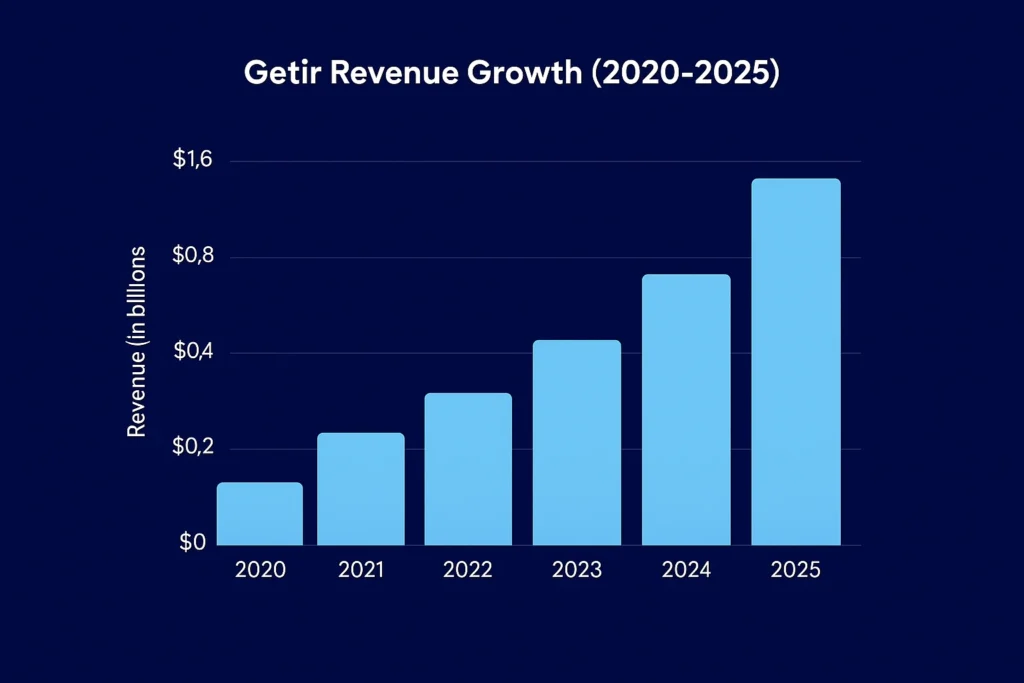
Getir generated approximately $1.4–$1.6 billion in revenue in 2026, reinforcing its position as one of the original pioneers of quick commerce. The company proved that delivering groceries and essentials in minutes can evolve into a scalable business when monetization is structured correctly.
Unlike marketplace-based delivery platforms, Getir operates an inventory-owned dark-store model, giving it full control over pricing, availability, and fulfillment speed. This structure enables stronger margin discipline and more predictable revenue flows.
For founders exploring hyperlocal delivery or instant commerce platforms, Getir’s revenue model offers a clear, operationally grounded framework for building sustainable growth.
Getir Revenue Overview – The Big Picture
Getir’s revenue growth reflects a transition from aggressive expansion to operational efficiency. By tightening city-level density and optimizing order economics, Getir focuses on margin stability rather than pure volume growth.
Key Financial Snapshot (2025)
| Metric | Data |
|---|---|
| Estimated Revenue | $1.4–$1.6 Billion |
| Valuation | ~$7–8 Billion |
| YoY Growth | 6–9% |
| Gross Margin | 26–32% |
| Core Markets | Turkey, UK, Western Europe |
| Profitability Status | Near break-even in mature cities |
Revenue by Region
| Region | Share |
|---|---|
| Turkey | ~42% |
| UK & Western Europe | ~38% |
| Other Regions | ~20% |
Read More: What Is Getir and How Does It Work?
Primary Revenue Streams Deep Dive
Getir’s revenue model is diversified across multiple streams, with product margins forming the foundation and service layers improving unit economics.
Revenue Streams Breakdown (2025)
| Revenue Stream | Explanation | Share |
|---|---|---|
| Product Markups | Wholesale procurement + retail pricing | 52–58% |
| Delivery & Service Fees | Convenience-based per-order fees | 14–17% |
| Alcohol & Regulated Products | Higher-margin categories | 9–11% |
| In-App Advertising | Sponsored listings & promotions | 6–8% |
| Subscription & Loyalty Plans | Delivery-fee reduction programs | 5–7% |
Product markups remain the dominant contributor, while ads and subscriptions act as margin multipliers.
The Fee Structure Explained
Getir’s fee system is designed to balance affordability with operational sustainability, adjusting dynamically by market and demand.
User-Side Fees
| Fee Type | Typical Range |
|---|---|
| Delivery Fee | €1.50 – €3.50 |
| Service Fee | €1 – €2 |
| Small Basket Fee | €2 – €4 |
| Surge Pricing | Demand & location based |
Provider-Side Fees
| Entity | Fee |
|---|---|
| Merchants | None (inventory owned) |
| Brands (Advertising) | CPC & placement-based |
Hidden & Indirect Revenue
| Source | Role |
|---|---|
| Private-Label Products | Higher gross margins |
| Brand Campaigns | Seasonal promotions |
| Consumer Data Insights | FMCG analytics partnerships |
How Getir Maximizes Revenue Per User
Getir focuses heavily on increasing average order value and repeat frequency rather than relying on constant new-user acquisition.
| Monetization Lever | Execution |
|---|---|
| User Segmentation | Urban professionals, families, students |
| Upselling | Add-ons at checkout |
| Cross-Selling | Snack + beverage bundles |
| Dynamic Pricing | Peak-time adjustments |
| Retention Programs | Loyalty & subscription models |
| Psychological Pricing | €9.99 and €14.99 bundles |
Customers within close proximity to dark stores demonstrate the highest lifetime value due to faster delivery and higher order frequency.
Cost Structure & Profit Margins
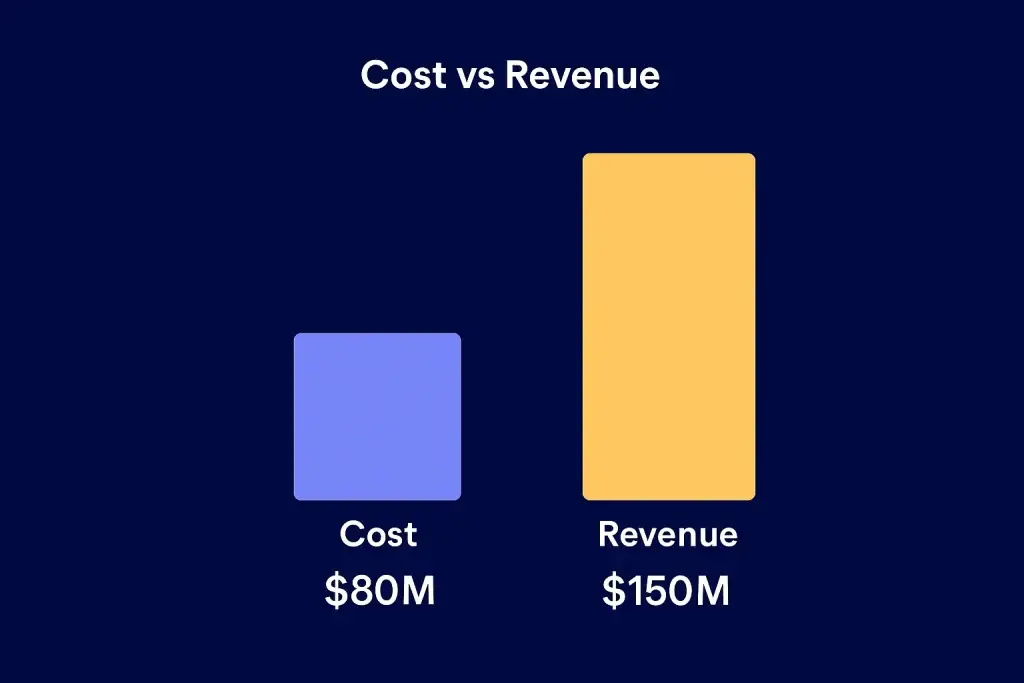
While quick commerce is capital intensive, Getir has steadily improved cost efficiency by optimizing fulfillment density.
Cost Breakdown
| Cost Category | % of Revenue |
|---|---|
| Dark Stores & Warehousing | ~27% |
| Delivery & Couriers | ~29% |
| Marketing & CAC | 10–13% |
| Operations & Admin | ~11% |
| Technology & R&D | 6–8% |
Orders with basket sizes above €25 show positive contribution margins once operational density stabilizes.
Read More: Best Getir Clone Script 2025 | Launch Quick-Commerce App Fast
Future Revenue Opportunities & Innovations
Getir continues to explore new monetization avenues beyond groceries.
| Area | Opportunity |
|---|---|
| AI Forecasting | Inventory optimization |
| Automation | Micro-fulfillment centers |
| Retail Media | Brand advertising platforms |
| New Verticals | Pharmacy & essentials |
| Market Expansion | Tier-2 European cities |
Risks: Rising labor costs, regulatory pressure
Founder Opportunity: Category-focused and region-specific instant commerce platforms
Lessons for Entrepreneurs & Your Opportunity
| Insight | Founder Takeaway |
|---|---|
| Inventory Ownership | Better margin control |
| Dark Store Density | Faster breakeven |
| Subscription Revenue | Predictable cash flow |
| Bundled Pricing | Higher AOV |
| Ad Monetization | Scalable income layer |
If you want to launch sooner, our ready-made quick-commerce delivery app starts at $2,499 and is delivered in 6 days. It is not a copy of Getir. Dark-store inventory tools and multi-warehouse routing are scoped as custom work.
Final Thought
Getir’s success shows that quick commerce becomes sustainable when speed is paired with monetization discipline. Owning inventory and fulfillment gives the platform tighter control over margins and customer experience.
By layering product margins with service fees, subscriptions, and advertising, Getir creates diversified and resilient revenue streams.
For founders, this model offers a practical roadmap for building profitable instant-commerce platforms in competitive urban markets.
FAQs
1. How much does Getir make per transaction?
Approximately €5–€8 in gross margin per order.
2. What’s Getir’s most profitable revenue stream?
Private-label and regulated product sales.
3. How does Getir’s pricing compare to competitors?
Competitive product pricing with moderate delivery fees.
4. What percentage does Getir take from providers?
None—Getir owns inventory.
5. How has Getir’s revenue model evolved?
From growth-first expansion to margin-focused optimization.
6. Can small platforms use similar models?
Yes, especially in dense urban markets.
7. What’s the minimum scale for profitability?
Roughly 1,800–2,500 orders per dark store monthly.
8. How can founders implement similar revenue models?
By combining owned inventory, subscriptions, and upselling.
9. What are alternatives to Getir’s model?
Marketplace-based or hybrid fulfillment platforms.
Miracuves is an independent software development company. We are not affiliated with, connected to, sponsored by, or endorsed by any company or product named in this article.
Terms such as “X Clone” are used descriptively. It is how the software industry refers to building a platform with functionality comparable to a known service, and how clients search for it.
The entire design and codebase of our products is built by our own team. Our products contain no code, design, graphics, or content originating from any third-party website or applications.
All third-party names and marks referenced in this article are the property of their respective owners, referenced solely to identify the services discussed.