


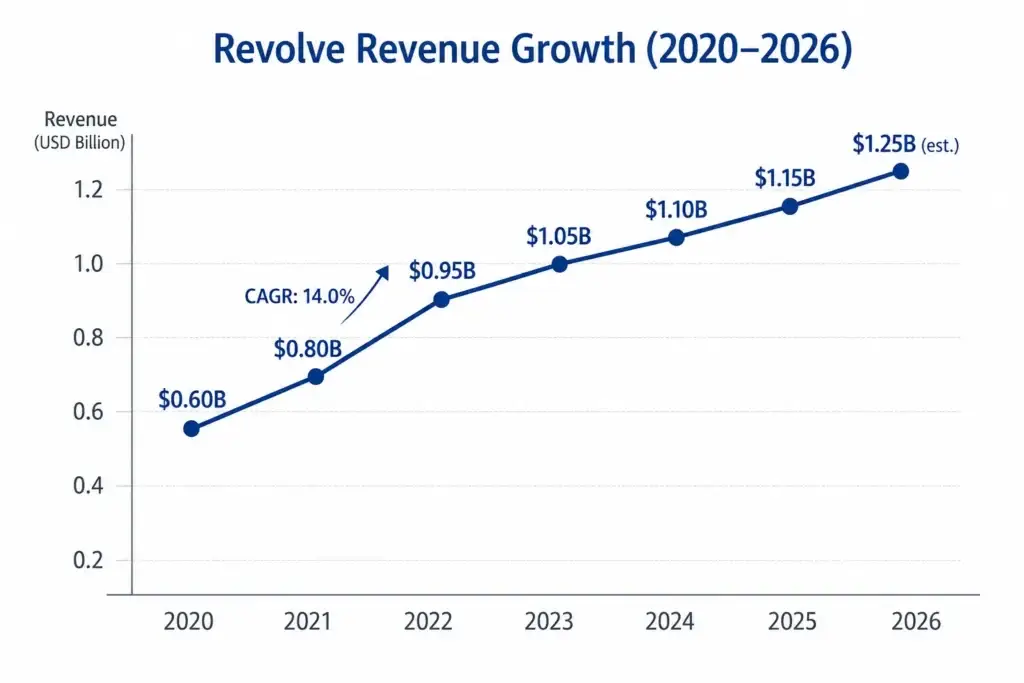
Revolve crossed $1.15 billion in annual revenue in 2026, proving that influencer-first fashion commerce is not a trend—it’s a systemized, repeatable business model. The company didn’t rely on seasonal hype alone; it built structured creator partnerships, data-driven merchandising, and tightly controlled inventory cycles that consistently convert attention into sales at scale.
What makes Revolve fascinating for founders is not just its size, but how efficiently it transforms social influence into predictable revenue. By turning influencers into long-term growth channels rather than one-off promoters, Revolve achieves high repeat purchase rates, lower customer acquisition costs, and strong lifetime value across core customer segments.
If you’re building a fashion marketplace or D2C platform, Revolve’s revenue mechanics offer a clear blueprint for monetization and retention. From drop-based launches and premium pricing psychology to loyalty-driven repeat buying, its model shows how fashion platforms can grow profitably without constant discounting or margin erosion.
Revolve Revenue Overview – The Big Picture
2026 Revenue: ~$1.15 billion
Valuation: ~$2.3–2.6 billion (market-based estimate)
YoY Growth: ~4–6% (stabilized post-pandemic)
Revenue by Region:
- North America: ~78%
- Europe: ~12%
- Asia-Pacific & Others: ~10%
Profit Margins:
- Gross margin: ~52–54%
- Net margin: ~4–6%
Competition Benchmark:
- Higher margins than fast-fashion players
- Lower logistics costs than marketplace-heavy models
- Stronger repeat purchase rate vs generic eCommerce
Read More: What is REVOLVE and How Does It Work?
Primary Revenue Streams Deep Dive
Revenue Stream #1: Direct-to-Consumer Fashion Sales
Revolve operates primarily as a curated D2C retailer, purchasing inventory wholesale and selling at premium prices.
- Contribution: ~72%
- Average order value: $220–$260
- Markups: 2.2x–2.6x wholesale cost
- 2026 revenue from this stream: ~$828M
Revenue Stream #2: Influencer-Led Capsule Collections
Influencers collaborate on exclusive drops that sell out fast, reducing inventory risk.
- Contribution: ~12%
- Pricing: 15–30% premium over standard SKUs
- High-margin due to demand predictability
Revenue Stream #3: Revolve Man
Menswear expansion brings higher basket values with lower return rates.
- Contribution: ~8%
- Higher profitability than women’s fast trends
Revenue Stream #4: Private Label Brands
Owned brands improve margin control and reduce dependency on third parties.
- Contribution: ~6%
- Gross margin: 60%+
Revenue Stream #5: International Expansion Sales
Localized pricing and logistics drive incremental growth.
- Contribution: ~2%
- High long-term upside
Revenue Streams Breakdown Table
| Revenue Stream | % Share |
|---|---|
| D2C Fashion Sales | 72% |
| Influencer Collections | 12% |
| Menswear | 8% |
| Private Labels | 6% |
| International | 2% |
The Fee Structure Explained
User-Side Fees
- Product price (all-inclusive)
- Express shipping fees in select regions
- Return restocking fees (limited categories)
Provider-Side Fees
- Wholesale margin absorption
- Influencer revenue share (5–12% per drop)
Hidden Revenue Layers
- Breakage on returns
- Exchange over refunds
- Promotional brand placements
Regional Pricing Variation
- Higher pricing in EU & APAC due to logistics
- Currency-based dynamic pricing
Fee Structure Table
| User Type | Fee Type | Range |
|---|---|---|
| Buyers | Shipping | $0–$25 |
| Buyers | Return Fee | $0–$15 |
| Influencers | Revenue Share | 5–12% |
| Brands | Margin Cut | 40–55% |
Read More: How Safe is a White-Label Revolve Clone? Security Guide 2026
How Revolve Maximizes Revenue Per User
Revolve focuses heavily on lifetime value, not one-time sales.
- Segmentation: VIP shoppers get early access
- Upselling: Style bundles & complete looks
- Cross-selling: Accessories added at checkout
- Dynamic pricing: Trend-based elasticity
- Retention monetization: Drops over discounts
- LTV optimization: Email + influencer remarketing
- Psychological pricing: Premium anchoring
Real Data Insight:
Returning customers generate ~65% of total revenue, despite being under 40% of total users.
Cost Structure & Profit Margins
Infrastructure Cost
- Cloud commerce systems
- Inventory warehousing
- Fulfillment automation
CAC & Marketing
- Influencer trips & campaigns
- Social-first spend (lower than paid ads)
Operations
- Returns management
- Customer support
R&D
- Data-driven merchandising
- Trend forecasting tools
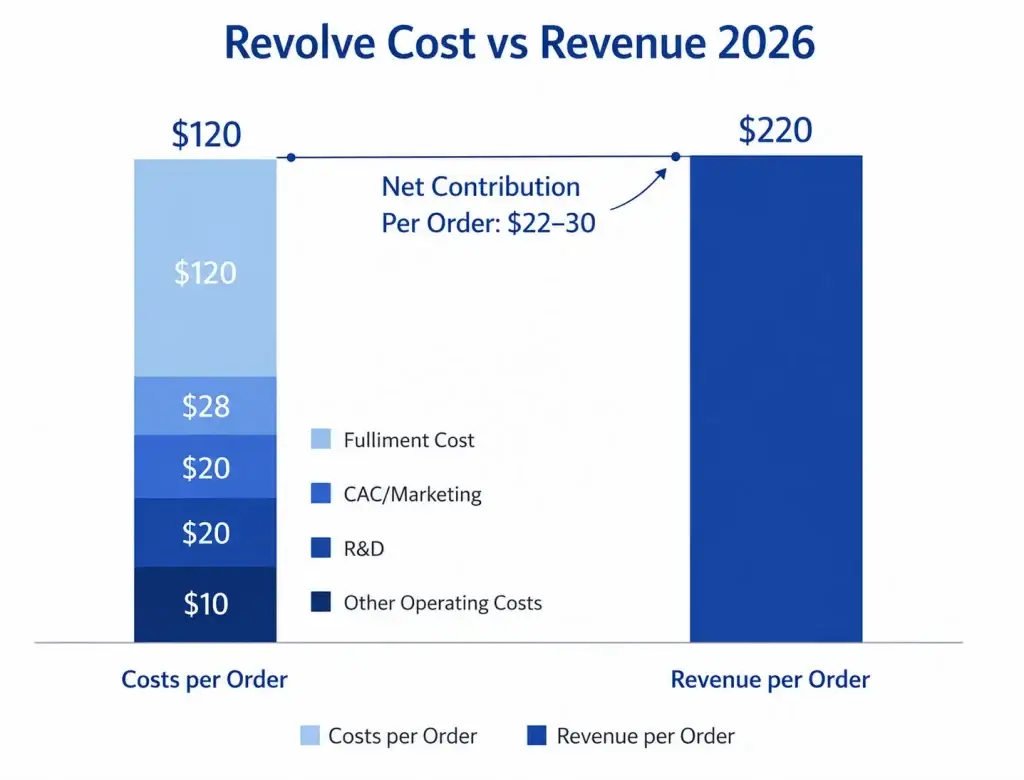
Unit Economics
- Avg gross profit/order: ~$120
- Avg fulfillment cost: ~$28
- Net contribution/order: ~$22–$30
Profitability Path
- Margin expansion via private labels
- Lower influencer CAC than ads
Read More: Best Revolve Clone Scripts 2025 | Premium Fashion E-Commerce
Future Revenue Opportunities & Innovations
- AI-powered demand forecasting
- Creator storefront monetization
- Live shopping commerce
- Sustainable fashion premium lines
- Expansion into Middle East & Southeast Asia
Predicted Trends (2026–2027):
- Fewer discounts, more exclusivity
- Influencers as equity partners
- Faster drop cycles
Risks & Threats:
- Inventory misreads
- Influencer fatigue
- Fast-fashion pricing wars
Opportunities for Founders:
- Niche-focused Revolve-style platforms
- Regional influencer marketplaces
Lessons for Entrepreneurs & Your Opportunity
What Works
- Influencers as distribution, not ads
- Scarcity-driven merchandising
What to Replicate
- Drop-based inventory model
- Data-led buying decisions
Market Gaps
- Mid-tier fashion creators
- Regional influencer commerce
Founder Improvements
- Lower return friction
- Community-owned fashion labels
Final Thought
Revolve proves that fashion eCommerce doesn’t need endless discounts to scale sustainably. Instead of racing to the bottom on price, it focuses on perceived value, limited availability, and brand-led demand, allowing the platform to protect margins while still driving high conversion rates.
What fashion eCommerce truly needs is cultural relevance, controlled supply, and repeat-driven monetization. Revolve stays close to social trends, limits overproduction through data-backed buying, and monetizes customer loyalty through frequent drops, exclusive access, and high-return engagement loops rather than constant promotions.
For founders, the real opportunity lies in localizing this model for untapped creator economies. Regional influencers, niche fashion communities, and culturally specific trends remain under-monetized, creating space for new platforms to replicate Revolve’s playbook at smaller, faster-moving scales with lower competition and higher community trust.
FAQs
1. How much does Revolve make per transaction?
Around $22–$30 in net contribution per order.
2. What’s Revolve’s most profitable revenue stream?
Private labels and influencer-led capsule drops.
3. How does Revolve’s pricing compare to competitors?
Higher than fast fashion, lower than luxury brands.
4. What percentage does Revolve take from providers?
Typically 40–55% margin on wholesale pricing.
5. How has Revolve’s revenue model evolved?
From pure D2C retail to influencer-powered demand creation.
6. Can small platforms use similar models?
Yes, especially with niche influencer communities.
7. What’s the minimum scale for profitability?
Roughly 5,000–10,000 monthly active buyers.
8. How to implement similar revenue models?
Drop-based inventory, influencer partnerships, and data-led pricing.
9. What are alternatives to Revolve’s model?
Marketplace-only fashion platforms or subscription styling services.
Miracuves is an independent software development company. We are not affiliated with, connected to, sponsored by, or endorsed by any company or product named in this article.
Terms such as “X Clone” are used descriptively. It is how the software industry refers to building a platform with functionality comparable to a known service, and how clients search for it.
The entire design and codebase of our products is built by our own team. Our products contain no code, design, graphics, or content originating from any third-party website or applications.
All third-party names and marks referenced in this article are the property of their respective owners, referenced solely to identify the services discussed.