


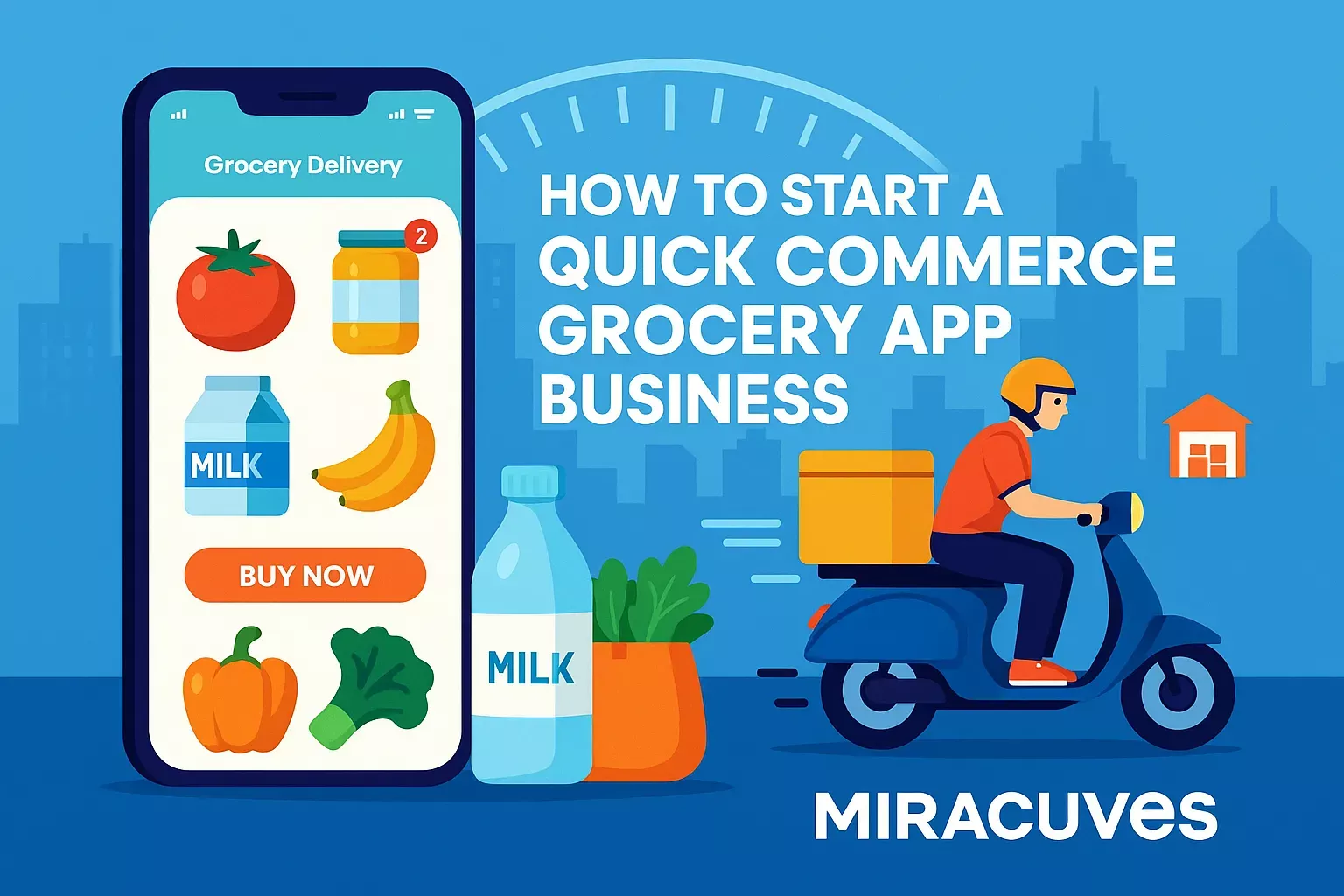
Ever had that late-night craving for chocolate and realized you’re out of stock? Or maybe you needed diapers in a hurry and the supermarket felt like it was on Mars. You’re not alone. The world is shifting to instant gratification, and the rise of Quick Commerce (Q-Commerce) grocery apps is proof.
Entrepreneurs and startups are racing to tap into this goldmine. With 10-minute delivery promises and micro-warehouses popping up like mushrooms, Q-Commerce is no longer a luxury—it’s becoming the new norm. If you’ve ever dreamed of building a lightning-fast grocery app that rivals Blinkit or Zepto, now is the perfect moment to dive in.
And the best part? You don’t have to start from scratch. With solutions like those offered by Miracuves, launching your own Quick Commerce Grocery App is faster, smoother, and way more cost-efficient.
What is Quick Commerce & Why It’s Booming
Quick Commerce refers to ultra-fast delivery of everyday essentials, often within 10 to 30 minutes. Unlike traditional eCommerce, it thrives on localized delivery, micro-fulfillment centers, and lightning-speed logistics.
Key Growth Drivers:
- Busy Urban Lifestyles: People want groceries on-demand without the trip.
- Pandemic-Driven Habits: COVID-19 normalized home deliveries even for essentials.
- Tech & Logistics Advancement: Route optimization, AI-powered demand prediction, and bike fleets have supercharged speed.
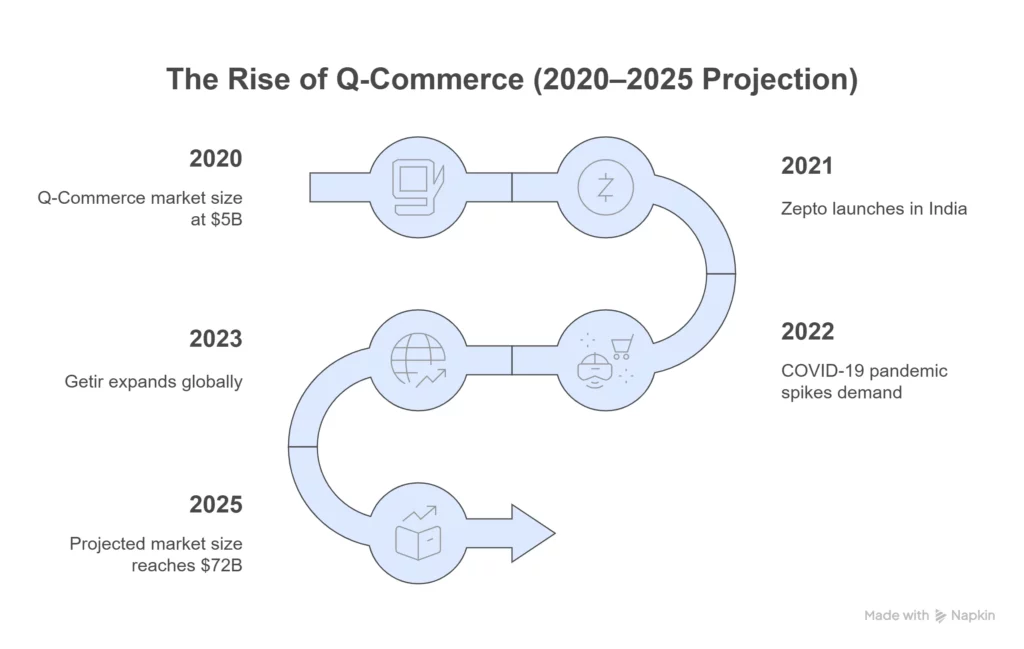
Key Players in the Q-Commerce Grocery Space
Let’s take a quick peek at who’s already making noise in the space:
Shipt (India)
It pivoted to 10-minute delivery and changed the game in Indian Q-commerce.
Getir (Turkey)
A global player known for ultra-fast deliveries in Europe and the U.S., operating with a hyperlocal warehouse model.
GoPuff (USA)
Offers everyday essentials in minutes, with a warehouse-first model.
Dunzo Daily (India)
Combines daily groceries with a delivery-first infrastructure.
Read more :- What is Dunzo App and How Does It Work?
Business Model of a Quick Commerce Grocery App
Here’s how most successful apps rake in revenue:
Delivery Fees
Users pay a nominal fee for the convenience of quick delivery.
Commission from Sellers
Partner stores or warehouses pay a small percentage of every order.
Subscription Plans
Apps like Zepto offer memberships with unlimited free deliveries or other perks.
In-App Ads & Sponsored Listings
Brands pay to get top placement.
Private Labels
Apps launch their own grocery brands for better margins.
Read more :- What is Blinkit App and How Does It Work?
Features Your Q-Commerce Grocery App Must Have
To compete in this fast-paced market, your app should offer:
Core Features
- Real-time inventory tracking
- GPS-based delivery tracking
- Multiple payment gateway integrations
- Smart cart with suggestions
- Instant order confirmation
Advanced Add-ons
- AI-based personalized recommendations
- Voice-based search
- Loyalty rewards & gamification
- Order scheduling & delivery slots
Read more :- know about Instacart App Works & Why It is Successful
Logistics & Tech Infrastructure: The Backbone
Speed isn’t just about the delivery guy on a bike. It’s an entire system that works behind the scenes:
- Dark Stores: Small warehouses located close to delivery zones.
- Demand Forecasting: Using AI/ML to predict what users will order.
- Route Optimization: Real-time traffic-aware path selection.
- Inventory Sync: Automatic sync between app and warehouse.
How to Start: A Step-by-Step Plan
If you’re planning to build a grocery delivery app, make sure to also check out our guide on building an app like Instacart — packed with real-world insights and practical tips
1. Market Research
Understand what your target audience really needs. Metro or Tier 2 city? Essentials or premium groceries?
2. Pick the Right Business Model
Decide whether you’ll use dark stores, partner retailers, or both.
3. Design User-Centric UI/UX
Make navigation intuitive and onboarding seamless.
4. Tech Stack Selection
Go native or hybrid? Use scalable cloud storage, integrated CRM, and secure APIs.
5. Partner with Miracuves
We offer ready-to-deploy, customizable clone apps for Blinkit, Zepto, GoPuff, and more.
6. Pilot & Optimize
Launch in one city, gather feedback, and scale iteratively.
Read more :- How to Build an App Like Blinkit
Conclusion
Quick Commerce isn’t just a trend—it’s a new way of living. In today’s jam-packed cities where time is the ultimate currency, getting groceries in minutes isn’t a luxury anymore—it’s an expectation. If you’re an ambitious founder or an innovation-hungry startup, this is your chance to stake a claim in a booming market before it gets overcrowded. The door is wide open for early adopters who act fast.
At Miracuves, we empower visionaries with robust, ready-to-scale grocery app solutions built for speed, reliability, and monetization.
Let’s build your Quick Commerce app together. You’ve got the idea — we’ve got the tools. Contact us today to get started.
FAQs
Q1. What is a Quick Commerce Grocery App?
It’s an app that delivers groceries and daily essentials in 10 to 30 minutes using dark stores and local delivery fleets.
Q2. How much does it cost to build a Q-Commerce app?
It depends on features, location, and scalability. With Miracuves’ clone solutions, you can save up to 60% of the cost.
Q3. What are dark stores?
They are small, warehouse-like facilities located in urban areas for faster order fulfillment.
Q4. Can I integrate local Kirana stores?
Absolutely! You can create a hybrid model that combines dark stores with local vendor listings.
Q5. Which clone app is best for starting?
Miracuves offers Blinkit Clone, Zepto Clone, and GoPuff Clone—customizable for your needs.
Q6. How fast can I launch?
With Miracuves, you can go live in as little as 3-4 weeks depending on customizations.
Related Articles:
- How to Start a Restaurant Food Ordering Platform Business
- How to Start a Food Delivery Marketplace Platform Business
- How to Start a Regional Food Delivery Platform Business
- How to Start a Home Services Marketplace Platform Business