
Back in 2020, my friend Sameer opened a small tandoori joint in our neighborhood. His food was divine, but footfall? Meh. That’s when he listed on Swiggy — and boom! From 20 daily orders to 200, his story is now digital legend. That’s the power of food delivery platforms. They aren’t just apps — they’re lifelines for modern foodpreneurs and time-starved customers alike.
The truth is, people no longer want to call in orders or wait in line. Tap, swipe, delivered. That’s today’s food ritual. Whether it’s midnight cravings or birthday brunches, food delivery marketplaces have become household essentials — just like fridge magnets and soy sauce packets.
If you’re thinking of building your own food delivery marketplace, now’s the time. This guide will walk you through the steps, challenges, proven models like DoorDash, Zomato, and how Miracuves helps entrepreneurs build powerful, scalable clone apps that actually make money.
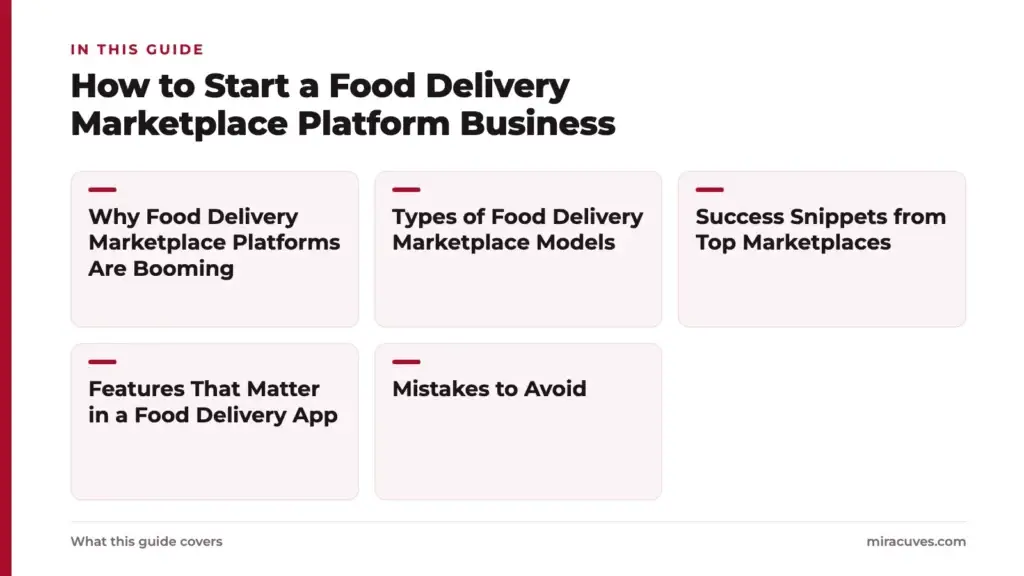
Why Food Delivery Marketplace Platforms Are Booming
Food delivery is no longer a luxury — it’s an expectation. The global online food delivery market is projected to hit $505 billion by 2030, with platforms accounting for the lion’s share of revenue. There are three big drivers behind this surge:
- Urban lifestyles & time crunches
- Contactless convenience (thanks, pandemic!)
- Digital-first consumer habits
Read more :- What is Dunzo App and How Does It Work?
Types of Food Delivery Marketplace Models
Not all delivery apps are built alike. Choosing the right model affects your tech stack, logistics, and monetization approach.
1. Order & Delivery Model (e.g., DoorDash, Uber Eats)
You connect customers to restaurants and provide delivery logistics.
- Complexity: Medium-High
- Revenue: Delivery fees, commissions, ads
2. Order-Only Model (e.g., Grubhub, Just Eat)
You list restaurants and route orders — but restaurants handle delivery.
- Complexity: Low
- Revenue: Listing fees, service commissions
3. Hybrid Cloud Kitchen Model (e.g., Rebel Foods)
You integrate a virtual kitchen into your platform — owning both the brand and backend.
- Complexity: High
- Revenue: 3X margin via direct orders + owned brands
Read more :- What is Blinkit App and How Does It Work?
Success Snippets from Top Marketplaces
Here’s how the big guns operate — and what you can learn from them.
Zomato (India)
Started as a restaurant listing site, now a unicorn with real-time GPS delivery and a 30% commission model.
Grubhub (USA)
Launched in 2004, pioneered the “order-only” model. Great for lean startups.
Deliveroo (UK)
Invested heavily in dark kitchens and AI-driven delivery logistics.
Uber Eats (Global)
Leverages Uber’s driver ecosystem, high scalability, sleek UI, and rewards integration.
DoorDash (USA)
Dominates North America with 50% market share. Introduced “DashPass” — a subscription model.
Read more : – Most Profitable Grocery Delivery Apps to Launch
Step-by-Step: How to Start Your Food Delivery Marketplace Business
1. Identify Your Niche
Will you focus on healthy eats? Regional cuisine? Late-night munchies? Pick your niche — it’ll define your branding and app UX.
2. Validate Market Demand
Run surveys, test MVPs, or analyze Google Trends. No demand = no delivery.
3. Choose the Right Tech Stack
You’ll need:
- Customer App
- Restaurant Panel
- Delivery Driver App
- Admin Dashboard
Or — shortcut alert — launch with a ready-made app clone from Miracuves and customize it to fit your vision.
4. Build Your Marketplace Platform
- UX/UI: Seamless, intuitive, fast
- Features: Real-time tracking, contactless delivery, live chat, multi-language
- Backend: Stable APIs, real-time database, secure payments
5. Set Up Restaurant Partnerships
Offer initial deals, featured listings, or low commissions to onboard early partners.
6. Recruit Delivery Drivers
Use referral incentives and flexible shifts to attract a loyal gig workforce.
7. Define Monetization Strategy
- Commissions
- Delivery charges
- Ads & sponsored listings
- Subscription (think DashPass or Zomato Gold)
Features That Matter in a Food Delivery App
Don’t overbuild. Focus on these essentials:
- Advanced Search & Filters
- Order Scheduling
- AI-based Recommendations
- Live GPS Tracking
- Multi-Payment Gateways
- Reorder & Favourites
- Real-time Notifications
Mistakes to Avoid
- Building from scratch when time-to-market matters
- Ignoring delivery route optimization
- Overlooking data privacy & payment security
- Partnering with too few restaurants
- Skipping loyalty/reward programs
Read more : – Create a Food Delivery App Like Swiggy
Conclusion
Launching a food delivery marketplace isn’t just about building an app — it’s about crafting a digital experience people rely on daily. With the right tech foundation and business model, you can ride the wave of on-demand culture and carve out your place in the market.At Miracuves, we empower changemakers to kickstart their ventures with reliable, scalable, and revenue-ready clone solutions. Got an idea bubbling? Let’s turn that spark into something deliciously real.
FAQs
Q1. What’s the difference between a marketplace and a restaurant app?
A marketplace connects users to multiple restaurants, while a restaurant app serves a single brand or chain.
Q2. How much does it cost to build a food delivery marketplace?
With Miracuves, you can launch a complete food delivery marketplace for $2K to $5K using a ready-made clone solution, delivered within 6 days including setup and deployment.
Q3. Can I launch without my own delivery fleet?
Yes! You can start with an order-only model where restaurants deliver.
Q4. Which countries are best to launch in?
High urban density + smartphone penetration = best markets. Think India, UAE, UK, USA.
Q5. How do I retain users on my platform?
Offer loyalty points, cashback, and personalized suggestions to keep users engaged.
Q6. Is it legal to start a food delivery business from home?
Yes, as long as you register, follow food safety laws, and get necessary local permits.
Related Articles:
- How to Start an Online Grocery Delivery Platform Business
- How to Start a Restaurant Food Ordering Platform Business
- How to Start a Home Services Marketplace Platform Business
- How to Start a Health & Wellness Platform Business
- How to Start an Online Pharmacy & Medicine Delivery Platform Business
Related reading: Simple Steps to Launch Your Own Pizza Delivery Business.
Miracuves is an independent software development company. We are not affiliated with, connected to, sponsored by, or endorsed by any company or product named in this article.
Terms such as “X Clone” are used descriptively. It is how the software industry refers to building a platform with functionality comparable to a known service, and how clients search for it.
The entire design and codebase of our products is built by our own team. Our products contain no code, design, graphics, or content originating from any third-party website or applications.
All third-party names and marks referenced in this article are the property of their respective owners, referenced solely to identify the services discussed.