Key Takeaways
- Claude is an AI assistant designed to understand questions, follow instructions, analyze information, write content, and support complex reasoning tasks.
- It works through large language model technology that processes text, identifies patterns, understands context, and generates helpful responses based on user prompts.
- Claude is commonly used for writing, research, coding support, document analysis, brainstorming, summarization, customer support, and business productivity.
- Its major strengths include long-context understanding, clear explanations, safer responses, and reliable handling of detailed instructions.
- For founders and businesses, Claude shows how AI assistants can improve workflows, reduce manual effort, and support smarter digital products.
AI Assistant Signals
- Claude can help users generate articles, emails, reports, summaries, product ideas, code explanations, strategy notes, and structured business content.
- Long-context capability makes it useful for reviewing large documents, comparing information, extracting insights, and maintaining conversation continuity.
- Businesses can use Claude inside internal tools, knowledge systems, customer support flows, research workflows, and productivity platforms.
- Claude does not think like a human; it predicts useful responses from patterns, context, training data, instructions, and the information provided by the user.
- Development complexity changes based on API integration, data privacy needs, prompt design, workflow automation, user permissions, and monitoring requirements.
Real Insights
- Claude is not just a chatbot; it can act as a writing assistant, research partner, coding helper, document analyst, and workflow support layer.
- The strongest use cases appear when Claude is connected with clear instructions, high-quality input, business context, and defined output goals.
- Founders can use Claude-style AI to improve app experiences through smart support, content automation, recommendations, onboarding, and internal operations.
- Security, data handling, prompt control, API limits, human review, and output validation are important when using Claude in production systems.
- The future of Claude-style AI will depend on better reasoning, multimodal capabilities, safer deployment, enterprise integrations, and practical agent-based workflows.
Imagine you’re drafting a long document, analyzing complex data, or trying to reason through a difficult problem—but you want an AI that feels calm, thoughtful, and safe rather than rushed or unpredictable. That’s exactly the space Claude is designed to fill.
Claude is an advanced AI assistant developed by Anthropic, a research-focused AI company known for prioritizing safety, reliability, and helpfulness. Claude is built to handle long conversations, deep reasoning, and nuanced tasks like writing, summarization, coding assistance, and analysis—while staying aligned with human values.
What makes Claude stand out is its emphasis on responsible AI design. Instead of just optimizing for speed or flashy responses, Claude focuses on being accurate, transparent, and context-aware, especially in complex or sensitive situations.
By the end of this guide, you’ll understand what Claude is, how it works, its business model, key features, the technology behind it, and why many startups and enterprises are inspired to build Claude-like AI platforms—and how Miracuves can help turn those ideas into reality.
What Is Claude? The Simple Explanation
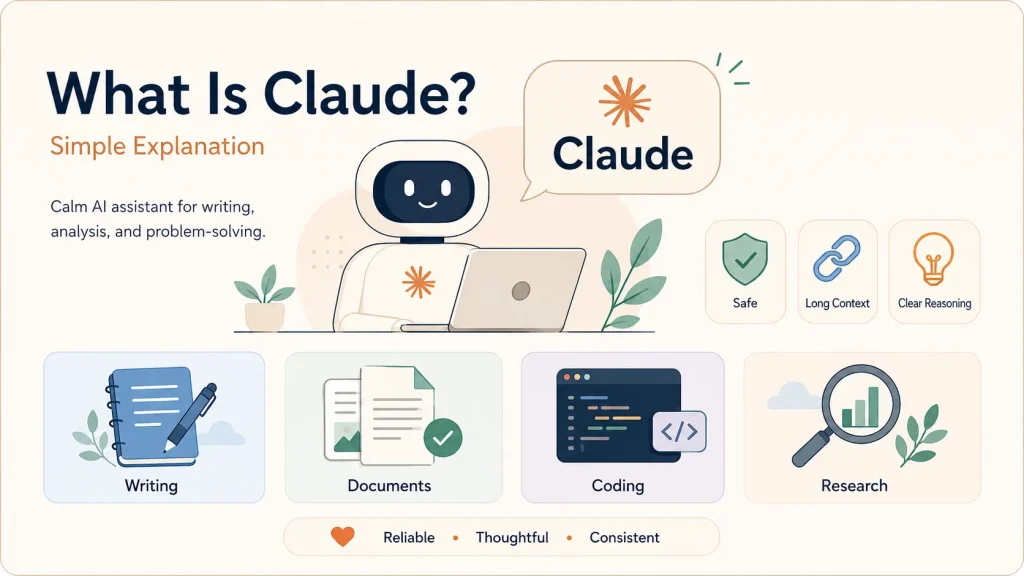
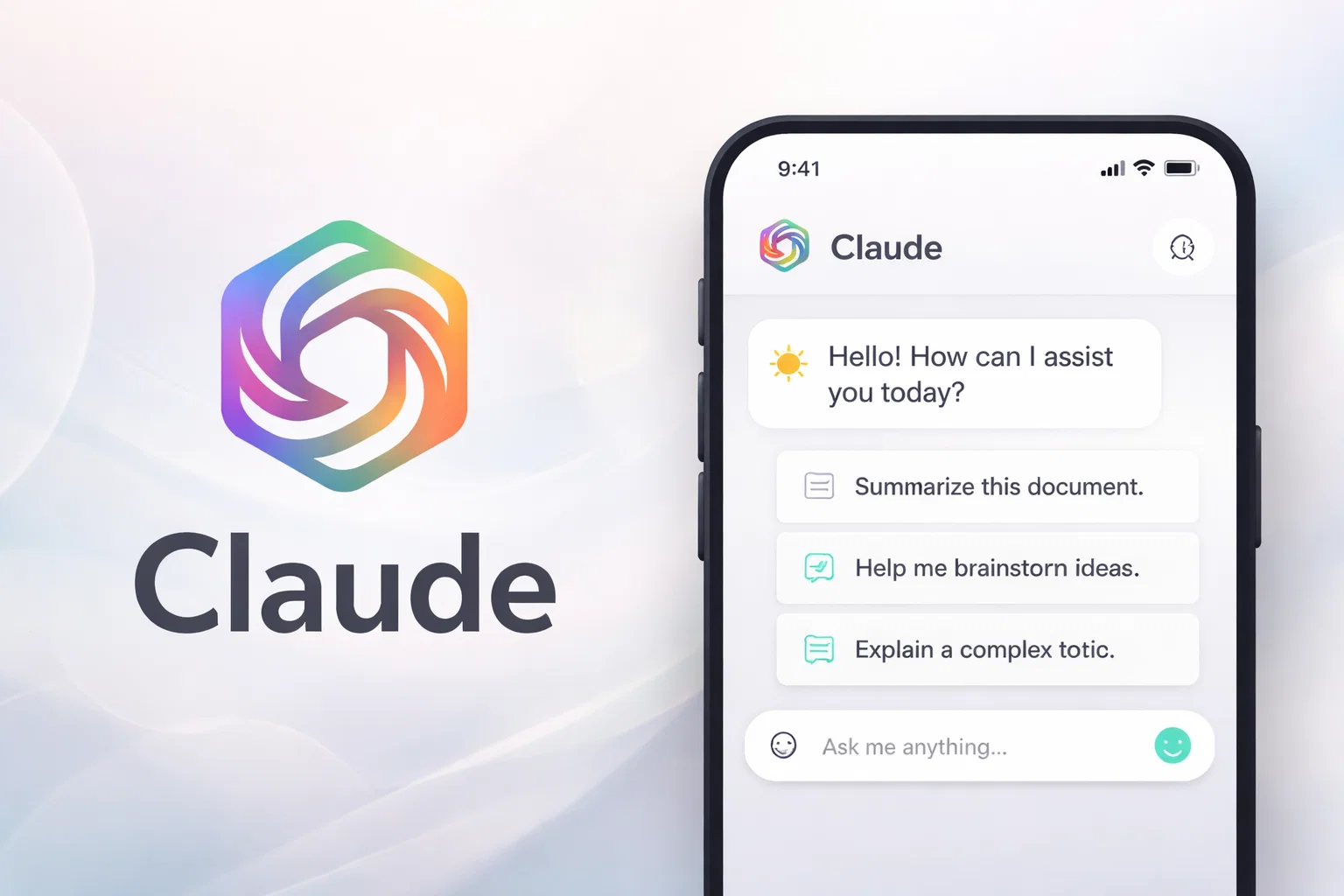
Claude is an AI assistant designed to understand, reason, and communicate in a calm, reliable way. In simple terms, it helps people think, write, analyze, and solve problems by having natural conversations—similar to talking with a very knowledgeable assistant that can read large amounts of information quickly.
The Core Problem Claude Solves
As AI tools became more powerful, many users struggled with trust, safety, and consistency. Some tools were fast but unpredictable, others struggled with long documents or nuanced reasoning. Claude addresses this by focusing on:
- Safer, more aligned responses
- Better handling of complex instructions
- Strong performance with long documents and conversations
- Clear, thoughtful explanations instead of rushed answers
Target Users and Use Cases
Claude is commonly used by:
• Professionals writing reports, emails, and documentation
• Teams summarizing long documents or contracts
• Developers needing coding help or explanations
• Researchers and analysts working with large text inputs
• Businesses integrating AI into internal tools or workflows
Current Market Position
Claude is positioned as a reliable, safety-focused AI assistant, especially strong in long-context reasoning and enterprise-friendly use cases. It’s often chosen when accuracy, tone control, and consistency matter more than flashy responses.
Why It Became Successful
Claude gained adoption because it feels measured and trustworthy. Users appreciate its ability to follow instructions carefully, maintain context over long conversations, and explain complex topics without overwhelming jargon.
How Claude Works — Step-by-Step Breakdown
For Users (Individuals & Teams)
Getting started
Users interact with Claude through a chat-style interface or via API integrations. They type a question, upload a document, or describe a task they want help with—such as writing, summarizing, analyzing, or coding.
Understanding the request
Claude first interprets the intent behind the input. It looks at:
- The goal of the task (write, explain, summarize, reason)
- Context from earlier messages in the conversation
- Tone and constraints provided by the user
- Any uploaded documents or long text
This allows Claude to respond in a way that fits the full context, not just the last message.
Generating a response
Claude produces responses by reasoning step by step internally and then presenting a clear, structured answer. It aims to:
- Stay aligned with the user’s intent
- Use simple language for complex ideas
- Maintain a calm, neutral, and helpful tone
- Avoid unsafe or misleading outputs
Handling long documents
One of Claude’s strengths is working with long inputs, such as contracts, research papers, or policy documents. Users can ask Claude to summarize, extract key points, or explain sections without breaking the text into smaller pieces.
Iteration and refinement
Users can follow up with clarifications like “rewrite this more simply” or “focus only on risks.” Claude keeps the conversation context and refines its output accordingly.
Example user journey
User provides prompt or document → Claude analyzes intent and context → generates structured response → user refines → final output produced.
For Developers (API Use)
Integration
Developers can integrate Claude into applications using APIs to power chatbots, document analysis tools, internal knowledge assistants, or customer support systems.
Custom workflows
Claude can be guided with system instructions to behave in specific ways—such as using a brand voice, following compliance rules, or limiting response styles.
Technical Overview (Simplified)
Claude is built on large language models trained to:
- Understand natural language
- Reason across long contexts
- Follow instructions carefully
- Prioritize safety and alignment
It combines language understanding, reasoning, and policy-based safeguards to deliver consistent results.
Claude’s Business Model Explained
How Claude Makes Money
Claude is offered as a commercial AI service by Anthropic, primarily monetized through subscriptions and API usage. Instead of ads, the focus is on paid access for individuals, teams, and businesses that need reliable AI assistance.
Key revenue streams include:
- Individual subscriptions: Access to Claude through consumer plans with usage limits
- Team and enterprise plans: Higher limits, collaboration features, and governance controls
- API usage: Pay-as-you-go pricing for developers integrating Claude into products and workflows
- Partnerships and platform deals: Claude embedded in third-party software and enterprise tools
This model aligns revenue with usage and value delivered, rather than attention or data harvesting.
Pricing Structure
Claude pricing is generally based on:
- Usage volume (tokens processed in inputs and outputs)
- Model tier (standard vs more capable models)
- Access type (consumer, team, or API)
Users and companies pay more as they scale usage, which keeps entry costs low while supporting growth.
Fee Breakdown
- Subscription fees for individuals or teams
- Usage-based API charges
- Enterprise contracts for high-volume or regulated environments
There is no advertising or commission-based pricing.
Market Size and Demand
Demand for AI assistants is driven by:
- Knowledge work automation
- Content creation and editing
- Document analysis and summarization
- Software development assistance
- Enterprise AI adoption
Claude benefits from being positioned as a trusted, enterprise-friendly AI, especially in environments where safety and reliability matter.
Profitability Insights
Claude’s economics improve through:
- High reuse of trained models across customers
- Scalable cloud infrastructure
- Long-term enterprise contracts
- Expansion into new enterprise workflows
Revenue Model Breakdown
| Revenue Stream | Description | Who Pays | Nature |
|---|---|---|---|
| Subscriptions | Individual & team access | Users | Recurring |
| API Usage | Token-based AI access | Developers | Usage-based |
| Enterprise Plans | Large-scale deployments | Companies | Contract |
| Partnerships | Embedded AI services | Platforms | Strategic |
Key Features That Make Claude Successful
Strong long-context understanding
Claude is especially good at handling long documents and extended conversations. Users can upload large files or paste long text and still get coherent summaries, explanations, or analysis without breaking content into pieces.
Calm, reliable tone
Claude is designed to respond in a measured, thoughtful way. This makes it well suited for professional settings where clarity, neutrality, and consistency matter more than flashy or overly casual responses.
Instruction-following accuracy
Claude carefully follows user instructions, including tone, format, constraints, and scope. This makes it reliable for tasks like rewriting, structured outputs, compliance-focused summaries, and step-by-step explanations.
Document analysis and summarization
One of Claude’s standout strengths is working with complex documents such as policies, contracts, research papers, and reports. It can summarize, extract key points, compare sections, and explain implications clearly.
Reasoning over complex topics
Claude performs well in tasks that require logical reasoning, such as analyzing trade-offs, outlining pros and cons, or explaining multi-step concepts in simple language.
Safety-first response design
Claude is built with a strong emphasis on safe and responsible outputs. It avoids harmful or misleading responses and is careful around sensitive topics, which builds trust with users and organizations.
Consistent behavior across sessions
Users experience predictable behavior across conversations. Claude tends to maintain consistent quality, tone, and structure, which is important for repeated professional use.
Flexible use cases
Claude supports a wide range of tasks, including:
- Writing and editing
- Research assistance
- Coding explanations
- Brainstorming and planning
- Internal knowledge assistance
This versatility makes it useful across teams and industries.
Developer-friendly customization
Through system instructions and prompts, Claude can be guided to follow specific styles, rules, or workflows—making it suitable for internal tools and business applications.
Enterprise readiness
Claude is often chosen in environments that require reliability, safety, and clarity, making it appealing for enterprise and regulated use cases.
Read More :- AI Chat Assistant Development Costs: What Startups Need to Know
The Technology Behind Claude
Tech stack overview (simplified)
Claude is built on large language model (LLM) technology, designed to understand natural language, reason over complex inputs, and generate helpful responses. At a high level, the system includes:
- A core language model trained on diverse text data
- Instruction-following and reasoning layers
- Safety and alignment systems
- Infrastructure for scaling requests reliably
- APIs and interfaces for user and enterprise access
All of these components work together to produce responses that are accurate, calm, and context-aware.
Large language model foundation
At the heart of Claude is a transformer-based language model trained to predict and generate text. This allows it to:
- Understand questions and instructions
- Recognize patterns in language
- Generate coherent and structured responses
- Maintain context across long conversations
The model is optimized to handle long context windows, which is why Claude performs well with lengthy documents.
Training and alignment approach
Claude is trained not only on data, but also on behavioral principles that guide how it should respond. This includes:
- Learning to follow instructions carefully
- Avoiding harmful or misleading outputs
- Providing balanced and neutral explanations
- Knowing when to be cautious or refuse unsafe requests
This alignment focus is a major differentiator in how Claude behaves compared to more aggressive or experimental AI systems.
Reasoning and response generation
When a user submits a prompt, Claude:
- Interprets intent and constraints
- Internally reasons through the task
- Selects relevant knowledge patterns
- Produces a clear, user-facing answer
While the internal reasoning process is not exposed, the output is designed to feel logical, structured, and easy to follow.
Handling long documents and memory
Claude’s architecture supports extended input lengths, which enables:
- Reading entire documents in one pass
- Maintaining context across many messages
- Reducing loss of meaning during summarization
This makes it suitable for legal, research, policy, and enterprise documentation tasks.
Safety and moderation systems
Claude includes multiple layers of safeguards that:
- Filter unsafe or disallowed content
- Enforce usage policies
- Guide the model toward safe alternatives
- Reduce hallucinations and overconfidence
These systems help ensure responses remain responsible and trustworthy.
Infrastructure and scalability
Behind the scenes, Claude runs on scalable cloud infrastructure that:
- Handles high request volumes
- Maintains low latency
- Ensures reliability for enterprise workloads
- Supports global availability
This infrastructure is essential for consistent performance across individual and business use cases.
Why this technology matters for business
Claude’s technology is designed for dependable, real-world use. By combining long-context understanding, strong instruction-following, and safety-first design, it becomes a practical tool for businesses that need AI they can trust—not just experiment with.
Claude’s Impact & Market Opportunity
Industry impact
Claude has helped shift expectations around what AI assistants should feel like in professional and enterprise settings. Instead of prioritizing speed or flashy outputs, it emphasized clarity, consistency, and safety, which resonated strongly with teams working on sensitive or high-stakes tasks.
This approach influenced how organizations think about AI adoption—moving from experimentation toward trusted, day-to-day use in writing, research, analysis, and internal workflows.
Market demand and growth drivers
The demand for AI assistants like Claude is growing because:
- Knowledge workers need help processing large volumes of information
- Businesses want AI that can follow rules and tone guidelines
- Long documents and complex data are common in real work
- Teams want productivity gains without sacrificing reliability
- Enterprises require safer, more predictable AI behavior
As AI becomes embedded in daily operations, assistants that behave consistently gain an advantage.
User segments and behavior
Claude is commonly used by:
- Professionals handling reports, policies, and documentation
- Legal, research, and compliance-focused teams
- Developers and product teams building AI-powered tools
- Enterprises integrating AI into internal systems
A common pattern is repeat, workflow-based usage. Users return to Claude for drafting, reviewing, summarizing, and refining work rather than one-off questions.
Enterprise adoption trend
Organizations increasingly prefer AI that:
- Follows instructions precisely
- Handles long, complex inputs
- Maintains a neutral and professional tone
- Reduces risk of unsafe or misleading outputs
Claude’s positioning aligns well with these needs, making it attractive for internal tools and enterprise deployments.
Future direction
The evolution of Claude-style AI assistants is moving toward:
- Deeper reasoning over complex tasks
- Stronger customization for business rules
- Better collaboration features for teams
- More integration into enterprise software
- Increased focus on reliability and trust
Opportunities for entrepreneurs
There are strong opportunities to build Claude-inspired platforms for:
- Internal company knowledge assistants
- Document-heavy workflows (legal, HR, finance)
- Research and analysis tools
- Customer support copilots with strict rules
- AI tools for regulated industries
This growing demand is why many founders want to build AI assistants that feel thoughtful, dependable, and safe—not just powerful.
Read Also :- How to Market an AI Chatbot Platform Successfully After Launch
Building Your Own Claude-Like Platform
Why businesses want Claude-style AI assistants
Claude shows that many users—especially professionals and enterprises—value reliability over flashiness. Businesses want AI assistants that can be trusted with real work, not just experimentation. Key reasons this model is attractive include:
- Growing demand for AI in everyday knowledge work
- Need for safe, predictable behavior in sensitive domains
- High value of handling long documents and complex context
- Strong fit for internal tools and enterprise workflows
- Clear monetization through subscriptions and APIs
Instead of optimizing for viral use, Claude-style platforms optimize for long-term adoption.
Key considerations before development
If you plan to build a Claude-like AI platform, important decisions include:
- Target audience: consumers, teams, or enterprises
- Core use cases: writing, analysis, compliance, research, support
- Safety and alignment rules the AI must follow
- Context length and document-handling capabilities
- Customization options (tone, rules, outputs)
- Deployment model: web app, internal tool, or API-first
- Data handling and privacy expectations
These choices shape both the product and the trust users place in it.
Miracuves Claude-Like AI Assistant Platform Solution Cost and Tech Stack
Miracuves Pricing for a Claude-Like AI Assistant Platform developed using Node.js / React.js Architecture is available on request. Contact Miracuves for custom pricing based on AI model integration, chat workflows, user roles, API usage, and deployment scope. Estimated delivery timeline: 30 to 90 Days.
Build a scalable AI assistant platform designed for text generation, document analysis, business automation, research support, and intelligent user conversations.
- Core Workflows: AI chat interface, prompt input, conversation history, document upload, response generation, workspace management, and user account flows.
- Built-in AI Operations: LLM API integration, context handling, file analysis, prompt templates, usage tracking, and AI response management.
- Management Hub: User management, subscription controls, API usage monitoring, role-based access, analytics dashboard, and admin settings.
- Enterprise-Ready: Fully customizable architecture prepared for secure AI workflows, business-specific automation, multi-user access, and long-term platform scaling.
Why does a Claude-Like Platform require Node.js / React.js architecture?
AI assistant platforms need fast response handling, real-time chat experiences, document processing, API orchestration, and scalable user activity management. These systems require a flexible backend and highly interactive frontend experience.
We recommend a modern JavaScript-based architecture because:
- Built for Real-Time AI Conversations: Node.js efficiently handles chat requests, streaming responses, API calls, background processing, and concurrent user sessions.
- Advanced Chat Experience: React.js supports smooth chat interfaces, document previews, prompt libraries, workspace views, and responsive dashboard interactions.
- Scalable AI Infrastructure: This architecture supports LLM APIs, vector search, file processing, usage limits, subscription logic, and secure enterprise workflows.
- Flexible Integration Layer: Easily integrates with AI model providers, CRM tools, productivity apps, payment gateways, analytics systems, and internal business software.
You get a scalable, enterprise-grade AI assistant platform foundation designed for modern AI product growth.
Note: Final pricing depends on AI model integration, document processing, enterprise security, subscription workflows, API usage logic, and custom automation requirements.
Essential features to include
A solid Claude-style MVP should include:
- Chat-based interface with context retention
- Long-document upload and analysis
- Strong instruction-following controls
- Clear tone and formatting guidance
- Safety and refusal handling
- Usage limits and billing logic
- Admin controls for monitoring and policies
High-impact extensions you can add later:
- Team collaboration and shared workspaces
- Workflow templates for common tasks
- Fine-grained role and permission systems
- Domain-specific reasoning layers
- Analytics on usage and outcomes
Read More :-How to Develop an AI Chatbot Platform
Conclusion
Claude shows that AI doesn’t have to be loud or unpredictable to be powerful. By focusing on clarity, safety, and careful reasoning, it has positioned itself as an assistant people can genuinely rely on for real work—whether that’s analyzing long documents, supporting business decisions, or helping teams think more clearly.
For entrepreneurs and builders, Claude is a strong example of where the AI market is heading next. As AI becomes embedded into everyday workflows, the platforms that win will be the ones users trust. Building calm, dependable, and well-aligned AI systems isn’t just a design choice—it’s a long-term business advantage.
FAQs :-
What is Claude used for?
Claude is used for writing, editing, summarizing documents, analyzing complex text, reasoning through problems, and assisting with coding and research tasks.
How does Claude make money?
Claude is monetized through paid subscriptions, team and enterprise plans, and usage-based API access for developers and businesses.
What makes Claude different from other AI assistants?
Claude focuses on safety, reliability, calm tone, and strong instruction-following, especially for long documents and professional use cases.
Can Claude handle long documents?
Yes. Claude is known for handling large inputs and long documents, such as contracts, policies, reports, and research papers, without losing context.
Is Claude suitable for business and enterprise use?
Yes. Claude is often chosen by organizations that need predictable behavior, clear explanations, and safer AI responses, especially in sensitive or regulated workflows.
Does Claude support developers?
Yes. Developers can integrate Claude through APIs to build chatbots, internal knowledge assistants, document analysis tools, and AI-powered workflows.
Is Claude designed with safety in mind?
Yes. Safety and alignment are core to Claude’s design, helping reduce harmful, misleading, or inappropriate outputs.
Can Claude be customized for specific tasks or tone?
Claude can follow system instructions and constraints, allowing customization of tone, structure, and behavior for different applications.
What industries benefit most from Claude?
Claude is commonly used in legal, research, education, content creation, software development, customer support, and enterprise operations.
Can I build an AI assistant like Claude?
Yes. With the right language models, safety layers, infrastructure, and product design, Claude-style AI assistants can be built.
How can Miracuves help build a Claude-like platform?
Miracuves helps founders build Claude-style AI assistant platforms with long-context handling, safety-focused workflows, scalable infrastructure, and full customization—allowing businesses to launch reliable, enterprise-ready AI products quickly.