


Key Takeaways
- Upwork-like platforms handle sensitive data including chats, files, payments, contracts, and identities.
- Security is a core business requirement as trust directly impacts hiring and retention.
- Authentication and access control are critical for freelancers, clients, and admins.
- Secure APIs are essential for payments, messaging, and integrations.
- Audits and penetration testing help identify vulnerabilities early.
- A secure Upwork clone builds long-term trust and reduces legal and reputational risks.
Stats That Matter
- End-to-end encryption protects messages, files, and transactions.
- Two-factor authentication and OAuth help prevent account takeovers.
- Regular security audits uncover vulnerabilities early.
- Penetration testing validates defenses through simulated attacks.
- SSL and secure APIs ensure safe data transmission and access control.
- Continuous compliance and monitoring are essential for long-term platform safety.
Real Insights
- Trust drives marketplace growth, and weak security directly hurts adoption.
- Cutting corners early leads to higher costs later in fixing breaches and rebuilding trust.
- Security supports business outcomes, not just technical infrastructure.
- Multi-sided platforms increase risk exposure across users, payments, and data flows.
- Proactive security is essential for platforms handling contracts and payments.
- The strongest platforms are built for continuous protection and scalable security.
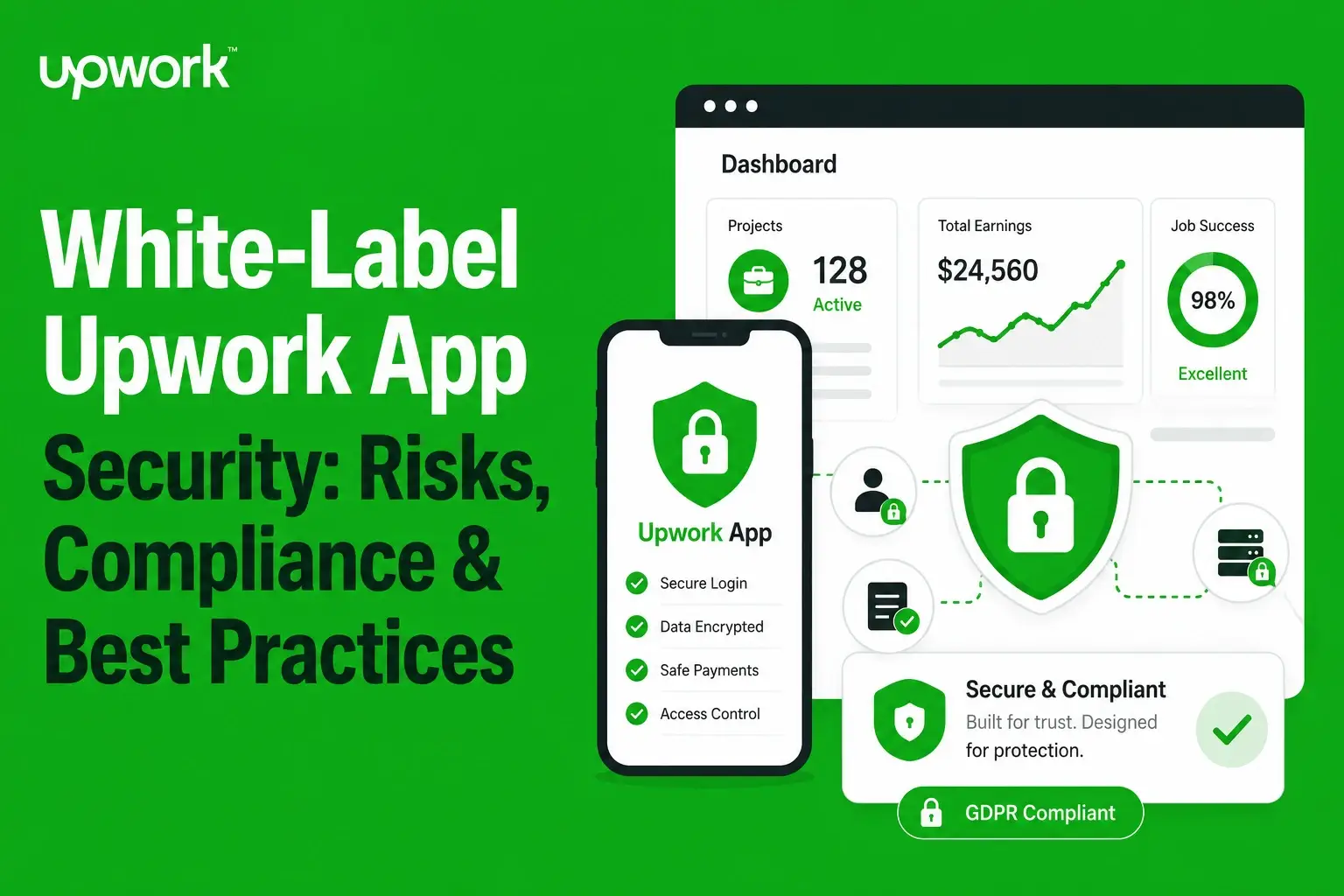
You’ve heard the horror stories about data breaches, leaked freelancer profiles, and payment fraud in marketplace apps. In 2026, security is no longer optional for a white-label Upwork app—it’s a business survival requirement.
Freelance platforms handle sensitive data every day: user identities, contracts, messages, and payment details. A single security flaw can destroy trust, invite legal penalties, and shut down operations overnight.
This guide delivers an honest, practical security assessment of white-label Upwork app solutions. You’ll learn real risks, required security standards, and how Miracuves approaches app security with a security-first mindset.
Understanding White-Label Upwork App Security Landscape
What White-Label Upwork App Security Really Means
White-label Upwork app security refers to the protection measures built into the app’s code, infrastructure, APIs, and data handling processes. It covers how freelancer data, client information, payments, and communications are stored and protected.
Common Security Myths vs Reality
Many believe white-label apps are automatically insecure. In reality, security depends on how the app is built, maintained, and audited. A professionally developed white-label Upwork app can be as secure as custom-built platforms when proper standards are followed.
Why Businesses Worry About White-Label Apps
Concerns usually come from lack of transparency, shared codebases, and unknown data handling practices. Marketplace apps are high-value targets for hackers because they manage payments and personal data.
Current Threat Landscape for Freelance Marketplace Apps
Freelance apps face threats like account takeovers, payment fraud, data scraping, API abuse, and insider access risks. These attacks have increased as remote work platforms continue to grow globally.
Security Standards in 2026
In 2026, secure white-label Upwork apps must align with global data protection laws, encrypted communication standards, and continuous security monitoring expectations.
Real-World App Security Statistics
Recent industry reports show marketplace apps account for a significant percentage of mobile data breaches, with weak authentication and insecure APIs being the top causes.
Key Security Risks & How to Identify Them
Data Protection & Privacy Risks
White-label Upwork apps store highly sensitive information that must be protected at all times.
User Personal Information
Freelancer profiles, identity documents, and client details are prime targets for data theft if encryption is weak.
Payment Data Security
Improper handling of payment data can lead to fraud, chargebacks, and PCI DSS violations.
Location & Activity Tracking
Tracking freelancer activity without proper safeguards can violate privacy laws and user trust.
GDPR and CCPA Compliance Gaps
Missing consent management and data access controls can result in heavy regulatory penalties.
Technical Vulnerabilities
Security flaws often originate from poor technical foundations.
Code Quality Issues
Unreviewed or reused code increases the risk of hidden vulnerabilities.
Server and Cloud Security Gaps
Misconfigured servers and unsecured cloud storage expose user data.
API Vulnerabilities
Weak API authentication allows unauthorized access to core app functions.
Third-Party Integrations
Payment gateways and messaging tools can introduce external security risks if not vetted properly.
Business-Level Risks
Security failures directly impact business stability.
Legal Liability
Data breaches can trigger lawsuits and regulatory investigations.
Reputation Damage
Loss of trust can permanently affect freelancer and client retention.
Financial Losses
Downtime, penalties, and fraud recovery costs add up quickly.
Risk Assessment Checklist
- Is all user data encrypted at rest and in transit
- Are payments handled through PCI-compliant providers
- Are APIs protected with authentication and rate limiting
- Is compliance documentation available
- Are security audits conducted regularly
Read more : – Upwork Features Every Startup Should Know About
Security Standards Your White-Label Upwork App Must Meet
Essential Security Certifications
A secure white-label Upwork app must align with recognized global security standards to protect user data and business operations.
ISO 27001 Compliance
Ensures structured information security management and risk control processes.
SOC 2 Type II
Validates secure handling of data over time, especially for availability and confidentiality.
GDPR Compliance
Mandatory for apps handling EU user data, covering consent, access, and data deletion rights.
HIPAA (If Applicable)
Required if the app manages healthcare-related freelance projects or sensitive medical data.
PCI DSS for Payments
Essential for secure payment processing and protection of cardholder information.
Technical Security Requirements
Beyond certifications, technical safeguards are critical.
End-to-End Encryption
Protects messages, files, and transactions from unauthorized access.
Secure Authentication
Two-factor authentication and OAuth reduce account takeover risks.
Regular Security Audits
Identifies vulnerabilities before attackers can exploit them.
Penetration Testing
Simulates real-world attacks to test system defenses.
SSL and Secure API Design
Ensures safe data transmission and controlled system access.
Security Standards Comparison Overview
Enterprise-grade white-label Upwork apps meet multiple certifications, while low-cost solutions often lack audits, encryption, and compliance readiness.
Red Flags: How to Spot Unsafe White-Label Providers
Warning Signs You Should Never Ignore
Choosing the wrong provider can expose your white-label Upwork app to serious risks.
No Security Documentation
Providers unable to explain their security architecture often lack proper safeguards.
Unrealistically Cheap Pricing
Low pricing usually means security, audits, and compliance are missing.
No Compliance Certifications
Absence of GDPR, ISO, or SOC compliance increases legal and operational risks.
Outdated Technology Stack
Old frameworks and libraries contain known vulnerabilities.
Poor Code Quality
Messy or undocumented code makes security maintenance difficult.
No Security Update Policy
Lack of regular updates leaves apps exposed to new threats.
Missing Data Backup Systems
Without backups, recovery after an attack becomes nearly impossible.
No Insurance Coverage
Providers without cyber insurance transfer all risk to your business.
Provider Evaluation Checklist
- Ask for security and compliance documentation
- Request recent audit and penetration test reports
- Verify data backup and disaster recovery plans
- Review update and patch management processes
- Confirm liability and cyber insurance coverage
Read more ; – Business Model of Upwork : Complete Strategy Breakdown 2025
Best Practices for Secure White-Label Upwork App Implementation
Pre-Launch Security Measures
Strong security should be established before the app goes live.
Security Audit Process
Conduct full code and infrastructure audits to identify vulnerabilities.
Code Review Requirements
Ensure clean, documented, and secure coding practices are followed.
Infrastructure Hardening
Secure servers, databases, and cloud environments against unauthorized access.
Compliance Verification
Confirm GDPR, PCI DSS, and regional compliance readiness.
Team Security Training
Train staff to handle data securely and recognize security threats.
Post-Launch Security Monitoring
Security is an ongoing responsibility.
Continuous Monitoring
Track suspicious activity and system performance in real time.
Regular Updates and Patches
Apply updates to fix vulnerabilities and improve protection.
Incident Response Planning
Prepare clear steps for handling security breaches quickly.
User Data Management
Limit access to sensitive data based on roles and permissions.
Backup and Recovery Systems
Maintain automated backups to ensure quick restoration after incidents.
Security Implementation Timeline
Effective white-label Upwork app security follows a continuous cycle of auditing, monitoring, updating, and improvement.
Legal & Compliance Considerations
Regulatory Requirements by Region
White-label Upwork apps must comply with multiple regional data protection laws.
Data Protection Regulations
GDPR for Europe, CCPA for California, and similar global privacy laws require strict data handling and user consent controls.
Industry-Specific Rules
Certain freelance categories may trigger additional regulatory obligations.
User Consent Management
Clear opt-in, data usage disclosures, and withdrawal mechanisms are mandatory.
Privacy Policy Requirements
Policies must clearly explain data collection, storage, and sharing practices.
Terms of Service Essentials
Well-defined user responsibilities and dispute handling reduce legal exposure.
Liability and Risk Protection
Legal preparation minimizes long-term business risk.
Insurance Requirements
Cyber liability insurance protects against breach-related losses.
Legal Disclaimers
Clearly define service limitations and responsibilities.
User Agreements
Contracts should outline data usage and platform obligations.
Incident Reporting Protocols
Timely breach notifications are required by most regulations.
Compliance Monitoring
Ongoing reviews ensure laws and standards remain up to date.
Read more : – How to Develop an Upwork App Alternative
Why Miracuves White-Label Upwork App Is Your Safest Choice
Miracuves Security-First Approach
Miracuves builds white-label Upwork apps with security embedded at every layer, not added later as a patch.
Enterprise-Grade Security Architecture
The app infrastructure follows industry best practices for data isolation, access control, and threat prevention.
Compliance by Default
Miracuves white-label Upwork apps are designed to meet GDPR and CCPA requirements from day one, reducing legal risks.
Continuous Security Monitoring
Round-the-clock monitoring helps detect and respond to suspicious activity before it escalates.
Encrypted Data Handling
All sensitive data, including user profiles, messages, and transactions, is protected through strong encryption.
Secure Payment Processing
Payments are handled through PCI DSS–compliant gateways to prevent fraud and data leakage.
Regular Updates and Audits
Security updates, vulnerability fixes, and periodic audits ensure long-term protection.
Insurance and Risk Coverage
Miracuves includes insurance-backed protection, minimizing business exposure during unforeseen incidents.
Final Thought
Don’t compromise on security. Miracuves white-label Upwork app solutions deliver enterprise-grade protection with proven reliability. With 9k+ successful projects and zero major security breaches, Miracuves helps you launch safe, compliant freelance platforms with confidence.
A white-label Upwork app can be safe, scalable, and compliant when security is treated as a priority, not an afterthought. Choosing a security-focused provider like Miracuves helps protect user trust, business reputation, and long-term growth in an increasingly regulated digital landscape.
FAQs
1. How secure is a white-label Upwork app compared to custom development
A white-label Upwork app can be equally secure if it follows proper security standards, regular audits, and compliance requirements.
2. What happens if there is a security breach
An incident response plan should be activated immediately, including containment, user notification, and regulatory reporting.
3. Who is responsible for security updates
The app provider handles core security updates, while the business must follow operational security practices.
4. How is user data protected in a white-label Upwork app
User data is protected through encryption, access controls, and secure cloud infrastructure.
5. Which compliance certifications should be prioritized
ISO 27001, SOC 2 Type II, GDPR, and PCI DSS are essential for freelance marketplace apps.
6. Can a white-label Upwork app meet enterprise security standards
Yes, when built with enterprise-grade architecture and continuous monitoring.
7. How often should security audits be conducted
At least once a year, with additional audits after major updates.
8. What is included in the Miracuves security package
Audits, compliance readiness, encrypted data handling, secure payments, and continuous monitoring.
9. How is security managed across different countries
The app adapts to regional data protection laws and localization requirements.
10. What insurance is required for app security
Cyber liability insurance is recommended to cover breach-related risks.
Related Articles