


Key Takeaways
What You’ll Learn
- Upwork’s revenue model is multi-layered, combining commissions, subscriptions, connects, visibility tools, and enterprise services.
- The platform monetizes both freelancers and clients, creating balanced revenue from both sides of the marketplace.
- Micro-transactions like connects and profile boosts generate revenue even before contracts are finalized.
- Enterprise hiring solutions provide stable and high-value income streams for long-term profitability.
- Subscription models and premium tools increase average revenue per user beyond basic transaction fees.
- An Upwork clone allows startups to replicate this proven monetization structure without building from scratch.
Stats That Matter
- Commissions contribute around 50–70% of total revenue, making it the primary income stream.
- Premium subscriptions contribute about 10–15%, adding recurring income stability.
- Connects, add-ons, and visibility tools contribute 5–10% each, showing the power of micro-monetization.
- Enterprise services contribute 10–20%, improving revenue predictability and margins.
- Freelancers are typically charged around 10% commission per contract.
- The model uses segmentation, upselling, and cross-selling to maximize lifetime value per user.
Real Insights
- Commissions alone are not enough — layered monetization creates stronger and more scalable revenue.
- Micro-transactions increase engagement and earnings even before major contracts are completed.
- Enterprise clients improve profitability by bringing larger and recurring contracts.
- The most successful marketplaces monetize every interaction, not just completed jobs.
- Retention-driven revenue (repeat clients and freelancers) significantly boosts long-term growth.
- The strongest Upwork-style platforms combine commissions, subscriptions, and upgrades into one unified revenue engine.
Upwork is one of the largest freelance marketplaces in the world, generating hundreds of millions in revenue every year across millions of transactions. Its platform connects businesses, startups, and independent professionals in a way that turns digital collaboration into a scalable business model. In 2026, Upwork strengthened its income strategy even further—shifting more focus to enterprise contracts, AI-powered tools, subscription-based offerings, and high-value clients.
What makes Upwork truly impressive is its ability to monetize multiple user types at the same time. From freelancers buying connects and membership upgrades to employers paying for premium job posts and managed hiring solutions, every interaction becomes an opportunity for revenue. This is exactly why Upwork’s model continues to scale globally without increasing operational cost at the same pace—proving the strength of a well-executed digital marketplace.
For entrepreneurs planning to build a freelance marketplace, Upwork offers a blueprint of how to structure monetization, retain users, and scale profitably with a smart fee-based architecture.
Upwork Revenue Overview – The Big Picture
Current valuation and revenue (2026):
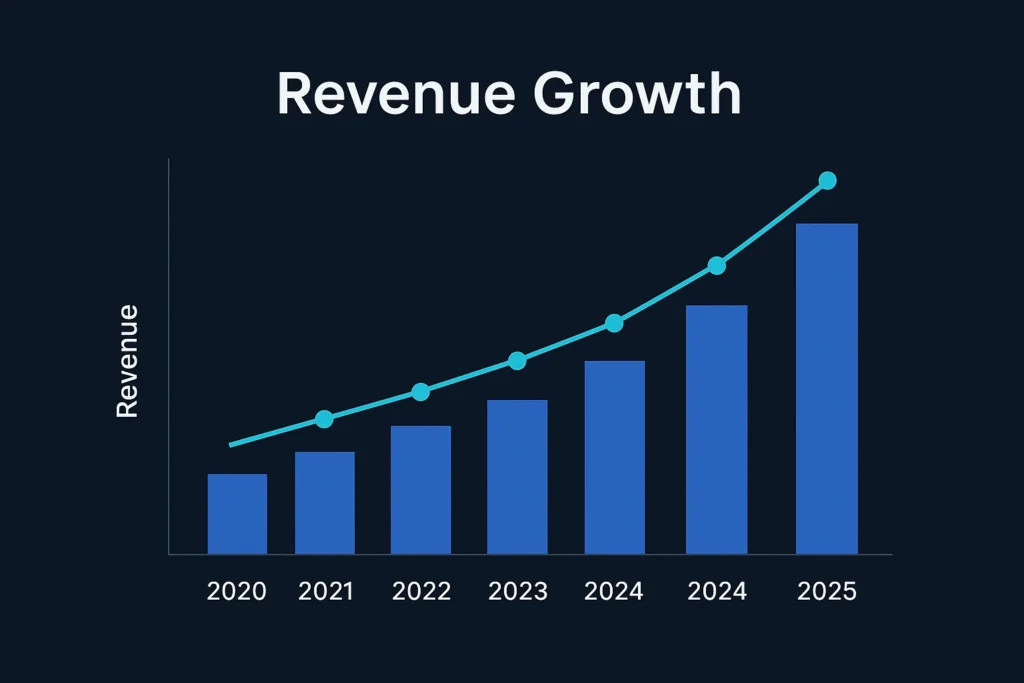
Upwork reported approximately USD 201.7 million in revenue in Q3 2026, with full-year revenue expected to exceed USD 780 million.
Year-over-year growth:
Upwork experienced roughly 4% YoY growth in Q3, reflecting stable demand and rising enterprise adoption.
Revenue breakdown by region:
The platform earns the most from North America and Europe, followed by strong expansion in Asia, Latin America, and the Middle East.
Profit margin analysis:
With a net income of around USD 29 million in Q3 2026, Upwork’s profitability improved due to enterprise contracts and reduced operating expenses.
Market position vs competitors:
Upwork remains a top global freelancing marketplace, competing with platforms like Fiverr while leading in enterprise hires and long-term freelance contracts.
Read More: Upwork App Explained – Features, Benefits & How It Works
Primary Revenue Streams Deep Dive
1. Service Fees / Commissions
Upwork earns its largest revenue share from commissions charged on freelancer earnings. On most contracts, the platform charges around 10%.
2. Premium Subscriptions
Freelancers purchase premium memberships that include extra visibility, job bidding benefits, and reduced fees. Employers can also upgrade to premium hiring plans.
3. Connects (Proposal Credits)
Freelancers must purchase “connects” to submit proposals, creating a high-volume micro-transaction revenue stream.
4. Add-On Services & Boosted Listings
Employers pay to post premium jobs with special visibility. Freelancers pay to boost their profiles or pin proposals.
5. Enterprise Solutions
Large companies use Upwork for managed hiring, workforce solutions, and long-term contractor management. This generates significant and predictable revenue.
Read More: Business Model of Upwork : Complete Strategy Breakdown 2025
Revenue streams percentage breakdown
| Revenue Stream | Approx % of Total Revenue |
|---|---|
| Commissions | 50–70% |
| Premium Subscriptions | 10–15% |
| Connects | 5–10% |
| Add-Ons & Visibility Tools | 5–10% |
| Enterprise Services | 10–20% |
The Fee Structure Explained
User-Side Fees (Freelancers)
• 10% commission on most contracts
• Paid connects for submitting proposals
• Optional premium membership
Employer-Side Fees
• Paid upgrades for featured job posts
• Subscription plans for premium hiring tools
• Agency and enterprise hiring fees
Hidden Revenue Layers
• AI-based recommendations
• Profile boosts
• Talent-matching fees
• Contract management services
Regional Pricing Differences
Upwork adjusts pricing based on region, spending power, marketplace maturity, and demand.
Complete fee structure by user type
| User Type | Fee Type | Typical Range |
|---|---|---|
| Freelancer | Commission | ~10% of earnings |
| Freelancer | Connects | Per credit purchase |
| Freelancer | Premium Membership | Monthly/annual |
| Employer | Featured Job Posts | Fixed upgrade fee |
| Employer | Premium Hiring Plans | Subscription |
| Enterprise | Managed Hiring | Contract-based |
Global Cost Factors & Pricing Breakdown
These values reflect global development cost estimates for an Upwork-like freelance marketplace platform. The Miracuves row shows our own custom-build pricing.
Miracuves Upwork-Like App Solution Cost and Tech Stack
Miracuves Pricing for an Upwork-Like Freelance Marketplace developed in PHP/Laravel with Flutter Apps for $2,799 USD (One-Time Price) in just 6 days.
Get a fully developed, deployment-ready platform modeled after Upwork. Built on a reliable PHP/Laravel backend with Flutter mobile apps, this complete solution helps you launch and scale a freelance marketplace quickly and efficiently.
- Core Workflows: Job posting, freelancer bidding, talent matching, contract management, messaging, and secure payments.
- Built-in Operations: Commission setup, proposal handling, milestone-based payments, and transaction management.
- Management Hub: Centralized admin panel to manage clients, freelancers, job listings, contracts, earnings, and platform activity.
- Launch-Ready: Fully prepared for your branding, configuration, and immediate go-to-market execution.
Why is it so affordable?
Most modern freelance platforms are built using complex architectures like Node.js or microservices. While powerful, these approaches require large engineering teams, longer timelines, and significantly higher development costs.
We took a smarter and more practical approach:
- You Aren’t Paying for Ground-Up Development: Our freelance marketplace engine is already developed, tested, and ready to deploy. You skip months of development time and avoid the high costs of building from scratch.
- The Power of PHP / Laravel: Built on one of the most trusted and widely used frameworks globally, this solution keeps upfront costs low while ensuring long-term flexibility. With a large developer ecosystem, it becomes easier and more cost-effective to maintain, scale, and customize your platform.
- Built for Practical Growth: You get a strong, market-ready freelance platform with essential features like bidding systems, escrow payments, and talent discovery—without the complexity and expense of enterprise-level builds.
You get a scalable, production-ready platform without paying inflated development costs.
Note: This cost is for the solution, re-branding, deployment, and source code only.
How Upwork Maximizes Revenue Per User
Segmentation:
Users are segmented by skill, spend, region, and contract type, enabling personalized monetization.
Upselling:
Freelancers are encouraged to buy connects, join premium tiers, and boost profiles. Employers are nudged into upgraded hiring plans.
Cross-selling:
Users often combine upgrades, memberships, and connects, increasing average revenue per user.
Dynamic pricing:
Upwork adjusts fees based on job type, contract longevity, and client-freelancer history.
Retention monetization:
Long-term contracts and repeat clients increase revenue consistency and lifetime value.
LTV optimization:
Frequent transactions, connects, and enterprise contracts keep the revenue cycle strong.
Psychological pricing:
Tiered memberships, discounts, and limited-time boosts drive upgrades.
Real examples:
With quarterly revenues exceeding USD 200 million, Upwork’s estimated take-rate averages around 5–7% of total contract value processed.
Cost Structure & Profit Margins
Tech infrastructure:
Cloud hosting, platform development, cybersecurity, and AI tools.
Marketing & CAC:
Advertising, influencer campaigns, SEO, and partnerships to attract freelancers and employers.
Operations:
Support teams, compliance checks, dispute resolution, and fraud monitoring.
R&D:
AI-driven matching, talent-vetting automation, and workflow optimization.
Unit economics:
As a digital marketplace, incremental cost per additional user is low, making scale the key to profitability.
Profitability path:
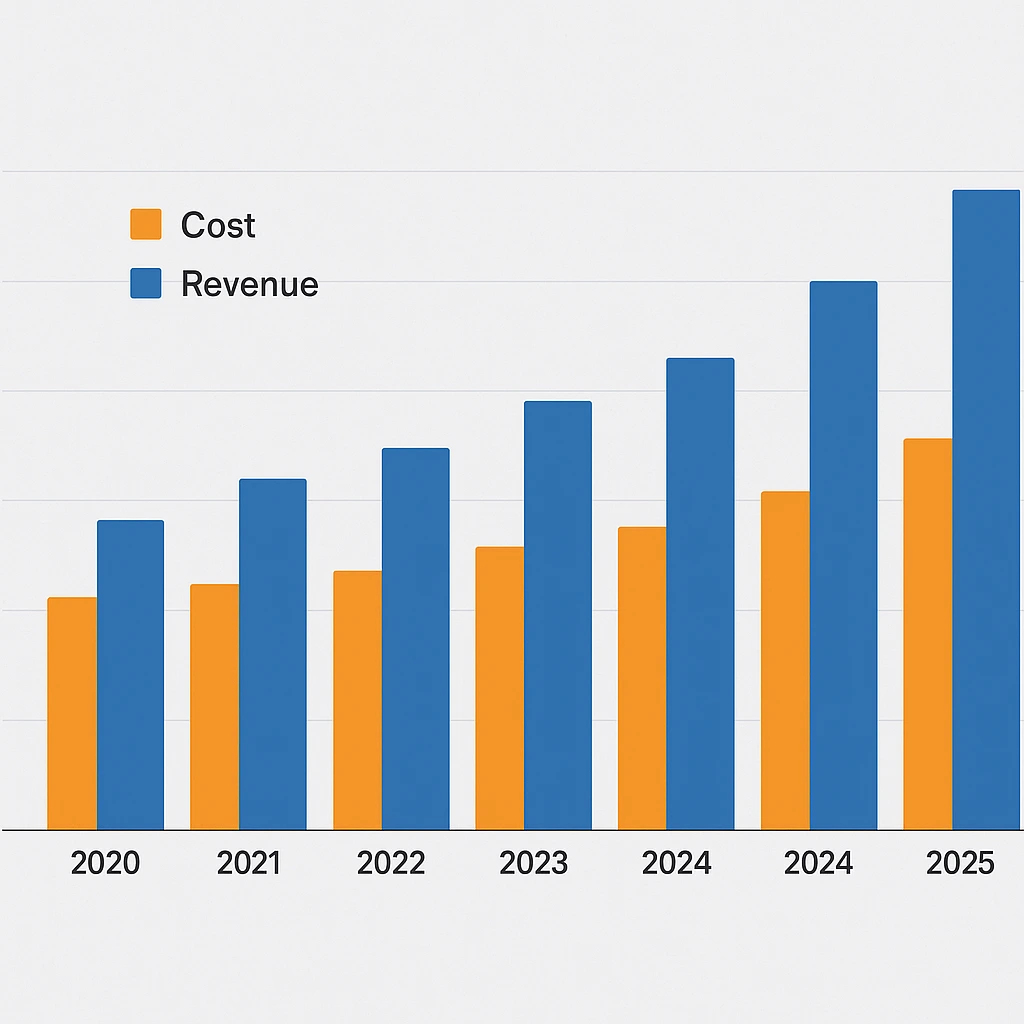
In 2026, Upwork demonstrated improved profitability due to higher enterprise revenue and streamlined operating expenses.
Margin optimization:
The shift toward memberships, connects, and enterprise services boosts margins significantly.
Future Revenue Opportunities & Innovations
AI-driven hiring:
Intelligent matching, automated proposals, and predictive skill identification can unlock premium pricing.
Enterprise workforce solutions:
More companies outsource work, expanding Upwork’s B2B opportunities.
Expansion into emerging markets:
Huge opportunities in India, Africa, and LATAM due to rising freelancing adoption.
New monetization angles:
Micro-services marketplace, packaged services, advanced reporting tools for employers, and agency-level subscriptions.
2025–2027 predictions:
Continued growth in enterprise adoption, higher take-rate, expanded subscription ecosystem, and increased AI monetization.
Risks:
Competition, regulatory challenges, withdrawal of freelancers due to fees.
Opportunities for new players:
Niche marketplaces with specialized skills or regions can outperform general platforms.
Lessons for Entrepreneurs & Your Opportunity
What works:
Commission-based income, memberships, and micro-transactions create strong recurring revenue.
What to replicate:
Tiered pricing, connects, enterprise solutions, boosted listings, and long-term contract management.
Market gaps:
Industry-specific marketplaces (AI, medical, fintech, legal, creative tech) remain underdeveloped.
How to improve the model:
Lower fees in emerging markets, better user onboarding, certification systems, built-in project management tools.
Final Thought
Upwork’s revenue model is powerful, scalable, and built for long-term profitability. It not only generates income through commissions, connects, and memberships—but also through intelligent monetization, user segmentation, and enterprise-level hiring solutions. This makes the platform far more than just a marketplace; it operates as a complete ecosystem where every user interaction can be monetized strategically.
With the right approach, this model can be replicated efficiently. Miracuves transforms this proven strategy into a ready-to-launch solution: the Upwork Clone script comes with built-in monetization streams, optimized fee logic, and flexible revenue control. Many entrepreneurs start earning within weeks—and Miracuves delivers fully launch-ready platforms in just 6 Days.
FAQs
1. How much does Upwork make per transaction?
Around 10% of freelancer earnings.
2. What’s Upwork’s most profitable revenue stream?
Commissions, followed by premium upgrades and connects.
3. How does Upwork’s pricing compare to competitors?
The pricing is competitive — lower than Fiverr and similar to Upwork, offering strong marketplace value. With Miracuves, you can build such a platform starting at just $2799.
4. What percentage does Upwork take from freelancers?
Approximately 10%, with no tiered reductions as in older models.
5. How has Upwork’s revenue model evolved?
More focus on enterprise, subscriptions, and AI-powered services.
6. Can small platforms use the same model?
Yes, even niche platforms can monetize successfully.
7. What’s the minimum scale for profitability?
Stable GMV and reduced CAC allow faster break-even for niche platforms.
8. How can entrepreneurs implement this model?
Use commissions, connects, premium memberships, and enterprise hiring features.
9. What alternatives exist to Upwork’s model?
Subscription-only hiring, SaaS talent platforms, or pay-per-lead systems.
Related Articles:
Miracuves is an independent software development company. We are not affiliated with, connected to, sponsored by, or endorsed by any company or product named in this article.
Terms such as “X Clone” are used descriptively. It is how the software industry refers to building a platform with functionality comparable to a known service, and how clients search for it.
The entire design and codebase of our products is built by our own team. Our products contain no code, design, graphics, or content originating from any third-party website or applications.
All third-party names and marks referenced in this article are the property of their respective owners, referenced solely to identify the services discussed.