
So, you’ve got this million-dollar idea for a hyperlocal delivery app—kind of like Dunzo, Swiggy Genie, or Postmates, but with your own twist. Maybe it hits your neighborhood better. Maybe it’s faster. Maybe it delivers coconut water at 2 AM because, hey, that’s what real locals need. But then comes the big, scary question: “Is building this thing going to burn through my entire runway?”
If you’ve been binge-reading startup founder threads, lurking on Reddit, or lurking in Product Hunt comments, you’ve probably seen it all—some say it’s cheap with the right devs, others say you’ll need VC-sized pockets. The truth? It’s complicated… but not hopeless. If you’re planning to develop a hyperlocal delivery app, costs can spiral, yes—but they can also be managed, streamlined, even predicted—with the right approach.
At Miracuves, we’ve helped dozens of entrepreneurs launch clone-powered hyperlocal delivery platforms that balance performance, design, and cost. So if you’re feeling stuck between your budget and your ambitions—this post is your friendly reality check.
What Does “Hyperlocal Delivery” Really Mean?
Hyperlocal delivery apps are all about instant gratification in your neighborhood. Think groceries, food, medicine, or errands delivered within a few kilometers—sometimes in under 30 minutes. It’s Uber meets corner store, backed by algorithms and real-time GPS.
Now, hyperlocal isn’t just a logistics play. It’s also a data-driven, UX-heavy mobile commerce experience. Your app has to track locations, route deliveries, show ETAs, handle payments, and offer delightful UI—all while making sure the user doesn’t delete it in frustration.
Read more: How to Start a Profitable On-Demand Delivery Business Today
So, What’s the Real Cost of Building One?
Let’s rip off the Band-Aid: a hyperlocal delivery app can cost anywhere between $15,000 to $150,000 to build from scratch, depending on:
- Scope and complexity (multi-city vs single area)
- Platform(s) (iOS, Android, Web?)
- Tech stack (native, hybrid, clone framework?)
- Backend infra (cloud-hosted vs self-managed)
- Team composition (freelancers, agencies, in-house?)
Here’s a quick breakdown:
| Feature / Module | Cost Range |
| User App (iOS/Android) | $6,000 – $20,000 |
| Delivery Agent App | $4,000 – $15,000 |
| Vendor Dashboard | $2,000 – $8,000 |
| Admin Panel (Web) | $3,000 – $10,000 |
| Backend APIs & Integration | $5,000 – $20,000 |
| Real-time Tracking & Maps | $1,500 – $8,000 |
| Testing & QA | $1,000 – $5,000 |
Why Do Costs Spiral for Startups?
You know the saying, “The devil’s in the details”? Hyperlocal apps are nothing but details. From surge pricing logic to rain-based delivery fees—custom features quickly multiply costs.
Common Cost Traps:
- Over-customization: Wanting to be the “next big thing” from day one
- Building everything in-house: Re-inventing the wheel instead of using proven clones
- Skipping product validation: Coding for months before testing with real users
- Poor UI/UX: Users bounce, and retention tanks
You don’t need a rocket ship version of your app to launch. Start with what’s functional, lovable, and fast—then iterate.
The Clone Advantage: Smart Startups Go Lean
Here’s a little industry secret: most startups don’t build from zero. They start with proven clone scripts—like a Dunzo Clone or Postmates Clone—and customize.
Clone frameworks from Miracuves, for instance, offer:
- Pre-built core modules (user login, order flow, real-time tracking)
- Scalable architecture
- Plug-and-play integrations (payment gateways, map APIs)
- Fast turnaround (launch in weeks, not months)
This alone can shave 60–70% off your initial dev budget, and you still retain the ability to customize later.
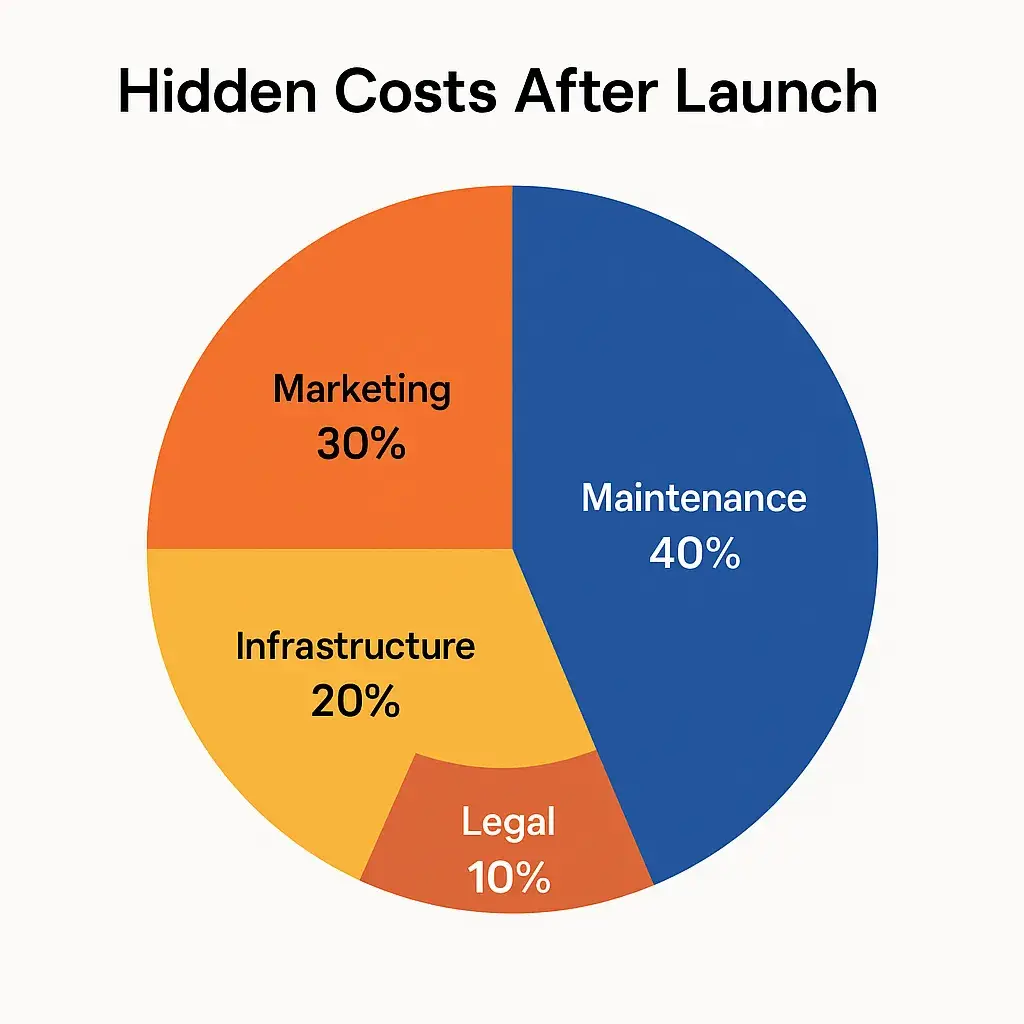
Cost Factors Startups Often Forget
Sometimes it’s not the app build—but what comes after—that eats your budget:
1. Server & Cloud Costs
Expect to spend $200–$800/month initially if you use AWS, Firebase, or similar platforms.
2. Maintenance & Updates
Your v1.0 will need bug fixes, OS compatibility updates, and maybe even new features.
3. Marketing & Onboarding
Even the best app is invisible without reach. Factor in influencer campaigns, local SEO, and rider onboarding costs.
4. Licensing & Legal
If you’re handling medicines or regulated goods, you’ll need permits, contracts, maybe even insurance.
MVP vs Full Product: What Should You Start With?
Not every hyperlocal app needs full-blown features from the get-go. Consider these two launch paths:
MVP (Minimum Viable Product)
- One city or area
- Limited vendor count
- Basic delivery & payment
- Manual assignment of tasks
- Cost: $12,000–$25,000
Full Product
- Multi-city expansion
- Dynamic pricing, loyalty rewards
- AI-based delivery optimization
- Cost: $40,000+
If you’re early-stage or bootstrapped, go MVP. Test-market fit, build traction, then reinvest.
How Do Big Players Do It?
Apps like Zomato or Swiggy Genie invested millions over years, but that’s a trap to compare against. What matters for you is speed, agility, and finding the smallest repeatable success in your niche.
Hyperlocal pet supply? Coffee bean delivery for urban hipsters? Laundry pickup in gated communities? There’s always an edge.
Statista reports the last-mile delivery market will reach $200+ billion by 2027 source. That’s not a typo. You just need to carve your corner of it.
Read more: Revenue Model for On-demand Hyperlocal Delivery Service
Conclusion
Well, yes… and no.
If you’re dreaming of building the next Uber for X with a global roadmap in mind—yes, it’ll cost you. But if you’re smart, use clone solutions, stay lean, and build with iteration in mind—it’s surprisingly doable.
At Miracuves, we help innovators launch high-performance app clones that are fast, scalable, and monetization-ready. Ready to turn your idea into reality? Let’s build together.
FAQs
Q:1 What’s the cheapest way to build a hyperlocal delivery app?
Start with a clone framework and limit your MVP scope. Focus on essential features only.
Q:2 Can I launch in one city first and expand later?
Absolutely. That’s the smart way. Local validation helps avoid costly nationwide flops.
Q:3 How long does it take to build the app?
With a clone framework—3 to 6 weeks. From scratch? 4 to 6 months minimum.
Q:4 Do I need a separate app for delivery agents?
Yes. You’ll need at least three components: user app, delivery agent app, and admin dashboard.
Q:5 What if I don’t have tech co-founders?
No problem. Partner with experienced teams like Miracuves who specialize in launch-ready solutions.
Q:6 Can I monetize it from day one?
Yes! You can start with delivery charges, service fees, or vendor commissions right off the bat.
Related Articles:
Miracuves is an independent software development company. We are not affiliated with, connected to, sponsored by, or endorsed by any company or product named in this article.
Terms such as “X Clone” are used descriptively. It is how the software industry refers to building a platform with functionality comparable to a known service, and how clients search for it.
The entire design and codebase of our products is built by our own team. Our products contain no code, design, graphics, or content originating from any third-party website or applications.
All third-party names and marks referenced in this article are the property of their respective owners, referenced solely to identify the services discussed.