Key Takeaways
What You’ll Learn
- Glovo-like platforms help launch a multi-service delivery app faster than building every module from scratch.
- Core delivery features include food delivery, grocery delivery, parcel delivery, real-time tracking, and seamless checkout.
- White-label solutions can reduce development time, operational complexity, and early launch costs.
- Monetization models such as delivery fees, commissions, surge pricing, ads, and subscription plans create multiple revenue streams.
- Pricing depends on platform scope, delivery coverage, logistics setup, payment integrations, and admin-side operational control.
Stats That Matter
- On-demand delivery platforms are built around high-frequency daily-use services like food, groceries, and essentials.
- A Glovo-style platform focuses on last-mile delivery logistics connecting users, merchants, and riders in real time.
- Multi-category delivery improves retention as users rely on one app for multiple needs.
- Fast checkout and tracking systems improve user experience and increase repeat orders.
- A strong delivery platform needs dense rider networks, merchant partnerships, and consistent service availability to scale effectively.
Real Insights
- Start with high-demand categories like food or grocery delivery before expanding into multiple verticals.
- Speed and reliability matter most because delivery experience directly impacts retention.
- Rider availability and merchant onboarding must be strong before scaling customer acquisition.
- Efficient dispatch, real-time tracking, and smooth payments are critical for operational success.
- Long-term growth depends on hyperlocal operations, scalable logistics systems, and optimized delivery routes.
Glovo, the Barcelona-based on-demand delivery app, has become a household name across Europe, Latin America, and parts of Africa. Known for delivering “anything within your city” — from food and groceries to electronics and urgent parcels — Glovo’s hyperlocal logistics platform has disrupted traditional delivery models by combining speed, convenience, and tech.
With millions of users, thousands of couriers, and partnerships with restaurants, supermarkets, and pharmacies, Glovo isn’t just a food delivery app — it’s a multi-category marketplace. And its business growth has been nothing short of impressive, with the company being acquired by Delivery Hero and reaching over 25 countries by 2026.
In this blog, we’ll break down how Glovo earns money, the brilliance behind its multi-pronged monetization strategy, and how startups can replicate this proven model using a Glovo clone powered by Miracuves.
How Glovo Makes Money
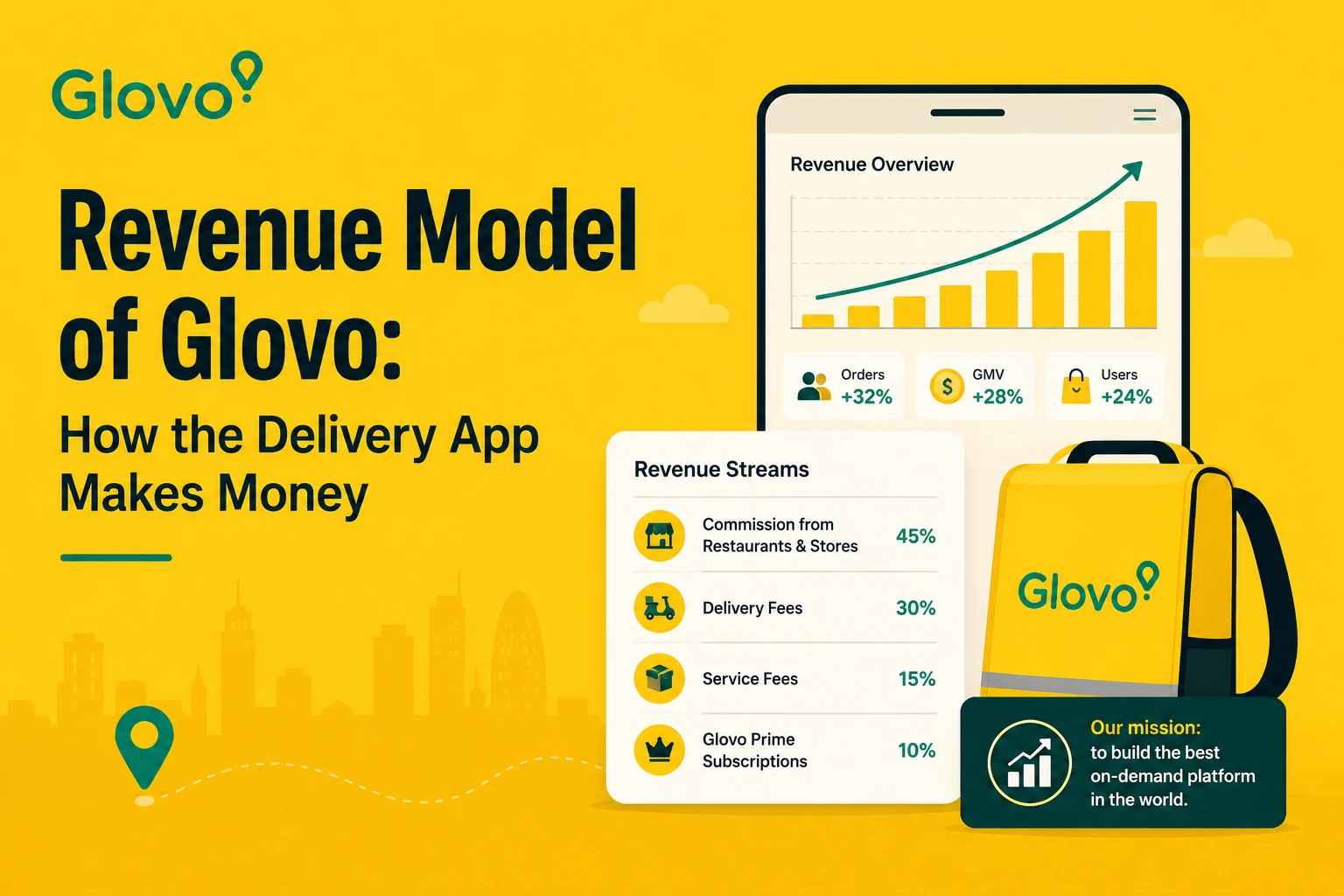
Glovo operates on a robust, multi-stream revenue model that monetizes each layer of its ecosystem — customers, couriers, and partners. Here are the major ways Glovo generates revenue:
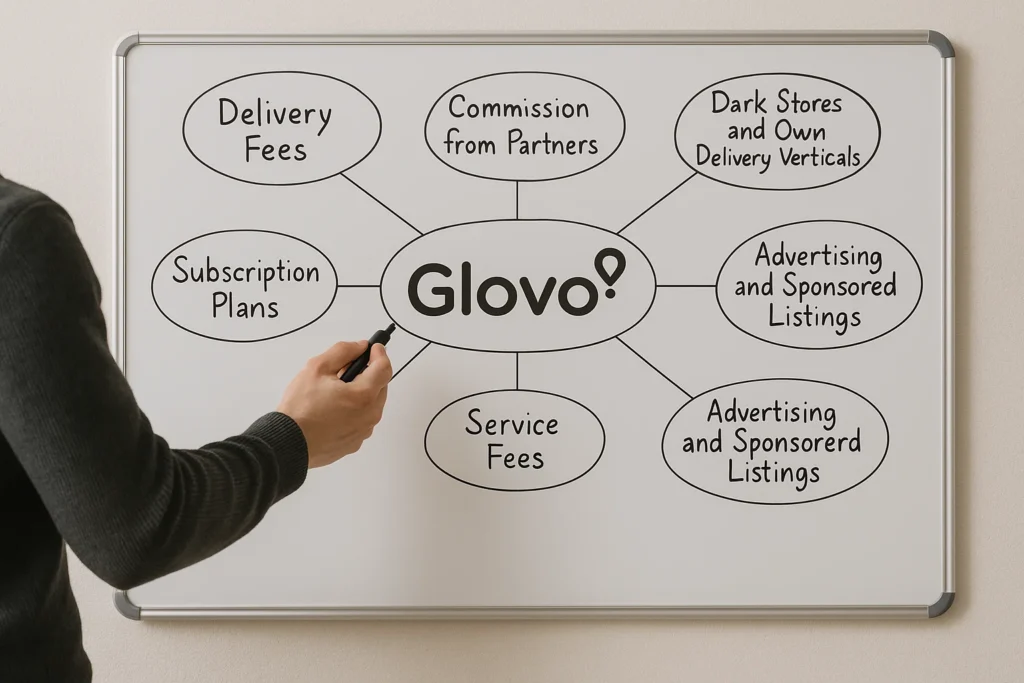
Together, these channels make Glovo not just a delivery app — but a full-fledged urban logistics and monetization engine.
Glovo turned hyperlocal convenience into a billion-dollar idea—explore the Glovo business model to see how its strategy fuels growth.
Detailed Breakdown of Revenue Channels
Delivery Fees
Glovo charges customers a delivery fee on each order, which varies based on distance, time of day, and category (e.g., food vs. courier delivery). These fees typically range from €1.50 to €4.99. In some cases, dynamic pricing applies during peak hours.
- Who Pays? End users
- Why It Scales? High transaction volume and user willingness to pay for convenience
Commission from Partners
Restaurants, grocery stores, pharmacies, and retail partners pay Glovo a commission — usually between 20% to 30% — on the total order value. This is the primary revenue stream for food delivery orders.
- Who Pays? Partnered merchants
- Why It Scales? Zero inventory model; revenue grows as more vendors join
Subscription Plans (Glovo Prime)
Glovo Prime offers users unlimited free deliveries for a monthly subscription fee (around €5.99–€9.99 depending on the region). It improves retention and encourages frequent ordering.
- Who Pays? Power users
- Why It Scales? Recurring income and increased customer lifetime value
Service Fees
Apart from delivery fees, Glovo adds a service fee at checkout — usually a small percentage (around 5–10%) of the cart total. This offsets tech, support, and operational costs.
- Who Pays? End users
- Why It Scales? Hidden margin builder applied to every order
Advertising and Sponsored Listings
Glovo monetizes merchant visibility through paid placements in the app. Businesses can pay to show up in top search results or appear on banners, driving more orders.
- Who Pays? Partner merchants
- Why It Scales? Recurring ad spend; works like Google Ads for local delivery
Courier Onboarding and Logistics Tools
Glovo charges couriers for onboarding kits (bags, uniforms) and provides white-label delivery software to partners under SaaS-like models. These tools help external brands manage last-mile logistics using Glovo’s infrastructure.
- Who Pays? Couriers and B2B partners
- Why It Scales? Low overhead with high operational adoption
Dark Stores and Own Delivery Verticals
In several markets, Glovo operates its own dark stores — mini-warehouses stocked with popular products for instant delivery. This enables better margins and tighter quality control.
- Who Pays? End users buying from Glovo-run verticals
- Why It Scales? Cuts out third-party vendors, increasing profitability
Real-time tracking, multi-payment support, and quick delivery slots set Glovo apart—discover the key features of Glovo users love most.
Why This Revenue Model Works in 2026
Glovo’s revenue model thrives in 2026 because it aligns with current urban lifestyles, evolving tech infrastructure, and customer expectations. Here’s why it continues to succeed:
Hyperlocal Demand is Still Booming
Urban consumers increasingly want everything on-demand — from restaurant meals to electronics and even forgotten keys. Glovo’s flexible model, which delivers nearly anything within a city, taps directly into this behavioral trend.
Multi-Category Diversification Reduces Risk
Unlike single-niche apps (just food or just groceries), Glovo spreads its revenue across food, retail, groceries, pharmacy, and personal courier services. This multi-category approach cushions seasonal dips and regional changes in consumer spending.
Rise of Subscription and Loyalty Models
In 2026, users are more willing to pay monthly for perks like free delivery and VIP access. Glovo Prime captures that value — driving retention, frequency, and higher average order values.
Dark Stores and Quick Commerce Synergy
With the explosion of 15-minute delivery and dark store logistics, Glovo’s investment in its own micro-fulfillment centers lets it control margins, reduce delays, and stay competitive in the quick commerce race.
Merchant and Courier Tools Create New Revenue Lines
By offering tech and logistics-as-a-service to partners and gig couriers, Glovo turns its infrastructure into a monetizable product — reducing reliance on just user-based revenue.
Glovo turned a delivery app into a lifestyle icon by blending branding with convenience—explore the Glovo app marketing strategy that made it unforgettable.
Can Startups Replicate Glovo’s Revenue Model?
Yes — but replicating Glovo’s powerful and multi-stream revenue engine requires more than just a basic delivery app.
To match Glovo’s level of monetization, startups need:
- Real-time logistics algorithms
- Dynamic pricing capabilities
- Merchant onboarding portals
- Subscription billing engines
- Courier tracking and payout modules
- Built-in advertising placements and loyalty features
Building all of that from scratch can take years and cost millions.
That’s why Miracuves offers a fully customizable Glovo Clone solution — purpose-built to replicate Glovo’s revenue model, but at a fraction of the time and cost.
Global Cost Factors & Pricing Breakdown
Glovo-Like On-Demand Delivery App Development — Market Price by Tech Stack
PHP/Laravel is often the most practical choice for launching a Glovo-like delivery platform quickly and affordably. Node.js/Python fits better when real-time tracking and logistics workflows become more important, while Go microservices are better suited for enterprise-scale delivery platforms with higher concurrency and more complex infrastructure needs.
Miracuves glovo-Like App Solution Cost and Tech Stack
Miracuves Pricing for a Glovo-Like Delivery App developed in PHP/Laravel with Flutter Apps for $3,399 USD (One-Time Price) in just 6 days
Get a fully developed, deployment-ready platform inspired by Glovo’s hyperlocal delivery model. Built on a rock-solid PHP/Laravel foundation, this complete package includes everything you need to launch and scale in today’s fast-moving quick commerce ecosystem:
- Core Workflows: Multi-category delivery including food, groceries, pharmacy items, and local store products with real-time order tracking and optimized delivery routing.
- Built-in Finance: Delivery fee logic, surge pricing for peak demand, in-app wallet system, subscription-ready modules, and automated courier payout management.
- Management Hub: Complete control over merchants, dark store operations, courier networks, and order flows through a centralized admin dashboard.
- Launch-Ready: Fully prepared for branding, local market configuration, multi-city rollout, and rapid entry into hyperlocal delivery markets.
Why Is Glovo-Like App Development More Affordable?
Modern delivery platforms like Glovo rely heavily on real-time logistics, dense courier networks, and multi-category operations. Building such a system from scratch using Node.js or microservices architecture often requires large engineering teams, complex infrastructure planning, and significant time investment — pushing costs into tens or even hundreds of thousands of dollars.
We took a more practical and market-ready approach:
You Aren’t Paying for Logistics Infrastructure from Scratch:
Our platform is already designed around real-world delivery use cases, including order dispatch, routing, multi-vendor management, and last-mile delivery coordination. This eliminates the need to build complex logistics systems from zero.
- Optimized for Quick Commerce Growth:
Glovo’s success comes from fast deliveries and high-frequency usage. Our solution is structured to support similar use cases — including instant deliveries, multi-category expansion, and localized operations without heavy redevelopment. - The Power of PHP / Laravel:
By building on a globally trusted framework, we reduce both initial and long-term costs. PHP/Laravel ensures stability, easier hiring for future scaling, and lower maintenance overhead compared to complex microservices-based stacks.
You get a delivery-first, quick-commerce-ready platform aligned with Glovo’s operational model — without the heavy engineering cost or infrastructure complexity seen in global builds.
Note: This cost is for the solution, re-branding, deployment and source code only.
Conclusion
Glovo’s revenue model is a masterclass in modern platform monetization. By layering delivery fees, commissions, subscriptions, service charges, advertising, and its own verticals — Glovo has built a business that’s flexible, scalable, and resilient in an increasingly on-demand world.
It’s not just about delivering food or products — it’s about owning the infrastructure of urban convenience.
For startups and digital agencies looking to tap into this booming space, the opportunity is massive — but so are the technical challenges.
With Miracuves’ Glovo Clone, you can skip the guesswork and launch a delivery super-app with proven revenue streams, pre-built monetization engines, and customizable tech.
FAQs
How does Glovo generate revenue?
Glovo earns revenue through delivery fees, partner commissions, service charges, subscriptions like Glovo Prime, advertising, and by operating its own dark stores and logistics services.
Is Glovo profitable in 2026?
While Glovo continues to invest in global expansion and tech infrastructure, its diversified revenue model and Delivery Hero backing have improved unit economics and brought it closer to profitability in several markets.
What are the main income sources for Glovo?
The main income streams for Glovo include commission from partner stores, delivery and service fees from users, subscriptions, paid promotions from merchants, and its own verticals like dark stores.
Can startups use the same revenue model as Glovo?
Yes, but replicating it from scratch requires significant tech development. With a Glovo clone from Miracuves, startups can implement the same monetization features quickly and cost-effectively.
Does Miracuves offer a Glovo clone with monetization features?
Yes. Miracuves offers a fully featured Glovo clone that includes all core revenue modules like commissions, subscriptions, advertising, courier management, and multi-category ordering.
Related Articles :-
Miracuves is an independent software development company. We are not affiliated with, connected to, sponsored by, or endorsed by any company or product named in this article.
Terms such as “X Clone” are used descriptively. It is how the software industry refers to building a platform with functionality comparable to a known service, and how clients search for it.
The entire design and codebase of our products is built by our own team. Our products contain no code, design, graphics, or content originating from any third-party website or applications.
All third-party names and marks referenced in this article are the property of their respective owners, referenced solely to identify the services discussed.