


Key Takeaways
- NFT loyalty platforms create stronger customer engagement than art marketplaces.
- Soulbound tokens reward users without being tradable.
- Digital memberships improve long-term customer retention.
- Brands can offer exclusive rewards and experiences.
- Loyalty NFTs strengthen community participation.
Platform Signals
- Issue soulbound tokens for verified customer achievements.
- Reward members with exclusive benefits and access.
- Track loyalty milestones using blockchain records.
- Manage campaigns through a centralized admin dashboard.
- Integrate wallets with secure user authentication.
Real Insights
- Brand loyalty creates more stable value than speculative NFT trading.
- Soulbound tokens reduce secondary-market abuse.
- Blockchain rewards improve customer retention.
- Utility-driven NFTs outperform collectibles in business applications.
- Miracuves builds NFT loyalty platforms with scalable soulbound token infrastructure.
The public NFT art marketplace is no longer the clean startup opportunity many founders were sold during the speculative boom.
In 2026, launching another open marketplace where users mint, list, flip, and trade digital art is not bold. It is usually a capital trap. The hardest part of that business is not smart contract development. It is liquidity. It is buyer trust. It is creator supply. It is retention. It is the brutal reality that a marketplace without active demand becomes an expensive gallery with no foot traffic.
That does not mean NFTs are dead. It means the speculative marketplace model is the wrong battlefield for most founders.
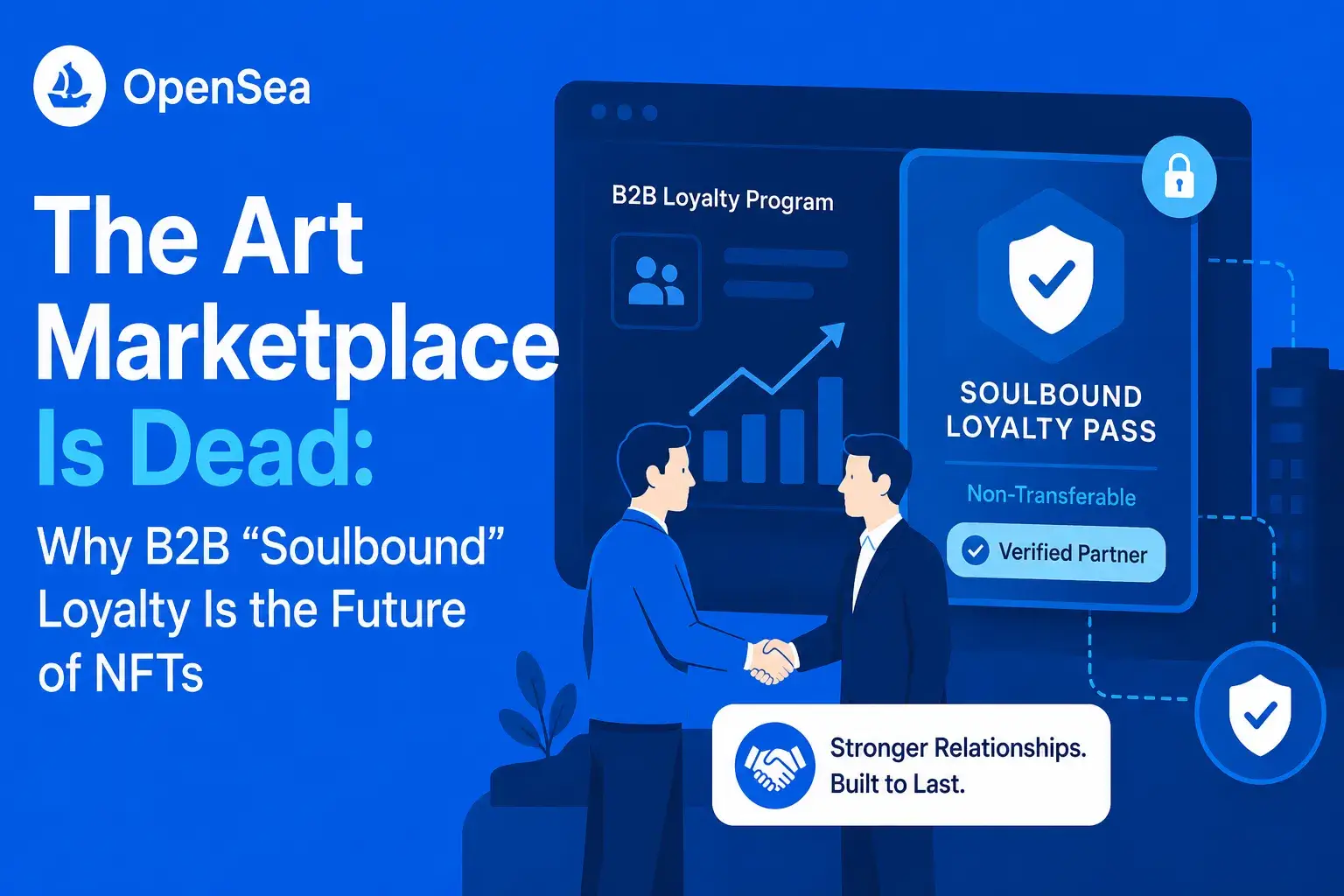
The stronger opportunity is B2B: white-label NFT loyalty platforms for enterprise retail brands, agencies, and SaaS operators. Instead of trying to create another public trading venue, founders can build closed-loop, non-transferable “soulbound” loyalty systems where tokens unlock access, rewards, experiences, membership tiers, and customer retention.
NFTs are unique blockchain-based tokens that can represent ownership or access rights, but their commercial value depends heavily on the use case. Ethereum describes NFTs as individually unique tokens with distinct properties, while soulbound-style tokens are generally understood as non-transferable assets that cannot be sold or listed like ordinary NFTs.
For founders, that difference changes everything.
A tradable NFT invites speculation. A soulbound loyalty token creates retention. A marketplace needs liquidity. A brand loyalty engine needs utility. A public NFT exchange fights for traders.
A B2B loyalty platform sells to brands with existing customers. That is the real shift.
The Retail Liquidity Crisis: Why Public NFT Marketplaces Bleed Cash
A public NFT marketplace is not just an app. It is a liquidity machine.
That machine only works when there are enough creators, collectors, traders, assets, trust signals, search filters, wallet users, repeat buyers, and secondary transactions. Without that activity, the marketplace has no momentum.
This is where many founders misunderstand NFT marketplace development.
They think the hard part is building:
- NFT minting
- Wallet login
- Smart contracts
- Listings
- Auctions
- Creator profiles
- Bidding
- Royalty logic
- Collection pages
- Admin controls
Those modules matter, but they are not the business.
The business is liquidity.
If buyers do not show up, creators stop listing.
If creators stop listing, collectors stop browsing.
If collectors stop browsing, trading volume disappears.
If trading volume disappears, the marketplace has no revenue engine.
This is why a speculative public NFT art marketplace is a dangerous use of startup capital in 2026. It asks a founder to solve product, trust, creator acquisition, buyer acquisition, market timing, wallet education, and liquidity all at once.
Even established NFT marketplaces have faced major changes in market share, trading volume, and royalty enforcement. Reports around NFT marketplace competition show how trading activity has shifted between major platforms such as Magic Eden, Blur, and OpenSea, while brand and creator royalty models have also been pressured as marketplace policies changed.
A new founder entering that battlefield with a generic art marketplace is not competing against an idea. They are competing against network effects.
And network effects are expensive.
Read more : Top OpenSea Features Every NFT Builder Needs
The Real Problem Is Not NFTs. It Is the Marketplace Business Model.
NFTs are not the issue.
The problem is building a business that depends on strangers buying digital assets from other strangers at rising prices.
That model creates several founder risks:
| Marketplace Risk | Why It Hurts the Founder |
|---|---|
| No initial liquidity | A marketplace without active buyers and sellers feels empty from day one. |
| High user acquisition cost | Founders must acquire creators and collectors at the same time. |
| Weak repeat usage | Users may visit only when speculation is hot. |
| Royalty uncertainty | Creator revenue from secondary sales depends on marketplace enforcement and trading behavior. |
| Trust friction | Wallets, scams, fake collections, and asset quality create user hesitation. |
| Commodity positioning | Many NFT marketplaces offer the same mint-list-trade experience. |
This is why “How to build an NFT art marketplace” is the wrong question for most founders.
The better question is:
How can NFT infrastructure solve a high-value business problem for companies that already have customers?
That question leads away from speculative marketplaces and toward enterprise loyalty.
Read more : Riding the NFT Wave: OpenSea App Marketing Strategy Breakdown
The Value of the Un-Tradeable Token: Introducing Soulbound Loyalty
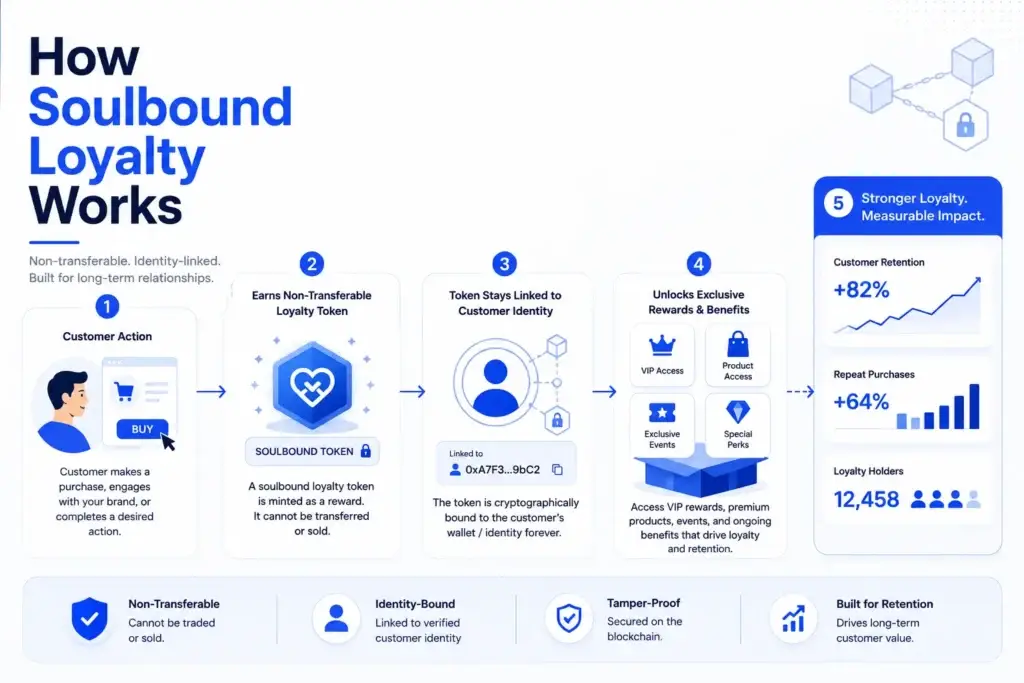
A soulbound token is powerful because it removes the behavior that corrupted many NFT launches: speculation.
Traditional NFTs are usually transferable. They can be bought, sold, traded, or listed on marketplaces. Soulbound-style tokens are different. They are designed to stay attached to a wallet or user identity and cannot be freely transferred. Cyfrin describes soulbound tokens as non-transferable tokens that cannot be transferred, sold, or listed like regular tradable assets.
That makes them ideal for loyalty.
A soulbound loyalty token can represent:
- VIP customer status
- Product access rights
- Event eligibility
- Brand membership level
- Purchase milestones
- Referral achievements
- Community reputation
- Warranty or ownership proof
- Long-term customer identity
- Private campaign access
The token is not valuable because another buyer may pay more for it later.
It is valuable because the brand makes it useful.
That is the mental shift founders need.
A speculative NFT asks, “Can I sell this?”
A soulbound loyalty token asks, “What does this unlock?”
For enterprise brands, that second question is far more interesting.
Why Enterprise Retail Brands Care More About Retention Than Resale
Retail brands do not need another speculative asset class. They need repeat customers.
They need better ways to identify high-value buyers, reward long-term behavior, increase campaign participation, create exclusive access, connect digital and physical experiences, and reduce loyalty fatigue.
Traditional loyalty programs often struggle because they feel generic:
- Points expire.
- Rewards feel small.
- Customers forget login details.
- Programs look identical across brands.
- Loyalty data sits in disconnected systems.
- Membership status is not emotionally meaningful.
NFT-based loyalty changes the experience when it is designed around utility instead of resale.
A customer can hold a brand-issued digital membership token that unlocks personalized benefits across campaigns, events, product drops, and community experiences. Luxury and beauty brands have already experimented with NFTs tied to loyalty, access, and real-world product benefits instead of pure resale speculation. Vogue Business reported Clinique’s NFT initiative as a loyalty-led campaign where selected rewards members received NFT artwork plus long-term product benefits.
This is the real enterprise use case: not “buy my JPEG,” but “hold this verified brand membership and unlock value.”
For retail brands, that means:
- Stronger customer segmentation
- More personalized campaigns
- Better VIP recognition
- Digital ownership of loyalty status
- Token-gated product drops
- Community access
- Real-world rewards
- Campaign analytics
- Reduced dependence on discount-only loyalty
This is why the B2B NFT loyalty platform is more commercially attractive than the public NFT art marketplace.
The buyer already exists.
The brand already has customers.
The token has a purpose.
The platform supports retention.
Public NFT Marketplace vs Soulbound Loyalty Platform
| Decision Factor | Public NFT Art Marketplace | B2B Soulbound Loyalty Platform |
|---|---|---|
| Core user behavior | Mint, list, buy, sell, flip, speculate | Earn, hold, unlock, redeem, engage |
| Main business dependency | Marketplace liquidity and trading volume | Brand adoption and customer retention |
| Buyer type | Collectors, traders, creators, crypto-native users | Retail brands, agencies, SaaS platforms, loyalty teams |
| Revenue model | Trading fees, minting fees, listing fees, royalties | Licensing, SaaS subscription, setup fees, campaign fees, analytics modules |
| Primary risk | No liquidity and weak repeat trading | Weak brand utility or poor CRM integration |
| Customer value | Potential resale upside | Access, rewards, membership, recognition, real-world benefits |
| Founder advantage | Hard to differentiate without massive acquisition spend | Easier to package as enterprise retention infrastructure |
Founder Decision Signals
Speed
If your goal is to validate a Web3 business quickly, a white-label NFT loyalty engine can move faster than building a public marketplace, creator network, and liquidity engine from zero.
Capital Efficiency
A public NFT marketplace requires heavy spend on both supply and demand. A B2B loyalty platform can focus sales effort on brands that already have customer bases.
Revenue Quality
Marketplace revenue depends on transaction activity. B2B loyalty revenue can come from licensing, implementation, subscriptions, analytics, and campaign support.
Market Fit
If customers are asking for retention, membership, rewards, and gated access, a soulbound loyalty model is better aligned than an open speculative trading platform.
Deploying B2B White-Label Engines for Enterprise Brand Retention
The strongest NFT opportunity in 2026 is not a public marketplace. It is infrastructure.
A white-label NFT loyalty platform gives agencies, SaaS founders, and enterprise service providers a product they can sell into existing brand ecosystems.
Instead of pitching:
“We will help you launch an NFT collection.”
The better pitch is:
“We will help you build a digital loyalty layer where customers earn non-transferable membership tokens that unlock rewards, product access, community status, and real-world experiences.”
That is a stronger conversation with enterprise retail brands.
Miracuves helps founders build ready-made and white-label Web3 app solutions with source-code ownership, admin control, custom branding, and faster deployment. For Web3 use cases, Miracuves offers NFT development and broader Web3 app development services that can support NFT platforms, smart contracts, and blockchain-based applications.
For a founder or agency, this creates a more practical go-to-market path:
- Choose a focused industry such as fashion, cosmetics, grocery, luxury retail, events, or sports.
- Package the NFT engine as loyalty infrastructure.
- Offer white-label branding for each enterprise client.
- Configure token rules, reward logic, and campaign flows.
- Integrate with brand systems where required.
- Sell recurring support, analytics, and campaign upgrades.
This is not Web3 as hype.
This is Web3 as customer retention software.
Read more : How to Start a NFT Marketplace Platform Business
Core Modules Every NFT Loyalty Platform Should Include
A serious NFT loyalty platform needs more than minting.
It needs a control layer that lets brands manage customers, campaigns, rewards, and access without calling developers for every operational change.
1. Customer Wallet and Identity Layer
Users need a simple way to receive and hold loyalty tokens. Depending on the target audience, the platform may support custodial wallets, non-custodial wallets, email-based onboarding, or social login flows.
For enterprise brands, wallet complexity should stay behind the experience. Customers should feel like they are joining a loyalty program, not passing a crypto exam.
2. Soulbound Token Rules
The token engine should allow the brand to define whether a token is transferable or non-transferable. For loyalty programs, non-transferability helps prevent reward abuse, resale distortion, and speculation.
Rules may include:
- Who can receive the token
- Whether the token expires
- What behavior triggers issuance
- Which benefits it unlocks
- Whether status can upgrade or downgrade
- Whether rewards are one-time or recurring
3. Brand Admin Dashboard
The admin dashboard is where the enterprise brand controls the program.
It should support:
- Customer management
- Token creation
- Reward rules
- Campaign configuration
- Access control
- Redemption tracking
- User segmentation
- Analytics
- Abuse reporting
- Role-based admin permissions
For founders, this dashboard is not a back-office extra. It is the core product value.
4. Reward and Utility Engine
The NFT should unlock something useful.
Examples include:
- Early product access
- VIP discounts
- Private events
- Limited merchandise
- Partner rewards
- Community access
- Tier-based perks
- Birthday rewards
- Referral rewards
- In-store redemption benefits
The stronger the utility, the less the program depends on token resale.
5. CRM and Commerce Integrations
Enterprise retail brands already use CRM, ecommerce, POS, email marketing, and customer support systems. A B2B NFT loyalty platform should be designed with integration logic in mind.
Common integration areas include:
- Shopify or ecommerce systems
- CRM platforms
- Email marketing tools
- POS systems
- Payment gateways
- Customer data platforms
- Analytics platforms
This is where many public NFT marketplace models fail as enterprise products. They are built for trading, not operational integration.
6. Analytics and Retention Reporting
Enterprise buyers care about outcomes.
The platform should help brands understand:
- Token holders
- Active members
- Redemption rates
- Repeat purchase behavior
- Campaign performance
- Reward engagement
- Tier movement
- Churn indicators
- High-value customer segments
If the NFT loyalty platform cannot show retention value, it becomes another campaign gimmick.
7. Security and Compliance-Ready Controls
NFT loyalty platforms should include secure API integration, encrypted data handling, role-based access control, audit logs, admin permissions, wallet security considerations, and fraud monitoring signals.
For regulated markets or complex enterprise environments, final compliance depends on jurisdiction, legal review, integrations, and the brand’s operating model. A platform can support compliance-ready workflows, but founders should avoid claiming guaranteed legal compliance everywhere.
Revenue Model: Sell Infrastructure, Not JPEG Liquidity
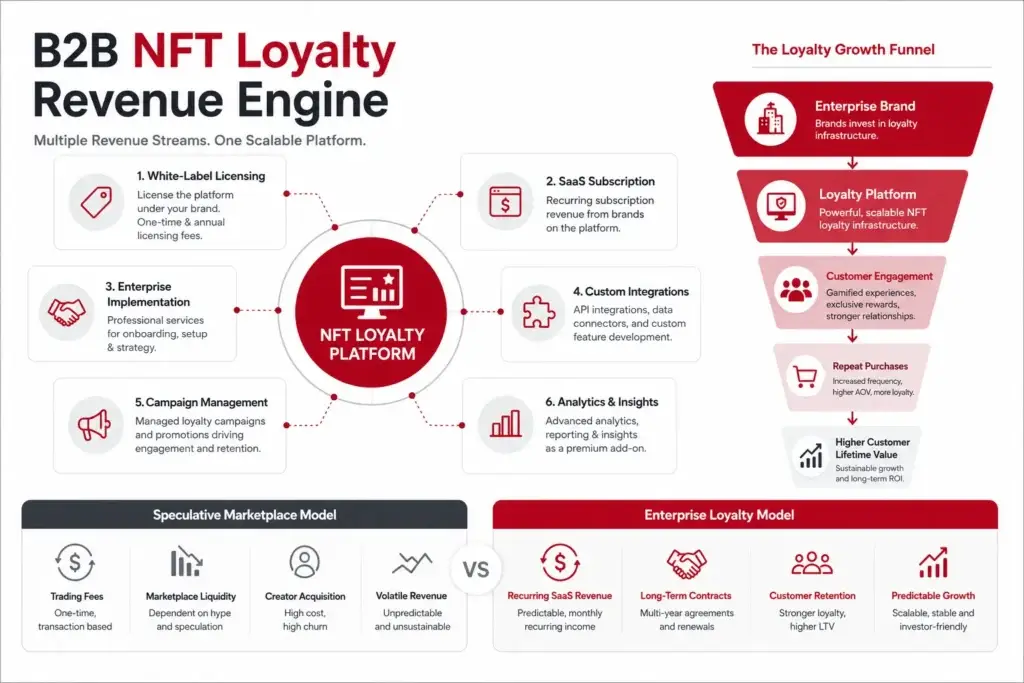
The public NFT marketplace revenue model usually depends on activity:
- Minting fees
- Listing fees
- Trading fees
- Creator royalties
- Featured collections
- Launchpad fees
That model breaks when trading slows.
A B2B NFT loyalty platform has more stable revenue options because the buyer is a business using the platform to improve customer engagement.
| Revenue Stream | How It Works | Why It Is Stronger for Founders |
|---|---|---|
| White-label licensing | Brands pay to use the NFT loyalty engine under their own branding. | Creates productized B2B revenue. |
| Monthly SaaS fee | Brands pay for access, hosting, dashboards, and platform tools. | Supports recurring revenue. |
| Setup and implementation | Agencies charge for configuration, branding, smart contract setup, and integrations. | Adds upfront project revenue. |
| Campaign management | Brands pay for seasonal loyalty campaigns, token drops, and reward programs. | Creates ongoing service opportunities. |
| Analytics module | Brands pay for deeper retention insights and customer segmentation. | Connects Web3 utility with business intelligence. |
| Enterprise customization | Larger brands pay for custom workflows, integrations, and access logic. | Increases deal size. |
This is why marketing agencies should pay attention.
An agency does not need to become a speculative NFT marketplace operator. It can become the Web3 loyalty partner for retail brands.
That is a better capital allocation strategy.
Why Marketing Agencies Should Enter NFT Loyalty Before Another SaaS Founder Does
Marketing agencies already sell customer acquisition, retention, campaign strategy, CRM, social media, ecommerce optimization, and brand engagement.
NFT loyalty fits directly into that stack.
An agency can package:
- Web3 loyalty strategy
- Token campaign design
- White-label NFT platform setup
- Reward architecture
- Customer onboarding flows
- Brand community engagement
- Analytics and retention reporting
This gives agencies a more differentiated offer than another ad campaign or email automation package.
The advantage is not that every customer cares about NFTs.
The advantage is that enterprise brands care about loyalty, access, and retention. NFTs become the infrastructure layer, not the headline.
That is the smarter positioning.
Do not sell “NFTs.”
Sell “verified digital loyalty.”
Do not sell “blockchain.”
Sell “customer retention infrastructure.”
Do not sell “art trading.”
Sell “membership that cannot be flipped, faked, or detached from the customer relationship.”
Where Miracuves Fits Into the B2B NFT Loyalty Opportunity
Miracuves can help founders, agencies, and enterprise teams build the technical foundation for white-label NFT and Web3 loyalty platforms.
A Miracuves-style implementation can support:
- White-label branding
- Source-code ownership
- NFT platform architecture
- Smart contract development
- Admin dashboard workflows
- Customer-facing app or web portal
- Token creation and management
- Reward and access logic
- Secure payment or wallet integrations
- Customization based on business model
For founders who still need marketplace-style functionality, Miracuves also offers an OpenSea clone solution and NFT development services. However, the stronger strategic move for many 2026 founders is to adapt NFT infrastructure toward loyalty, access, and enterprise utility rather than relying only on speculative trading volume.
That is the difference between copying a marketplace and building a monetization-ready product foundation.
Mistakes Founders Should Avoid
Building Another Generic NFT Art Marketplace
A mint-list-trade platform is not enough. Without liquidity, creators, buyers, trust, and repeat activity, the marketplace becomes expensive infrastructure with no commercial pull.
Making Transferability the Main Feature
For loyalty, transferability can weaken the customer relationship. If users can sell their status, the brand loses control over who receives benefits.
Ignoring Enterprise Integrations
Retail brands already operate CRM, ecommerce, POS, and analytics systems. A loyalty platform that cannot integrate with business workflows will struggle to become operationally useful.
Overpromising Compliance
Founders should use careful language. A platform can support compliance-ready workflows, but final legal requirements depend on jurisdiction, token design, customer data handling, and legal review.
The Contrarian Truth: The NFT Is Not the Product
The NFT is not the product. The retention loop is the product. The brand relationship is the product. The customer data layer is the product. The reward utility is the product. The admin dashboard is the product. The NFT simply makes loyalty more verifiable, programmable, portable across brand experiences, and harder to fake when implemented correctly.
That is why the next wave of profitable NFT businesses will not look like public art marketplaces. They will look like loyalty infrastructure, membership engines, access systems, ticketing layers, warranty records, brand communities, and retention dashboards.
Founders who understand this will stop chasing retail liquidity and start selling enterprise utility.
Final Thoughts: Stop Building for Speculators. Start Building for Brands.
The public NFT art marketplace is not the highest-quality opportunity for most founders in 2026.
It is crowded. It is liquidity-dependent. It is expensive to seed. It depends on speculative behavior that most new platforms cannot control.
The stronger NFT business is quieter, more practical, and more profitable: B2B loyalty infrastructure.
Soulbound loyalty tokens remove the resale obsession and shift the value back to utility. They help brands reward real customers, recognize high-value behavior, unlock exclusive access, and build retention systems that feel more meaningful than ordinary points.
For founders, agencies, and B2B SaaS operators, the message is simple: Do not build another marketplace hoping traders arrive. Build the engine that brands use to keep customers coming back. contact us.
FAQs
What is an NFT loyalty platform?
An NFT loyalty platform is a Web3-based system that allows brands to issue digital tokens for customer rewards, membership, access, and engagement. Unlike a public NFT marketplace, the focus is not trading. The focus is customer retention, reward utility, and brand-owned loyalty experiences.
What are soulbound tokens in loyalty programs?
Soulbound tokens are non-transferable digital tokens linked to a user or wallet. In loyalty programs, they can represent VIP status, purchase milestones, event access, or brand membership. Because they cannot be freely sold, they are better suited for identity-based rewards than speculative trading.
Is an NFT art marketplace still profitable in 2026?
It can be profitable only if the platform solves liquidity, creator acquisition, buyer demand, trust, and repeat trading. For most new founders, a generic NFT art marketplace is a high-risk model. A B2B NFT loyalty platform can be a stronger opportunity because it sells utility to brands with existing customers.
Why are NFT loyalty platforms better for enterprise brands?
Enterprise brands care about repeat purchases, VIP recognition, customer engagement, and retention. NFT loyalty platforms can support token-gated rewards, exclusive access, digital membership, and campaign analytics. This makes NFTs useful as customer infrastructure instead of speculative assets.
Can Miracuves build a white-label NFT loyalty platform?
Yes. Miracuves can help founders and agencies build white-label Web3 and NFT platforms with source-code ownership, branded design, admin dashboards, and custom workflows based on the business model.
What features should an NFT loyalty platform include?
A strong NFT loyalty platform should include customer wallets, token management, soulbound token rules, reward logic, campaign management, admin dashboards, analytics, CRM integration support, secure API integrations, and role-based admin controls.
How do NFT loyalty platforms make money?
NFT loyalty platforms can generate revenue through white-label licensing, SaaS subscriptions, setup fees, enterprise customization, campaign management, analytics modules, and ongoing support. This can be more predictable than relying only on NFT marketplace trading fees.
Are soulbound NFT loyalty programs legally compliant?
A platform can support compliance-ready workflows, but final compliance depends on jurisdiction, token structure, data handling, integrations, legal review, and operating model. Founders should avoid claiming universal legal compliance without proper legal validation.