


Key Takeaways
What You’ll Learn
- Thumbtack works as a local-services marketplace that connects customers with professionals across a wide range of everyday service categories.
- The app is designed to simplify the hiring journey from need discovery to provider comparison and final booking.
- Its core workflow is built around customer requests, provider matching, quotes, reviews, and hiring decisions.
- The model reduces search friction for users while helping service professionals get higher-intent leads.
- Thumbtack’s popularity comes from convenience, trust, and category depth rather than from one single feature.
- A Thumbtack clone gives startups a proven local-services model with strong monetization and repeat-use potential.
Stats That Matter
- The article highlights over 1,000 service categories, showing the breadth of Thumbtack’s marketplace model.
- Users can access the platform for free, while professionals pay to bid on leads or boost visibility.
- Provider recommendations are influenced by request details, location, availability, ratings, past bookings, and relevance.
- The operating flow is built around request creation, matching, quoting, comparison, and hiring.
- Customer convenience comes from having search, communication, and hiring in one place instead of across scattered channels.
- The marketplace is structured to serve both demand-side simplicity and supply-side lead generation.
Real Insights
- Thumbtack wins by simplifying a messy offline process and turning it into an on-demand digital hiring experience.
- The strongest value is convenience plus confidence, not just access to service providers.
- Category variety increases repeat usage because users can rely on the same app for many different local needs.
- The business works best when matching is relevant and provider response quality stays high.
- For founders, the lesson is to build a hiring journey, not merely a service directory.
- The most effective Thumbtack-style platforms turn local discovery into a fast, trusted, and repeatable marketplace action.
Ever tried assembling IKEA furniture and ended up calling your ex just because they “used to be good with tools”? Yep, we’ve all been there. The truth is, finding reliable local pros — whether it’s for plumbing, photography, or personal training — is often harder than the task itself. That’s exactly where the Thumbtack app steps in like a digital superhero for all your “I-need-a-pro” moments.
As more people shift from traditional 9-to-5s to freelance gigs and small biz hustle, platforms like Thumbtack aren’t just handy — they’re essential. In this creator economy, where everyone’s juggling side hustles, startup dreams, and 3 AM brainstorms, apps that match needs with services instantly are redefining how business gets done.
And if you’re eyeing this model as your next big idea, you’re in luck. At Miracuves, we specialize in helping you launch high-performance Thumbtack clone apps — fast, scalable, and monetization-ready. Let’s unpack what makes Thumbtack tick, and how you can tap into this growing goldmine.
What Exactly is the Thumbtack App?
A Digital Matchmaker for Local Services
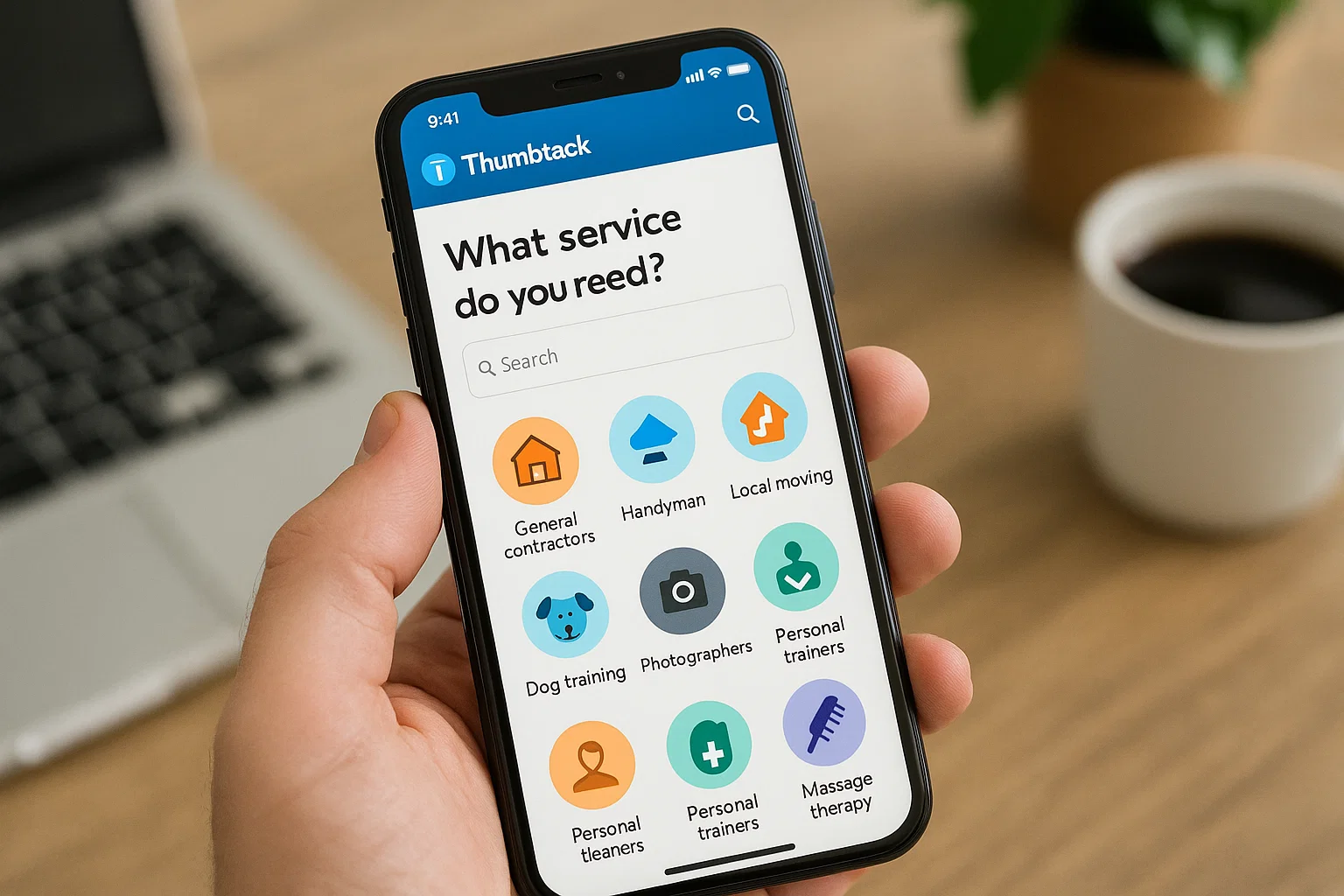
Thumbtack is an American home services marketplace that connects consumers with local professionals. Think of it as Tinder — but instead of dates, you’re swiping for electricians, piano teachers, dog walkers, or wedding photographers.
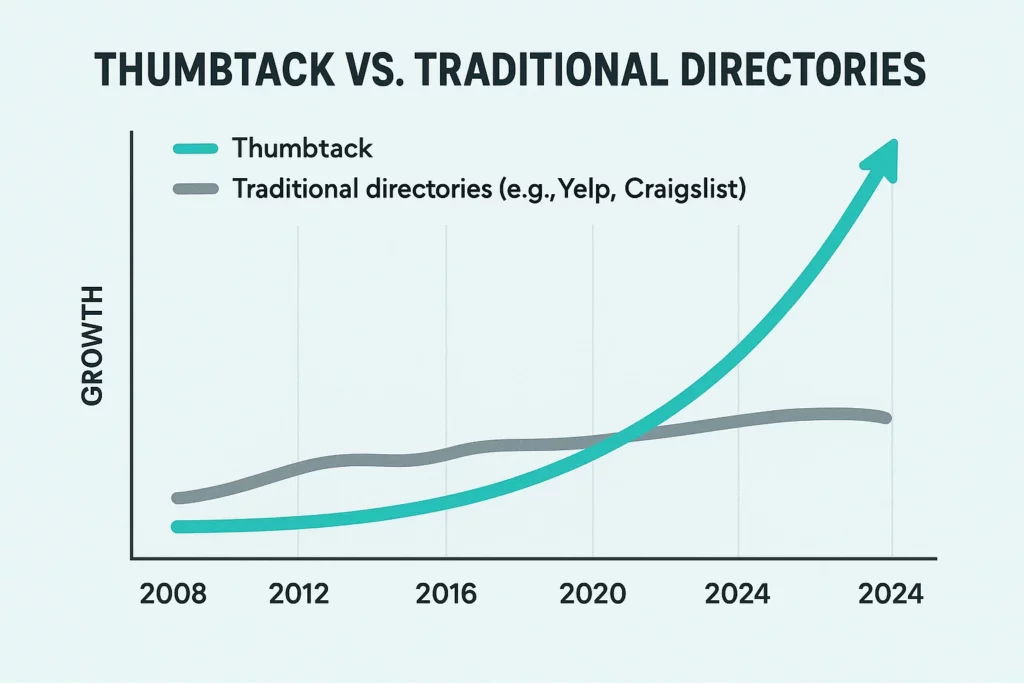
Founded in 2008, Thumbtack quickly rode the wave of mobile-first innovation. It bypassed old-school classifieds and directly challenged platforms like Angie’s List and Yelp by offering a cleaner UI, smart matching algorithms, and direct messaging between users and pros.
According to Statista, the home services market in the U.S. is worth over $500 billion — and apps like Thumbtack are carving out a significant chunk.
How Does Thumbtack Work?
1. User Experience – Smooth as Butter
- Users enter what they need (e.g., “deep clean my 3-bedroom apartment”).
- The app asks smart, context-driven questions to narrow the scope (number of rooms, location, preferred dates).
- It matches you with qualified professionals nearby.
- Users browse quotes, check ratings, read reviews, and book.
2. For Professionals – A Lead Generation Powerhouse
- Service providers create detailed profiles, including pricing, areas served, availability, and photos.
- They receive job requests that match their category and can respond with quotes.
- The more reviews and job completions, the higher their visibility.
As of recent data, Thumbtack boasts over 1,000 service categories and has helped pros earn over $1 billion in bookings.
Revenue Model – How Does Thumbtack Make Money?
Thumbtack isn’t just a helpful app — it’s a clever monetization machine. Here’s how:
Pay-Per-Lead (PPL) Model
Instead of charging commission on each job, Thumbtack charges pros to bid on leads. This keeps the platform free for users and scalable for high-volume pros.
Premium Profiles & Sponsored Listings
Pros can pay to boost their visibility in search results — kinda like SEO, but for your plumbing biz.
Thumbtack Plus
Rumors and A/B tests hint at subscription plans offering better lead targeting, analytics, and profile boosts — the SaaS side of the marketplace model.
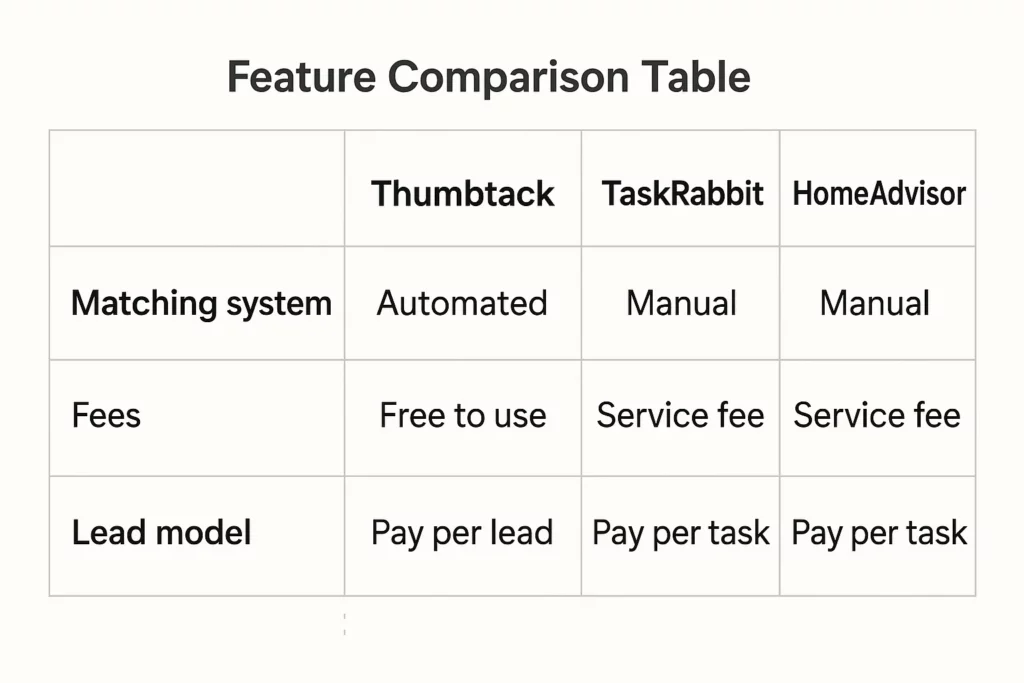
Discover the business model of Thumbtack — learn how it connects customers with local professionals, its key features, and the revenue streams that fuel growth.
Why Entrepreneurs & Startups Should Pay Attention
Whether you’re a startup founder or a solopreneur looking to launch your next big SaaS-marketplace hybrid, Thumbtack’s model has juicy takeaways:
- Low Inventory Overhead: You’re not stocking anything — just connecting people.
- High Retention Loop: The more jobs a pro completes, the more reviews they get, increasing visibility and matching.
- Data-Driven Personalization: Contextual requests let the app tailor pro recommendations perfectly.
Can You Build a Thumbtack Clone?
At Miracuves, we’ve helped entrepreneurs worldwide launch Thumbtack-style apps that cater to:
- Niche markets (e.g., only pet services, only home repairs)
- Hyperlocal areas (specific cities or neighborhoods)
- Specialized verticals (e.g., wellness pros, creative freelancers)
You don’t have to reinvent the wheel — just make it roll smoother, faster, and with monetization baked in.
Kickstart your marketplace journey with our developer’s guide to building a Thumbtack-like app, covering tech stack, features, and cost breakdowns.
What’s the Future of Service Marketplaces?
The line between eCommerce and services is blurring fast. With voice assistants booking appointments and AI managing customer support, platforms like Thumbtack are evolving from marketplaces into digital operations hubs for local pros.
Trend Forecast:
- AI matchmaking: Replacing manual browsing with automated pro selection.
- Embedded payments: In-app tipping, subscription-based bookings.
- AR consultations: Try-before-you-hire — virtually.
Global Cost Factors & Pricing Breakdown
These values reflect global development cost estimates for a Thumbtack-like services marketplace platform.
Miracuves Thumbtack-Like App Solution Cost and Tech Stack
Miracuves Pricing for a Thumbtack-Like App Solution developed in PHP/Laravel with Flutter Apps for Original price was: $3,699.$2,899Current price is: $2,899. USD (One-Time Price) in just 6 days
Get a fully developed, deployment-ready platform modeled after Thumbtack. Built on a reliable PHP/Laravel backend with Flutter mobile apps, this complete solution helps you launch and scale a local services marketplace quickly and efficiently.
- Core Workflows: Service discovery, provider matching, quote requests, bookings, and customer-provider communication.
- Built-in Operations: Pricing logic, commission setup, lead management, and payment flow handling.
- Management Hub: Centralized admin panel to manage customers, service providers, job requests, transactions, and platform activity.
- Launch-Ready: Fully prepared for your branding, configuration, and immediate go-to-market execution.
Why is it so affordable?
Most modern service marketplaces are built using complex architectures like Node.js or microservices. While powerful, these approaches require large engineering teams, longer timelines, and significantly higher development costs.
We took a smarter and more practical approach:
- You Aren’t Paying for Ground-Up Development: Our marketplace engine is already developed, tested, and ready to deploy. You skip months of development time and avoid the high costs of building from scratch.
- The Power of PHP / Laravel: Built on one of the most trusted and widely used frameworks globally, this solution keeps upfront costs low while ensuring long-term flexibility. With a large developer ecosystem, it becomes easier and more cost-effective to maintain, scale, and customize your platform.
- Built for Practical Growth: You get a strong, market-ready services marketplace with essential features like provider discovery, booking workflows, and lead management—without the complexity and expense of enterprise-level builds.
You get a scalable, production-ready platform without paying inflated development costs.
Note: This cost is for the solution, re-branding, deployment, and source code only.
Conclusion
Thumbtack isn’t just a service aggregator — it’s a case study in how modern platforms solve age-old pain points with tech-driven simplicity. If you’re building in the gig economy or dreaming of your own services app, there’s never been a better time.
At Miracuves, we help innovators launch high-performance app clones that are fast, scalable, and monetization-ready. Ready to turn your idea into reality? Let’s build together.
FAQs
What kind of services can you find on Thumbtack?
Everything from dog trainers to drywall repair, wedding planners to wellness coaches — over 1,000 categories.
Is Thumbtack free to use?
Yes, for users it’s free. Pros pay to bid on leads or boost visibility.
How does Thumbtack choose which pros to recommend?
Based on your request details, location, availability, pro ratings, past bookings, and relevance.
Can I build a Thumbtack clone app for my city or niche?
Absolutely. Platforms like Thumbtack are perfect for hyperlocal or specialized markets.
How do professionals get paid on Thumbtack?
Once hired, the transaction happens between the user and pro directly. Thumbtack doesn’t usually process payments (though they’re evolving here).
What makes a Thumbtack-style app succeed?
Clean UX, smart matching logic, trust-building features (reviews, ratings), and a strong value loop for pros.