

Key Takeaways
What You’ll Learn
- Tinder connects users through profile-based matching.
- Swipe system enables fast like or pass decisions.
- Matches require mutual interest from both users.
- Chat starts after matching for private conversations.
- Location helps show nearby and relevant profiles.
Stats That Matter
- Tinder launched in 2012 and scaled globally.
- Millions of users use the app for dating and connections.
- Daily swipe activity drives high engagement.
- Double opt-in system improves user comfort.
- Freemium model supports premium features and revenue.
Real Insights
- First impressions matter in profile-based apps.
- Simple UX increases daily user activity.
- Mutual matching builds trust before chatting.
- Nearby matches feel more relevant to users.
- Retention depends on engagement, not just installs.
Imagine you’re at a party. You lock eyes with someone across the room, feel a spark, and wonder, “Should I go say hi?” That, in a nutshell, is the experience Tinder tried to digitize. But instead of a party, it’s your phone. Instead of locking eyes, it’s a profile picture. And instead of “hi,” it’s a right swipe.
Tinder didn’t just revolutionize dating — it rewired how humans connect online. Whether you’re in it for love, fun, or market research (hey, no judgment), this swipe-happy platform has redefined app engagement. If you’re a creator or founder curious about starting your own dating app or tapping into this behavioral phenomenon, you’re in for a ride.
At Miracuves, we help digital entrepreneurs build Tinder-like apps — with their own twist, edge, and money-making magic. Let’s crack open the Tinder playbook and see what makes it tick.
What is Tinder, Really?
Tinder is a location-based dating app that allows users to anonymously like (swipe right) or pass (swipe left) on other profiles. If two users swipe right on each other, it’s a match — and they can start chatting.
It launched in 2012, and within months, it turned into a cultural wildfire. From casual connections to long-term love stories, Tinder became the default shorthand for dating apps. It popularized the “swipe mechanic” — now a staple UI gesture in mobile experiences.
“Tinder” comes from dry wood that starts fires — fitting, right?
Also Read :-Reasons startup choose our tinder clone over custom development
How Tinder Works: A Step-by-Step Breakdown
1. User Onboarding
- Sign up via mobile number, email, or social login
- Quick bio, interests, and location preferences
- Profile photo upload (with filters & face detection tech)
Frictionless onboarding = higher retention.
2. The Discovery Feed (Swipe Deck)
- AI-powered algorithm serves nearby profiles
- Swipe right to “like”, left to “pass”
- Super Like = swipe up (premium boost)
Tinder uses “Elo score”-style algorithms (similar to chess rankings) to rank users based on swipe desirability and activity.
3. Matching Logic
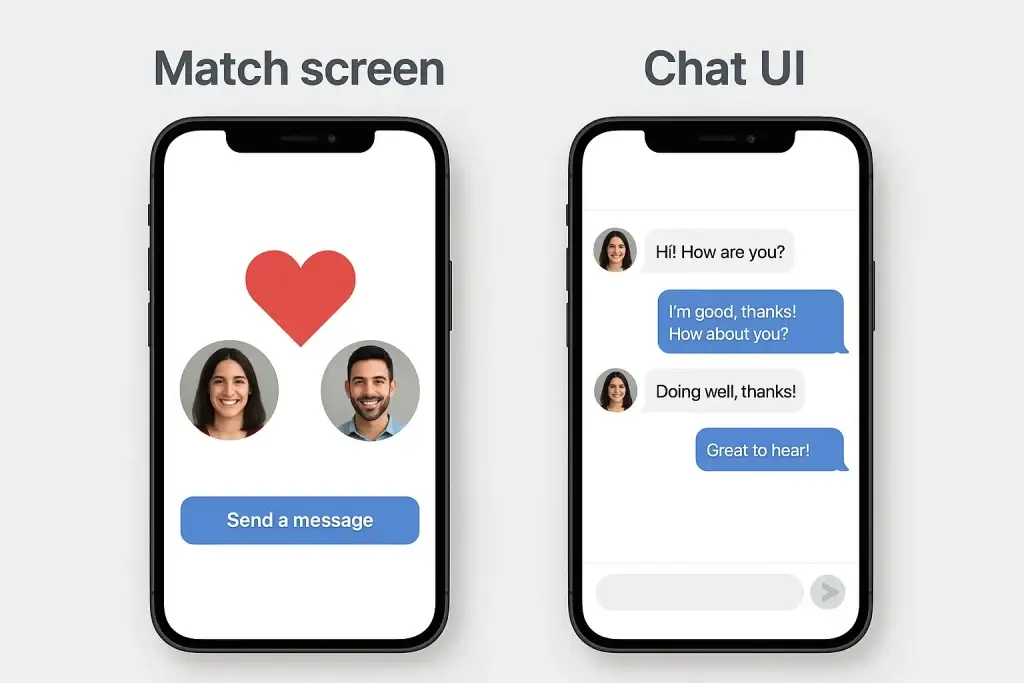
- If both users swipe right = It’s a match!
- Chat window unlocks, real-time messaging begins
Chatbot moderation filters, GIFs, voice messages, and more in newer versions.
4. Tinder’s Monetization Features
Tinder isn’t just about finding love. It’s about finding revenue streams. Here’s how they rake it in:
Freemium Model
Basic features are free — but the real magic? That’s locked behind Tinder Plus, Gold, and Platinum.
Subscription Tiers
- Tinder Plus: Unlimited swipes, passport feature
- Tinder Gold: See who liked you, more Super Likes
- Tinder Platinum: Priority likes, message before matching
Boosts & Super Likes
In-app purchases for temporary visibility boosts or standout swipes.
Ads
Interstitial and native ads appear for free users — think dating apps crossed with adtech.
Learn More :-How Much Does It Cost to Build a Modern Dating App From Scratch?
Why Tinder’s Business Model Works
It’s not just about dating. Tinder mastered the psychology of gamification:
- Variable rewards: Every swipe could be your next love (or ego boost)
- Micro-interactions: Swipes are quick dopamine hits
- Scarcity tactics: Limited swipes unless you pay = FOMO-driven monetization
Tinder’s user base crossed 75 million active users with over 1.6 billion swipes per day.
Discover how Tinder’s business model works and what features make it a global leader in swipe-based dating.
Building a Tinder-Like App: What You Need
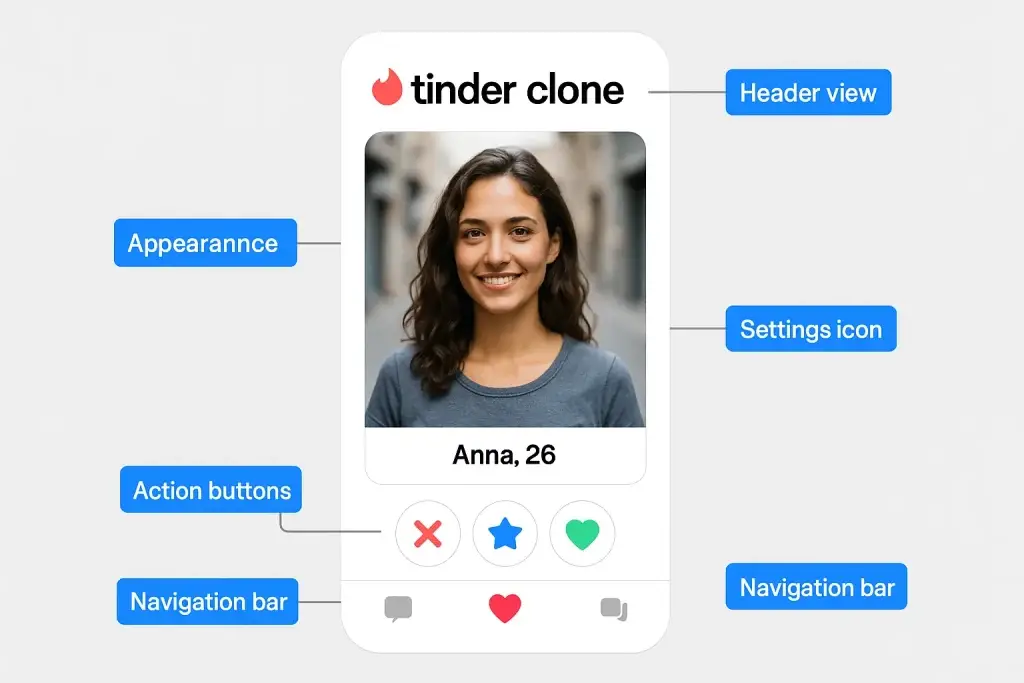
1. Core Features to Include
- Geolocation-based profile matching
- Swipe cards (touch gestures)
- Match + Chat system
- Push notifications
- AI/ML recommendation engine
- Subscription/paywall integration
2. Bonus Features to Stand Out
- Video profiles (like Hinge or Bumble)
- Audio bios
- Interest-based discovery (events, hobbies)
- In-app events or games for icebreaking
Global Cost Factors & Pricing Breakdown
Tinder-Like App Development — Market Price
These values reflect global development cost estimates. Final pricing varies based on feature scope, team location, and platform complexity.
These amounts reflect the broader market cost of building a Tinder-style dating platform based on the selected backend architecture, match flow complexity, real-time interaction needs, and long-term scalability goals.
Miracuves Tinder-Like App Solution Cost and Tech Stack
Miracuves Pricing for a Tinder-Like App developed in PHP/Laravel with Flutter Apps for $3,399 USD (One-Time Price) in just 6 days
Get a fully developed, deployment-ready platform modeled after Tinder. Built on a rock-solid PHP/Laravel foundation, this complete package includes everything you need to launch and scale:
- Core Workflows: User onboarding, profile discovery, swipe-based matching, real-time chat, and end-to-end dating app engagement management.
- Built-in Finance: In-app wallet logic, subscription pricing operations, premium feature billing, and payout setups.
- Management Hub: Comprehensive user management, moderation controls, and a centralized admin backend.
- Launch-Ready: Fully prepped for your custom branding, configuration, and immediate market entry.
Why Miracuves’s Tinder Like App is so affordable?
Most complex dating platforms force you into expensive architectures like Node.js or Go. Building from scratch with those frameworks requires highly specialized, expensive engineering teams, which drives the cost into the tens or hundreds of thousands of dollars.
We took a smarter, more practical approach:
- You Aren’t Paying for Ground-Up Development: Our dating platform engine is already developed, battle-tested, and ready to deploy. You skip the inflated costs and months of waiting associated with building from scratch.
- The Power of PHP / Laravel: We built this on one of the most reliable, globally adopted frameworks in the world. Not only does this keep our upfront costs down, but it also protects your future budget. PHP has a massive global talent pool, making it incredibly easy and cost-effective for you to find developers for future scaling or customizations.
You get an enterprise-capable, heavy-duty foundation without the inflated Silicon Valley price tag.
Note: This cost is for the solution, re-branding, deployment and source code only.
Tinder vs. Other Dating Apps: What Sets It Apart?
| Feature | Tinder | Bumble | Hinge |
|---|---|---|---|
| Women Message First | ❌ | ✅ | ❌ |
| Video Chat | ✅ | ✅ | ✅ |
| Algorithm Style | Swipe Rank | Feminist AI | Compatibility-based |
| Monetization Focus | High | Medium | Medium |
Bumble focuses on women-first interactions, while Hinge markets itself as “designed to be deleted”.
How Miracuves Can Help You Build the Next Big Dating App
We get it — you want to build an app that’s Tinder in the streets and a revenue machine in the backend. That’s where Miracuves shines.
We help entrepreneurs develop robust Tinder clones — but not just clones. We build platforms with:
- Custom branding
- AI-powered matching engines
- Monetization-ready infrastructure
- Scalable cloud deployment
Explore Tinder’s revenue model, growth-driven marketing strategy, and what it costs to build a scalable dating app like Tinder.
Conclusion
Tinder didn’t just change dating. It reshaped digital connection, swipe by swipe. From micro-interactions to mega revenues, it’s a masterclass in app design and monetization. If you’ve got an idea itching to become the next Tinder, the best time to start was yesterday.
At Miracuves, we help innovators launch high-performance app clones that are fast, scalable, and monetization-ready. Ready to turn your idea into reality? Let’s build together.
FAQs
Is Tinder just for dating?
Primarily, yes — but many users use it for networking, friendships, and travel buddies too.
How does Tinder make money?
Through subscriptions, in-app purchases like Boosts, and ads.
Can I build a Tinder clone with unique features?
Absolutely! Miracuves specializes in tailoring Tinder-like apps with your own flair.
What tech stack is used in Tinder clones?
Common stacks include React Native, Firebase, Node.js, and MongoDB — but it varies by need.
Does Tinder use AI?
Yes — for profile recommendations, moderation, and behavior tracking.
Is swiping the only way to match?
In Tinder — yes. But you can create alternatives like “tap to like,” quizzes, or event-based matching.
Related Articles :-
Miracuves is an independent software development company. We are not affiliated with, connected to, sponsored by, or endorsed by any company or product named in this article.
Terms such as “X Clone” are used descriptively. It is how the software industry refers to building a platform with functionality comparable to a known service, and how clients search for it.
The entire design and codebase of our products is built by our own team. Our products contain no code, design, graphics, or content originating from any third-party website or applications.
All third-party names and marks referenced in this article are the property of their respective owners, referenced solely to identify the services discussed.