




Key Takeaways
What You’ll Learn
- TransferNow uses a freemium SaaS model to attract users with free file transfers.
- Premium subscriptions unlock higher limits, storage, and advanced features.
- Enterprise tools provide branding, collaboration, and secure file management.
- The platform monetizes based on usage, storage needs, and business requirements.
- The model balances accessibility with scalable revenue generation.
Stats That Matter
- Revenue is driven mainly through subscriptions and premium plans.
- Freemium access helps attract a large user base and drive conversions.
- Cloud-based infrastructure allows scalable and cost-efficient operations.
- Users upgrade as their file size limits, storage, and usage increase.
- The model supports both individual users and business-level needs.
Real Insights
- Freemium models help file-sharing platforms scale quickly without high acquisition costs.
- Subscriptions create predictable recurring revenue for long-term growth.
- Additional monetization can include premium features and business integrations.
- User trust and security play a key role in conversion to paid plans.
- A successful model balances simplicity, performance, and monetization flexibility.
In 2026, TransferNow stands as one of the most trusted large-file–transfer platforms, generating close to $120 million annually. What began as a simple, free tool for sending files up to 5 GB has matured into a scalable SaaS business powered by premium plans, enterprise features, and secure data delivery. Its growth shows how a streamlined freemium model—supported by global accessibility and strong security—can create dependable recurring revenue. For entrepreneurs, TransferNow’s monetization framework offers clear, practical insights for building successful file-transfer or SaaS platforms using Miracuves’ TransferNow Clone solutions.
Understanding TransferNow’s monetization model offers valuable lessons for founders building their own file-transfer or SaaS products through Miracuves clone solutions.
TransferNow Revenue Overview – The Big Picture
Valuation & Revenue : ≈ $120 million
YoY Growth: +12 % from 2025’s $107 million
Primary Market: Europe (≈ 60 % of total revenue)
Other Regions: North America 25 %, Asia 15 %
Gross Margins: ≈ 78 %
Operating Margin: ≈ 32 %
TransferNow positions itself between free consumer tools (like WeTransfer) and enterprise file-management suites (like Dropbox Business). Its hybrid model—freemium plus paid subscriptions—lets it monetise individuals, professionals, and teams efficiently.
Read More: TransferNow App Explained – Features, Benefits & How It Works
Primary Revenue Streams Deep Dive
Revenue Stream #1 – Premium Subscriptions
Users upgrade from free accounts (limited size and duration) to paid plans unlocking bigger file limits, permanent storage, and security features.
- Share of revenue: ≈ 75 %
- ARPU (2026): ≈ $95 / year
- Tiers: Pro (Individuals), Team (SMBs), Business (Enterprises)
- Growth: Driven by remote work and data-sharing compliance.
Revenue Stream #2 – Business & Enterprise Licensing
Enterprise clients get custom domains, branding, and admin dashboards.
- Share: ≈ 15 %
- Pricing: Per-seat or usage-based storage plans
- Value drivers: Security, GDPR compliance, data encryption.
Revenue Stream #3 – Add-on Storage & Bandwidth
Extra storage and extended link durations for premium users.
- Share: ≈ 5 %
- Pricing: Tiered (100 GB → 1 TB → 5 TB)
Revenue Stream #4 – API and Integration Partnerships
Corporate clients integrate TransferNow via API for internal file flows.
- Share: ≈ 3 %
- Model: Usage-based billing (API calls, bandwidth).
Revenue Stream #5 – Affiliate & Reseller Programs
Regional partners sell premium subscriptions for a commission.
- Share: ≈ 2 %
- Purpose: Low-cost acquisition in emerging markets.
Read More: Business Model of TransferNow : Complete Strategy 2025
Revenue streams percentage breakdown
| Revenue Stream | Share of Total Revenue |
|---|---|
| Premium Subscriptions | 75 % |
| Business Licensing | 15 % |
| Add-on Storage & Bandwidth | 5 % |
| API Integrations | 3 % |
| Affiliate Programs | 2 % |
The Fee Structure Explained
User-Side Fees
- Free Users: Limited file size (5 GB), short link expiry (7 days)
- Pro Users: Monthly or annual fee for bigger limits (20–500 GB), password protection, tracking
- Business Plans: Per-seat licence, custom branding, team storage
- Add-ons: Extra storage or bandwidth sold on demand
Provider-Side Fees
There are no provider commissions; TransferNow monetises directly from users and enterprises.
Hidden Revenue Tactics
- Storage thresholds drive upgrades (freemium conversion)
- Limited link expiry creates urgency to go Pro
- Tier naming (“Pro”, “Business”) adds psychological value
Regional Pricing
Adjusted per country — euro, dollar or local currency pricing for better conversion.
Complete fee structure by user type
| User Type | Fee Structure | Notes |
|---|---|---|
| Free User | $0 | 5 GB limit, short link duration |
| Pro User | $8–12 / month | Larger files, security features |
| Business Team | $20–25 / seat | Custom domain + storage |
| Enterprise | Custom | API access, integration support |
| Add-ons | $5–10 | Extra storage or bandwidth |
How TransferNow Maximizes Revenue Per User
- Segmentation: Free → Pro → Business → Enterprise.
- Upselling: Prompted upgrades when storage or transfer limits hit.
- Cross-Selling: Add-ons, extra bandwidth, branding tools.
- Dynamic Pricing: Annual plans with discounts, team tier bundles.
- Retention Monetisation: Cloud stickiness + multi-device sync reduce churn.
- Lifetime Value (LTV): ≈ $110–$130 per paying user / year.
- Psychological Pricing: “Free → Pro → Business” clearly communicates progression and value.
Read More: How Safe Is a White-Label WeTransfer App? Security Guide 2025
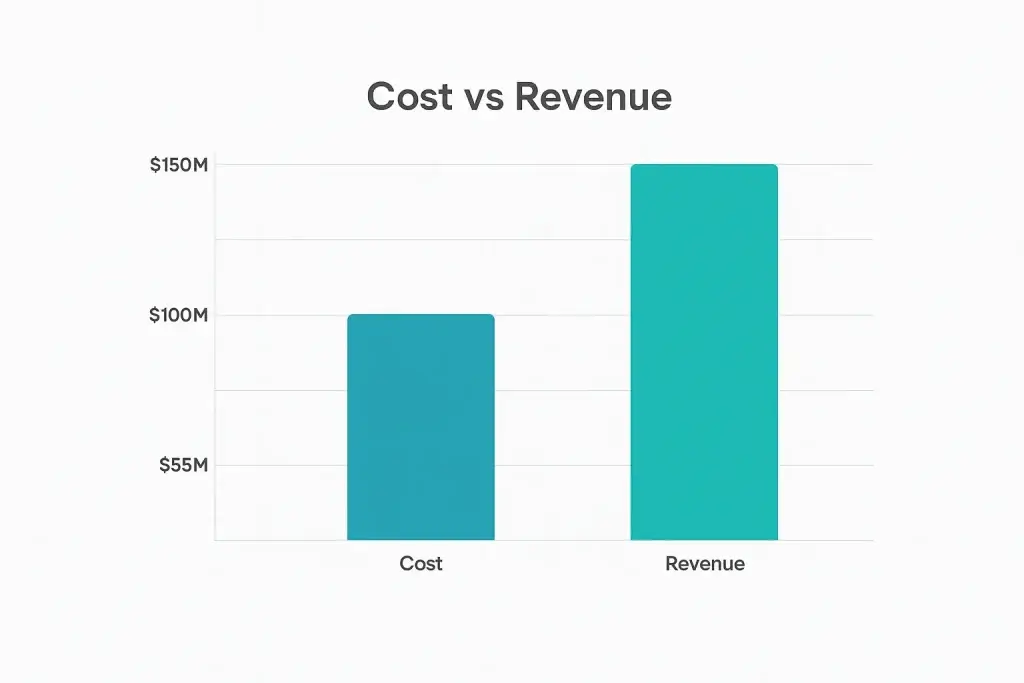
Cost Structure & Profit Margins
Major Costs: Infrastructure (servers, storage providers), bandwidth, marketing, R&D, and support.
Gross Margin: ≈ 78 %
Operating Margin: ≈ 32 %
Cost Reduction Strategies: partnerships with CDNs, AI-driven infrastructure optimisation, and subscription automation.
Future Revenue Opportunities & Innovations
- AI Expansion: Auto-summaries, content recognition, and data insights for enterprise clients.
- New Markets: Asia and Latin America where business data transfer is rising fast.
- API Marketplace: Developers building apps on top of TransferNow’s platform.
- Partnerships: Integrations with CRM, HR, and project tools for cross-selling.
- Threats: Free alternatives, privacy regulations, and storage commoditisation.
- Opportunities: Vertical-focused file-transfer solutions (e.g., media, finance, legal).
Lessons for Entrepreneurs & Your Opportunity
Key Takeaways
- Freemium conversion can be a stable growth engine.
- High-margin subscription revenue scales fast.
- User experience and security drive retention.
What to Replicate
- Simple free tier → upgrade path.
- Business plans for higher ARPU.
- Automated onboarding and renewal flows.
What to Improve
- Industry-specific pricing.
- AI-driven premium features early in cycle.
Global Cost Factors & Pricing Breakdown for a TransferNow-Like App
The technology stack behind your platform plays a critical role in determining development cost, launch speed, and how securely and efficiently your platform can handle large file transfers at scale. Some businesses aim for a fast and budget-friendly launch, while others require a more advanced setup to support high-speed uploads, cloud storage, secure file sharing, link-based access, encryption, and global file delivery across different regions.
Here is a simple comparison of common global development approaches for a TransferNow-like file-sharing platform:
PHP/Laravel is best for quick and cost-efficient launches, Node.js/Python improves performance and real-time handling, while Go microservices are ideal for large-scale, high-performance file transfer systems.
Miracuves TransferNow-Like App Solution Cost and Tech Stack
Miracuves Pricing for a TransferNow-Like File Sharing Platform developed in PHP/Laravel with Flutter Apps for $1,899 USD (One-Time Price) in just 6 days
Get a fully developed, deployment-ready platform modeled after TransferNow. Built on a robust PHP/Laravel foundation, this complete package includes everything you need to launch and scale:
- Core Workflows: Secure file uploads, large file transfers, link generation, and time-based file expiry.
- Built-in Sharing: Email sharing, download tracking, password protection, and access control features.
- Management Hub: File management system, user controls, admin dashboard, and storage monitoring tools.
- Launch-Ready: Fully prepared for your branding, customization, cloud storage integration, and immediate deployment.
What Makes It Affordable to Develop?
File-sharing platforms like TransferNow require efficient file handling, secure data transfer, and scalable storage management. However, compared to real-time-heavy applications, they can be effectively built using stable frameworks like PHP/Laravel, reducing infrastructure complexity and overall development cost.
We took a smarter, more practical approach:
- You Aren’t Paying for Ground-Up Development: Our file-sharing engine is already developed, tested on real-world use cases, and ready to deploy. You avoid high development costs and long timelines.
- The Power of PHP / Laravel: Built on a widely trusted and scalable framework, this solution reduces both initial and long-term costs. PHP has a massive global developer ecosystem, making it easier and more affordable to maintain, upgrade, and scale your platform over time. You get a secure, scalable file-sharing platform without unnecessary cost overhead.
Note: This cost is for the solution, re-branding, deployment, and source code only.
Conclusion
TransferNow proves that simplicity, reliability, and a well-structured pricing ladder can fuel a multi-million-dollar SaaS business. Its success highlights how a clean user experience paired with premium upgrades creates long-term recurring revenue. Entrepreneurs can leverage this proven approach through Miracuves’ ready-made TransferNow Clone, customizing it for specific industries, regions, or audiences. With built-in monetisation systems and scalable infrastructure, it becomes easier to launch quickly, attract paying users, and achieve sustainable growth in a competitive digital market.
FAQs
How does TransferNow make money?
Through premium subscriptions, business plans, and storage add-ons.
What’s its main revenue source?
Paid subscriptions contribute around 75 % of total revenue.
How profitable is TransferNow in 2026?
It maintains an operating margin of around 32 %.
Does TransferNow charge commissions?
No, its revenue is subscription-based, not transactional.
Can small start-ups copy this model?
Yes, the freemium plus subscription structure is scalable for any size.