


Key Takeaways
What You’ll Learn
- A healthcare app should be built around patient care flow, not just appointment booking.
- Telemedicine, records, scheduling, and secure communication are core product layers.
- Compliance matters early because healthcare platforms handle sensitive patient data.
- Reliable UX improves trust for both patients and healthcare providers.
- Long-term success depends on privacy, usability, and connected care services.
Stats That Matter
- The article is positioned as a healthcare app development guide for entrepreneurs.
- Features, costs, compliance, and strategy are treated as the main decision areas.
- Secure communication and patient data handling are essential parts of healthcare app planning.
- Development strategy should balance speed, functionality, and legal readiness.
- The guide focuses on building a successful healthcare app business, not just shipping an app interface.
Real Insights
- Healthcare users trust platforms that feel safe and dependable, not just modern.
- Compliance should be part of the product foundation, not added later.
- Care continuity matters because disconnected services reduce patient confidence.
- Provider-side efficiency is as important as patient-side convenience.
- The strongest healthcare apps are built for care delivery, trust, and long-term usability.
The healthcare industry is undergoing a rapid digital transformation, and mobile applications are at the center of this shift. From telemedicine platforms to fitness tracking apps and AI-powered diagnostics, healthcare app Development are redefining how patients and providers interact. Many modern solutions are inspired by platforms like Practo, offering features such as doctor discovery, appointment booking, and virtual consultations in one place.
For entrepreneurs, this presents a significant opportunity—but also a complex challenge. Building a healthcare app is not just about development; it involves compliance, data security, user trust, and long-term scalability.
This Healthcare App Development Guide for Entrepreneurs will help you understand what it takes to build a successful healthcare application, avoid common pitfalls, and make informed decisions before investing in development.
What is a Healthcare App?
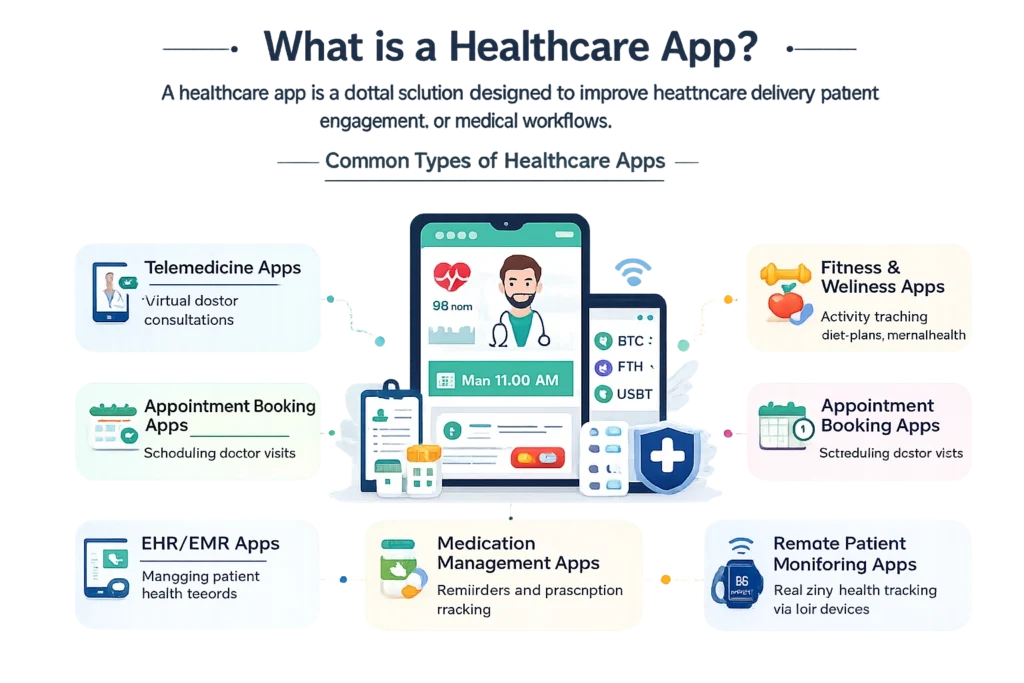
A healthcare app is a digital solution designed to improve healthcare delivery, patient engagement, or medical workflows. These apps serve different audiences, including patients, doctors, hospitals, and insurance providers.
Common Types of Healthcare Apps
- Telemedicine Apps – Virtual doctor consultations
- Fitness & Wellness Apps – Activity tracking, diet plans, mental health
- Appointment Booking Apps – Scheduling doctor visits
- EHR/EMR Apps – Managing patient health records
- Medication Management Apps – Reminders and prescription tracking
- Remote Patient Monitoring Apps – Real-time health tracking via IoT devices
Why Entrepreneurs Are Investing in Healthcare Apps
Healthcare apps are not just a trend—they are becoming essential infrastructure in modern healthcare systems.
Key Reasons Driving Growth
- Increasing demand for remote healthcare services
- Rising adoption of smartphones and wearable devices
- Need for efficient patient data management
- Growth of preventive healthcare and wellness awareness
- Government support for digital health initiatives
For entrepreneurs, this means scalable business models with long-term relevance.
How Healthcare Apps Work: A Simple Breakdown
Understanding the core workflow helps in planning features and architecture.
Basic Workflow
- User Registration – Patients or doctors sign up
- Profile Setup – Medical history, preferences, availability
- Service Interaction
- Book appointments
- Consult doctors
- Track health data
- Data Storage – Secure storage of health records
- Notifications – Reminders, alerts, follow-ups
- Payments (if applicable) – Consultation fees, subscriptions
Essential Features of a Healthcare App
The success of your app depends heavily on choosing the right features.
For Patients
- Easy registration and onboarding
- Appointment scheduling
- Video/audio consultation
- Health record access
- Medication reminders
- Payment integration
For Doctors
- Patient management dashboard
- Appointment scheduling tools
- E-prescriptions
- Secure communication
For Admin
- User management
- Analytics dashboard
- Payment tracking
- Compliance monitoring
Key Technologies Used in Healthcare App Development
Choosing the right tech stack ensures performance, scalability, and security.
| Technology Area | Common Tools/Technologies |
| Frontend | React Native, Flutter |
| Backend | Node.js, Django |
| Database | PostgreSQL, MongoDB |
| Cloud Services | AWS, Google Cloud |
| Video Integration | WebRTC, Twilio |
| AI/ML (optional) | TensorFlow, Python-based models |
| IoT Integration | Wearable device APIs |
Compliance and Security: A Non-Negotiable Factor
Healthcare apps deal with sensitive patient data, making compliance critical.
Important Regulations
- HIPAA (USA) – Data privacy and security
- GDPR (Europe) – Data protection and user consent
- Local regulations depending on your target market
Security Best Practices
- End-to-end encryption
- Secure authentication (2FA)
- Regular security audits
- Data anonymization where needed
Ignoring compliance can lead to legal issues and loss of user trust.
Step-by-Step Healthcare App Development Process
1. Validate Your Idea
- Identify a real healthcare problem
- Analyze competitors
- Define your target audience
2. Define Features and Scope
Start with an MVP (Minimum Viable Product) to test the market.
3. Choose the Right Development Approach
- Custom development
- White-label solutions
- Clone apps
4. UI/UX Design
Healthcare apps must be simple, accessible, and user-friendly—especially for older users.
5. Development Phase
- Frontend and backend development
- API integrations
- Security implementation
6. Testing and QA
- Functional testing
- Security testing
- Performance testing
7. Launch and Maintenance
- App store deployment
- Continuous updates
- User feedback integration
Common Challenges Entrepreneurs Face
Building a healthcare app comes with unique challenges.
Key Challenges
- Navigating complex regulations
- Ensuring data security
- Building user trust
- Integrating with existing healthcare systems
- Managing high development costs
Understanding these challenges early helps in better planning.
Best Practices for Building a Successful Healthcare App
- Focus on user experience, especially simplicity
- Start with an MVP and scale gradually
- Prioritize data security and compliance
- Choose a scalable architecture
- Continuously gather user feedback
Healthcare App vs Traditional Healthcare Systems
| Aspect | Healthcare Apps | Traditional Systems |
| Accessibility | 24/7 remote access | Limited to physical visits |
| Cost Efficiency | Lower operational costs | Higher infrastructure costs |
| Speed | Instant consultations | Time-consuming appointments |
| Data Management | Digital, centralized | Manual or fragmented |
| Scalability | Highly scalable | Limited scalability |
If you’re planning to launch a healthcare app, having the right development partner can simplify the process significantly.
Miracuves specializes in building scalable, secure, and user-friendly healthcare applications tailored to your business goals. Whether you’re starting with an MVP or aiming for a full-scale platform, the right strategy can turn your idea into a successful digital healthcare solution.
Conclusion
Healthcare app development offers immense opportunities for entrepreneurs, but it requires careful planning, technical expertise, and strict adherence to regulations. From choosing the right features to ensuring data security, every step plays a critical role in the app’s success. By focusing on user needs, starting with a scalable approach, and maintaining compliance, entrepreneurs can build impactful healthcare solutions that truly make a difference.
FAQs
1. Do healthcare apps require legal compliance?
Yes, compliance with regulations like HIPAA or GDPR is essential.
2. Can I start with a basic version of the app?
Yes, launching with an MVP is recommended to test your idea.
3. What is the biggest challenge in healthcare app development?
Ensuring data security and regulatory compliance is the biggest challenge.
4. Are healthcare apps profitable?
Yes, with the right model (subscriptions, consultations, partnerships), they can be highly profitable.
Related Article :