


Key Takeaways
What You’ll Learn
- TransferNow uses a freemium SaaS model to attract users with free file transfers.
- Premium subscriptions unlock higher limits, storage, and advanced features.
- Enterprise tools provide branding, collaboration, and secure file management.
- The platform monetizes based on usage, storage needs, and business requirements.
- The model balances accessibility with scalable revenue generation.
Stats That Matter
- Revenue is driven mainly through subscriptions and premium plans.
- Freemium access helps attract a large user base and drive conversions.
- Cloud-based infrastructure allows scalable and cost-efficient operations.
- Users upgrade as their file size limits, storage, and usage increase.
- The model supports both individual users and business-level needs.
Real Insights
- Freemium models help file-sharing platforms scale quickly without high acquisition costs.
- Subscriptions create predictable recurring revenue for long-term growth.
- Additional monetization can include premium features and business integrations.
- User trust and security play a key role in conversion to paid plans.
- A successful model balances simplicity, performance, and monetization flexibility.
In 2026, TransferNow stands as one of the most trusted large-file–transfer platforms, generating close to $120 million annually. What began as a simple, free tool for sending files up to 5 GB has matured into a scalable SaaS business powered by premium plans, enterprise features, and secure data delivery. Its growth shows how a streamlined freemium model—supported by global accessibility and strong security—can create dependable recurring revenue. For entrepreneurs, TransferNow’s monetization framework offers clear, practical insights for building successful file-transfer or SaaS platforms using Miracuves’ TransferNow Clone solutions.
Understanding TransferNow’s monetization model offers valuable lessons for founders building their own file-transfer or SaaS products through Miracuves clone solutions.
TransferNow Revenue Overview – The Big Picture
Valuation & Revenue : ≈ $120 million
YoY Growth: +12 % from 2025’s $107 million
Primary Market: Europe (≈ 60 % of total revenue)
Other Regions: North America 25 %, Asia 15 %
Gross Margins: ≈ 78 %
Operating Margin: ≈ 32 %
TransferNow positions itself between free consumer tools (like WeTransfer) and enterprise file-management suites (like Dropbox Business). Its hybrid model—freemium plus paid subscriptions—lets it monetise individuals, professionals, and teams efficiently.
Read More: TransferNow App Explained – Features, Benefits & How It Works
Primary Revenue Streams Deep Dive
Revenue Stream #1 – Premium Subscriptions
Users upgrade from free accounts (limited size and duration) to paid plans unlocking bigger file limits, permanent storage, and security features.
- Share of revenue: ≈ 75 %
- ARPU (2026): ≈ $95 / year
- Tiers: Pro (Individuals), Team (SMBs), Business (Enterprises)
- Growth: Driven by remote work and data-sharing compliance.
Revenue Stream #2 – Business & Enterprise Licensing
Enterprise clients get custom domains, branding, and admin dashboards.
- Share: ≈ 15 %
- Pricing: Per-seat or usage-based storage plans
- Value drivers: Security, GDPR compliance, data encryption.
Revenue Stream #3 – Add-on Storage & Bandwidth
Extra storage and extended link durations for premium users.
- Share: ≈ 5 %
- Pricing: Tiered (100 GB → 1 TB → 5 TB)
Revenue Stream #4 – API and Integration Partnerships
Corporate clients integrate TransferNow via API for internal file flows.
- Share: ≈ 3 %
- Model: Usage-based billing (API calls, bandwidth).
Revenue Stream #5 – Affiliate & Reseller Programs
Regional partners sell premium subscriptions for a commission.
- Share: ≈ 2 %
- Purpose: Low-cost acquisition in emerging markets.
Read More: Business Model of TransferNow : Complete Strategy 2025
Revenue streams percentage breakdown
| Revenue Stream | Share of Total Revenue |
|---|---|
| Premium Subscriptions | 75 % |
| Business Licensing | 15 % |
| Add-on Storage & Bandwidth | 5 % |
| API Integrations | 3 % |
| Affiliate Programs | 2 % |
The Fee Structure Explained
User-Side Fees
- Free Users: Limited file size (5 GB), short link expiry (7 days)
- Pro Users: Monthly or annual fee for bigger limits (20–500 GB), password protection, tracking
- Business Plans: Per-seat licence, custom branding, team storage
- Add-ons: Extra storage or bandwidth sold on demand
Provider-Side Fees
There are no provider commissions; TransferNow monetises directly from users and enterprises.
Hidden Revenue Tactics
- Storage thresholds drive upgrades (freemium conversion)
- Limited link expiry creates urgency to go Pro
- Tier naming (“Pro”, “Business”) adds psychological value
Regional Pricing
Adjusted per country — euro, dollar or local currency pricing for better conversion.
Complete fee structure by user type
| User Type | Fee Structure | Notes |
|---|---|---|
| Free User | $0 | 5 GB limit, short link duration |
| Pro User | $8–12 / month | Larger files, security features |
| Business Team | $20–25 / seat | Custom domain + storage |
| Enterprise | Custom | API access, integration support |
| Add-ons | $5–10 | Extra storage or bandwidth |
How TransferNow Maximizes Revenue Per User
- Segmentation: Free → Pro → Business → Enterprise.
- Upselling: Prompted upgrades when storage or transfer limits hit.
- Cross-Selling: Add-ons, extra bandwidth, branding tools.
- Dynamic Pricing: Annual plans with discounts, team tier bundles.
- Retention Monetisation: Cloud stickiness + multi-device sync reduce churn.
- Lifetime Value (LTV): ≈ $110–$130 per paying user / year.
- Psychological Pricing: “Free → Pro → Business” clearly communicates progression and value.
Read More: How Safe Is a White-Label WeTransfer App? Security Guide 2025
Cost Structure & Profit Margins
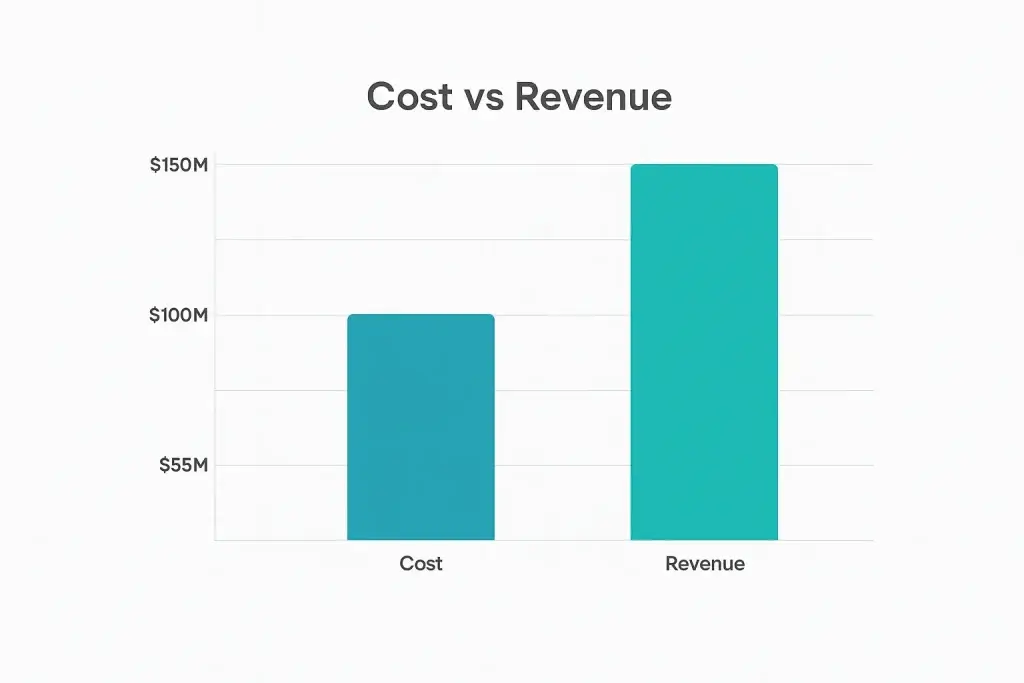
Major Costs: Infrastructure (servers, storage providers), bandwidth, marketing, R&D, and support.
Gross Margin: ≈ 78 %
Operating Margin: ≈ 32 %
Cost Reduction Strategies: partnerships with CDNs, AI-driven infrastructure optimisation, and subscription automation.
Future Revenue Opportunities & Innovations
- AI Expansion: Auto-summaries, content recognition, and data insights for enterprise clients.
- New Markets: Asia and Latin America where business data transfer is rising fast.
- API Marketplace: Developers building apps on top of TransferNow’s platform.
- Partnerships: Integrations with CRM, HR, and project tools for cross-selling.
- Threats: Free alternatives, privacy regulations, and storage commoditisation.
- Opportunities: Vertical-focused file-transfer solutions (e.g., media, finance, legal).
Lessons for Entrepreneurs & Your Opportunity
Key Takeaways
- Freemium conversion can be a stable growth engine.
- High-margin subscription revenue scales fast.
- User experience and security drive retention.
What to Replicate
- Simple free tier → upgrade path.
- Business plans for higher ARPU.
- Automated onboarding and renewal flows.
What to Improve
- Industry-specific pricing.
- AI-driven premium features early in cycle.
Global Cost Factors & Pricing Breakdown for a TransferNow-Like App
The technology stack behind your platform plays a critical role in determining development cost, launch speed, and how securely and efficiently your platform can handle large file transfers at scale. Some businesses aim for a fast and budget-friendly launch, while others require a more advanced setup to support high-speed uploads, cloud storage, secure file sharing, link-based access, encryption, and global file delivery across different regions.
Here is a simple comparison of common global development approaches for a TransferNow-like file-sharing platform:
PHP/Laravel is best for quick and cost-efficient launches, Node.js/Python improves performance and real-time handling, while Go microservices are ideal for large-scale, high-performance file transfer systems.
Miracuves TransferNow-Like App Solution Cost and Tech Stack
Miracuves Pricing for a TransferNow-Like File Sharing Platform developed in PHP/Laravel with Flutter Apps for $2,499 USD (One-Time Price) in just 6 days
Get a fully developed, deployment-ready platform modeled after TransferNow. Built on a robust PHP/Laravel foundation, this complete package includes everything you need to launch and scale:
- Core Workflows: Secure file uploads, large file transfers, link generation, and time-based file expiry.
- Built-in Sharing: Email sharing, download tracking, password protection, and access control features.
- Management Hub: File management system, user controls, admin dashboard, and storage monitoring tools.
- Launch-Ready: Fully prepared for your branding, customization, cloud storage integration, and immediate deployment.
What Makes It Affordable to Develop?
File-sharing platforms like TransferNow require efficient file handling, secure data transfer, and scalable storage management. However, compared to real-time-heavy applications, they can be effectively built using stable frameworks like PHP/Laravel, reducing infrastructure complexity and overall development cost.
We took a smarter, more practical approach:
- You Aren’t Paying for Ground-Up Development: Our file-sharing engine is already developed, tested on real-world use cases, and ready to deploy. You avoid high development costs and long timelines.
- The Power of PHP / Laravel: Built on a widely trusted and scalable framework, this solution reduces both initial and long-term costs. PHP has a massive global developer ecosystem, making it easier and more affordable to maintain, upgrade, and scale your platform over time. You get a secure, scalable file-sharing platform without unnecessary cost overhead.
Note: This cost is for the solution, re-branding, deployment, and source code only.
Related reading: SaaS platform security guide.
Conclusion
TransferNow proves that simplicity, reliability, and a well-structured pricing ladder can fuel a multi-million-dollar SaaS business. Its success highlights how a clean user experience paired with premium upgrades creates long-term recurring revenue. Entrepreneurs can leverage this proven approach through Miracuves’ ready-made TransferNow Clone, customizing it for specific industries, regions, or audiences. With built-in monetisation systems and scalable infrastructure, it becomes easier to launch quickly, attract paying users, and achieve sustainable growth in a competitive digital market.
FAQs
How does TransferNow make money?
Through premium subscriptions, business plans, and storage add-ons.
What’s its main revenue source?
Paid subscriptions contribute around 75 % of total revenue.
How profitable is TransferNow in 2026?
It maintains an operating margin of around 32 %.
Does TransferNow charge commissions?
No, its revenue is subscription-based, not transactional.
Can small start-ups copy this model?
Yes, the freemium plus subscription structure is scalable for any size.
Miracuves is an independent software development company. We are not affiliated with, connected to, sponsored by, or endorsed by any company or product named in this article.
Terms such as “X Clone” are used descriptively. It is how the software industry refers to building a platform with functionality comparable to a known service, and how clients search for it.
The entire design and codebase of our products is built by our own team. Our products contain no code, design, graphics, or content originating from any third-party website or applications.
All third-party names and marks referenced in this article are the property of their respective owners, referenced solely to identify the services discussed.