Key Takeaways
What You’ll Learn
- Glovo clone startups often fail due to poor execution, not lack of idea or demand.
- Core mistakes include weak logistics planning, poor delivery flow, and lack of supply-side partners.
- White-label Glovo clone solutions can reduce development risk, but execution still determines success.
- Revenue models like delivery fees, commissions, and surge pricing require proper operational balance.
- Success depends on execution, including dispatch logic, real-time tracking, and smooth user experience.
Stats That Matter
- On-demand delivery platforms depend heavily on fast and reliable last-mile logistics.
- A Glovo-style platform combines food delivery, grocery delivery, and courier services into one system.
- Delivery time and service availability directly impact customer retention.
- Multi-service platforms increase order frequency but require strong backend coordination.
- Without proper supply and operations, user acquisition alone cannot sustain growth.
Real Insights
- Many startups fail by scaling too fast without stabilizing delivery operations first.
- Poor partner onboarding (drivers, stores, couriers) leads to inconsistent service quality.
- Ignoring dispatch optimization results in delays and higher operational costs.
- User experience gaps like tracking delays or failed orders reduce trust quickly.
- Winning platforms focus on execution, strong logistics, and localized operational strategies.
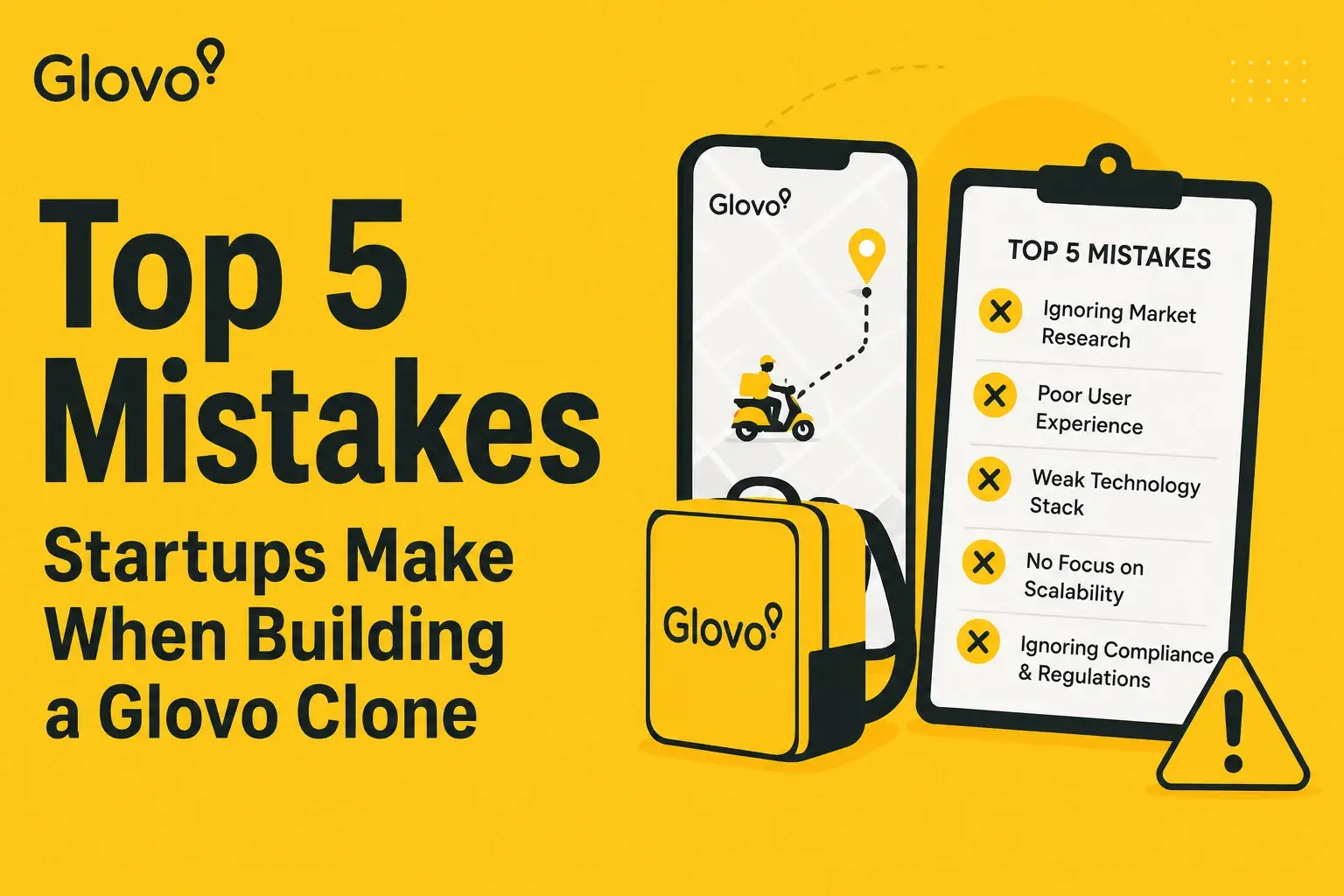
In 2026, launching an on-demand delivery app like Glovo feels like hitting the jackpot. Every week, there’s a new player entering the delivery game—be it groceries, meals, medicine, or that weird gourmet sauce you didn’t know you needed at 11 PM. But here’s the catch: while the idea is sexy on paper, the execution? Not so much. Most startups crash and burn before their app even hits version 1.2. Why? Because building a Glovo clone is not just about copying buttons and colors—it’s about understanding the beast you’re cloning.
Back when I first tinkered with building my own food delivery app (think Glovo x chaos), I thought I had it all figured out. I copied some UI, integrated a payment gateway, and voila!—delivery startup ready to roll. Or so I thought. The nightmare began when drivers couldn’t locate addresses, orders were disappearing, and worst of all, users were uninstalling like it was a sport. That hard lesson? It taught me that copying a product isn’t the same as cloning its business logic.
This blog’s going to save you from repeating those mistakes. We’re digging deep into the top five screw-ups startups make while trying to build a Glovo clone. You’ll get insights on design decisions, logistics algorithms, pricing, and how not to treat the delivery boy like a second-rate citizen in your app model. Whether you’re a solo founder or leading a small dev team, these are mistakes you can’t afford to make.
So buckle up, grab a coffee—or a delivery snack—and keep reading till the end. These tips might just save your startup from becoming another graveyard on the App Store.
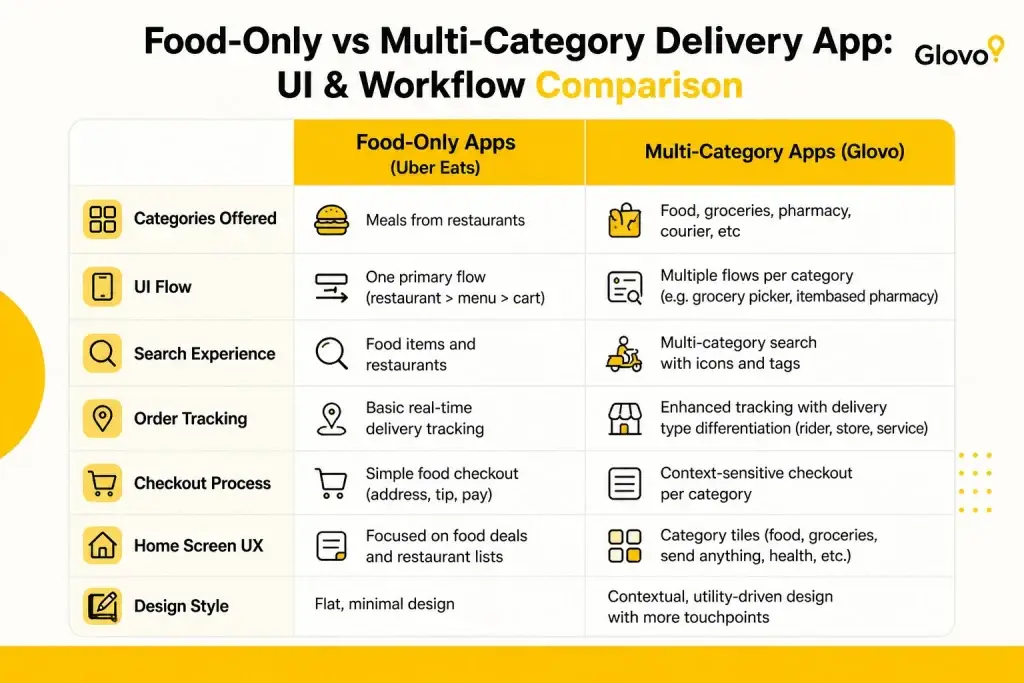
Mistake #1: Treating It Like a Simple Food Delivery App
The biggest rookie mistake? Thinking Glovo is “just another Zomato.” Spoiler alert: it’s not. Glovo is a multi-category, hyperlocal, logistics-driven platform, and that comes with layers—literally.
You’ve got groceries, restaurants, courier services, pharmacy deliveries, even weird stuff like picking up dry cleaning. Each vertical comes with unique UI flows, location logic, and time sensitivity. So if you build a “one-size-fits-all” app interface, it’s like handing a Swiss army knife to someone who just wanted a spoon.
Mistake #2: Underestimating the Logistics Engine
Here’s the meat of the sandwich: delivery logistics. If you don’t invest in a robust dispatching algorithm, you’re toast. Users will complain about long wait times, riders will hate juggling unassigned orders, and partners will ghost you faster than unpaid interns.
Glovo’s backend uses real-time rider allocation, dynamic ETAs, heatmaps, and even demand predictions. If your “clone” just dumps orders in a queue for the nearest rider, get ready for chaos. Proper logistics is your secret sauce—don’t skip it. Check out this CB Insights breakdown on delivery app logistics trends
Mistake #3: Copying UI Without Understanding UX
You can steal Glovo’s design, but you can’t fake their user experience. A good clone isn’t about identical buttons—it’s about frictionless journeys.
Are you offering real-time item availability? Can users schedule deliveries for odd hours? Does the app remember preferred delivery instructions? Most startups skip these nuanced flows. Users don’t just want pretty—they want predictability and personalization.
Mistake #4: Ignoring the Operational Complexity
Glovo partners with thousands of vendors, each with unique working hours, menu updates, inventory systems, and delivery rules. Startups try to launch with 50 restaurants and think that’s “scalable.” Ha! Without a partner onboarding dashboard, inventory sync, and custom SLA settings, it’s like trying to run a fleet with paper maps.
Remember: this business is as much offline as it is online. Your tech needs to support complex ops without needing an army of humans manually tracking everything.
Mistake #5: Forgetting the Monetization Flywheel
Revenue? Hello? Many Glovo clone builders forget to bake in monetization early. They assume commission on deliveries is enough. It’s not.
You need tiered vendor subscriptions, ad placements in-app, delivery charges, priority service fees, and even micro tipping. If your app isn’t structured to support multiple revenue flows from day one, you’re setting yourself up for a cash-flow crisis.
Want to see how a complete platform handles this right? Explore Miracuves’ on-demand delivery solutions and discover monetization strategies already baked into the architecture.
For more app performance benchmarks, SensorTower offers in-depth insights into user retention and delivery trends.
Conclusion: Think Beyond the Clone
Let’s recap: A Glovo clone isn’t a weekend project or a glorified grocery app. If you’re skipping logistics logic, botching UX, ignoring ops, or failing to monetize—you’re burning money. And time.
What we’re seeing in 2026 is a mature but ruthless delivery ecosystem. Winners stand out by obsessing over last-mile execution, modular features, and deep platform integration. If you want to survive—and thrive—ditch the shortcuts and focus on the essentials that make platforms like Glovo so sticky.
Still dreaming of launching the next Glovo? Go ahead—but now, you’ve got fewer excuses to mess it up.
FAQs
Q1. Can I launch a Glovo clone without coding?
Yes, but you’ll be severely limited. No-code tools can get you to MVP, but scaling requires serious backend customizations—especially around dispatch, payments, and partner management.
Q2. How much does it cost to build a full-featured Glovo clone?
You can launch a fully functional Glovo Clone App for just $2,499 with Miracuves — complete with setup, branding, and deployment — all delivered within 6 Days.
Q3. Should I build native apps or go cross-platform?
If speed and budget matter, start with Flutter or React Native. But if you’re aiming for performance and scalability, go native.
Q4. What’s the biggest technical challenge in a Glovo clone?
Real-time logistics and geofencing. Getting riders, customers, and vendors in sync with live data is no joke.
Q5. How do I find delivery partners for my app?
Start locally. Offer good commission rates, easy onboarding, and timely payouts to attract delivery agents and vendors.
Q6. Is it better to focus on one city or multiple cities at launch?
Start with one city, dominate it, and then expand. Going wide too fast kills most startups.
Related Articles:
Miracuves is an independent software development company. We are not affiliated with, connected to, sponsored by, or endorsed by any company or product named in this article.
Terms such as “X Clone” are used descriptively. It is how the software industry refers to building a platform with functionality comparable to a known service, and how clients search for it.
The entire design and codebase of our products is built by our own team. Our products contain no code, design, graphics, or content originating from any third-party website or applications.
All third-party names and marks referenced in this article are the property of their respective owners, referenced solely to identify the services discussed.