


Key Takeaways
- A Revolut clone helps startups launch a fintech, digital wallet, and neobank-style app faster than building from scratch.
- Users, merchants, admins, payment partners, and compliance teams need secure connected financial workflows.
- Wallets, cards, transfers, currency exchange, KYC, payments, and transaction tracking are core features.
- Custom development can increase cost, timeline, testing effort, and launch risk for early-stage fintech startups.
- A ready Revolut-like app can reduce development complexity while supporting faster market validation.
Decision Signals
- Users need easy onboarding, KYC, wallet balance, transfers, card management, bill payments, and transaction history.
- Admins need control over users, accounts, transactions, fees, compliance, disputes, reports, and approvals.
- Payment workflows need secure gateways, wallet ledgers, fraud checks, notifications, and audit records.
- A clone-based launch suits startups that need tested fintech modules, faster deployment, and lower technical uncertainty.
- Custom development suits founders with highly unique fintech logic, larger budgets, and longer product timelines.
Real Insights
- Fintech startups should validate user demand and payment workflows before spending heavily on custom architecture.
- Weak transaction logic can create payment errors, wallet mismatches, and user trust issues.
- Clear fees, fast transfers, transaction visibility, and secure authentication help users manage money with confidence.
- KYC, AML checks, encrypted APIs, audit logs, and fraud monitoring reduce financial and compliance risk.
- Miracuves builds Revolut Clone apps with digital wallets, payments, cards, compliance workflows, transaction tracking, and admin control.
Building a fintech product from scratch sounds exciting until the real execution pressure begins.
Founders must plan user onboarding, wallets, transfers, cards, multi-currency flows, transaction history, compliance workflows, admin controls, payment integrations, security, and app publishing. That is before the product even reaches real users.
This is why many fintech startups compare custom development with a ready-made Revolut-style app before making a build decision.
A Revolut Clone App gives startups a faster way to launch a branded digital banking product with core fintech workflows already in place. Instead of spending months building every module from zero, founders can start with a proven product foundation and customize it around their business model.
This does not mean every startup should avoid custom development. Custom builds make sense when the product requires a completely new financial workflow, deep enterprise architecture, or highly specific compliance logic from day one.
But for many founders who want to validate a neobank, digital wallet, remittance, business finance, or multi-currency platform faster, a white-label Revolut clone can reduce launch risk and help the team focus on market execution.
The Startup Struggle: Speed, Cost, or Complete Custom Control?
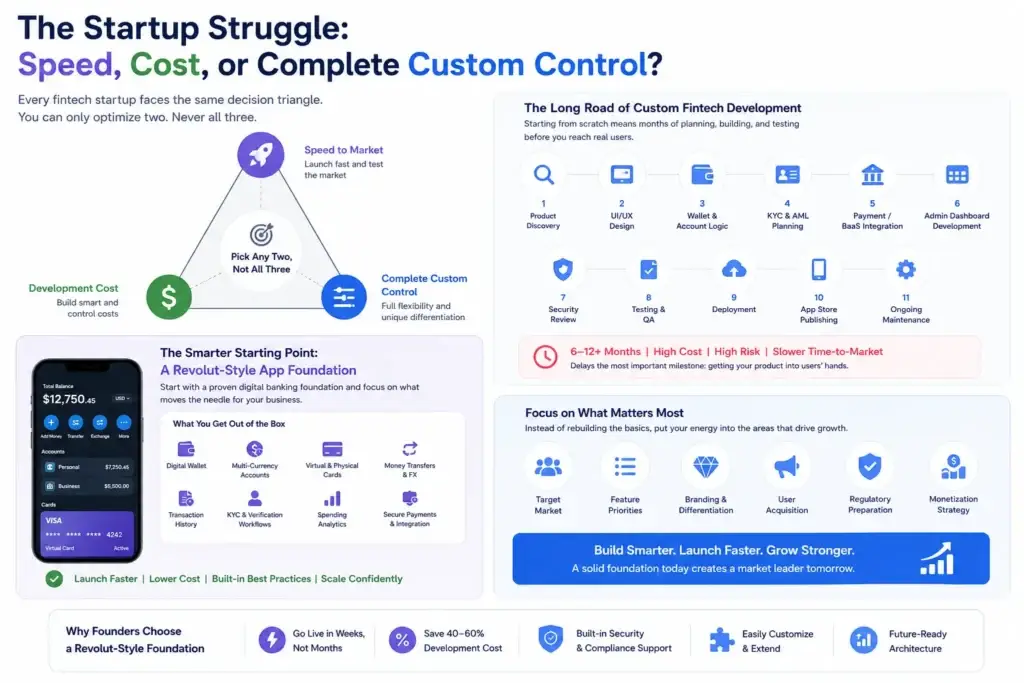
Image Source: AI-generated visual by Miracuves
Every fintech startup faces the same decision triangle.
You want to launch fast, control development cost, and still create a product that feels unique. The challenge is that custom fintech development often stretches across multiple planning layers:
- Product discovery
- UI/UX design
- Wallet logic
- Card and account flows
- KYC and AML workflow planning
- Payment gateway or Banking-as-a-Service integrations
- Admin dashboard development
- Security review
- Testing and deployment
- App store publishing
- Ongoing maintenance
For a funded enterprise team, this long route may be acceptable. For a startup trying to test demand, it can delay the most important milestone: getting the product into users’ hands.
A Revolut-style app changes the starting point.
Instead of beginning with blank screens and custom architecture discussions, the founder begins with an existing digital banking foundation. The team can then focus on what matters commercially: target market, feature priorities, branding, user acquisition, regulatory preparation, and monetization.
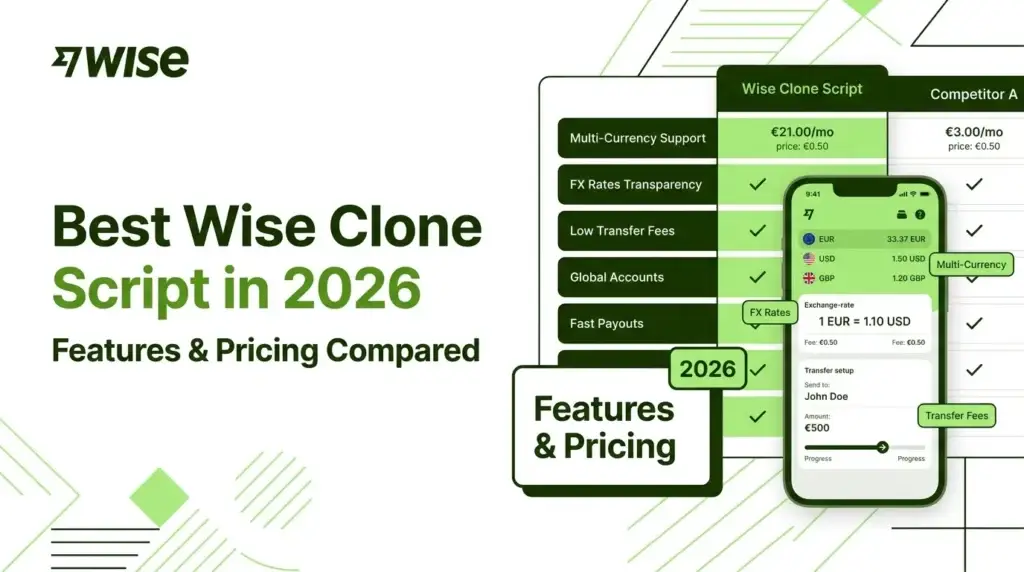
Read more: Best Revolut Clone Script in 2026: Features & Pricing Compared
Why Starting With a Ready-Made Fintech Foundation Makes Sense
The original reason startups choose clone-based development is simple: they do not want to rebuild common fintech flows that already exist in proven digital banking products.
A ready-made Revolut clone can include core modules such as:
- User onboarding and login
- Account dashboard
- Multi-currency wallet
- Money transfer flows
- Card management
- Transaction history
- FX conversion logic
- Budgeting or finance visibility
- Admin dashboard
- User management
- KYC review workflows
- Payment and API integration readiness
- Notifications and support flows
For founders, this matters because fintech products are not only about attractive screens. A financial product must work reliably across user actions, transaction records, admin decisions, and support operations.
A ready-made base gives the startup more time to refine the business model instead of spending the early stage rebuilding standard product modules.
Revolut Clone vs Custom Development: Startup Decision Table
| Decision Factor | Revolut Clone Approach | Custom Development Approach | Startup Impact |
|---|---|---|---|
| Launch speed | Faster because core workflows already exist | Slower because the product is built from zero | Clone approach helps validate demand sooner |
| Cost planning | More predictable starting scope | Cost can expand with discovery, changes, and integrations | Clone route can reduce early uncertainty |
| Product demo | Available earlier for review and sales discussions | Usually available after design and development phases | Helps founders show investors, partners, or internal teams faster |
| Customization | Branding, workflows, modules, and integrations can be adapted | Full flexibility from the beginning | Custom is better for highly unique workflows |
| Security planning | Starts with existing security and admin-control layers | Must be planned and built from scratch | Ready-made foundation reduces missed operational layers |
| Admin control | Admin dashboard can be included from the base product | Often becomes a separate development scope | Stronger backend control from day one |
| Scalability | Can be extended if the architecture is modular | Depends entirely on the team and budget | Product quality matters more than the label “clone” or “custom” |
| Best fit | Startups, regional fintechs, digital wallet products, neobank launches | Enterprises or products with uncommon financial logic | Choose based on speed, complexity, and roadmap |
The practical question is not “clone or custom?” The better question is:
How much of the product should be ready-made, and how much should be customized for your market?
Where a Revolut-Style App Creates Business Value for Startups
A Revolut-style app is useful because it connects several fintech experiences into one product ecosystem.
Founders can use the foundation for different business models, such as:
- Consumer neobank app
- Digital wallet platform
- Multi-currency account product
- Cross-border transfer app
- SME business finance platform
- Card-based spending product
- Regional digital banking brand
- White-label fintech deployment for agencies or operators
This makes the product more valuable than a simple wallet app.
A basic wallet usually supports balance, top-up, transfer, and transaction history. A stronger Revolut-style product can support broader financial workflows such as accounts, cards, FX, business finance, admin controls, and integration-ready architecture.
For cross-border or remittance-focused ideas, founders can also compare the Wise clone solution to understand whether their product should be closer to digital banking, global transfers, or both.
Product Features That Matter Before Launch
Startups often focus first on the user app. That is natural because users judge the product through onboarding, dashboard design, transfers, cards, and transaction visibility.
But a fintech platform needs more than a clean frontend.
The stronger product decision is to evaluate the full operating system behind the app:
| Product Layer | Why It Matters |
| User app | Helps customers onboard, view balances, manage cards, transfer money, and track activity |
| Web app | Supports desktop access, business finance workflows, statements, and browser-based usage |
| Admin panel | Gives the operator control over users, transactions, KYC reviews, disputes, provider settings, and reports |
| Integration layer | Connects payments, Banking-as-a-Service providers, notifications, analytics, and other systems |
| Security layer | Protects account access, sensitive data, transactions, and admin actions |
| Branding layer | Allows the product to become your own fintech brand instead of a generic script |
| Support layer | Helps resolve user issues, monitor activity, and manage platform operations |
This is where a white-label Revolut clone becomes relevant. It gives startups a product base that can be reviewed, branded, configured, and expanded rather than imagined from scratch.
How a Revolut Clone Supports Faster Market Validation
A startup does not learn much from a product stuck in development. It learns from users, transactions, onboarding friction, support issues, and payment behavior.
A ready-made fintech app helps founders validate faster because it allows them to test:
- Which user segment responds best
- Which features users actually use
- Whether multi-currency or card features matter in the target market
- Which pricing or fee model feels acceptable
- Whether business users need invoices, payroll, or expense tools
- Which compliance and onboarding steps create friction
- Which integrations are essential before scaling
Custom development can still be useful later. Once the startup has real usage data, custom modules can be added with better judgment.
That is the smarter sequence for many founders:
Launch a strong foundation first. Learn from the market. Customize based on evidence.
Monetization Opportunities for a Revolut-Style App
A fintech product should not be built only around features. It needs a clear revenue model.
Depending on the market, licensing approach, and financial partners, a Revolut-style platform may support monetization through:
- Subscription plans for premium users
- FX margin or currency conversion fees
- Transfer fees
- Card issuance or card usage fees
- Business account plans
- SME finance tools
- Payroll or invoice features
- Partner commissions
- Featured financial services
- Add-on modules for advanced users
- Multi-brand deployment for agencies or operators
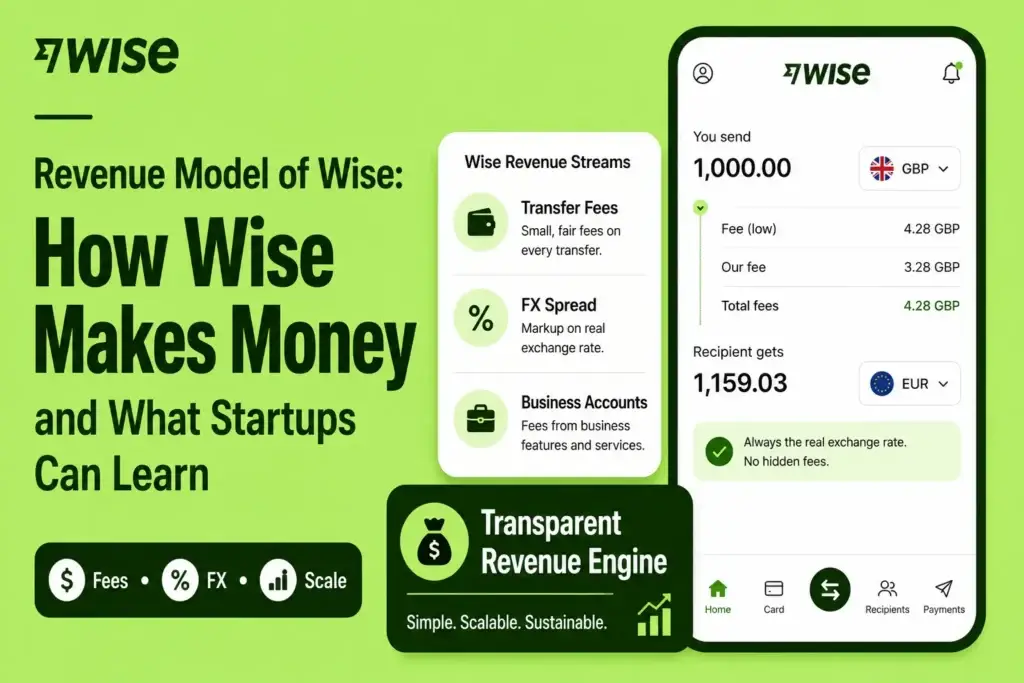
For a deeper revenue comparison, the Revolut business model guide and the Revolut vs Wise business model comparison can support readers who are still choosing between neobank, remittance, or hybrid fintech positioning.
The key point for startups is this: monetization should be planned before development starts.
If the app has no admin-level fee controls, transaction visibility, subscription logic, or reporting structure, the founder may struggle to test revenue even after the app launches.
Security, Compliance Workflows, and Admin Control Cannot Be Afterthoughts
Fintech apps handle sensitive financial data, account access, user identity, transaction records, and operational decisions. Security cannot be added casually at the end of development.
A serious Revolut-style app should consider:
- Encrypted data transfer
- Secure authentication
- Multi-factor authentication options
- Role-based access control
- Admin permission levels
- KYC workflow support
- AML workflow support
- Transaction monitoring
- Audit logs
- Dispute management
- Secure payment gateway integration
- Activity history
- User verification
- Provider or partner configuration controls
The important wording here is compliance-ready, not “fully compliant everywhere.”
Final compliance depends on target jurisdiction, legal review, operating model, payment partners, Banking-as-a-Service providers, and required licenses. A strong fintech platform can support compliance workflows, but regulatory approval is not something a software product should promise by itself.
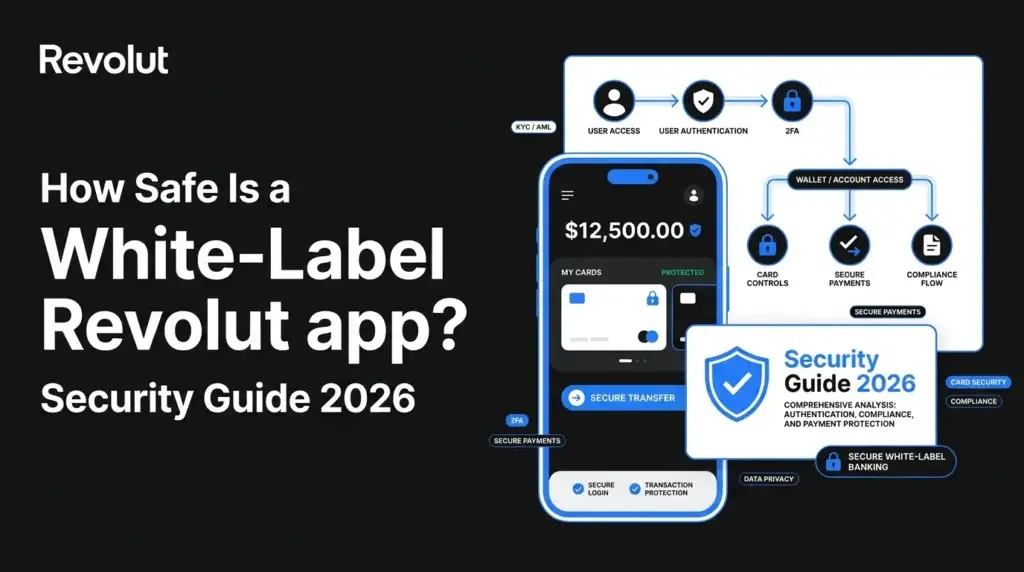
For readers evaluating this area deeply, the white-label Revolut app security guide is a useful supporting read.
Why the Admin Dashboard Matters as Much as the User App
Many founders judge a fintech product by the mobile screens. Users care about the frontend, but operators live inside the admin dashboard.
The admin panel decides whether the business can manage the platform properly after launch.
A strong admin dashboard should help the operator manage:
- Users and profiles
- KYC review queues
- Transactions
- Cards and account activity
- Disputes and support issues
- Payment providers
- Commissions and fee settings
- Reports and analytics
- Audit logs
- Role-based team access
- Risk or suspicious activity flags
- App configuration and operational settings
Without admin control, even a beautiful fintech app can become difficult to operate.
This is one of the strongest reasons startups choose a ready-made fintech platform instead of a basic script or frontend-only product. A complete product foundation should include the control layer needed to manage the business.
Customization Still Exists — It Just Starts From a Better Base
Choosing a Revolut clone does not mean launching a copy of another brand.
The value is in using a proven product pattern and adapting it to your own market.
A startup can customize:
- App name and branding
- Color palette and UI presentation
- User onboarding flow
- Supported currencies
- Regional account flows
- Payment providers
- Banking-as-a-Service integrations
- KYC and AML workflow rules
- User roles and permission logic
- Card-related modules
- Business finance tools
- Notifications
- Reports
- Add-on services
- Language and regional settings
This approach gives founders a better balance: they avoid rebuilding common fintech foundations while still shaping the product around their own brand, audience, and business model.
For broader ecosystem planning, founders can also explore Miracuves’ fintech app development resources to understand how digital banking, wallets, remittance, and embedded finance products connect.
When Custom Development Is Still the Better Choice
A ready-made Revolut clone is not the answer for every fintech product.
Custom development may be better when:
- The product has a completely new financial workflow
- The business requires highly specific enterprise architecture
- The team has a large engineering budget and longer timeline
- The product depends on proprietary algorithms or unique infrastructure
- The compliance model requires extensive custom logic from day one
- The founder wants every module designed from scratch
The best decision depends on the founder’s stage.
If the goal is early validation, faster demo readiness, and a practical go-to-market path, a ready-made Revolut-style app can be more efficient.
If the goal is a highly specialized fintech infrastructure product with unusual logic, custom development may be worth the longer route.
Post-Launch Support: The Real Work Starts After Going Live
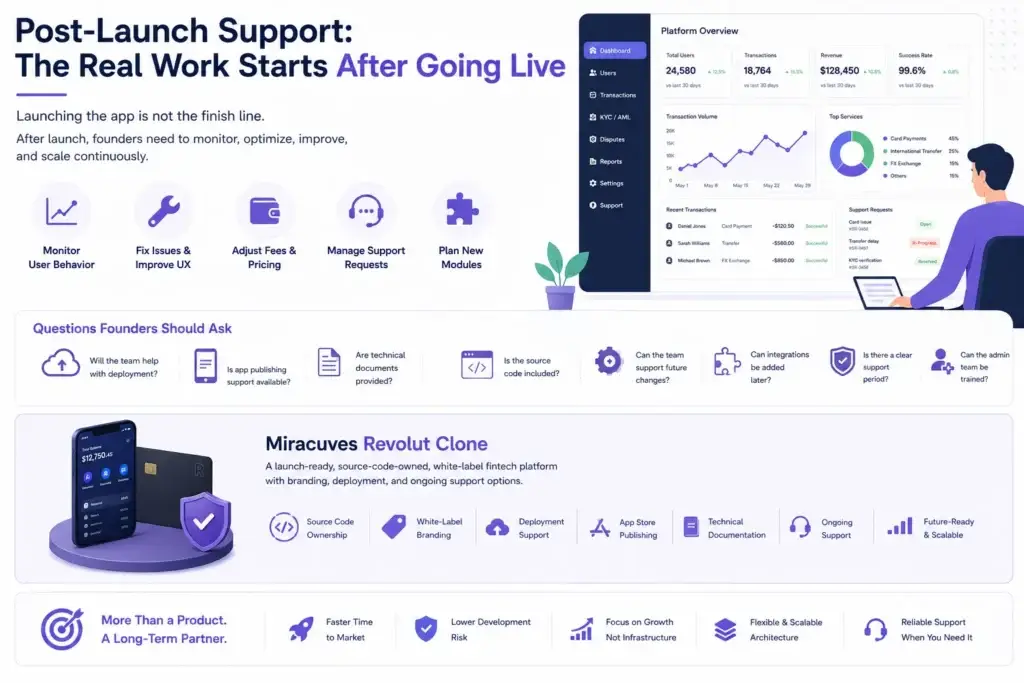
Image Source: AI-generated visual by Miracuves
Launching the app is not the finish line.
After launch, founders need to monitor user behavior, fix issues, improve onboarding, adjust fees, review transaction flows, manage support requests, update integrations, and plan new modules.
This is why startups should evaluate more than the app package. They should ask:
- Will the team help with deployment?
- Is app publishing support available?
- Are technical documents provided?
- Is the source code included?
- Can the team support future changes?
- Can integrations be added later?
- Is there a clear support period?
- Can the admin team be trained?
Miracuves positions its Revolut clone as a launch-ready, source-code-owned, white-label fintech platform with branding, deployment, and support options. For founders, that means the product can start faster and still leave room for future development.
Read more: Pre-launch vs Post-launch Marketing for Revolut Clone Startups
Why Choose Miracuves for Revolut-Style App Development?
Choosing the right development partner matters as much as choosing the right product model. A Revolut-style app involves more than wallet screens or money transfer flows. It needs user onboarding, KYC workflow support, transaction visibility, card management, admin control, secure integrations, monetization options, and a product structure that can grow with the business.
Miracuves helps fintech founders launch faster with a ready-made, white-label fintech foundation that can be customized around branding, market requirements, integrations, and business goals. Instead of starting every module from zero, startups can begin with a launch-ready product base and focus on validation, partnerships, compliance preparation, and user acquisition.
With the Miracuves Revolut Clone App, founders can explore a source-code-owned solution designed for faster deployment, branded app experiences, admin dashboard control, and future customization. This makes it a practical route for startups that want to test a digital wallet, neobank, multi-currency account, or fintech platform without committing to a long custom development cycle from day one.
For founders comparing custom fintech development with a ready-made approach, Miracuves provides a clearer path to review the product, understand pricing, check demo flows, and plan the next version based on real business priorities.
Conclusion: Build Faster, Validate Smarter, and Customize With Purpose
Startups choose a Revolut clone over custom development because they are not only buying code. They are buying time, clarity, and a practical route to market.
Custom development has its place, especially for highly specialized financial products. But for many fintech founders, the smarter first move is to launch with a ready-made Revolut-style foundation, validate demand, and customize based on real market feedback.
The goal is not to copy Revolut blindly.
The goal is to use a proven fintech product structure to create your own branded digital banking experience faster, with better control over launch scope, cost, security workflows, admin operations, and future expansion.
FAQs
Why do startups choose a Revolut clone instead of custom development?
Startups choose a Revolut clone because it helps them launch faster, reduce early development uncertainty, review product flows sooner, and validate demand before investing in a long custom build. It is useful when the founder needs a practical fintech foundation rather than a product built entirely from zero.
Can a Revolut clone be customized?
Yes. A white-label Revolut clone can be customized with your branding, UI changes, market-specific workflows, integrations, supported currencies, KYC/AML workflow settings, payment providers, and add-on modules. The level of customization depends on the final project scope.
How much does it cost to build a Revolut-style app?
The cost depends on features, platforms, integrations, security requirements, compliance workflows, branding, infrastructure, and support scope. Miracuves’ Revolut clone money page currently positions the ready-made white-label solution from $27,999, with final pricing confirmed after reviewing the selected modules and customization needs.
How long does it take to launch a Revolut clone app?
A standard ready-made white-label deployment can be launched much faster than custom development. Miracuves currently positions its ready-made Revolut clone with a 6-day go-live timeline for the standard scope. More complex customization, BaaS integrations, or compliance-heavy workflows may require additional time.
Is a Revolut clone secure for fintech startups?
A serious Revolut-style app should include secure authentication, encrypted communication, role-based access, audit logs, KYC workflow support, AML workflow support, transaction monitoring, admin controls, and secure integrations. Final compliance depends on your jurisdiction, legal review, partners, and operating model.
Does a Revolut clone include an admin panel?
A complete Revolut clone should include an admin panel for managing users, KYC reviews, transactions, disputes, cards, fee settings, provider configurations, reports, roles, and audit logs. The admin dashboard is important because it gives the operator control over the business after launch.
Can I use a Revolut-style app for neobank app development?
Yes. A Revolut-style app can support neobank app development if your goal is to launch a branded digital banking product with accounts, transfers, cards, wallets, multi-currency workflows, and admin control. The final structure should be adapted to your market, regulations, and financial partners.
Does a Revolut clone support monetization?
A Revolut-style fintech platform can support monetization through subscriptions, transfer fees, FX margins, card fees, business finance tools, partner commissions, premium features, and add-on modules. The right model depends on your target users, geography, product scope, and financial integrations.