



Ever found yourself juggling Slack notifications, a startup pitch deck, and—oh no—your fridge is emptier than a VC’s inbox post-funding season? Yeah, we’ve all been there. You need milk, coffee, oats… and zero time to run to the store. Enter OneCart—the grocery genie that delivers everything you need with just a few taps.
For entrepreneurs and digital creators, time isn’t just money—it’s survival. Whether you’re coding in your pajamas or hosting a late-night brainstorm session, OneCart steps in like your personal shopper with superpowers. It’s not just an app; it’s a lifestyle upgrade wrapped in UX.
And here’s the kicker: startups like OneCart aren’t unicorns from another planet. With the right partner (hint: Miracuves), you can build, launch, and scale your very own version. But let’s first understand how OneCart works its magic.
What Exactly is OneCart?
OneCart is a multi-retailer grocery delivery app that lets users shop from various local supermarkets, pharmacies, and specialty stores—all in one order. Think of it as Uber Eats meets Instacart meets your neighborhood store, all synced into a single interface.
It originated in South Africa and quickly scaled by solving a real problem: fragmented grocery shopping. Users can search for products across retailers like Woolworths, Pick n Pay, Dis-Chem, and others without hopping between apps. OneCart aggregates the shopping experience and then dispatches personal shoppers to fulfill the order.
Partner with a reliable grocery delivery app development company to launch a OneCart-style platform packed with real-time inventory and multi-store support.
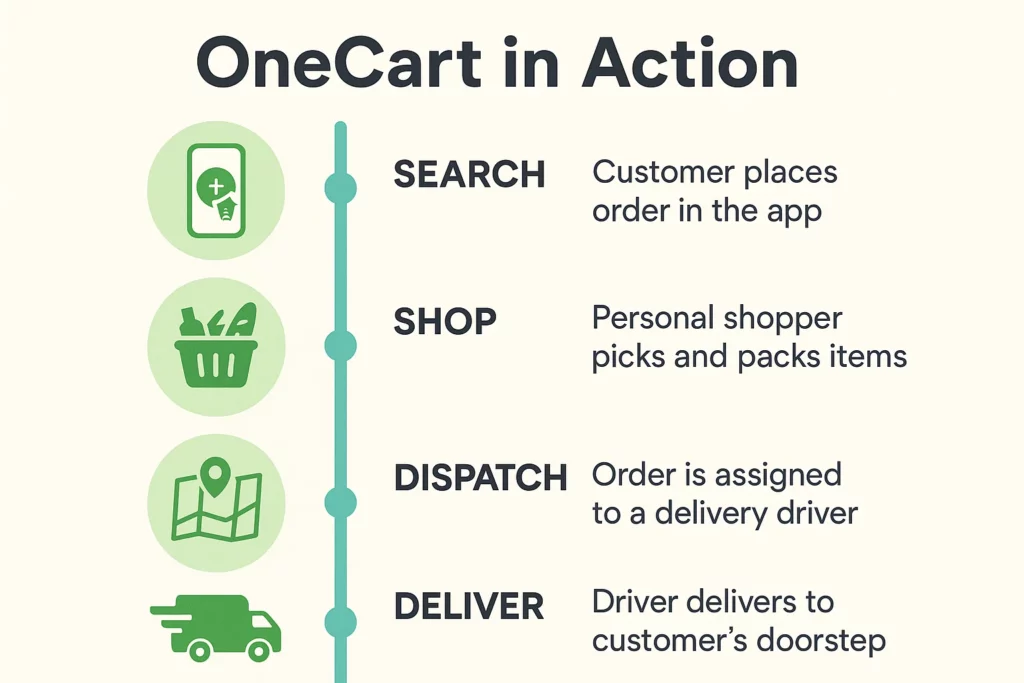
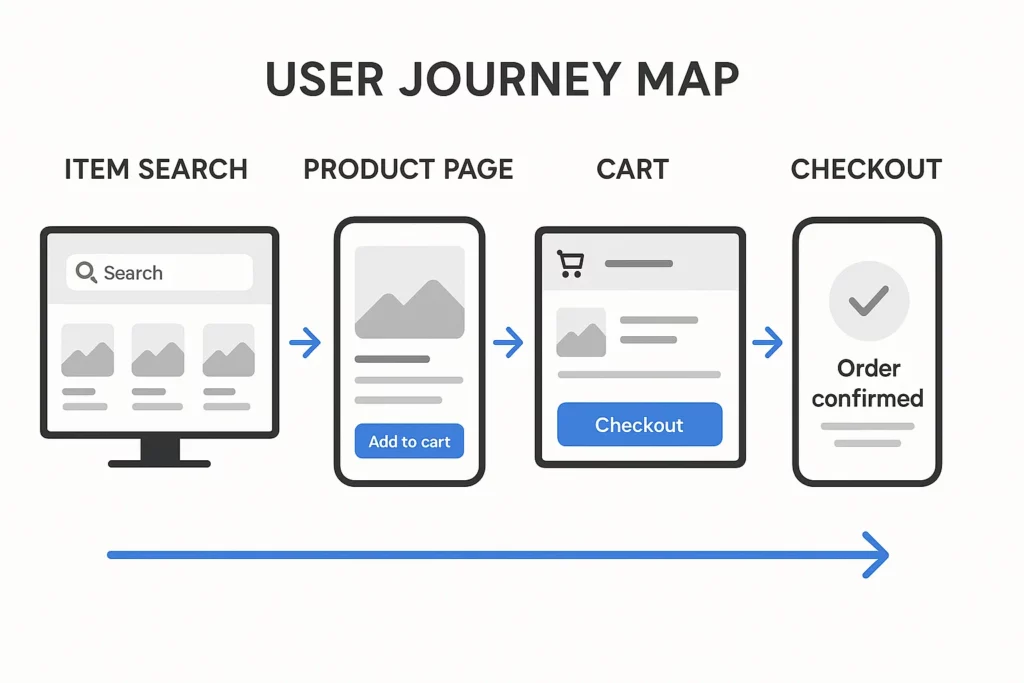
How Does OneCart Work? Step-by-Step Breakdown
Let’s break it down like you’re reverse-engineering it for your pitch deck:
1. Retailer & Product Discovery
- Users log in and enter their delivery address
- App displays nearby partnered retailers based on location
- Products are categorized (fruits, bakery, dairy, meds, etc.)
- Real-time inventory sync from stores
2. Order Placement & Cart Consolidation
- Users can mix items from multiple stores
- OneCart auto-splits the order per vendor
- Final cart shows subtotal, delivery fees per store, ETA
3. Personal Shoppers & Fulfillment
- Trained shoppers pick products in real time
- Substitutes available if items are out of stock
- Shoppers can chat with users for item clarifications
4. Last-Mile Delivery & Tracking
- Orders are bagged and assigned to delivery drivers
- Users get live tracking and delivery confirmation
- Digital receipt sent post-delivery
Why OneCart’s Model Works (And What Startups Can Learn)
OneCart didn’t invent grocery delivery. It just refined it. Here’s what gives its business model real bite:
1. Marketplace Aggregation Power
Multiple vendors = more options = higher cart value. It’s classic multi-sided platform economics—value increases with more participants.
2. Revenue Streams Galore
- Delivery fees
- Commission from retailers
- Subscription (OneCart+)
- Promoted listings for brands
- White-labeled B2B logistics
3. Hyperlocal Edge
OneCart wins because it plays the hyperlocal game well. Unlike global giants, it understands local delivery challenges, partnerships, and language preferences.
Explore how OneCart earns revenue through delivery fees, service charges, and partnerships with grocery retailers.
Tech Stack Behind OneCart (And Your Future App)
If you’re building a OneCart clone, here’s what you’d need in your tech toolkit:
Frontend (Customer)
- Flutter or React Native (for Android + iOS)
- Clean UX with predictive search, filters, barcode scan
Backend (Admin + Vendor)
- Node.js or Django
- Real-time inventory API integration
- Multi-vendor dashboard, order routing logic
Infra
- Cloud hosting (AWS / GCP)
- Firebase for real-time messaging
- Twilio for shopper-user chat
Explore the top-rated OneCart clone scripts of 2025 — compare key features, customizability, and pricing to launch your grocery delivery platform.
Global Cost Factors & Pricing Breakdown
Onecart-Like App Development — Market Price
These values reflect global development cost estimates. Final pricing varies based on feature scope, team location, and platform complexity.
These amounts reflect the broader market cost of building a OneCart-style grocery delivery platform based on the selected backend architecture, order and inventory workflow complexity, real-time operational needs, and long-term scalability goals.
Miracuves Onecart-Like App Solution Cost and Tech Stack
Miracuves Pricing for a OneCart-Like App developed in PHP/Laravel with Flutter Apps for $2,199 USD (One-Time Price) in just 6 days
Get a fully developed, deployment-ready platform modeled after OneCart. Built on a rock-solid PHP/Laravel foundation, this complete package includes everything you need to launch and scale:
- Core Workflows: Grocery discovery, product browsing, cart management, order scheduling, and end-to-end grocery delivery management.
- Built-in Finance: In-app wallet logic, order pricing operations, and payout setups.
- Management Hub: Comprehensive store and delivery partner management and a centralized admin backend.
- Launch-Ready: Fully prepped for your custom branding, configuration, and immediate market entry.
Why Miracuves’s OneCart Like App is so affordable?
Most complex grocery delivery platforms force you into expensive architectures like Node.js or Go. Building from scratch with those frameworks requires highly specialized, expensive engineering teams, which drives the cost into the tens or hundreds of thousands of dollars.
We took a smarter, more practical approach:
- You Aren’t Paying for Ground-Up Development: Our grocery delivery platform engine is already developed, battle-tested, and ready to deploy. You skip the inflated costs and months of waiting associated with building from scratch.
- The Power of PHP / Laravel: We built this on one of the most reliable, globally adopted frameworks in the world. Not only does this keep our upfront costs down, but it also protects your future budget. PHP has a massive global talent pool, making it incredibly easy and cost-effective for you to find developers for future scaling or customizations.
You get an enterprise-capable, heavy-duty foundation without the inflated Silicon Valley price tag.
Note: This cost is for the solution, re-branding, deployment and source code only.
OneCart vs Instacart vs BigBasket
| Feature | OneCart | Instacart | BigBasket |
|---|---|---|---|
| Multi-retailer cart | ✅ | ❌ | ❌ |
| Hyperlocal targeting | ✅ | ✅ | ✅ |
| Personal shoppers | ✅ | ✅ | ❌ |
| Retail partnerships | Regional | National | Owned inventory |
Future-Proofing the OneCart Model
Dark Stores & Micro-Warehousing
To optimize delivery speed and SKU availability, OneCart-like models may invest in dark stores—small fulfillment hubs in dense urban areas.
AI-Powered Recommendations
As grocery personalization becomes the norm, AI engines will suggest bundles based on purchase history, dietary habits, and even local weather.
Wallets & Instant Checkout
Mobile wallets, UPI, and crypto integration could simplify payments further. Checkout friction = cart abandonment = lost $$$.
Explore the marketing strategy that fuels OneCart’s growth and uncover the full-stack development approach behind building a OneCart-like grocery delivery app.
Conclusion
OneCart is more than a grocery delivery app. It is a smart example of how scalable operations, efficient logistics, and user-first design can create real everyday value. It does not just deliver products. It delivers convenience, saves time, and becomes part of the customer’s routine.
For startup founders, that is where the opportunity lies. Building a OneCart-style platform is not just possible, but commercially promising when supported by the right features, strategy, and execution. With a strong product foundation, businesses can turn daily demand into a scalable and profitable delivery model.
At Miracuves, we help innovators launch high-performance app clones that are fast, scalable, and monetization-ready. Ready to turn your idea into reality? Let’s build together.
FAQs
What is OneCart used for?
OneCart is used to order groceries and household items from multiple local retailers in a single app. It lets users shop smarter, faster, and with less hassle.
Can I shop from more than one store?
Yes! That’s OneCart’s main USP. You can fill your cart with items from various partnered retailers and receive them in one consolidated delivery.
How does OneCart make money?
It earns via delivery fees, commissions from retail partners, subscriptions, and premium placements. It may also monetize logistics for B2B players.
Is OneCart available globally?
Not yet. It’s primarily focused on South Africa but the model is replicable in other regions with similar market dynamics.
How long does delivery take?
Delivery times depend on store location and order volume, but most deliveries are fulfilled within 60–120 minutes.
Can I build a OneCart clone for my region?
Absolutely. With the right development team like Miracuves, you can customize features, integrate local vendors, and scale your own version quickly.