Key Takeaways
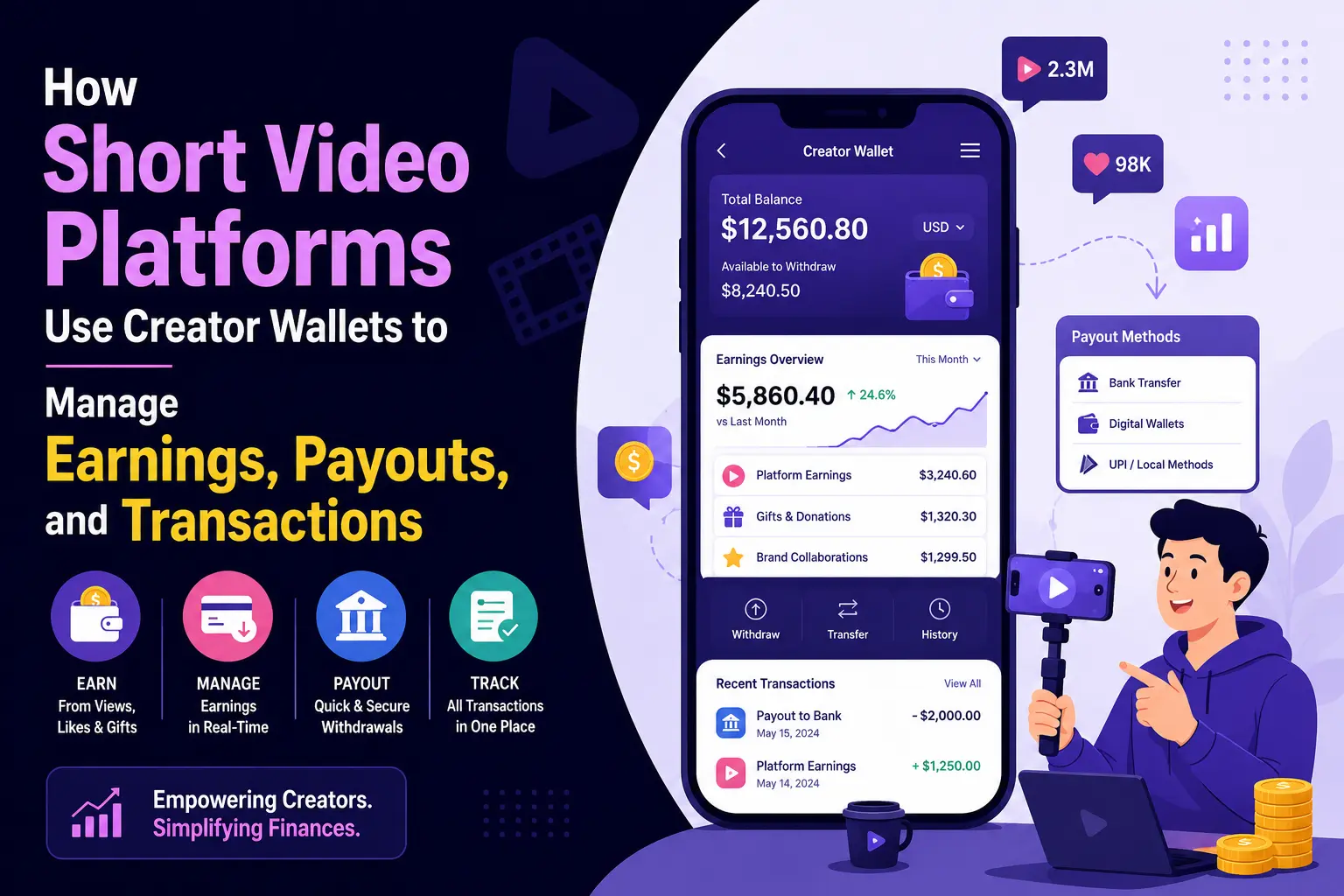
- Creator wallets help short video platforms manage earnings, balances, withdrawals, and payouts.
- Wallet systems track multiple income sources like gifts, ads, subscriptions, and creator rewards.
- Clear payout flows build trust between creators and the platform.
- Admin controls are important for commissions, refunds, disputes, and payout approvals.
- A strong wallet system supports monetization, transparency, creator retention, and platform growth.
What You’ll Learn
- How creator wallet systems work inside short video platforms.
- Earnings tracking helps creators view income from different monetization channels.
- Payout workflows manage withdrawals, processing status, and payment records.
- Transaction history improves transparency for creators and admins.
- Growth depends on wallet accuracy, payout speed, security, and creator confidence.
Real Insights
- Creators stay loyal when earnings are visible, accurate, and easy to withdraw.
- Payout delays can damage trust even if the platform has strong engagement.
- Wallet logic must handle deductions such as platform fees, taxes, refunds, and chargebacks.
- Security matters because wallet systems handle sensitive financial activity.
- The best strategy is to build a transparent creator wallet that supports earnings, payouts, and long-term monetization.
Short video platforms are no longer just content feeds. They are creator-driven economies where users upload videos, build audiences, earn from engagement, receive virtual gifts, promote products, and withdraw real money from the platform.
That is why a creator wallet system has become one of the most important financial layers inside a modern short video app.
For founders building a TikTok-style platform, the wallet is not just a screen that shows money. It is the system that decides how creator earnings are calculated, when balances become available, how withdrawals are approved, how payouts are processed, and how every transaction is tracked.
A weak wallet system can create disputes, delayed payments, creator dissatisfaction, and admin confusion. A well-designed wallet system builds trust, improves creator retention, and gives the platform operator better control over monetization.
Miracuves helps founders build ready-made and white-label short video platforms with creator monetization, wallet workflows, admin dashboards, and source-code ownership. For founders entering the creator economy, the wallet layer should be planned early because creator trust depends heavily on transparent earnings and reliable payouts.
Why Creator Wallets Matter in Short Video Platforms
In the early version of a short video platform, founders often focus on the video feed, upload flow, likes, comments, sharing, and user profiles. These features are important, but they do not fully explain why creators stay active.
Creators stay active when the platform gives them visibility, community, and a practical path to earnings.
A creator wallet gives creators a clear view of their money. It answers the questions that matter most to them:
- How much did I earn?
- Where did the earning come from?
- Is the amount pending or available?
- When can I withdraw it?
- Which payout method can I use?
- Why was a withdrawal delayed, rejected, or adjusted?
Platforms such as YouTube already require creators to verify payment information, share tax information, and select payment methods once earnings reach certain thresholds. That same logic matters for short video platforms because payout reliability becomes part of creator trust.
For founders, the wallet system also protects the business. It gives the admin team visibility into financial activity, creator withdrawals, payout failures, refund adjustments, suspicious earning patterns, and platform liabilities.
Read more: What is TikTok App and How Does It Work?
What Is a Creator Wallet System?
A creator wallet system is the internal wallet layer that records, organizes, and manages creator earnings inside a content platform.
In a short video app, the wallet system usually connects with:
- Creator profiles
- Monetization rules
- Video analytics
- Ad revenue calculations
- Virtual gifts
- Tips
- Subscriptions
- Brand campaign rewards
- Referral rewards
- Withdrawal requests
- Payment gateway or payout provider
- Admin approval workflows
- Transaction history
- Tax and verification records
The wallet does not always work like a full banking wallet. In many creator platforms, it functions as an internal earnings ledger. It shows what the creator has earned, what is pending, what can be withdrawn, and what has already been paid.
The most important part is not the wallet screen itself. The real value sits behind the screen: the ledger, rules engine, transaction records, payout logic, fraud checks, and admin controls.
How Creator Earnings Enter the Wallet
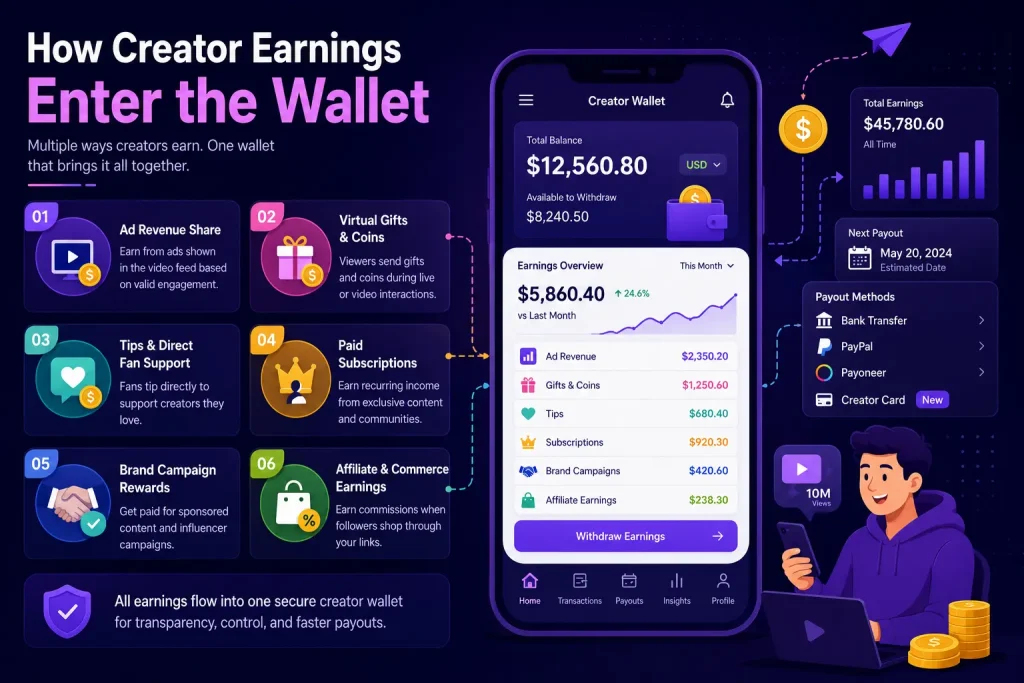
Creator earnings can come from several monetization streams. A strong wallet system should be flexible enough to support multiple earning sources because short video platforms often evolve over time.
1. Ad Revenue Share
If the platform runs ads inside the video feed, it can share a percentage of ad revenue with eligible creators. The wallet system records the creator’s share based on platform rules.
The earning logic may depend on:
- Valid views
- Watch time
- Engagement quality
- Ad impressions
- Region
- Creator eligibility
- Content category
- Brand safety filters
The wallet should not simply count every view as payable. It should use validated engagement data so the platform does not pay for fake traffic, bot activity, or manipulated views.
2. Virtual Gifts and Coins
Many short video and livestreaming platforms allow viewers to buy coins, send gifts, and support creators during live sessions or video interactions.
TikTok Live, for example, uses virtual gifts that can be converted into creator earnings, and TikTok and Visa recently introduced a UK creator card to help eligible creators access earnings faster.
For founders, this shows how creator payments are moving from a backend finance process into a visible product experience. The wallet is becoming part of the creator experience, not just accounting infrastructure.
3. Tips and Direct Fan Support
Some short video platforms allow fans to tip creators directly. The wallet records the tip amount, deducts platform fees if applicable, and updates the creator’s pending or available balance.
This flow needs transparency. If a fan sends $10 and the creator receives $8 after fees, the creator dashboard should clearly explain the deduction.
4. Paid Subscriptions
Creator subscription models allow followers to pay monthly for exclusive content, badges, private content access, or community privileges.
The wallet system should record:
- Subscription payment received
- Platform commission
- Creator share
- Refund adjustments
- Renewal status
- Failed payment impact
- Subscription cancellation impact
5. Brand Campaign Rewards
A short video platform may support influencer campaigns where brands pay creators for publishing sponsored content.
In this case, the wallet may record milestone-based earnings:
- Campaign accepted
- Video submitted
- Brand approved
- Performance target achieved
- Payment released
- Creator balance updated
This is more complex than a simple tip because the earning depends on workflow approvals.
6. Affiliate and Commerce Earnings
Short video commerce is growing because creators can drive product discovery through short-form content. If the platform supports product tagging or affiliate links, wallet earnings may come from commissions.
The wallet should show which product, campaign, video, or affiliate event generated the earning.
Creator Payment Flow: From Engagement to Withdrawal
A creator payment flow should be simple on the front end and controlled on the backend. A structured payout flow helps creators understand how their earnings move from engagement activity to actual withdrawal.
| Step | Payment Flow Stage | What Happens | Platform Control |
|---|---|---|---|
| 1 | Creator Generates Monetizable Activity | The creator earns through views, virtual gifts, tips, subscriptions, brand campaigns, or commerce activity. | The platform tracks monetizable events from videos, campaigns, gifts, and subscriptions. |
| 2 | Platform Validates the Earning Event | The system checks whether the earning is valid, eligible, and free from suspicious activity. | Fraud checks, eligibility rules, and engagement quality filters are applied. |
| 3 | Earnings Enter Pending Balance | The earning appears in the creator wallet but is not yet withdrawable. | The platform keeps the amount under review before releasing it. |
| 4 | Holding or Review Period Applies | The platform may wait for fraud checks, refunds, payment settlement, or campaign approval. | Admin or automated review prevents early or risky payouts. |
| 5 | Amount Moves to Available Balance | Once cleared, the earning becomes available for withdrawal. | The wallet updates the creator’s available balance. |
| 6 | Creator Submits Withdrawal Request | The creator selects a payout method, enters the amount, and confirms the request. | The system checks withdrawal rules and payout details. |
| 7 | Request Is Reviewed | The platform checks KYC status, minimum threshold, suspicious activity, payout limits, and account details. | Admin dashboard or automated workflow approves, rejects, or holds the request. |
| 8 | Payout Is Processed | Funds are sent through bank transfer, wallet transfer, card payout, or another supported method. | The payout provider or payment gateway processes the transaction. |
| 9 | Transaction Status Updates | The creator sees whether the payout is pending, processing, completed, failed, or rejected. | Real-time status tracking reduces creator confusion and support queries. |
| 10 | Ledger Records Every Movement | Every credit, debit, adjustment, and payout is stored in the wallet ledger. | The platform keeps an audit-friendly transaction record for disputes and financial control. |
This flow matters because creators do not judge a platform only by how much they earn. They also judge it by how clearly and reliably the platform explains every stage of the money movement.
Wallet Balance Types Founders Should Understand
One of the biggest wallet mistakes is showing one generic balance. In a creator platform, one balance is rarely enough.
A well-designed creator wallet system should separate different balance states.
| Balance Type | What It Means | Why It Matters |
|---|---|---|
| Pending Balance | Earnings recorded but not yet cleared | Helps creators see upcoming money without allowing premature withdrawal |
| Available Balance | Cleared amount ready for withdrawal | Gives creators confidence and reduces support questions |
| Withdrawn Balance | Total amount successfully paid out | Helps creators track lifetime earnings |
| Locked Balance | Amount held for review, dispute, refund, or policy issue | Protects the platform from fraud and payout mistakes |
| Failed Payout Balance | Amount returned after failed payout attempt | Helps retry payments without losing transaction history |
| Bonus Balance | Platform rewards, referral bonuses, or promotional incentives | Useful for campaigns and creator acquisition |
For founders, balance separation improves financial clarity. It also prevents disputes because creators can see why money is not immediately withdrawable.
Read more: Reasons startup choose our TikTok-like app over custom development
Core Features of a Creator Wallet System
A creator wallet should be designed for both creators and platform operators. The creator needs simplicity. The admin team needs control.
Creator Wallet Features and Business Value
| Feature | Business Value | Founder Impact |
|---|---|---|
| Wallet Balance Dashboard | Shows pending, available, withdrawn, and locked balances | Reduces creator confusion and support tickets |
| Earnings Breakdown | Separates income from ads, gifts, tips, subscriptions, and campaigns | Helps creators understand what monetization channels work best |
| Withdrawal Request Flow | Allows creators to request payouts after meeting platform rules | Creates a controlled payout process |
| Payout Method Management | Supports bank accounts, wallets, cards, or payout provider integrations | Improves payout flexibility across regions |
| Transaction History | Records every credit, debit, payout, adjustment, and failed transaction | Improves financial traceability and dispute handling |
| Minimum Withdrawal Threshold | Prevents very small or inefficient payout requests | Controls operational cost and payment processing load |
| Admin Payout Approval | Allows review before releasing payouts | Protects against fraud, fake engagement, and policy violations |
| Fraud Monitoring | Flags suspicious earning or withdrawal behavior | Protects platform finances and advertiser trust |
Admin Controls Needed to Manage Creator Payouts
The creator-facing wallet is only half of the system. The admin dashboard is where the platform operator controls money movement.
For a short video platform, the admin panel should help manage:
- Creator verification status
- Payout method verification
- Withdrawal requests
- Pending approvals
- Failed payouts
- Manual adjustments
- Wallet freezes
- Refund deductions
- Campaign payment approvals
- Gift conversion rules
- Platform commission settings
- Minimum withdrawal threshold
- Payout schedules
- Suspicious earning flags
- Creator dispute tickets
- Audit logs
The admin dashboard should also allow the platform team to pause withdrawals for a creator account when suspicious activity is detected. This matters because creator platforms can attract fake engagement, bot traffic, collusive gifting, refund abuse, and attempts to withdraw before fraudulent activity is reviewed.
Payment infrastructure providers increasingly focus on global payout APIs, local payout methods, FX handling, and validation. Nium, for example, positions creator economy payouts around local funding, local payouts, multi-currency wallets, beneficiary validation, and global payout coverage.
For founders, the key lesson is clear: payout management should not be treated as a manual spreadsheet process once the platform starts scaling.
Security, Fraud Monitoring, and Compliance-Ready Workflows
A creator wallet system handles sensitive financial activity. That means security must be part of the product foundation, not a feature added later.
Important security layers include:
- Encrypted data transfer
- Encrypted data storage
- Role-based access control
- Admin access controls
- Audit logs
- Secure payout API integration
- Creator identity verification
- Payout method verification
- Suspicious activity flags
- Transaction monitoring
- Withdrawal limits
- Device and login risk checks
- Manual review queues
- Dispute management
- Permission-based dashboards
For creator wallets, compliance requirements may vary by market, payout method, creator location, tax rules, and operating model. Founders should use a compliance-ready foundation that supports verification, reporting, payout logs, and review workflows, but final compliance depends on jurisdiction, legal review, integrations, and business structure.
YouTube’s creator payment flow shows how creator monetization often requires payment verification, tax information, and payment method selection once earnings reach certain thresholds.
Short video founders should not wait until creator payouts become large to plan these workflows. Payment trust becomes harder to fix after disputes begin.
Creator Wallet Architecture for Short Video Platforms
A creator wallet system usually needs multiple layers working together.
1. Creator App Layer
This is what the creator sees inside the mobile app.
It includes:
- Wallet home screen
- Earnings summary
- Balance breakdown
- Withdrawal button
- Payout method setup
- Transaction history
- Earning source details
- Payout status tracking
- Tax or verification prompts
- Support or dispute request option
The screen should be simple enough for creators to understand without contacting support.
2. Monetization Rules Engine
The rules engine decides how earnings are calculated.
It may process:
- Valid views
- Watch time
- Ad revenue share
- Gift conversion rate
- Platform commission
- Subscription split
- Refund impact
- Campaign reward rules
- Affiliate commission logic
- Creator eligibility rules
This layer must be configurable from the admin panel because monetization rules can change as the platform grows.
3. Wallet Ledger
The wallet ledger records every credit and debit.
It should track:
- Transaction ID
- Creator ID
- Earning source
- Amount
- Currency
- Fee deduction
- Balance before transaction
- Balance after transaction
- Status
- Timestamp
- Admin action if applicable
- Reference ID from payout provider
The ledger is important because wallet disputes are not solved by screenshots. They are solved by clear transaction records.
4. Payout Processing Layer
This layer connects the wallet to actual payment rails.
Depending on the market, payout methods may include:
- Bank transfer
- UPI
- Mobile wallet
- Card payout
- PayPal or similar provider
- Local payment networks
- Payout API providers
Thunes highlights the importance of supporting local payout methods such as digital wallets, bank accounts, cards, and alternative payment methods because creators in different regions prefer different payment channels.
For founders, this means the wallet system should be region-aware. A payout method that works well in one market may not be the preferred method in another.
5. Admin and Finance Dashboard
This dashboard gives the platform operator financial control.
It should include:
- Total creator liability
- Pending payout amount
- Completed payout amount
- Failed payout amount
- Creator-wise earning reports
- Payout approval queue
- Suspicious withdrawal queue
- Payment provider status
- Exportable reports
- Manual adjustment logs
A strong admin layer helps founders move from manual operations to controlled scale.
Founder Decision Signals
Founder Decision Signals
Speed
If your short video platform needs creator monetization early, a ready-made wallet foundation can reduce the time spent building balance logic, payout flows, and admin controls from zero.
Cost
Wallet cost depends on earning sources, payout integrations, verification workflows, supported countries, and admin reporting depth. Avoid treating wallet development as a simple UI task.
Scalability
As creators grow, the wallet must handle higher transaction volume, failed payouts, disputes, currency differences, and payout status updates without breaking trust.
Market Fit
If creators expect fast withdrawals, transparent earnings, or local payout methods, wallet design can directly affect creator acquisition and retention.
Monetization Models Connected to Creator Wallets
A creator wallet becomes more valuable when it supports multiple monetization models.
Ad Revenue Sharing
The platform shares advertising income with creators based on valid engagement. This model works best when the platform has strong watch time, advertiser demand, and clear eligibility rules.
Virtual Gifts
Viewers purchase coins or credits, send gifts to creators, and the platform converts those gifts into creator earnings based on predefined rules.
Tipping
Fans support creators directly. This works well for community-driven platforms, live video, niche creators, and fan engagement models.
Subscriptions
Creators offer exclusive content or privileges to paying followers. The wallet records recurring income and refund adjustments.
Paid Content
Creators lock selected videos behind a paid access model. The wallet credits creators after the platform deducts its fee.
Brand Campaigns
Brands pay creators for sponsored content, product placements, or challenge participation. The wallet releases funds after campaign approval.
Affiliate Commerce
Creators earn commissions when users buy products through video links or shoppable content. The wallet should map each earning to a product or campaign.
A strong short video platform does not need every monetization model on day one. But the wallet architecture should be flexible enough to support new earning streams later.
Read more: Best TikTok Clone Scripts in 2026: Features & Pricing Compared
Ready-Made vs Custom Creator Wallet Development
Founders usually have two paths: build the creator wallet from scratch or start with a ready-made short video app foundation and customize it.
| Development Path | What It Means | Best For | Founder Consideration |
|---|---|---|---|
| Custom Development | Build wallet, feed, creator dashboard, admin panel, payout logic, and integrations from zero | Highly specific platform models with unique financial workflows | More flexibility, but usually requires more time, budget, testing, and technical planning |
| Ready-Made Short Video App Foundation | Start with existing short video app modules and customize wallet, branding, payout logic, and admin controls | Founders who want faster launch and market validation | Faster path when core flows already exist, but customization scope should be clearly defined |
| Hybrid Approach | Use ready-made base modules and custom-build advanced wallet or payout workflows | Platforms with common video features but specific monetization rules | Balanced option for founders who need speed plus differentiation |
Miracuves’ white-label short video app approach helps founders launch faster with a source-code-owned product foundation, branded design, creator monetization workflows, and admin control. Final pricing depends on the selected features, payout integrations, wallet logic, customization scope, and launch requirements.
Mistakes Founders Should Avoid
Mistakes Founders Should Avoid
Showing One Generic Wallet Balance
Creators need to know whether money is pending, available, withdrawn, locked, or failed. A single balance creates confusion and payout disputes.
Launching Monetization Without Fraud Checks
Short video platforms are vulnerable to fake views, bot engagement, collusive gifting, and suspicious withdrawal behavior. Fraud monitoring should be part of the wallet foundation.
Ignoring Local Payout Preferences
Creators in different markets may prefer bank transfers, mobile wallets, UPI, cards, or other local payout methods. The payout layer should match the target market.
Depending on Manual Payout Spreadsheets
Manual payout handling may work for early testing, but it becomes risky when transaction volume grows. Admin approval, logs, and payout status tracking are essential.
How Miracuves Helps Build Creator Wallet Systems for Short Video Platforms
Miracuves helps founders build short video platforms with the product foundation needed for creator monetization, wallet workflows, admin dashboards, and scalable platform operations.
For a founder planning a TikTok-style app, the creator wallet can be connected with:
- Creator profiles
- Video upload and feed modules
- Gift and tipping flows
- Earnings dashboard
- Withdrawal request flow
- Admin payout approval
- Payment gateway or payout provider integrations
- Transaction history
- Role-based admin controls
- Content moderation
- Abuse reporting
- Creator verification
- Analytics and reporting
Explore Miracuves’ TikTok clone app solution if you want to launch a short video platform with creator features, branded experience, and monetization-ready workflows.
You can also read Miracuves’ guides on video streaming infrastructure for short video apps, cloud infrastructure for short video platforms, and background processing for creator platforms to understand the backend layers that support video processing, feeds, and creator operations.
Related reading: How Do Short-Form Video Platforms Manage Recording, Editing, Effects, and Publishing.
Conclusion
A creator wallet system is not just a financial add-on. It is the trust layer between the platform and its creators.
When creators can clearly see their earnings, understand payout timelines, choose suitable withdrawal methods, and track every transaction, they are more likely to stay active and invest in the platform.
For founders, the stronger decision is to plan wallet logic before monetization becomes operationally complex. The wallet should support transparent balances, flexible earning streams, payout controls, fraud monitoring, and admin visibility.
Miracuves helps founders build white-label short video platforms with creator-focused workflows, source-code ownership, admin control, and faster launch support. If creator monetization is part of your platform strategy, the wallet system should be treated as a core product module from the beginning.
Ready to build a creator wallet system for your short video platform? Contact Us to launch a white-label, source-code-owned app with creator earnings, withdrawals, payout tracking, and admin control.
FAQs
What is a creator wallet system?
A creator wallet system is the internal wallet layer that manages creator earnings, balances, withdrawals, payouts, and transaction history inside a content platform. In short video apps, it connects monetization sources such as ad revenue, gifts, tips, subscriptions, and brand campaigns with creator payout workflows.
How does a creator wallet work in a short video platform
A creator wallet records earnings from monetizable activity, places them into pending balance, applies review or settlement rules, moves cleared funds to available balance, and allows creators to request withdrawals. The admin dashboard manages payout approvals, failed payments, fraud checks, and transaction records.
What balance types should a creator wallet include?
A strong creator wallet should include pending balance, available balance, withdrawn balance, locked balance, failed payout balance, and bonus balance. This separation helps creators understand why some earnings can be withdrawn immediately while others are still under review.
Why do short video platforms need creator payout systems?
Short video platforms need creator payout systems because creators expect transparent earnings, reliable withdrawals, and clear transaction histories. Without a structured payout system, platforms may face disputes, manual finance work, delayed payments, and lower creator trust.
What payout methods can creator wallets support?
Creator wallets can support bank transfers, mobile wallets, UPI, cards, local payout networks, and third-party payout providers. The right payout method depends on the target market, creator location, payment regulations, and business model.
How can platforms prevent creator wallet fraud?
Platforms can reduce wallet fraud through creator verification, suspicious activity flags, transaction monitoring, withdrawal limits, admin approval queues, audit logs, fake engagement detection, and payout method verification.
Is a creator wallet the same as a digital wallet?
Not always. A creator wallet inside a short video platform often works as an internal earnings ledger rather than a full banking wallet. It tracks earnings, balance states, withdrawals, and payouts, while actual money movement may happen through external payment or payout providers.
Can Miracuves build a short video app with creator wallet features?
Yes. Miracuves helps founders build white-label short video platforms with creator monetization workflows, wallet logic, admin dashboards, branding, source-code ownership, and faster deployment. Final scope depends on wallet rules, payout integrations, supported earning models, and customization needs.
Miracuves is an independent software development company. We are not affiliated with, connected to, sponsored by, or endorsed by any company or product named in this article.
Terms such as “X Clone” are used descriptively. It is how the software industry refers to building a platform with functionality comparable to a known service, and how clients search for it.
The entire design and codebase of our products is built by our own team. Our products contain no code, design, graphics, or content originating from any third-party website or applications.
All third-party names and marks referenced in this article are the property of their respective owners, referenced solely to identify the services discussed.