Key Takeaways
What You’ll Learn
- The best inDrive clone scripts are built for fast launch, flexible customization, and real ride-hailing operations without starting from zero.
- Must-have features include separate rider and driver apps, fare negotiation, real-time APIs, live tracking, and admin-side ride management.
- A strong clone platform should support payments, city-zone controls, multilingual branding, and scalable backend performance.
- Ready-made clone solutions reduce development time and make it easier to go live with a proven user flow.
- The right provider matters because source-code ownership, customization support, scalability, and post-launch updates all affect long-term growth.
Stats That Matter
- Fare negotiation remains the core differentiator of an inDrive-style app, allowing riders to suggest fares and drivers to accept or counter.
- Admin dashboards with analytics and heatmaps are essential for managing users, approvals, commissions, and city zones.
- Custom development may take 6–12 months and $100K+, while the blog positions a ready-to-customize clone as launch-ready in 6 days.
- Built-in monetization can include commissions per ride, driver subscriptions, in-app promotions, surge pricing, and corporate bookings.
- A strong clone provider should offer clean source code, multilingual support, high-performance backend, and scalability for 10K+ users.
Real Insights
- Speed to market is a major advantage because founders can validate demand faster instead of waiting through a long custom build cycle.
- Monetization should be planned from day one so the app earns through more than just standard ride commissions.
- Scalability is not optional because a ride-hailing platform needs stable performance as users, drivers, and city coverage grow.
- Customization flexibility matters since every local market needs different pricing rules, service zones, and branding needs.
- The strongest long-term choice is a clone solution that balances launch speed, monetization readiness, technical control, and future expansion.
A few years ago, getting into someone’s car for a ride across town might’ve sounded sketchy. Now? It’s a daily ritual. But here’s the twist — people don’t just want rides anymore. They want control, transparency, and a fair price. That’s why Indrive’s unique model—where riders and drivers negotiate the fare—has become such a hit in emerging markets.
If you’re an entrepreneur, startup founder, or even a local cab fleet owner, you’ve probably thought: “Can I build something like that?” Spoiler alert: You can. And no, you don’t need to code it from scratch or raise millions. All you need is a solid Indrive clone script —fast to deploy, flexible to grow, and packed with ride-matching magic.
At Miracuves, we’ve worked with founders across continents to launch next-gen ride-hailing platforms that give Uber and Lyft a run for their money. And in this guide, we’ll compare the top Indrive clone options of 2026—features, pricing, and everything in between.
What Is an Indrive Clone, Anyway?
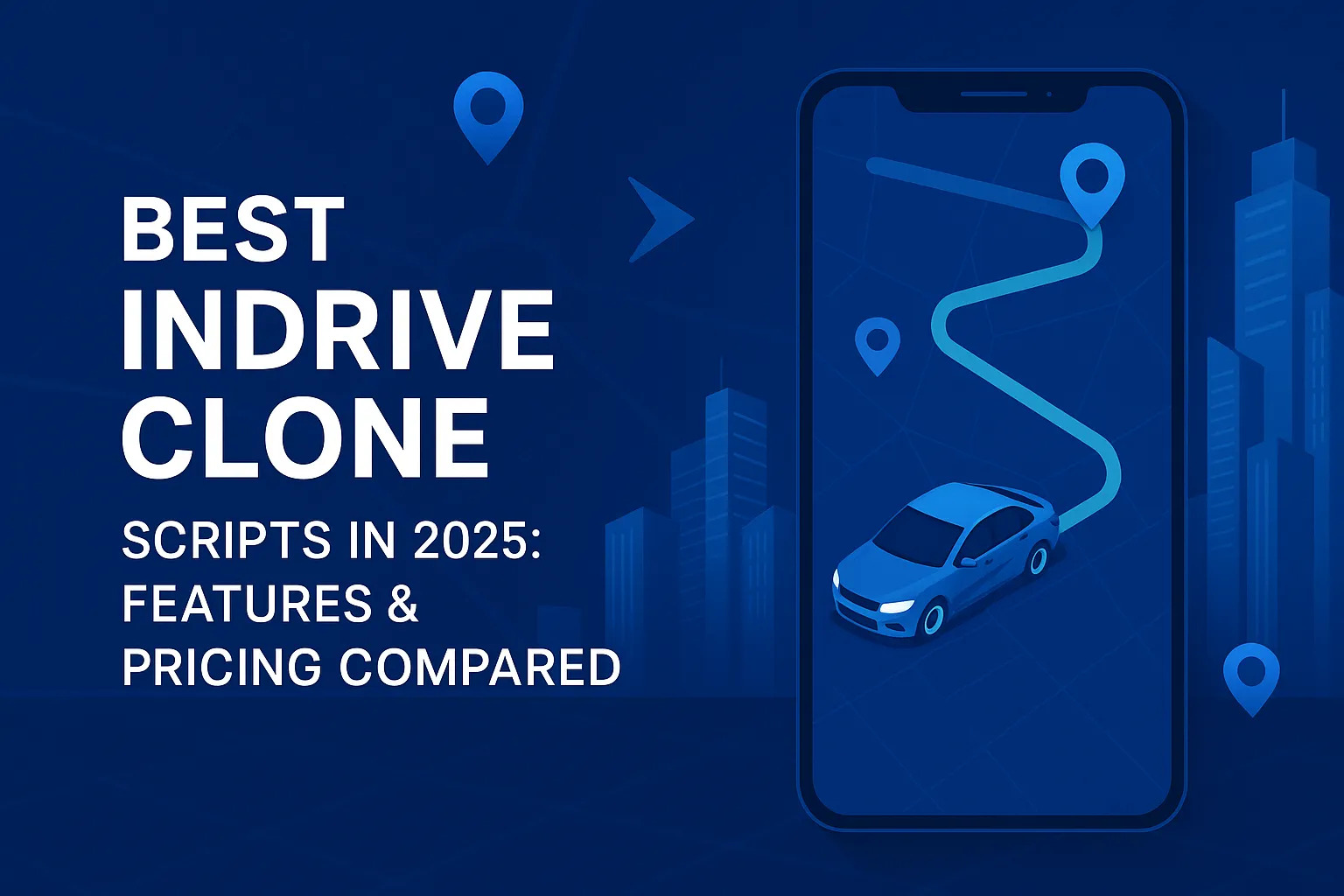
Let’s get this straight: an Indrive clone app isn’t a cheap knockoff. It’s a pre-built, fully customizable ride-hailing platform inspired by Indrive’s core concept — where riders suggest a fare and drivers can accept, reject, or counter-offer. It blends marketplace dynamics with real-time transportation.
It’s ideal for:
- Startups in cities underserved by Uber or Bolt
- Regional taxi associations going digital
- Entrepreneurs targeting student or budget-conscious riders
- Fleet operators looking to scale sustainably
Unlike fixed-price apps, Indrive-style clones offer a fare negotiation feature, which not only empowers users but also builds trust between both sides of the transaction.
Read More : InDrive App Features: What Sets It Apart
Must-Have Features in the Best Indrive Clone Script
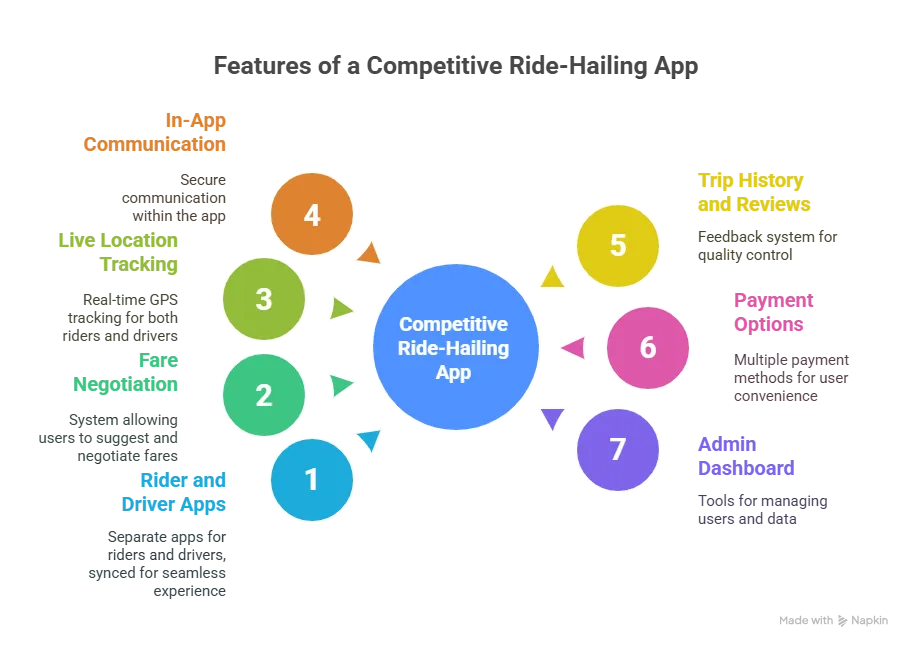
If you’re stepping into the ride-hailing arena in 2026, you’ll need more than just maps and meters. Here’s what to expect from a competitive Indrive clone:
1. Rider and Driver Apps (Separate, Yet Synced)
Two apps, two interfaces — one seamless experience. Riders request, drivers respond, and everything connects via real-time APIs.
2. Fare Suggestion & Counter Offer System
Unlike Uber, Indrive clones let the user suggest a price, and drivers can negotiate before accepting. A real USP.
3. Live Location & Route Optimization
Powered by GPS, your clone should allow both parties to track trips in real time, with auto-suggested routes to reduce delays.
4. In-App Chat & Calling
No more sharing personal numbers — built-in communication keeps things private and secure.
5. Trip History, Reviews & Ratings
Each ride should end with feedback, keeping driver quality and rider behavior in check.
6. Wallets, Cards & Cash Payment Options
Multi-mode payments are a must. Let users choose how they pay and reward loyal ones with referral credits.
7. Admin Dashboard with Heatmaps & Analytics
As the owner, you’ll need to view ride data, manage users, approve drivers, set commission rates, and adjust city zones.
Read More : From Bids to Bookings: How Our InDriver Clone Maximizes Retention and Returns
Global Cost of Development for an Indrive Clone App
InDrive-Like Ride-Hailing App Development — Market Price by Tech Stack
These values reflect global development cost estimates. Final pricing varies based on feature scope, team location, and platform complexity.
These values reflect the global development cost of building an InDrive-like ride-hailing platform using different backend architectures. The final cost usually depends on fare negotiation logic, real-time trip handling, geo-location systems, wallet setup, payment integrations, scalability goals, and the operational coverage of the platform.
Miracuves Indrive-Like App Solution Cost and Tech Stack
Miracuves Pricing for an inDrive-Like Super App developed in PHP/Laravel with Flutter Apps for $3,099 USD (One-Time Price) in just 6 days
Get a fully developed, deployment-ready platform modeled after inDrive. Built on a rock-solid PHP/Laravel foundation, this complete package includes everything you need to launch and scale:
Core Workflows: Ride-hailing with fare negotiation, on-demand delivery, and multi-service categories.
Built-in Finance: In-app wallet logic, pricing operations, and payout setups.
Management Hub: Comprehensive provider management and a centralized admin backend.
Launch-Ready: Fully prepped for your custom branding, configuration, and immediate market entry.
Why Miracuves’s Indrive Like App is so affordable?
Most complex super apps force you into expensive architectures like Node.js or Go. Building from scratch with those frameworks requires highly specialized, expensive engineering teams, which drives the cost into the tens or hundreds of thousands of dollars.
We took a smarter, more practical approach:
You Aren’t Paying for Ground-Up Development: Our multi-service engine is already developed, battle-tested, and ready to deploy. You skip the inflated costs and months of waiting associated with building from scratch.
The Power of PHP / Laravel: We built this on one of the most reliable, globally adopted frameworks in the world. Not only does this keep our upfront costs down, but it also protects your future budget. PHP has a massive global talent pool, making it incredibly easy and cost-effective for you to find developers for future scaling or customizations.
You get an enterprise-capable, heavy-duty foundation without the inflated Silicon Valley price tag.
Note: This cost is for the solution, re-branding, deployment and source code only.
Read More :Reasons startup choose our Indriver clone over custom development
Why Indrive Clone Scripts Are Trending in 2026
Let’s face it — Uber fatigue is real. In many countries, people are tired of flat fares, surge pricing, and lack of human touch. Enter Indrive-style platforms, where the pricing feels more democratic.
This fare-bidding model is:
- Perfect for price-sensitive markets like LATAM, Africa, and Asia
- Appreciated by drivers who want better control over their earnings
- Loved by students, gig workers, and locals who enjoy flexibility
And unlike saturated metro cities, tier-2 towns and smaller cities are still wide open for smart, community-driven ride apps.
According to CB Insights, regional and alternative ride-hailing models grew 38% faster than global brands in non-metro areas in 2024.
Benefits of Using an Indrive Clone vs Building From Scratch
Let’s play devil’s advocate. Could you build your own ride app from zero? Sure. But you’d need:
- A dev team (iOS, Android, backend, UI/UX)
- 6–12 months of development time
- A minimum budget of $100K+
Compare that to a ready-to-customize Indrive clone:
- Launch-ready in 6 Days
- Proven user experience
- Built-in monetization models (commissions, ads, surge)
That’s not just cost-saving — it’s business-smart.
Monetization Models: How Do You Make Money?
Because let’s be honest — you’re not doing this for charity. An Indrive clone script supports multiple ways to turn rides into revenue:
- Commission per ride (standard model)
- Driver subscriptions for access to premium booking zones
- In-app promotions and featured driver placement
- Surge pricing during peak hours
- Corporate tie-ups and pre-scheduled bookings
Some platforms even offer ad placements in the rider app — perfect for local businesses.
How to Choose the Right Indrive Clone Provider
Look beyond shiny dashboards and glossy app demos. Your ideal clone partner should offer:
- Clean source code and full ownership
- High-performance backend (Laravel, Node.js, etc.)
- Custom branding & multilingual support
- Scalability for 10K+ users
- Real-time support and post-launch updates
That’s where Miracuves truly shines. With years of experience in transportation clones, we build robust, revenue-ready platforms that get to market fast and grow with you.
Conclusion
Ride-hailing isn’t dying — it’s evolving. Users want choice. Drivers want respect. Cities want alternatives. And if you’re ready to build a local hero or a regional disruptor, the tools are already in your hands.
You don’t need a Silicon Valley budget. You need vision, speed — and the right tech.
At Miracuves, we help innovators launch high-performance app clones that are fast, scalable, and monetization-ready. Ready to turn your idea into reality? Let’s build together.
FAQs
Is the fare negotiation feature customizable?
Absolutely. You can set limits, minimums, or remove negotiation entirely if you want fixed pricing.
Can I launch in multiple cities or countries?
Yes. Most Indrive clone platforms support geo-fencing and city-wise configuration.
What if I want to add food or package delivery later?
No problem. Miracuves’ clone scripts are modular, so you can add services without rebuilding.
Will drivers have their own app with earnings history?
Yes. Driver apps include earnings tracking, trip logs, payout requests, and more.
Can I monetize with ads or partner promotions?
Definitely. You can enable ad banners, offer promos, or create premium zones for paid visibility.
What if I want to add features like live chat or voice search?
You can launch a basic version in 6 days, while adding custom features like live chat or voice search may extend the timeline by 6–8 days, depending on the complexity and scope of the requirements.
Related Articles
Miracuves is an independent software development company. We are not affiliated with, connected to, sponsored by, or endorsed by any company or product named in this article.
Terms such as “X Clone” are used descriptively. It is how the software industry refers to building a platform with functionality comparable to a known service, and how clients search for it.
The entire design and codebase of our products is built by our own team. Our products contain no code, design, graphics, or content originating from any third-party website or applications.
All third-party names and marks referenced in this article are the property of their respective owners, referenced solely to identify the services discussed.