


Key Takeaways
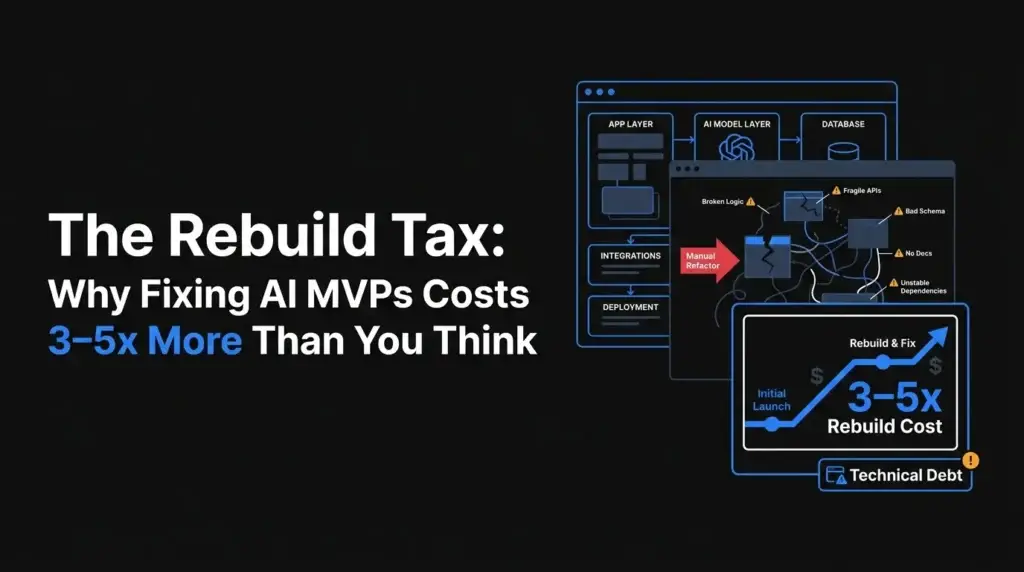
- The fix-versus-rebuild decision depends on whether the AI-built MVP has a stable foundation or hidden structural risk.
- Founders, developers, CTOs, agencies, and investors need clear audit signals before committing more budget.
- Architecture quality, database design, payments, security, documentation, and deployment setup are core decision areas.
- A weak MVP may look functional in demos while becoming expensive to maintain, scale, or hand over to developers.
- A structured rebuild decision can reduce wasted patches, launch delays, technical debt, and long-term product risk.
Decision Signals
- Founders need to check whether the app has clean modules, stable workflows, protected APIs, and reliable data logic.
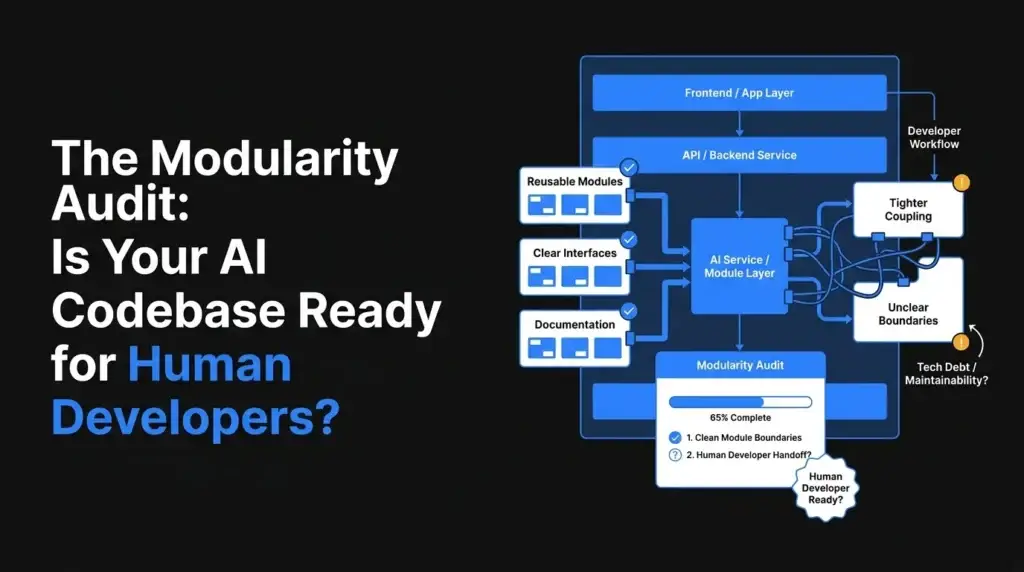
- Developers need readable code, documented architecture, reusable components, testable services, and safe deployment notes.
- Admins need control over users, roles, payments, logs, prompts, reports, backups, and operational settings.
- Fixing makes sense when issues are isolated, documented, and repairable without breaking core workflows.
- Rebuilding becomes safer when bugs, duplicated logic, security gaps, and database problems are spread across the system.
Real Insights
- Patching is useful when the foundation is stable, but dangerous when the architecture itself is wrong.
- A founder should not keep funding small fixes if every feature creates new bugs, delays, or security concerns.
- Migration planning helps preserve useful data, users, payments, and workflows while replacing weak technical foundations.
- A practical salvage matrix can help teams decide between refactoring, partial rebuild, or full replacement.
- Miracuves builds AI MVPs and clone apps with modular architecture, migration planning, secure workflows, documentation, and admin control.
A broken MVP creates one of the hardest founder decisions: keep fixing what exists, or rebuild on a stronger foundation.
This decision becomes even more urgent when the first version was built quickly with AI tools, no-code workflows, freelancers, or rushed engineering. The product may look functional on the surface. Users may even be testing it. But underneath, the architecture may not be ready for payments, user growth, admin control, compliance workflows, or future customization.
That is where many founders lose time. They treat the problem as a bug list when it is actually an architecture decision. For founders who have already validated demand but need a stronger launch foundation, ready-made clone app solutions can offer a more stable path than endlessly patching weak code.
Recent research on AI-generated software shows that functional code can still carry long-term maintainability, defect, and security risks, which is why founders should evaluate more than whether the app “works today.”
This guide gives founders a practical framework to answer one question clearly:
Emotional Attachment vs. Technical Reality in Broken MVPs
Founders rarely want to rebuild.
The first version carries emotional weight. It represents late nights, investor conversations, user demos, and early market validation. Even when the product is unstable, founders often feel that replacing it means admitting failure.
But a broken MVP is not always a failed startup. Sometimes it is proof that demand exists, but the technical foundation was never designed to carry the business.
The real question is not, “Did we waste money building this?”
The better question is, “Has this version already done its job?”
If the MVP helped you test demand, understand user behavior, validate a category, or attract early interest, then it created business value. But that does not mean the same codebase should become your long-term platform.
A demo-ready product and an operations-ready product are different assets.
A demo-ready product proves interest. An operations-ready product supports users, payments, roles, security, admin workflows, reporting, support, growth, and future customization.
When founders confuse those two assets, they keep spending money on patches that do not improve the actual business foundation.
Read More: Why AI-Built MVPs Break at Scale: Founder Crash Patterns After Launch Traffic
Why AI-Built MVPs Break Differently
AI-generated development can help founders move fast. It can generate screens, connect APIs, create workflows, and produce a working prototype faster than traditional development.
The problem begins when speed replaces architecture.
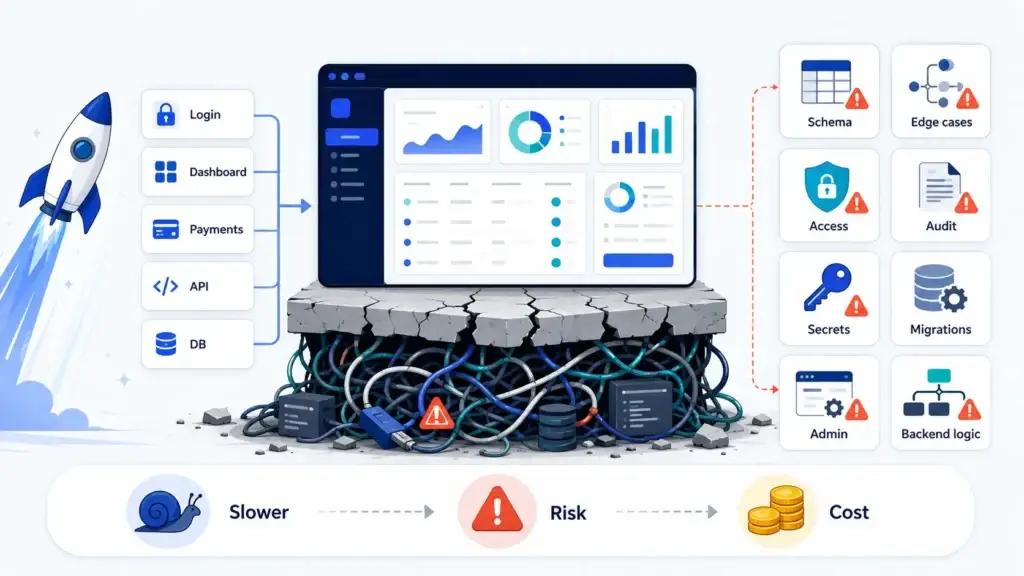
Many AI-built MVPs are assembled feature by feature. The app may have a login screen, dashboard, payment button, database tables, and API calls, but no clear system design connecting them safely. This creates a product that appears functional while hiding deep operational risk.
Common issues include:
- Database tables that do not match the real business model
- Payment flows that work in testing but fail under edge cases
- User roles mixed together without proper access control
- No audit logs for disputes, refunds, payouts, or account changes
- Hardcoded credentials or weak environment management
- No migration structure for future data changes
- No proper admin dashboard for business operations
- Frontend logic carrying decisions that should live in the backend
For a founder, this matters because every future feature depends on the foundation. If the foundation is wrong, each new feature becomes slower, riskier, and more expensive.
That is why a broken AI-built MVP should not be judged only by the number of visible bugs. It should be judged by whether the core architecture can support the business model.
Read more: The Infinite API Loop: Why AI-Built MVPs Bankrupt Founders on Day 1
The Salvage Matrix: Evaluating Core Architectural Integrity
The Salvage Matrix is a founder-friendly scoring framework for deciding whether to fix, refactor, rebuild, or migrate.
Score each layer from 0 to 2.
0 = Healthy enough to keep
1 = Repairable with focused refactoring
2 = Structurally compromised
| Architecture Layer | 0: Salvageable | 1: Refactor Needed | 2: Rebuild or Migrate Signal |
|---|---|---|---|
| Database model | Tables match users, transactions, roles, and business logic | Schema needs cleanup but relationships are understandable | Data model is confused, duplicated, undocumented, or blocks core workflows |
| Payment routing | Payments, refunds, commissions, and payouts are traceable | Some payment edge cases need cleanup | Payment logic is unsafe, inconsistent, or not connected to proper records |
| Authentication and access | Roles are clearly separated | Permission rules need tightening | Users, admins, vendors, or providers can access the wrong data |
| Admin control | Operators can manage users, transactions, disputes, and settings | Admin workflows are incomplete | Business depends on developers for basic operational changes |
| API structure | APIs are documented and predictable | Some endpoints need refactoring | APIs are inconsistent, fragile, or tightly coupled to frontend screens |
| Security posture | Secrets, permissions, and data handling are controlled | Security review needed before launch | Hardcoded keys, weak access control, or no audit trail exists |
| Deployment process | App can be tested and deployed predictably | Deployment needs automation | Every release risks breaking unrelated features |
| Scalability path | Current stack can support near-term growth | Infrastructure needs optimization | The stack cannot support the target product category |
How to Read Your Score
| Total Score | Decision | Founder Meaning |
|---|---|---|
| 0–4 | Fix | The product has bugs, but the foundation is usable. |
| 5–8 | Refactor | The product can survive, but only with focused engineering cleanup. |
| 9–12 | Rebuild | The architecture is slowing the business and should be replaced. |
| 13–16 | Migrate | The MVP has validated the idea, but the codebase should not carry the company forward. |
Critical Override Rule
Even if the total score is moderate, choose rebuild or migration if any of these are true:
| Critical Failure | Why It Overrides the Score |
|---|---|
| Broken payment routing | Money movement errors create financial, trust, and operational risk. |
| Broken database architecture | Every feature depends on the data model. |
| Weak authentication or role control | Security and privacy risks can damage user trust quickly. |
| No admin control | The founder cannot operate the business without constant developer involvement. |
| No reliable deployment process | Growth becomes dangerous because every update can break production. |
This is the point where the decision becomes objective.
If the surface app is broken, fix it.
If the product logic is messy, refactor it.
If the core architecture is compromised, stop patching and rebuild.
If a proven business model already exists for your category, migrate to a white-label clone foundation.
Read More: Scaling Beyond the Prompt: AI Toy Databases vs. Production SQL Engines
When Patching Becomes a Financial Liability
Patching feels cheaper because it avoids a large decision today.
But patching becomes expensive when each fix creates more uncertainty. A founder may spend money repairing login issues one week, payment issues the next week, database issues the next month, and deployment problems before launch. The app slowly becomes a cost center instead of a validation engine.
A patch only makes sense when the product foundation is stable. If the underlying architecture is healthy, a patch can remove friction, fix isolated bugs, improve user experience, or prepare the product for the next release. In that situation, the founder is protecting an asset that still has structural value.
But when the foundation is wrong, patching becomes dangerous. A broken database model, weak payment routing, unclear user roles, missing admin control, or fragile deployment process cannot be solved through surface-level fixes. Each patch may make the app look better for a short period, but it also adds more complexity to a system that was never designed to scale.
The financial liability starts with development velocity. Every new feature takes longer because developers must first understand messy logic, undocumented flows, and hidden dependencies before they can safely make changes. Instead of building momentum, the team spends more time decoding the old system than improving the product.
Quality assurance also becomes unpredictable. In a compromised architecture, fixing one workflow can break another because the system is tightly connected in the wrong places. A payment change may affect order history. A user-role fix may break admin access. A small frontend update may expose backend weaknesses. This creates a cycle where every release feels risky.
Business operations suffer next. If admin controls are weak, the founder continues depending on engineers for basic actions such as refunds, approvals, disputes, content updates, provider management, pricing changes, or account corrections. That means the business cannot operate independently, and every operational decision becomes another development request.
Investor confidence can also weaken. Investors may accept that an early product is imperfect, but they expect the founder to understand technical risk and make disciplined decisions. When the roadmap becomes a long list of emergency fixes, it signals that the company may be funding technical drag instead of building a scalable product.
The longer the founder waits, the harder migration becomes. More users, payments, transactions, listings, content, and support records accumulate inside a weak architecture. Eventually, the team still has to rebuild or migrate, but now the process is more expensive, more sensitive, and more disruptive.
That is why the fix vs. rebuild MVP decision is really a capital allocation decision. The founder is not choosing between old code and new code. The founder is choosing between continuing to fund technical drag or investing in a stable launch foundation that can support users, operations, monetization, and growth.
Read More: Stripe Payments Not Reconciling? Fix the Webhook Desync Breaking Your AI App Revenue
Fix, Refactor, Rebuild, or Migrate: What Each Option Really Means
Not every broken MVP needs to be thrown away. The right move depends on where the weakness lives.
| Option | Best When | Business Risk | Founder Decision |
|---|---|---|---|
| Fix | Bugs are isolated and the architecture is sound | Low | Keep the product and repair visible issues |
| Refactor | Core logic works, but code quality is slowing development | Medium | Improve the system without changing the product foundation |
| Rebuild | The business model is valid, but architecture is wrong | High | Replace the codebase while preserving learnings |
| Migrate | The category already maps to a proven app model | Lower than rebuilding from zero | Move users and workflows to a stable white-label foundation |
For many AI-built startup apps, the strongest option is not a custom rebuild from scratch. It is migration.
Migration lets the founder keep what matters: users, learnings, positioning, brand direction, and market insight.
The unstable part is the codebase.
A white-label clone platform gives the founder a stronger foundation for user roles, admin control, payment flows, dashboards, notifications, and monetization. Instead of rebuilding every common module again, the founder can focus on differentiation, launch strategy, user acquisition, and operations.
For founders comparing recovery paths, Miracuves’ ready-made clone app solutions provide a practical starting point across categories like delivery, ride-hailing, marketplaces, fintech, creator platforms, ecommerce, booking apps, and on-demand services.
The Migration Playbook: Transitioning Users to a Miracuves Clone
Migration should not be chaotic. It should be planned like a product operations project.
The goal is to preserve business continuity while replacing the unstable foundation.
Step 1: Freeze Non-Essential Feature Work
Before migration, stop adding new features to the broken MVP.
Every new feature increases migration complexity. The founder should only approve bug fixes required to keep current users active until the new platform is ready.
This protects capital and keeps the team focused.
Step 2: Audit the Current User and Data Flows
List the data that must move:
| Data Type | Migration Priority |
|---|---|
| User accounts | High |
| Profiles and roles | High |
| Orders, bookings, rides, posts, or listings | High |
| Payment history | High |
| Wallet or credit balances | High if applicable |
| Reviews and ratings | Medium |
| Notifications and message history | Medium |
| Analytics events | Optional |
| Old logs and failed records | Archive instead of migrating blindly |
The founder should not migrate bad data blindly. The migration process is also a cleanup opportunity.
Step 3: Choose the Closest White-Label Foundation
The right clone foundation depends on the business model, not the old codebase.
A delivery startup should map to delivery workflows.
A marketplace should map to listing, vendor, payment, review, and dispute workflows.
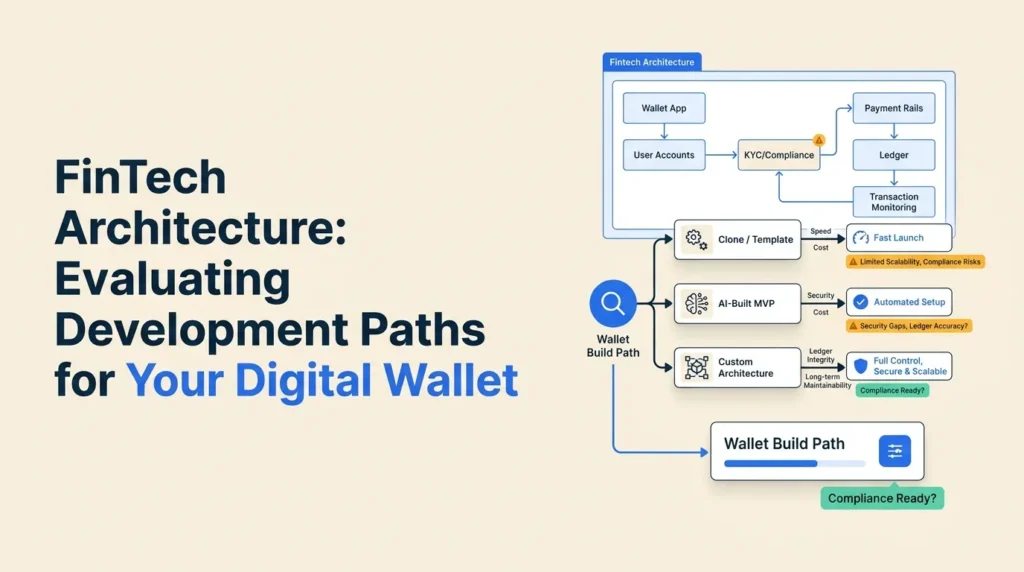
A fintech app should map to wallet, KYC, transaction history, and admin risk controls.
A creator platform should map to content upload, feeds, monetization, moderation, and creator dashboards.
Miracuves helps founders choose the right recovery path when their current MVP has proved market interest but cannot support the next launch version. For founders who need a faster, proven foundation, clone app development can reduce the need to rebuild every core module from zero.
When the product needs deeper customization, complex workflows, or category-specific engineering, Miracuves can also support founders through full-stack app development. This gives the next version a stronger technical base while keeping the business learnings from the original MVP intact.
Step 4: Rebrand and Configure the New Platform
A migration is not just a technical move. It is a chance to improve the product experience.
The new foundation should be configured around:
- Brand identity
- User roles
- Admin workflows
- Payment settings
- Commission logic
- Service areas or categories
- Notifications
- Content or listing rules
- Support and dispute flows
- Analytics and reporting needs
This is where white-label becomes useful. The founder does not need to start from blank screens, but the product still becomes branded and market-specific.
Step 5: Test the Business-Critical Workflows
Before moving users, test the workflows that make the business run.
For a marketplace, test signup, listing, booking, payment, refund, dispute, review, and admin approval.
For a delivery app, test customer ordering, merchant acceptance, delivery assignment, tracking, payment, cancellation, and admin commission.
For a fintech app, test onboarding, user verification, wallet records, transaction history, limits, and admin controls. Final compliance depends on jurisdiction, legal review, integrations, and operating model.
For a creator platform, test upload, feed, content moderation, subscriptions, creator earnings, reporting, and abuse handling.
A migrated product should not simply “open.” It should operate.
Step 6: Move Users in Controlled Waves
Do not migrate every user at once unless the product is very small.
Start with internal users, then friendly testers, then active early users, then the broader base. This gives the team room to fix configuration issues before they affect the full audience.
A clean migration message can be simple:
“We are upgrading the platform to improve speed, stability, payments, and account management. Your account access will continue, and we will guide you through the transition.”
The message should focus on user benefit, not internal technical debt.
Step 7: Retire the Old MVP
Once the new platform is stable, the old MVP should be archived.
Do not keep two systems running longer than necessary. Dual systems create confusion, split data, and increase operational risk.
The old MVP did its job if it helped validate demand. The new platform should do the next job: support real operations.
Founder Decision Signals Before You Spend More Money
Before approving another development sprint, ask these questions.
Can the Current App Handle Real Transactions?
If payments are fragile, undocumented, or disconnected from reliable records, fixing small bugs will not solve the business risk. Payment routing must be traceable, testable, and connected to admin control.
Can the Admin Panel Operate the Business?
A startup app is not only what users see. The admin dashboard is where the business manages users, roles, payments, refunds, disputes, content, listings, providers, merchants, reports, and settings.
If the admin panel is missing or weak, the founder is not running a software business. The founder is running manual operations behind a fragile interface.
Can Another Developer Understand the System Quickly?
If every new developer needs weeks to understand basic flows, the product has comprehension risk. That risk gets worse when AI-generated code was assembled without documentation, naming discipline, or architecture planning.
Can the Product Support the Next Business Model?
The current MVP may support a demo, but can it support commissions, subscriptions, paid listings, wallet flows, creator earnings, multi-location operations, or vendor dashboards?
If the answer is no, the founder should stop asking whether the product can be patched. The right question is whether the architecture matches the revenue model.
Can You Launch With Confidence?
A founder does not need perfect software to launch. But they do need confidence that users can register, pay, transact, receive service, get support, and trust the platform.
If every release feels risky, the product is not ready to scale.
Why a White-Label Clone Can Be the Logical Rebuild Path
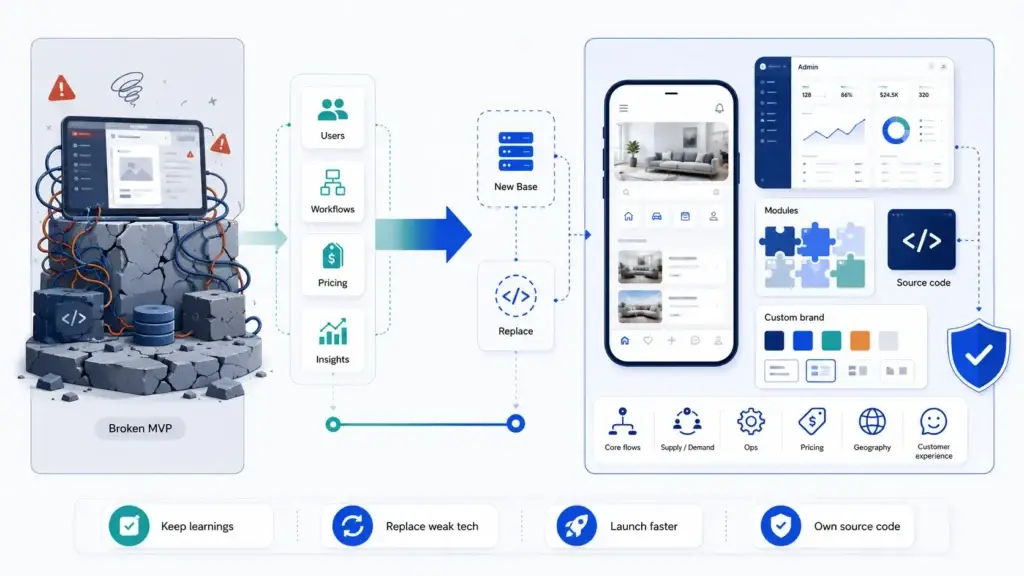
A white-label clone is not about copying another brand. It is about starting from a proven product pattern and customizing it for your market.
For a founder with a broken AI-built MVP, this matters because the business has already learned something. You may know which users care, which workflows matter, which features are unnecessary, and which revenue model has potential.
That learning should not be thrown away.
The unstable architecture should.
Miracuves’ white-label approach helps founders replace weak technical foundations with app models that already include core user flows, branded interfaces, admin dashboards, and source-code ownership. The founder can then focus on what creates differentiation: positioning, operations, community, supply, demand, pricing, geography, and customer experience.
For more context on using clone app development for market validation, read Clone App Development: Validate Your Market Faster. Founders exploring multiple ready-made app categories can also review Miracuves on-demand clone app solutions.
Mistakes Founders Should Avoid
Mistake 1: Measuring the MVP by Screens Instead of Systems
A product can have good-looking screens and still be structurally weak. Screens do not prove database quality, payment accuracy, admin control, or security.
Mistake 2: Asking Developers to “Just Fix It” Without an Architecture Audit
A repair sprint without an audit can waste money. The founder should first identify whether the weakness is isolated or foundational.
Mistake 3: Migrating Bad Data Into a Better Platform
Migration should clean the business. Do not move duplicate records, failed transactions, test users, and broken account states unless they are needed for audit or support.
Mistake 4: Rebuilding From Zero When a Proven Category Already Exists
If the product is a delivery marketplace, taxi platform, booking app, fintech wallet, ecommerce marketplace, or creator platform, rebuilding every common module from zero may not be the best use of capital.
Mistake 5: Ignoring Source-Code Ownership
A founder recovering from a broken MVP should avoid creating a second lock-in problem. Source-code ownership matters because the business needs control over future customization, scaling, hosting, and technical decisions.
Final Thoughts: Keep the Learning, Replace the Weak Foundation
The fix vs rebuild decision is not emotional. It is architectural.
If your AI-built MVP has isolated bugs, fix them. If the code is messy but the foundation is usable, refactor it. If the database, payment routing, authentication, admin control, or deployment process is compromised, rebuilding becomes the stronger business decision.
And when your business model maps to a proven app category, migration to a white-label clone can be more practical than starting again from zero.
The first MVP may have helped you learn what the market wants.
The next platform should help you deliver it reliably.
Miracuves helps founders turn validated ideas into launch-ready, white-label app platforms with source-code ownership, admin control, and a faster path to market. To evaluate your recovery path, book a consultation through the Miracuves contact page.
FAQs
Is my AI-built MVP salvageable?
Your AI-built MVP may be salvageable if the core architecture is sound and the issues are limited to bugs, UI problems, missing features, or performance tuning. It becomes harder to salvage when the database, payment logic, authentication, admin panel, or deployment process is structurally weak.
When should a startup rebuild its MVP?
A startup should rebuild its MVP when the current product blocks core business operations, creates payment or security risk, slows every new feature, or cannot support the next business model. Rebuilding is not about perfection. It is about replacing a foundation that cannot carry the company forward.
What is the Salvage Matrix?
The Salvage Matrix is a decision framework that scores an MVP across database design, payment routing, authentication, admin control, APIs, security, deployment, and scalability. The score helps founders decide whether to fix, refactor, rebuild, or migrate.
Why do AI-built MVPs often need technical review?
AI-built MVPs can work in demos but still lack architecture planning, secure workflows, clean database relationships, testing discipline, and admin control. A technical review helps founders separate visible bugs from deeper structural problems.
Is migrating to a white-label clone better than rebuilding from scratch?
Migration to a white-label clone can be better when the business model maps to a proven app category. It helps founders replace unstable code while keeping market learning, users, branding, and launch momentum. Custom rebuilding is better when the product requires highly unique workflows or proprietary technology.
Can users be moved from an old MVP to a new platform?
Yes, users can often be moved through a planned migration process. The team should audit user accounts, clean data, map roles, test critical workflows, migrate in controlled waves, and communicate the upgrade clearly to users.
Does Miracuves provide source code with white-label app solutions?
Miracuves positions its ready-made and white-label solutions around source-code ownership, branded design, admin control, and faster deployment. Founders should confirm the final scope, modules, and delivery terms during consultation.
How fast can a Miracuves white-label app launch?
Miracuves publicly positions ready-made clone app deployment around a 6-working-day launch process, with source code and white-label customization included for ready-made solutions. Final timing depends on scope, branding inputs, integrations, and store review processes.