


Key Takeaways
- TikTok is a short-form video app built around fast content discovery.
- Users create, watch, like, share, comment, and follow creators.
- The For You feed drives engagement through personalized recommendations.
- Creator tools, music, filters, and trends increase content creation.
- A TikTok-style app needs video, social, monetization, and admin workflows.
Platform Feature Signals
- Users need feeds, profiles, uploads, comments, likes, and sharing.
- Creators need editing tools, sounds, effects, analytics, and earnings.
- Admins need control over users, videos, reports, ads, and moderation.
- Video compression and CDN setup improve playback speed.
- Push notifications help increase repeat viewing and creator engagement.
Real Insights
- Short video apps grow when discovery feels instant.
- Weak recommendations can reduce watch time quickly.
- Creator monetization helps improve content supply.
- Moderation protects platform safety and brand trust.
- Miracuves builds TikTok Clone apps with short video and creator workflows.
I remember the first time I heard someone say, “I went viral last night.” No, it wasn’t the flu. They had posted a short video on TikTok and suddenly thousands of people were watching, liking, sharing, commenting, and following.
That is the power of TikTok. What started as a short-form entertainment app has become one of the most influential digital platforms for creators, brands, communities, and product discovery.
For startups, creators, and businesses, TikTok is not just another social media app. It is a product model built around short videos, instant discovery, creator participation, algorithmic recommendations, and repeat engagement.
So if you have been wondering how TikTok really works, why people keep scrolling, and what founders can learn from its product model, this guide breaks it down in simple terms.
We will cover the TikTok app, its algorithm, features, monetization model, creator ecosystem, startup opportunity, business value, cost factors, admin panel logic, security considerations, and what it takes to build a short-form video platform.
For founders exploring their own video sharing platform, this article should stay your educational starting point. Once you understand how the model works, you can compare whether a ready-made TikTok-style app foundation makes sense for your market, audience, and launch timeline.
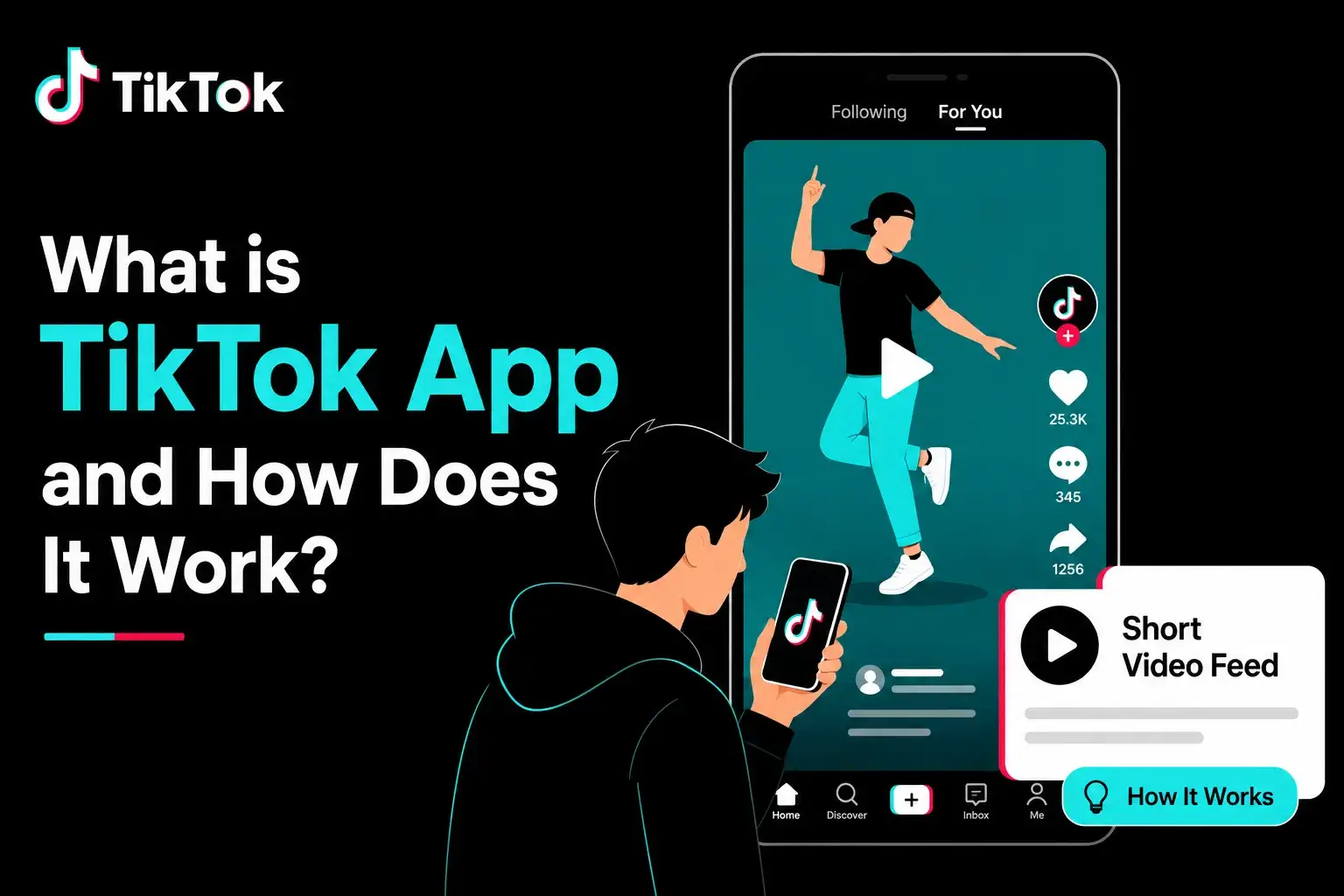
What is TikTok?
TikTok is a short-form video app that allows users to create, watch, share, and engage with vertical videos. Users can upload videos, add sounds, use filters, participate in trends, follow creators, comment on posts, and discover content through a personalized feed.
At its core, TikTok combines three major product layers:
- A video creation tool
- A social engagement platform
- A personalized content discovery engine
This combination is what makes TikTok different from many traditional social platforms. Users do not always need to search for people they know. Instead, TikTok recommends videos based on behavior, interests, watch time, and engagement signals.
That is why TikTok became powerful for creators and brands. A new creator with very few followers can still reach a large audience if the content performs well with early viewers.
For startups, TikTok is important because it proves how powerful short-form video can be when content creation, discovery, engagement, and monetization work together. The product is not successful only because users can upload videos. It works because every interaction feeds a larger engagement system.
That is why founders study TikTok before building a short-form video app, reels app, or social video app. The goal is not to copy TikTok blindly. The smarter goal is to understand which parts of the model matter for your audience: fast video creation, personalized discovery, creator incentives, moderation, admin control, and monetization.
Founder takeaway: TikTok is not just a social media app. It is a creator-led engagement engine. Any startup planning a video sharing platform should think beyond screens and focus on retention, content flow, creator growth, operational control, and revenue design.
What Makes TikTok Work So Well?
TikTok works because it removes friction from both sides of the platform.
For viewers, the app opens directly into a video feed. There is no complex search process, no need to build a friend list first, and no heavy onboarding journey before content appears.
For creators, the app makes publishing simple. A user can record, edit, add music, use filters, post, and reach an audience without professional production tools.
For the platform owner, every user action creates signals. Watch time, swipes, likes, shares, comments, follows, and replays help the system understand what users want next.
This creates a loop:
- User watches content
- The platform learns preferences
- The feed becomes more relevant
- User spends more time
- Creators get more visibility
- More content gets uploaded
- The platform becomes stronger
That loop is what founders should understand. TikTok is not successful because of one feature. It is successful because video, discovery, creator tools, and engagement signals work as one system.
The TikTok Algorithm: Why the For You Page Matters
The For You Page is the heart of TikTok. It is the personalized feed that shows videos based on user behavior and content signals.
The TikTok algorithm studies signals such as:
- Video completion rate
- Rewatch behavior
- Likes
- Comments
- Shares
- Saves
- Follows
- Skips
- Content category
- Hashtags
- Sound usage
- Device and location signals
This means users do not only see content from accounts they follow. They see videos the system believes they are likely to watch, enjoy, or engage with.
That is why a new creator can sometimes reach a large audience quickly. If a video performs well with a small test audience, the platform may distribute it to more users.
For founders, the algorithm is not just a technical feature. It is the retention engine. A short video app can have good design, smooth uploads, and creator profiles, but if the feed does not learn from user behavior, people will not keep returning.
This is where product strategy matters. Watch time, skips, replays, likes, shares, follows, and comments help the platform understand what each user wants to see next. A stronger feed can improve session time, creator visibility, ad inventory, and monetization opportunities.
For a deeper technical explanation, read Miracuves’ guide on the recommendation engine for viral growth.
Core Features of TikTok
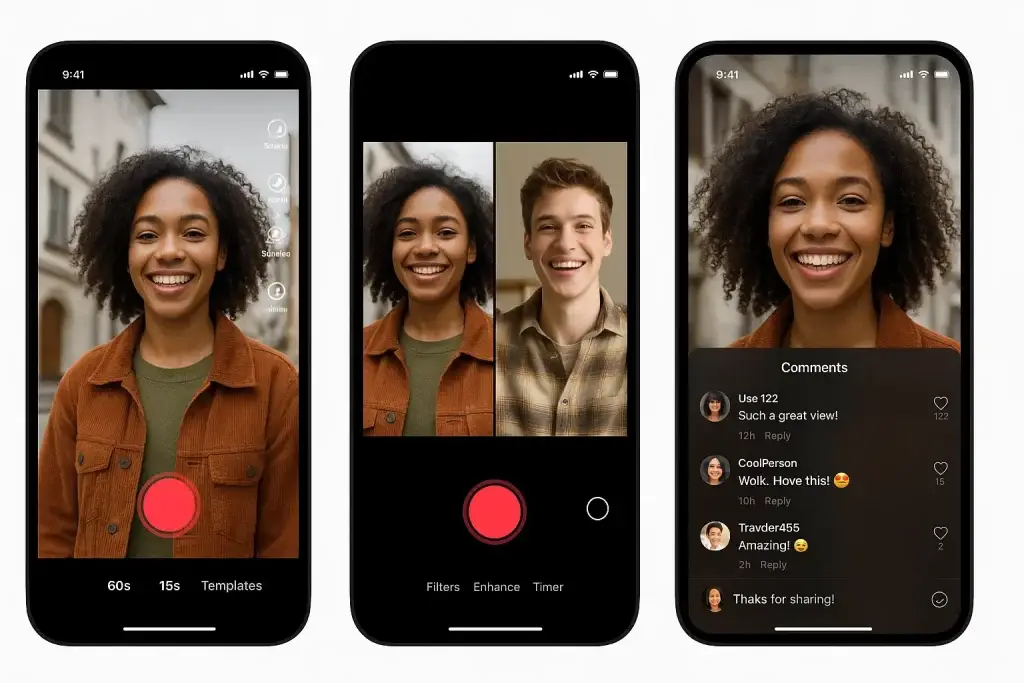
TikTok feels simple to users, but the product is supported by many connected features.
Video Creation Tools
TikTok allows users to record, upload, trim, edit, and publish videos directly inside the app. Creation tools reduce the need for external editing software and make publishing faster.
Common video creation features include:
- Camera recording
- Upload from gallery
- Speed controls
- Filters
- Effects
- Beauty mode
- Text overlays
- Stickers
- Captions
- Drafts
- Green screen effects
For founders, this matters because creator activity drives content supply. If publishing feels difficult, fewer creators will post regularly.
Sound Library
TikTok’s sound library helps users create content around music, voice clips, trends, memes, and audio formats. Sounds often become discovery triggers because many users create different videos using the same audio.
For a short video app, sound and audio tools can support trends, challenges, creator participation, and community-led growth.
Duets and Stitches
Duets and stitches allow users to respond to, remix, or build on other people’s videos. These features increase participation because users do not always need to create something from zero.
For a social video app, remix-style features can increase engagement and help creators interact with each other.
Likes, Comments, Shares, and Saves
Engagement features help users interact with content and help the platform understand what people like.
These features also support social proof. A video with strong engagement can attract more attention and encourage more people to interact.
Creator Profiles
Creator profiles allow users to build identity, publish multiple videos, gain followers, and develop a community.
For platform owners, creator profiles are important because creators become content suppliers, audience builders, and monetization partners.
Hashtags and Trends
Hashtags help organize content around topics, challenges, communities, and campaigns. Trends make content participation easier because users can join an existing format instead of inventing a new idea.
For brands and startups, hashtags can support campaigns, product launches, regional trends, and community discovery.
Notifications
Notifications bring users back to the app when someone likes, comments, follows, mentions, or shares their content. They also help creators stay active.
For retention, notifications should be useful, not spammy. A good notification strategy supports engagement without frustrating users.
What Founders Should Learn From TikTok’s Feature Set
TikTok’s features work because they reduce friction for both creators and viewers. Users can record, edit, publish, discover, react, and share without leaving the app. That smooth loop is what founders should focus on when planning a short video app.
A startup version does not need every advanced TikTok feature on day one. It should start with the features that support content supply, user engagement, admin control, and monetization.
| Product Layer | Why It Matters for Users | Why It Matters for Founders |
|---|---|---|
| Video upload and editing | Makes content creation simple | Increases creator activity |
| Personalized feed | Helps users discover relevant videos | Improves retention and session time |
| Likes, comments, follows, and shares | Creates social interaction | Builds engagement data |
| Creator profiles | Gives creators identity and visibility | Helps attract repeat creators |
| Admin panel | Keeps the platform manageable | Supports moderation, users, content, and revenue control |
| Monetization tools | Gives creators and platform owners earning options | Supports ads, gifts, subscriptions, and campaigns |
This is also where a white-label video app can help founders move faster. Instead of building every module from zero, the core short-video product foundation can be customized around a specific audience, region, or business model.
How TikTok Makes Money
TikTok is free for most users, but the platform has several revenue streams. This is important for founders because monetization should be planned before development, not added as an afterthought.
In-App Advertising
TikTok earns through ad placements such as in-feed ads, branded content, campaign placements, and brand-led promotions.
For a short-video startup, advertising can become a revenue stream once the platform has enough active users, watch time, and audience segmentation.
Creator Monetization
Creator monetization helps attract and retain content producers. If creators can earn, build a fan base, or grow their personal brand, they are more likely to stay active.
Creator monetization can include:
- Creator funds
- Tips
- Gifts
- Subscriptions
- Brand collaborations
- Premium content
- Live session income
Virtual Coins and Gifts
Users can buy virtual coins and send gifts to creators. This is especially useful for live streaming, fan communities, influencer platforms, and entertainment apps.
Brand Campaigns
Brands use TikTok for product discovery, influencer marketing, challenges, and viral campaigns. A niche short-video platform can also support brand campaigns if it has a focused audience.
Social Commerce
Short videos can influence buying decisions. Product demos, tutorials, reviews, influencer recommendations, and live shopping can turn a video platform into a commerce engine.
How a Short-Video Startup Can Monetize a TikTok-Style Platform
TikTok’s revenue model gives founders a useful starting point, but your own platform does not need to rely on only one income stream. A short-video app can combine creator monetization, brand campaigns, subscriptions, live engagement, and commerce depending on the audience.
| Revenue Model | How It Works | Best For |
| In-feed ads | Ads appear between videos in the feed | Media apps, entertainment platforms, large communities |
| Sponsored challenges | Brands pay to promote hashtag campaigns or creator challenges | Creator communities, D2C brands, regional platforms |
| Virtual gifts and coins | Users buy coins and send gifts to creators during videos or live streams | Creator-first platforms and fan communities |
| Premium subscriptions | Users pay for exclusive content, private communities, or creator access | Coaching, education, fitness, and expert-led platforms |
| Live streaming revenue | Creators earn through live sessions, gifts, and paid interactions | Influencer, entertainment, events, and fan apps |
| Social commerce | Videos promote products, reviews, affiliate links, or live shopping | Ecommerce, beauty, fashion, gadgets, and lifestyle brands |
If monetization is part of your launch plan, read this guide on TikTok clone monetization models before finalizing your feature scope.
TikTok vs Other Short-Form Video Apps
TikTok is not the only short-form video platform. Instagram Reels, YouTube Shorts, Snapchat Spotlight, and regional apps also compete for attention. But each platform has a slightly different product advantage.
| Platform | Core Strength | Best Known For | Founder Lesson |
| TikTok | Personalized content discovery | Viral short-form videos, trends, creator growth | Recommendation logic drives retention |
| Instagram Reels | Social graph and creator distribution | Reels inside an existing social network | Built-in audience can speed adoption |
| YouTube Shorts | Creator monetization and search discovery | Short videos connected to long-form content | Video platforms can blend discovery and creator earnings |
| Regional short-video apps | Local language and culture focus | Vernacular content, regional creators, local trends | Niche markets can compete through relevance |
The opportunity for founders is not to build a generic TikTok copy. The better opportunity is to create a focused short-form video platform for a specific market, language, industry, creator category, or community.
Who Uses TikTok and Why It Matters
TikTok attracts many user groups because short videos are easy to consume and easy to share.
Common TikTok user groups include:
- Gen Z and millennials looking for entertainment, trends, and creators
- Influencers building personal brands and communities
- Brands using short videos for marketing, storytelling, and product discovery
- Startups testing ideas, campaigns, and audience engagement
- Educators sharing quick lessons and explainers
- Fitness, beauty, food, finance, gaming, and lifestyle creators
- Regional creators building language-specific communities
For founders, this matters because TikTok proves that short-form video is flexible. The same format can support entertainment, education, ecommerce, social commerce, creator communities, local content, and professional niches.
If you are planning a short video app, your first question should not be “How do we copy TikTok?” It should be “Which audience can we serve better than a generic global platform?”
A focused platform can win through:
- Local language content
- Niche creator communities
- Category-specific discovery
- Better monetization for creators
- Safer moderation rules
- Regional trends
- Branded community ownership
Business Opportunity: Why Founders Are Exploring TikTok-Style Apps
Short-form video has become a powerful format because it combines entertainment, education, influence, and buying intent in one experience.
For businesses, this creates several opportunities.
Owned Audience
Brands and creators often depend on third-party platforms for reach. A dedicated video sharing platform gives businesses more control over users, content rules, engagement data, and monetization.
Niche Communities
A short-form video app can be built around a specific audience such as fitness creators, regional entertainers, beauty influencers, educators, gamers, food creators, or local communities.
Creator Monetization
Creators want platforms that help them grow and earn. A TikTok-style app can support gifts, coins, subscriptions, paid content, live sessions, and brand collaborations.
Social Commerce
Short videos can drive product discovery. D2C brands, ecommerce businesses, and local sellers can use video-led content to build trust and influence purchase decisions.
Regional and Vernacular Growth
Many communities prefer content in their own language, culture, and context. A regional reels app can focus on local creators, trends, festivals, humor, education, and commerce.
Agency and White-Label Opportunity
Agencies can use a white-label video app script to launch branded platforms for clients faster, then add marketing, creator onboarding, and growth services on top.
Thinking of Building a TikTok Alternative?
Once you understand how TikTok works, the next question is whether your business can use the same short-video model for a more focused audience.
This could mean:
- A regional creator app
- A reels app for a niche community
- A social commerce video platform
- A fan engagement app
- A creator monetization platform
- A short-video layer inside an existing business
- A video-first education or coaching community
- A branded entertainment platform
A TikTok-style app is not only about video upload and scrolling. To make the product useful, founders need to plan the full operating system behind the app.
| Layer | What It Should Handle | Why It Matters |
| User app | Signup, feed, upload, likes, comments, follows, sharing | Controls the viewer and creator experience |
| Creator tools | Recording, editing, drafts, filters, music, live streaming | Helps creators publish more content |
| Admin panel | User control, content moderation, reports, revenue, settings | Gives the business owner operational control |
| Recommendation logic | Watch time, engagement signals, feed ranking, discovery | Improves retention and content relevance |
| Monetization | Ads, gifts, coins, subscriptions, campaigns, commerce | Creates revenue options |
| Security and moderation | Abuse reports, restricted content checks, role-based access | Protects users, creators, and brand reputation |
| Infrastructure | Video processing, storage, CDN, streaming, backups | Keeps playback fast and scalable |
Founders usually have two routes. One is custom development, where everything is planned and built from the ground up. The other is a ready-made TikTok script or white-label video app script that already includes the core product foundation and can be customized for branding, features, integrations, and launch scope.
Miracuves supports founders who want to move faster with a white-label short-video app foundation that includes source-code ownership, admin control, branding flexibility, and deployment support. For a deeper technical path, see this short video app development roadmap.
Must-Have Features for a TikTok-Style Video Sharing Platform
If you are planning a short video app, the feature list should be based on business goals, not just competitor imitation.
Here are the most important feature groups.
User Features
User features control the front-end experience.
Important user features include:
- Signup and login
- Profile creation
- Personalized video feed
- Video upload
- Video recording
- Likes
- Comments
- Shares
- Follows
- Saves
- Search
- Hashtag discovery
- Notifications
- Report content
- Block user
- Live streaming access
- Wallet or coin balance where relevant
Creator Features
Creator features help users produce and monetize content.
Important creator features include:
- Creator profile
- Video drafts
- Filters and effects
- Sound library
- Captions
- Hashtag tools
- Analytics
- Follower insights
- Live streaming
- Gift receiving
- Monetization dashboard
- Payout request workflow
Admin Panel Features
The admin panel is where the platform owner controls operations.
A strong admin panel should support:
- User management
- Creator management
- Video management
- Reported content review
- Comment moderation
- Hashtag and category control
- Banner and campaign control
- Revenue dashboard
- Coin and wallet monitoring
- Payment gateway settings
- Push notification management
- Role-based admin access
- Activity logs
- Platform settings
Monetization Features
Monetization features should match the business model.
Options include:
- In-feed ads
- Sponsored content
- Creator subscriptions
- Virtual coins
- Gifts
- Live streaming payments
- Brand campaigns
- Premium content
- Social commerce integrations
- Featured creator promotions
Technical Features
Technical features decide how stable and scalable the app can become.
Important technical layers include:
- Video upload
- Video compression
- Video streaming
- CDN integration
- Cloud storage
- Feed ranking
- Push notifications
- Secure APIs
- Database optimization
- Analytics tracking
- Backup workflows
- Error monitoring
Founder Decision Signals Before Building a Short-Video App
Before investing in development, founders should answer a few practical questions.
| Decision Area | What to Ask | Why It Matters |
| Audience | Who is this app for? | A focused audience gives the platform a stronger reason to exist |
| Content Supply | Who will upload videos first? | Without creators, the feed feels empty |
| Discovery | How will users find relevant content? | Feed quality affects retention |
| Monetization | How will the platform earn? | Revenue logic should shape features early |
| Moderation | How will harmful or low-quality content be controlled? | Trust affects brand safety |
| Admin Control | Can the business manage users, videos, reports, and revenue? | Operations become difficult without backend control |
| Launch Speed | Do you need a custom build or ready-made foundation? | Timeline affects market validation |
| Ownership | Will you own the source code? | Ownership affects long-term flexibility |
The strongest short-video platforms usually start with clear market positioning. A generic “TikTok for everyone” is difficult to grow. A focused platform for a clear audience is easier to position, moderate, monetize, and scale.
Cost Factors in Building a TikTok-Style Short Video App
The cost of building a TikTok-style app depends on how much of the platform you want to launch, customize, and scale. A simple video upload app costs less than a full social video app with AI feed logic, live streaming, creator wallets, moderation, analytics, and admin dashboards.
Major cost drivers include:
| Cost Factor | Why It Affects Budget |
| Platforms | Android, iOS, and web increase design, testing, and deployment scope |
| Video infrastructure | Upload, compression, storage, CDN, and streaming affect performance and operating cost |
| Creator tools | Filters, drafts, music, editing, and live features add development complexity |
| Recommendation feed | Behavior-based personalization needs tracking, ranking, and data logic |
| Admin panel | User control, content moderation, revenue reports, and settings need backend workflows |
| Monetization modules | Ads, coins, gifts, subscriptions, and payouts require transaction logic |
| Security and moderation | Abuse reporting, access control, and review workflows protect platform trust |
| Customization | Branding, language, region, integrations, and business rules shape the final cost |
A ready-made white-label app can reduce launch time because the core foundation is already built. Miracuves’ TikTok clone pricing currently starts from $2,799 for a launch-ready solution, with final cost depending on branding, platforms, integrations, monetization modules, and customization scope.
To understand how infrastructure affects long-term cost, read this guide on TikTok clone architecture and video hosting costs.
Launch Process for a TikTok-Style App
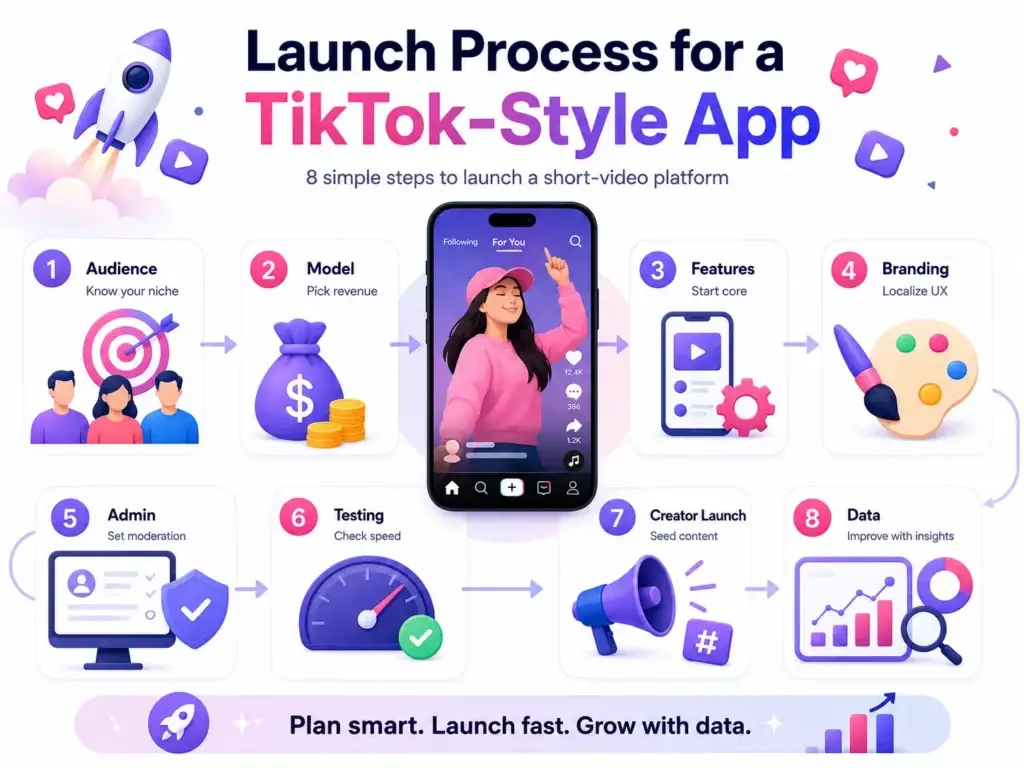
A short-video platform should not be launched randomly. Founders need a clear product and go-to-market path.
Step 1: Define the Audience
Start with the audience. Are you building for creators, regional communities, ecommerce brands, educators, influencers, or entertainment fans?
The audience decides the content style, moderation rules, monetization model, and feature priority.
Step 2: Choose the Business Model
Decide how the platform will earn.
Possible models include:
- Ads
- Subscriptions
- Creator commissions
- Gifts and coins
- Paid live sessions
- Sponsored campaigns
- Social commerce
- Featured content
Step 3: Select the Feature Scope
Do not add every feature at once. Start with the features needed for launch, then add advanced modules based on user behavior.
A practical first version should include video upload, feed, profiles, engagement, admin panel, basic moderation, and monetization planning.
Step 4: Customize Branding and User Experience
Your platform should not look like a generic script. Branding, colors, language, categories, onboarding, and content rules should match your market.
Step 5: Configure Admin and Moderation Workflows
Before launch, decide who can manage users, review content, resolve reports, monitor revenue, and send platform updates.
Step 6: Test Performance
Video apps need careful testing because upload speed, playback quality, feed loading, and notifications directly affect retention.
Step 7: Launch With Creator Supply
A short-video app should not launch with an empty feed. Prepare creators, seed content, hashtags, challenges, and launch campaigns before opening the platform widely.
Step 8: Improve Based on Data
After launch, review watch time, uploads, completion rates, active creators, user retention, reports, and revenue activity. These signals should guide future updates.
Security, Admin Control, and Customization Matter More Than Founders Think
A short-video platform grows only when users, creators, and the platform owner can trust the system. That is why security, moderation, and admin control should not be treated as afterthoughts.
For a TikTok-style platform, the admin panel should help the business owner manage:
- Users and creator accounts
- Uploaded videos and reported content
- Comments, abuse reports, and moderation queues
- Hashtags, categories, banners, and challenges
- Revenue, coins, gifts, and transaction records
- Push notifications and engagement campaigns
- Roles, permissions, and platform settings
Security also matters because user-generated content platforms can face spam, fake accounts, harmful content, copyright issues, and payment-related risks.
A practical foundation should support:
- Encrypted data transfer
- Role-based access control
- Secure API integrations
- Content moderation
- Abuse reporting
- Activity logs
- Comment moderation
- Creator verification where relevant
- Payment monitoring where monetization is enabled
- Admin access controls
Customization is equally important. A regional creator app, a social commerce video app, and an education-focused reels app may all use short videos, but their business rules are different.
Your platform should allow branding, language, feature, monetization, and workflow changes without forcing you into a fixed template.
For deeper backend planning, read Miracuves’ guide on TikTok clone backend architecture for scale.
Common Mistakes Founders Should Avoid
Copying TikTok Without a Niche
A generic TikTok copy is difficult to position. Founders should define a clear niche, region, use case, or creator category.
Ignoring Creator Supply
Users will not stay if the feed has no strong content. Prepare creators, seed videos, and launch campaigns before going public.
Treating the Admin Panel as Optional
The admin panel is where the business manages users, content, reports, revenue, and platform settings. Without it, operations become difficult quickly.
Adding Monetization Too Late
Revenue features affect wallet logic, payments, creator dashboards, admin reports, and compliance workflows. Plan monetization early even if you activate it later.
Underestimating Video Infrastructure
Video apps need stable upload, processing, storage, and playback. Poor performance can hurt retention even if the app design looks good.
Weak Moderation Planning
User-generated content platforms need moderation workflows, reporting tools, and clear platform rules. Safety affects user trust and brand reputation.
Choosing a Locked-In Product Foundation
If you cannot customize or own the source code, long-term growth becomes harder. Founders should understand what they can change, extend, and control.
Ready-Made TikTok Script vs Custom Development
Founders usually compare two routes: ready-made app foundation or custom development.
| Build Option | Best For | Advantages | Things to Consider |
| Ready-made TikTok script | Founders who want faster launch and market validation | Faster deployment, existing app modules, lower initial development complexity, source-code ownership when included | Needs customization to avoid looking generic |
| White-label video app script | Agencies, startups, and brands that want a branded short-video platform | Rebrandable, faster go-to-market, admin control, monetization-ready workflows | Feature scope should match business model |
| Custom development | Businesses with very specific product logic or unique architecture needs | Full control over every workflow from day one | Usually needs more time, planning, and budget |
| Hybrid approach | Founders who want speed plus customization | Start with a ready-made foundation and extend over time | Requires clear roadmap and technical planning |
A ready-made foundation is not about copying another app blindly. It is about reducing repetitive development work so founders can focus on positioning, creators, monetization, and growth.
Where Miracuves Fits Into the Short-Video App Launch Journey
Miracuves helps founders, startups, agencies, and businesses launch white-label short-video platforms with a ready-made product foundation.
This is useful when you already understand the TikTok model and want to move from research to execution.
A Miracuves short-video app foundation can support:
- User app experience
- Creator profiles
- Short-video feed
- Video upload workflows
- Engagement features
- Admin dashboard
- Content moderation
- Monetization modules
- Branding customization
- Source-code ownership
- Deployment support
The value is not just faster development. The value is starting with a product foundation that can be shaped around your market, audience, monetization model, and launch plan.
Explore the TikTok-style video app solution when you are ready to review features, demo access, pricing, and deployment scope.
Final Thoughts: TikTok Is a Product Model, Not Just a Social App
TikTok changed how people discover content, creators, products, and communities. But for founders, the bigger lesson is not the dance trends or viral videos.
The real lesson is how short-form video, personalized feeds, creator tools, monetization, moderation, infrastructure, and admin control work together to create a repeat-engagement platform.
If you are only trying to understand TikTok, this guide gives you the foundation. If you are planning to build a short-form video app, the next step is to define your audience, monetization model, feature scope, moderation needs, and launch path.
Miracuves helps founders move from idea to launch faster with white-label, source-code-owned short video app solutions that can be customized for branding, creator workflows, monetization, and admin control.
Explore the TikTok-style video app solution or book a consultation to discuss your launch plan.
FAQs
What is TikTok used for?
TikTok is used for creating, watching, sharing, and discovering short-form videos. People use it for entertainment, education, product discovery, creator content, trends, live streams, and community engagement.
How does the TikTok algorithm work?
The TikTok algorithm studies user behavior such as watch time, replays, skips, likes, comments, shares, follows, and content preferences. It uses these signals to personalize the For You feed and show videos each user is more likely to watch.
Why is TikTok so addictive?
TikTok feels addictive because the feed is personalized, videos are short, content loads quickly, and users can keep discovering new videos without searching. The app continuously learns from behavior and improves recommendations over time.
Why do founders study TikTok before building a short-form video app?
Founders study TikTok because it shows how short videos, recommendation feeds, creator tools, social engagement, and monetization can work together. The goal is not to copy TikTok exactly, but to understand the product model and adapt it for a specific audience or market.
What features should a TikTok-style app include?
A TikTok-style app should include user onboarding, video upload, editing tools, personalized feed, creator profiles, likes, comments, follows, sharing, hashtags, notifications, admin panel, moderation tools, analytics, and monetization options such as ads, gifts, coins, subscriptions, or live streaming.
What is the difference between a TikTok-style app and a ready-made TikTok script?
A TikTok-style app refers to the final branded product users interact with. A ready-made TikTok script is the underlying source-code foundation used to build and customize that product. A white-label video app script can help founders launch faster because core app modules are already built.
How much does it cost to build a short video app like TikTok?
The cost depends on platforms, features, design, video infrastructure, recommendation logic, monetization modules, admin panel, security, integrations, and customization. Miracuves’ ready-made TikTok clone solution currently starts from $2,799, with final pricing based on the selected launch scope.
Can Miracuves help launch a TikTok-style video sharing platform?
Yes. Miracuves helps founders launch white-label short video platforms with branding, source-code ownership, admin control, creator workflows, monetization features, and deployment support. The solution can be customized for regional platforms, creator communities, social commerce, education, entertainment, or niche video apps.