

Key Takeaways
What You’ll Learn
- Instacart is a grocery delivery platform that connects users with local stores for fast, on-demand shopping.
- Customers place orders through a simple app with real-time updates and flexible delivery options.
- Shoppers fulfill orders by picking, packing, and delivering groceries efficiently.
- Digital payments and subscriptions make transactions seamless and recurring.
- Partnerships with retailers are key to scaling Instacart across different regions.
Stats That Matter
- Instacart partners with over 1,400 retail banners across North America.
- Online grocery is projected to become a major share of total grocery sales by 2026.
- Delivery fees, service charges, and subscriptions drive core revenue.
- Advertising and brand promotions are rapidly growing revenue streams.
- Convenience-based shopping is becoming a standard consumer behavior.
Real Insights
- Convenience and speed are the biggest drivers of grocery delivery adoption.
- Strong platforms balance customers, shoppers, and retail partners efficiently.
- Real-time updates and substitutions help build user trust and retention.
- Retail partnerships matter more than building inventory from scratch.
- Growth comes from operational efficiency and repeat usage, not just expansion.
Instacart recorded an estimated $3.38 billion in revenue in 2026, showing steady double-digit growth into 2026. As one of North America’s largest online grocery delivery and pickup platforms, Instacart has successfully turned everyday grocery shopping into a multi-billion-dollar digital ecosystem.
Understanding how Instacart makes money is critical for entrepreneurs and startup founders building marketplace platforms. The company’s diverse mix of service fees, memberships, retailer commissions, and retail media advertising reveals how to layer multiple revenue sources within a single app — a strategy that Miracuves helps founders replicate and scale through customizable clone app solutions.
Instacart Revenue Overview – The Big Picture
Instacart’s total revenue in 2026 was approximately $3.38 billion, driven primarily by advertising and transaction fees. Its gross transaction volume (GTV) — the total value of items sold through the platform — exceeded $33 billion.
- Year-over-year growth: ~11 %
- Net income (Q2 2026): $116 million, up 92 % YoY
- Gross profit margin: around 75 %
- Valuation: ~$9 billion in 2026
- Market position: Dominant independent grocery marketplace across U.S. and Canada
Instacart’s profitability surge has been fueled by its retail-media business and operational efficiency. It now earns more per user than ever before by monetizing shoppers, retailers, and advertisers simultaneously.
Read More: What is Instacart App and How Does It Work?
Primary Revenue Streams Deep Dive
Revenue Stream #1: Consumer Fees & Memberships
Instacart earns directly from customers through:
- Delivery and service fees ($3 – $10 per order on average)
- Small-order fees for baskets under $10 – $35
- A monthly or annual subscription called Instacart +, offering free deliveries and reduced service fees
Share of total revenue: ≈ 40 %
Growth trend: Driven by rising order frequency and premium subscriptions
Example: 82 million orders processed in Q2 2026, up 17 % year-over-year
Revenue Stream #2: Retailer Commissions and Fulfillment Fees
Retailers (brand partners and grocery chains) pay Instacart to access its logistics and delivery infrastructure.
- Average commission rate: 5 – 10 % per order
- White-label and co-branded fulfillment arrangements
- Technology licensing for Instacart Platform solutions
Share of total revenue: ≈ 25 %
Growth trend: Steady growth as Instacart expands partnerships with national and regional retailers
Revenue Stream #3: Advertising & Retail Media
This is Instacart’s most profitable business unit. Brands pay for sponsored placements and digital shelf ads to appear at the top of search results and recommendations.
- Ad formats: featured product placement, carousel ads, in-app banners
- Pay-per-click and performance-based pricing
- Profit margin > 80 %
Share of total revenue: ≈ 30 %
Growth trend: Fastest-growing segment with $1 billion+ annualized revenue run rate
Revenue Stream #4: White-Label Technology and API Licensing
Instacart licenses its logistics software to supermarkets for their own e-commerce sites under the Instacart Platform brand. This includes catalog management, payment systems, and delivery routing APIs.
Share of total revenue: ≈ 5 – 8 %
Growth trend: Expected to double as more retailers adopt hybrid online delivery systems
Revenue Stream #5: Data Monetization and Partnerships
Instacart sells aggregated, anonymized shopping behavior data to retail partners for insight-driven marketing and inventory optimization.
Share of total revenue: ≈ 5 %
Growth trend: Rising with AI-based predictive analytics offerings
Read More: How to Build an App Like Instacart – Step by Step Guide in 2024
How Instacart Maximizes Revenue Per User
- Segmentation: Personalized recommendations and dynamic discounting based on purchase frequency
- Upselling: Encouraging bulk purchases and priority delivery options
- Cross-Selling: Partner retailer offers, meal kits, and household bundles
- Dynamic Pricing: Higher fees in peak demand zones to protect margins
- Retention Monetization: Instacart + rewards and exclusive deals drive recurring revenue
- LTV Optimization: Predictive analytics track user lifespan and order frequency
- Psychological Pricing: Odd-number pricing ($9.99, $4.99) for perceived value gains
Each layer ensures Instacart earns from every user action — ordering, searching, advertising clicks, or subscription renewals.
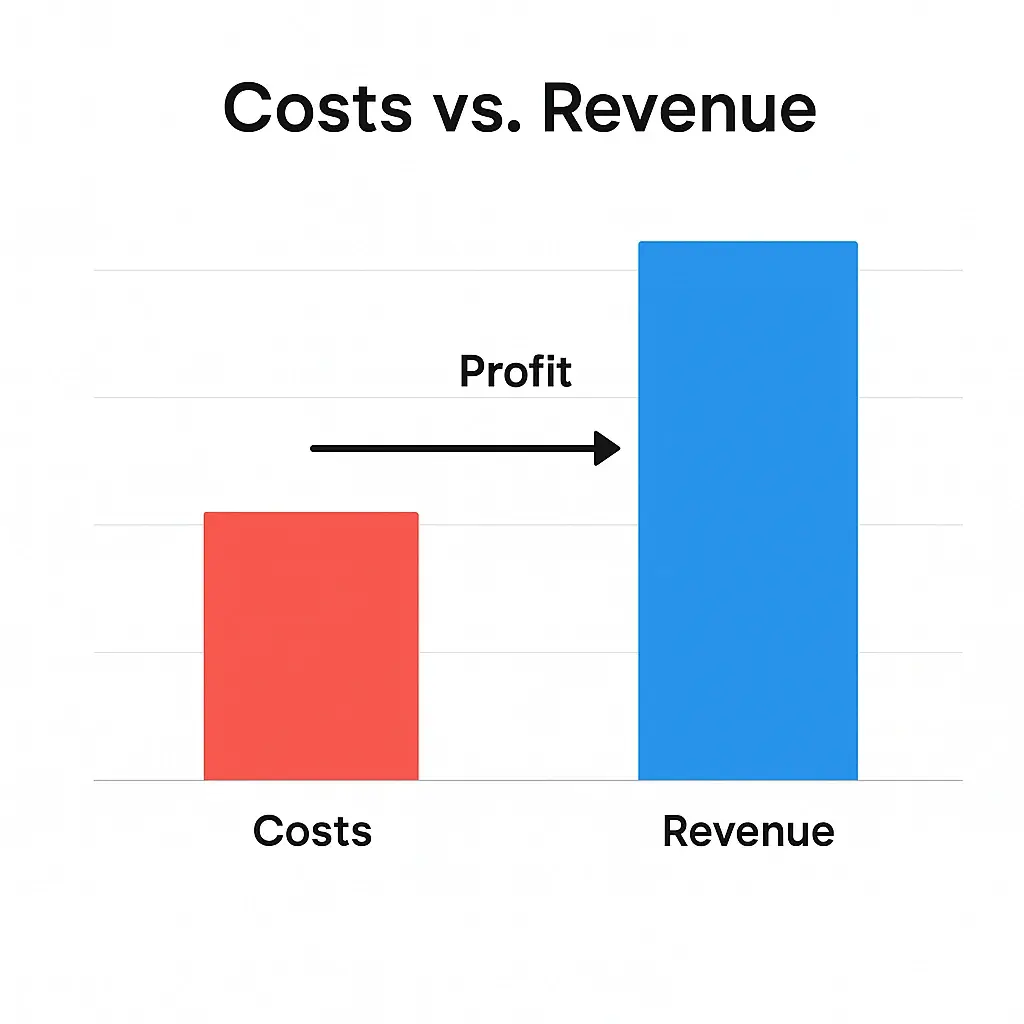
Cost Structure & Profit Margins
Major Costs
- Technology and cloud infrastructure (~25 %)
- Marketing and customer acquisition (~20 %)
- Operations and driver payments (~35 %)
- R&D and AI investments (~10 %)
- Corporate and admin overheads (~10 %)
Unit Economics Breakdown
Instacart earns approximately $2 – $4 net profit per order after fees and advertising income offset delivery costs.
Margin Improvement Strategies
- Expansion of retail media ads with 80 % profit margin
- AI-driven route optimization reducing delivery cost per order
- Growth in Instacart + membership renewals
Read More: Best Instacart Clone Scripts in 2025 | Grocery App
Future Revenue Opportunities & Innovations
- AI and Machine Learning: Personalized product recommendations and dynamic ad pricing
- Grocery Store Integration: Deeper white-label solutions for retailers
- Expansion Markets: Europe and Latin America testing delivery models
- Retail Media 2.0: Shoppable video ads and in-cart recommendations
- Subscription Bundles: Combining Instacart + with partner retail offers
- Threats: Margin pressure from gig-economy competition and tight ad budgets
These trends open the door for new entrants — including Miracuves clients — to build customized Instacart-like platforms that monetize from multiple angles right from launch.
Lessons for Entrepreneurs & Your Opportunity
Instacart’s model proves that profitability in a delivery business comes from layered monetization, not just commissions. Entrepreneurs can replicate this success by:
- Designing multi-sided revenue flows (users, providers, advertisers)
- Using predictive analytics to increase LTV and order frequency
- Building retail media and ad solutions within their apps
Final Thought
Instacart Clone journey from a startup to a billion-dollar public company demonstrates the power of diversified monetization and scalable unit economics. For entrepreneurs, replicating its core principles — fee optimization, advertising revenue, and subscription retention — can accelerate profitability from day one. With Miracuves’ ready-to-deploy Instacart Clone, your path to a multi-revenue delivery business is closer than you think.
FAQs
How much does Instacart make per transaction?
Roughly 7 – 8 % of gross transaction value comes as net revenue after fees and advertising.
What’s Instacart’s most profitable revenue stream?
Its retail media advertising business, with over 80 % profit margins.
How does Instacart’s pricing compare to competitors?
Its fees are slightly higher than DoorDash Grocery or Walmart+, but Instacart offers broader retailer choice and faster fulfillment.
What percentage does Instacart take from providers?
Between 5 % and 10 % commission on average, depending on contract type and category.
How has Instacart’s revenue model evolved?
From simple delivery fees to a three-pillar system of fees, commissions, and advertising media sales.
Can small platforms use similar models?
Yes. With white-label solutions like Miracuves’ Instacart Clone, you can integrate the same model with custom pricing.
How to implement similar revenue models?
Use multi-tier pricing, subscription plans, and ad modules built into your platform.
What are alternatives to Instacart’s model?
Aggregator fee-based models, direct retail partnerships, and driver-owned co-ops.
Related Articles:
Miracuves is an independent software development company. We are not affiliated with, connected to, sponsored by, or endorsed by any company or product named in this article.
Terms such as “X Clone” are used descriptively. It is how the software industry refers to building a platform with functionality comparable to a known service, and how clients search for it.
The entire design and codebase of our products is built by our own team. Our products contain no code, design, graphics, or content originating from any third-party website or applications.
All third-party names and marks referenced in this article are the property of their respective owners, referenced solely to identify the services discussed.