


Key Takeaways
What You’ll Learn
- Instacart is an on-demand grocery delivery platform that connects users with personal shoppers and local stores.
- Users place orders through a simple app with real-time tracking and flexible delivery slots.
- Shoppers pick and deliver groceries while updating users on item availability and replacements.
- Digital payments and subscriptions make ordering faster and more convenient for regular use.
- Strong local store partnerships are key to Instacart’s growth and service reliability.
Stats That Matter
- Instacart partners with thousands of grocery stores across North America.
- The online grocery market is expected to grow rapidly, reaching hundreds of billions in value globally.
- Same-day delivery and convenience drive most user demand.
- Instacart+ subscriptions help increase repeat usage and customer retention.
- On-demand grocery platforms are becoming a core part of modern urban lifestyles.
Real Insights
- Convenience drives adoption when groceries can be delivered quickly and reliably.
- Strong platforms balance customers, shoppers, and retail partners effectively.
- Real-time updates and substitutions improve user trust and satisfaction.
- Local inventory integration is more important than just app features.
- Growth depends on delivery efficiency and service consistency.
Imagine running out of groceries just before dinner — and instead of driving to the supermarket, you simply open an app, tap a few items, and within minutes, someone delivers them to your doorstep. That’s the convenience Instacart brought into millions of homes.
Founded in 2012 by Apoorva Mehta, Instacart transformed grocery shopping by connecting users to personal shoppers who handpick and deliver items from local stores. In 2026, Instacart continues to dominate North America’s on-demand grocery delivery market, partnering with over 1,400 retailers across 80,000+ stores in the U.S. and Canada.
Its success lies not just in convenience — but in how it blends real-time logistics, human shoppers, and smart tech to create an ecosystem that works seamlessly for both customers and stores.
What is Instacart? The Simple Explanation
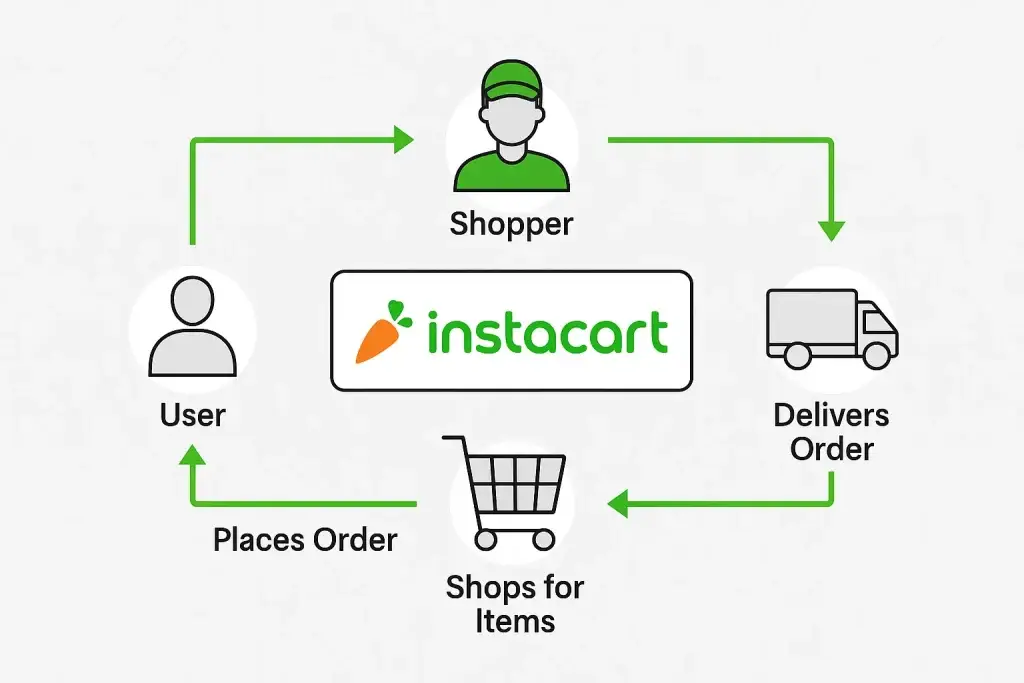
Instacart is an on-demand grocery delivery and pickup platform that connects users with personal shoppers who purchase and deliver groceries from nearby stores. It bridges the gap between traditional supermarkets and modern consumers who value convenience and time efficiency.
At its core, Instacart solves the problem of time-consuming grocery trips. Users can browse thousands of items from multiple stores, add them to a virtual cart, and have everything delivered — often within an hour.
The target users include:
- Busy professionals and parents
- Elderly or mobility-limited individuals
- Tech-savvy customers preferring contactless shopping
By 2026, Instacart commands a market share of over 70% in the U.S. online grocery delivery segment, competing with players like Walmart+, Amazon Fresh, and DoorDash. Its success stems from its localized partnerships, flexible gig-worker model, and user-friendly app that streamlines grocery shopping like never before.
Read more: How to Build an App Like Instacart: Complete Guide to Grocery Delivery App Development
How Does Instacart Work? Step-by-Step Breakdown
Instacart operates through a three-way system connecting customers, personal shoppers, and partner stores — all synchronized through a powerful tech platform. Let’s break down how it works for each participant.
For Users (Customers)
- Download & Sign Up:
Users install the Instacart app (available on iOS and Android) or visit the website. They create an account using email or social login. - Select Store & Browse Items:
Instacart partners with multiple local supermarkets — users can choose their preferred store and explore products by category (produce, dairy, bakery, etc.). - Add to Cart & Checkout:
Items are added to a virtual cart. Users can view pricing, discounts, delivery options, and select a delivery slot. - Real-Time Shopping:
Once an order is placed, a personal shopper is assigned. Users can chat with the shopper, approve substitutions, or add extra items. - Delivery or Pickup:
Groceries are either delivered to the doorstep or prepared for in-store pickup. Most deliveries occur within 1–2 hours.
For Shoppers (Service Providers)
- Onboarding:
Shoppers register via the Instacart Shopper app, pass background checks, and set their availability. - Order Assignment:
When an order matches a shopper’s proximity and schedule, it appears in their queue. - Shopping & Payment:
The shopper receives order details, collects items, and pays using an Instacart-provided payment card. - Delivery & Earnings:
Once delivered, shoppers earn per delivery, plus tips from customers. Average earnings in 2026 range from $18–$30/hour, depending on city and volume.
Technical Overview (Simplified)
Instacart’s workflow relies on real-time data synchronization between users, stores, and shoppers.
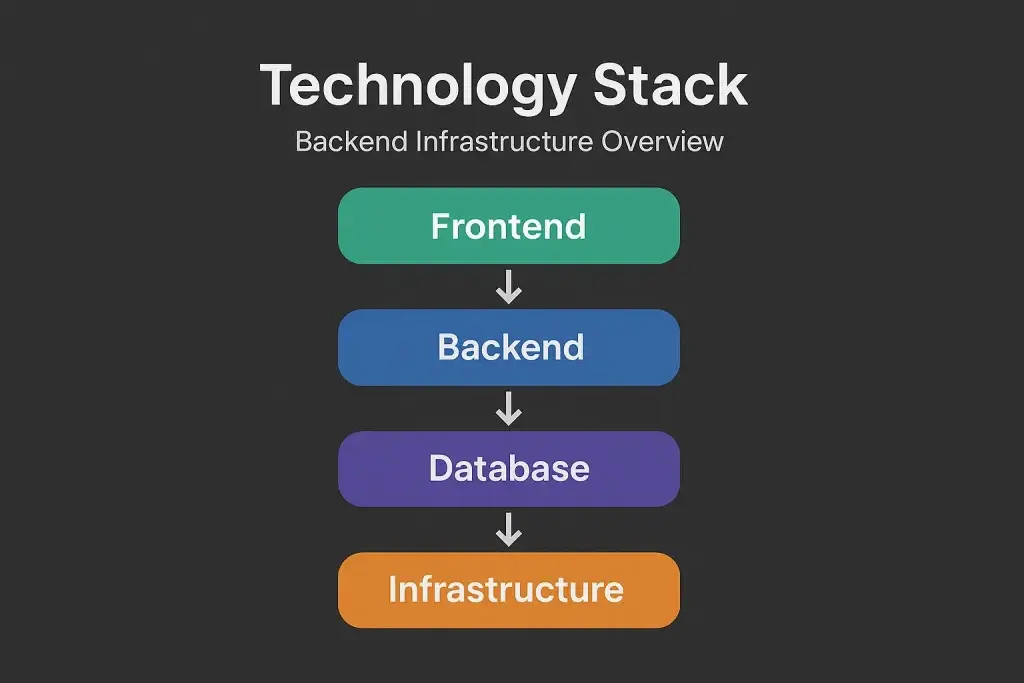
- Frontend: Flutter (mobile), React (web)
- Backend: Node.js, Python, and Go
- Database: PostgreSQL, Redis
- AI-powered routing: Predicts optimal delivery routes and time slots
- Cloud infrastructure: AWS for scaling and reliability
Key Features That Make Instacart Successful
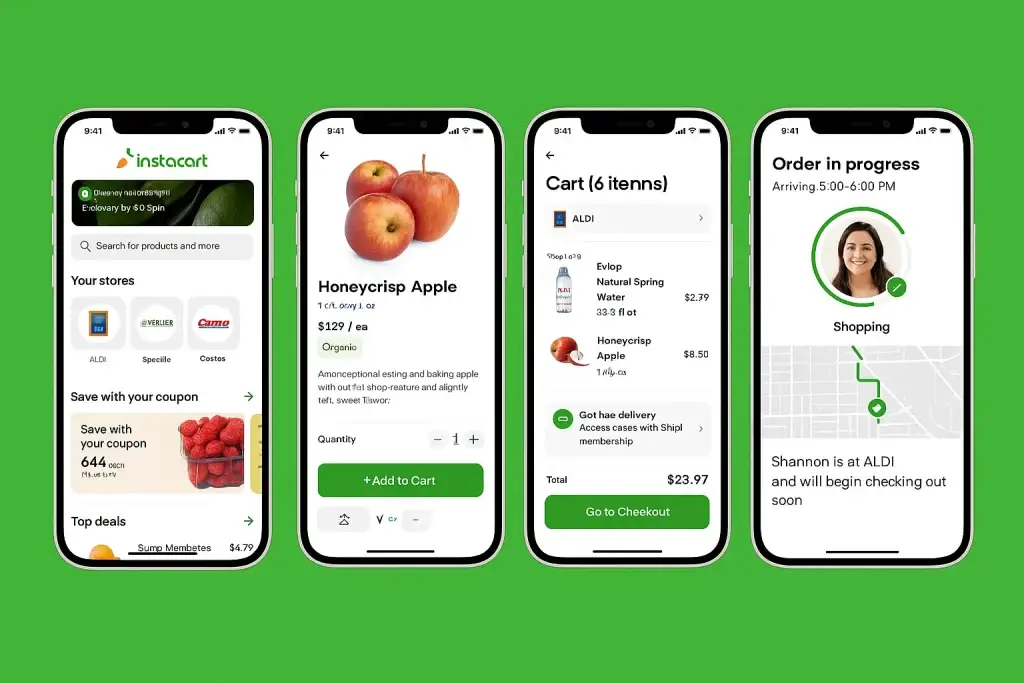
Instacart’s dominance in the online grocery delivery market comes from its well-engineered features, customer-first design, and data-driven personalization. Each feature has been refined to improve convenience, reliability, and user satisfaction.
Top 10 Key Features of Instacart (2026)
- Real-Time Order Tracking
- Users can monitor each stage of the order — from picking to delivery.
- Powered by live GPS updates for accuracy.
- In-App Chat with Shoppers
- Enables direct communication for replacements or add-ons.
- Builds trust and ensures higher satisfaction.
- AI-Based Product Recommendations
- Suggests frequently bought items or alternatives using AI/ML.
- Enhances user engagement and cart value.
- Multi-Store Shopping
- Users can order from multiple retailers in one checkout.
- Smart routing ensures efficient delivery logistics.
- Flexible Delivery Scheduling
- Choose instant (under 1 hour), same-day, or scheduled deliveries.
- Real-time slot optimization ensures minimal delays.
- Digital Coupons & Loyalty Integration
- Syncs with store loyalty cards and promo codes.
- Saves users time and money effortlessly.
- Voice Ordering & Smart Device Support
- Integrates with Alexa and Google Assistant for voice-based orders.
- Growing trend in 2026 for accessibility.
- Instacart Pickup
- Users opt for self-pickup to save on fees.
- Popular in suburban and semi-urban regions.
- Dark Store Fulfillment (2026 Update)
- Exclusive “micro-fulfillment centers” for high-demand zones.
- Enables faster delivery and higher order accuracy.
- Sustainability Features
- Paperless billing, eco-packaging options, and optimized routes.
- Appeals to environmentally conscious consumers.
Read more: Best Instacart Clone Scripts in 2025: Features & Pricing Compared
2026 Updates & Innovations
- AI route optimization reducing average delivery times by 20%.
- Predictive cart suggestions based on seasonality and previous orders.
- AR-based product previews in beta for home essentials.
The Technology Behind Instacart
Instacart’s success is driven not just by its business model — but by a robust and intelligent tech architecture that powers millions of transactions daily. It’s a perfect example of how technology, logistics, and human coordination can combine to create seamless delivery experiences.
1. Tech Stack Overview (Simplified)
| Layer | Technologies Used |
| Frontend | React (web), Flutter (mobile), Redux |
| Backend | Node.js, Python (Flask), Go |
| Database | PostgreSQL, MongoDB, Redis |
| Cloud Infrastructure | Amazon Web Services (AWS) |
| Payment Integration | Stripe, PayPal, Apple Pay |
| Push Notifications | Firebase Cloud Messaging |
| APIs | RESTful + GraphQL APIs |
2. Real-Time Features
- Live Shopper Tracking: GPS integration shows precise location and ETA.
- Instant Updates: Users receive notifications for substitutions, delivery status, and offers.
- Smart Routing: AI-driven algorithms analyze real-time traffic to optimize delivery paths.
3. Data Handling & Privacy
Instacart employs:
- End-to-End Encryption (AES-256) for user data
- Anonymized shopper-user communication
- GDPR and CCPA compliance to meet global standards
- AI-powered fraud detection to identify suspicious activity
4. Scalability & Performance
- Microservices architecture enables fast updates without downtime.
- Auto-scaling on AWS Lambda and EC2 manages traffic spikes during holidays.
- Edge caching with CloudFront ensures low-latency experiences even during high load periods.
5. Mobile vs Web Platform
- Mobile App: Focused on convenience — barcode scanning, notifications, and GPS tracking.
- Web Version: Optimized for browsing and large cart orders, often used by families and desktop users.
6. API Integrations
Instacart integrates with:
- Retailer Inventory APIs for real-time stock sync
- Payment gateways for secure transactions
- Mapping services (Google Maps, Mapbox) for navigation
- Marketing tools for personalized offers and A/B testing
7. Why This Tech Matters for Business
This architecture enables Instacart to:
- Handle millions of concurrent users
- Deliver orders within 60 minutes
- Maintain 99.8% uptime reliability
- Personalize shopping experiences with machine learning insights
Instacart’s Impact & Market Opportunity
Instacart has transformed the grocery industry by creating a hybrid model that merges the reliability of local supermarkets with the convenience of digital commerce. Its impact goes beyond groceries — it’s reshaping how consumers think about time, logistics, and shopping behavior in the on-demand era.
1. Industry Disruption
Before Instacart, online grocery shopping struggled due to logistics and trust issues. Instacart changed that by introducing crowdsourced fulfillment, giving users real-time updates from human shoppers.
Now, even traditional supermarkets rely on Instacart’s network instead of building their own delivery infrastructure.
2. Market Statistics (2026 Data)
- Global online grocery market (2026): $680+ billion
- Instacart’s U.S. market share: ~70%
- Partner stores: 80,000+ across North America
- Active users: Over 14 million monthly
- Total orders per year: 800 million+
These numbers make Instacart the largest grocery delivery platform in North America and one of the top 10 gig-economy employers globally.
3. User Demographics & Behavior
- Age group: 25–45 years
- Top regions: USA (urban/suburban), Canada
- Key motivations: Time-saving, hygiene, ease of access
- 60% of users repeat orders weekly, indicating strong loyalty and habit formation.
4. Geographic Presence
Instacart operates primarily in:
- United States
- Canada
- Expansion efforts are ongoing in Mexico and select EU regions through strategic retailer partnerships.
5. Future Growth & Market Projections
- Expected revenue (2026): $4.2 billion
- Forecasted CAGR (2026–2028): 15%
- Growth driven by AI automation, retail analytics, and fulfillment optimization.
6. Opportunities for Entrepreneurs
The growing demand for instant, hyper-local delivery platforms makes Instacart’s model extremely attractive for new entrants. Entrepreneurs can:
- Launch localized grocery delivery apps
- Integrate AI-driven personalization
- Partner with regional stores for exclusivity
This massive success is why many entrepreneurs want to create similar platforms — tapping into the booming grocery-tech market and redefining convenience for local communities.
Building Your Own Instacart-Like Platform
As online grocery delivery continues to boom, more entrepreneurs and retail brands are eager to launch their own Instacart-like apps — platforms that replicate the same convenience, speed, and reliability for local or niche markets.
With the right strategy, tech stack, and partner, it’s possible to build and launch such a platform within weeks, not months.
1. Why Businesses Want Instacart Clones
- Proven high-demand business model with recurring users
- Rapidly growing urban grocery delivery segment
- Opportunity to localize and customize (ethnic foods, organic groceries, etc.)
- Low initial investment compared to full-scale product development
2. Key Considerations for Development
Before building your Instacart-like platform, focus on:
- Multi-store integration for inventory syncing
- Efficient delivery management system
- Real-time tracking & in-app chat
- Dynamic pricing & commission modules
- AI-based recommendation engine
- Scalable backend to support thousands of users simultaneously
Global Cost Factors & Pricing Breakdown
instacart-Style on-demand grocery Marketplace Development — Market Price
PHP/Laravel is often the most practical choice for launching an Instacart clone quickly and affordably. Node.js/Python fits better when real-time workflows and heavier data movement become more important, while Go microservices are better suited for enterprise-scale Instacart-like platforms with higher concurrency and more complex infrastructure needs.
Miracuves Instacart-Like App Solution Cost and Tech Stack
Miracuves Pricing for an Instacart-Like Grocery Delivery App developed in PHP/Laravel with Flutter Apps for $2,499 USD (One-Time Price) in just 6 days
Get a fully developed, deployment-ready platform modeled after Instacart. Built on a rock-solid PHP/Laravel foundation, this complete package includes everything you need to launch and scale:
Core Workflows: Grocery ordering, real-time delivery management, and multi-store marketplace operations.
Built-in Finance: In-app wallet logic, pricing operations, and payout setups.
Management Hub: Comprehensive store/vendor management and a centralized admin backend.
Launch-Ready: Fully prepared for your custom branding, configuration, and immediate market entry.
Why is it so affordable?
Most complex grocery delivery platforms force you into expensive architectures like Node.js or Go. Building from scratch with those frameworks requires highly specialized and expensive engineering teams, which drives the cost into the tens or even hundreds of thousands of dollars.
We took a smarter, more practical approach:
You Aren’t Paying for Ground-Up Development: Our multi-vendor grocery engine is already developed, battle-tested, and ready to deploy. You skip the inflated costs and months of waiting associated with building from scratch.
The Power of PHP / Laravel: We built this on one of the most reliable and globally adopted frameworks in the world. Not only does this keep your upfront costs low, but it also protects your future budget. PHP has a massive global talent pool, making it easy and cost-effective for you to find developers for future scaling or customizations. You get an enterprise-capable, heavy-duty foundation without the inflated Silicon Valley price tag.
Note: This cost is for the solution, re-branding, deployment, and source code only.
Related reading: grocery delivery app security guide.
Conclusion
Instacart has proven that simplicity powered by smart technology can revolutionize even the most traditional industries. What started as a small idea to save time on grocery shopping has evolved into a multi-billion-dollar ecosystem connecting retailers, shoppers, and millions of consumers daily.
In 2026, Instacart isn’t just a grocery delivery app — it’s a logistics powerhouse, a data-driven personalization engine, and a symbol of convenience in the digital era. Its growth underscores how people value time, choice, and real-time interaction in everyday tasks.
For entrepreneurs, Instacart’s journey offers a clear message: on-demand delivery isn’t the future — it’s the present. Whether it’s groceries, essentials, or local products, users now expect instant fulfillment. And with proven clone frameworks and rapid app development options, you can build your own Instacart-like business faster than ever.
Want to dominate the online grocery delivery market? Miracuves builds high-performance Instacart clones with real-time tracking and AI-powered logistics.
Get in touch with us now for a free consultation!
FAQs
How does Instacart make money?
Instacart earns revenue from delivery fees, service charges, Instacart+ memberships, retailer commissions, and in-app advertising from brands and stores.
Is Instacart available in my country?
As of 2026, Instacart operates across the U.S. and Canada, with pilot expansion programs underway in Mexico and select European regions.
How does Instacart ensure safety?
Instacart uses identity verification, background checks, encrypted communication, and real-time tracking to ensure shopper and customer safety.
Can I build something similar to Instacart?
Yes. You can create your own grocery delivery app using Instacart clone solutions provided by development firms like Miracuves, which offer pre-built scripts and full customization.
What makes Instacart different from competitors?
Instacart stands out for its retailer partnerships, crowdsourced shopper model, and AI-powered logistics, offering unmatched local availability and reliability.
How can I create an app like Instacart?
You can partner with Miracuves to build your own Instacart-like app. With ready-to-deploy clone scripts, custom branding, and advanced features, your grocery delivery business can go live in just 6 Days
Related Articles:
Miracuves is an independent software development company. We are not affiliated with, connected to, sponsored by, or endorsed by any company or product named in this article.
Terms such as “X Clone” are used descriptively. It is how the software industry refers to building a platform with functionality comparable to a known service, and how clients search for it.
The entire design and codebase of our products is built by our own team. Our products contain no code, design, graphics, or content originating from any third-party website or applications.
All third-party names and marks referenced in this article are the property of their respective owners, referenced solely to identify the services discussed.